SUMMARY
Gloria Steinem, the pioneering journalist and activist who became one of the most recognizable voices of the modern women’s movement, has died at the age of 92. For more than half a century, Steinem challenged entrenched ideas about gender and power, helping bring the fight for women’s equality from the margins of American life into the mainstream. Jeffrey Brown has this remembrance.
View the transcript of the story.
Short on time? Watch the video and complete the following See, Think, Wonder questions: What did you notice? What did the story make you think? What would you want to learn more about?
News alternative: Check out our recent segments from the News Hour, and choose the story you’re most interested in watching. Then make a copy and answer these general discussion questions.
WARM-UP QUESTIONS
- What work is Gloria Steinem best known for?
- Where did Steinem grow up?
- Why did Steinem move to New York, and what did she do there?
- When did Steinem found Ms. magazine, and what did the magazine cover?
- How was Steinem's work unfinished toward the end of her life, as described in her interview with Judy Woodruff?
ESSENTIAL QUESTIONS
- After watching this segment, what do you think was the most significant part of Gloria Steinem's legacy?
- At the end of this segment, a clip of an interview with Geoffrey Brown includes Steinem saying, "Here's my advice. Do not listen to me, really." What do you think she meant by this? What advice was she giving young women who might be following in her footsteps?
Media literacy: What else would you like to know about Gloria Steinem and her legacy? Did any details from the segment stand out to you that you think should have been covered in more detail? If so, what are they?
WHAT STUDENTS CAN DO
How did Gloria Steinem's life fit into the larger movement for women's equality? Check out this case study on our site, Journalism in Action. There, you can see how Steinem's life was part of a much larger (and older) movement.
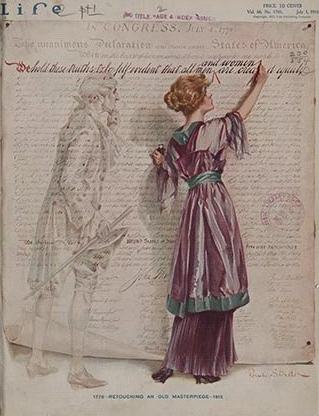
Cover illustration from Life, July 1915. Paul Stahr. 1776—Retouching an Old Masterpiece—1915. The woman is adding the phrase “and women” to the Declaration of Independence. Library of Congress
After examining the case study, as a class, discuss — how do you think the goals of the women's equality movement are being carried out today? Who are some of the figures from younger generations who best represent the movement?
Sign up to receive our weekly newsletter with Daily News Lessons and community events.
To provide feedback on News Hour Classroom's resources, including this lesson, click here.