SUMMARY
The job market delivered a surprising rebound in August, adding 162,000 jobs, far more than economists had expected. The unemployment rate held steady at 4.1%, and the Labor Department revised July numbers upward. The stronger-than-expected report comes as the Federal Reserve is set to weigh interest rates. Geoff Bennett discussed more with Roben Farzad, host of "Full Disclosure."
View the transcript of the story.
NOTE: If you are short on time, watch the video and complete this See, Think, Wonder activity: What did you notice? What did the story make you think about? What would you want to learn more about?
News alternative: Check our recent segments from the News Hour, and choose the story you’re most interested in watching. You can make a Google doc copy of discussion questions that work for any of the stories here.
WARM-UP QUESTIONS
- How did the job market surprise economists in August?
- Who is Roben Farzad, and what is his background?
- Where were the strongest gains in employment, according to Farzad?
- Why is the economy not as appealing to the working class, according to Farzad?
- What are some of the reasons that economists are uncertain about the future job market, according to Fazad?
ESSENTIAL QUESTIONS
- In this segment, Roben Farzad says that we are in a "no hire, no fire economy." What do you think he means by this? What does it mean for employed workers looking for a new job? What does it mean for unemployed workers looking for a job?
- Have you noticed the impact of inflation in your own life? If so, how?
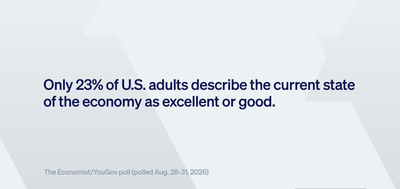
Media literacy: Examine the infographic below. Then as a class, discuss — why do you think this information was included in the segment? What seems to be the source of information? Why do you think the number is so low, despite positive reports around employment numbers?
WHAT STUDENTS CAN DO
According to the Economist/YouGov poll cited in the infographic above, only 23% of adults describe the economy as excellent or good. But how does that compare to attitudes toward the economy in other recent years? As a class, take a look at this polling tracker from YouGov that goes back to 2009 (roughly the start of Barack Obama's presidency). After familiarizing yourself with the tracker, as a class, discuss —
- How do current attitudes about the economy compare to other points in the recent past?
- What do you think caused some of the most significant spikes in pessimism about the economy?
- Based on historical trends, do you expect pessimism about the economy to go up or down in coming months?
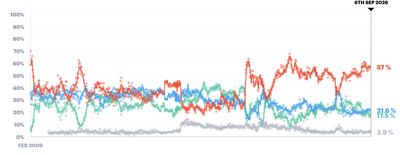
Screenshot from YouGov poll of the economy
Sign up to receive our weekly newsletter with Daily News Lessons and community events.
To provide feedback on News Hour Classroom's resources, including this lesson, click here.