March is National Women’s History Month and the right time to ask: why are women still underrepresented in Science, Technology, Engineering and Mathematics (STEM)?
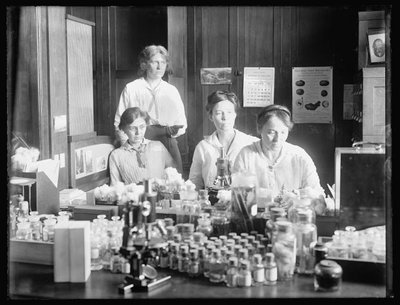
According to a recent National Science Board report, women made up just 28 percent of science and engineering workers in 2010. They also make up less than 13 percent of the engineering workforce, according to the MIT Women's Initiative. This lesson explores the careers of 19 great female scientists, the obstacles they overcame and asks students to look at their own schools, teachers, friends and families to see whether those obstacles continue to operate in their lives.
Subjects
History, economics, psychology, sociology
Estimated time
One 50-minute class period, plus homework for extension assignments, if desired
Grade level
9-12
Materials
- Handout #1: These are the 7 things keeping women out of science careers
- Handout #2: 20th century women in STEM
- Handout #3: Recording sheet
- Computer and Internet access
Objectives
To answer the essential question, “Why are there so few women in STEM careers?” students will:
- Examine seven barriers posited for the under-representation of women in STEM fields
- Become familiar with outstanding women in these fields by reading biographies and analyzing how a particular female scientist overcame obstacles
- Apply those barriers to their own lives to see whether they are personally true
Main Activity
- Students will read the journal article These Are The 7 Things Keeping Women Out Of Science Careers (Handout #1) which cites several key factors including teasing, lack of encouragement, stereotyping, childcare, competition, marginalization and bias.
- The teacher will download and print 20th Century Women in Science (Handout #2) and cut out the names of female scientists so that there are slips of paper in a bowl or box containing the names of 16 outstanding women in various STEM fields of the past century. Each pair of students will come up to select their subject.
- Students will access the online Women in Science document to read short biographies of each of the women they chose. They may use computers, iPads or phones, as the biographies are short and readable.
- Each pair will apply the seven barriers in the journal article to the story of their subject, and use the Recording Sheet (Handout #3) to write about them. They will also use the recording sheet to describe whether any of these obstacles persist in their communities, schools, homes or families. Students of different genders may have diverse viewpoints on these issues.
Extension activity
- Three living female Nobel Prize winners have websites that include their Nobel acceptance speeches and other interviews. Students may wish to read these:
- Françoise Barré-Sinoussi - France
- Ada Yonath - Israel
- Elizabeth Blackburn - United States
Syd Golston was a former president of the National Council for the Social Studies (NCSS). She was a veteran teacher, school administrator and News Hour Classroom advisor.
This lesson was published on March 8, 2018, and updated on June 3, 2026.
Sign up to receive our weekly newsletter with Daily News Lessons and community events.
To provide feedback on News Hour Classroom's resources, including this lesson, click here.