This lesson was originally published Oct. 10, 2022, and was updated June 9, 2025. For a Google doc version, click here.
Introduction
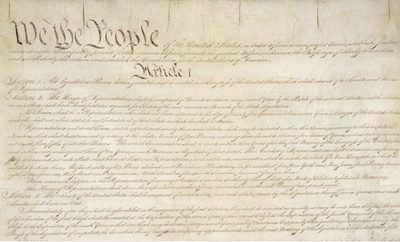
“…and if there be more than one who have such Majority, and have an equal Number of Votes, then the House of Representatives shall immediately chuse by Ballot one of them for President…” — U.S. Constitution, Article II, section 1, clause 3
Sometimes it helps to know that current debates that divide the nation have occurred elsewhere in history. This is the case with contested elections. It doesn't mean that all the details are the same between 1876 and now, or that history repeating itself is something we have to readily accept. But it's usually helpful to know about related events from the past and lessons we can learn as we compare them to today.
Subjects
History, U.S. Government, Civics
Estimated Time
One 50-minute class period
Grade Level
6-12
Objectives
- Students will learn about elections that have been contested in American history.
- Students will understand the political and legal controversies that have surrounded these types of elections, and they will leave with a better understanding of what might happen in future elections.
Activities
A. Start by watching this 5 minute TEDed clip on the Electoral College and reading the excerpt on the 12th Amendment. Then answer the question below.
B. Read this excerpt from the 12th Amendment to the U.S. Constitution: "The person having the greatest Number of votes for President, shall be the President, if such number be a majority of the whole number of Electors appointed; and if no person have such majority, then from the persons having the highest numbers not exceeding three on the list of those voted for as President, the House of Representatives shall choose immediately, by ballot, the President. But in choosing the President, the votes shall be taken by states, the representation from each state having one vote; a quorum for this purpose shall consist of a member or members from two-thirds of the states, and a majority of all the states shall be necessary to a choice."
Answer the following questions:
- What happens if no candidate has a majority of electors?
- How many votes does each state get?
C. The House of Representatives decided the elections of 1800 and 1824. Then, all of Congress decided the election of 1876.
Election of 1876: Use the Election of 1876 Worksheet to read more about this election and to answer questions.
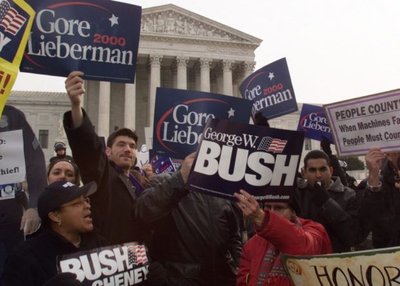
Election of 2000: Use the Election of 2000 Worksheet to read more about the case and to answer questions.
Election of 2020: Read these articles about the 2020 election (note: this is a sampling of articles over the last few years, including allegations by Trump that the election was stolen (no evidence of systemic voter fraud was found), the insurrection at the Capitol and charges of fake electors meant to overturn the election in favor of Trump). You can check News Hour's coverage of the 2020 election or read the following articles:
Special counsel moves to dismiss Trump’s election interference and classified documents cases (Nov. 25, 2024)
What to know about the sweeping indictment against Donald Trump (Aug. 15, 2023)
In video, Trump spreads baseless claims about voter fraud (Dec. 2, 2020)
Grief, anger, disbelief: Trump voters face Biden’s victory (Nov. 12, 2020)
Answer the following questions:
- What were some of the issues that made the 2020 presidential election a contested election?
- Did the Election of 2020 wind up in the House of Representatives?
- How did the Election of 2020 wind up in some state courts?
- Do you think there were any ways to have prevented the 2020 election from being contested? If so, what?
About the author
Stephanie Schragger teaches American and world history at Saint Ann's School in Brooklyn. Stephanie has an A.B. in History from Princeton University and a M.A. in History from Yale University.