Charlotte Cooks
Jamaican Beef Patties | Charlotte Cooks
Season 7 Episode 3 | 26m 29sVideo has Closed Captions
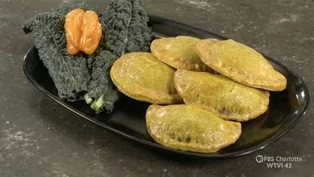
Chef Lisa Brooks and Chef Pamela Roberts create Jamaican Beef Patties.
Experience the vibrant flavors of Jamaica with our authentic Jamaican Beef Patties, expertly crafted by renowned chefs Lisa Brooks and Pamela Roberts. Each patty is filled with a savory blend of seasoned beef, encased in a flaky, golden crust that promises a delightful crunch with every bite. Perfect as a snack or a meal, these patties bring a taste of the Caribbean to your table.
Problems playing video? | Closed Captioning Feedback
Problems playing video? | Closed Captioning Feedback
Charlotte Cooks is a local public television program presented by PBS Charlotte
Charlotte Cooks
Jamaican Beef Patties | Charlotte Cooks
Season 7 Episode 3 | 26m 29sVideo has Closed Captions
Experience the vibrant flavors of Jamaica with our authentic Jamaican Beef Patties, expertly crafted by renowned chefs Lisa Brooks and Pamela Roberts. Each patty is filled with a savory blend of seasoned beef, encased in a flaky, golden crust that promises a delightful crunch with every bite. Perfect as a snack or a meal, these patties bring a taste of the Caribbean to your table.
Problems playing video? | Closed Captioning Feedback
How to Watch Charlotte Cooks
Charlotte Cooks is available to stream on pbs.org and the free PBS App, available on iPhone, Apple TV, Android TV, Android smartphones, Amazon Fire TV, Amazon Fire Tablet, Roku, Samsung Smart TV, and Vizio.
Providing Support for PBS.org
Learn Moreabout PBS online sponsorship- [Narrator 1] This is a production of PBS Charlotte.
- [Narrator 2] The following episode of "Charlotte Cooks" is brought to you by Central Piedmont Community College and viewers like you.
Thank you.
- Coming up on this episode of "Charlotte Cooks," we're heading down to Jamaica and we're gonna be making some authentic Jamaican beef patties.
(upbeat rhythmic music) Welcome to this episode of "Charlotte Cooks."
I'm chef Pamela Roberts.
And joining me here in the kitchen today is chef Lisa Brooks.
You know her as your favorite TikTok chef and probably learned some things from her on Instagram too.
So Lisa, thanks for joining me on the set today.
- Thanks for having me.
- [Pamela] What are we making?
- We are making Jamaican beef patties.
- [Pamela] Tell us all about Jamaican beef patties.
- Well, if you've ever been to Jamaica, you know that that's a staple there.
And it's something I think people don't always think they can make at home.
You have to go and buy them at a Jamaican restaurant, or you can buy them frozen in the grocery store.
- [Pamela] They sound so exotic.
- [Lisa] Yeah, it's like they're scared of it.
So I wanna show people that it's easy to make them at home.
I think that's why it's one of my most viral video is 'cause I think people just think, wow, I can make this.
- [Pamela] I can make that.
In order to make Jamaican beef patties, we need several things.
We need a dough.
- [Lisa] Yes.
- [Pamela] But the dough is kinda special.
So what's special about the dough?
- [Lisa] The dough has turmeric in it.
Sometimes even there'll be curry powder in it.
But we're doing it with just salt, sugar, turmeric.
It's gonna have a nice golden color.
The golden crust.
- So we're gonna get started with the dough first, right?
- Yep, let's do that.
- And then we're gonna make some filling, and then we're gonna assemble the patties, then we're gonna cook them.
- Bake them.
- Then we're gonna eat them, right?
- Yes.
- [Pamela] Oh, boy.
- I hope we get to eat them.
- Oh, boy, we will get to eat them.
- So we start with flour.
- Just regular, everyday, all-purpose flour.
- Yep, that's right.
- We're gonna use about four cups of that for this recipe, right?
- Four cups, that's right.
And then our seasonings go in.
So salt, sugar and turmeric.
- Okay.
These are all your dry ingredients.
- Yep, that's right.
Let me get that sugar loosened up and in there, and then our turmeric.
That's gonna give us that golden color.
- [Pamela] Have you ever used fresh turmeric in this?
- [Lisa] I have not used it in this.
- Most of the time we just use powder.
- Yeah, because I teach people to do things easily so they're not intimidated.
So I always try to do things the easy way so people don't get intimidated by cooking.
- There you go.
- So the cold butter has gone in.
Now I'm gonna put the lid on my food processor and just gonna let that go.
- [Pamela] Just like you do with a pie dough, you're looking for it to be a little bit- - Crumbly.
- Not smooth.
You want it to be crumbly.
- Crumbly, exactly.
- You wanna still see some chunks of fat in there, right?
- That's right.
- Okay.
So you've got a little bit of ice in your water.
That's important to keep that butter cold.
- [Lisa] Right.
Because we want the flakiness, and that's where the flakiness comes from is that cold butter or shortening sometimes.
And keeping it cold so that when it bakes up, the air pockets left by the melted butter or shortening makes it flaky.
So we just wanna add it until it forms a ball.
And you'll know when that happens.
- [Pamela] It'll just- - It'll just all of a sudden be a ball.
- Yeah, right?
- It'll start going around.
- There we go.
- There we go.
- There we go.
- It's moving, it's moving.
I'm gonna put a little bit more.
- [Pamela] I love seeing the yellow develop.
That's great.
There it is.
- See the ball going?
- [Pamela] There it is.
There it is.
- Look.
Yes.
So we did work it a little bit.
We put the ice water.
We made sure the butter was cold.
We wanna chill it because that's gonna help it rest, relax the gluten, chill out.
It'll roll out much, much easier.
- Yes, it will.
Okay.
- Beautiful golden dough.
- I know.
That color is amazing.
- Look at that.
- [Pamela] What's really nice is the dough stays that color too.
It looks a lot stickier than that.
But that's another reason you rest it too, so the stickiness goes down just a little bit.
- Get that off there.
- And so then we're gonna wrap that with some cellophane and cool that down.
So to start on our filling, Lisa, you would need a nice saute pan.
- Yes.
- Something that's not too small 'cause you need to stir it up, right?
- Yeah, we need a little bit of space for this.
- Okay, so walk us through.
What are we gonna do for this filling?
- So I got my pan heating nice, medium-high heat.
And I just add my oil, just vegetable oil, canola oil, some mild-tasting flavored oil.
And then just gonna get my beef in here and get it started.
Hear that sizzling going?
- [Pamela] Just like your regular everyday ground beef you'd fry?
- Yeah, absolutely.
We just wanna break it up really nicely, and then we're gonna start adding a ton of stuff.
Now I wanna go ahead and add my onions now, and I'll continue breaking up that beef.
(beef sizzling) It starts to cook down a little bit.
This actually comes together pretty quickly.
And you'll start to smell, if you start adding these spices.
- Yeah, as soon as they hit the heat, they're just gonna bloom.
- [Lisa] You're gonna start.
It's gonna smell up the kitchen.
But we don't have to wait till it's completely brown to add our seasonings.
So let's get started with that.
I got black pepper going in.
This is curry powder.
- [Pamela] So just regular everyday curry powder.
- [Lisa] Yeah, yeah.
You can get Jamaican curry powder at an international store, but there's no need.
You can just get the regular.
This is allspice.
Really important in Jamaican cooking.
They actually call it- - [Pamela] Pimento.
- Pimento.
(laughs) - [Pamela] Yes, they do, they do.
- Exactly.
Okay, so that was paprika.
Now we're coming in with our scotch bonnet.
This was chopped up without the seeds or the membrane, so that lessened it a little bit, right?
But then it's gonna be up to you how much heat you want.
I'm gonna add this whole thing.
(both laughing) This is also the cool thing about making your own stuff because Jamaican food, even the jerk, it's known for being spicy.
But if you make your own jerk rub, if you make your own recipes, you control the heat.
- Yes.
- So it's really good to learn to make these things.
So we've got garlic going in and then scallions.
- Scallions.
- It's just the whites and the greens all going in.
Everybody in the pool.
And I'm gonna pull some thyme off of these sprigs.
- [Pamela] Oh, boy, oh, boy.
- [Lisa] Right.
- [Pamela] The aroma, Lisa.
- [Lisa] I've got it down on medium right now.
I still need to break that up.
Now, would you mind stepping in, breaking that up?
- Not at all.
- And I'm gonna start getting some thyme.
- [Pamela] All right.
- [Lisa] I'm gonna get some thyme off of here.
You just go against the way it's growing.
- Just pull it right back.
- It just slides right off.
- That's a good trick for all those leafy herbs.
- [Lisa] Okay, so look at that.
Let's get that fresh.
Try to get it as fine as you can.
Because we're making appetizer-size patties, we just really need a- - You want more than one piece of meat in that patty.
- You wanna... Yeah, I mean, if we were making larger patties, maybe we could not break it up so much, but I like to have it nice and fine.
What'll help with that too, I'm gonna actually mix up this chicken.
- Oh, there you go.
- I have bouillon.
And this is... You can do granulated bouillon, you can do... Of course, you can buy beef stock as well, just already boxed up.
And I'm taking this bouillon and just mixing it in the water just to show you that this is a way to really save a lot of money, buying a concentrate, and then make your own stock.
- [Pamela] Just dilute it as you need it.
- [Lisa] Yeah, absolutely.
You also can control then, the intensity of the flavor and the sodium.
- And the sodium, that's really important to do.
- [Lisa] All right, I'm gonna add the breadcrumbs.
(laughs) - And what's the purpose of the breadcrumbs, just to give it a binder?
- Yeah, it's a binder.
We add the stock in.
I just wanna do enough.
Go ahead and mix that up.
- [Pamela] Just to moisten it, right?
- You just gonna wanna moisten it.
It's gonna create a little bit thicker of a gravy.
- Some juice.
- Some juice, yeah.
There's not a rue process here with flour and oil.
- [Pamela] No, there's not.
- [Lisa] This is the slight thickening, the breadcrumbs and the stock.
So look at that filling.
It's nice and it's thickened up.
I'm gonna turn the heat off right now.
- That looks fantastic.
Look at that.
Is that what you want?
- [Lisa] That's what you want.
You don't want a sauce per se, but you want it to have just a little.
- You want it to be moist.
You don't want it to be dry.
- Exactly.
- 'Cause it is going into a patty, and you do wanna have a little bit of that moisture in there when you bite into it.
- You do, yep.
- This smells amazing.
So next step?
- It looks so good.
- Oh my goodness.
Cool this buddy down.
Yeah, let's put this in a bowl and cool it down.
- Cool it down.
- There you go.
- We'll pull out our dough and roll that out while that cools.
- Wanna pour that in there?
- Yep.
Let's see.
- There you go.
- [Lisa] Ooh, yummy.
- [Pamela] Oh, the aroma is- - [Lisa] I know.
I could get a spoon and go in there right now.
- [Pamela] I mean, really, I could do that, and say, "Thanks for lunch, Lisa.
I'll see you later."
(laughs) All right, so we're gonna pop this into the refrigerator and cool this down.
And so while this is cooling, we're gonna start rolling out our dough.
So Lisa, we have the filling in the cooler cooling down.
We've pulled out our chilled dough.
And so let's talk a little bit about handling the chilled dough.
- [Lisa] So we wrapped it in plastic wrap, and that's just to keep it from drying out.
We don't want it to dry out.
So it's nice and chilled and it's moist.
And so I'm just gonna unwrap this.
And it should be nice and pliable at this point.
- Oh, it's beautiful.
- Oh, look at that.
- [Pamela] It's really nice.
- [Lisa] Feel that.
And it's gonna be easier to work with half at a time, I would say.
And so that's what we'll do here.
So I'm gonna flour my surface.
- [Pamela] It's important to flour your surface so that stuff doesn't stick to your board.
- Yeah, if you have a pastry mat, you could use it.
- Absolutely.
- I'm just gonna actually get this right in half.
And, ah, it feels great.
It's perfect, it's nice and rested.
- [Pamela] It's got a nice texture to it.
- [Lisa] So do wanna coat in on all sides.
Make sure nothing will stick to it.
So we're just rolling this out.
I like to roll it from the center out and then turn it.
Roll it from the center out.
- That helps you get a nice circle or a rectangle, depending on what you're trying for.
- [Lisa] And if you don't have a rolling pin at home, 'cause I think about my son who's 30 years old in his first apartment, and even though he lived with me his whole life, he doesn't know how to cook, and so- - [Pamela] My son's the same way.
- It's like, well, what do I do?
I don't have a rolling pin.
It's like, do you have a wine bottle?
He's like, "Oh, yeah."
(laughs) - Oh, yeah.
Got lots of those, mom.
- Got a wine bottle.
I said, "Just makes sure it's nice and clean or you could wrap it in plastic wrap and use that."
You could just improvise with that.
But we actually want these to be fairly thin, so I need to put in a little more work here.
You can see we're getting very close to, to the right thickness for this.
You see how this is taking up this whole cutting board now?
That's why we did half, right?
- Right.
- We did half.
- Otherwise, our dough would be really thick.
(both laughing) 'Cause we just have no more room to roll it.
- [Lisa] Roll it out quite a bit.
So this is a nice thickness here.
- [Pamela] That is a nice thickness.
Yes, that's really nice.
- [Lisa] I just like to use a pizza cutter to trim things.
- Pizza cutters are for more than just cutting pizza.
- Yeah, exactly.
- They're great for doing dough.
- So I'm actually going to... Now, if you have a large enough round cutter, cookie cutter, it would really need to be fairly large.
I don't at home.
I just, I make a rectangle first.
I'll show you.
Just clean up these corners.
We can always continue to use that.
I'm gonna just make some strips first.
Again, I'm doing appetizer-sized.
- [Pamela] So they're gonna one, two bites.
They're gonna be kinda smallish.
They're not gonna be the dinner ones you would get.
- [Lisa] That you would get at a restaurant.
So I'm just squaring this off really.
Yeah, looks good.
So we have a nice rectangle, right?
That's where we're gonna, that's our starting point.
Now if I need to, which I typically do, after I get it, I just roll it out a little bit more.
- [Pamela] Just get it a little bit thinner.
- [Lisa] Little bit thinner and almost get it the size I really want it, each one.
'Cause we're gonna have to fold this over.
We'll do all of these, but this is gonna be our patty.
We're gonna put our filling right in here, and it's gonna go over like that.
Okay, so I'm gonna do a few more.
- Okay.
- Okay.
And then we'll fill some.
Let's do five or so.
I'm just gonna roll this one.
And if you need to re-flour your surface at any point, you can.
If anything starts to stick, just re-flour it.
They don't have to be perfect.
Again, that's how people know they're homemade.
(laughs) They're not perfect.
- And a Jamaican beef patty is not perfect.
They are fabulous and they're rustic.
They're rustic food, and this shouldn't be perfect.
I think they're tastier when they're imperfect, anyway.
- [Lisa] That's how I feel about biscuits too.
- [Pamela] Yeah, right?
Right?
- [Lisa] I want the biscuits to look like I made them.
- [Pamela] I don't want them to be uniform.
(both laughing) - All right, this is therapeutic, I'd say.
- [Pamela] It is a nice thing to do.
And if you wanted to get your family together and everybody help out, that's also a good thing.
Kids love to help with this.
- [Lisa] Especially this part with the rolling.
Absolutely.
You can have a little assembly line at home.
Okay, let me do just a couple more.
And you wanna have a sheet pan ready for these.
- [Pamela] Okay, we have one right here.
And we have it parchment-lined so they don't stick.
- And at this stage, you could go ahead and preheat your oven to 350.
- It's already done.
- [Lisa] Look at that.
- [Pamela] Look it.
- [Lisa] Gorgeous.
- [Pamela] Are we ready to fill now?
- We are.
- All right, there we go.
- [Lisa] This is nice and chilled.
You could even prepare this the day before.
I mean, you could prepare the dough the day before.
You can prepare this the day before if you want.
You can prepare the patties and freeze them, like par cook them and freeze them.
You don't have to do all this work on the day of a party, for example.
- So it's a versatile dish that doesn't demand a lot of attention.
You could actually be quite liberal with your timing on it.
- [Lisa] That's right.
That's absolutely right.
Many of the steps, all the steps can be done in advance.
- [Pamela] Now do they ever serve a sauce with these?
I think I've always just had the Jamaican patty.
- It's not typical.
So what they typically have is what they call coco bread.
You heard of the coco bread?
- [Pamela] No, I haven't.
- [Lisa] It's... (laughs) I just...
I don't like that much bread, but it's served in coco bread.
So even though this is already a pastry- - They put it in bread?
- It's served in coco bread.
And sometimes it'll be cheese on it.
- Oh, neat.
- They'll put cheese on the patty in the coco bread.
But never a sauce.
- [Pamela] How interesting.
- Now me being chefy and all, I'll do an avocado cream or- - [Pamela] Oh, yeah, there you go.
- [Lisa] A cilantro avocado cream would go with it, if I'm serving it for a party.
So you see how I put the nice scoop.
I use a small scoop because I'm doing appetizer size.
So we're gonna use the egg wash like glue.
That's the first use of it.
I'm just gonna go around.
You could do this with water actually.
It's just a little.
- [Pamela] Now tell me about your egg wash 'cause some people will use all egg, some people will use egg with a lot of water, some people use egg with a little water.
What do you use for this?
- This is an egg and two tablespoons of water.
- Just one egg and two tablespoons?
- That's right.
- [Pamela] And that works.
That's about what I use most of the time anyway.
And this is the glue.
And we're also gonna put the egg wash on the top.
- [Lisa] That's right.
- [Pamela] Outside.
- [Lisa] Create a nice sheen.
- [Pamela] It's gonna make it glossy and pretty when it's all done.
- [Lisa] It's gonna be awesome.
Yeah, 'cause you'll see those pastries, if you go to a Jamaican place.
They always have that nice sheen to them.
- They do have a gloss to them that's gorgeous.
- So I'm just gonna start.
You have to handle this and get it- - [Pamela] Stretch it.
Try not to stretch it too much though, right?
- Right, you don't wanna poke a hole in it.
You just wanna get that, the edges sealed.
We're gonna go back and crimp it, and then we can flatten the patty a little bit, right?
- [Pamela] Okay.
- So that's step one, and I'll just show you all of them, and then we'll do the whole thing.
So then after that, I'm actually gonna crimp next, then I'm gonna trim it.
Oh, I need...
I keep my flour here for my fork so it doesn't stick.
So just crimp it around.
Doesn't have to be perfect.
Mine certainly won't be perfect.
So that, and then I use my pizza cutter again to just trim it.
- To cut back.
And make it uniform.
- [Lisa] Make it in that little classic half moon shape.
- [Pamela] Oh, how pretty.
- [Lisa] Yeah.
Look at it.
Oh my goodness.
- That's beautiful.
- It's perfect.
I said I wasn't gonna be perfect, but it's perfect.
- Oh, they look great.
- All right, so let's get going with this.
- So while you do that, I want to get, I want people to get a good closeup of how you're crimping it with that fork too.
Because sometimes people do the fork crimping, and it separates on them still.
That always happens with puff pastries and turnovers and stuff.
So I want them to get your technique there so they can actually do this where it's not gonna pop open on them.
- [Lisa] So now I'm just gonna go ahead and get them all sealed.
So it's just like assembly line fashion.
Instead of doing one step at a time, I mean doing each patty at a time, we're just gonna go ahead and seal them all, then we'll go back and crimp them all, then we'll go back and trim them all.
So right now I'm just going through and sealing.
- Just the assembly line.
This is how you make it go fast.
- [Lisa] Exactly.
- [Pamela] If you did each one, each step, each one, it'd take you forever to do this.
Especially if you've got your family together, and you're doing this as a bunch, you're gonna be making a lot of these things.
And so just do it assembly line and get them done, and you'll be done in no time.
Almost every culture in the world will have some kind of a dumpling or some kind of a turnover.
- Some kind of filled pocket.
- Absolutely.
- Samosas and pakoras and arepas and empanadas.
- [Pamela] They go all over.
- [Lisa] Everywhere.
- [Pamela] The list is non ending.
It just is forever.
- This is really cool.
- So now let's talk about that fork crimping technique.
- The fork crimping.
Let me get one out here on its own.
So I'm using the fork.
I keep my fork just in that flour.
This is for that extra dusting, but it's going to keep it from sticking to the dough at this point.
So I'm just gonna go around and do that crimping.
- [Pamela] And you're really pushing it down.
- [Lisa] Yeah.
- [Pamela] And you wanna keep your fork with the flour on it 'cause that's gonna keep that dough from sticking, and it's gonna allow you to get that nice tight seal.
- Yeah, you could just keep it on your board.
Yeah, 'cause you don't want the filling to ooze out, right?
So you wanna make sure it's sealed really good.
So that first press, and then the crimping should make sure it's pretty well sealed.
I'm just gonna put the flour right here on the surface.
Make it easier to get to.
- [Pamela] Do you have a little video up of this somewhere?
(Lisa laughs) Did you have one?
I saw one somewhere.
- [Lisa] It's everywhere, TikTok, Facebook, Instagram.
It's literally been my most viral.
It has probably total four million views.
- [Pamela] That's great.
- Between YouTube, Facebook, Instagram and TikTOk.
- [Pamela] That's great.
- [Lisa] It just resonates with people.
- [Pamela] It does, it does.
- [Lisa] This is so perfect.
And because you're doing this process, now remember, we only used half of the dough, so that other half of the dough is gonna go in the freezer for later.
So I don't have to do that part again.
So I suggest you just make a batch, and then you can... You wanna bake them partially 'cause these bake for 20, 25 minutes.
But if you just bake it for 10, 15 minutes, take them out and then let them cool and then freeze them.
- Oh, there you go.
- Yeah, for later.
So these are all crimped in their various shapes.
So we're gonna make them all the same shape with this, my little pizza cutter trick.
Just going around, getting a nice curved edge.
- [Pamela] Give it a nice little trim.
- [Lisa] I try not to be a perfectionist with it.
(laughs) It's so easy.
You can even just square it up first, and then go back and do your little rounded corner.
So cute.
- They are adorable.
- They're so cute.
- I like the way you've punched them down.
I like that.
They're just adorable.
- Yep.
- You could see the lovely seasonings in the dough.
- You can.
Yeah, you totally can.
This is a huge hit.
Almost done with these.
I think there's gonna be a...
There's gonna be a nap time after this, I think.
(both laughing) - [Pamela] And we're gonna wanna get some beer to go with these things, that's for sure.
- Some... What is the Jamaican... Red Stripe.
- Yeah, Red Stripe.
That's the one.
- I've traveled to Jamaica so many times.
- Have you?
I've never been.
- Yes, I've been so many times.
- [Pamela] You love it?
- [Lisa] I love it there.
I never stay at the resorts.
I always rent, we always rent a villa.
We go as a group and rent a villa.
- [Pamela] Oh, that's nice.
- [Lisa] And then you've got a driver and you've got a chef in the home.
This is a great way to have a more personal experience.
- [Pamela] Yeah, absolutely.
- Look at those.
- So now what are we gonna do?
- The egg wash. - Next step, egg wash, and bake them off, right?
- Yeah.
- All right.
- Egg wash will be pretty quick.
It's not 100% necessary, but we just want to- - [Pamela] It's gonna give them that sheen.
- [Lisa] Give it a sheen, right.
- Without the egg wash, they'll just be matte looking, just like they are now.
- Right, exactly.
- [Pamela] But the egg wash makes it shine.
- [Lisa] Try hard not to get these, not to get the egg wash on the parchment paper 'cause you'll think something- - [Pamela] It'll just burn.
- You'll think something's burning, and it won't be the patties.
It'll just be that egg wash. - And it'll bother you.
You'll wanna get them out because you smell that burn.
- [Lisa] Because you smell that burn, right?
So it's probably best if you can do the egg wash on a different surface, and then put it on your baking sheet.
I'm just being careful.
- [Pamela] Like if you did it on the cutting board.
- Yeah, yep, exactly.
- Just move them over there.
- Exactly.
- So on the...
Your son cooking, is he interested in cooking at all?
- Well, he calls it, he says he needs to learn because he calls it...
He says it'll be his last infinity stone.
(both laughing) He's got a great job.
He speaks lots of languages.
He's into art and film.
He's like, "If I just learn how to cook, it'd be like my final infinity stone."
- Well, good.
- We did have time during the pandemic, during quarantine.
He just so happened to be in Charlotte from New York 'cause his birthday's March 20th.
And then New York was shut down two days later.
So he did fly back a couple weeks later to get some more stuff, but he was with me for three months.
- Oh my goodness.
- I know, it was very cool.
I would've never had my adult son home that long ever.
- [Pamela] For three months, right?
- Yeah.
But ask me did he learn how to cook in that three months.
- No.
- No.
We tried.
I mean, we did some lessons.
But it just doesn't stick.
(laughs) We tried.
So now I'll say to him, he's like, "Mom," 'cause he'll FaceTime me, "Can you stay on the phone with me while I do this?"
I'm like, "Just watch my video."
- Right, right.
- He gets mad.
He said, "Ugh."
I'm like, "Watch my video.
I did a video on it.
Just watch the video."
These are ready to go in the oven.
- All right, so let's put them in the oven.
- [Lisa] Let's go.
Watch out.
- [Pamela] There you go.
Here's some we baked off earlier, while the others that we just made are in the oven.
- Look at the sheen on these.
- Oh, they're beautiful.
Look at that.
Oh, they look fantastic.
- [Lisa] They're so shiny.
- [Pamela] They really are.
- (laughs) Oh my goodness.
This makes me happy.
- And look, you can see the stain from the turmeric.
(laughs) - [Lisa] Always that.
- Yes, there's always that.
You do have to be aware turmeric will stain.
- Yep, it'll stain your countertops.
(laughs) You just gotta be careful.
- [Pamela] Stain your fingers.
- [Lisa] Fingers, certainly.
Your white chef coat.
- [Pamela] Ooh, that looks great.
They are beautiful.
Thanks for watching this episode of "Charlotte Cooks."
Once again, thanks to Lisa for being here.
If you want to grab the recipes, you can grab them off of our website at pbscharlotte.org, or send me an email at Pamela, P-A-M-E-L-A, .roberts, R-O-B-E-R-T-S, @cpcc.edu.
And I'll send you a link to all the recipes that we have on our website for all of our "Charlotte Cooks" shows.
So thank you for watching.
Lisa, thank you for being here.
- Thank you so much.
- And we'll catch you next time and catch Lisa on the web.
See you later.
- [Narrator 1] A production of PBS Charlotte.
Preview: S7 Ep3 | 58s | Chef Pamela Roberts and Chef Lisa Brooks create Jamaican beef patties. (58s)
Providing Support for PBS.org
Learn Moreabout PBS online sponsorship
- Food
Christopher Kimball’s Milk Street Television
Transform home cooking with the editors of Christopher Kimball’s Milk Street Magazine.






Support for PBS provided by:
Charlotte Cooks is a local public television program presented by PBS Charlotte