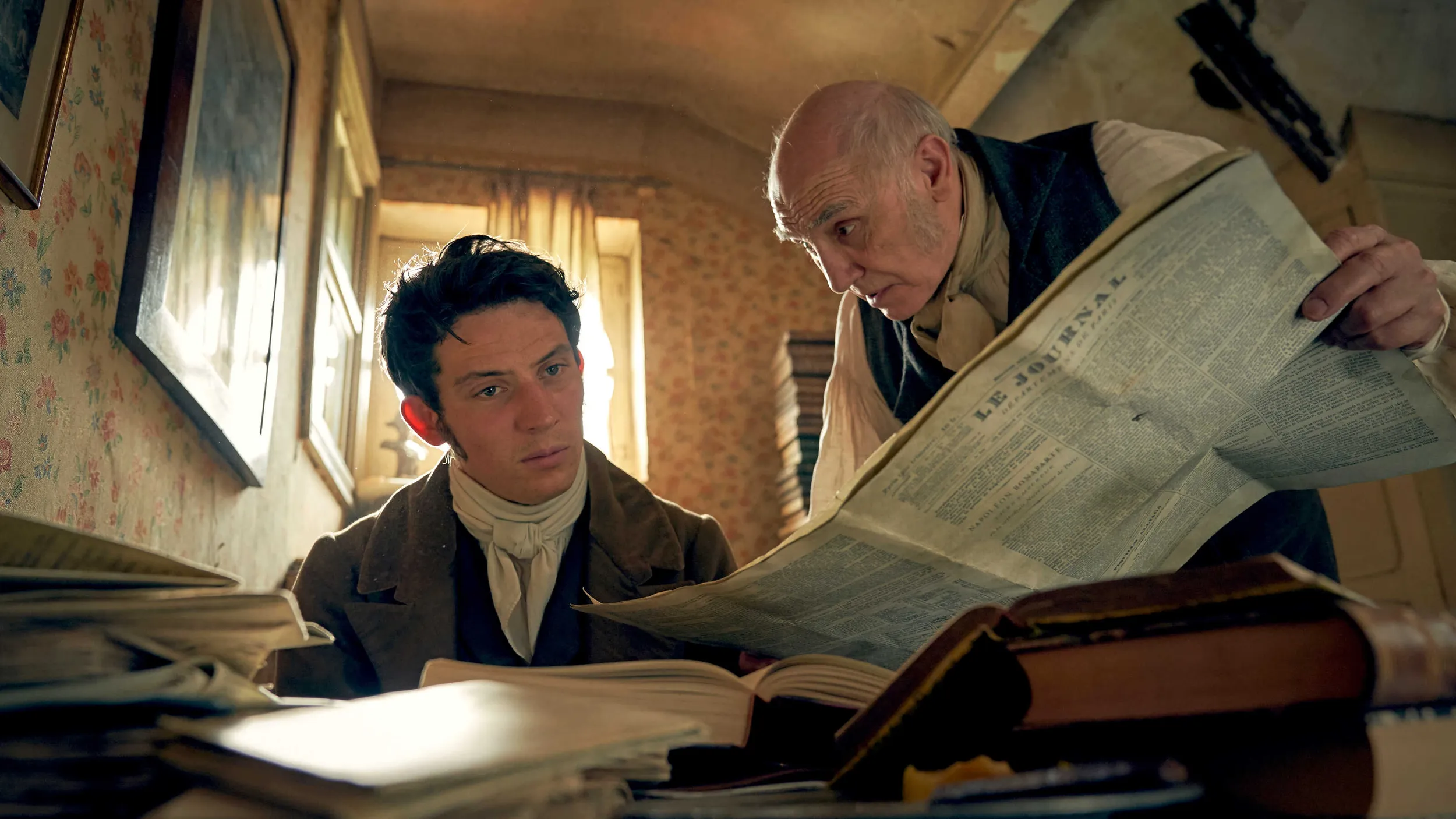
- The thing that initially struck me about Javert is that his pursuit of Jean Valjean is inexorable.
Why, what's this obsession?
I shall never be at peace until he is back in chains.
It's fine in a musical to sort of touch on it lightly, I think the audience would forgive that, but over six hours, people are gonna ask questions.
- It's the first question I asked, I said, "What's his problem with Valjean?"
- My parents were criminals.
Men like us have only two choices.
- Javert has decided that his options were to enforce the law or to be a criminal himself.
He's taken it with a kind of religious intensity.
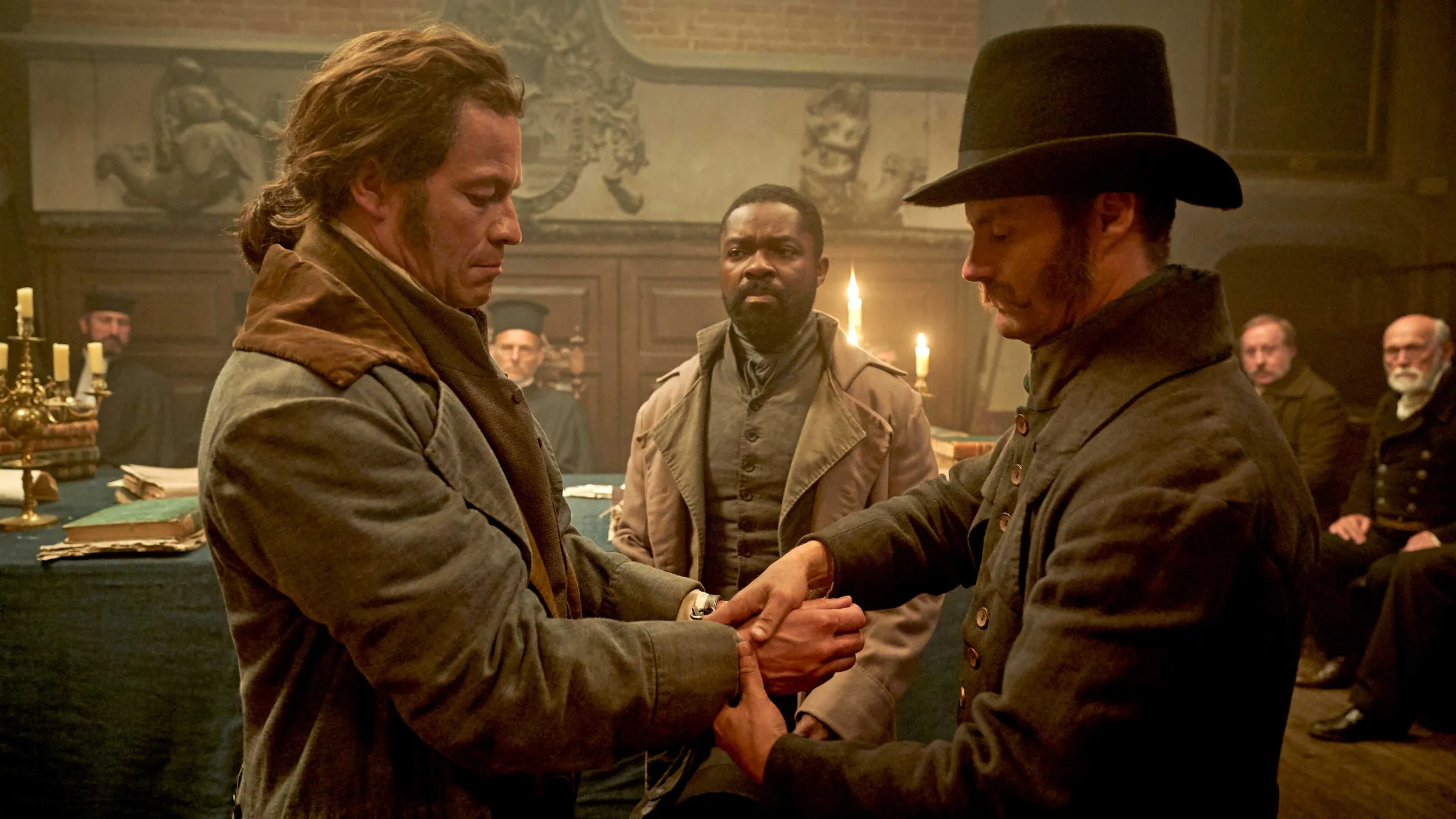
It's meeting Jean Valjean in prison, a man who is such a paradox, viscerally opposed to the authorities but yet, will perform a selfless act and refuse to explain himself at all.
This gets to Javert so deeply that his devotion to justice becomes an obsession with one man.
- [Man] It's a great honor, sir.
- I can take no pleasure in it, not while that man is free.
He had a real sense of loathing about criminality, which, in effect, meant his upbringing, maybe even himself.
And so it became clear to me that Jean Valjean in some way was a reflection of himself to himself.
And so in a sense, he was pursuing and hunting himself.
(banging) - At first, I thought David was rather unfriendly, but I didn't realize he was being in character.
(laughs) We had this one, you know, I kept asking him when he wanted to go out to dinner or something and he kept sort of keeping his distance.
And then at the end we went out and had a great time and he said, "No, I was deliberately avoiding you, "we can't get too close."
and he was right, in a way, 'cause it did create a sort of awareness between us.
He's an amazing actor but he's an amazing human being in terms of his discipline and I'm a big admirer.