What Makes a Sleuth a Sleuth?
short | 05:39 | CC
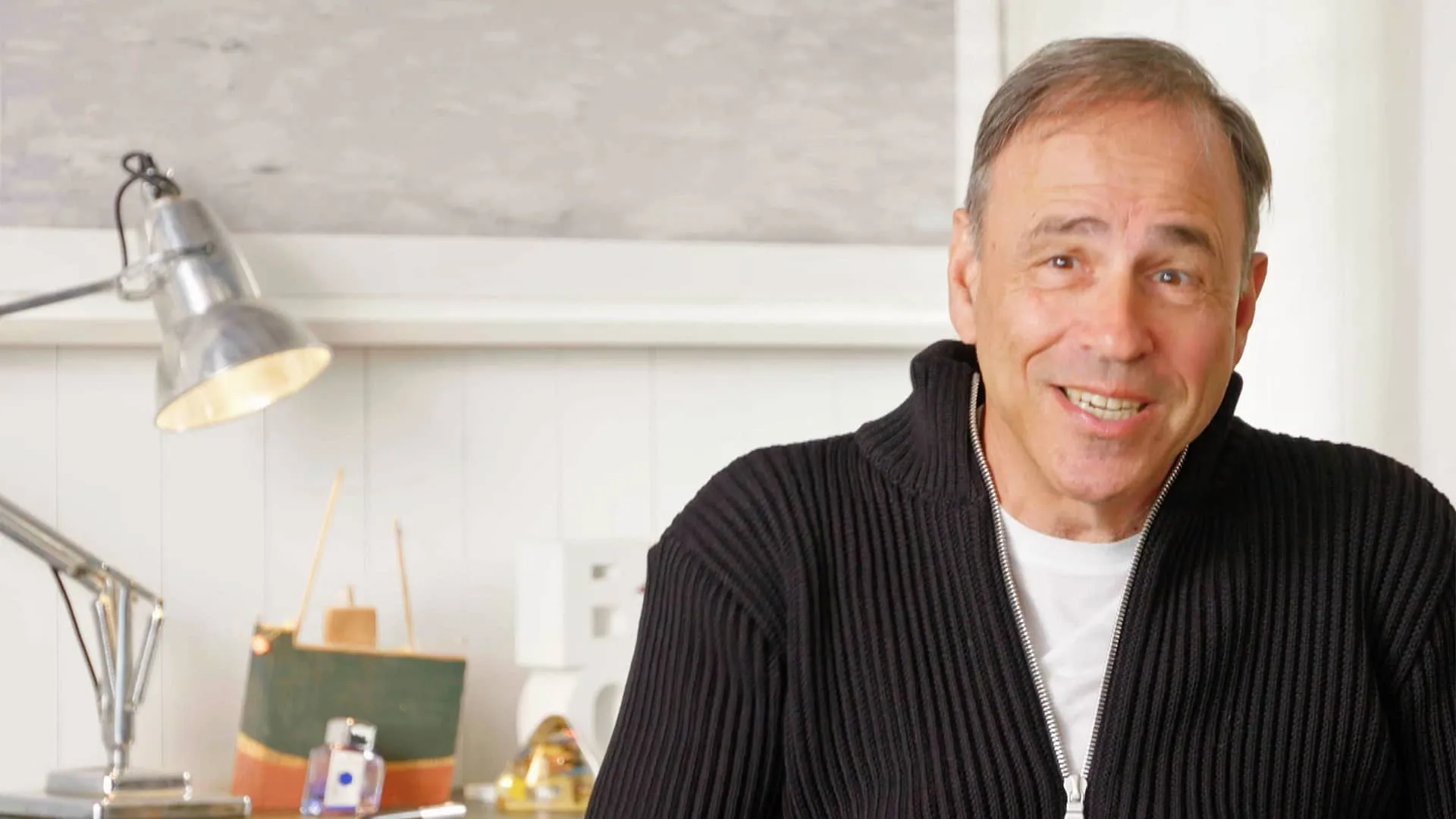
Writer and Executive Producer Anthony Horowitz breaks down what makes a great fictional sleuth and how to craft the perfect mystery.
(upbeat music) - Episode 2 notches everything up a gear.
Susan began simply with an interest in this missing chapter, but now she's being drawn into a world that is completely alien to her, the world of murder.
And that I think is the argument of the whole show.
The difference between ordinary life and detective fiction.
- This is the real world, and I don't need some fancy editor from London, poncing around, pretending to be some sort of private detective.
- In the first episode, she met Detective Inspector Locke, whose view of criminality is that it is brutish and nasty, and very easy to solve, but everything is fairly straightforward.
Modern policing, after all solves most murders in the first 24 hours.
But Susan is now being drawn into a world of clues, and has to try and make sense of them.
- If someone really did push him off that tower, well, there'd have been plenty of volunteers.
- She doesn't realize that she's actually amassing clues for a murder, until quite a long way down the line.
So her interviews with James, with Khan, with everybody who knew Alan Conway, of building up the picture of a man surrounded by enemies, any one of whom could've wished to kill him, even though at this stage that is not her primary interest.
And I think that transition, the movement in that character, is what makes this episode so much fun.
- On the face of it, three crimes may have taken place at Pye Hall, one after the other.
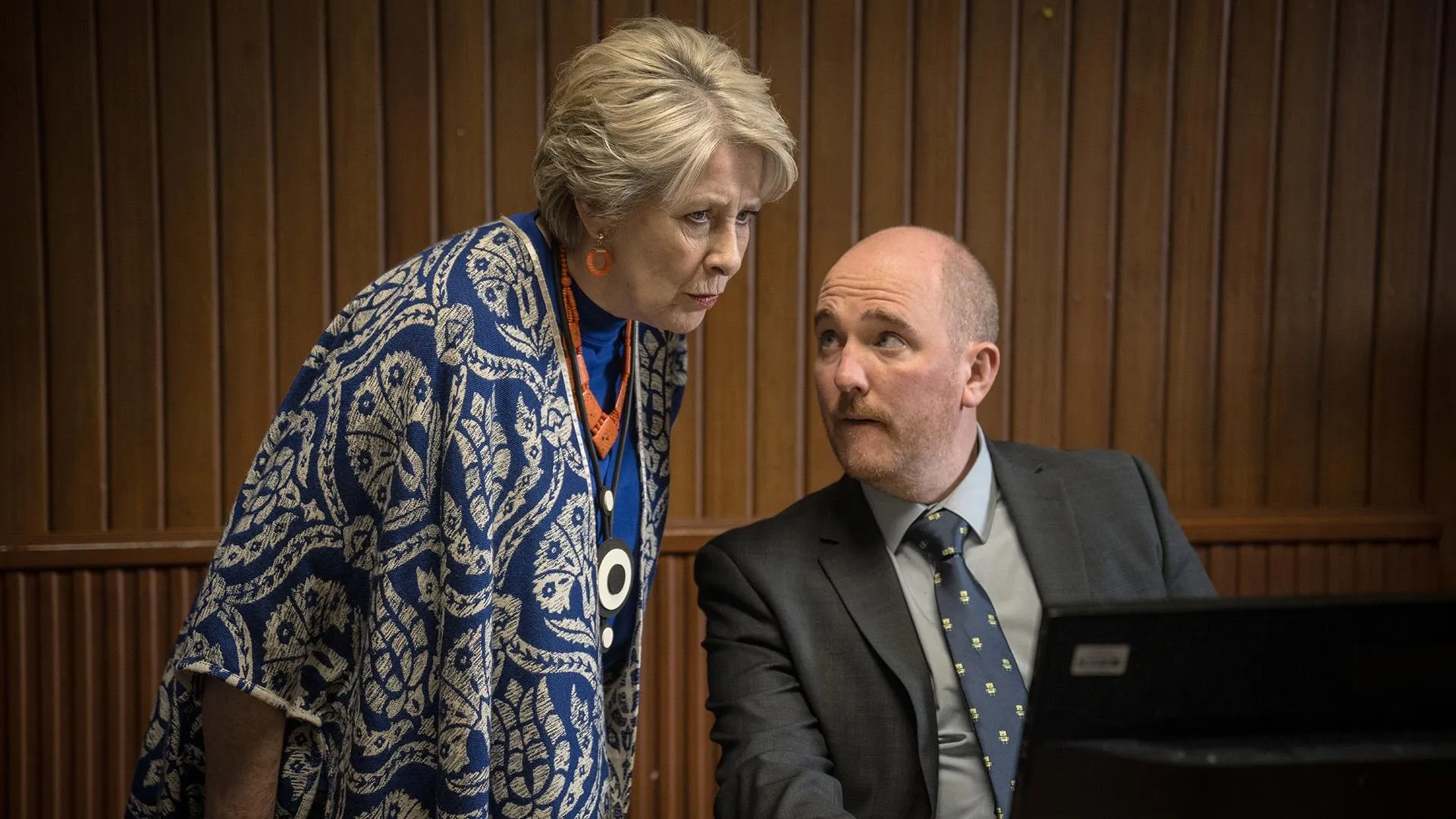
- Pund and Susan are complete opposites.
What makes Susan a good detective is her ability to empathize with people.
She somehow gets close to people, and people trust her with their secrets.
- What do you mean?
Don't suppose you could help me?
- Well, he had decided to make a new will.
- Because she's friendly with people, she is open to their secrets, she can get under their skins.
- This is murder, and murder can be solved.
- Pund, on the other hand, is completely alien from the people that he talks to.
He comes in as an outsider.
He asks questions, and his questions are very focused, on the what, the where, the when, and the why of the crime.
- It's my belief there is no such thing as a coincidence.
- Every single detail he somehow keeps in his head, and he has the ability to put these pieces together, like a jigsaw, to come up with the final solution, at the end of the show.
You might say that Susan is intuitive, and Pund is entirely psychological.
- You should read it again.
- "Magpie Murders" is, at the end of the day, a literary mystery.
It's in the writing that the solution will be found.
And it's already been mentioned that Alan Conway has a liking of anagrams, and acrostics, and lipograms, and tricks of language.
And in fact, the language of the book is very much part of its solution.
And Susan is the perfect detective for a literary mystery, because she's an editor.
It was for me, a very happy marriage.
I couldn't think of anybody else who would be able to solve it.
- Somebody killed him.
The answer's in the book.
- I was really thrilled, and excited when I heard that Lesley Manville was going to play Susan Ryeland.
Not only because she is very, very well known, and a distinguished actress, really at the top of her game, but cause of all the qualities that she brings to the part, a playfulness, and an energy, a humanity.
And I really cannot think of anybody else who could have done it quite so well.
- There might be more to her death than meets the eye.
- As for Tim McMullan, I'd worked with him before.
He came into the last season of "Foyle's War", when he played a spy called Valentine.
And he, I think he is one of the warmest actors that I know.
He always brings his extraordinary sense of humanity, and generosity to the characters that he plays.
Now, and what's important for this character is that he has to inhabit two worlds.
I mean, he exists in the 1950's, very much as the classic golden age detective.
But then he crosses over almost into a new dimension, and appears more and more in the world of Susan Ryeland, and our world.
And when he's doing that, he isn't exactly a ghost, he isn't quite a figment of her imagination.
He is, he's real, but at the same time, he has to be somehow unworldly.
And that's exactly what Tim brings to the part.
- This is where Mary Blakiston- - Yes, fell down, and broke her neck unless she was pushed.
- You know, one character, that one has to look at in this is James Fraser, who is Pund's sidekick.
And the sidekick in detective fiction is enormously important, and extremely useful to a writer like me.
- There you are!
- It was Sherlock Holmes and Conan Doyle who first created the idea of a sidekick in Dr.
Watson, of course, who is, you know the great grandfather of all detective sidekicks, and the wonderfully unreliable narrator of the Sherlock Holmes' stories.
Why unreliable?
Because the sidekick always gets everything wrong.
- Why is that?
What exactly is you're looking at?
- Saxby-on-Avon is the village the young lady came from.
Joy Sanderling.
You introduced her to me recently.
- Of course.
- A lot of detective fiction is about sleight of hand, and in sleight of hand you're saying, look here at my hand, there's nothing here.
When actually at the same time, you're slipping the ace out with your other hand out of your pocket.
The sidekick says, what is that over there?
He asks a question, but he only asks it, because I don't want you to look the other way, at that particular moment.
And that to me is the most useful aspect of the character.
(upbeat music)
RELATED CONTENT

MASTERPIECE Newsletter
Sign up to get the latest news on your favorite dramas and mysteries, as well as exclusive content, video, sweepstakes and more.