Writing Magpie Murders
short | 04:59 | CC
Author and series Writer and Executive Producer Anthony Horowitz describes the difference between writing Magpie Murders as a book vs. a television series.
(dramatic music) - [Anthony] I've been writing murder mystery for a very long time.
People say, actually, I've probably committed more murders in fiction than anybody will ever meet.
I began with Agatha Christie in Poirot.
Then from there I moved on to Midsummer Murders a series which has run for many, many years.
Then I gave up 16 years of my life for Foils War, a serious sector in the Second World War.
And all the time I was asking myself, "What can I do with Murder Mystery that is different that hasn't been done before?"
That's what you get with Magpie Murders.
(cap clacks) (pen scribbles) It's not one story, it's two.
It is a murder mystery inside a murder mystery one of which is set in the Golden Age detective fiction in the 1950s and the other set in the modern world.
And I think the fun of the show, as you will see as it continues, is the way these two worlds collide and interacted entwined with each other, is that not only do you get the who done it, you see something of the structuring of it as it were, the scaffolding, the engineering of it.
- I'm gonna go to Suffolk and look for the missing pages.
- [Anthony] In the book, there are two very distinct worlds.
It starts with I think something like 300 pages set in the 1950s and all the world of a Golden Age classic crime story.
Then in a second half of the book, Susan Ryeland appears as the editor of the book.
She reads the manuscript and she begins to work out for herself who the killer might be.
Now, that didn't work in the adaptation.
You couldn't have half the story set in the 50s and then half the story set now because you'd get confused and because it would mean we wouldn't meet Leslie Manville, who plays Susan, until the second half.
So in adapting it, what I had to do was to merge them together.
Normally in a detective show, you rely on what is called the reliable narrator, who is the detective and his/her sidekick who take you through the action.
But in this case, you've got two parallel parts of action and two narrators.
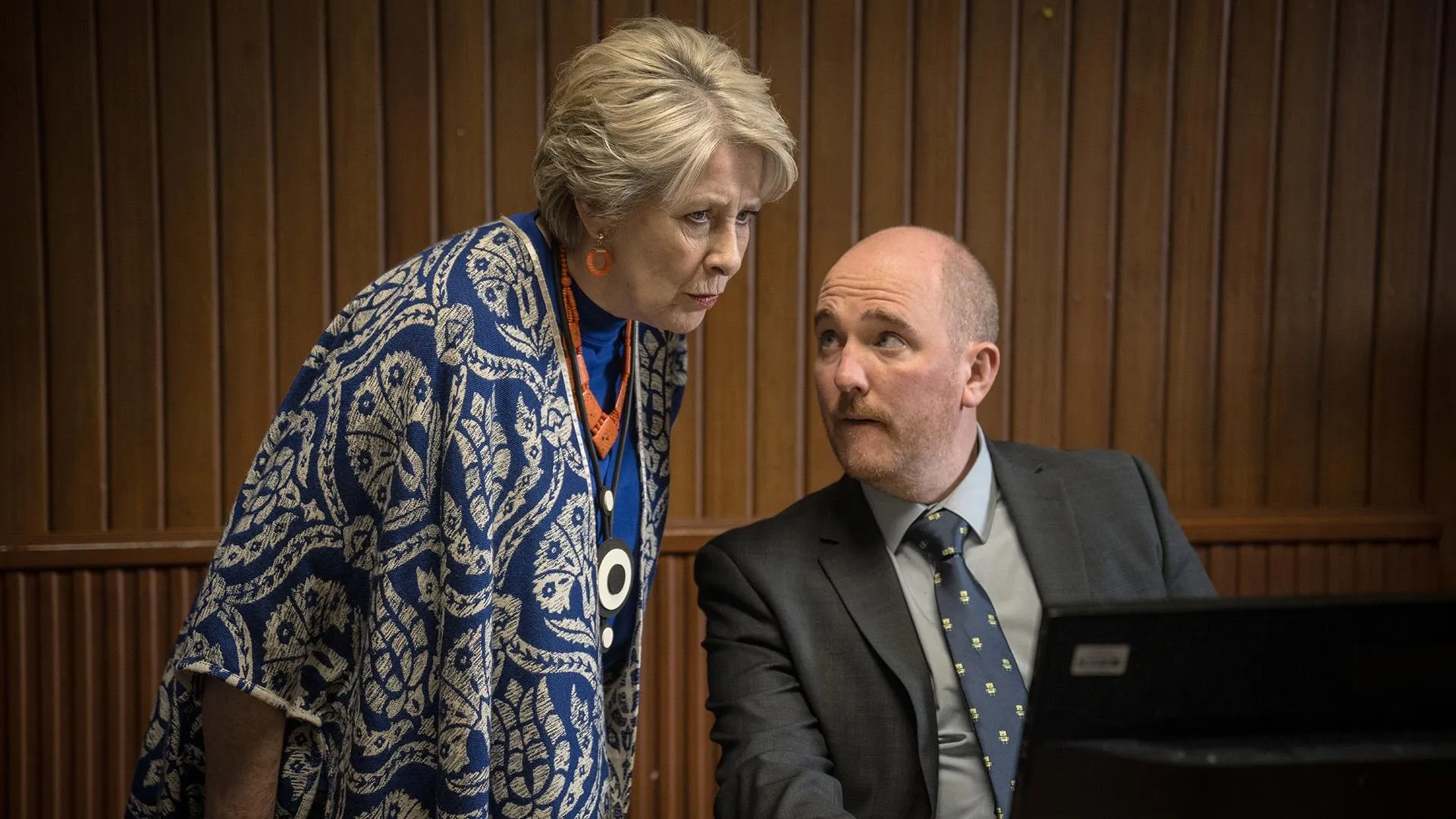
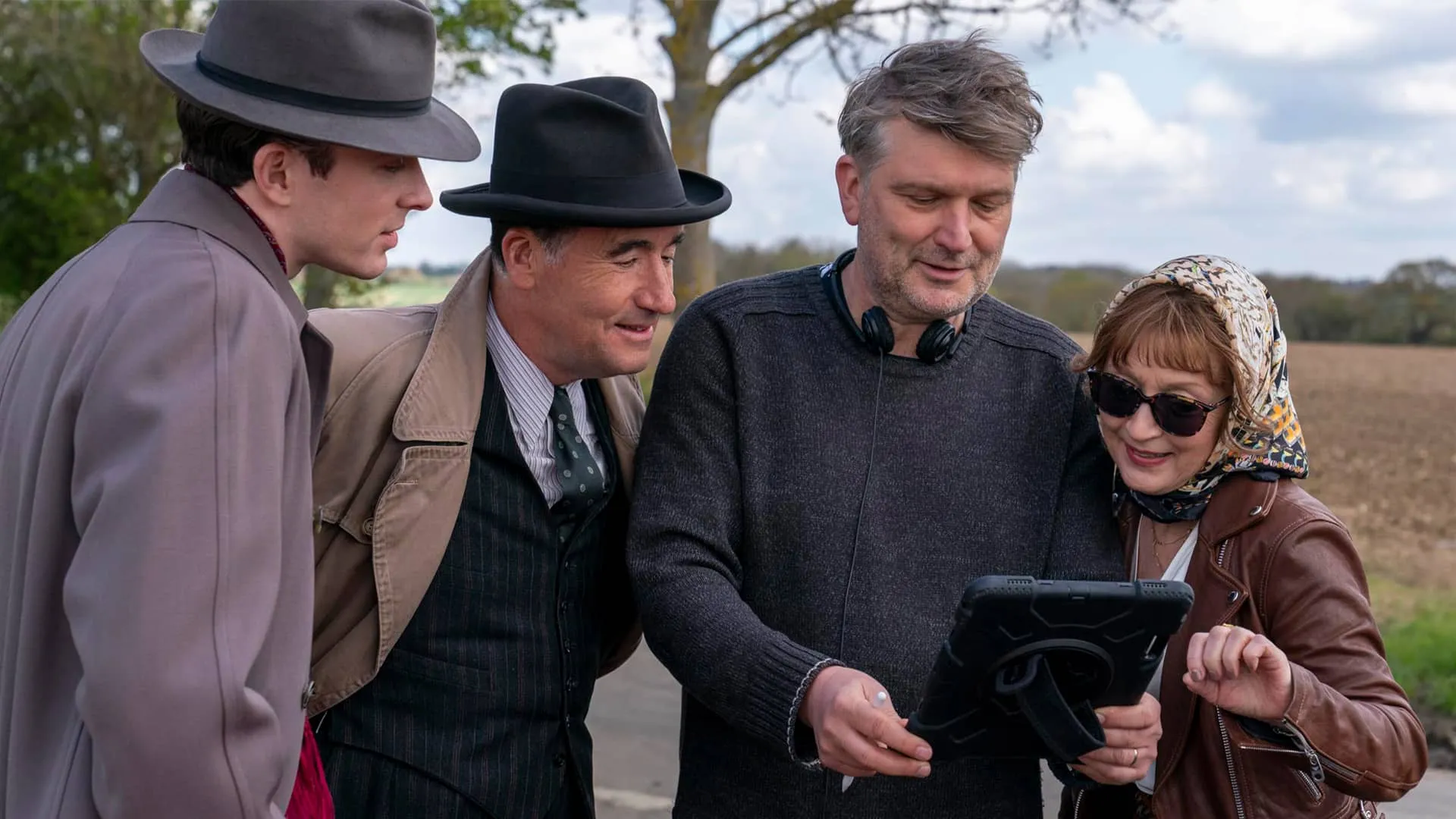
You've got Susan Ryeland in the modern world, and Atticus Pund, with Fraser, his assistant in the 1950s world.
It was a question of how do you keep both narrative lines separate from each other and understandable?
And that took a lot of thinking and a lot of time.
And I hope at the end of episode one, you are with me and on this journey, because we have five more to go before we get to the end.
- Don't tell me, you know, who did it.
- [Anthony] Creating Punt was a challenge because there are so many wonderful detectives who have created this sort of template, Sherlock Holmes, Lord Peter Whimsy, many, many others.
And I had to try and find a way to make him stand on his own two feet.
And I think giving him that Second World War background and his intimate knowledge of evil, which sort of guides him, makes him both real and I hope sympathetic too.
- I wonder if we might have a word?
- [Anthony] In Golden Age fiction, the detective is always some sort of outsider.
And the important thing is that when he goes into a community like Saxby-on-Avon, he knows nobody.
This is a village where everybody is connected to everyone else.
That's how murder ministries work.
Everybody thinks they know everybody else's secrets.
The role of a detective is to come into that community to peel back the curtains, to discover the secrets and somehow to get to the solution of the crime.
- A who dunnit without the solution.
It's not even worth the paper, it won't be printed on.
- [Anthony] I did love writing the character of Susan Ryeland.
What I think I like best about her, she's not a detective.
I mean, you know, she's not worried about where fingerprints came from or who was where at what time of the night.
She's actually got a real life of her own.
In fact, she's come to a major crossroads.
Is she going to take on the job of being CEO of a company?
Or is she going to go off to Crete with her boyfriend who has suddenly announced that he wants to take over a hotel?
And on top of all that she's trying to solve a murder mystery.
And I think it's just a fascinating mix which Lesley Manville does so brilliantly.
- You knew all along, didn't you?
- The investigation of a crime, it is often the connections we cannot see that lead us to the truth.
- [Anthony] I love the whole art of creating a murder mystery.
I love laying the foundations, the clues, the red herrings, the suspects, the twists, the turns, the surprises at the end.
(woman gasps) (knife chimes) It is my favorite genre, simply because if two people meet and one murders the other you're not dealing with superficial or light emotions.
You're dealing with passion, with anger, with fear, with jealousy, with rage.
Everything is amplified in the world of murder mystery.
You get straight into the character of people because actually murder mystery is not about murder, it is about the reasons, the motivation for doing the murder.
And to me that is a very fast way to get interested in different people.
(dramatic music)
RELATED CONTENT
MASTERPIECE Newsletter
Sign up to get the latest news on your favorite dramas and mysteries, as well as exclusive content, video, sweepstakes and more.