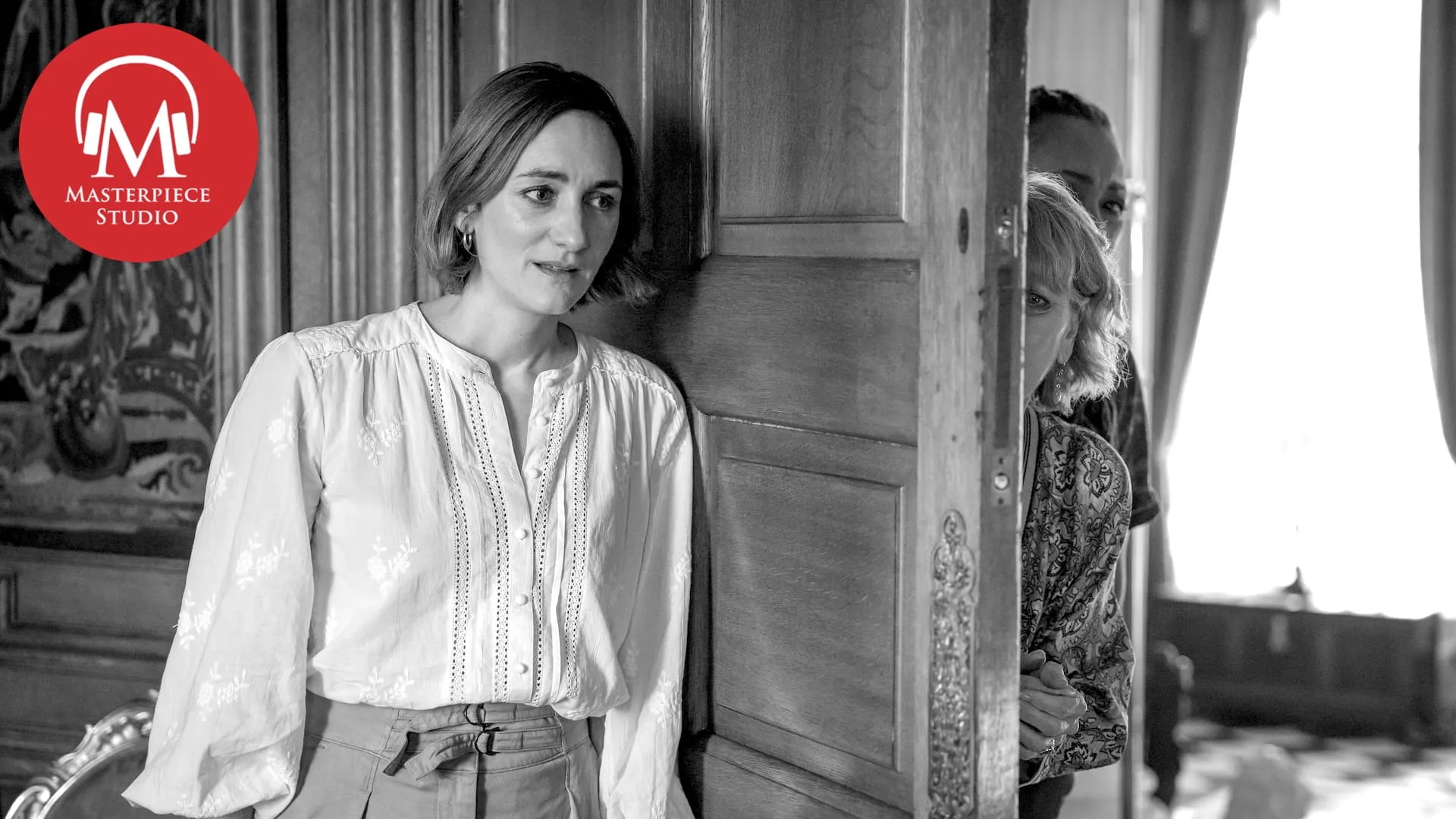
Cara Horgan, The Marlow Murder Club | MASTERPIECE Studio
33:29
WARNING: This episode contains spoilers for Episode Four of The Marlow Murder Club.
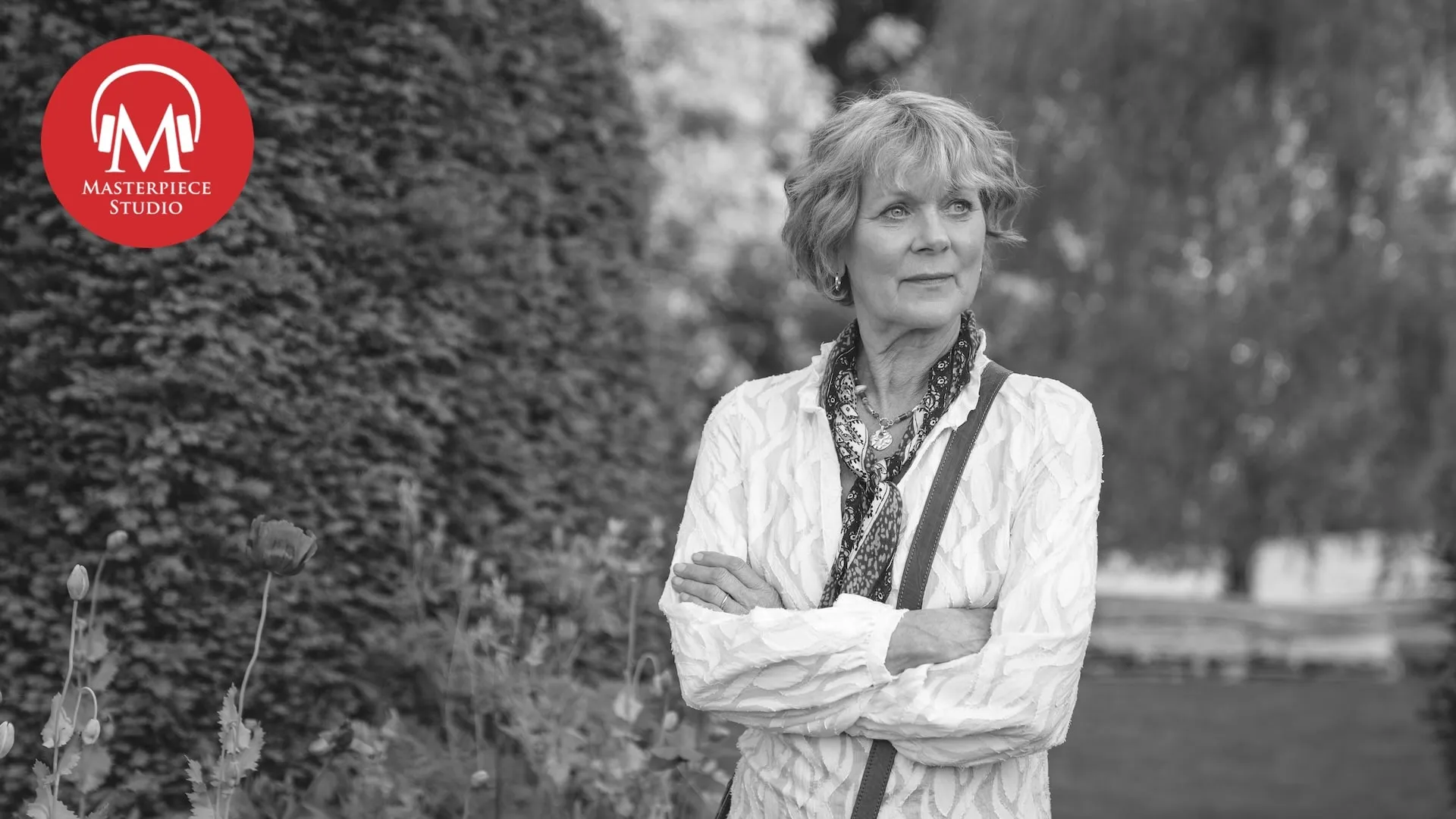
Actor Cara Horgan has been playing the well-respected and sweet-natured Becks Starling for the past three seasons of The Marlow Murder Club. In this episode, Cara shares how she leans into Becks’ rebellious side, and what it was like to be a suspect in a murder investigation this season.
This script has been lightly edited for clarity.
Jace Lacob: I’m Jace Lacob and you’re listening to MASTERPIECE Studio.
Darkness envelops a country manor just outside Marlow, as a group of friends gather to play a game of "murder in the dark." A relentless storm adds to the sense of claustrophobia, trapping this friend group inside the building with the game’s murderer. But fear not, as this is just a game… until it isn’t.
CLIP
Oskar: Let’s do the library first. Perfect place for a murder. Maybe it was Colonel Mustard.
Ryan: With the Boer War bayonet.
Oskar: He’s not in here either.
Jessica: No, he’s here. Freddie?!
Ryan: Una, no.
Una: Oh my God!
Becks and her old university friend group rented a house in the countryside for a reunion. However, during the final round of murder in the dark, someone used the opportunity to stab their friend Freddie in the back, killing him on the spot. DI Tanika Malik and her team are first on the scene, followed by Judith and Suzie. But this time, as the interrogations begin, Becks is on the other side of a murder investigation.
CLIP
Judith: Do you have any idea who could have done this to Freddie?
Becks: It all happened really quickly. We were playing a game of murder in the dark and I was the killer in the game, and I found Freddie in the library. He shouted 20 seconds later like he was supposed to and I thought it was part of the game. But it must have been real because when we went to find him—
Stripped of her civilian consultant lanyard and scolded by Tanika for withholding information from the police, Becks struggles to keep her head above water, and beyond suspicion. Regardless, she carries on sleuthing, doing her best to gather clues without drawing too much attention to herself.
CLIP
Becks: I had a small question.
Hector: Yep?
Becks: Your beautiful library. I was walking around there earlier, and thought, ‘you know what I fancy? Reading something a bit gothic.’ I don’t suppose you have a copy of Dracula, do you?
Hector: You think my house is like Dracula’s castle?
Becks: Not at all! I just love that story and thought I’d pass the time. Better than burying my head in my phone.
Hector: People are too reliant on technology these days. I don’t trust it. It’s in the library. Far left shelf, high up. There’s an entire gothic section.
Becks: Thank you.
Today, we’re joined by The Marlow Murder Club star Cara Horgan who shares what it’s like to be on both sides of a murder investigation.
Jace Lacob: So, this week we are joined by The Marlow Murder Club actor Cara Horgan. Welcome.
Cara Horgan: Oh, thanks for having me. I'm excited to be here.
Jace Lacob: This is your third go-round as Becks Starling in The Marlow Murder Club. Judith Potts first meets Becks when she's caught hiding in a church cupboard, headphones on, watching a show on an iPad, and drinking a cup of tea. What did you make of Becks initially as a character, particularly with this as her introduction to Judith?
Cara Horgan: I really warmed to her immediately because she's such a contradiction from the beginning, really. She is the wife of the vicar of the local town, who is obviously a very respected and upstanding member of the community. And she also has this side to her, which is kind of cheeky and rebellious and defiant. And even though she is a wife and a mother and a person in society and community who's thought well of and respected, she's also not always what she seems. And I loved that we met her initially hiding in a cupboard watching a reality TV show. I thought it was a perfect start to somebody who is multifaceted.
Jace Lacob: I want to dive into that a little more, you mentioned her family life. Of the three core amateur sleuths at the heart of Marlow Murder Club, Becks is the one that's most tethered to a family unit. Judith is single and retired, Suzie's divorced and contending with an empty nest, and Becks, however, is still very much entangled within this nuclear family setup. How does Becks balance her role as vicar's wife and mum with her own needs and wants, and is that part of what attracts her to crime-solving in the first place?
Cara Horgan: I think you're absolutely right. I think it does. She is a very dedicated and hard-working mother and wife. She really supports her husband's work within the community and within the church, and she's really there for her kids. But I think if anything, that very much makes the life of sleuthing, and the kind of undercover work that she does with the Marlow Murder Club, and also the intrigue and drama and mystery around the work that they do, much more appealing because, frankly, I think she's bored. I think there's part of her that's kind of fed up with always being like the "good girl" and the predictable, safe, sweet-natured wife. I think meeting Judith and Suzie, and the fun they have amongst themselves, figuring out these crimes, and also the kind of naughty side of them—the side of them that breaks the rules and goes behind the police's back and breaks into things that they shouldn't and looks at things they shouldn't—really appeals to the side of her that just doesn't get fed with her home life.
Jace Lacob: While many of the episodes within Marlow Murder Club are based on Robert Thorogood's Marlow novels, the more recent series have seen a balance between episodes based on pre-existing novels and original stories. When you were first cast as Becks, did you turn to Robert's novels or do you view the television series as being its own beast?
Cara Horgan: Really, I look at the scripts as being their own thing because we're quite different in some ways. The way that they've cast us as actors to play these three roles is quite different to how they're described physically in the books and things. So, I mean, initially it was useful to read the first one just to get a sense of the world that Robert has created. But since then, the scripts themselves really are the key into each of the narratives and the characters themselves. So they've been useful up to a point, but now I feel like we're all learning and growing about these characters together, and so the scripts have been the key into that.
Jace Lacob: I will say when I interviewed Samantha Bond for Season One, I read her the description of Judith Potts from the novel as Robert had written, and that made her hoot because she is nothing like that physical description of Judith. And you guys have definitely developed into your own characters that are distinct from the characters in the books, and that's been part of the fun of watching this, too, is to see these two things kind of diverge.
Cara Horgan: Yes. Yes, I agree. I think that has been part of the fun of it, really. And it's such a joy to do a show that goes over multiple seasons because you get to know the writers and the writers get to know you, and they can kind of bear your strengths in mind and the things they've seen of yours in previous seasons to create new stuff. So it's a lovely symbiotic relationship.
Jace Lacob: I think the other thing that I love is how it balances murder with cozy charm and humor. And I think one of my favorite examples of this is from Series Two, when you, Samantha Bond, and Jo Martin try to tail a suspect through the streets of Marlow on a mobility scooter. What do you remember of this low-speed chase sequence?
Cara Horgan: Other than having a very sore bottom afterwards? It was really fun to do. Obviously, there's a lot of tricks in the editing of the way that it's shot in terms of sort of the actual drive that we were doing. We were on the back of a low-loader, which is where you're not actually driving, you're sort of being dragged on a—I don't want to spoil the mysteries of television, but you're being dragged on the back of the bottom of a vehicle, which means that you can concentrate on your lines and on the acting and not have to worry about the road itself.
But I just remember it being really fun. We had extras dotted around who we could play against on the streets. But as we were doing take after take, real people were on the streets, too. And so we were waving and playing to them as though we were characters, and sometimes it was funny to see the way that real people were responding to us, too, because we must have looked completely crazy. But it was such a fun thing to shoot. Myself and Samantha and Jo know each other so well now that being squeezed together on a mobility scooter wasn't too excruciating.
Jace Lacob: That's nothing now. That's nothing.
Cara Horgan: No, exactly. Yeah.
Jace Lacob: So I want to rewind for a second. Back when I watched the screener for the first episode of Marlow Murder Club, it was the same day that I watched a screener for a certain Series Nine episode of Grantchester, where you played murderess-maid Leah opposite your Marlow series one co-star Rishi Nair, who had just stepped into the role of the new vicar. What do you remember of your experience filming that episode of Grantchester?
Cara Horgan: Oh, it was so fun. I'd worked with a couple of actors on that show before: Rishi, as you say, and another actor, Richard Goulding and I had done a Netflix show in 2019. And the nicest thing about this job is when you come into contact with the same people again. And it's a similar kind of cozy crime trope, so I knew the world of Grantchester quite well. And it's always fun playing the murderer, to be honest. So I really enjoyed that show, yeah. It was great fun.
Jace Lacob: I was going to ask, is there a different appeal to playing the murder suspect, to say, the investigator? In this season of Marlow, for example, you get the opportunity to do both at the same time, in fact.
Cara Horgan: Yes, that's very true. It was really interesting to play a suspect in that season because Judith and Suzie had always been her trusted companions, and they've all shared everything and kept no secrets from each other in regards to the murders. But Judith and Suzie have to treat Becks as a suspect in this season. So they can't fill her in in the way that they should, and Becks similarly has to hand over her civilian advisor badge back to Tanika and accept that she was one of the witnesses. She was one of the potential suspects, she's not going to be treated the same way. So it was a really different situation and challenge for Becks in this season. But as you'll see, she finds a way around it and finds her way of communicating with the women behind the police's back in order to help with the investigation in her own way.
Jace Lacob: We'll talk about that more in a second. You have extensive experience on stage. You're used to playing the same character show after show, whether that's Hedda Gabler, Far Away, or The School for Scandal. What has it been like with The Marlow Murder Club having the opportunity to play a returning character in an ongoing series, one who has a chance to grow and change over multiple series?
Cara Horgan: It's been really wonderful and really fun. I think part of what makes working on screen together a success is giving the impression that you know each other better than you do. So often you don't have any rehearsal in TV and film. You're just straight in there having to play opposite people that you barely know and create a kind of intimacy that translates onto the screen. And what's wonderful about playing a returning character like this is that those bonds are already there. So the shorthand of friendship between myself, Jo who plays Suzie, Sam who plays Judith, and Nat, who plays Tanika, is that that friendship's now been building over four years. So hopefully that kind of translates on the screen: the trust, the humor, and the bond that we've genuinely got now. So it makes a lot of that work easier and more fun.
Jace Lacob: So looking now at that, talking about that intimacy, Becks has a lot going on. She's juggling family life, community life, expectations of being a vicar's wife, all while investigating local murders. She's not alone. What do Judith and Suzie mean to her, and how does their friendship unexpectedly buoy her or lift her up?
Cara Horgan: Well, they're really close at this stage now. And what's wonderful about shooting in a town like Marlow is that it's not a large town. And I myself actually am from quite a small town originally. What's lovely about that is often you would form friendships with people that you might not otherwise form friendships with.
And in the case of Judith and Suzie and Becks, they've got this kind of unusual, cross-generational friendship. They're people who may not otherwise have found each other, but they're in this small town of Marlow with this common aim, and that's what's bonded them. And they are all really supportive of each other. Like you pointed out at the beginning, they're very different. Becks is a mum and a wife, Judith is retired and an archaeologist, and Suzie is a single mum and alone and busy doing her thing. So they're all very different, but the bonds of their friendship have really bolstered each other, and their differences actually are the things that make them strong as friends. So hopefully people enjoy seeing that cross-generational friendship because I think it's refreshing and it's different. We so often see things about groups of friends who are in the same age bracket and do the same type of job or in the same office or whatever. And these three women are from different walks of life.
Jace Lacob: I think that's one of the appeals of the show, is that they ordinarily maybe would just nod at each other passing in the street, but they are brought together by this shared passion for and knack for solving crime, which I think is pretty unusual.
Cara Horgan: I think so, too.
Jace Lacob: Becks has an eye and a memory for detail. She knows everyone in the village, and she has a knack for getting people to open up. How much overlap do you feel Becks has with you in real life?
Cara Horgan: I think the overlaps would be—well, we're both mothers, and we're both quite social people. So I think the side of Becks that really likes communicating with people, and she's quite bubbly and friendly—I'd like to think that I'm quite social in that way. But she's, like you pointed out, rightly, she's got an eye for detail that I definitely don't have. I'm much more forgetful. And she's also bolder than I am in terms of she's a rule-breaker. If solving the crime requires her to break in somewhere or look at things she's not supposed to look at or really break the rules, she's not afraid to do it for the greater good. And that's a side of her that I really admire, actually. I think it's a really nice quality.
Jace Lacob: Becks gets the chance to stay home alone when her family takes a trip.
CLIP
Becks: I’m furious with myself. I sat down to watch telly last night, and I was all set, nice glass of wine, bar of chocolate.
Suzie: Love it.
Becks: And then I noticed the games cupboard looked a bit messy.
Suzie: No, tell me you didn’t.
Becks: I just thought it’d be a quick tidy.
Judith: She did.
Becks: You know how it goes. Once that cupboard was tidy, all the other cupboards looked terrible. Before I knew it, I had the marigolds on, and I was giving the sitting room a once-over. What an idiot!
Suzie: You could have at least come round here, made yourself useful and cleared out Judith’s stash of old newspapers.
Jace Lacob: What does the domestic represent for Becks?
Cara Horgan: Well, I think she is a house-proud person, and I think she's one of those people who needs order in her external life in order to feel relaxed and orderly inside herself. So I think it represents safety and calm for her, having a place that's well looked after. But I also think she's hyper-capable and probably more capable than being a wife and mother allows her to be. She's not satisfied in that domestic role on its own, which is part of what attracted her to being a crime-solver in the Marlow Murder Club. But that external life for her, that exterior of everything looking good and feeling like it's in order is really important to her. I think it allows her to have the chaos in the crime-solving.
Jace Lacob: And I do think it plays up her need to take risks in her life or push the boundaries of her quiet, suburban existence. What do you make of Becks and Colin's marriage?
Cara Horgan: I think it's really solid. They've definitely had some big changes in their life because he never used to be a vicar. He wasn't a vicar when they got together. The backstory of Becks and Colin is that they both worked in the music industry and they lived in the city and they had a relationship that was much less sort of in the countryside and much busier and more lively. And then he got his calling to the priesthood, and Becks loves her husband and she followed him there.
And I think for her, it's been a massive shift. She's busied herself up to the point where we meet her in The Marlow Murder Club by supporting him and trying to help with the community in any way she can as the vicar's wife, but that isn't enough for her. So actually finding the sleuthing life with Judith and Suzie has been part of what's made a success of her marriage because it's satiated her boredom, I think. And also her kids are getting older now, so they need her a lot less than they did. So it frees up her time.
MIDROLL
Jace Lacob: And we’re back with The Marlow Murder Club star, Cara Horgan. Series three gives us a two-parter, my favorite of the series, Murder in the Dark, that focuses on Becks and her past. If series one was focused on Judith and series two on Suzie, series three gives Becks a chance to shine and peels away some of her layers to reveal who she is apart from her family. What was your reaction to reading the scripts for Murder in the Dark?
Cara Horgan: I really loved it. It was nice to see a snapshot of Becks' university life, her friends before meeting Colin. And they cast the most wonderful group of actors for those friends, so it was actually very easy to form the bond with everyone. We were six actors of a similar age because we were playing that crowd who'd grown up together. And it was really lovely to see what happens to Becks when she's forced to look through that sleuthing lens at people that she otherwise trusts and knows really well.
What was so fun about that script is it's in a way, a locked-door mystery, which is what they call it when you're in one location. So because the murder happens in a manor house and there's only the people there that were there, it keeps the options of who the potential murderer is very small and limited. That locked-door mystery is really intriguing to work out, I think. And for Becks, she thinks she knew these people, you know? They're her old, old friends. So I really enjoyed reading it. I thought it was so well written. Amy Reith wrote that, one of our writers, and she really balanced the love of her friends with the suspicion of their potential behaviors really well, I thought.
Jace Lacob: The manor house weekend is a reunion, but it's also an opportunity to rehash some painful history among this friend group. And that history turns deadly when a game of Murder in the Dark turns all too real and Freddie is found dead. For someone who solves crimes for a hobby, does this murder occur a little too close to home for Becks?
Cara Horgan: Yeah, I think it does. I think it's really challenging for her. First of all, she actually sees her friend's body in that state straight after it's happened. But like anybody who is in a scenario where something happens and there's only a number of potential people that could have done it, it makes you look at the people that you thought you knew with suspicion. So that for her, I think, is the thing that makes it so tricky and painful, is being able to see that a potential that one of her friends could have done this. It beggars belief for her, really. So, no, it was a really wonderful opportunity to see a different side to her and to explore what happens when people are really pushed to the limits.
Jace Lacob: And what I love about this episode in particular is how the tone is a departure from Marlow. It's a Gothic manor house, there's a game of Murder in the Dark, and the entire installment feels really proper creepy and Gothic as a whole.
Cara Horgan: Oh, cool! I'm glad you enjoyed it.
Jace Lacob: Oh my god, there are secret passageways, there are uninvited guests, there's murder. What did you make of the tonal shift in Murder in the Dark?
Cara Horgan: I think it really needed it for this story to feel like a kind of Gothic horror. And we found a great location for it with actual secret passageways. So they weren't—it's amazing, really, thinking that these buildings existed and why they're there for that reason originally. Because we found this extraordinary location that had this secret hidden doorway that led up to another floor of the house. We didn't even have to kind of stage it, it was already there. And it really helped build the picture of the world that this needed to exist within. You're right, it had a very Gothic tone, that episode, and I think it served the story to have been set in one place that visually really aided that.
Jace Lacob: And kudos to that location manager, because that is incredible. I had no idea that that was not the magic of television, but an actual location.
Cara Horgan: So creepy! Lots of taxidermy animals and—you wouldn't want to be alone in any of the rooms in that house, to be perfectly honest. It felt like it did a lot of the work for us because it was so genuinely creepy.
Jace Lacob: Tanika is called in to investigate along with Judith and Suzie, who are worried for Becks. And Becks' position as a murder suspect this time puts her reputation and her standing as a civilian consultant with the police in jeopardy. Her police lanyard is confiscated, she's cut off from the group. How traumatic for Becks is that act of being completely, entirely cut off?
Cara Horgan: I think it is upsetting at first. But as I slightly hinted at earlier, she finds a way round it because I think she's got to the stage where she can't resist, really. If she knows she can help the investigation in any way for the greater good, if that means breaking the rules and going behind the police's back, she is willing to do it. So it's frustrating for her and restrictive, and she doesn't want to out-and-out ignore the instructions of Tanika, but she finds a way of communicating with the women, which doesn't technically mean that she's broken the rules, but it means she manages to get the information across. So it's just another obstacle for Becks that she manages to get her way round.
But I think the other thing I thought when I first read that episode and those scripts is that the suspects are not allowed to leave the location until Tanika says they can, so they've got to remain sleeping at the manor house after the murder has happened. And I was reading it thinking, can you imagine anything worse? If you know one of these six people has killed one of your friends, to have to go to bed at night under this roof with these people! So the whole thing was so stressful for her, I think.
Jace Lacob: I imagine Becks sliding a chair under her doorknob...
Cara Horgan: Yeah, exactly! Yeah. Or getting into bed with one of her other friends being like, "I'm sleeping in here with you."
Jace Lacob: Unless, of course, they're the killer.
Cara Horgan: Well, exactly! Who can you trust in that scenario?
Jace Lacob: You can't trust anyone. You can't trust anyone. Even Tanika catches Becks in several lies of omission, and she is very much on the other side of the investigation, and Tanika is not happy.
CLIP
Jessica: I know how it looks, but you don’t know Oskar like we do. I mean, there’s no way he could do something like this.
Tanika: Are you certain about that? Because earlier, it didn’t sound like you were particularly close anymore.
Jessica: I’m not, but I know him. I mean, we’ve all known him since he was 18.
Tanika: It’s not enough.
Ryan: Look, I’ve worked with Oskar for over a decade. He couldn’t have killed Freddie.
Becks: It wasn’t meant to be a lie. It was just… an omission.
Tanika: I really thought I’d be able to trust your word on this one. Anything else you’re holding back, I suggest you tell us sooner rather than later.
Jace Lacob: Becks later gets caught having not told Tanika that she and Freddie briefly dated. What goes through Becks's head seeing Tanika's sense of betrayal?
Cara Horgan: I think it's horrible because in that particular instance, I don't think Becks intended to lie to Tanika. Her brief relations with Freddie were so unremarkable and so long ago. It was university, they briefly dated. I don't think Becks deliberately didn't tell her, it just didn't occur to her that it was important. But of course she should know better than that because every detail is important, really. So it ends up making her look guilty and like she's hiding something when she isn't intending to. But I think it's good for Becks to see what the shoe is like on the other foot. If you're being interviewed by a police officer, or a civilian advisor for that matter, in the heat of the moment it's quite easy to forget details that actually were important. So Becks experiences it from that side, which makes it pretty stressful for everyone, I think.
Jace Lacob: Tanika believes Becks is holding back evidence, but Judith knows Becks is in a no-win position.
CLIP
Judith: No one thinks you’re lying. We trust you.
Becks: It doesn’t feel like that. Tanika thinks I’ve been deliberately holding back information, but it wasn’t like that. And the group think I’m talking to the police about them.
Judith: You’ve lost one friend, and it’s possible another friend killed him. You’re in an awful position. You don’t have to explain yourself.
Becks: But I do. Trying to prove you’re innocent is much harder than you’d think. The more you protest, the more you look guilty.
Jace Lacob: Has this experience changed how Becks might approach a suspect in a future investigation?
Cara Horgan: I definitely think it sort of gives her a different empathy because I don't think until you're cross-examined do you realize how stressful it is and how easy it is to say the wrong thing or to leave information out. So, yes, I think so. But I don't know, I sort of feel in this particular scenario, Becks is having to be interviewed and pressured and questioned by her friends. So it gives it an extra layer, you know? Having Tanika, who she is so fond of, has such a bond with, questioning her suspiciously really puts Becks on the back foot and throws a different light onto the whole scenario of cross-examining people. I think it probably does change the way that she deals with suspects in the future.
Jace Lacob: Cleared of all charges and Freddie's killer arrested, Tanika does give Becks back her police lanyard. What does that moment mean to her?
Cara Horgan: It means the world, I think. Having it taken away—she was so glad to have it in the first place in Season One that to have it taken away, stripped from her, felt horrible. But getting it back, I think, yeah, it just gives her a spring in her step that next time she's going to be on it and get to the next investigation. I think it also forces her to think what it would be like not to have the Marlow Murder Club and to go back to her life of just being a wife and a mum, and I don't think she liked that prospect. So it's really nice to have it back.
Jace Lacob: The final two episodes of Season Three bring us a murdered chef played by former Monarch of the Glen star Alastair Mackenzie. What can you tease about where we find Becks and the others in An Appetite for Murder?
Cara Horgan: That's a really great story, too, because it's centered around a very hot-headed celebrity chef. And for anyone that's worked in kitchens, especially for food that is Michelin-starred or at a certain level, there are often hot tempers at play. And so what's so great about this story is that there are more than one suspects that look like they might want to kill Ferdy Blake. So it becomes hard for the trio to work out who the murderer was because, frankly, it feels like everyone wants to murder him. He's a nasty piece of work.
Also the murder happens on a day when the women are there for the opening of the restaurant. So it means that they themselves were witnesses at the front of house. So it's piecing together clues from things that they saw, not only from interviewing suspects, but things they've experienced with their own eyes. So it's a really, really nice story, that, and a great murder for them to work out. And there's a lot of red herrings in it, so as you watch it, the end denouement, the final thing, it's never who you thought it would be. And reading that, I didn't guess correctly, so that's always a good sign.
Jace Lacob: I found an old acting CV of yours from years ago, and I'm always fascinated by actors' skills section on their CVs.
Cara Horgan: Oh god!
Jace Lacob: And yours lists RP, Sussex, Cockney, Yorkshire, American, good ear for all accents, mezzo-soprano, Pilates, gymnastics, yoga, contemporary dance, full clean driving license. Do all these skills still apply in 2026?
Cara Horgan: I'm not the best driver. I have got a full clean driving license, I've never had any serious crashes. But I mean, whoever passed me in my driving test, I wouldn't have passed me. I'm not a very good driver. And as for the contemporary dance, I think that might be a bit of a stretch. I've got rhythm and I can pick up moves, but I think to call me a dancer would not be—I wouldn't call me a dancer. But it's funny, when you fill out your CV in the UK, there's a thing called Spotlight, which is an actors' directory, and often it's like a multiple choice. So rather than thinking these things up, it's a tick-box exercise, and I was like, "Yeah, I've done that, yeah, yeah, yeah." And I think looking back now, I think, "Oh, that might have been a bit of an exaggeration." But I'm grateful that I didn't put things like horse riding or abseiling on it because I know people who have lied on their CV to that extent and been really caught out.
Jace Lacob: Stage combat.
Cara Horgan: So I think it's within the realms of the truth.
Jace Lacob: I would be remiss if I didn't ask about your experience playing the puppy-obsessed Aurora on the seminal British comedy Peep Show, one of my favorite shows of all time. Do people come up to you to talk about Aurora and Peep Show?
Cara Horgan: Yeah. People shout "Mummy!" across the street to me!
Jace Lacob: Do they shout "Mummy!"?
Cara Horgan: Her dog was called Mummy!
Jace Lacob: Mummy, yes!
Cara Horgan: Which now that I am a mummy—I've got a child—is really weird. Yeah, I think one of the most memorable things for me about that job, other than it just being really good fun with all the actors, is that I'm not really a dog person, to be honest. And I'm not afraid of dogs, but I don't really want them licking my face. And I had to hold a small dog and really let it lick my face and pretend I was enjoying it. And you know how some dog people just basically make out with their dogs? I just didn't want this dog really very near my face. It was a bit stinky. So I just remember having to hold in the wincing of like, "Get this dog off me!" But, no, we managed to make it look like I wasn't wincing too much, I think. It was such a fun show, just trying not to laugh while the others are doing their brilliant, brilliant acting.
Jace Lacob: Amazing. I mean, it definitely looked like you loved Mummy, I'll say that. Cara Horgan, thank you so very much.
Cara Horgan: Thanks, Jace. Really nice to chat to you.
Next time on MASTERPIECE Studio, after many clues, much head-scratching, and even more questioning, Pünd has cracked the case.
CLIP
Beatrice: Good morning, sir.
Pünd: They are all here?
Beatrice: Yes, sir.
Pünd: Then it is time to bring this matter to a close.
Join us on Sunday, October 11, as we sit down with writer Anthony Horowitz and actor Lesley Manville once again to wrap up all of the clues and storylines in the worlds of both Susan Ryeland and Atticus Pünd.
The Marlow Murder Club Podcasts
2 More Podcasts
MASTERPIECE Newsletter
Sign up to get the latest news on your favorite dramas and mysteries, as well as exclusive content, video, sweepstakes and more.