
Inside All Creatures Great and Small's Charming Period Production Design
All Creatures Great and Small‘s production designer, Jacqueline Smith, takes us behind the scenes to reveal how she brought the famous home and surgery to life, how she found inspiration in Alf Wight’s original surgery (now a museum in Thirsk), and what character clues are embedded in the set design for Season 1. Plus, you’ll find a very special video where she takes viewers on a fascinating tour through the Skeldale House set.
Masterpiece:
The world of All Creatures Great and Small is close to the land and muddy, but also clean and tidy; it's hardscrabble, but it's also nurturing; it's cold but warm. What were the guiding principles of your design that expressed this world of opposites?
Jacqueline Smith:
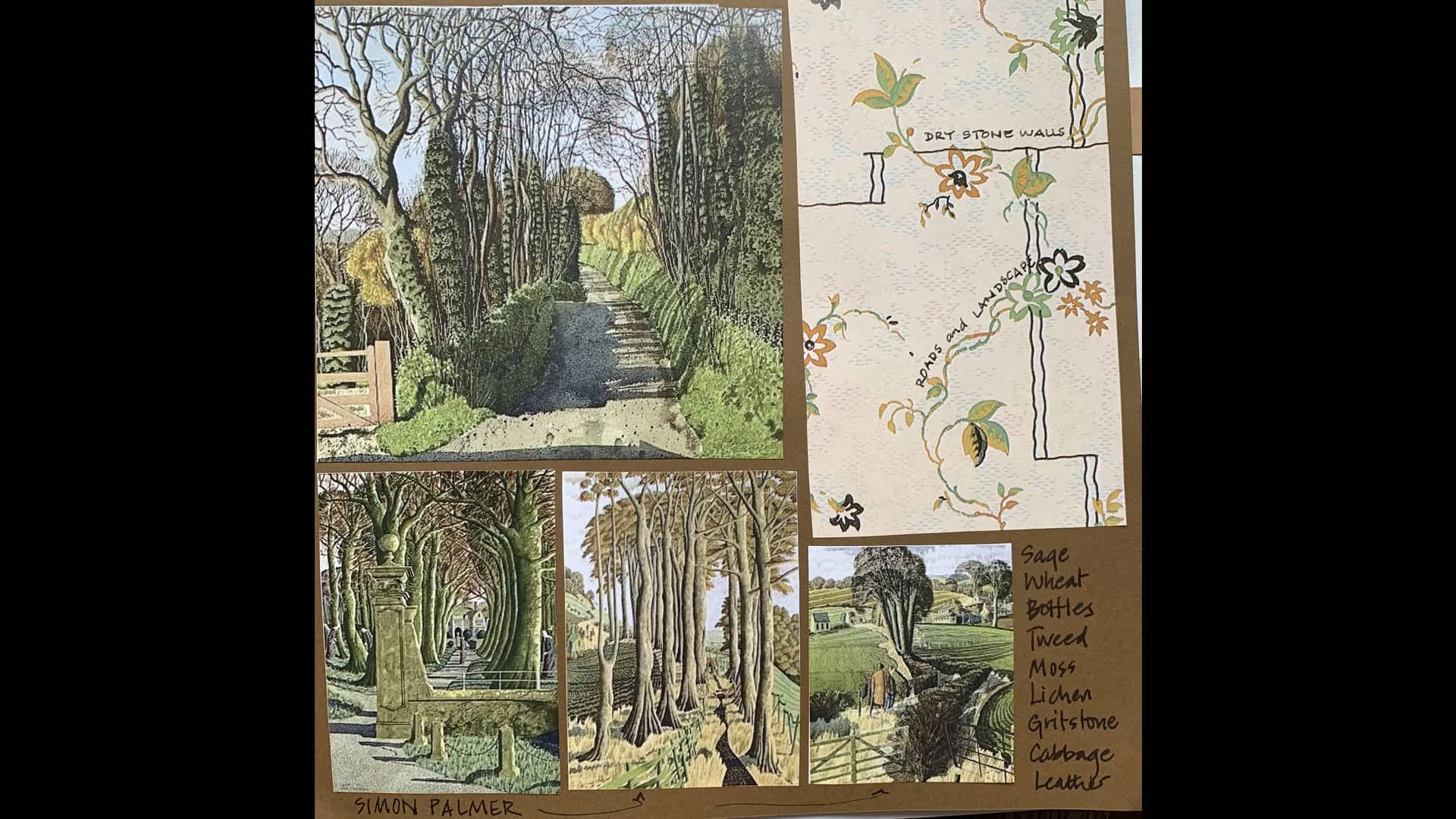
That was actually really key to how I saw it at the beginning. I wanted the interiors of people's homes, especially Skeldale House, to feel really warm and nurturing and like a sanctuary, and as a contrast to the often quite bleak weather outside and the harshness, the reality of having to roll up your sleeves and stick your hand up a cow in the freezing cold, and to do that for hours on end. So I wanted keep that palette of the landscape, which is all your greens and browns, slightly separate, and to make the color palette of Skeldale House all about warm, buttery colors—the color of home baking really, like cakes and biscuits and homemade bread. And that's the kind of palette I went with.
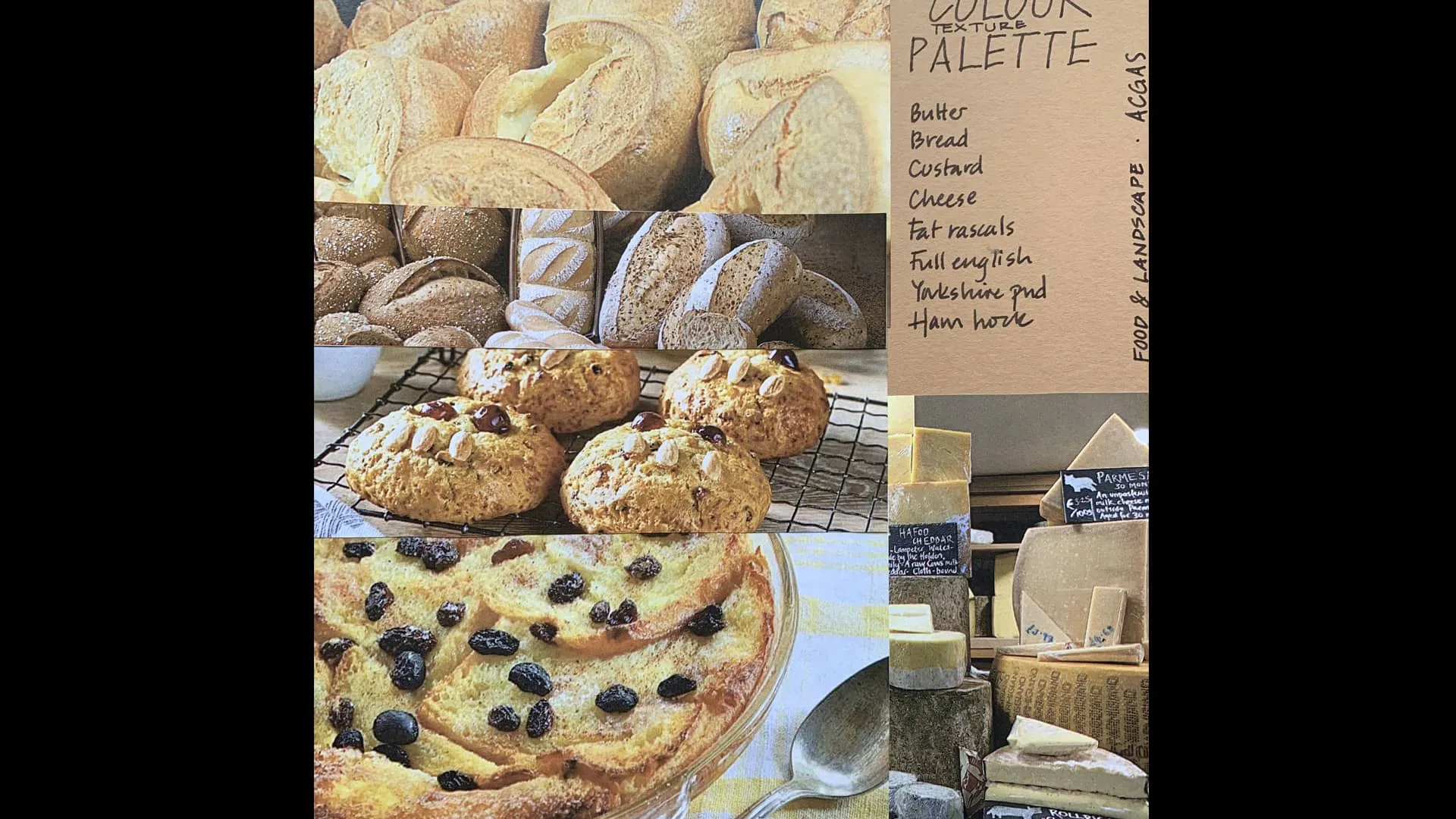
I used a painter called Simon Palmer, an amazing Yorkshire artist in his 80s now. He paints the landscape in Yorkshire and he uses this quite stylized painting technique where the landscape is a bit more sinuous and kind of twisty than reality, so it's like a heightened reality. So Simon Palmer's work was really quite an influence when we looked at exteriors. He also includes little pops of red in his paintings, like in a road sign or in somebody's outfit, and I tried to use that where I could, like at Heston Grange, where Helen lives, there's a postbox on a kind of post overlooking the farmhouse. So you have this pop red in the landscape, and it's sort of cinematic looking. I try to find opportunities to do that, and work with costume design as well, to try and introduce that where we can. Because I always think it's like a little cherry in the landscape. So it brings me back to baking again. As you can tell, I quite like baking!
Masterpiece:
How did you get started with your design?
Jacqueline Smith:
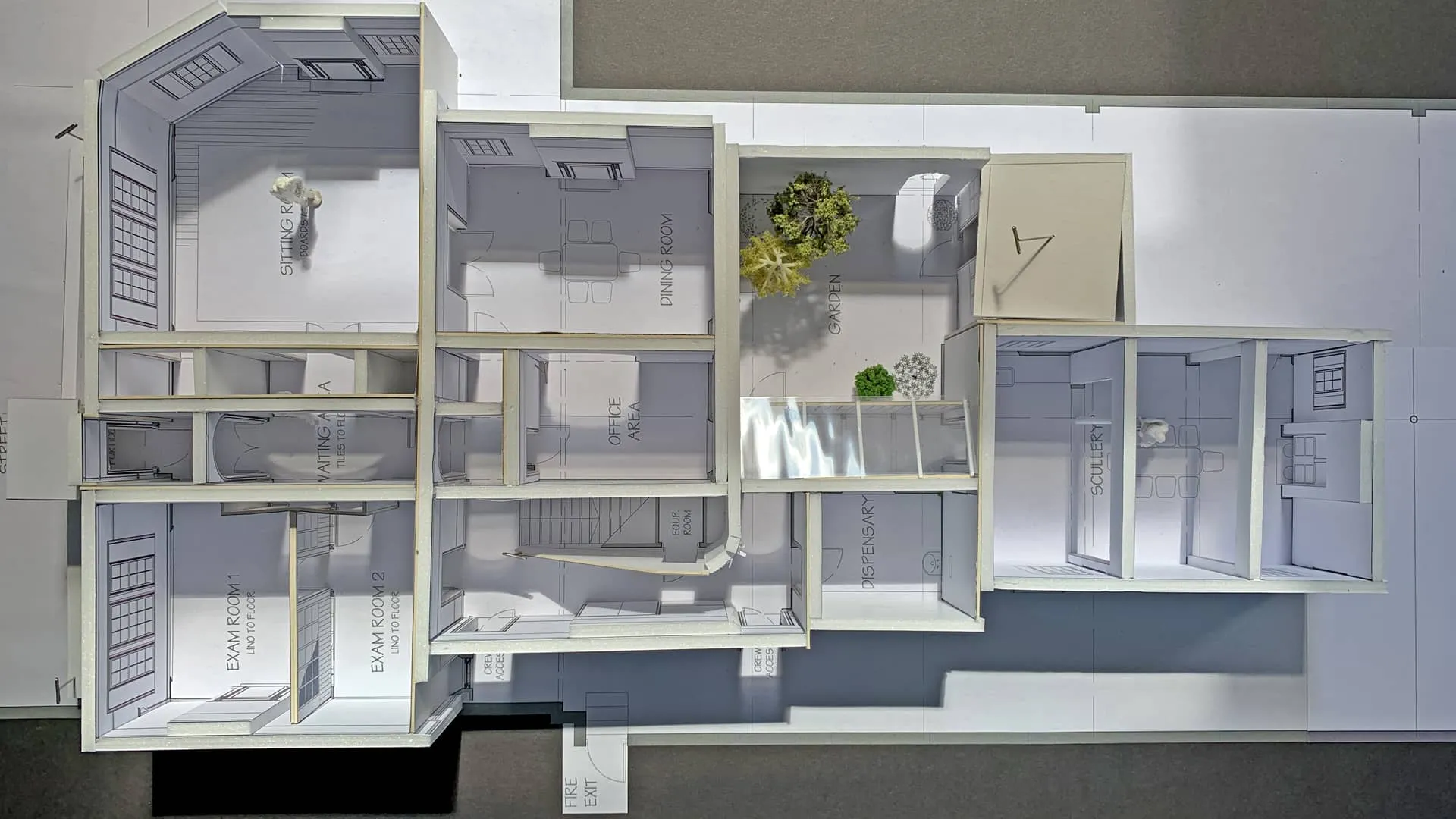
There's a museum in Thirsk, The World of James Herriot, that's set in the house that Alf Wight actually lived in when he was a vet, the house where he brought up his children. So it was a lovely place to go for reference. The museum has laid out the rooms as they would have been, so it gives you a feeling of it. It's a Georgian townhouse, a red brick townhouse with a very long hallway, quite narrow from the front and when you go inside, it's like a kind of Tardis [as in Doctor Who]. It opens up and it's very long and sort of narrow. And that's how based the design of the set on the layout of that house, but obviously made it bigger, easier for us to film in. And I really worked on the floor plan to achieve all the angles and the long views through that the director wanted to achieve. Thirsk was the starting point.
Masterpiece:
What characterizes a Georgian townhouse?
Jacqueline Smith:
They looked back towards classical ideals of architecture, so Georgian townhouses often have columns and paneling and things, but it's not heavy—it's quite light; the moldings are quite light and delicate. Victorian architecture came afterwards, and is much heavier and clumpier with way more excess, shall we say. A Georgian stair balustrade, for example, stair rods, would often be just simple square sections with a simple handrail on, whereas a Victorian stair rail would be very ornate, carved wood, that goes in and out and in and out. I like the simplicity of the Georgian architecture as well, because for me, it fitted better with the kind of pared back feeling of the Yorkshire Dales—well, the whole show, really. I think it ought not to be about all frothy, ornate things. Because even though the wallpapers are arts and crafts, so they're sort of late Victorian, early Edwardian, I tried to choose papers that had pattern on pattern but with colors that were quite tonally similar, so that they didn't shout at you. They sort of just faded into the background and allowed the actors to shine.The backstory is that Siegfried moved into this house maybe 10 years previously with his wife. She then may have done some of the decorating, or oversaw some of the decorating—hence, the wallpapers are a little bit more arts and crafts, more like the 1910 period, that was the thinking there. And then his wife dies, and therefore there's a little bit of an overlay of neglect about the house, afterwards. But then Mrs. Hall comes in, and she's trying to keep on top of it all.
Video: Go behind the scenes of the Skeldale House set in an exclusive tour with Jacqueline Smith.
Masterpiece:
The entire Skeldale House is a set that's been built. Where is it located?
Jacqueline Smith:
It's in a little village called Summerbridge, which sounds idyllic, but is actually quite bleak. It used to be a textile mill where they made hemp, for making rope. They had these big rope-making mills in the area with these huge long like warehouses where they'd have the rope. I've seen photographs of it where their ropes area all made in these massive long lengths, so they have to dry, which is hence why they're laid out in these big long warehouses. But they're all empty and they're sort of being taken over by small businesses. One of them was empty, and we took it over to build the set, because it was quite near a lot of our locations. It's a little bit tucked away, you wouldn't really know it was there.
Masterpiece:
Can you share details about any specifics in the set that may be in the background, but that reveal something about our main characters?
Jacqueline Smith:
Well, we cast an actress as Siegfried's wife, so that we could do some stills with her, in costume. I think there are about four different framed photographs around the house—they're there, but they're not shouting at you. We talked with Sam West about developing his character a bit more in terms of his personal possessions. He has his captain's hat and a photograph of him with his regiment, and a couple of other little bits of army memorabilia. And also his passion for race horses—there's a couple of figurines in this study, and he has racing posts sometimes as well. He has his pipe and all his pipe paraphernalia that go with that, a tobacco pouch and matches, things that he has on him all the time. And he has a little notebook as well, and a penknife, the little things that are often tucked in his waistcoat pockets. I think it's nice for the actors to have those types of props that they feel help them inhabit their characters a little more fully, even if they're never seen.
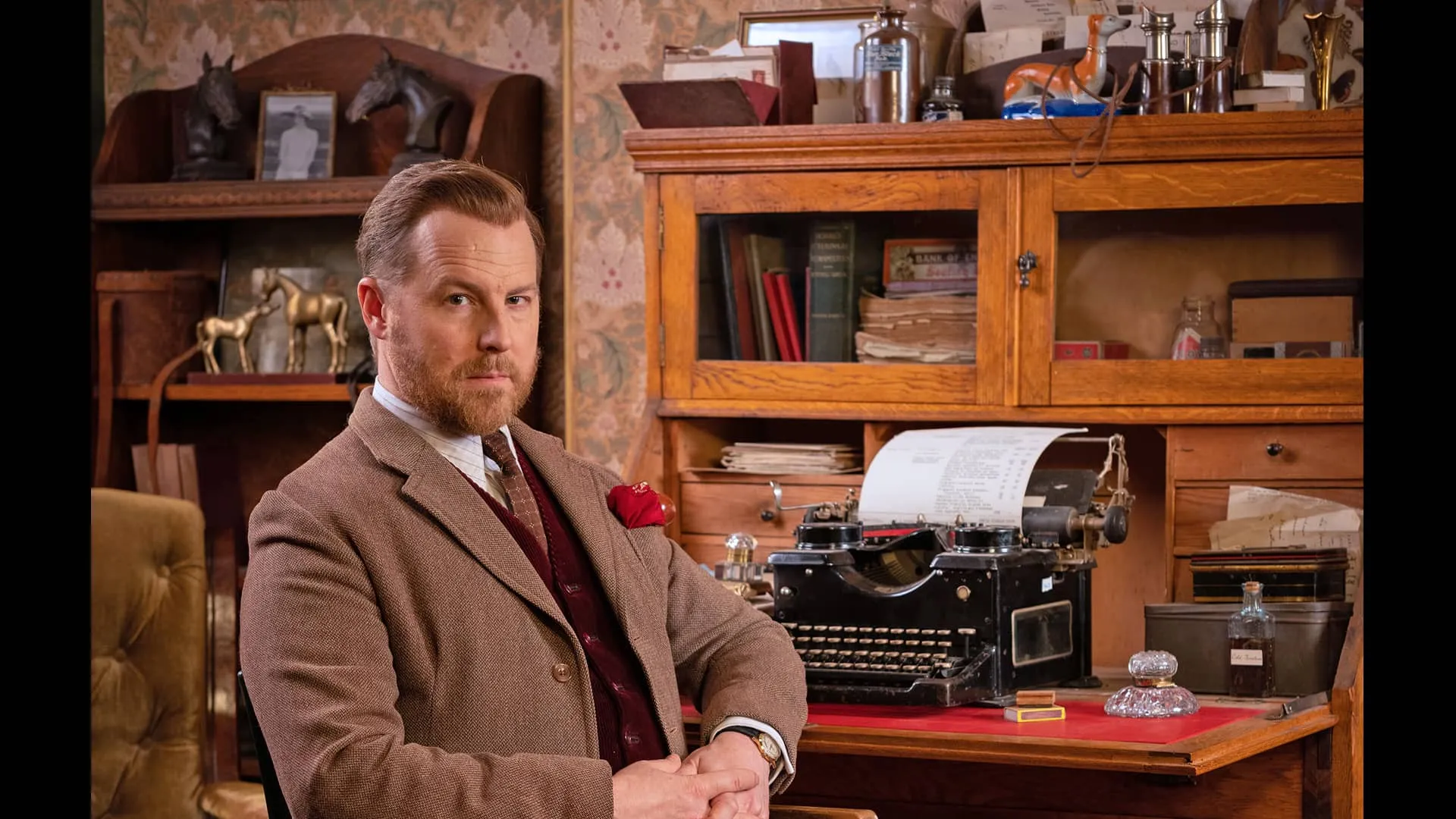
For Mrs. Hall, she's got a range of interests. She's a very, very busy woman, and she loves cricket, so she has a little magazine that she gets about cricket every week. There are a few games they play, boardgames, and one of them is based on cricket. She sews and makes jam and makes black pudding and bakes and knits as well and does embroidery. We worked with Anna Madeley quite a lot because she likes to be able to do things in the back of shop that aren't always the stereotypical thing. At the beginning, she was always carrying laundry and she was like, "No, I need to be doing other things," so she's got a list of activities that she can select from. The interest in cricket was to try and pull her away from being too girly. And because she was in the Wrens, she also learned how to shoot, so she's a crack shot with a rifle, as well.James' room is always very neat and tidy with everything was just so. He folds his clothes and has his books all lined up in height order, things like that. He's quite meticulous and he takes care of his possessions, whereas Tristan's room is a complete mess. I'm not sure that you ever really see it, but we certainly dressed it that way. He never made his bed. His clothes were everywhere, with his newspapers and bits of food lying next to his bed with half-drunk cups of tea, that sort of thing. It was quite easy to play up the contrast between the two characters with the way we dressed the bedroom sets, so that was a nice thing. In general, James is much more meticulous and careful and considerate about everything he does in his world of work. His emotional life, I think, is a little bit more all over the place. But he's learning.
Masterpiece:
What can you reveal about Tricki's hamper?
Jacqueline Smith:
It was a great fun thing to do. There was a lot of discussion about the size of the hamper, the type of the hamper, because Tricki has to sort of hide in it towards the end. And discussion about what the contents were, because it had to be something that Siegfried and Tristan, as well as a dog, would like to eat. The thing that caused Tricki the mischief was the chocolate liqueurs, because of course, dogs aren't meant to eat chocolate, and it makes them quite poorly. But of course our dog didn't actually eat any chocolate, we just made it look like that they had chocolate liqueurs. There was pate, hot pork pies, ham, and preserves, with chutneys and things like that. Everyone had their own thoughts about it, so it was about distilling it all, and making sure we had the right references for all the graphics on the packaging. It looked amazing when it was finished. We had to have repeats of certain items, because obviously they had to get eaten, and we made all the packaging from references that we'd researched. Everyone seemed to enjoy it.
Masterpiece:
Were you surprised by anything you learned in making All Creatures Great and Small?
Jacqueline Smith:
Well, I love the research on any job, but because of the history of this area and because my family are from this area, it is just so personal. I've been asking my mother, "What do you remember from when you were little?" She was born in 1940, so obviously she's not quite old enough, but still it's opened up conversations with elderly relatives that you wouldn't necessarily have had, and that's really lovely. I've learned quite a lot from the vets, about how knowledgeable they are, and what a tough life it is working outside with animals, when it's large animal practice. Because for vets who just do small animals, and that's a little bit more straightforward and you're in a nice warm cozy surgery, but when you've got to be out on the hillside and dealing with the elements, as well as dealing with an animal that's unwell, I think that's really quite amazing!
Masterpiece:
What was your biggest challenge?
Jacqueline Smith:
I would say the most challenging parts are to do with multi-disciplinary set ups and they're always the prosthetics and the animals and the special effects. So it's when you've got an operation. You've got to have a real animal involved at some point [and then the animal leaves and a prosthetic prop is used]. It's got to have something oozing out of the wound; something might get splattered onto somebody's costume…Therefore it involves costume, special effects, animals, art department, all of these different disciplines that have to come together to make something work. And because it involves live creatures, you can predict some of it, but you can't predict all of it. You just have to kind of be prepared to go with the flow on the day, to some extent. You can story board scenes, and you can hope that the animals will behave in a certain way, and then when it comes to it, they'll just do what they want to do. You have to be really patient. We've got a schedule to keep to, and people have got lot of pressures in their particular roles, but at the end of the day, you've just got to wait till you get the shot. But the rest of it, I mean, all the creative side is just a joy. I wouldn't say that it's a challenge, because anything that involves recreating some really well-loved stories, that are actually based on someone's real life—it's a huge challenge to honor it, but also to bring something fresh to it for a new audience.
Take an exclusive behind-the-scenes tour of the Skeldale House set with Jacqueline Smith!
Explore our Insider's Guide to the Dales Filming Locations
Samuel West Interview: All Tempers Quirky & Kind of Siegfried Farnon
Anna Madeley Interview: Skeldale’s Housekeeper & Heart, Mrs. Hall
Discover the Animals of All Creatures Great and Small