
Shaun Evans on Directing "Apollo"
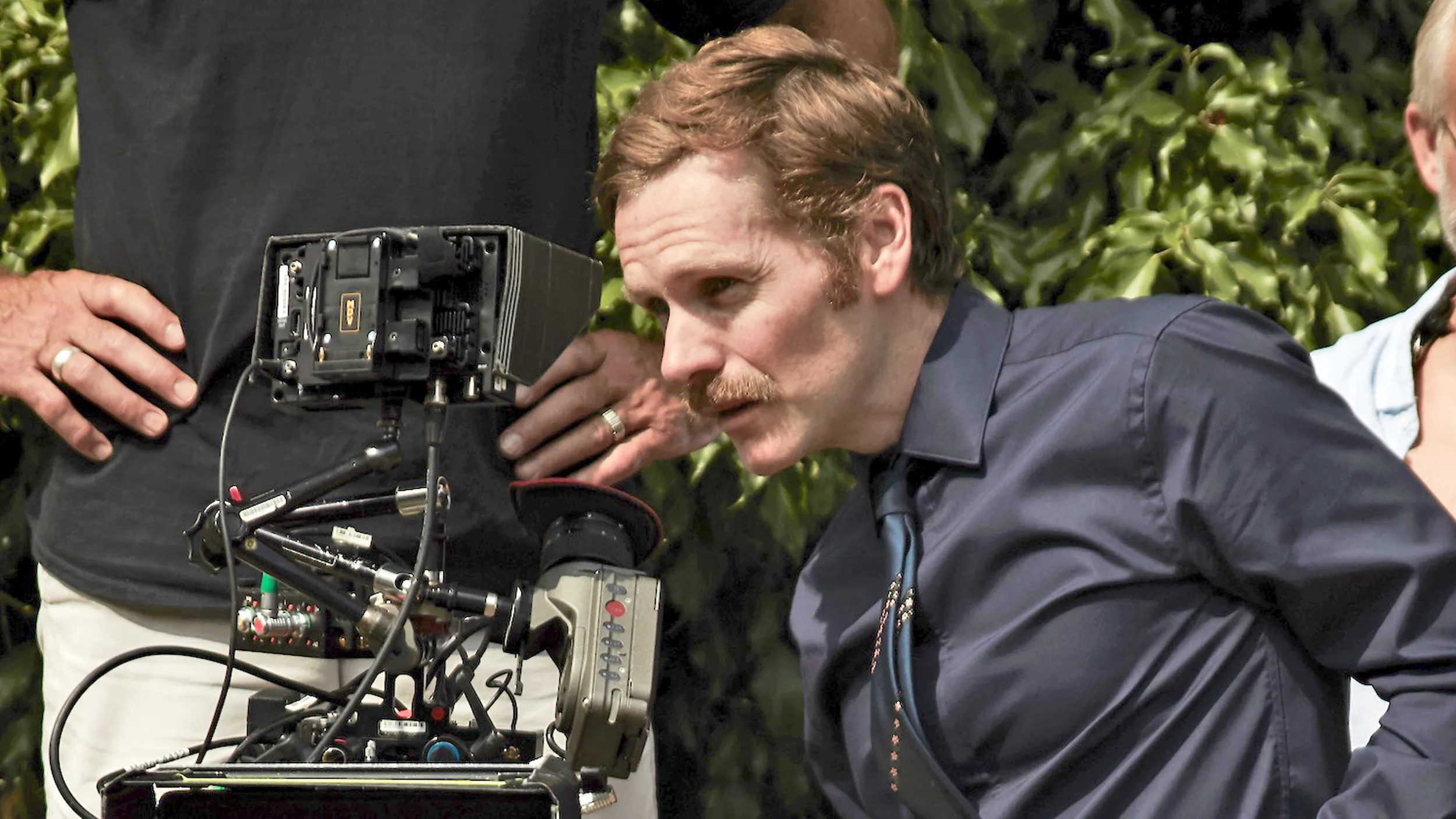
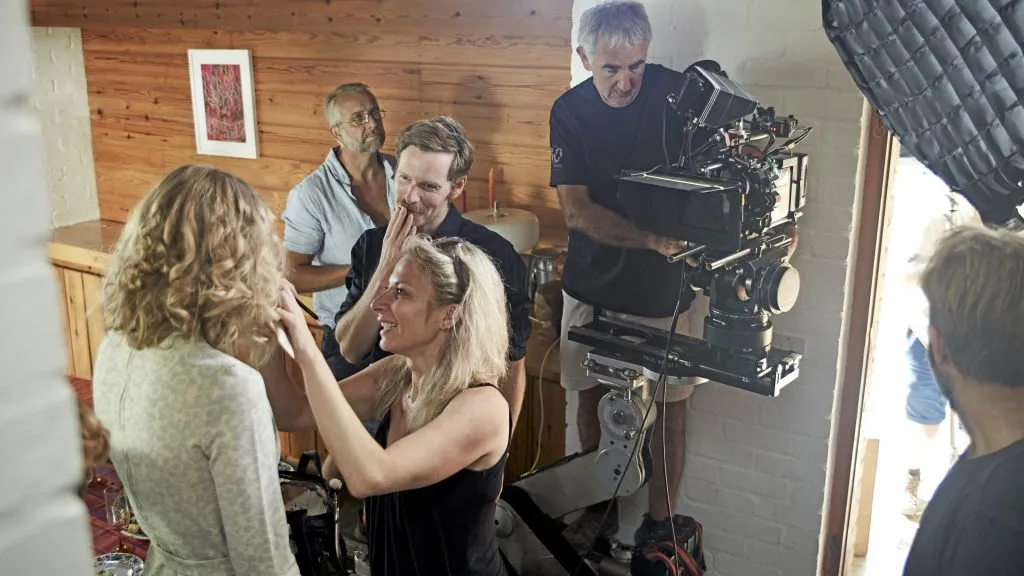
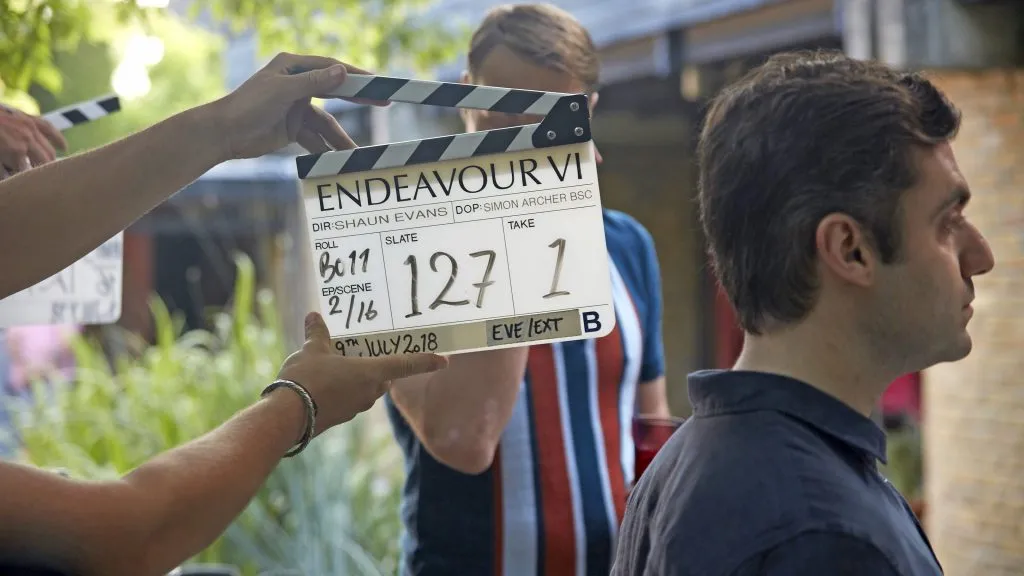
Directing Endeavour Season 6’s “Apollo” was one giant leap for series star Shaun Evans, who worked in front of and behind the camera to produce a taut, unique, and riveting episode that moved the plot and deeply moved viewers. In this excerpt from the MASTERPIECE Studio podcast interview, Evans shares details about his process and reveals how he arrived at some of the episode’s most powerful moments. Learn more below, and listen to Evans’ complete interview with host Jace Lacob.
JACE LACOB: I love the framing the shot of Morse as he comes into Castle Gate with his box and finds it empty. He’s very alone. He’s small. He’s sort of isolated. What were you trying to achieve with that specific shot?SHAUN EVANS: Exactly what you’ve just said.LACOB: It’s a good shot.EVANS: Thank you.
LACOB: There’s a noir-like chase sequence involving Fred Thursday, who’s assaulted when two men jump out of the shadows at him. There are also scenes of sort of quiet desperation of him at home with Winn. What was it like directing Roger Allam in this episode?EVANS: Incredible, incredible. I’ll take my hat off to him. He’s such a wonderful actor and a dear, dear friend now, as well. As indeed are all of the cast, but especially Rog. And we have a very similar way of working: both of us care deeply about our work, but both love having a laugh, and have got a sense of humor. Roger is also a producer on the show, as well, and so we both care deeply about it. Having known Roger now for a few years, I had a sense of what he would require as an actor. I think the best way to work is to create an atmosphere where everyone can do good work. So if you create an atmosphere of lightness and joy and freedom to be creative, then you’re halfway there. If you’re clear about where the characters are going in the scene, then there’s a freedom, and the scenes sort of the play themselves. If you’ve got actors like we’re lucky enough to have on the show, who come in—all of them, to a man—with their lines down, with a sense of the scene, with an idea of where they will be coming in and out of, where they’re going, and again with an openness to somebody having a different idea, and to being a part of the whole piece rather than it just being about them, then it’s a really easy working relationship. Also, because we have a history, I know their heart is in the right place and they know my heart is in the right place, as well. so it’s not. It’s very simple in a way you know. Let’s have a line run, this is where I think people are coming from…should we have a little rehearse, and play with it? Yeah let’s do it. Okay someone’s got a better idea, let’s try that. Sure, let’s do that instead. It’s an openness, really and also you know, just not making it about you, we’re making it about the story, making it about the scene. So Roger’s incredible. They all were.
LACOB: This episode involves multiple murders, mistaken identities, wife-swapping, key parties, new age therapies…EVANS: Oxford, baby.LACOB: The craziest of the crazy, to me, was Moon Rangers, the Thunderbirds-like space puppet show which is so weird and retro. What was it like filming these bizarro Thunderbirds-esque sequences?EVANS: Incredible. I mean, I knew nothing about that… my childhood cartoons were like, Thundercats, so I wasn’t really into supermarionation (is what it’s called). So I sought the guidance of an expert who was incredibly helpful, who showed us how they would have used the studio and how the puppets would have been shot and how they move and how to get the best out of them. Worked incredibly closely with this this guy you helped us that. What particularly love about this story is that you’ve got the moon, this epic: guys going to the moon. So that exists on that one macro, huge level. Then on the middle level, you’ve got us, the characters, inter-playing and doing their normal stuff. And then on a micro view of this these puppet characters also working on a moon base. There’s something about it, those three things, which I just find kind of intoxicating.
LACOB: And the moon, of course, signifying change, and waxing and waning.EVANS: Exactly.LACOB: The perfect sort of macro metaphor for this entire season, and this episode particularly.EVANS: Exactly, exactly! But also, it’s just a fascinating thing, isn’t it, the moon? I’m endlessly fascinated by it. Yeah, so I was just delighted with it. That just that idea of loneliness, as well, which I think speaks about this character, particularly. There’s just something about it which is pleasing.
LACOB: I think there’s another beautiful moment in this episode when Morse and Thursday discovered the old black Jaguar at the shop and are told that it’s had its day and will be turned into scrap and spares. How much of this is as a knife to the heart for Thursday?EVANS: It should be, but I also think it’s representative—that’s what I was trying to achieve. Thursday has just been beaten and…This is a guy who was in the army, who fought in North Africa, and then got beaten by these two guys. And then you’ve got this barely new officer in this new nick saying “You just sit down now, you sit this one out” or, you know, “you’re on light duties”…He’s being put out to pasture. He’s being told he’s past his sell-by date. So I think so it’s symbolic, really: you get this Jag which is not past its sell-by date, just being neglected, as someone’s putting it out to pasture. So it’s to do with that, really.LACOB: Even when they’re not past their prime, there’s still use to them. They still have utility. It’s like Fred Thursday—there’s still a lot of good left in him.EVANS: That’s exactly what I’m trying to say…It’s him, in a way.LACOB: I mean, if anything represents him, I think it is that car, that says so much about him. I thought that was a heartbreaking moment.EVANS: Good. Good.
LACOB: The final shot of “Apollo” might just be my favorite. Morse in his car listening to the moon landing on the radio, in front of the Radcliffe Camera, the moon overhead. There’s just this sense of innate, intense loneliness and isolation embedded in the single image. What was the idea for this shot composition?EVANS: Exactly that, to be honest with you. Going back to the film director I was talking about, Tsai Ming-liang, I remember reading an article with him—he was saying…that “people who like my movies are the same people who like to look at the moon,” and I thought, God, that’s interesting. And I don’t know if anyone can relate to this, but I frequently look at the moon, and there’s a sense of that weird feeling that you can’t put your finger on, of being a part of something but also being separate from something, because it makes you feel tiny. And I suppose that’s what I wanted, really. I think it’s helped enormously by the music, which was not difficult, but took us a while—it was kind of easy because Matt [Matthew Slater] is a brilliant composer. I just wanted everything stripped away, so you just have one thing, one note on a piano, which is painful. And it makes you think you know you got the Thursday family a home doing their thing, and of course things aren’t great, but they have each other. And then, you have this person alone, in the car, in Oxford, lonelier than the man on the moon. Because that’s his fate. That’s what I was trying to do with it.
LACOB: Was that shot as scripted? I seem to remember Morse asleep in the back of the police car in at least one draft of Russell’s script for this.EVANS: Yeah, there were a few: that he’s in the station house, and then he’s sleeping in his car because he can’t bear being in the station house. Two things really, two reasons why that changed: the time of the landing, he likely wouldn’t have been asleep at 8 o’clock (or whatever time, I can’t remember specifically, now). So that was problematic. Also to get the shot that I wanted, it would have been tricky to have me asleep in the back of the car and or in the front of the car. Also, again, it’s about being clear about what you’re trying to achieve, right? I want to achieve exactly what I’ve said, and exactly what you’ve picked up on. What I didn’t want is for it to end, and for people to go “Why is he asleep in the back of his car?” You know what I mean? But to be, hopefully, moved by the moment. So we spoke about it and decided to make the change.
LACOB: I think it’s a good change, because it is a momentous moment for mankind, and to see him sort of alone, adrift, not in space but just as sort of lonely and lost. I think was very touching.EVANS: Oh good, I’m glad. Thank you. Also, it raises questions as well: if he’s listening to that on the radio, he can’t be sleep in the back of the car. If he is asleep in the back of the car, why has he got the radio on? And if not, if neither of those things are true, then where’s noise coming from, you know? So you have all these logistical, practical questions as well.
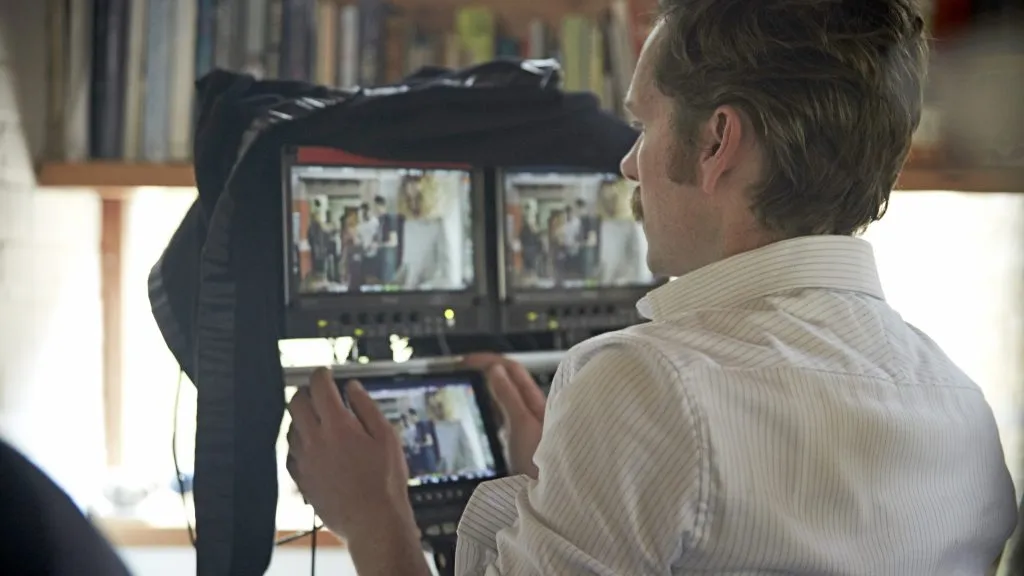
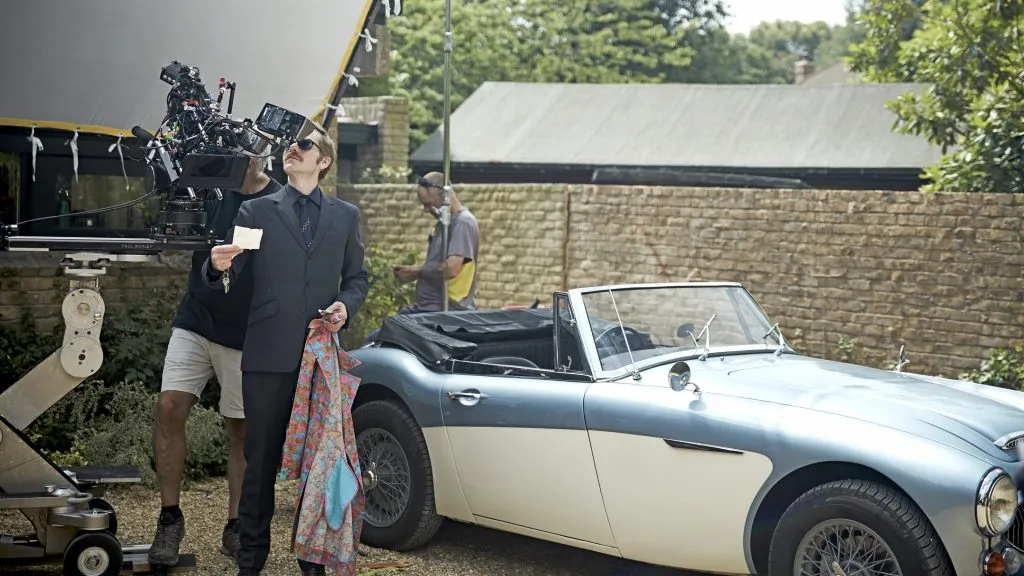
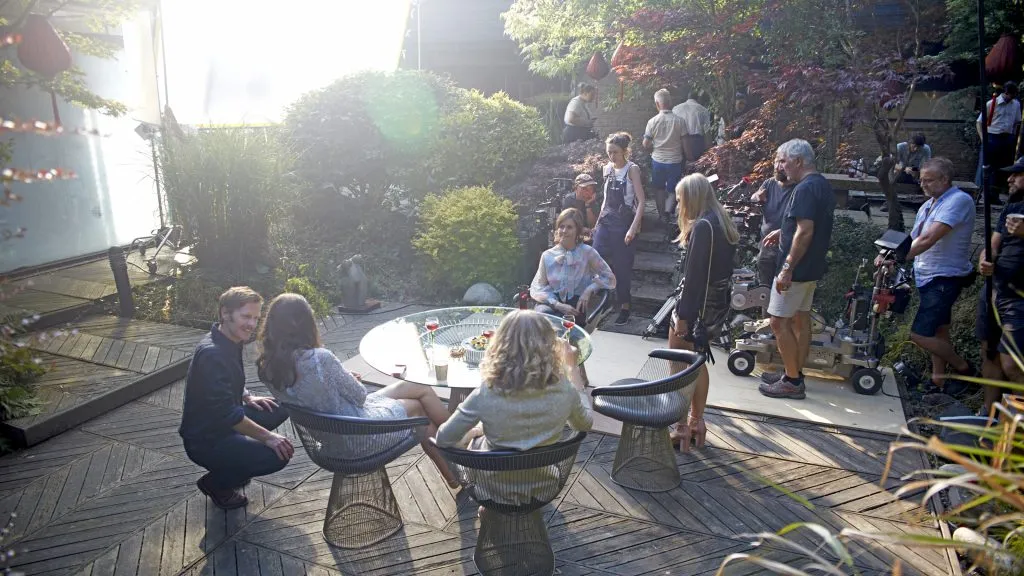
LACOB: Looking at “Apollo” as both a director and an actor, do you have a favorite scene that stands out to you?EVANS: Yeah, I do, there’s a few things that I love, actually. Are you supposed to say that about your own work? Yeah, well whatever anyways, I do. I love this montage sequence in the middle. Because I’m an actor, as well—and I always try to do this, in all of the work that I do or have done up to this point, as much as you can—is to nick, or steal, little private moments with the character, so you get to see them when no one else is there, and you get an insight, a little chink, into how they’re feeling about something. I always try and achieve that, even if you’re in the middle of a scene, there’s many many ways of doing it. What I like about this is, I love the scene where Thursday comes in, his wife is listening to some music, so we get the sense that she perhaps is having a romantic involvement with someone else, he just looks up the stairs—he’s on his own in a room—he looks at the stairs, the music is playing in the background, and we read on his face that he is devastated about this.
Then, we have Mrs. Wingqvist meditating. Because this speaks to this idea of going to the moon—to me, in a way, kind of a pointless road trip to find meaning, and these people going to the Single Way Institute, or meditating, or being part of a swingers party, going within to find meaning. So we have this girl—I really liked this—where she’s meditating, she’s trying to find some degree of peace. But you can see on her face that there’s something troubling, and at the end she opens her eyes and then we cut to the brother and sister, who are all lost in their own thoughts as well. We’re nicking private moments with them. It’s so incredible, I think, to be afforded the luxury of that over 90 minutes. If you have to squeeze something into, like, a TV hour, you don’t have the time for that, whereas one of the things that I particularly love about this show, I feel very fortunate about, is that you have the time to let things breathe, to not say everything that needs to be said, but actually to visually tell a story, rather than hitting it over the head. So I love that section of it. There’s like two seconds that I think are hilarious, where Strange is talking to them, the brother and sister are sitting there, and she says, “I took Miss Susann to bed” and he goes, “Oh, I see. Where can we find Miss Susann?” and he misinterprets that it’s a book. She’s an author. I love that moment. There’s a few lighter, funnier moments I really like as well.
Hear the complete MASTERPIECE Studio interview with Shaun Evans, where he discusses Morse’s will they/won’t they relationship with Joan Thursday, the overarching mystery of the season, and…the mustache! Plus, he reveals what’s in his future, as an actor and director, and what might just be in Endeavour Morse’s future, as well.