
Inside Jane Austen's Chawton Cottage: A Visual Tour of Her Historic Home
Step into Jane Austen’s world at her beloved Chawton Cottage. From 1809 to 1817, this charming Hampshire, UK home was where Jane revised and wrote some of her greatest works, including Pride and Prejudice and Emma. Visit the cozy sitting room where she read her novels aloud, marvel at her tiny writing table, and peek at the pianoforte she played each morning. Walk in Jane’s footsteps and discover the intimate spaces that inspired a literary legend.
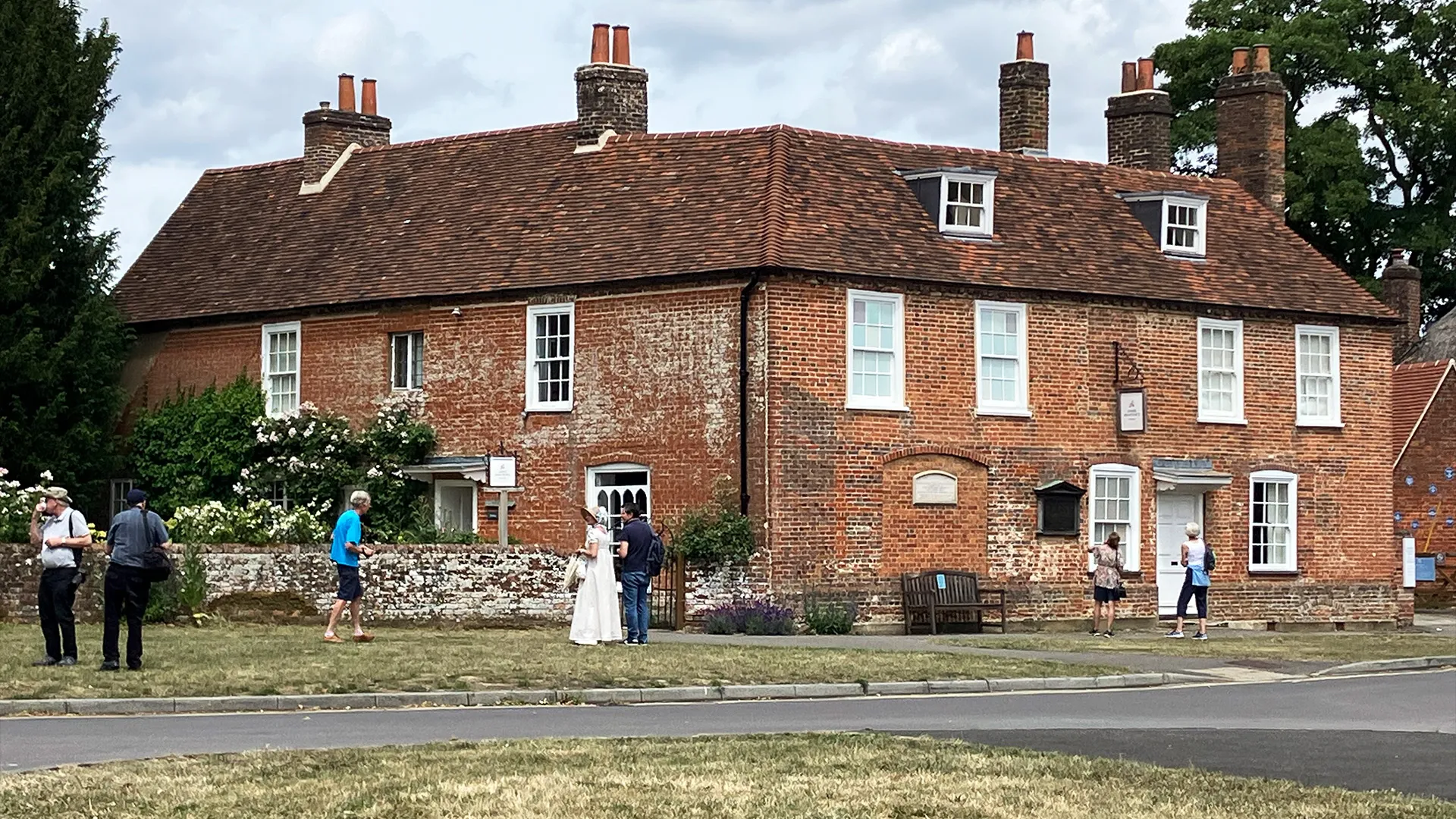
Chawton Cottage
In July 1809, Jane Austen moved to Chawton Village with her sister Cassandra, their mother, and longtime friend Martha Lloyd, settling into this cozy cottage on the estate of Jane’s brother Edward. Jane would live here for the final eight years of her life. The house was always lively, filled with visiting nephews and nieces during holidays, and friends were always welcome.
Edward made some updates to the cottage before his family members moved in. One detail to notice is the bricked-up parlor window to the left of the street-facing door. He did this to give the ladies more privacy—the window had been so close to the road that anyone could easily look inside, including the passing stagecoach. He replaced it with a window overlooking the side garden instead.
The building is now the Jane Austen House Museum, which on average sees over 30,000 visitors a year.
Drawing Room
According to the House Museum’s website, it was in this very drawing room on a winter day, January 27, 1813 that Jane first read aloud from a published copy of Pride and Prejudice. Her debut novel, Sense and Sensibility, had been published 18 months earlier, in the fall of 1811, and its positive reception had already begun to establish her talent.
The lovely pale-yellow wallpaper was recreated from a fragment discovered in the late 1940s, when the home was being transformed into a museum. The design dates from about 1800 and features delicate white vine leaves on a yellow background. You can see the historic fragment here.

Pianoforte
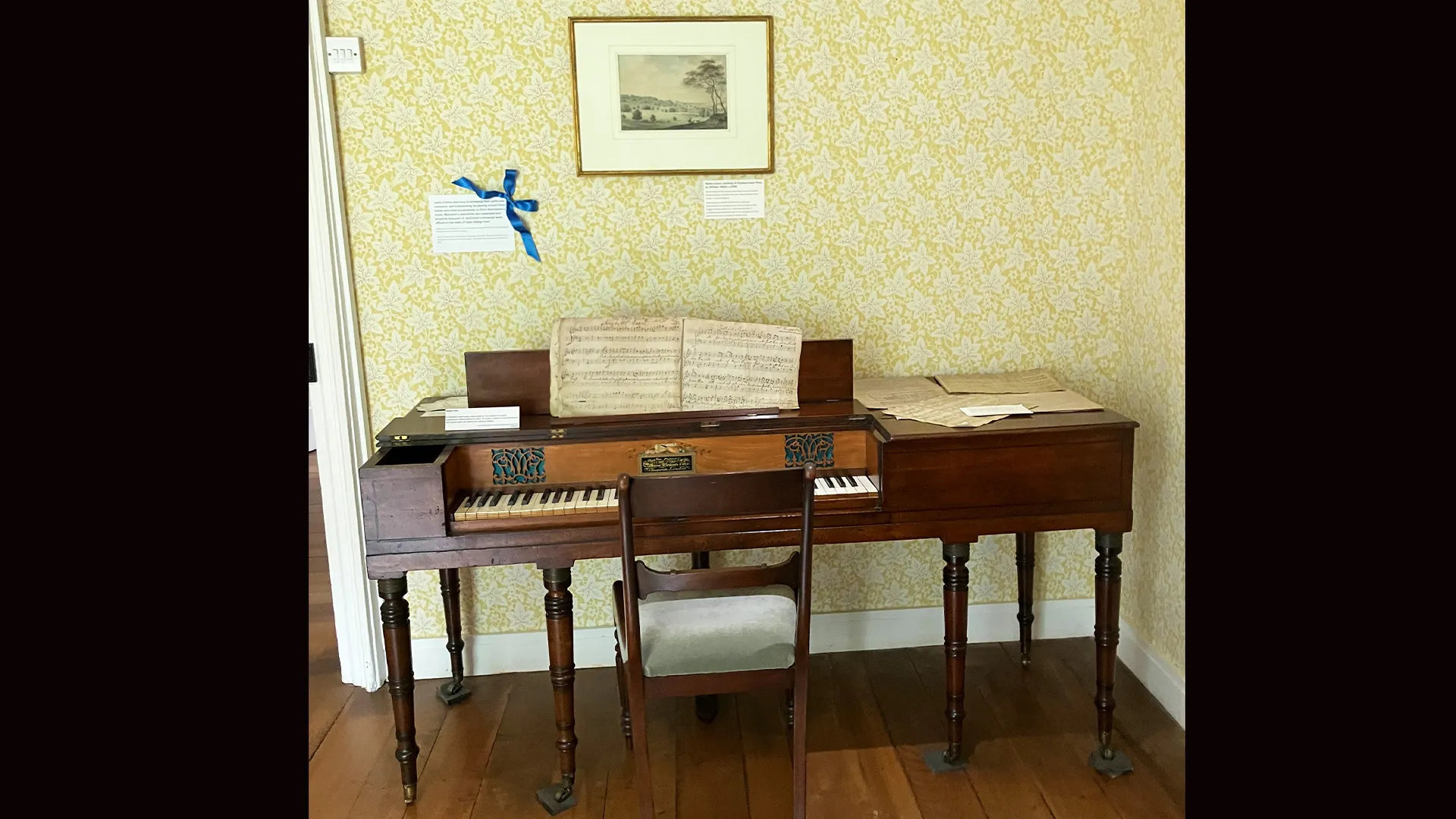
It’s said Jane practiced the piano faithfully every morning before breakfast at Chawton Cottage. Her love of music started early—her father encouraged it by buying her a pianoforte and arranging lessons with the assistant organist at Winchester Cathedral. When the Austen family left Steventon in 1801, that piano had to be sold, and during their years in Bath and Southampton, Jane rented instruments instead. When the Austen women prepared to move to Chawton, Jane wrote Cassandra:
‘Yes, yes, we will have a Pianoforte, as good a one as can be got for 30 Guineas — & I will practise [sic] country dances, that we may have some amusement for our nephews & neices [sic], when we have the pleasure of their company.’
Jane Austen, 28 December 1808
The Clementi square piano now in the cottage’s drawing room is a little later in date than the one Jane originally owned, but it’s thought to be very similar in both style and quality.
Dining Room
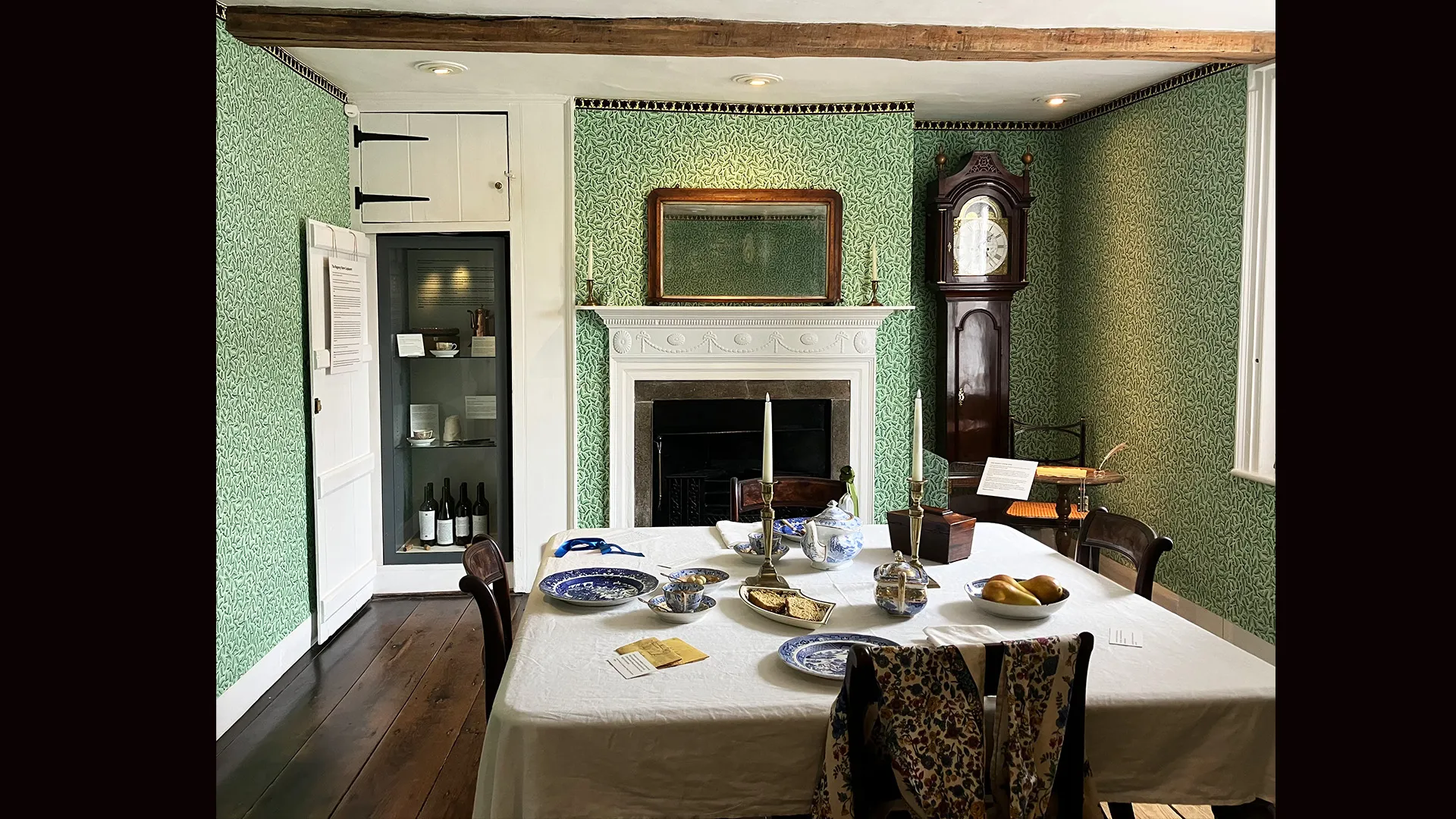
This is Chawton Cottage’s bright dining room, complete with its original cast-iron fireplace grate. Each morning at nine, Jane was in charge of making tea and toast for the household’s breakfast, using the small fire that burned there. The tea was valuable enough to be kept in the locked cupboard beside the fireplace.
The room features a vibrant green, leaf-patterned wallpaper recreated from bits found behind the room’s cupboard. It reflects the sort of bold colors popular at the time. See the original wallpaper fragment here.
(Note Jane’s tiny writing desk in front of the grandfather clock—see it up close in the next photo.)
Writing Desk
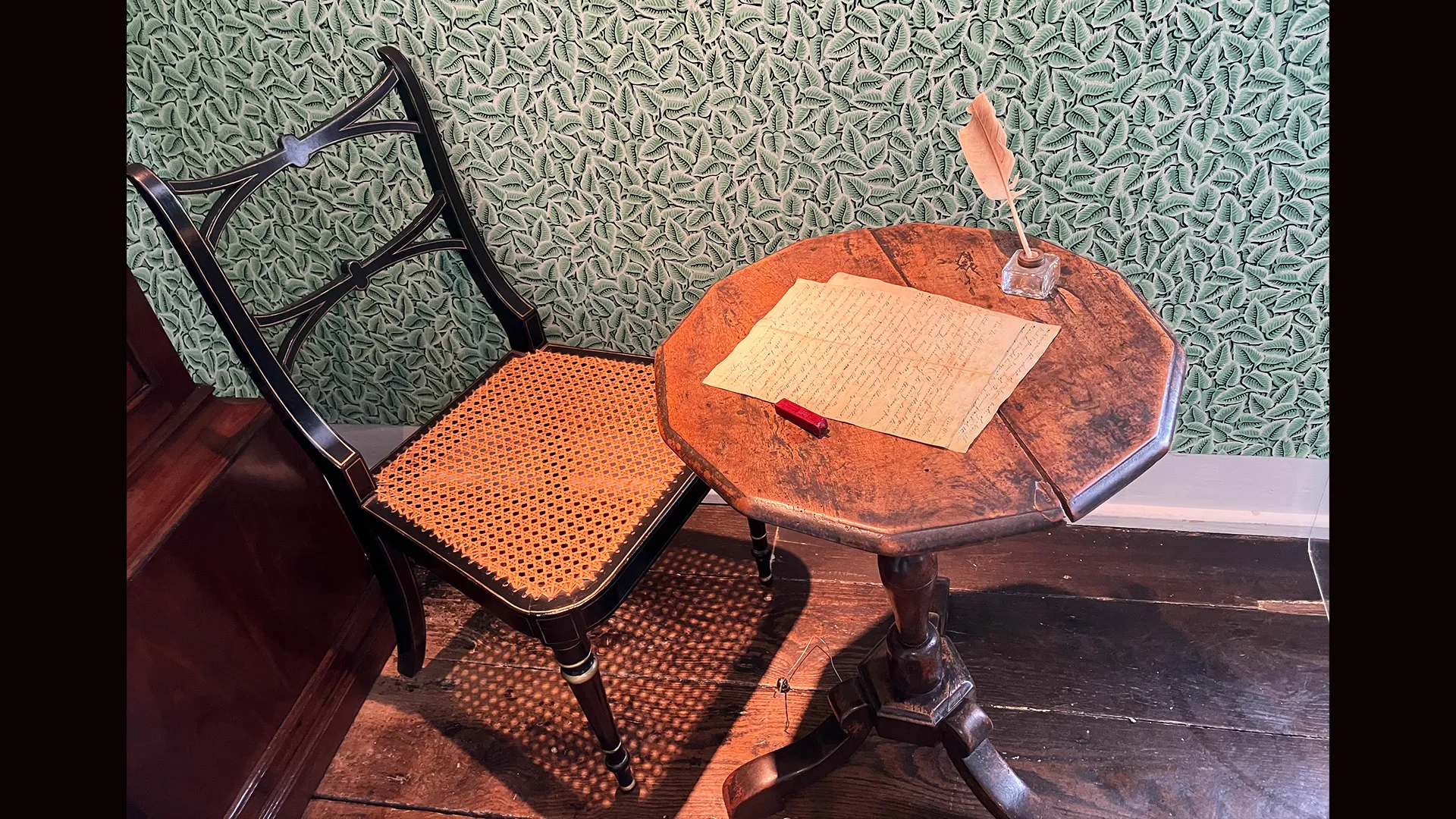
Austen family tradition holds that Jane wrote at this small, twelve-sided walnut table, positioned by the dining room window. Because her eyesight was poor, the natural light there would have been especially helpful. No one knows exactly why she chose such a tiny table—maybe its modest size suited her preference for writing unobtrusively. We do know she was a neat worker, so perhaps she simply didn’t need much space.
As her nephew James Edward Austen-Leigh wrote in his Memoir of Jane Austen:
‘She was careful that her occupation should not be suspected by servants, or visitors, or any persons beyond her own family party. She wrote upon small sheets of paper which could easily be put away or covered with a piece of blotting paper.’
Sometime after Jane’s death, the table was passed along to the family’s servant, William Littleworth. In 1913, it returned to the Knight family, the descendants of Jane’s brother Edward.
Kitchen
Chawton Cottage had both a cook and a maid, along with a manservant, whose help could be afforded now that the Austen ladies no longer paid rent. The women of the household, including Jane and Cassandra’s nearly 70-year-old mother, still managed domestic duties, but they relied on these servants for the heavy work.
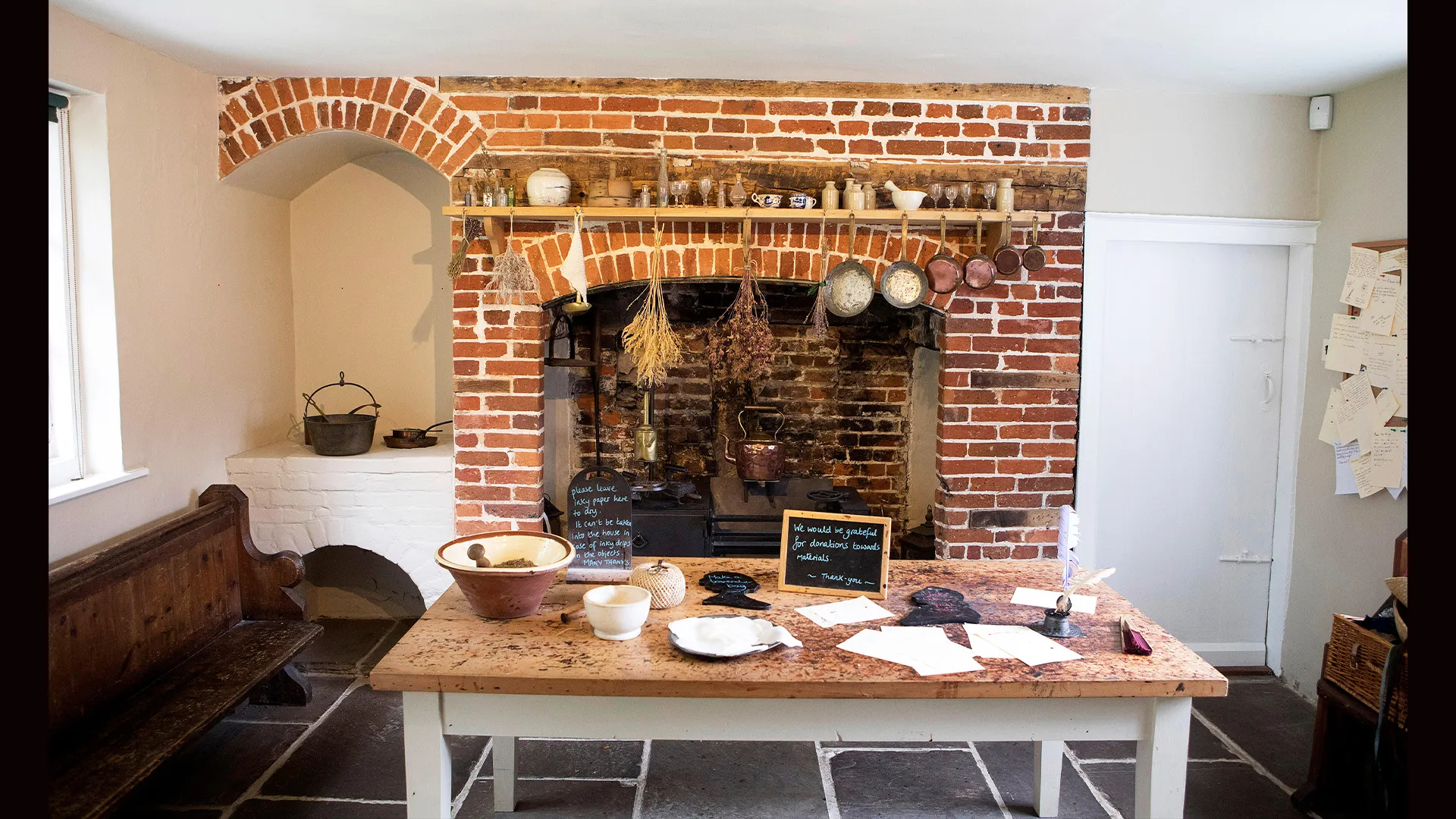
The kitchen features a large, inglenook fireplace recessed into the wall, which has two small wooden seats on either side and a bar above where meat was hung to cure in the smoke. The Austen’s cottage-mate, Martha Lloyd, was an excellent cook and she compiled a handwritten collection of recipes and remedies over 30-some years. Her manuscript, Martha Lloyd’s Household Book, includes everything from humble “Hogs Puddings” to “Curry after the India Manner,” as well as the “white soup” mentioned in Pride and Prejudice. Jane’s own favorites are said to have been toasted cheese and mead.
Sisters' Bedroom
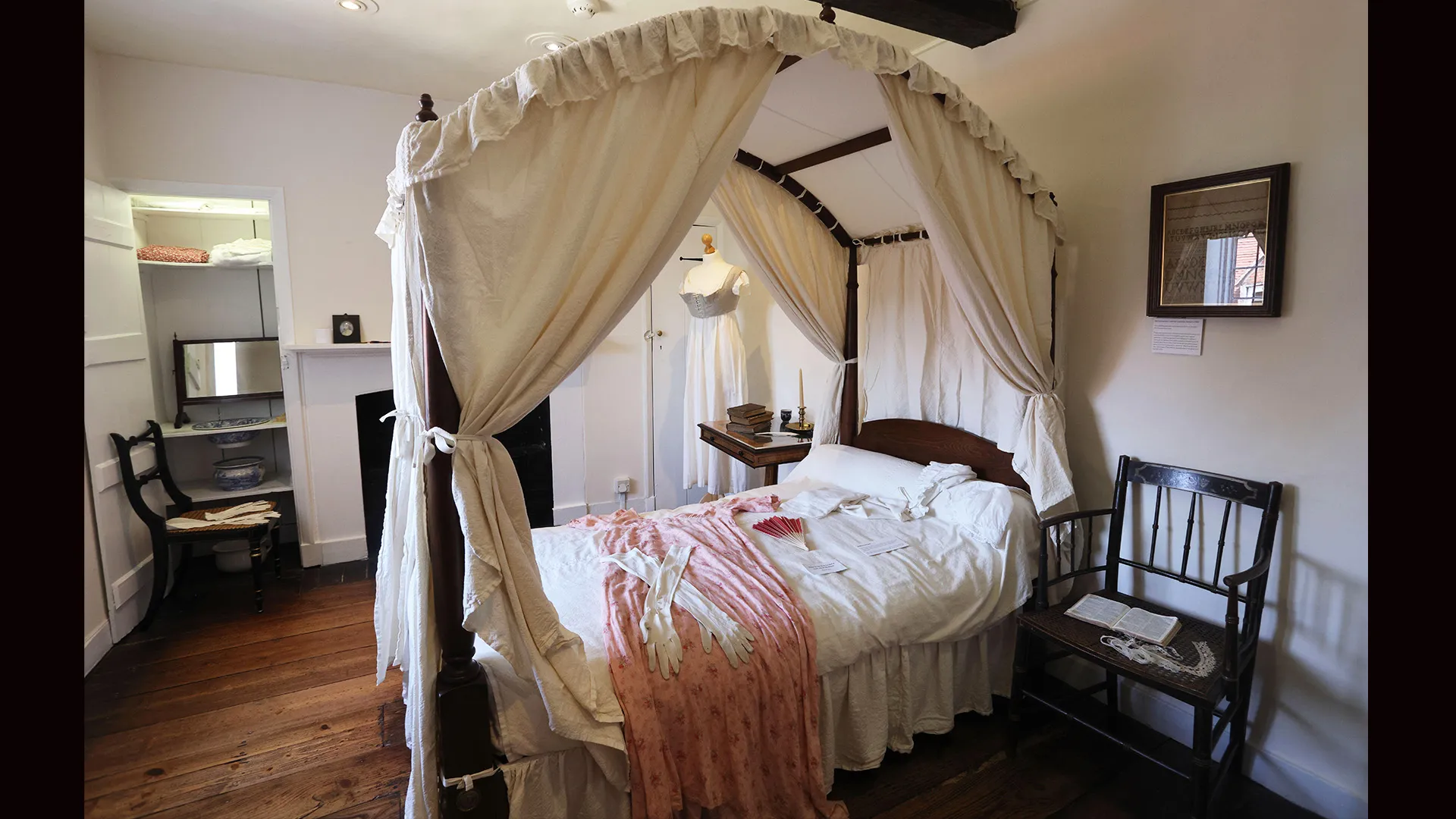
Upstairs, at the back of the house, is the bedroom Jane shared with Cassandra during their eight years at Chawton Cottage. At the time, the snug room would have held two single tent beds, each with a cloth canopy to help keep out the night’s cold. The closet on the left held a mirror and a washstand, while the one on the right was used for clothes. There’s also a fireplace in the room—every room in the cottage had one, even the vestibule.
The other upstairs bedrooms were used by Mrs. Austen, their close friend Martha Lloyd, the two servants, and guests. (Overflow guests would stay at Edward Austen Knight’s estate up the road.) The manservant slept up in the garret.
Cassandra's Sampler
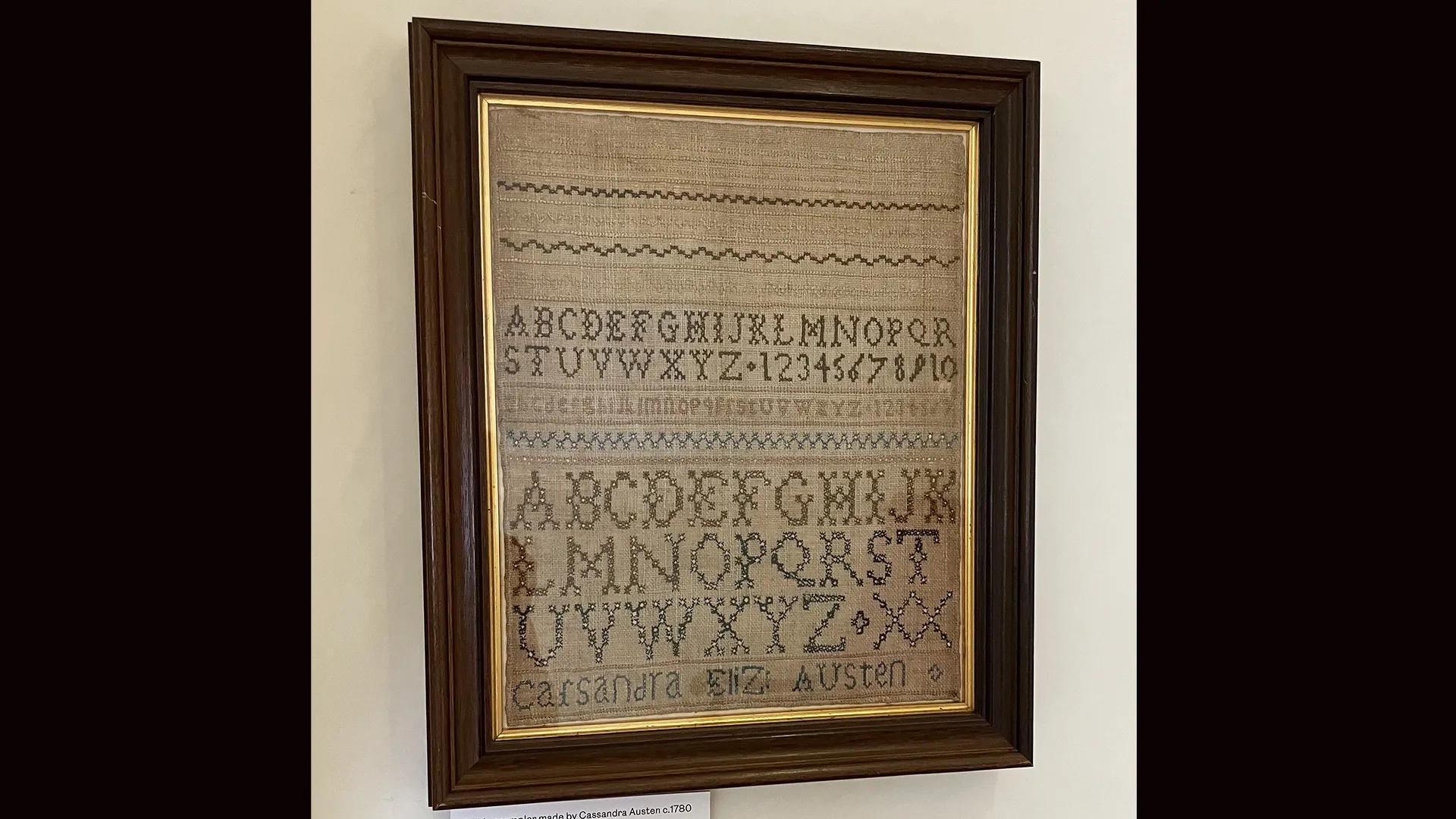
In the sisters’ bedroom hangs an original sampler embroidered by Cassandra. It’s framed in wood, and the needlework itself is about 9.5 by 12 inches. Dating from around 1780–1785, it’s probably the first sampler Cassandra ever made.
The piece includes rows of letters and numbers, along with practice lines of different stitches. Samplers like this weren’t made for display—they were essentially training pieces, helping a girl learn the skills she’d need to mark household linens such as sheets, curtains, and clothing so everything could be identified when sent out for washing. Marking the family linen was often one of the earliest household tasks given to a young girl.
Chawton House Estate
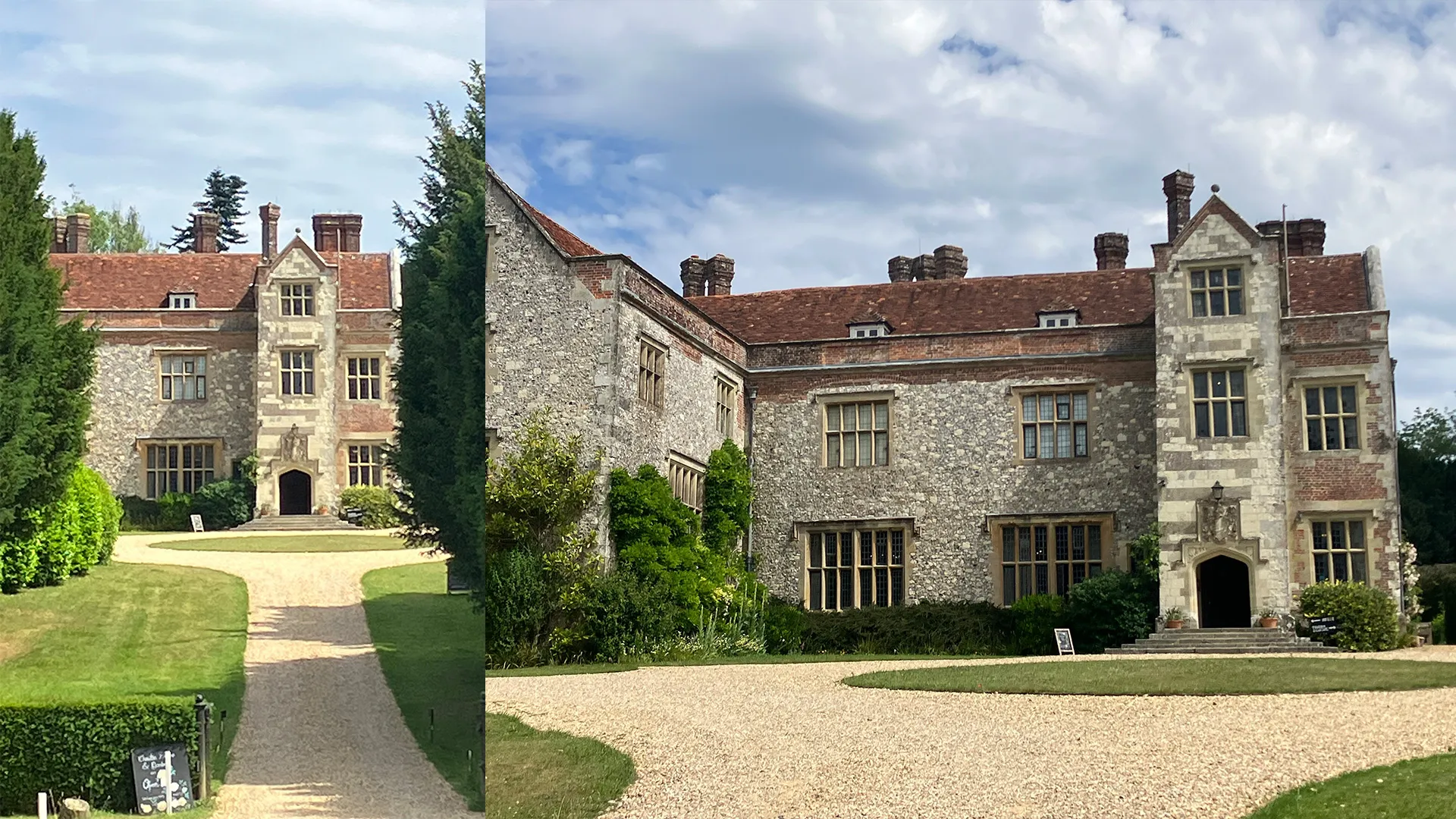
Less than a half mile from Jane’s cottage stands her brother Edward’s manor house. Adopted at a young age by his father’s second cousin—who was childless—Edward Austen Knight eventually inherited this grand Chawton House and its surrounding estate. When Edward and his family were in residence, there was a steady stream of visits between the cottage and manor house. (Most of the time, Edward lived at his other estate, Godmersham Park.)
Today, Chawton House welcomes visitors for tours, serves food and drink in its cozy tearoom, offers a north-wing apartment for rent, and is home to a remarkable library featuring early editions of works by women writers from 1600 to 1830.
St. Nicholas Church
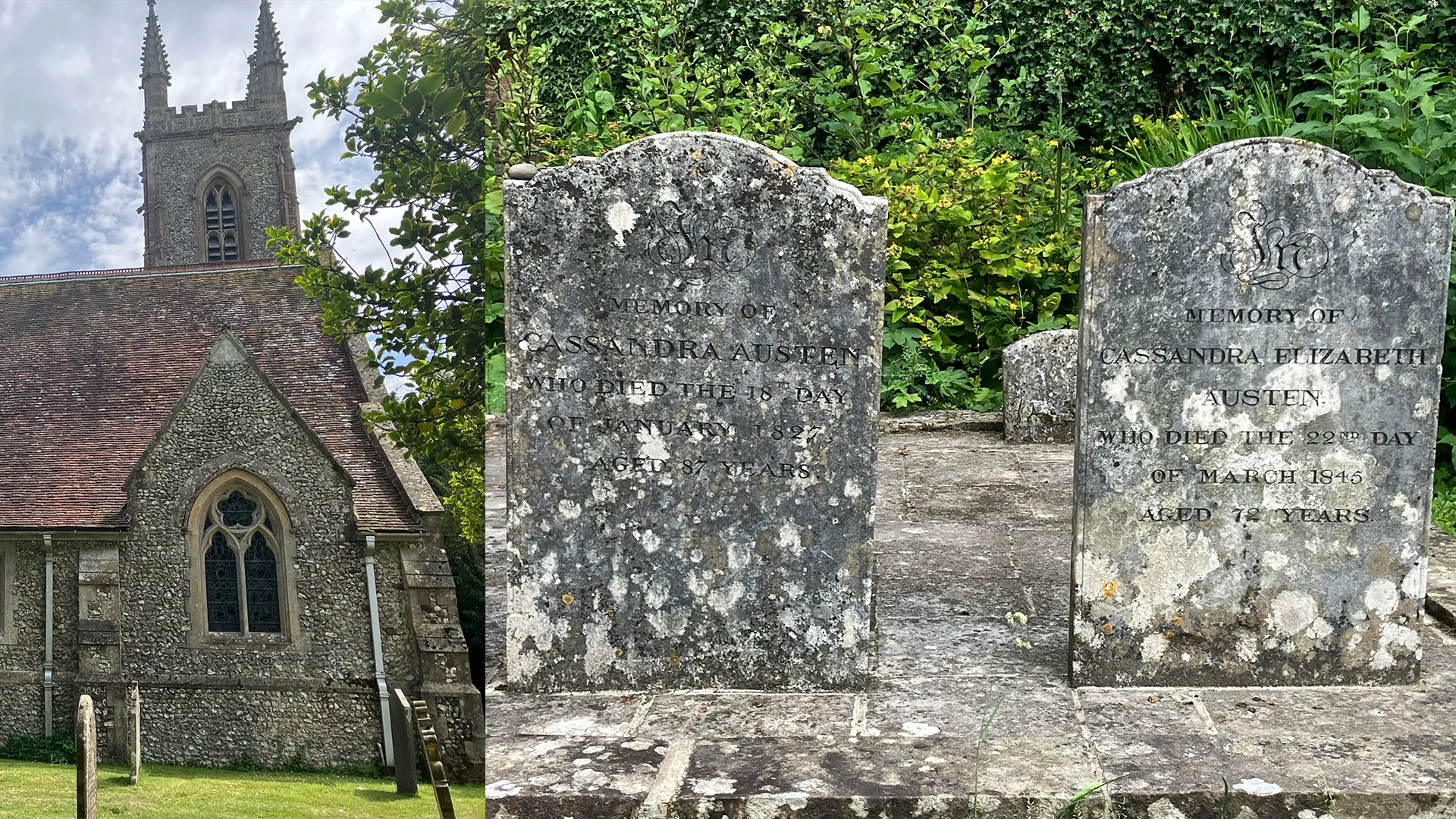
St. Nicholas Church sits on the grounds of Edward Austen Knight’s Chawton House estate, and it’s the place where Jane worshipped from 1809 to 1817. The core of the church dates back to around 1270, though it was later rebuilt in a Victorian style. The graves of Jane Austen’s mother and her beloved sister Cassandra are in the small churchyard. Both lived at Chawton Cottage until their deaths—her mother in 1827 at the age of 87, and Cassandra in 1845 at 72.