
The Forsytes' Tuppence Middleton on Understanding Her Character & Herself
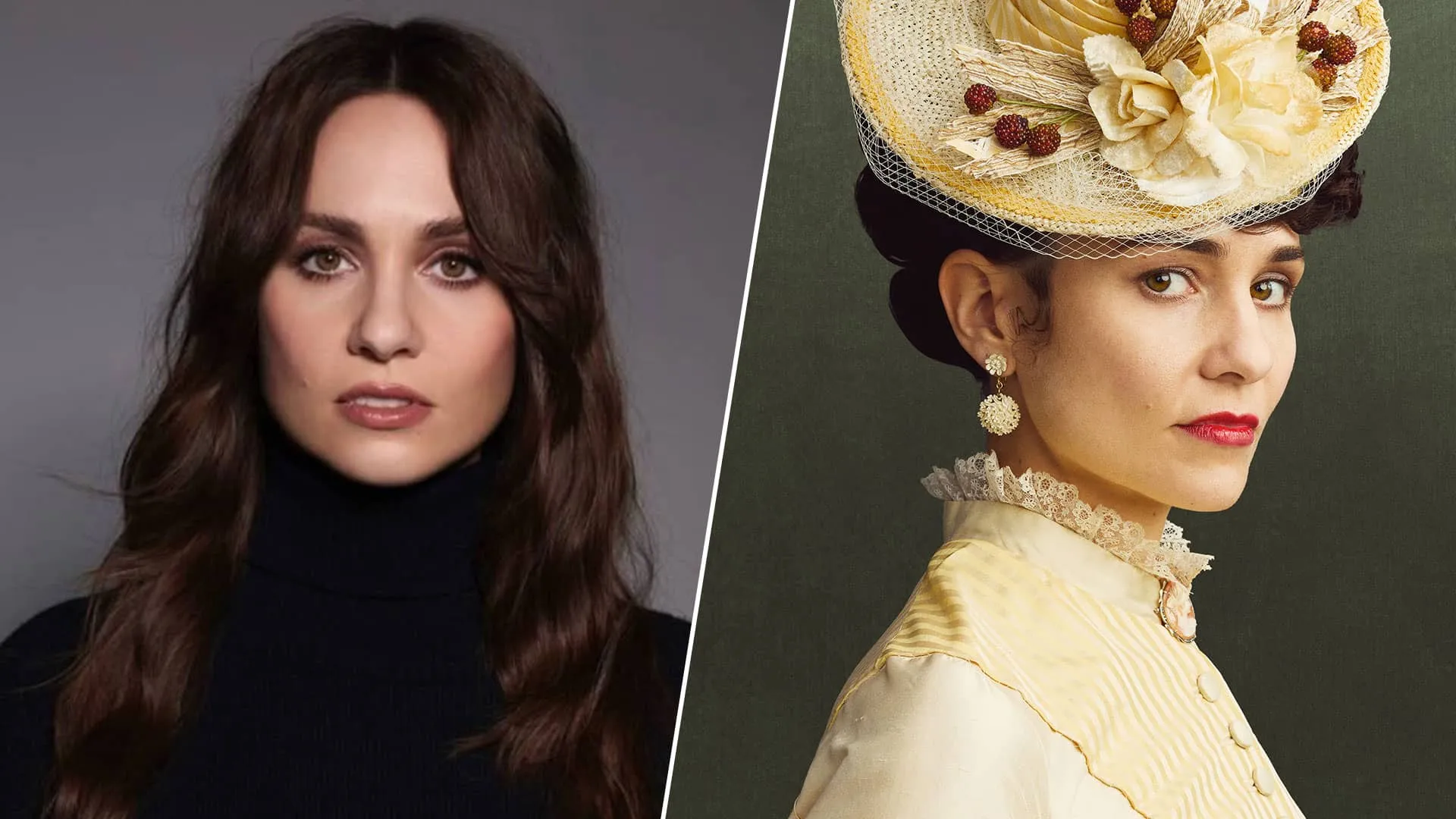
Tuppence Middleton has taken on everything from sci-fi (Sense8) to epic adaptations (War & Peace), and in the new period drama The Forsytes, she plays high-society beauty and power wife Frances Forsyte. In an interview with MASTERPIECE, Middleton shares insights about her character's love, her marriage, and her controversial actions after a shocking revelation. She also talks about her fascinating 2025 memoir and why she wrote it. [Note: This interview contains spoilers for Episode 5 of The Forsytes Season 1.]
MASTERPIECE:
If The Forsytes was set in the present day, Frances would definitely be head of Forsytes & Company, she’s such a strong and savvy character. What do you love most about her?
Tuppence Middleton:
When I first read the script, I loved how she really knows how to take her place in a world and a society which doesn't value women. It's very hard in the late Victorian era to make your stamp as a woman and to know your value. And I think that she always had, for me, such a headstrong sense of self.
And although she wasn't a Forsyte by blood and was brought in to elevate the status of the Forsyte family, she almost feels more of a Forsyte than any of them because she understands that world and thrives in a world where she can adapt and manipulate the people and situations around her—not necessarily in a bad way, but to get what she wants. And she understands the nature of business and the nature of their business.
In a sense, I think she's really found her place, and she's made the best of what could have been a kind of dire situation, having been widowed when her child was young and then there wasn't always the certainty of her being married into another family. And so I think more than anything, aside from her wit and her charm, I love that she's a survivor.
MASTERPIECE:
By evicting Louisa and her family in Episode 5, Frances takes some pretty drastic actions that are at once reprehensible, but also somewhat understandable. What do you make of it, and what was it like to play?
Tuppence Middleton:
Part of the draw, initially, in playing Frances was that there was so much complexity to her, and it was important for me and for everyone making the show that she wasn't an unlikable character. She very easily could have slipped into that, because she does some things that are very questionable and at times feel like they're self-serving, even if her intentions are good.
She's not a good guy, she's not a bad guy—she's flawed, and that's what it is to be human, and so in a way, she's one of the most human, relatable characters in The Forsytes. I think we can all put ourselves on either side of that situation and question how we might react, and you don't ever really know until it happens to you. And I think that she's only ever doing what she thinks is the best for her family, even if that means making some difficult decisions along the way.
MASTERPIECE:
Do you think that Jolyon was the right match for her?
Tuppence Middleton:
I think he was as good a match as any in this world where you oftentimes can only hope to be with someone that you vaguely get on with. Marriage at that time was not for love, and you were lucky if you found that along the way. But I think she understands the transaction. She understands that she brings something to the marriage and he brings something to the marriage. Are they soulmates? Probably not. But could they learn to love each other? I think yes, and they do to a certain extent.
A really important thing for us was that the marriage feel strong and genuine, otherwise where's the conflict? Where's the decision for Jo? I think it needs to feel like he's not leaving something which he hates being in. Yes, they're different people, but they had a strong relationship before Louisa comes into their life. So it has to be a real decision, and a hard decision.
But is there someone out there for Frances who is a better match? Absolutely. I think someone who understands the social context of the world they're living in and who enjoys the kind of pomp and the duty of that in a way that Jolyon just never has. And there's probably someone who understands his artistic sensibilities a lot more than Frances does. But something in those opposite kind of characteristics works for them, or at least has done up until the point where we meet them in the story.
MASTERPIECE:
It almost seems like Jolyon Sr. would have been a great match for her!
Tuppence Middleton:
There's even one point in the first series where he says, "Oh, I had wanted to choose you for myself," where he thought it might have been a better match. And realistically, it probably would've been. But I think what they found instead is this real mutual understanding, a real kind of a genuine non-judgmental friendship, which is so supportive for each other. They both need that in this world.
And they both love Jo and understand Jo and have spent their lives with him. So in a way, there's no other person who understands their predicament as much as each other. They share a lot of future goals and visions for the family, and are both concerned with the succession of the business falling into Jo's hands rather than Soames.
MASTERPIECE:
Frances' costumes are absolutely incredible. What do you think her costumes reveal about her character?
Tuppence Middleton:
I was so lucky because as soon as we started fittings for Frances, Nick Ede, the costume designer, said, "I'm so excited about Frances because she's the one who I've allowed the most dresses for, because it has to be fashion forward and it has to feel risky and expensive and elaborate.” And so we really got to play around with all those things, and the more sort of embellishment you have, the grander you feel, and you hold yourself in a different way.
A great thing is that there were such different looks for each of the characters for the hair and makeup as well. Frances was experimenting with crushed pigments on the lip; using some stronger colors on her—and having very ornate hairstyles, very precise and elegant and quite held—was a good reflection of how she is in that first series, that she's presenting a front to the world. Even when she doesn't feel it, she dresses how you want to feel, in a way that makes you feel good.
Those darker, richer, deeper colors hint to something more luxurious, something darker. Not that she's a bad guy, but it's kind of a nice contrast with the very earthy colors of Louisa, the very free dress and hair that she has. I think it's a nice contrast for Jo.
MASTERPIECE:
Something I think viewers will be interested to learn is that somehow, amidst all of your film and television and stage work and being a mother, you have managed to write a memoir. Can you share what it's about and what the experience of writing the book was like for you?
Tuppence Middleton:
It’s a memoir called Scorpions, sort of like an immersive creative nonfiction of my experience of what it's like to live with OCD, obsessive-compulsive disorder—I've always thought of it as a nest of scorpions living in my head—and how I coexist with those scorpions. But I tried to make it feel as varied and surprising and strange as the condition itself in terms of the way the book is formatted, so I didn't want it to necessarily be a linear story.
I'd touched upon [my experience with OCD] in interviews before and had then continued to be asked about it, and I never quite felt that I had given it enough time or had valued it enough in terms of: What would I have liked to have read when I was 11, 12 years old and I started to have symptoms of OCD? What would've been helpful for me to hear?
And I feel like these tiny, sort of clickbait-y headlines about it, for me, was not sort of fair—it didn't give enough value to the subject and to my experience of it. So I felt like if I could write the book that I would've loved to read when I was that age, when I was growing up, and to see myself reflected in that, then I would've felt like I'd achieved something useful.
In a way, it coexists with me all the time, but it's a very separate part of myself, and I wanted it to be available as a separate thing, to direct people that way. And reading it back felt like a sort of instruction manual to myself.
So it's been a really great experience. I've had such wonderful feedback from people who either know someone with OCD or who have it themselves and felt like they recognize themselves in some of what I was talking about. And for me, that's the most important thing. If it helps one person to come to terms with something or to just not feel like they're quite so isolated, then that's a winner.