
The Surprising History of WW2's VE Day
At the start of All Creatures Great and Small Season 6, Darrowby erupts in celebration as Victory in Europe (VE) Day marks Nazi Germany’s surrender. The series captures the joy of the moment, but in reality, VE Day across Britain was bittersweet. Jubilant crowds flooded the streets, even as grief for lost loved ones and the realization that the war wasn’t completely over tempered the nation’s happiness. Here are a few interesting things you might not know about the close of World War II in Europe.
Hitler Died Just 7 Days Before VE Day
Germany’s capitulation was imminent in early May 1945, as Allied forces advanced from the west and Soviet troops stormed Berlin from the east. Facing certain military defeat and wanting to avoid capture, Adolf Hitler died by suicide on April 30 in his underground bunker in Berlin. His death underscored Germany’s rapid collapse, with the war in Europe coming to an end just days later.
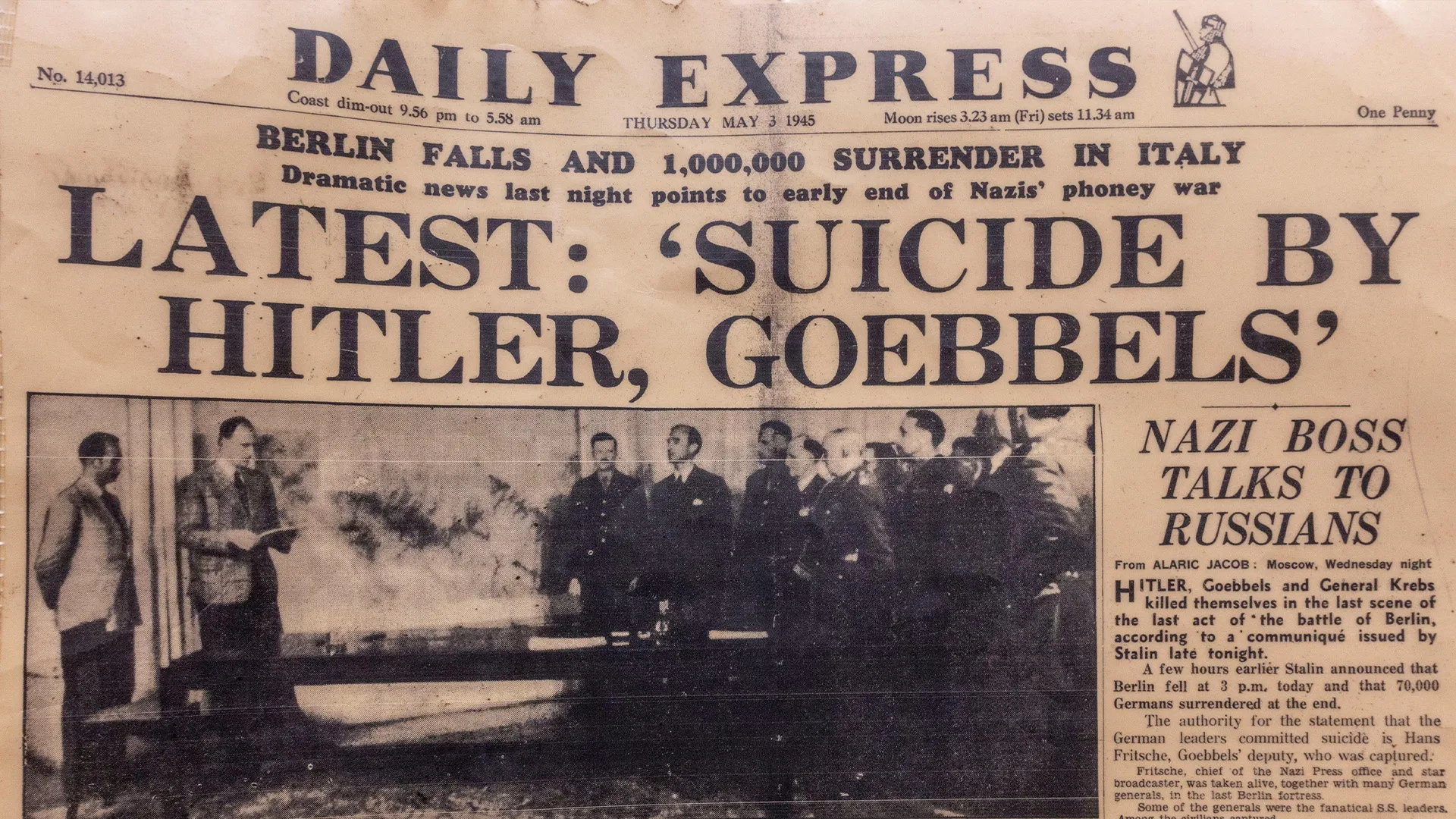
Front page headline following death of Adolf Hitler, Daily Express, May 3, 1945.
UK Government Prepped for VE Day Parties
Germany surrendered unconditionally on May 7, 1945 in Reims, France. Britain then announced that May 8 would be a national holiday, or "Victory in Europe Day.” Prime Minister Winston Churchill moved quickly to ensure celebrations ran smoothly, reportedly even contacting the Ministry of Food to secure enough beer for revelers. Despite this, pubs ran dry as festivities stretched late into the night. Merrymakers splashed in fountains, lit roaring bonfires, and even slept on the street, and the police cheerfully turned a blind eye for the night.
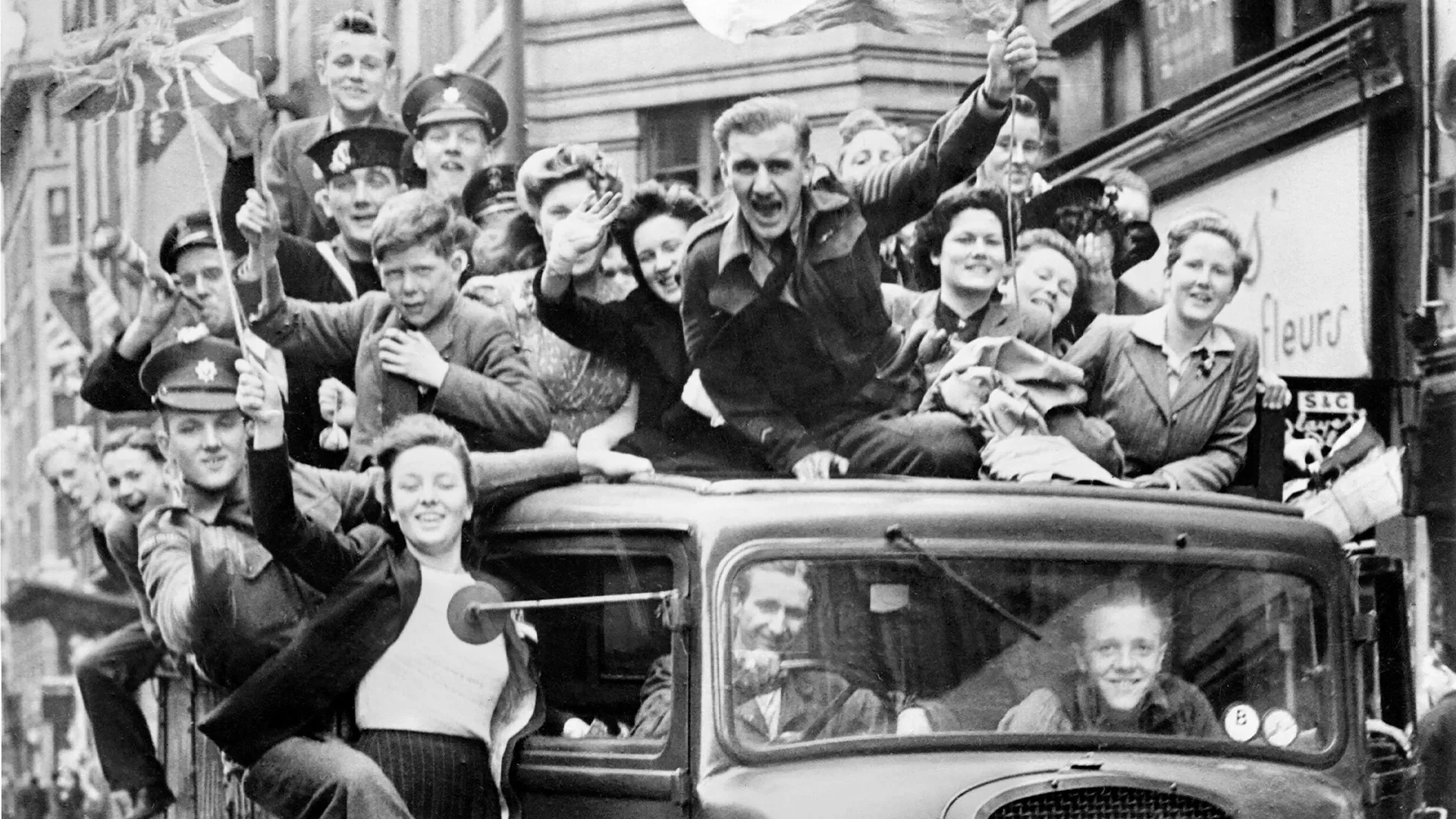
VE Day, London, May 8, 1945
Royals Partied in the Streets on VE Day
As Churchill announced the war’s end in London, crowds poured into the streets from Trafalgar Square to Buckingham Palace. The future Queen Elizabeth II and Princess Margaret secretly joined the throngs—Elizabeth disguised in her Auxiliary Transport Service uniform—even joining conga lines with the public. Elizabeth later described it as “one of the most memorable nights of my life.”
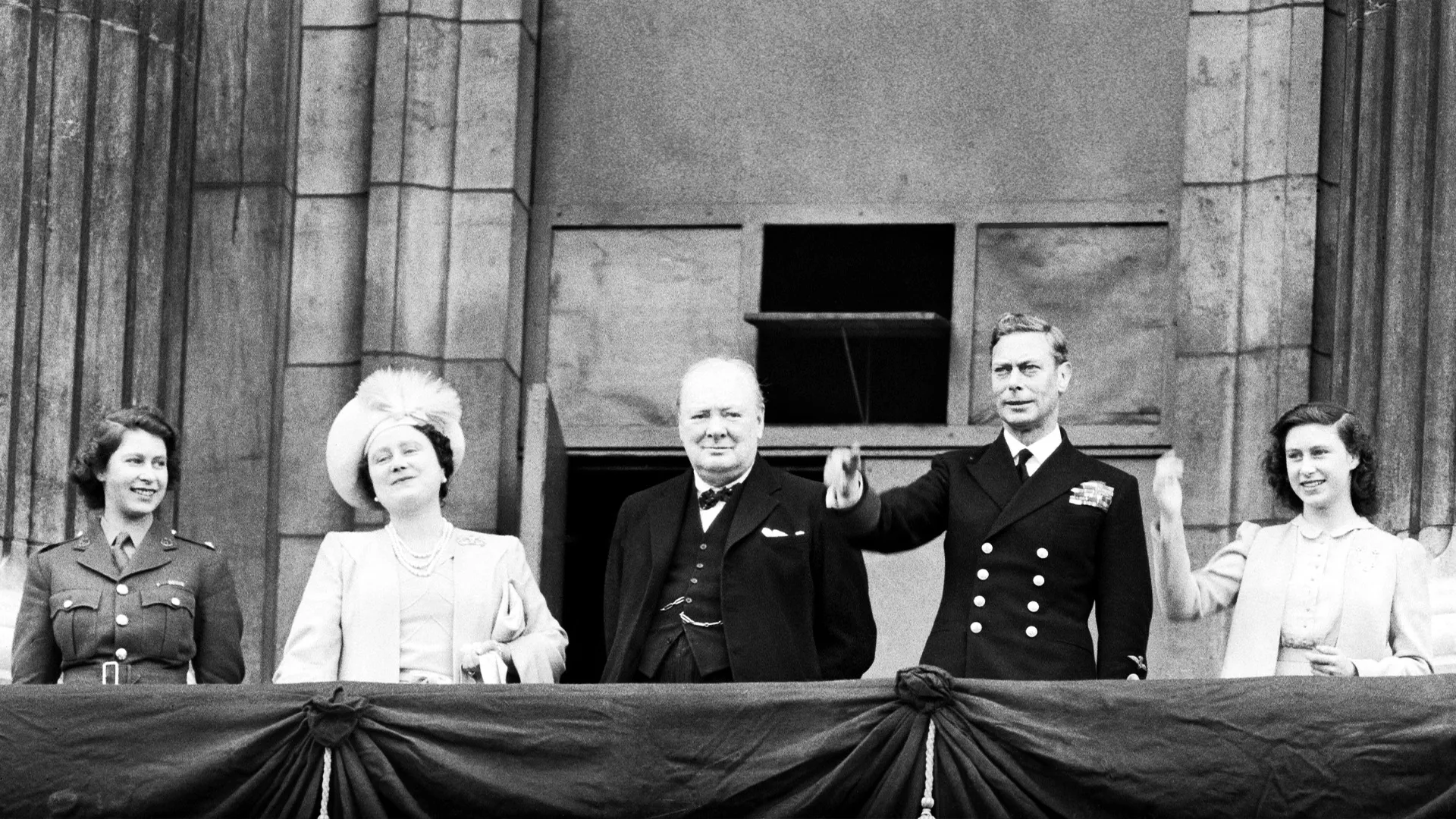
Winston Churchill joins members of the Royal Family on the balcony of Buckingham Palace during VE Day celebrations. Left to right are Princess Elizabeth, Queen Elizabeth, Mr. Churchill, King George VI, and Princess Margaret.
Britain also Celebrated its Allies on VE Day
VE Day celebrations in Britain were not just about celebrating Britain itself. As the country marked victory in Europe, it publicly acknowledged the crucial role played by American and Soviet forces. Union Jacks were displayed beside the Stars and Stripes and the Soviet flag, emphasizing Allied unity rather than British triumph alone. In fact, the UK government temporarily relaxed rationing rules to allow the purchase of flags and bunting without using precious coupons.
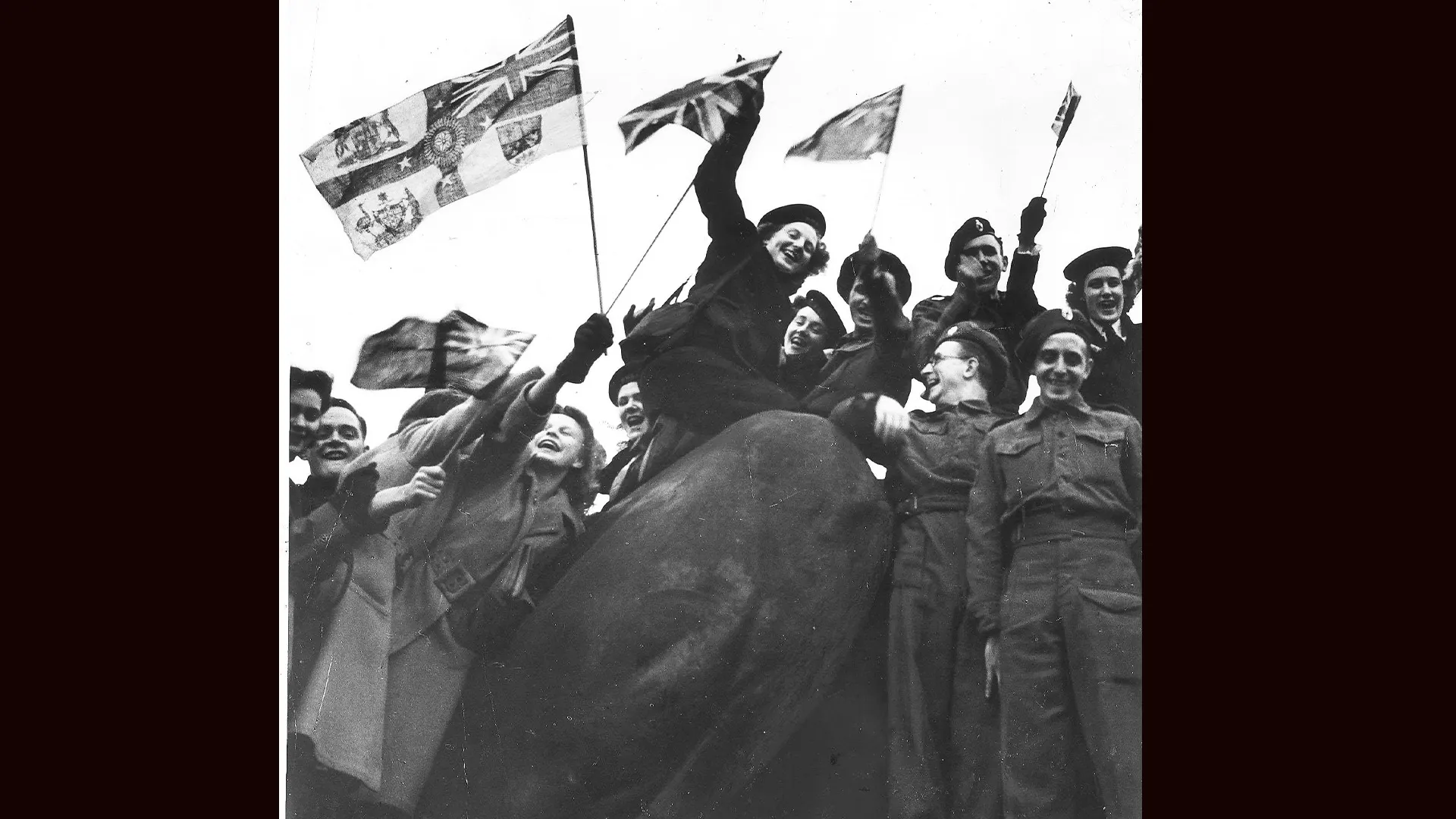
VE Day celebrations in Trafalgar Square London 1945 at the end of WW2 in Europe
Stalin Demanded a Second Nazi Surrender
Soviet leader Joseph Stalin wasn’t happy with Germany’s May 7th capitulation in Reims, France. He wanted changes to that agreement, the presence of higher-ranking German officials, and for the formal act to take place in Berlin, the heart of Nazi power. As a result, William Keitel, Chief of the German Forces High Command signed another, slightly revised surrender document in Berlin close to midnight on May 8, 1945.
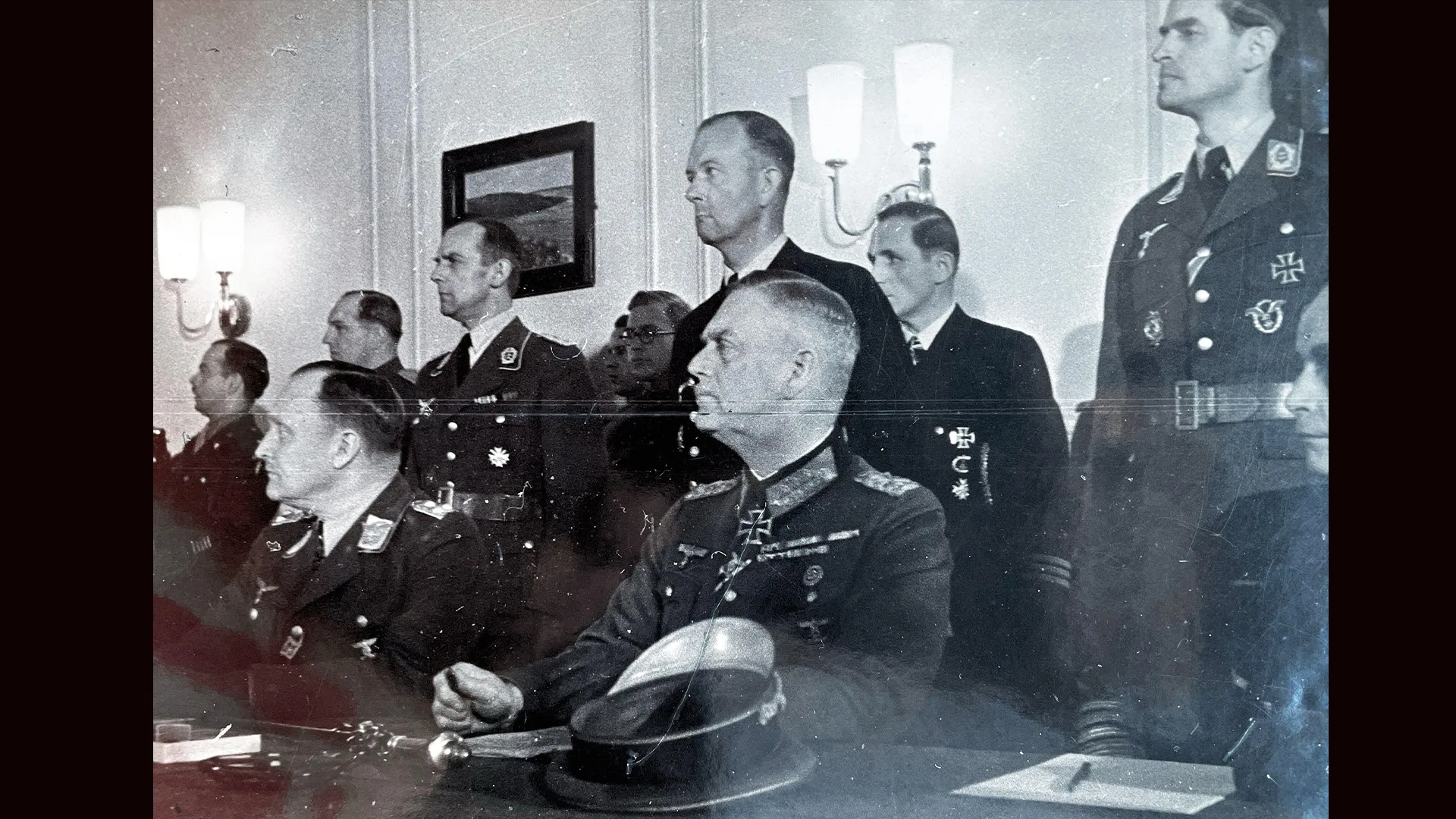
Wilhelm Keitel (1882-1946) at center listening to the surrender terms in Berlin, 8 May 1945 before signing on behalf of the German Army.
UK Rationing Increased after VE Day
After the initial elation of VE Day, food shortages continued and in some ways worsened. Britain emerged from the war financially exhausted and deeply in debt, with a severe lack of foreign currency—especially US dollars—needed to buy imported food. The burden of feeding the British occupation zone in Germany further strained resources. Bread was rationed for the first time in July 1946, a major blow since it had been exempt during the war. Rationing continued until 1954, with meat the final item to be de-rationed, reflecting the war’s lasting economic impact.
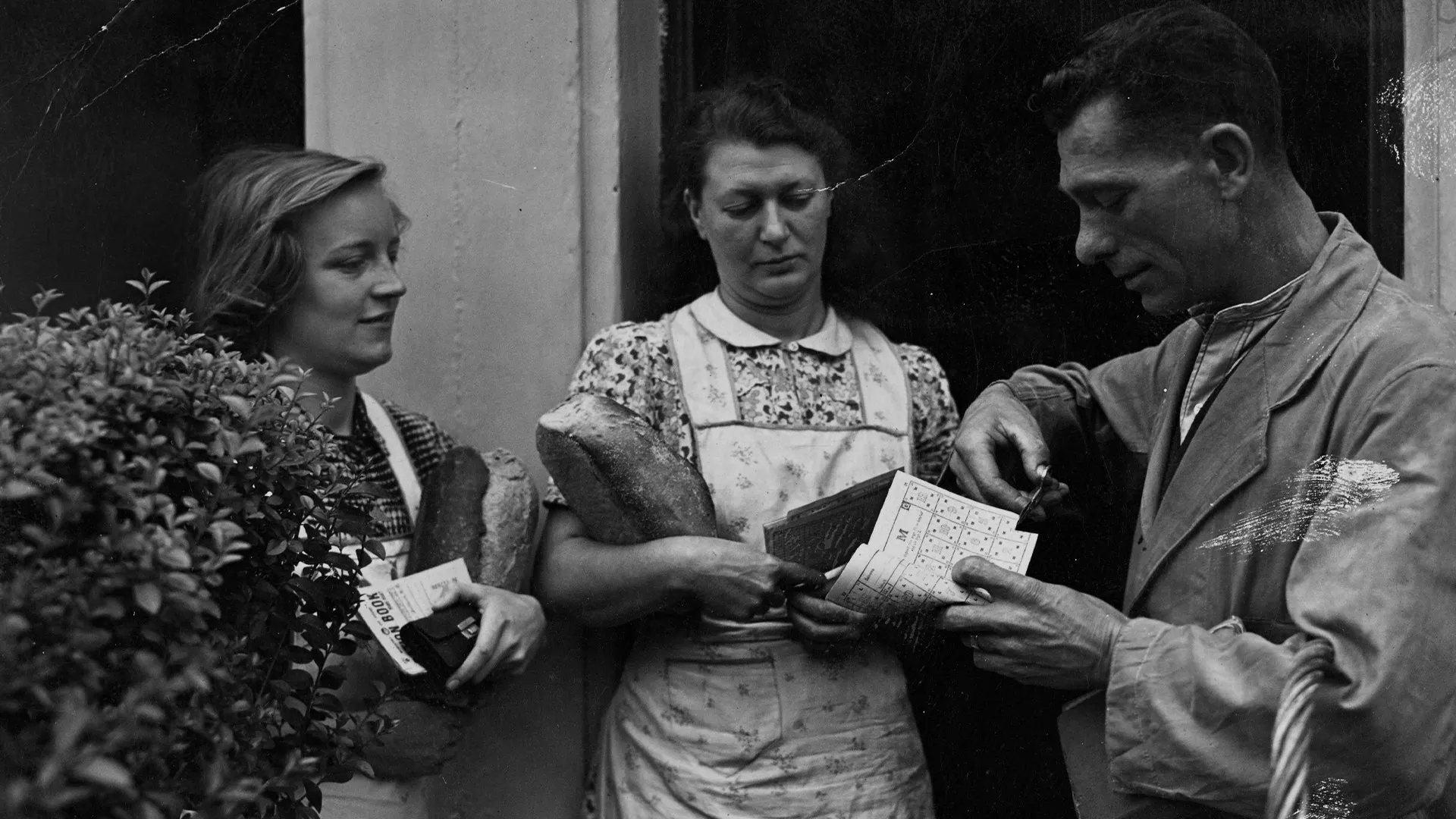
A baker's deliveryman cutting BU's (bread rationing units) from a customer's ration book at Stratford, London, 22 July 1946
More History
Find other features on the real history in All Creature Great and Small as well as a Major Events Timeline for WWII.
James Herriot (Alf Wight)’s Real WWII Experience
The Real People Behind the Characters in the Series
Victory Gardens in WWII
Homing Pigeons in WWII England
Beasts of Burden in WWII
Requisitioned Estates in WWII Britain
WWII’s ARP and Blackouts in Rural England
Who Were Land Girls and What Was the Women’s Land Army?
The Surprising Real History in Season 4