AI & "Evolution"
BBC Studios
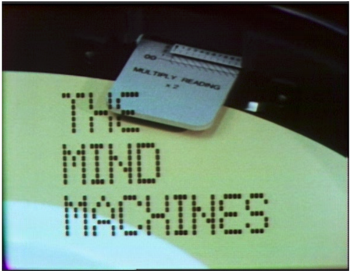
NOVA has been following the evolution of artificial intelligence since it was a zygote. In our 1978 film The Mind Machines, Arthur C. Clarke predicted, “I think that what we’re doing now is in a sense creating our own successors. We have seen the first crude beginnings of artificial intelligence.” In 2011, we aired Smartest Machine on Earth following IBM Watson’s victory over the world’s best Jeopardy! players. Then came Can We Build a Brain? in 2018 and AI Revolution in 2024.
But using generative AI in the creation of a NOVA film? Now, that is new.
AI is a technology we've covered for decades, but it's one we've approached cautiously as a production tool. Over the past few years, we've carefully explored where it can and cannot support our filmmaking, always making sure we uphold the standards that matter most to us and to our audience. No matter what tools are used, every NOVA production adheres to GBH’s and PBS's core principles of Accuracy, Fairness, Inclusiveness, Independence, Accountability, and Transparency.
In that spirit of transparency, we wanted to share a little about how AI was used in our five-part series Evolution, a co-production with the BBC.
Related
A.I. Revolution
How A.I. is fighting wildfires
Can Technology Detect Deepfakes Better Than Humans Can?
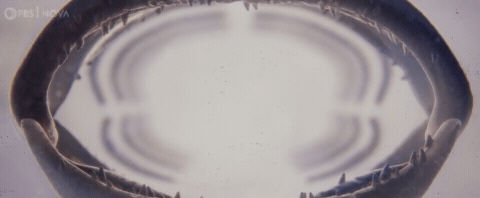
Visualization of early placoderm jaws.
BBC Studios
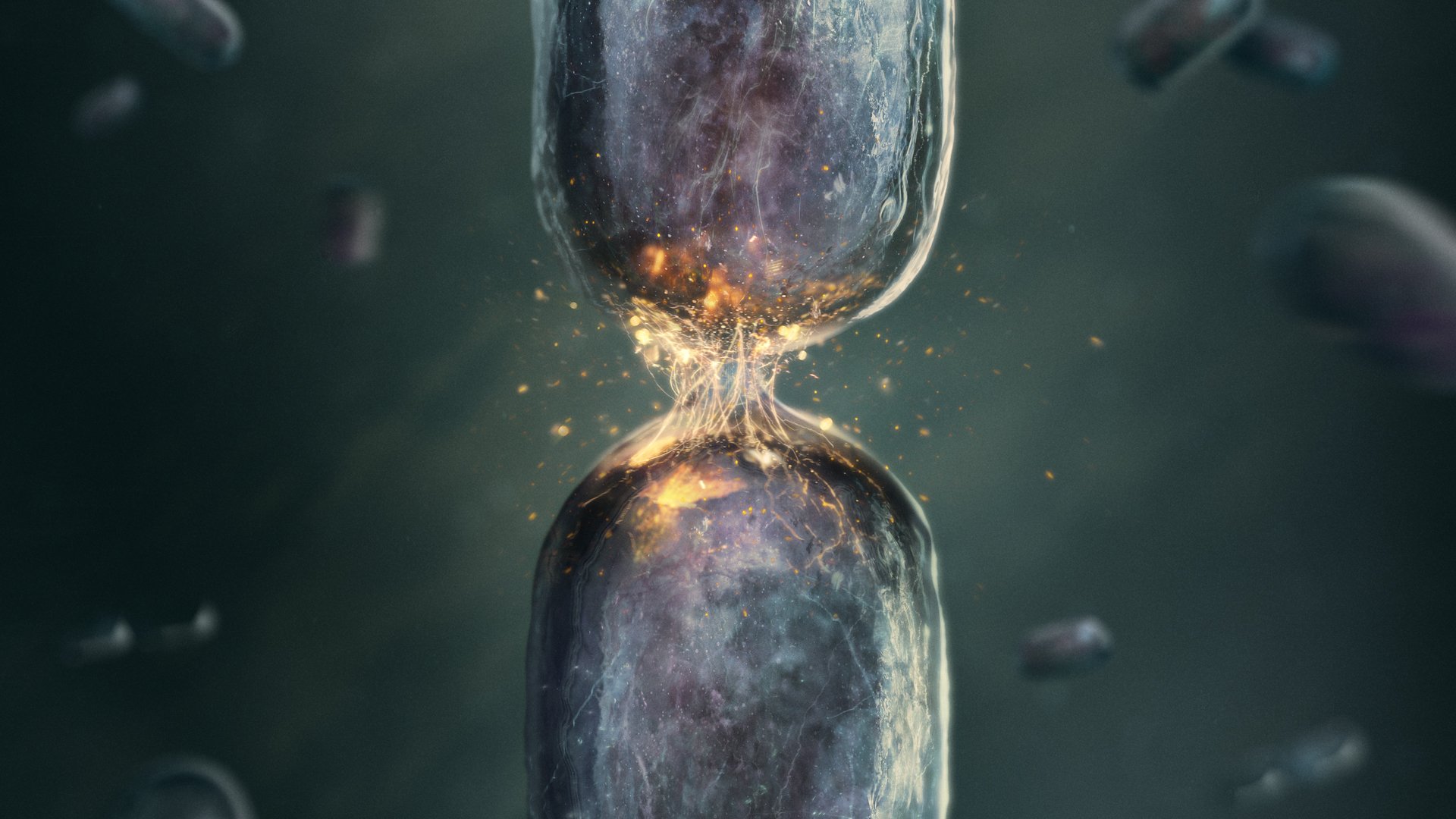
Scientists often have fossil evidence of an ancestral species and its descendants, but not every intermediate form that existed between them. To aid visualizing those transitions, our graphics team used AI tools to generate stills of multiple possible intermediary forms based on fossil evidence at the beginning and end points. Those stills were fed into the animation to create a timelapse effect.
Importantly, these graphics are not intended to show a definitive evolutionary pathway. In fact, you'll notice that the final sequence does not depict a single smooth transformation. Evolution rarely follows a straight line. Instead, the visualization presents many possible routes between two known points, reflecting both the evidence we have and the uncertainty that remains.
Throughout the process, the team worked closely with dozens of paleontologists and evolutionary experts to ensure all the visual effects sequences were rigorously accurate. The result for the AI-assisted sequences are visualizations that help audiences imagine possibilities where evidence is incomplete, while remaining grounded in the best available research. The irony wasn’t lost on us that the evolution of AI itself is now helping us bring the story of life’s evolution to the screen. And if the story of evolution has taught us anything, we expect that the way we use these tools will also continue to evolve over time.
Series Academic Consultant Peter Holland, Linacre Professor of Zoology at the University of Oxford, who reviewed all of the visual effects sequences, explains: "We have abundant evidence for evolution from anatomy, fossils and DNA, and about which species are most closely related to each other, but sometimes we don’t know the precise pathway taken. The use of the morph sequences to convey the non-linearity of this process actually allowed us to better imagine what the process actually looked like.” In addition to Professor Holland, the series and its visuals received scientific and historical input from over 75 Scientific Advisors and Expert Reviewers, who are credited on each episode.
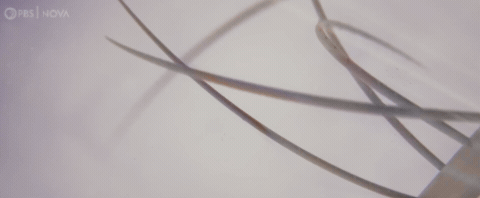
Visualization of the earliest proto-feathers.
BBC Studios/Moonraker
Want to learn more? Below is a Q&A with the Evolution graphics team.
How did you make sure your use of AI was scientifically rigorous?
- Scientific accuracy is integral to Evolution as a series. As part of our research process, we worked with dozens of scientists and palaeontologists over the course of the production to help avoid making mistakes with anatomy or creature behavior. Authenticity had to underpin the visual effects before we could begin to craft the beautiful shots that would drive the storytelling. We decided that we would use AI, not to create the core content, but to help convey the concept of generational change in the evolutionary morph sequences. The AI software helped to create ghosted timelapse elements that would have proven too time-consuming for the team by conventional means.
All final shots in each evolutionary transition were also checked for factual accuracy by the Series Academic Consultant, Professor Holland, and by the Scientific Advisors and Expert Reviewers credited on each episode.
Can you think of an example that explains this?
- One example would be a sequence where we illustrate the evolution of jaw bones in mammals. Through traditional visual effects techniques we created a sequence of shots showing the progression of bone morphology whereby the bones shrink, move and detach, ending with the configuration we now recognize in the inner ear. Whilst technically accurate, first versions felt too linear to be scientifically accurate and failed to convey a sense of chance mutations along the path. This was a crucial element of the storytelling without which evolution’s branches could be incorrectly perceived as being inevitable. We settled on using AI software to help create hundreds of tiny aberrations that could be overlayed with our original VFX shots, adding a layer of generational chance that had been missing from earlier versions of the sequence.
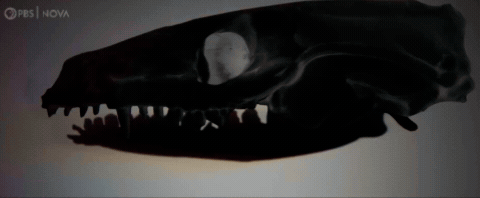
Visualization of early mammal-like jaws.
BBC Studios
How did you come up with the inputs for these visualizations?
- For each evolutionary story, we were presented with an extensive reference pack of illustrations and photographs of fossils sourced from scientific experts from around the world. Next followed a circular process of sign off, where our VFX team re-created the relevant anatomy in the series style and sent them back off to the team of Scientific Advisors and Expert Reviewers for review and feedback. Once the sequences had a green light from that team, the inputs were selected from keyframes in the animation and the hundreds of tiny variations generated.
How many different graphics or animals did you make using AI tools?
- Over the five-episode series, we created eighteen sequences of shots that involved integrating AI elements.
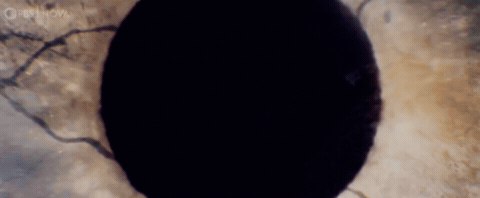
Visualization of the evolution of the camera-eye.
BBC Studios/Moonraker
Why was using AI software the right approach?
- Considering the number of shots and the number of frames which had the ‘ghost’ of a small evolutionary deviation, it would have been unfeasible to generate the thousands of elements in a traditional way. We had experimented with ways of jittering the image with alternative processes but none of them conveyed the narrative point as clearly, while remaining true to the underlying scientific research and findings.