Does A Universal Genetic Recipe for Monogamy Exist?
By fine-tuning the expression of a similar set of genes, mammals, birds, frogs, and fish may have all capitalized on a common toolkit in the transition to monogamy.
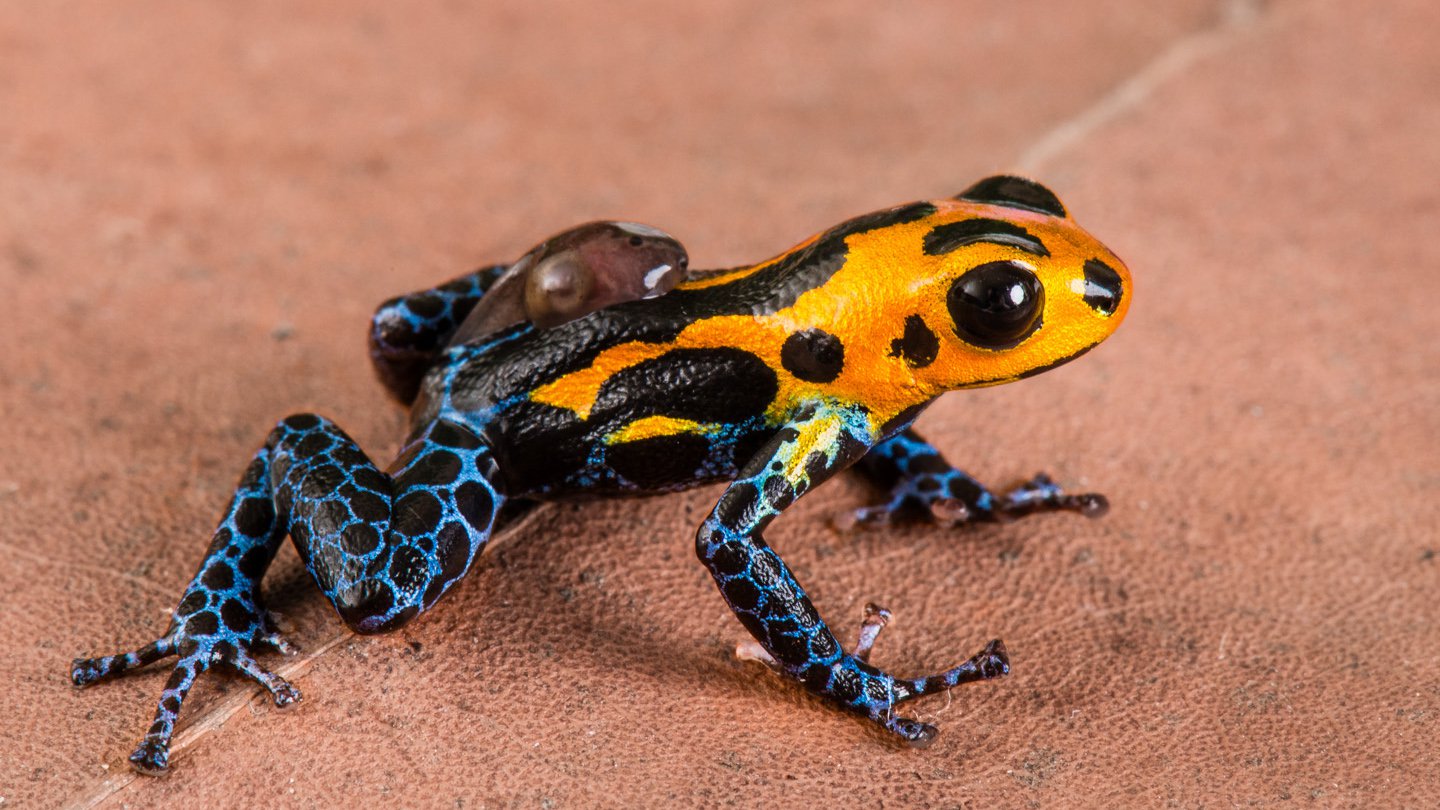
In non-monogamous strawberry poison frogs (Oophaga pumilio), moms transport tadpoles on their backs after they hatch; however, in their close relatives, monogamous mimic poison frogs (Ranitomeya imitator, pictured), the task falls to dads. Image Credit: John P. Clare, Caudata.org; Seánín Óg, flickr
Birds do it. Voles do it. Even poisonous frogs do it. When it comes to monogamous mating, there are countless ways to couple up. But while the modus operandi of commitment may differ across the tree of life, if you zoom in far enough, things can start to look awfully familiar.
According to a new study published today in the journal PNAS, the brains of monogamous animals may share a common genetic signature. Though rodents, birds, frogs, and fish are separated by 450 million years of evolution—and a panoply of promiscuous predecessors—it seems that, in these species, evolution has fiddled with the same set of genes to keep commitment on the mind.
“These species are so evolutionarily divergent,” says Hopi Hoekstra, an evolutionary biologist who studies the genetics of animal behavior at Harvard University, but was not involved in the study. “There are so many reasons you might think you wouldn’t get this result... it’s really remarkable.”
Promiscuity may not be all that romantic, but in many animals, it’s the standard way of life. Less than 10 percent of mammalian species sustain steady relationships over long periods of time. And when you think about the economics of devotion, it actually makes a lot of sense to swing: Maintaining fidelity to just one partner or a single set of offspring takes time away from finding new mates and, by extension, new opportunities to pass genes on to the next generation—especially if you’re male. In other words, putting all your eggs (or sperm) in one basket can be quite a costly strategy.
All the same, sometimes the payoff is worth the investment. Monogamous mating has evolved time and time again in vertebrate species—each instance independent of the others—and seems to help couples and their offspring thrive. Once prairie voles find a partner, their unions can last a lifetime. Certain songbirds may serenade their mates into sticking around for good. Even amphibians like poison dart frogs can make for devoted dads that attentively parent their young.
Fidelity doesn’t always manifest in exactly the same way, but it’s an option that animals from all walks (and flights and swims and waddles) of life have turned to time and time again. As a group, committed critters are more likely to bond intimately with their mates; aggressively defend their territory; be raised by both mothers and fathers; and look similar across the sexes (as opposed to peacocks or deer, whose males sport plumage or antlers—and tend to operate on the more philandering end of the spectrum). These common motifs suggest that, when it comes to monogamy, evolution could be capitalizing on a similar set of molecular tools.
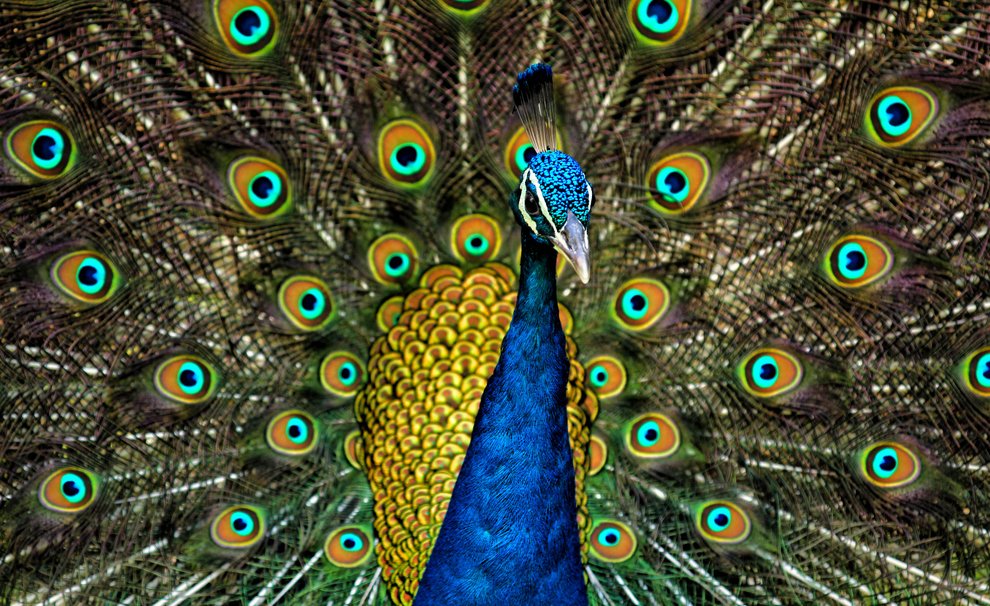
Promiscuous male peacocks flash their colorful plumage to attract females, which are noticeably more drably feathered. Males and females of monogamous bird species, on the other hand, tend to resemble each other more. Image Credit: Jatin Sindhu, Wikimedia Commons
To test this possibility, a team of biologists led by Rebecca Young and Hans Hofmann of the University of Texas at Austin extracted genetic material from five pairs of vertebrate species that haven’t shared a common ancestor for at least 400 million years. Each pair represented a separate instance in which a lineage had yielded a monogamous species, as well as a closely-related, non-monogamous counterpart: prairie voles (Microtus ochrogaster) and meadow voles (Microtus pennsylvanicus); California mice (Peromyscus californicus) and deer mice (Peromyscus maniculatus); water pipits (Anthus spinoletta) and dunnocks (Prunella modularis); mimic poison frogs (Ranitomeya imitator) and strawberry poison frogs (Oophaga pumilio); and cichlid fishes Xenotilapia spiloptera and Xenotilapia ornatipinnis. In all cases, the researchers used only reproductive males, and focused entirely on brain tissue (as it turns out, love really is all in your head).
Related

When Looking for Love, Darwin’s Finches Choose Mates Just Like Their Parents
Help a Snail Find True Love!

Wild Ways to Find a Mate
At first glance, this list presents a veritable menagerie of misfits with little in common. But when the researchers compared gene expression in all five, they found that the same genetic shifts had been leveraged in each transition to commitment—a core suite of 24 genes that comprised monogamy’s molecular trademark.
It wasn’t the content of the genes themselves that had changed, however. Rather, in monogamous species, evolution had tweaked the genetic equivalent of volume control, allowing some genes to blast their instructions to the cell’s protein-producing machinery on loudspeaker, while others were muffled into silence.
Despite their outwardly differences, five species spanning millions of years of evolutionary change had managed to converge on the same playbook. Turns out, there may just be a sort of universal language of love—one inscribed in the very contents of the genetic code.
“One might think that something like mammalian monogamy would be nothing like fish monogamy—that we would use higher, more complex processes,” says Justin Rhodes, a biologist studying genes affect behavior at the University of Illinois at Urbana-Champaign, but who was not involved in the study. “But this work is saying, well, no. There’s a lot of common molecules involved.”
Among the genes that rose to prominence in steadfast species were factors that are thought to affect learning and memory, or make the brain more amenable to change—hinting at a sort of behavioral flexibility in monogamous males. Young thinks it’s possible that hardworking family guys may benefit from this kind of cognitive firepower.
Until these genes are tested one by one, however, it’s too early to definitely say what’s actually going through the heads of monogamous males. “A clear next step could be manipulating these genes and seeing if that changes behavior,” Hoekstra says. “Can you get a promiscuous male to start providing parental care? That would be really cool.”
Of course, even if there are commonalities between species, the complexity of the researchers’ findings also shows that there isn’t just one “monogamy gene”—or even one way to be monogamous. “There’s a conserved theme at the molecular level, but also a lot of variation on that theme... even within populations and individuals,” Hofmann explains.
For instance, “monogamous” isn’t always equivalent to “faithful”: The term refers not to a code of conduct, but a repetitive pattern of behavior. Getting attached to a single mate at a time certainly doesn’t preclude the tendency to stray—and many monogamous animals regularly engage in a little infidelity here and there.
Tinkering aside, monogamy’s encore act is telling, Hofmann says. The packaging may differ, but these sorts of evolutionary echoes indicate that, with the same building blocks lying around, there’s been little reason to reinvent the wheel.
Moving forward, the researchers plan to test if these patterns hold true in other monogamous species. “I think we would go in with the prediction that we’d see the same genetic signature in other vertebrates,” Young says.
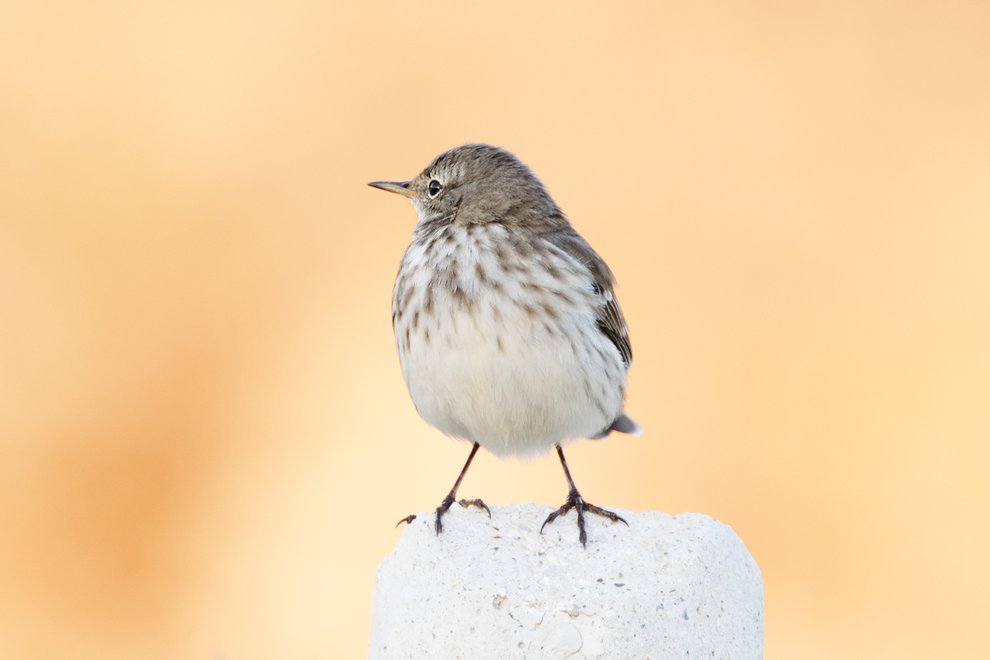
The water pipit (Anthus spinoletta) is mainly monogamous, although both males and females will occasionally deviate from their pairs. Image Credit: Zeynel Cebeci, Wikimedia Commons
Does that include primates—like us humans? It’s complicated. The topic of human monogamy remains a contentious topic: On one hand, people do tend to get pretty attached to each other, and fathers regularly parent their kids. But not all hallmarks ring true—and many human cultures aren’t strict about the practice of monogamy.
The researchers didn’t include people in their study for a variety of reasons (including the ethical dubiousness of grinding up the brains of virile young men). Still, humans are vertebrates, and we share much of the anatomical and chemical machinery that enables monogamy in other species. As such, there are likely to be at least some overlaps in behavior, Hofmann says.
From the outside, animals take just about every shape and form. But deep down—at the heart of it all—there exist some striking similarities. “We’re not apart from other animals,” Hofmann says. “We are animals. What happened millions of years ago still affects what we look like, our physiology, our behavior. And not acknowledging that is a mistake.”
 Katherine J. WuPosts By This Contributor