|
||||||
|
|
|
|
||||
|
|
||||||
|
|
|
|
||||
|
|
|
|
||||
|
|
|
|
||||
|
|
Smashing Pictures |
|
||||
|
|
|
|
||||
|
|
|
|
||||
|
|
|
|
||||
|
|
|
|
||||
|
|
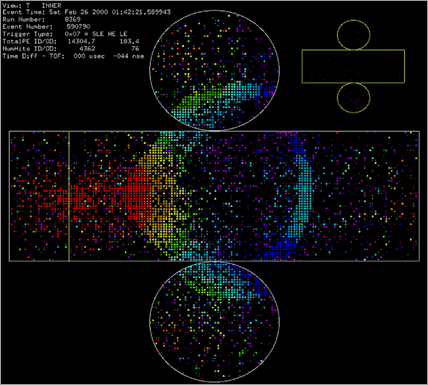
One method of measuring neutrino oscillation is to compare the difference in the number of muon neutrinos produced by the KEK proton synchrotron accelerator in Tsukuba, Japan, and the number that reach the Super-Kamiokande detector 155 miles away. In this image a muon neutrino interacts inside the 1,000-ton water tank at KEK and creates a muon. The muon emits a ring of Cerenkov light as it slows down in the water. The color coding denotes the time of arrival of the light and is used to verify that the neutrino came from the direction of the accelerator. |
|
||||
|
|
||||||
|
|
|
|
||||
|
||||||