|
||||||
|
|
|
|
||||
|
|
||||||
|
|
|
|
||||
|
|
|
|
||||
|
|
|
|
||||
|
|
Gallery of Auroras |
|
||||
|
|
|
|
||||
|
|
|
|
||||
|
|
|
|
||||
|
|
|
|
||||
|
|
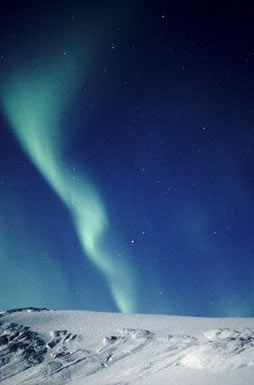
The aurora borealis is seen here over Iceland's Vatnajokull Ice Cap, the largest ice cap in Europe, on February 15, 1999. The aurora appears in a band shape and gets its blue color from nitrogen 60 miles or less above the Earth's surface. There are many other auroral forms—coronas, rays, spirals, and arcs, to name a few. Observers of auroras sometimes think that the variety of shapes corresponds to fluctuating weather conditions. In reality, auroras take on roughly the same shape each time they appear, but they look different depending on the viewer's perspective. (They can also be blown by the wind.) |
|
||||
|
|
||||||
|
|
|
|
||||
|
||||||