|
||||||
|
|
|
|
||||
|
|
||||||
|
|
|
|
||||
|
|
|
|
||||
|
|
|
|
||||
|
|
Gallery of Auroras |
|
||||
|
|
|
|
||||
|
|
|
|
||||
|
|
|
|
||||
|
|
|
|
||||
|
|
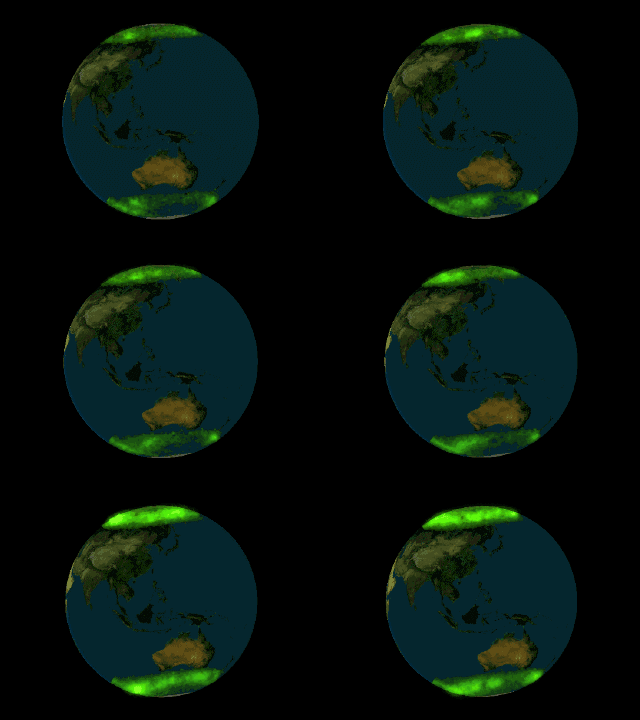
On September 16, 1770, while exploring the South Pacific on the HMS Endeavour, Captain James Cook saw what he described in his diary as "a phenomenon...in the heavens in many things resembling the Aurora Borealis." On the flip side of the Earth, in the Northern Hemisphere, residents of northern China observed an aurora on the same night. (The event was recorded in the Qingshi Gao, a Qing Dynasty almanac.) Scientists have long suspected that auroras in the Northern and Southern hemispheres are conjugates, or mirror images, occurring at the same time. But hard evidence eluded them. For two decades, NASA studied the auroras and tried to capture an image of simultaneous auroral loops at both poles. Finally, their Polar spacecraft filmed this movie on October 22, 2001. It shows the auroras dancing around both poles at the same time. Analysis of the movie has shown that while the auroras appear to be mirror images, they have subtle differences. |
|
||||
|
|
||||||
|
|
|
|
||||
|
||||||