


Genetically Engineering the Avian Flu
- Teacher Resource
- Posted 09.08.09
- NOVA scienceNOW
This video segment adapted from NOVA scienceNOW examines the threat of a virus being spread from birds to humans, and then from humans to humans. It details the mechanisms viruses use to infect cells, and explores how mutations in a virus may change its virulence and how it can spread. It also looks at work being done with a re-created flu virus—from the deadly 1918 strain—that may help prevent future flu pandemics.
Permitted use:  Download and Share


- Media Type: Video
- Running Time: 5m 08s
- Size: 15.4 MB
- Level: Grades 9-12
Log in to Teachers' Domain to download, share, rate, save, and match to state standards.
Source: NOVA scienceNOW: "1918 Flu"
This media asset was adapted from NOVA scienceNOW: "1918 Flu".
Background
Normally, it's not easy for humans to get infected with an animal virus. However, in recent years, deadly outbreaks of avian (bird) and swine flu in humans have been reported worldwide. To contract an animal-borne flu, a person must come in direct contact with an infected animal or its excrement. Infection cannot happen through consuming its meat. And if a person becomes sick, it's very difficult for that person to infect another person.
But because influenza viruses are subject to rapid genetic change, or mutation, especially in mammals, there is reason to believe infection may spread in unprecedented ways. For example, experts are indeed worried that if someone gets a human flu virus and an animal flu virus at the same time, the two viruses may share genetic information and create a new strain capable of infecting either of the species. This could in turn cause a global epidemic, or pandemic, that could kill millions of people.
The influenza pandemic of 1918, also known as the Spanish flu, was the deadliest flu pandemic in recent history. Approximately 40 million people died worldwide. It was spread through a strain of influenza A virus called H1N1—the same strain detected in the 2009 outbreak of swine flu. Dr. Terrence Tumpey, who is featured in this video segment, became interested in understanding the genetic mechanism responsible for such deadly virus strains, especially those that move across species. To answer the questions of whether people infected with an animal flu could infect other humans, and just why these virus strains can be so deadly, Dr. Tumpey decided to recreate the 1918 H1N1 flu virus.
Using genome sequences that were recovered from a 1918 flu victim who was buried in Alaskan permafrost, Tumpey engineered a live virus with the full genetic sequence of the H1N1 flu. Dr. Tumpey's rationale for re-creating the virus was that he had no living virus or infected tissue to study. The only way to really understand the virus, the genes responsible for its extreme virulence, and how scientists might develop antivirals to guard against a future pandemic, was to experiment with the real thing.
Many other scientists have argued that there is no compelling reason to conduct these experiments, especially with the risks involved. These include the unintended release of the reborn virus into the public if the scientists were unintentionally exposed to it or through an act of bioterrorism. Nevertheless, the U.S. National Institutes of Health supports the research. Preliminary results suggest that just two small changes in the 1918 virus stopped it from spreading between mammals in the laboratory. Insights like this may help scientists prevent a future flu pandemic.
To learn what happens inside a cell when a virus attacks, check out Immune Cells in Action and Dengue Virus Invades a Cell.
Questions for Discussion
- How is the avian flu virus transmitted?
- Explain the role of the hemagglutinin and neuraminidase genes.
- What reasons does Dr. Tumpey give for experimenting with the 1918 and avian flu viruses?
- Why is Dr. Tumpey's radical approach to "virus engineering" controversial? What are the potential benefits of this approach?


Related Resources
-

1918 Flu: Expert Q&A
Microbiologist Terrence Tumpey, whose team revived the virus, answers questions about the 1918 flu and its recreation.
-
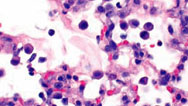
1918 Flu
A virus that killed up to 50 million people is brought back to life to decipher its deadliness.


