
Read Full Transcript EXPAND
Hello everyone and welcome to Amanpour & Co.
Here's what's coming up.
Ukraine is not beat.
This lot, they don t go on fighting.
They do not want to be in Russia.
As the latest U.S.
effort to bring Putin to the negotiating table flounders, I ask former NATO deputy supreme allied commander General Rupert Smith what s next for Ukraine and for its allies plus a champion us.
I mean, I never ever want to separate women from men.
Men have their stories.
We don t have enough stories as women.
We need to see ourselves.
The legendary photographer Annie Leibovitz tells me about capturing female power and her latest project, "Women, Volume 2."
Then... I think there are people in the grassroots and I think there are people in right-wing media as well who are unhappy with how the second term is going and are sort of looking towards 2028, trying to position themselves and realizing that sort of the Trump era of the Republican Party is not going to last forever.
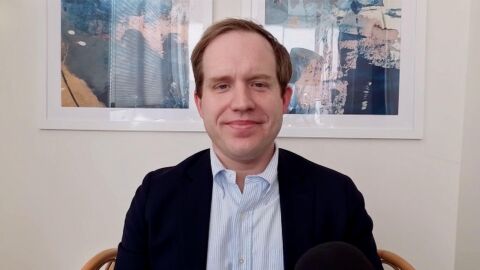
Senior reporter at The Bullwalk, Will Sommer, tells Michel Martin about splits in Donald Trump's MAGA base.
Amanpour & Co.
is made possible by t committed to bridging cultural differences in our communities.
And by contributions to your PBS station from viewers like you.
Thank you.
Welcome to the program, everyone.
I'm Christiane Amanpour in London.
A week of intensive U.S.
diplomacy has wrapped up with no Ukraine deal in sight and escalating threats from Moscow.
Ukrainian officials were also back in Miami trying to get their deal approved by the U.S.
This comes after President Trump's top negotiators left a five-hour sit-down at the Kremlin without a breakthrough on territory, security guarantees or a cease-fire, i.e.
all the important points.
Moscow, though, has called the meeting "useful and constructive."
But at the same time, it is using these delays to keep pummeling Ukrainian cities and taking more territory, including Pokrovsk.
Now, Putin says he plans to conquer all of Ukraine's eastern Donbass using any means necessary, including military force, something he has not been able to manage in the last 12 years since first invading.
With Moscow dragging its heels on a ceasefire now, where can Ukraine and its allies turn for a path forward?
Well, 30 years ago, the Dayton Agreement brought an end to the savage war in Bosnia, where like Putin's dream of a greater Russia now, Serbia wanted more land and more control, not an independent Bosnia.
It ended after finally NATO ramped up military pressure against the Serbs, which led to a ceasefire, and then tough negotiations with the US and its allies that brought the Balkan warring factions to the table.
Rupert Smith was commander of the United Nations Peacekeeping Forces at the end of that conflict.
Through his four decades in the military, he also led troops in the first Gulf War and in Northern Ireland.
Experiences he describes in his book, "The Utility of Force."
And he joined me here in London to map a way out of the Russian war on Ukraine.
General Sir Rupert Smith, welcome to our program.
Okay, so this has gone on for four years in Ukraine now, this latest iteration of the full-scale invasion.
We're nowhere closer to peace, and we'll talk about that in a minute.
Bosnia went on for around that length of time as well.
You write and you talk about an essentially transformative moment, a moment that meant the West could no longer look away and just sort of sit there while Rome was burning.
Describe that.
Well, the event is Srebrenica and the atrocities that followed on from the fall of the safe area.
Srebrenica was the massacre that shocked the world and shocked the West, I think, out of its apathy and made it more willing to use force to stop this war finally.
This would be the classic sort of diplomacy backed by the threat of and the use of force.
So tell me what you did to sort of "unlock" that key.
You will recall that I am building up a force at the time called the Rapid Reaction Force, because I didn't see that air power alone is capable of doing what everyone wanted it to do.
But the result was that at about a month after Srebrenica, I would have this force in place.
It was an armoured force.
I had armoured vehicles.
I had guns.
And now I was going to have NATO airpower in support.
So I now had a... I could make a fist.
At that point, the trigger for me to use force, which was the Serbs shelling the marketplace in Sarajevo, an incident that had happened earlier, about a year before, became, if you like, the reason that I could now act.
So I acted.
First we got some of my fingers out of the fire in the case of pulling people out of the way, and then I acted.
And at that stage, I communicate with Richard Holbrooke and say, I'm just about to do this.
Do you want to?
This is going to have an impact on what you do.
Do you want me to communicate?
And he said, no, I don't.
I'm not going to do it.
It's nothing to do with me.
Get on with it.
So that's what I did.
I chose to break the siege of Sarajevo.
That seemed to me to be the most useful strategic act I could do with this force.
So that's what we did.
That means attacking in some form the forces of the Bosnian Serbs who were around Sarajevo.
And then, with a mixture of artillery and air power and my armoured forces, we broke the siege of Sarajevo.
So I remember that.
Obviously, I was there and it was a big, big deal.
That then led to the enabling of Richard Holbrooke's further diplomacy and then bringing all the parties together at Dayton, which we've just celebrated for 30 years.
Well, you miss out a point.
It led to a ceasefire.
It takes that long because, for very good reasons, the Bosniaks, particularly those inside Sarajevo, weren't going to cease fire until the gas was back on, the electricity was back on, and the water was flowing again.
Because you recall, that was all part of the siege.
And that took quite a lot of engineering effort to do by the UN and so forth.
So, there was a ceasefire, and then there was the negotiations, and then eventually the end to the war.
There is no talk of a ceasefire right now.
They just keep talking about a plan, a peace plan.
So, from your perspective, how do you think that, I mean, must there be a ceasefire before anything else, and how do we get there?
Well, you have to stop fighting.
And that's a ceasefire.
Whether the ceasefire is permanent or not is another matter, and whether it leads to a resolution or a peace agreement or whatever we want to call it, a state of peace, is another matter altogether.
But there has to be a ceasefire.
Well, so far Putin has rejected any idea of any monitoring force, so there's that.
And then the other thing is, Ukraine has said yes, yes, yes to this, that and the other, but we can't do anything without security guarantees.
What do security guarantees look like for you?
They've got to be a lot better than those, like the Budapest memorandum, Ukraine gave up the nuclear weapons that it had inherited in '91 from the Soviet Union.
So that was, that's the, and this largely because Russia, a guarantor, had invaded, that negated, it was said, that memorandum.
So nobody in Kiev is going to buy that.
And certainly the man on the street isn't going to buy it.
So you're going to have to produce some pretty copper-bottomed guarantees.
Now, I do not know what Kiev would be satisfied with, but it's got to be a sufficient guarantee to deter any further invasions.
So if you were to guess, or to not guess, to use your educated, experienced view of this, what do you think is going to happen in the next year?
What do I think now?
I mean, I was in Kiev last month.
Ukraine is not beat.
This lot are going to go on fighting.
They do not want to be in Russia.
I don't see this ending, nor would I want them to end.
So, no, the fighting will go on.
The ground will freeze, the skies will clear, and the military situation will be different again to the one at the moment.
But I don't see the fighting stopping.
What do you think, and I'm not going to make this personal, but certainly from the United States, they keep telling Ukraine you have no cards to play, you're on the defensive, if you just keep going you're going to create World War III, you know, various things they keep throwing at Ukraine, and they seem to believe Russia's narrative that it can win.
Obviously Putin believes he can win, he's telling Trump that he can win, he tells whoever he's talking to that he can win.
What do you think Russia's chances are on the battlefield, since it's been 12 years, not 4, 12 years?
Sure, sure.
I mean, you're answering my question.
They're not doing very well.
For an enormous army with, you know, lots of kit and all the rest of it.
It's learning very fast on the job, but it still isn't doing very well in any measure over the last four years.
It's fighting an extremely expensive, in terms of manpower at least, attritional war along the front, costing them considerably.
Now, they've got lots of manpower and they're fairly careless about their losses, but nevertheless, there's a cost to all of this.
And to take your point about what Russia's saying, of course they're going to say that.
And even more important is to understand that in the Russian strategic logic, the information operation that surrounds your actual fighting is as important if not more important in your overarching strategy.
So throughout this story, and we can go back to into the 90s, Russia has been conducting a very deep, prolonged information operation to deny that Ukraine is even a state, that they should even be considered a state because they're so corrupt and so on and so forth.
Ukraine inherited everything from Russia, so if Ukraine is corrupt in the year 2000, so is Russia, but it's being played as Ukraine all the time, not Russia, etc.
etc.
Okay, so this obviously has an impact on what people think about Ukraine.
So let me ask you then, because there's a huge corruption investigation right now, Zelensky's right-hand man, Andrei Yermak has had to resign, his house was searched, how much does that weaken Ukraine?
First of all, as I say, this is inherited from Russia.
All those people of the Russian state, on whatever the day was in 1991, are told, "You are Ukrainian."
But otherwise, it was the same lot doing the same things in the same way.
And that is the government apparatus of Ukraine.
And it's a straight Russian model.
And all the progress of Ukraine becoming a state is driven from the street.
It's the Orange Revolution, the Maidan to take them.
That this is the civil society changing their state, not the administration or the government.
And Russia seeks to control the state through its fingers in the old, or in the administration, the old Russian administration that the Ukrainians inherited.
And you can see that in the story of the politics.
By the time this the Ukrainian street slowly makes this more and more unique to Ukraine they gain advantages the Rada changes the Parliament, yeah, the laws change and so on to the point that Russia is losing control so it invades in 14 and seeks to get control and they don't so you have another set of pressures being applied and then ultimately in 22 I say ultimately in the stories therefore they they invade again because they don't have control and each state each case of this is triggered when Ukraine look as though they want to join the EU not NATO the European Union what... That triggered the Maidan... Correct but it goes back further and Putin is terrified I think of a prosperous state on its southern border because he only has to look at Poland and he can see that what happens if when Poland joins the EU in much the same time frame there is a prosperous European state on his western border.
It used to be under his purview.
So that's the story there.
Now to answer your question, this information operation is pernicious and runs throughout Europe and America.
Russia's saying that Ukraine is just endemically corrupt.
Correct, amongst other things.
And we, the collective West, as the Russian call us, are doing very little to counter this.
And that's the sort of line I would like to see us doing to better support Ukraine, be its quartermaster, by all means, keep supplying it with weapons and so forth.
But let's start countering this Russian information operation and stop believing that he says he's winning.
No, you're not.
I can see you're not.
Given what you're saying and how much Ukraine has shown that it can fight and it's fighting Europe's war for it right now, right?
Do you think, do you have any doubt that if Ukraine falls to Russia, Putin will be satisfied and will stop there?
No, I don't think he'd stop there.
And here's why.
If Ukraine falls to Russia, then we, the Europeans, whether you're carrying the NATO flag or the European flag or both, have just doubled the length of the border with Russia.
So we know we don't have a very good amount of forces and so forth at the moment.
Well, if you double the length of the border, you've doubled your problem.
We don't want to do that.
Secondly, a large number of men and material in Ukraine that we have helped provide and so forth, and we have supported them while they've been fighting, have learnt a great deal.
They are, in effect, after Russia, the next biggest army in Europe, and after Russia, the most experienced.
Do we want that on the Russian side, or on our side?
That's how I would think about this prospect.
Well, that's a very good place to end.
General Rupert Smith, thank you very much.
We turn now to a legendary photographer known for her intimate portraits of some of the world's best-known personalities.
Annie Leibovitz amassed hundreds of front covers in her work for Rolling Stone magazine, Vanity Fair and Vogue.
And now, 25 years after the publication of her celebrated Women Collection, she's back with Volume 2.
From writers, actors and musicians to CEOs, athletes and politicians, Gloria Steinem, Venus Williams, Michelle Obama, and even me, full disclosure.
The original idea came from her partner, the late Susan Sontag, but it was recalling the former First Lady Hillary Clinton's famous rallying cry for women in Beijing 1995 that brought Leibovitz to volume two.
Women's rights are human rights and human rights are women's rights, Clinton had declared.
I met up with Annie Leibovitz on her swing through London to discuss this impressive body of work.
Do you consider yourself as somebody who champions women?
Well, I champion us.
I mean, I never ever want to separate women from men.
You know, men have their stories.
We don't have enough stories as women.
We need to see ourselves.
And when we put out that first book in 1999, it was a surprise to me.
-Beginning just to what you just said, women don't have as many stories, men have plenty of stories, but in the first one Sontag wrote, portraits of women featured their beauty, portraits of men, their character.
So Chimamanda Ngozi Adichie, one of the great, great novelists and writers of our time, you have her there, you photographed her several times.
-Yes.
-I mean you took the picture of her is quite long distance, she's sort of in the background of the picture almost, there's a whole library.
Oh, now I'm in the library.
Yes, yes, I mean that's phenomenal.
I want to write what she's written for you.
The first time Annie photographed me more than 10 years ago at my home, she sensed my discomfort right away and knew that it was not merely about my general awkwardness with being photographed.
It was specifically about my belly which was newly postpartum, although I would probably still have worried even if it was.
Annie's sanguine reaction was a relief.
There was no dismissiveness, no judgment.
Well you just don't, you know, it's so funny I think she really sort of tied herself on to what Susan Sontag was writing about.
Susan did talk a lot about the gays and how women are looked at and men aren't looked at that way.
I think Chimamanda didn't have the opportunity to read Gloria Steinem's because Gloria wrote hers.
She sent it over and it was this very nice essay on me.
I called her up and I said, "Gloria, look, thank you very much.
That's great.
We just really want to know what the right now.
Where are we?
Write about yourself.
Please write about yourself."
And she has written about herself, and she's a good writer.
And she took it to task, and I've been rereading that essay just to sort of have a front in front of me because I'm just a photographer.
You're not just a photographer.
No, I am.
You've shaped the way we see our cultural space.
You're not just a photographer.
No, but here's the thing.
Gloria in 2006.
Wait, you have to read this.
I don't want to read this.
No, I'm going to read it.
I'm going to read it.
Wait.
Okay, how we are seen no doubt changes how we see ourselves.
This is for us.
I know many people now feel our country is going backwards, but when you have lived a long life which I am lucky to have done, you have a context of compared to what?
Yes.
We survived McCarthy.
We survived Nixon.
We survived Reagan.
We survived the Obama administration.
We can survive what feels like regression.
A perspective that maybe only my age peers and I can have but being condescended to is progress.
Previously, we were just ignored.
I think that's really important actually for this moment with the rollback of DEI with actually this administration removing women's contributions from the Pentagon from everywhere.
You know, it is so oppressed back in the United States, back in America.
You can cut it with a knife.
You walk down the street.
It's not the same as in London feels, you know, like people are like normal.
I do think actually it's important to have Gloria's perspective there.
I didn't finish it though.
She said you're the tallest and most authoritative, unsure person that I've ever seen.
Why do you think that is?
I mean you just said, oh, I'm only a photographer.
Why do you have been so awarded, rewarded, changed the way we look at public figures and non-public figures?
I mean, you just, you like right up there in the pantheon of our visual history.
What makes you unsure?
I don't know.
All right, we'll move on.
No, no, no.
I, you know, someone just wrote about, wrote about it, was writing about me for the introduction to the show in Spain.
And he saw it, he saw it as a strength.
He, and it's the first time I looked at it and said, you know, that's interesting, you know, to see it as questioning something, stepping back and not being sure, which falls into all those stories about feeling is important.
Yeah, you know, it is.
And actually, you know, as a mother, you know, I know all of that.
Yeah, I'm talking about as a mother.
The book is really for our daughters.
Well, that's really interesting.
I love what Chimamanda said about how you, you know, no judgment, postpartum.
Yeah, what I love is the Rihanna picture.
Oh, yeah, because that harks back to your famous Demi Moore picture.
She is, she's just phenomenal.
I mean she's so smart, so brilliant, such, and she loves fashion and you know she took that Demi Moore picture and blew it out of the water.
I mean she just, you know, she just, you know, you know, she, you know, and so there she is pregnant with her first, first baby that was done for a fashion shoot for Vogue in Paris and then the second baby she's at the Super Bowl and the third baby she's announcing it at the Met Gala.
So she's just out there, you know, she's just being dragged behind a car.
I mean, I just think she's amazing.
What about Michelle Obama?
I just thought that picture was phenomenal.
She's always been an icon, but this is quite something.
How different to the portrait you made for the cover of Vogue, for instance, when they first got in.
We shot many, many times.
The very last one, she was just... it was so painful.
I could tell that she couldn't wait to get out of there on some level.
And so I asked her.
She was one of the first.
I mean, I didn't do too many new shoots for this second... But this is a new one, the Obama one.
This is brand new.
Yeah, it's pretty.
And I asked her if she would sit, and she agreed right away.
And then we got a call from her office saying, "Can Michelle Obama wear jeans?"
And I said, "Sure."
And then she showed up.
But what's interesting about the little clip that she puts on her little Instagram is that you see her preparing to get into that moment and they actually have her, you know, putting her head back like that.
And honestly, you know, I've said this before, but her assistant was standing next to me and she said, "There's my first lady!"
So I also thought it interesting, given all these portraits, you said in a Masterclass video, you don't believe that it's the photographer's job to put their subjects at ease.
Tell me about that.
Because you must have some pretty... I think it goes along with everything else.
I just don't think I do anything special.
I mean, I really do come from... I mean, I thought it was journalism.
It was never journalism.
It was, you know, repitage.
It was personal repitage.
I learned Cartier-Bresson, Robert Frank.
The camera was... When you came for photojournalism or reportage during the siege?
It wasn't all repitage.
You know, we did... I felt a little... I felt I couldn't compete with the great war photographers that were there, you know, risking their lives.
And, you know, it was unbelievable.
But no, I enjoy repertoire.
I don't think I can go back completely.
You know, I mean, I love what I'm doing with the portraits.
I was taught at the San Francisco Art Institute.
I was went into the painting major, took a night class of photography, much more exciting, very, you know, move, you know, move fast, you know, you're a young person, you know, it's painting was, you know, I was a bad painter.
And I started working for Rolling Stone before I graduated, but I learned Cartier-Bresson, Robert Frank, you know, were my idols.
And we learned to frame within a 35 millimeter frame.
So you learn to take the whole frame and use everything you have there.
It's so interesting being alive this long and being able to work in photography and having the opportunity to try so many different ways to take pictures.
In the very first book are a set of pictures that to me were transformable.
I mean to me in so many ways they're the showgirls, which are two pictures and it totally broke up this whole idea that you're not going to get it in one frame necessarily.
And also I'm a huge fan of the photo story.
Tina Brown asked me to work on an issue on women and I thought about, I had made a small list and I thought about showgirls in Las Vegas and I went out to photograph them, met them at night in their costumes and then they came into the studio the next day.
This woman came in, this is really true, this woman, Susan McNamara, came in.
I said, "Can I help you?"
I couldn't recognize her because she came in out of her costume and out of her makeup and I was just sort of, I mean, I still don't know what to make of it, quite honestly.
So I photographed her as herself and photographed her in those clothes and went back to New York.
I said, "Susan, let's do the book."
It was really, there was something.
That was what clicked for you?
Clicked.
Oh, yeah.
Oh, my God.
Oh, my God.
Oh, such a fun.
Listen, I have to ask you because it's such an extraordinary picture and it does define a lot of your oeuvre.
And that is the John and Yoko.
Tell me about that because he was naked, she wasn't.
And of course, it was taken a few hours before he was assassinated.
Yes.
It's still an emotional image to me because it changes with time.
And especially like after he died, after he was killed.
And then some time passed, you look at it and you see it really is, it turns from a story of love to a goodbye.
So that's interesting about photography, how over time the stories sort of change in the imagery.
In my youth, starting to work for Rolling Stone, I had talked Jan Winter into letting me go and photograph John Lennon in New York when he was doing the interviews.
I flew Youth Fair and stayed with friends and John and Yoko couldn't have been nicer.
They were very warm.
It turned out, Yoko told me later, that they were so surprised that Jan picked an unknown photographer to come and take their picture.
That's why they were so nice.
But it really set the bar for me as far as how people should treat each other during these shoots no matter who they were because I of course admired him so much.
So it was over 10 years and Rolling Stone was doing a cover.
I was told before I went out to shoot that day that they really just wanted a picture of John by himself.
You know, no one really liked Yoko that much.
You know, there was still that kind of myth that she broke up the Beatles.
So, you know, I went over to see them at the Dakota and I say to John, "Hey, they really just want me to shoot you."
You know, it's like he said, "Well, we're going to have to do something really, really good.
We're going to have to do something special."
And I was thinking, you know, on their other double fantasy album, They're Kissing, and it's like romance was not that alive in 1980.
And it was beautiful to see them kissing each other.
And so I imagined them in an embrace.
And they just, you know, I put them on the floor in their apartment.
And John, you know, I imagine them both nude, which really wasn't so unusual for both of them.
And since, you know, two versions, they had posed nude before.
Anyway, at the last moment, Yoko didn't really want to take her clothes off.
And I was a little perturbed.
I mean, she... But I didn't know it would be what it was, but she kept her clothes on.
And John's nude and he's clinging to her.
And in those days, before you shot film, you would shoot a Polaroid.
So we pulled the Polaroid, and usually the Polaroid was always the picture, and then you would go take pictures.
You know, it was never as good as the Polaroid.
We pulled the Polaroid, and John looked at it, and he said, "Oh, that's really my relationship."
He was very happy with it, and so we took several more frames.
Then I went away, and I got a call from Jan that night, and he said that John was shot.
So I went over to the hospital and waited to hear a final result that he had been killed.
But I went into Rolling Stone's offices a day or two later, and they were mocking up a single picture of his head.
And I went into Jan's office and I said, "Jan, I promised Jan that they would both be on the cover."
And he did.
He changed it.
He changed it to And it wouldn't have been half as good had it not been the two of them, right?
No.
Because I think all of our sights and energy in that shoot went to doing that photograph.
And it didn't take long.
I mean, it wasn't belabored.
We just did a few frames.
And so, I think I've always been on the side of the subject.
You know, I mean, I'm like, that's why I'm a bad journalist.
I like doing that.
You know, I like seeing the best of people, if I can.
I do have a hard time when I have to photograph someone I don't necessarily like.
I'm not really good at that.
But I think as photographers, as a portrait photographer, you should be able to photograph everybody.
You really should.
Timothy Chalamet, why has that caused such a hullabaloo?
I had breakfast with Anna Wintour and she said, "I love the cover, I love the pictures, I don't read anything, we're just going forward."
Timothy Chalamet was amazing.
When we talked before we started working, he said, "I'll do anything you want to do, let's do it."
And I thought he looked so intelligent and so interesting in this kind of... And I chose the city.
So we're talking about this odd city in the Nevada desert.
Michael Heiser's.
And it was... Honestly, it was the hardest thing I've ever done because Michael said, no, I don't want anyone wearing Gucci shoes in front of something I've worked 50 years on.
I spent some time, I really felt like in our times right now, the city sort of exemplified a lot.
Michael worked on this for 50 years and so he was like, "No."
So I worked on it and it was hard because I was in the middle.
I was trying to not hurt the city or Michael Heiser's work and I was trying to work with Timothy and come up with something that was really different, you know, and interesting and he was totally... he was amazing because it was like a hundred and ten degrees, no... there wasn't a cloud in the sky, I mean it was really, really hard but I loved what we finally did.
I'm proud of the work actually.
I'm really different.
I love Anna for just doing something totally out of this world.
Timothy was supposed to be the little prince, which I couldn't really tell him he was the little prince.
And I let all the fashion go in on the cover.
And the inside was kind of very low key, if not no fashion.
It was just, it was really kind of an experiment, you know, of sorts.
- Annie, thank you very much.
Now to Washington, where the full release of the Epstein files looms, revealing ever growing rifts in Donald Trump's MAGA base.
The president's friendship with the convicted sex offender is causing frustrations to boil over.
Will Sommer is a senior reporter at The Bulwark who has spent years following the MAGA movement and he speaks to Michel Martin about what he's been observing.
Thanks Christiane.
Will Sommer, thank you so much for joining us.
Thanks for having me.
You've been writing extensively, I mean for years in fact, about different strands of the conservative movement, the MAGA movement as we call it.
This has been a very pivotal couple of weeks and months.
I think the signature, the signature issue that I think a lot of people have focused on is a member of Congress named Marjorie Taylor Greene, very conservative member of Congress, some might say a fringe member, but a person who's moved into leadership because of her close association with Trump, has had a very public breakup with him to the point where she is resigning from Congress come January.
How do you read that?
What happened here?
And first of all, what happened with Marjorie Taylor Greene and the president?
But the second bigger question obviously is, does this speak to something else?
Is this unique to those two and their relationship or does this speak to some bigger issue in the MAGA movement?
Yeah, I mean I think the key thing to understand here is that Marjorie Taylor Greene was initially sort of like the ideal of a hardcore Trump supporter.
We know she was a big believer in the QAnon conspiracy theory, which basically posits Trump as sort of like a messianic figure coming to save the world.
As she gets to Congress, she's very supportive of Trump.
But in recent months she has been more critical of Trump, saying, for example, over the government shutdown, she was critical of Republican efforts to end Obamacare subsidies.
And I think especially their big break came on Trump's attempts to withhold the Jeffrey Epstein files.
And so I think -- in some ways, I think this is personal.
She was reportedly told not to run for Senate or to run for governor in Georgia.
And so I think she had some anger there with the White House.
But also I think she is sort of a hardcore Trump supporter who's become disappointed with the direction of the administration.
Is it mainly about the Epstein files or are there other things?
I mean I think it's primarily about the Epstein files and this broader sense that Marjorie Taylor Greene has of almost being too Trumpist for Trump himself, for this idea that she feels that he's abandoned the populist roots of the MAGA movement or what it was supposed to be.
I mean she's very isolationist, she says she's America first and she's been critical of Trump for example for supporting Israel, for bombing Iran, and so she almost seems to be saying you know this is not what I voted for, what I got into politics to support and so that's why I'm going to leave, particularly now that Trump is calling her a traitor.
And speaking of that, I mean this current administration initiative in Venezuela, you know bombing these these boats for on the basis of no evidence being presented that these are drug traffickers as the administration insists they are.
That was one of the issues that the Marjorie Taylor Greene and others who agree with her object to what they consider this kind of adventurism in foreign affairs that doesn't seem to be clearly tied to a specific American interest.
Is this the kind of thing that causes people to question that they're getting what they voted for?
I think Trump's aggression towards Venezuela and these attacks on these supposed drug boats in the Caribbean, I think really play into this kind of disaffection a lot of people, particularly people Trump brought into the Republican Party, are feeling.
I mean, I think the Iraq War in particular really left deep wounds in the Republican Party, this idea that there was this foreign adventuring that had had this huge blowback and it turned into this disaster, both in Iraq and for the United States.
So there's been this kind of reluctance to engage in these sort of pointless wars.
It's been striking to me, as someone who obviously lived through the run-up to Iraq, I remember there was much more of a sense of getting the American public on board, convincing people.
There really seems to be none of that in this case.
There really seems to be, when they're asked, "Well, why are we threatening to go to war in Venezuela?"
There's really no effort to make the case from the administration.
I think for people like Marjorie Taylor Greene, the whole idea of America first, a lot of that was, you know, we're not going to get involved in these reckless wars for no reason.
They're looking at that and they're saying, you know, I thought Trump was going to be this peace president, you know, and they're seeing that that's not the case.
So some people have looked at this and called it the beginnings of a kind of a fracturing.
Some analysts have even called it kind of a civil war.
You don't think that?
Marjorie Taylor Greene is really emblematic because she's such a high profile Republican figure and someone a lot of people know.
And you know, look, I think she is potentially a warning sign for the White House that you have these people who should be devoted Republicans.
I mean, these are not moderates, certainly in Marjorie Taylor Greene's case, by any stretch.
But she's saying, you know, I'm getting fed up with Trump with the second term.
I don't want anything to do with it.
And I think there are a lot of people like that.
I think there are people in the grassroots, and I think there are people in right-wing media as well, who are unhappy with how the second term is going and are sort of looking towards 2028, trying to position themselves and realizing that sort of the Trump era of the Republican Party is not going to last forever.
Margie Taylor Greene has said some really interesting things in various interviews that she's done.
I mean, she says that she regrets her role and sort of the toxicity of this political moment.
Then as to the question of her denouncing sort of U.S.
involvement in Israel and the Gaza war, she is one of the few, if not the only, Republican lawmaker that I can think of who criticized Israel's actions in Gaza, calling it genocide.
And when she was asked about that, she said, well, I just learned about it.
I just heard about it.
And that is why she was moved to make these comments.
Do you think this is kind of what has often been a kind of trajectory for people when they serve in these positions and are exposed to more information than they had previously?
Or is there something beyond it that you can identify that really speaks to a bigger issue with voters in general?
Yeah, I think Marjorie Taylor Greene, you know, personally, I think she's, she appears to be someone who is a really hardcore Trump supporter and conservative and gets to Congress and finds out maybe that things aren't that simple.
And not that necessarily I think she's becoming a liberal or a moderate.
I mean, she's trying to sort of tack to this more sort of, you know, optics, optic friendly saying, you know, I regret my toxic political behavior of the past.
But I do think she's finding out that things are a lot more complicated.
But I think also she is symbolic of a broader trend in the Republican Party, a sort of dissatisfaction with Trump.
And how do you see that?
Where do you see that?
Sure.
I mean, you can look all over.
I mean, you can look at the rise of white nationalist podcaster Nick Fuentes, who's a guy who marched in Charlottesville, is now in his 20s, and has managed really from out of nowhere to build this following among young, particularly young men in the Republican Party, very explicitly racist and anti-Jewish.
He's a guy who a few years ago, I mean, was seen as anathema even within the far fringes of the Republican Party.
They wanted nothing to do with him.
He couldn't come into conservative conferences like CPAC.
But now we see people like Tucker Carlson, who obviously is a massive voice on the right, having friendly interviews with him.
We see fights at the Heritage Foundation, which is a major Republican think tank, over how they should react to Nick Fuentes.
And so you can see figures like this kind of getting inside the party and stirring up trouble in a way that -- and sort of growing their own bases in a way that exists outside of Trumpism and I think poses some problems for the party in the future.
For one example, Nick Fuentes, among other things, has said he thinks Hitler is really cool.
I mean, how is that going to play with the average voter if this is someone who starts palling around with lawmakers or appearing in more media outlets?
Is that the main fault line that you see, these voices that who are pretty much -- whose through line is this extremist form of racism and anti-Semitism?
Is that the fault line you see or are there others?
I mean, I think there are a few.
I mean, the anti-Semitism and the racism is one aspect.
I think that's also linked to more -- I think more mainstream questions about how supportive Republicans should be of Israel.
And, obviously, I think that that line kind of blurs often into the advantage of figures like Nick Fuentes.
In the past, the idea of Republicans being critical of Israel was unheard of, but I think we're hearing more voices like that from people like Fuentes, but also Tucker Carlson.
Even the Heritage Foundation said, we have to look out for America's interests first.
On the other hand, I think there are also divides on economic issues, questions of immigration, topics like H-1B visas, bringing in foreign workers.
I mean, this is something that the tech companies that have aligned themselves with Trump really want to continue, whereas you're seeing a lot of disaffected young white men, I would say for the most part in America, who are saying, you know, these foreign workers are stealing our jobs.
So we're starting to see these new, I would say, almost novel policy issues emerge in the Republican Party.
And Trump is either unwilling or sort of uninterested in doing anything about it.
You know, another significant event in recent months was the assassination of Charlie Kirk.
What is your sense of the impact of what happened to Charlie Kirk?
I think Charlie Kirk's murder had, you know, on one hand, I think it was really sort of a uniting moment for the right.
I mean, we saw that they had the big memorial service and, you know, figures, very varied figures, you know, people who are often typically at odds with each other were there.
On the other hand, I think it sort of created a leadership vacuum and it created this sort of moment of chaos.
And I mean, to be frank, a lot of these right-wing media personalities, they're very fractious and they're very willing to sort of take advantage of an opportunity.
So you have people like former Charlie Kirk friend Candace Owens promoting conspiracy theories about his murders, suggesting maybe Israel or even France did it, and that somehow his organization was involved in it, betrayed him.
You have people like Nick Fuentes, who was sort of Charlie Kirk's arch enemy, sort of trying to take that spot.
And so I think a lot of the chaos and the divisiveness we're seeing within the right right now can also be traced back to Charlie Kirk, to the murder, because he was sort of a even before his death he was sort of a uniting figure who tied a lot of factions together and without him I think that's producing a lot of disenmity.
Talk a little bit more if you would about the Epstein files.
Why does that have such a hold on the public?
I mean I think for people outside of sort of the right-wing media bubble it can be hard to understand why Epstein in particular has had such resonance because we look at all the other potential scandals that Trump has participated in or been accused of involvement with and in the way that the base doesn't really care about that.
But I think Epstein matters because for so many years this was sort of a Republican coded scandal or this was an issue Republicans were told by people like JD Vance, Kash Patel, a lot of people in right-wing media, they were told this is an important issue, we've got to get these files, we've got to get this client list, and you know, there was this assumption that all these top Democrats would be exposed as pedophiles.
On the other hand, in July, when Trump suddenly said, you know, oh, never mind, you know, we're moving on from this, we're not releasing the files, and then in fact started to insult people who were still interested in the story, many of them his own supporters, I think that's when the trouble started because suddenly this U-turn, that there had been no sort of narrative groundwork laid for Republicans, was really jarring.
And so that's why I think we're seeing people like Marjorie Taylor Greene, Lauren Boebert, Nancy Mace in Congress, who supported the efforts to release the files, and ultimately why it passed nearly unanimously in the House, because people realize this is something voters care about.
What else do they care about?
The fact is the president's, as we are speaking now, the president's approval ratings are at a historic low.
They've always been low among Democrats.
Increasingly, independents are not pleased.
But the real erosion has to come from his own base.
What else is it that the base is disappointed in?
I think going back to the first Trump administration, the 2016 campaign, Republican voters have made this deal where basically they were told, you may not like Trump's scandals, you may not like his personal behavior, but he's a businessman, the economy is going to be great.
And so suddenly, and in particular in the 2024 race, so much was made by Republicans about inflation.
But now inflation is continuing.
Most prices are still high.
Add in issues like cutting Obamacare subsidies, another pocketbook issue.
And I think, you know, people who were told the most important thing is the economy, don't care about, let's say, threats to American democracy that Trump poses, all of these myriad other issues.
They're saying, well, geez, even the economy isn't good.
That was the one thing Trump was really supposed to deliver on.
And so I think that's why there's this discontent.
I mean, I think also there's this kind of this MAGA populism.
There's this idea that represented by people like Marjorie Taylor Greene or Steve Bannon that really you don't want to do this kind of old-school Republican austerity, cuts to entitlement programs, in this case, like the Obamacare subsidies, because that alienates people from issues like, you know, if you really want to carry out deportations, for example, you're going to alienate people if you're focused on cutting the deficit.
And yet we're seeing, I think, the Trump administration do a lot of these classic moves just to do Republican tax cuts, to accomplish these almost pretty Trump fiscal agenda items.
And I think that's angering a lot of Trump's more -- the people he brought to the party who are not traditional Republicans.
-And what about the president's own statements?
For example, he had a cabinet meeting this week where he called the issue of affordability the Democrat hopes that it's kind of a made-up issue.
Does that -- you know, how does that land?
How does something like that land?
-I mean, I think it's starting to have real echoes of the Biden administration's struggles with inflation.
A lot of talk about, you know, well, the numbers aren't as bad as you think.
J.D.
Vance said, you know, give us some more time.
And, you know, I think as we saw with the Biden administration, that's a really tough position to be in.
You know, it's difficult to bring these prices down, and particularly when it's something that people have experience with every day when going to the grocery store, seeing the prices go up.
I think it's difficult for any administration, and particularly one that does not seem that politically adept at the moment.
I think it's kind of struggling.
It's facing restless Republicans in Congress, as we saw with the Epstein discharge petition.
So it's -- I think inflation is sort of -- it's probably the biggest political pressure the White House faces, but it's far from the only one.
I'm curious about how the president's kind of comportment affects this conversation, because one of the things that I think has been sort of puzzling to Democrats/progressives/ independents all this time is that the president's coarseness, the way he barks at people, the demeaning way he speaks to people.
Do you think that that matters, or do you think people just say, "Oh, that's just Trump being Trump"?
What do you think?
I think it does matter.
I mean, I think certainly, you know, we've had about a decade of Trump in politics now, and we can get in our heads about, you know, nothing sticks to him.
He's Teflon Don.
He's able to avoid every scandal.
But I think the polling and then the special election results and the off-year elections suggest otherwise.
I mean, issues like, you know, Trump writing, you know, a birthday letter to Jeffrey Epstein or Epstein having emails where he suggests he has some kind of leverage on Trump or issues, you know, sort of more more concrete issues like affordability.
You know, I think that matters to people.
And, you know, ultimately, I think they're all they I think the evidence has been that people were really only willing to accept Trump's behavior as long as the economy was doing well.
And if that changes, I mean, we have a potential AI bubble on the horizon.
We have all these other potential economic issues.
I think Trump could be in trouble.
Before we let you go, is the conservative/MAGA media sphere as united as it was or seems to be around Trump?
Do you see any fissures with them?
I think we're seeing right-wing media outlets, and particularly this sort of new crop of social media personalities on the right who have managed to amass tens of millions of followers, people like Nick Fuentes, Candace Owens, Tucker Carlson, maybe Megyn Kelly.
We're seeing them sort of seek a little distance from the administration.
There is this sense that Trump -- I mean, in the past, Trump really kind of ruled the party with an iron fist, and anyone who's critical of Trump, you risked being excommunicated and basically having your career destroyed.
But more and more, we're seeing people, even people like Laura Loomer, who's very close to Trump, and whose career really relies on her access to the White House, saying critical things about Trump taking a jet from Qatar, for example.
And so I think there's this sense of, you know, perhaps the midterms aren't going to go very well, and then Trump will really be a lame duck, and then, you know, who's next?
And there's going to be, I think, kind of a scrabbling for among these factions, whether it's J.D.
Vance or Marco Rubio or I'm sure a dozen other candidates we can't even think of now, I think there's going to be this attempt in right-wing media to position yourself for what comes after Trump.
And I think for a lot of people, that's going to mean getting more critical of Trump himself.
Will Sommer, thank you so much.
Thanks for having me.
Important to keep an eye on that.
And that is it for our program tonight.
If you want to find out what's coming up on our show every night, sign up for our newsletter at pbs.org/amanpour.
Thank you for watching, and goodbye from London.