
Read Full Transcript EXPAND
BIANNA GOLODRYGA, ANCHOR: Hello, everyone, and welcome to “Amanpour.” Here’s what’s coming up.
(BEGIN VIDEO CLIP)
UNIDENTIFIED FEMALE: Greenland is not for sale. Greenland is ours.
(END VIDEO CLIP)
GOLODRYGA: Greenland and Europe’s dilemma, appease President Trump or fight back? We’ll get perspective from Greenland’s capital, Nuuk. And I’ll
discuss what’s next with a former top U.K. diplomat and a U.S. Arctic security expert.
Then, as America remembers Martin Luther King Jr., is the U.S. protecting the values of justice and equality that he fought for? Civil rights
advocate Kimberle Crenshaw joins me.
Plus —
(BEGIN VIDEO CLIP)
MIKE GORDON, FORMER ASSISTANT U.S. ATTORNEY AND FORMER JANUARY 6 CAPITOL RIOT SENIOR PROSECUTOR: Starting with the target and then working
backwards to try and figure out what crime we might be able to charge.
A former January 6th prosecutor tells Hari Sreenivasan how Trump has weaponized the U.S. Justice Department to pursue personal grudges.
Welcome to the program, everyone. I’m Bianna Golodryga in New York, sitting in for Christiane Amanpour.
Europe is scrambling and Donald Trump is doubling down. The U.S. president locked in an all-out offensive as he tries to annex Greenland with the
whole world watching. Trump says he will slap tariffs on European countries who don’t support his ambitions.
And now, in an extraordinary text message to the leader of Norway, he writes that, since Norway decided not to give me the Nobel Peace Prize, I
no longer feel an obligation to think purely of peace. That comment in reference to his ambitions for Greenland.
In the face of these extraordinary developments, Europe is weighing its options, including a so-called trade bazooka, which would block some U.S.
access to E.U. markets and impose export controls. Speaking earlier, British Prime Minister Keir Starmer had this message for President Trump.
(BEGIN VIDEOTAPE)
KEIR STARMER, BRITISH PRIME MINISTER: Alliances endure because they’re built on respect and partnership, not pressure. That is why I said the use
of tariffs against allies is completely wrong. It is not the right way to resolve differences within an alliance. Nor is it helpful to frame efforts
to strengthen Greenland’s security as a justification for economic pressure.
(END VIDEO CLIP)
GOLODRYGA: With Trump piling the pressure on Greenland and its allies, what is clear from speaking to Greenlanders is their reluctance to be
forcibly joined with America. Nic Robertson is in Nuuk with details for us. And, Nic, what we have constantly heard for a number of years from
Greenlanders is that while Greenland is open for business, it is not open for sale. It has been under the control of Denmark now for hundreds of
years. And now, we’ve seen a number of NATO and European allies participating with Denmark in military training operations and exercises in
the region. How do Greenlanders feel about the position they’re put in today?
NIC ROBERTSON, INTERNATIONAL DIPLOMATIC EDITOR: In part, they feel sort of helpless that this is happening above their heads, that they are
really not getting a chance to direct their own, you know, where the country is going. There’s a frustration with that. And that part of what
you saw in the protest over the weekend here was an expression of that. You know, the prime minister said the whole country was united. He was there or
the politicians were there leading that conversation that they hope that the United States and President Trump are listening to, not for sale, hands
off of Greenland.
But at the same time, they recognize they’ve got a lot of support in Europe at the moment. The Greenlandic foreign minister, along with the Danish
foreign minister, have been meeting with the NATO Secretary General, Mark Rutte. Meetings like these, the diplomacy that’s going on like this and the
reassurances they’re getting is warming for Greenlanders.
But I think the overall feeling is somewhat unable to really make a difference. Their voices are raised. The diplomacy is happening elsewhere.
They do have a voice in that. But it’s happening at such a level that they’re just worried, significantly worried about the outcome.
GOLODRYGA: Yes, no doubt. And I’m wondering, you’ve been there for about a week now and have had the opportunity to speak with so many Greenlanders. I
mean, there aren’t that many there. I think there are only like 50,000 in total on the island. But those that you have spoken with, can you just talk
about their views of the United States, of President Trump, how they may have evolved over the last few years?
ROBERTSON: Particularly recently, there’s a sense of what President Trump is doing is pushing them away. There’s always been a warmth towards the
United States, partly as a view that’s strongly held by Denmark, of which, of course, Greenland is part of, that Denmark has been such a strong
partner to the United States, committing troops in Iraq and Afghanistan. And the language that’s being used now by President Trump, deriding what
the Danish military is doing and is capable of doing in terms of security in the Arctic, deriding them by saying, just adding another dog sled team,
things like that. That’s taken really, really personally.
I think, you know, the people — you know, some of the young people I’ve talked to here seem to be the most worried. On several occasions now, young
people have told us, shown us their iPhones and said, look, this plane, this military plane is flying here. We’re worried that it might be
American. It turns out to be Danish. Another young woman told us over the weekend that they’d even thought about buying a gun for defense. Of course,
a lot of people in Greenland have weapons for traditional hunting. She said, it’s a conversation every day. And so, that’s a narrative I hear
coming up time and time again, that people can’t escape the uncertainty of this threat. And that’s deeply worrying.
Even — you know, even experienced business executives I’ve talked to here, who actually know some of the people in the inner circle inside the White
House, are very wary of what’s going to happen. They can see that a Trump dynamic in terms of mining and those sorts of things, putting business
first and, you know, perhaps throwing a little bit of caution to the wind when it comes to environmental issues, they can see how from a business
point of view, better connections with the United States would be good, but not at a sacrifice of their sovereignty and certainly not having their
future determined by a U.S. president who seems determined to have and to take Greenland one way or another.
GOLODRYGA: Yes, and if there’s one thing business leaders don’t like, that’s uncertainty. And there’s no sense on where this will ultimately
land. Nic Robertson in New Greenland for us, thank you.
Let’s dive deeper now on the strategic significance of Greenland and if we are seeing a real time rupture of transatlantic relations playing out on a
global stage. Sir Peter Westmacott is a former British ambassador to the United States under President Obama. And Heather Conley is a former U.S.
Deputy Assistant Secretary of State under President George W. Bush and non- resident senior fellow at the American Enterprise Institute. Welcome both of you.
Let me start with you, Mr. Ambassador, because you spent decades managing alliances around the world. NATO has weathered strains internally amongst
members in the past, but nothing of the scale and never coming from the United States itself. Going on the offensive, going after a territory that
belongs to a NATO member and ally and then threatening additional tariffs if others don’t comply. Just tell us your reaction to all of this.
PETER WESTMACOTT, FORMER BRITISH AMBASSADOR TO THE U.S.: Well, good evening. Thanks for having me on. It is indeed unprecedented. This is not
what you expect from your own allies. You might expect it from the other side. We’ve got used to the lies and the aggression of Vladimir Putin
seeking to undermine NATO and steal territory and so on. But we did not expect this to come, even from the unpredictable president of the United
States who’s now in the Oval Office.
I think there’ve been several warning signs that this might become a real problem, but it’s got worse by the day. We had that extraordinary statement
that Denmark and its allies had been being subsidized by the United States by America not charging them tariffs on their exports made no economic
sense, but it was kind of familiar stuff. And people began to say, well, what’s that all about?
Then we had this extraordinary letter to the prime minister of Norway, ignoring the fact that it’s not, of course, the government of Norway that
determines who gets the Nobel Peace Prize, but making perfectly plain that this was essentially a vanity exercise rather than an exercise looking
after the national security of the United States of America. So, this is indeed strange.
And the way in which the British prime minister associated himself with other European leaders in a way that normally he would perhaps not do
because he professed to have private conversations with Donald Trump. And I think he feels that their relationship has allowed that to make some
progress on a number of difficult issues beforehand. But there he is this morning in his press conference and yesterday in his joint statement with
other European leaders saying this is completely wrong and applying tariffs as a means of trying to strengthen the security of part of NATO is the
wrong way of going about it and can counterproductive and we’re heading in a downward spiral.
Now, from a British prime minister who’s prided himself on having a strong personal link to the president of the United States to speak in those terms
is I think an indication of just how worrying this language is and how seriously people are taking all this. Is it for real? Does he mean it? Will
he change his mind in a few days’ time? Will we find that the 1st of February arrives and there aren’t any tariffs? We don’t know. Sometimes in
the past he’s moved on from some of these more dramatic threats the president of the United States.
But I think people are right to be saying at this time because he’s now said it so many times and it seems to be almost a kind of foreign policy of
revenge because a handful of European soldiers have gone to prepare an Arctic endurance exercise in Greenland. He somehow thought that was a
challenge to his own virility, if you like, his own desire to take possession of the island.
So, there’s an awful lot here which is different, hard to handle and being taken very seriously by European capitals and back to your very first
question, you know, genuinely unprecedented.
GOLODRYGA: And, Heather, I want to bring you in because it’s important to remind viewers of the sweeping controls that the United States and access
the United States already had to Greenland following a 1951 agreement that built military bases there on the island. And you have noted and I read in
a recent book where you’re quoted called “Polar War” where there was a lot of frustration in the previous administrations about the U.S. under-
investing in the Arctic. And when it comes to our dependence on some of these countries, whether it’s Norway, Finland, Canada to use their
resources, their ice cutting technology because we haven’t invested enough here in the United States.
I’m just wondering, can the U.S. at this point make a plausible argument that Greenland under the control of an under-invested U.S. is best
positioned to take on other threats, namely from Russia or China?
HEATHER CONLEY, FORMER U.S. DEPUTY ASSISTANT SECRETARY OF STATE: Yes, this is the absolute frustration of where we are because President Trump can
gain greater security in the Arctic. He can gain greater U.S. economic prosperity. The door is open. The door has been opened from the Kingdom of
Denmark, the Greenlandic government.
And you’re absolutely right. It is the reason why the Kingdom of Denmark is a founding member of NATO, the 1951 agreement. It gives us every
opportunity to strengthen America’s security position in Greenland. We just refuse to walk through that open door because the president is solely
focused on ownership.
And you’re absolutely right. Over the last few months, and much of this is due to President Trump’s prodding, the government of Canada has put forward
a pretty significant increase to their Arctic security package. So, has Denmark. I mean, we’re talking upwards of $4 billion in increased security
posture for Greenland. America’s Arctic strength is because we have our Arctic allies and we work together. And of course, now what we’re seeing is
our NATO allies starting to present in a protective crouch against the potential of U.S. military intervention in Greenland.
Interestingly, this summer, the Kingdom of Denmark hosted an Arctic exercise on Greenland, and the United States did not participate. There’ll
be a very important exercise coming up in Northern Norway and Northern Finland in March, exercise cold response. The U.S. is participating. And
again, we need our allies to help strengthen our own cold weather capabilities.
What we’re seeing in Russia and China, quite frankly, the most activity has been in the North Pacific and around Alaska. This is where we’re seeing
Russia and China exercising both maritime and in air, really beginning to challenge U.S. presence in Alaska. We have not seen that level of activity
yet near Greenland.
GOLODRYGA: And it is important to emphasize that the number of years and money that Russia in particular, but now even China, have invested in the
Arctic. Russia has many more icebreakers and sophisticated icebreakers than the United States does. And it was interesting to hear that I think as
recently as 2018, China had offered to pay for a new airport in Nuuk, which then Denmark said no and denied.
But it just gives you a sense that the two things, Mr. Ambassador, can be right at the same time, that the way the United States is going about
Arctic security can be all wrong, but the interest that Russia and China and perhaps some of U.S.’s enemies are having is in fact growing in this
region and adversaries.
WESTMACOTT: Yes, I think that’s a very fair point. And I think it’s also fair to say that the Europeans have probably under-invested in Arctic
security in recent years, as we have under-invested in a number of other aspects of NATO military capability. You know, we thought we had a peace
dividend. We thought there wasn’t going to be lots more World War breaking out. We’ve been proven wrong and we’ve been a bit slow. We’ve spent our
defense budgets poorly and we’ve been nagged for many years.
I remember President Obama talking to me about it, but certainly President Trump more recently has been saying to the Europeans, you know, what are
you doing to do more to look after your own security and stop just piggybacking on what we’re doing? And that is a legitimate point. It’s
legitimate specifically in terms of Arctic security.
All that said, in terms of the claim that America has to take possession of it, and we’re not at all convinced that’s the right way of going about it,
America does have its 1951 agreement with Denmark, which allows it to do pretty much whatever it wants in Denmark, but it’s run in Greenland. It’s
run down its security facilities there enormously in recent years because it felt that there wasn’t really a need to be there.
Now, I think we’re all waking up to the possibility that the Chinese and the Russians, as global warming means that the Arctic ice is melting more
than it used to, are more of a threat to sea lanes, maybe to critical minerals, maybe to broader Arctic security.
Yes, we’ve got to do more about that. Has it been a little bit exaggerated, some of that in order to strengthen the case for America taking possession
of this very large island? Perhaps, but as you say, two things can be true. One, that we need to do more about Arctic security, and that is why
Denmark’s allies have been sending a small contingent to prepare for a bigger exercise in Greenland in the last few days.
But two, this is not the way to go about it. And with Scott Bessent saying, what right — what claim has Denmark got to Greenland anyway at a time
when, you know, Greenland’s been a Danish territory for longer than the United States of America been in existence? It’s kind of insulting, really,
to your NATO allies when you’ve got a common interest in trying to boost NATO security in the Arctic against a common enemy. And I think that’s
what’s so dispiriting, if you like, for America’s NATO allies at this time.
GOLODRYGA: You mentioned Treasury Secretary Bessent. Let’s play more of his comments from a media interview that he gave over the weekend.
(BEGIN VIDEO CLIP)
SCOTT BESSENT, U.S. TREASURY SECRETARY: I believe that the Europeans will understand that the best outcome is for the U.S. to maintain — or receive
control of Greenland. Make it part of the United States, and there will not be a conflict because the United States right now, we are the hottest
country in the world. We are the strongest country in the world. The Europeans project weakness. The U.S. projects strength.
(END VIDEO CLIP)
GOLODRYGA: Heather, as someone who served in the U.S. government, to hear the treasury secretary basically say that this is a national emergency and
avoiding a national emergency which could transpire in the near future, and then to have the president then come out just 24 hours later and say, well,
maybe the pretext here really was that I didn’t receive the Nobel Peace Prize. I’m just wondering, as someone who has worked in the U.S.
government, how you feel personally and how that’s being interpreted around the world?
CONLEY: Well, I think we had hoped that we would see much more stronger resolve from members of Congress, from the president’s cabinet, to, you
know, help tell the boss, look, we can gain greater security and economic prosperity by working in partnership with the Kingdom of Denmark and the
Greenlandic government, not to be in opposition.
Unfortunately, we didn’t hear that. There was a congressional delegation over the weekend that visited Copenhagen that’s in Europe right now, but
it’s insufficient. And you’re absolutely right, the president continues to double down and making clear that he will not be deterred with his quest
for ownership.
So, now we really turn to the next few days in Davos, where European leaders will be meeting with President Trump. Certainly, the message from
Europe has been one of calm, one of unity, one of dialogue, and one of clarity about the criticality of sovereignty and territorial integrity.
I don’t believe the president will be persuaded. And I do believe European leaders on Thursday, when they hold their Council meeting, are going to
have to start meeting the president and starting to place tariffs on U.S. goods. I say that in great sorrow because right now we need this alliance
to increase its focus on security, whether that’s Russia, China, Iran, North Korea. And what we find ourselves totally focused on is the U.S.
creating greater insecurity and instability within the NATO alliance itself. But this is going to be a time for resolve.
And I hope — but I’m not sure, whether Europe will be able to stomach going toe-to-toe to insist on sovereignty and territorial integrity.
GOLODRYGA: And you’re talking about the last moment we have, Mr. Ambassador. I believe Heather’s talking about really putting the trade
bazooka forward from the E.U. And as much as you note the alliance between the United Kingdom and the Prime Minister, Keir Starmer, there with the
E.U.’s approach, he has not suggested that tougher tariffs should be placed against the United States in response just yet.
Is he wrong? Should he go in lockstep now with the E.U. and put forward this trade tariff in the bazooka that not only tariffs goods but also U.S.
services?
WESTMACOTT: Well, he fundamentally believes that applying tariffs as an instrument of foreign policy, unless you are dealing with an extreme
situation where you apply huge sanctions as well, that this is not the way to resolve differences and certainly not between allies. So, I think that’s
why Keir Starmer, he didn’t quite rule it out this morning, but he was essentially saying, you know, applying tariffs is not the way to deal with
this thing. Let us resolve our differences between ourselves.
This is, after all, you know, a completely self-inflicted crisis on NATO when, as Heather rightly points out, there’s a lot more serious issues out
there with some seriously bad people that the alliance should be should be dealing with. And we’ve got this one which has come from left field and
which we’ve got to deal with ourselves.
The British prime minister closely allied in terms of the language with his European colleagues, and I’m sure will stay in close touch, but he does not
want to give up, I think, the hope of using dialogue, private conversation with the president, persuasion, arguments that will, he hopes, appeal to
him to move this along, perhaps in the hope that those tariffs will not be applied at the beginning of February. After all, we do know that the
president has in the past threatened these things and not done it.
So, there are arguments that he can use, and there are ways in which he can remind, I think, the president that there’s an awful lot the Europeans, not
least the United Kingdom, does in support of America’s security interests, not just of its own European interests around the world. And I suspect he
may not be aware of some of those things.
So, there’s a lot of private, useful conversation that needs to be had. But at the same time, NATO is going to have to respond at the European level in
doing more about its own defensive capabilities and not be as reliant on American policy, capabilities, and weaponry as it has been in the past.
It’s a big change. But I think that the European allies are, all of them, including U.K., beginning to say to themselves, we’re going to have to
rethink this relationship.
GOLODRYGA: Well, it’s going to be a busy and critical 48, 72 hours ahead as the president will be speaking in Davos, and that ruling that’s expected
from the Supreme Court here in the U.S. as to the legality of these sweeping tariffs as well. Sir Peter Westmacott, Heather Conley, thank you
so much for your expertise. Appreciate the time.
CONLEY: Thank you.
GOLODRYGA: He was the voice of nonviolent civil disobedience and racial and economic justice. Yet America today is far from the one Martin Luther
King Jr. fought for. President Trump has made tearing down DEI protections a calling card of a second term, stripping away legal rights and taking aim
at America’s most prized cultural institutions.
As for the right to protest, a source says hundreds of soldiers are standing by to deploy to Minneapolis, the site of major anti-ICE
demonstrations. Officials there are urging those turning out to stay peaceful, but Homeland Security Secretary Kristi Noem is refusing to rule
out using chemical agents in some instances.
Let’s reflect on this moment in America. I’m joined now by Kimberle Crenshaw, a law professor at UCLA and a longtime civil rights advocate.
Kimberle, it’s good to see you. So, today, just let’s take a moment to reflect on the fact that it is Martin Luther King Jr. Day, the 40th
anniversary of this becoming a federal holiday. What does the day mean for you?
KIMBERLE CRENSHAW, PROFESSOR OF LAW, UCLA AND COLUMBIA UNIVERSITY: Oh, the day means that I have the opportunity to actually sit with what Martin
Luther King’s legacy really was. In contrast to the mythology about Martin Luther King.
So, you just listed a host of shocking dimensions of where this current administration has taken our democracy. And I think about the fact that
Martin Luther King would be appalled, but would not be surprised. He told us in his last book, “Where Do We Go From Here?,” That if America turns
back on its promise of fully inclusive democracies, if it turns back on the policies and practices, it will mean that many Americans have decided that
democracy really isn’t worth having if it involves racial inclusion and equity, or as I often like to say, that there is a faction in this country
that would rather break it rather than share it. It was that faction that we saw on January 6th.
And now, it’s that faction that’s been empowered to attack Americans everywhere. It’s that faction that has been given license to murder
Americans in plain view. It’s that faction that is kidnapping people on the street. And it’s that faction that is attacking our cultural institutions,
our history, our memory and our norms. So, that the understanding about how far removed from a legitimate democratic practice this is, is also being
erased.
So, this is a day where I hope that we spend more time not commemorating, but activating people to fight for the democracy that Martin Luther King
died for.
GOLODRYGA: One of our producers, I think, put it well in describing the current landscape and environment, just sort of a Rorschach test to see how
Americans remember Martin Luther King. And that is conservatives tend to emphasize his quote about not judging people by the color of their skin,
but the content of their character. At the same time, you know, they’re downplaying other aspects of the policies of King’s legacy and what he was
pushing and championing for the Voting Rights Act, the constitutional protection of civil rights. What do you make of this dichotomy?
CRENSHAW: Well, you know, I’ve often talked about the fact that the only part of Martin Luther King’s speech that people generally know from the
March on Washington is the content of the character as opposed to the color of skin statement. But he also said quite clearly that we are coming here
to cash a promissory note that’s come back to us marked insufficient funds. What was that promissory note? It was the promise of equality, inclusion.
It was the promise of a real democracy, that this democracy actually is younger than I am.
The Civil Rights Acts in the 1960s that he championed, the March in Selma for Voting Rights Act, that led directly to the creation of a real way to
create a democracy. These are the aspects of his legacy that people want to erase. In fact, we’re now at a point in time where the Supreme Court itself
is positioned to erase the Voting Rights Act itself.
So, when we separate out the real legacy, the real things he fought for, the real challenges that he forced America to confront, and instead create
this saccharine vision of a man that basically said one thing, we lose the direction he pointed us in. We lose the benefit of all the things that he
gave his life for. And now, we face in America, not only that it’s turning its back on African Americans, but it’s turning its back on everybody.
This is the consequence of not recognizing the close relationship between anti-racism and the battle for civil rights, and democracy and the battle
against fascism. These two have always been in America part of the same story, and we allow it to be separated to our peril.
GOLODRYGA: I want to play something that Donald Trump as candidate back in 2024 said at the National Association of Black Journalists in Chicago at
their conference. And this was an exchange with Rachel Scott, who is a black journalist at ABC News. Let’s play this clip, and I want to get your
reaction after.
(BEGIN VIDEO CLIP)
RACHEL SCOTT, ABC NEWS: Mr. president, I would love for you to answer the question on your rhetoric and why you believe that black folks should trust
you with another four years?
DONALD TRUMP, THEN-U.S. REPUBLICAN PRESIDENTIAL CANDIDATE: I have been the best president for the black population since Abraham Lincoln. That’s my
answer.
(END VIDEO CLIP)
GOLODRYGA: So, I remember it’s one of those moments where I was listening to this exchange in the news at the time, and I remember where I was, and
it stopped me in my tracks. I wonder when you reflect now, when you heard this in the moment and then now, nearly a year later, how you’re digesting
that statement?
CRENSHAW: Well, of course, it stopped pretty much any rational person who knows anything about American history in their tracks. One of the features
of an authoritarian is the ability to tell a big lie and to continue to rehearse that big lie to the point that it becomes such a part of the
background noise that it’s not challenged anymore.
And I think about the most recent thing that President Trump has said, which is that the civil rights movement treated white people very badly.
This is, of course, the justification that his administration is standing behind in framing the memory of the past, in framing the struggle against
segregation, in framing the ideas and the policies and practices that came out of that struggle as improper ideology. We expect this now from
President Trump. We need, however, to be able to respond to it forcefully.
And frankly, I was shocked at how little we heard from the mainstream politicians, from the mainstream press, about how outrageous it is that our
chief executive is associating the civil rights movement and everything Martin Luther King stood for as a detriment to white people. This is a far-
right frame that has always been part of that faction that was against equity and inclusion, that fought for the Confederacy, that fought against
Brown versus Board of Education.
Now, that faction has taken its idea that civil rights is a zero-sum game in which white people lose to the extent that people of color win to the
center of our political culture. One would expect an outraged response to that. But instead, we get one day in which everyone gets to say Martin
Luther King was a hero. And every other day in the year, they seem to have forgotten what his imperative requires us to do.
GOLODRYGA: Well, the administration argues that civil rights should cover everyone, not just underprivileged minorities. In other words, white people
deserve the same civil rights protections as women and people of color. What do you make of that argument? And then I want to get to some of the
tangible changes that the administration has already made, specifically as it comes to the coverage, the reporting, the education of U.S. history.
CRENSHAW: Well, of course, the Civil Rights Acts of 1965, the Voting Rights Act, the Constitution itself is a protection for everyone. That is
not disputed. What is disputed is what constitutes discrimination. If we go back to the civil rights movement, white owners of segregating institutions
actually said that to enforce integration was discrimination against them. That idea that equality for some constitutes discrimination for white
people, or as is now the talking point, anti-racism is anti-white. That idea is a very old idea that says any advance, any effort to say you cannot
exercise your privilege to discriminate or subordinate or exclude or marginalize, that idea for many people is discrimination against white
people.
So, what we’re fighting about is not whether the law protects white people. The question that we’re having is whether the privileges that have been
associated with exclusion of people of color are themselves rights that have to be reinforced by the law. For the most part, that’s not been
understood to constitute discrimination. What’s radical about what Trump is trying to do now is to say that any effort to integrate and to make
equitable policies constitutes discrimination against white people. That’s what’s at stake right now.
GOLODRYGA: Yes, and another target, as I noted, of the White House is America’s history curriculum, and you’ve written about that as well as we
close this segment. I want to show for our viewers what you wrote, and it is the fight for our museums and for our memory is a critical bulwark
against the unraveling of American democracy. That was written in August of last year. Kimberle, quickly, I would imagine that you still stand by those
words.
CRENSHAW: Oh, absolutely. And the threat to the Smithsonian, to the Museum for African American History and Culture, to African American history writ
large, that threat is real and it is growing. We have to understand that a country that does not know its history is bound to repeat it. This is the
time that we all have to understand that history is all of ours and we cannot allow it to be a race for the short-term benefit of an autocrat in
the White House.
GOLODRYGA: All right. Kimberle Crenshaw, thank you so much for your perspective. Really appreciate it. Our next guest is suing the Trump administration after what he says was a politically motivated dismissal from the Department of Justice.
Former Assistant U.S. Attorney Mike Gordon believes that he was abruptly fired because of his role as a senior prosecutor on the Justice
Department’s January 6th Capitol riot cases. Gordon is one of many impacted by the DOJ’s firings and its probes into those who’ve opposed President
Trump.
On Friday, the Justice Department announced that it was launching a criminal investigation into Minnesota Governor Tim Walz and Minneapolis
Mayor Jacob Frey over allegedly impeding federal efforts there.
Mike Gordon joins Hari Sreenivasan to discuss how the department’s new path could impact judicial order.
(BEGIN VIDEOTAPE)
HARI SREENIVASAN, INTERNATIONAL CORRESPONDENT: Bianna, thanks. Mike Gordon, thanks so much for joining us. Recently, the Department of Justice
has gone after who they perceive to be political rivals. I mean, the list is very long now. I mean, whether it’s James Comey or Letitia James or the
Fed Governor Lisa Cook. I wonder, did Vice president J. D. Vance insist that these actions are, quote, “driven by law, not politics?” What’s your
assessment of that?
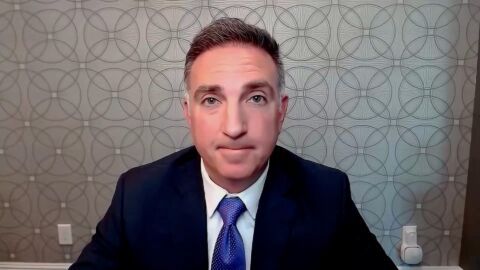
MIKE GORDON, FORMER ASSISTANT U.S. ATTORNEY AND FORMER JANUARY 6 CAPITOL RIOT SENIOR PROSECUTOR: I don’t see how that can possibly be true. So, I
served in the Department of Justice for eight and a half years. And while I was there, there was a mantra, that is that we follow the facts and the law
wherever they lead without fear or favor. That’s what our task was. And that meant that investigations begin with the facts. They begin with FBI
agents and prosecutors seeing wherever they lead.
And if they do lead to a prominent person, right, to somebody that’s going to get a lot of media attention, for example, if we charge that person with
a federal crime, then there are many layers of review that you have to go through as a prosecutor to get approval to charge that person, sometimes
all the way up to the attorney general themselves. And that takes a significant amount of time.
Sometimes those result in serious public corruption prosecution. But what doesn’t happen is the reverse. And that’s what I’ve been seeing
consistently from the administration over the past few months, is starting with the target and then working backwards to try and figure out what crime
they might be able to charge.
SREENIVASAN: There are a number of sitting elected officials right now that are being targeted, Senator Mark Kelly, Senator Elissa Slotkin, and
some House members as well, for a message that they had sent out to military members, right? And I wonder, what’s the legal rationale here for
this type of investigations?
GORDON: Well, there’s two things at play. One, the Constitution has a speech and debate clause that covers members of Congress and largely
insulates them from being prosecuted or otherwise having levers of government brought against them for things that they say in exercising
their First Amendment rights as part of their duties of deliberating and legislating and bringing issues to light to the American people. The
administration doesn’t seem to have given any consideration to the speech and debate clause in these cases.
In addition, the Department of Justice has its own guidelines. And those deal, though, with election year concerns. And they essentially hold that
we don’t charge people within certain time frames in the lead up to elections. But that doesn’t seem to be an issue because the people the
department has been targeting are currently in election years.
SREENIVASAN: So, right now, there’s also a lot of news and concern about a high-profile investigation into Fed Chairman Jerome Powell. The president
has been making several comments over months. Again, this is somebody that he appointed as Fed Chair at his displeasure on what Federal Chairman
Powell is doing. But when you heard that there was an investigation launched into Chairman Powell, what did you think?
GORDON: I thought that it was pretty transparently meant as an act of coercion. The president has made no secret that he would like interest
rates to be lower. And it’s obvious why, because doing that usually gooses the economy in the short-term. It carries long-term consequences, though,
for inflation. Those may take effect after the president’s already left office.
So, he’s been trying to lobby Chairman Powell to lower interest rates for years, even going back to his first term. That hasn’t succeeded because the
Fed is an independent body that’s been setting monetary policy based on what they think is best for the American economy. And so, President Trump
appears to have turned instead to using the law as a Billy club, to use the Department of Justice as a means to exert coercion over Chairman Powell.
And that, to me, is not only anathema to what the Department of Justice is and what it’s supposed to be, but also it should scare all Americans,
because Chairman Powell is the target of the president’s ire today, it could be any of us tomorrow.
SREENIVASAN: Regarding the Powell case, we should note that U.S. Attorney in D.C. Jeanine Pirro said on X that, quote, “The United States Attorney’s
Office contacted the Federal Reserve on multiple occasions to discuss cost overruns and the chairman’s congressional testimony, but were ignored,
necessitating the use of legal process, which is not a threat. The word indictment has come out of Mr. Powell’s mouth. No one else, none of this
would have happened if they had just responded to our outreach.”
You know, one of the things that’s been interesting to watch is when judges have thrown out indictments against James Comey, Letitia James in New York,
because, again, I don’t know what the statistics are, but that’s not something that I’m used to seeing. The Department of Investigations,
usually the homework is done before you get to court, right?
GORDON: Absolutely. In my entire career, I never once had a case rejected by a grand jury. I’d never seen a colleague have a case rejected by the
grand jury. It covers hundreds of cases, and the reason for that is the Department of Justice is not a shoot first, aim later organization, or at
least it never has been.
The way the Department of Justice works is you have to do all the work on the front end as a prosecutor, but then also have it approved by a
supervisor. And if your target is somebody that is a prominent person, or if the charges you’re bringing are those that are particularly sensitive,
those usually have to get approved at multiple higher levels, including all the way up in D.C.
And because of that level of vetting by experienced professionals who are taking careful consideration of all the relevant legal and ethical
considerations, we don’t bring cases that the grand jury is going to reject. The fact that this has happened is an indication of sloppiness.
It’s an indication of the department not giving proper legal or ethical consideration to what it’s doing and what I’m seeing from the
administration. The actual outcome of these criminal cases doesn’t appear to be the priority.
SREENIVASAN: What does this do to, I guess, the overall credibility of DOJ lawyers? I don’t know how uniform it is across the country, but I just
assume that there is a certain deference that judges give to say, OK, this is a serious person. They’ve done their homework. I should take this piece
of paper seriously. But when we see cases like this come out, what do judges start to think?
GORDON: The credibility of the Department of Justice has been just gutted over the course of the past few months. Being a DOJ lawyer, for many law
students, is the brass ring. It’s the they aspire to because they want to use their legal degrees to do good.
In the Department of Justice, when you stand up in court, you don’t say, I’m Mike Gordon representing a particular person. You say, I’m Mike Gordon
representing the United States and all of its people, even the defendant, even the judge himself. That’s a higher calling.
Every DOJ lawyer could make more money in the private sector, but they choose not to. They choose to give up that money in order to do what they
think is right. That’s the charge, do what’s right every day. That’s not what we’re seeing anymore. And the Department of Justice is hemorrhaging
people. Judges are noticing. They’re noticing the change in the department. They are noticing that they can no longer rely on the fact that everything
that a Department of Justice lawyer says is the truth or carefully vetted. That kind of erosion of credibility is going to take decades to undo.
SREENIVASAN: Just recently in Minneapolis, we had six career prosecutors say that they resigned. I have to say that they said that because that
there is some conflicting information. The Department of Justice says there were no resignations at all, that these people were fired. That their
concern was, as they say, that look, they were set tasked to investigate the widow of Renee Good, the Minneapolis woman who was shot and killed by
an ICE agent, while declining to pursue a civil rights investigation against the ICE agent who shot Ms. Good. I wonder, what does that tell you
about what’s happening in the department when you have lawyers, at least groups at a time, deciding to resign or leave?
GORDON: The department’s losing some of its best, most ethical, most experienced lawyers. The problem here, to be clear, isn’t the fact that
they were asked to investigate the wife of Renee Good. The problem is that they were asked or told or directed not to investigate ICE officer Jonathan
Ross, right? The mantra of the Department of Justice is to investigate and follow the facts and the law wherever they lead without fear or favor.
That shooting in Minneapolis requires that the Department of Justice lawyers investigate all of it, that a civil rights investigation occur to
determine whether or not Renee Good’s civil rights were violated. It is possible that a good faith investigation of that shooting would result in a
decision not to charge Officer Ross with violating her civil rights. It is possible that a good faith investigation of Renee Good’s wife would lead to
a conclusion that she had done something to criminally obstruct the ICE officers.
But that’s not what was directed to occur here. The civil rights lawyers in that office were directed to not even look at whether that shooting was an
unauthorized use of force, effectively a murder, not even look at it, and instead to target Renee Good’s wife.
And so, I am proud of those six prosecutors. I’m proud to call them colleagues in the Department of Justice because their actions show me that
they cared about their oath to defend the Constitution and to enforce the law without fear or favor, more than they cared about their own personal
security or jobs.
SREENIVASAN: You know, someone watching our conversation might Google you and say, wait, this is a guy who was fired while he was handling major
cases, including the January 6th rioters. What happened? And then you chose to sue because you felt like you were unfairly or illegally fired. What
happened in that? And where is the case now?
GORDON: Sure. So, I was the senior trial counsel for January 6th prosecutions for two years, from 2021 through 2023. And then at the end of
2023, I returned to my home office in Tampa, Florida, where I prosecuted white collar cases, public corruption, cybercrime, et cetera. I’ve been
prosecuting those cases for 18 months, when in June 2025, I was given a letter indicating that I was being fired and no reason was given
whatsoever, nor any warning, nor any due process.
Regular folks might be at will employees in their jobs. I certainly understand that. But prosecutors like me are actually covered by a law, the
Civil Service Reform Act, that means you can’t just fire us at will. We’re not some people that can be fired without due process, without notice,
without any merit-based cause. And so, my firing was illegal. It was obviously retribution for my work prosecuting January 6th cases. And there
have been news reports since then that have indicated that’s the case.
I sued because what the government did was illegal. The Department of Justice, the very part of the government that is tasked with enforcing the
law, was breaking it to fire me. While I had spent almost nine years fighting to uphold the law by representing the government, by fighting for
the government in court, I didn’t change. The government did. So, in order for me to continue fighting for the law to uphold it, it required that now
I go against the government and I sue them. So, that’s what I did.
The case is ongoing. The government has moved to dismiss it, arguing that I’m in the wrong court, that I didn’t have the right to sue where I did.
And my lawyers have responded and said that the government is wrong, that the government has shut down the other avenues to bring this kind of claim.
And so, the judge has the right to hear it. So, right now it’s pending. And the judge is deciding whether she even has the power to hear the case, not
just whether or not I was illegally fired.
SREENIVASAN: For the record, we reached out to the DOJ about your case. And as of now, when we’re speaking, they have not yet responded with any
comments. When you look at how the administration has treated the people who went into the Capitol on January 6th versus calling Renee Good a
domestic terrorist, it seems to be totally different standards here.
GORDON: It does. The administration seems to be supporting a rule of obey or die when it comes to law enforcement. And they appear to be painting
Renee Good as someone who deserved what she got. I don’t see how that viewpoint holds consistent with pardoning January 6th rioters who assaulted
law enforcement officers.
For example, Officer Michael Fanone was tased in the base of his skull. Officer Aquilino Gonell was crushed and had his shoulder ripped to the
point that ligaments were damaged and he can’t lift his arm above his head or play basketball with his son. His career was ended. Officer Daniel
Hodges was crushed between two doors. In any of those situations, those officers could have drawn their weapons, but they didn’t because they
understood that if they did, it could have instigated a massacre.
I don’t see how the administration can celebrate the pardon and call January 6th rioters persecuted political prisoners or hostages and yet view
Renee Good as a domestic terrorist who deserved what she got.
SREENIVASAN: Former Assistant U.S. Attorney and former federal prosecutor Mike Gordon, thanks so much for your time.
GORDON: Thank you for having me. I appreciate it.
(END VIDEOTAPE)
GOLODRYGA: And finally, my favorite segment of the hour. For more than four dozen studio albums, 55 Grammy nominations and 956 distributed songs.
That is just a handful of achievements that the Queen of Country Dolly Parton can celebrate today on her 80th birthday.
Over a six-decade long career, the singer has amassed success and awards from across the entertainment industry. But her music isn’t the only reason
people love her. The star is also widely celebrated for her philanthropy. She donated a million dollars to fund development of the Moderna COVID-19
vaccine. And in 2025, she celebrated the 30th anniversary of the Imagination Library, which has gifted more than 300 million books to
children across America. Back in November, the singer said, look at all I’ve done in 80 years. I feel like I’m just getting started. So, do we,
Dolly. You are an American icon.
All right. That is it for now. If you ever miss our show, you can find the latest episode shortly after it airs on our podcast. Remember, you can
always catch us online, on our website, and all-over social media. Thanks so much for watching, and goodbye from New York.
END