
Read Full Transcript EXPAND
BIANNA GOLODRYGA, ANCHOR: Hello everyone and welcome to “Amanpour.” Here’s what’s coming up.
(BEGIN VIDEO CLIP)
DONALD TRUMP, PRESIDENT OF THE UNITED STATES: When you see crooked elections, and we had plenty of them, and by the way, we had them last
time. But go to 2020. Look at the facts that are coming out, rigged, crooked elections.
(END VIDEO CLIP)
GOLODRYGA: As Republicans face possible big losses in the midterms, President Trump cast doubt on the system. So, how can Americans safeguard
elections from his threats? I ask UCLA law professor Richard Hasen.
Then one year without USAID, we explore the global impact since the organization was dismantled with Michelle Nunn, president of a leading
humanitarian agency CARE.
Plus.
(BEGIN VIDEO CLIP)
MAX COLCHESTER, U.K. CORRESPONDENT, THE WALL STREET JOURNAL: I think it really lays bare the expense of Epstein’s grip on these two people within
at the top of the British establishment.
(END VIDEO CLIP)
GOLODRYGA: The Epstein storm rages on, leaving political aftershocks in the U.K. “Wall Street Journal” reporter Max Colchester dives into the latest
batch of emails and allegations with Michel Martin.
Welcome to the program, everyone. I’m Bianna Golodryga in New York City, sitting in for Christiane Amanpour.
Crooked, rigged, words used time after time by President Trump, questioning, without evidence, the integrity of America’s elections.
As Republicans face the prospect of huge losses in the upcoming midterm elections, he’s ramping up that criticism even more, echoing his actions
from 2020.
In recent days, Trump called for nationalizing voting, saying that the federal government should get involved because elections are riddled with
corruption.
Speaking to NBC last night, he walked back those calls to nationalize, but continued to sow doubt.
(BEGIN VIDEO CLIP)
TRUMP: There are some areas in our country that are extremely corrupt. They have very corrupt elections. Take a look at Detroit. Take a look at
Philadelphia. Take a look at Atlanta.
If we need to put in federal controls, as opposed to state controls, remember this, they’re really an agent. They’re really accumulating the
votes for who wins an election. If they can’t do it honestly, and it can’t be done properly and timely, then something else has to happen.
(END VIDEO CLIP)
GOLODRYGA: This all comes after last week, the FBI descended on Fulton County, Georgia, seizing 700 boxes of election materials from 2020,
including ballots.
Plus, the Trump administration has so far sued more than 20 states for refusing to turn over voter files. The Brennan Center think tank warns that
this is part of a campaign to undermine future elections.
So, how can America’s elections be protected? And will the midterms be conducted and counted fairly?
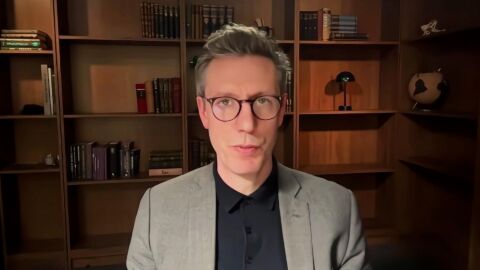
Richard Hasen is the director of the Safeguarding Democracy Project at the UCLA School of Law, and joins us now from California. Rick, welcome to the
program.
So, we just heard there, the president once again make a series of — of allegations and claims about the U.S. elections. None of them
substantiated, but let’s try to go through them one by one, because the president claims that some parts of the country have, quote, extremely
corrupt elections.
Is that true? Are there corrupt elections in any part of the country that you are aware of?
RICHARD HASEN, DIRECTOR OF THE SAFEGUARDING DEMOCRACY PROJECT, UCLA SCHOOL OF LAW: Well, it’s good to be with you. I think that if you look at U.S.
elections overall, our elections have never been conducted with more integrity.
We have all kinds of checks on the election officials. There’s a lot of transparency. There have been a lot of both government and journalistic
investigations looking into claims that Trump has made about non-citizen voting or about mail-in ballot fraud and things like that.
It’s no coincidence that he’s singling out Detroit, Philadelphia, and Atlanta. These are all cities with large minority populations, large
democratic strongholds. It might have been true that some of the big cities in the 1950s and ’60s had fraudulent elections. We had problems in Chicago,
you know, as late as the early 1980s.
But at this point in the United States, our elections are generally fair. And when you do see fraud, it tends to be isolated and also it tends to be
ineffective. Unless you’re talking about a very small election where just a few ballots could make a difference.
GOLODRYGA: And do we see any questions about the integrity of voting, specifically in those cities that you mentioned, large cities, many of
them, minority majority cities, as you noted, and they’re democratic cities, so Detroit, Philadelphia, Atlanta?
HASEN: So, what we have seen in the past, and Detroit is a good example of this, is incompetence in election administration. It’s not a surprise that
big cities that lack resources, sometimes have problems with how they do all of their government services.
In Michigan, in particular, this was an issue in Detroit, going back to the beginning of this decade, and Detroit and Michigan really cleaned up its
act. We saw in 2024 the elections will run there in a — in a much more efficient way.
So, I think, you know, when you talk about problems with elections, there’s both issues of competence and issues of criminality, trying to rig
elections.
We have seen pockets of incompetence in this country. It’s gotten better because everyone’s watching and we have more professionalized elections
staff running elections.
But in terms of criminality, which is what Trump is talking about, crooked elections, rigged elections, there’s just no evidence that this is
happening at the level of the government on any scale that could affect the midterm elections for Congress or that could affect the presidential
elections that we have every four years.
GOLODRYGA: The president also says that states are merely agents of the federal government when it comes to counting votes. As it relates and as it
stated in the constitution, is he correct?
HASEN: He’s absolutely incorrect. So when the constitution was written, there was a lot of power that the states had. In fact, all of the power to
run the government is reserved the states unless the federal government has a specific grant of authority in the constitution.
So in particular, in Article I, Section IV of the constitution, it says that states make the rules through their legislatures for setting the time,
place and manner for running congressional elections subject to congressional override.
So, Congress can pass laws that regulate how elections for — for — for Congress are to be conducted. When Congress doesn’t do that, it’s the role
of the states. And for state and local elections, there is no legislative power in Article I, Section IV.
And importantly, there’s absolutely nothing in the constitution that gives the president the executive any power over running elections. And there
have been a couple of court cases, but going back to last August, when Donald Trump issued an executive order, purporting to exert some power over
the form of — that’s used to register voters over certain kinds of procedures that are done and in — in conducting elections in the United
States. And we’ve had multiple courts say, the president has no role to play. So, there’s no official role in the constitution for the president
when it comes to running elections in this country.
GOLODRYGA: And yet, he continues to push that narrative and he has many powerful Republicans who are not necessarily using the language he is, but
are backing up his claims to at least question voter integrity and whether or not there are — there is massive fraud in elections, including the
speaker of the house, Mike Johnson.
And what’s notable about Mike Johnson is that he is a constitutional lawyer, by training, by education, whereas the president is not, and yet he
continues to espouse some of the president’s talking points by saying this.
(BEGIN VIDEO CLIP)
REP. MIKE JOHNSON (R-LA): We had three house Republican candidates who were ahead on election day, in the last election cycle. And every time a new
tranche of — of ballots came in, they just magically whittled away until their leads were lost in no series of ballots that were counted after
election day were our candidates ahead on any of those counts.
It just — it looks on its face to be fraudulent. Can I prove that? No.
(END VIDEO CLIP)
GOLODRYGA: OK. How do you interpret that?
HASEN: Well, he may call himself a constitutional lawyer, but that is one of the most asinine comments I’ve heard besides coming from the president
about how our elections are run.
Here’s what happens. Everyone votes by election day and ballots come in. Some states accept ballots that are postmarked by election day, but that
arrive a few days later, but in states where there are a lot of mail ballots, they have to be checked to make sure that signatures match, to
make sure that the people who are voting are entitled to vote. And it takes time to do that. So, everyone has voted and it takes time to count the
ballots.
Now, if Democrats are more likely in some places to vote by mail, and if Democrats are more likely in some places to vote later than Republicans,
it’s not surprising that the early announcement of the returns, which are heavily weighted towards those people who voted on election day, will skew
Republican. And, you know, it’s not a random sample on the first day.
And so what happens is a lot of these elections, they’re not too close to call, but they’re too early to call. All the ballots are in, but they
haven’t yet been processed and counted.
And so we’ve seen, time and time again, when we see this so-called blue shift, when Republicans appear to have more votes at the beginning of the
count, but not at the end. We’ve seen Trump, and now we see the Speaker of the House, trying to turn this into some kind of fraudulent conspiracy.
It’s nothing of the sort.
It’s what happens when you don’t have a random selection of ballots. It doesn’t prove anything nefarious. All of the states that are counting the
ballots have chain of custody. They’re watching those ballots. You can, in many places, look on a live camera to see the ballots being stored. There’s
nothing going on other than it takes time to process those ballots.
GOLODRYGA: You mentioned mail-in ballots. And this has been something in a process traditionally supported by Republicans. It even helped them in the
sense that those who participate in mail-in ballots, a lot of them are Republicans, and a lot of them are elderly voters as well. We saw this
particularly highlighted during the pandemic.
And then the president spoke out heavily and consecutively against mail-in ballots. And that’s raised the question of, again, of voters who may not be
as well informed as you are about whether or not there’s any validity to the president questioning mail — mail-in ballots.
So, can you answer for us, are they safe? And if they are, why you think the president has such issue with it?
HASEN: Let me start with your second question first. Donald Trump consistently claims that there’s fraud in elections. He claimed it in 2016.
He claimed that three million non-citizens voted by mail, not coincidentally the amount by which Hillary Clinton, his opponent, won in
the popular vote.
And there were extensive investigations in 2016, turned out there were about 30 potential cases that’s the incredible of non-citizens voting. And
the entire United States, out of, you know, well over 100 million ballots cast.
In 2020, when, as you said, during the pandemic, we shifted to mail-in voting. So Trump shifted his rhetoric to mail-in ballots, claiming that
they’re rife with fraud. This was extensively investigated.
There was no evidence in the presidential election of mail-in ballot fraud going on at any scale that could influence the outcome of the presidential
election in any state.
And now that we’re, you know, out of the pandemic, he’s condemning mail-in ballots, and he’s claiming non-citizens voting, and he’s claiming the votes
rigged in all of these counties, to me, it sounds like someone who’s scared that he’s going to lose the midterm elections.
And maybe the optimistic story here is he’s trying to explain away why his party might lose. The — the less optimistic story is he’s trying to lay
the groundwork for federal intervention, somehow to try to interfere legally or illegally in the 2026 midterm elections.
GOLODRYGA: Yes. And it’s interesting because he was actually convinced to walk back some of his criticism when it comes to mail-in voting before the
2024 election by other Republicans who said, no, that this could actually benefit you if more people are actually able to mail-in their ballots. And
now all of a sudden he’s picking this issue up again.
We should note that for years, you have argued that the federal government should play a larger role in overseeing elections. In fact, your 2012 book,
“The Voting Wars,” you called for a national nonpartisan election administration. You’ve now changed your mind since then, and I’m wondering
why.
HASEN: Well, I think the Donald Trump experience, over the last decade or so, has convinced me that American democracy is too weak for national
nonpartisan election administration.
So if you think about how elections are conducted in virtually all other advanced democracies in the world, you know, from Canada to Australia to
Germany to Italy, in these countries, there is a national nonpartisan body that conducts elections. They’re independent of the government. They have
allegiance to the integrity of the system. It’s a much more rational way.
So, you know, in Canada, if you walk into the polling place in one province or another, the ballot’s going to look the same. The machinery is going to
be the same, the way they tabulate votes going to be the same.
So, I argued back in 2012, we should join the — the 21st century advanced democracies in doing this.
But what we’ve seen is that Donald Trump has tried, in many ways, to have a federal takeover of ostensibly independent agencies in the federal
government and to try to exert his power wherever he can.
And I’m worried that whoever comes after Trump, who might be the next would-be authoritarian, that they might be able to capture control of this
agency.
So, what I saw as primarily a weakness, the devolution of power, the decentralization of power to the states and to counties to run elections,
is actually going to serve as a bulwark against authoritarianism because it’s very hard for someone like Trump to manipulate the processes in states
and counties where he has no official control.
GOLODRYGA: We should also note that while Mike Johnson may have been playing into Trump’s narrative, not all Republicans have — have supported
his call to nationalize elections. In fact, many have spoken out against it.
Thom Tillis, being one of them, he is retiring, but others that are not, also spoke out against nationalizing elections.
But as it comes to and relates to Thom Tillis and many Republicans, they do support voter I.D. at election at voting sites and the SAVE Act, which
would require documents like a passport or any sort of other identification, legal identification to register to vote.
Here’s what Senator Tillis said.
(BEGIN VIDEO CLIP)
SEN. THOM TILLIS (R-NC): I’m as against nationalized election now as I was back in 2022 when the Democrats tried to do it. Now, having said that, I
think the SAVE Act would be a great bill if we can get to 60 votes in the Senate because the world’s changed.
I mean, Biden allowed eight million people to come across the border. That could be eight million, theoretically eight million, illegally present
people who could vote in some states that are more liberal.
(END VIDEO CLIP)
GOLODRYGA: So, would, in your view, requiring identification and documents showing your citizenship, would that be a legitimate thing to — to — to
demand voters? Do you have any issue with the SAVE Act?
HASEN: So, there — I think we need to separate two things. One is, do you need to show identification at the polls to — to say who you are? And many
states have that. Some states use signatures to figure out that the person is who they say they are. Sometimes you have to show a kind of government-
issued ID.
The part of the SAVE Act that is the controversial part is less the voter I.D. part. But the part that would require providing documentary proof of
citizenship before you can register to vote. So, you have to come up with your birth certificate if you were born in the United States. And if you’ve
changed your name, because you got married, your marriage license, or your naturalization papers, or a passport, in order to register to vote.
We know from the experience when Kansas tried to put a law like this in place a decade ago, it is tremendously disenfranchising. Before a federal
court put it on hold, there were 30,000 people who were otherwise eligible to be registered to vote who were not registered.
And this went to trial. And the — the then Secretary of State of Kansas, Kris Kobach, tried to prove that non-citizen voting was a big problem that
justified requiring this. He said what he presented is evidence was the tip of the iceberg, and then the federal district court judge who heard this
evidence, a Republican appointee, said there is no iceberg, there’s only an icicle that is mostly made up of administrative error.
So, the idea that we have to require documentary proof of citizenship when non-citizen voting is an incredibly small problem in this country, you sign
— when you register to vote, you sign under penalty of perjury that you are a citizen.
If you sign that you’re a non-citizen, you can be expelled from the country, you could be committing a felony. We don’t see it. And so, this
would be a very disenfranchising law, one that would not really make our elections any cleaner.
GOLODRYGA: Finally, I do want to ask you about all of the headlines that have now been in questions raised following the Director of National
Intelligence, Tulsi Gabbard, accompanying FBI agents last week as they searched the Fulton election — county election office. They seized some
700 boxes.
There were U.S. officials, including the deputy attorney general asking why she was there. He didn’t really have a clear answer for that. There was
follow-up reporting showing that she had put the president on the phone. And he actually spoke with some of those FBI agents.
The Fulton County is now suing and pressing back against this — this issue. But I do want to update you on one headline we just got, and that is
that Tulsi Gabbard’s office had obtained and tested voting machines in Puerto Rico as well.
And there had been a lot of question as to why the Director of National Intelligence had been witnessed and — and accompanying FBI agents to a
voting site because that is — that is not our purview.
Now that we have some more news about seizing voting machines or looking into them in Puerto Rico, what questions does that raise for you?
HASEN: Well, again, I think there’s a potentially optimistic story and the pessimistic story. The optimistic story is that Tulsi Gabbard, like Trump,
is a conspiracy theorist. That Trump has tasked her, according to “The Wall Street Journal,” with investigating voter fraud.
The connection to Puerto Rico is apparently through some a conspiracy about Venezuelan manipulated voting machines being used in Puerto Rico, for which
there’s no credible evidence. So the optimistic story is they’re just kind of spinning out more conspiracy theories.
The pessimistic theory is that they’re going to use the intelligence apparatus, the federal government. We saw the FBI raid on the Fulton County
offices as a kind of test run, a pretext for potentially trying to seize ballots or vote tabulating machinery or election machinery as votes are
supposed to be tabulated in the 2026 election. So, I think everyone on the state and local level needs to be on guard.
And the idea that we have to be on guard against interference by the federal government, interference of elections, shows you just how much
American democracy has deteriorated in the last decade.
GOLODRYGA: On a scale of one to 10, how worried are you about the security of our upcoming, the — the midterm elections and presidential elections
two years after?
HASEN: Well, I think I’m about a seven out of 10 in terms of being worried. I was a nine out of 10 earlier, but it seems that Donald Trump has a little
bit less power to try to, you know, consolidate his power over the Republican Party, over the federal government, over states than — than I
thought he was going to.
I think we have to get past this moment. And it’s going to take Democrats and Republicans together working to ensure that we continue to have free
and fair elections in the United States.
GOLODRYGA: Yes. Seven is a bit too high and alarming for my taste, but I guess it’s better than nine.
Richard Hasen, thank you so much. Good to see you.
HASEN: It’s great to be with you.
GOLODRYGA: Well, this week marks a stark moment for global humanitarian relief. It’s been one year since the Trump administration dismantled USAID.
Now, with those cuts, we’ve seen the closure of HIV clinics in South Africa, the termination of medical programs in Afghanistan, and the end of
so many programs tackling malnutrition and preventable disease all around the world.
And this could be just the beginning. Foreign aid cuts by the U.S., U.K. and other developed nations could lead to more than nine million additional
deaths by 2030. That’s according to a new study by the Lancet Medical Journal.
Plus, with global conflict on the rise, international aid organizations face acute challenges. One of those being CARE. A major humanitarian agency
that’s been in an action for 80 years now.
Michelle Nunn is president and CEO of CARE and joins us from Atlanta. Michelle, welcome to the program. Thank you so much for taking the time.
And before we get into what this year’s cuts have meant for you and the impact that it’s had on CARE, I think it’s important for you to tell our
viewers exactly what CARE does and what it’s been doing for so many years.
MICHELLE NUNN, PRESIDENT AND CHIEF EXECUTIVE OFFICER, CARE: Yes. Thank you so much.
CARE has been, for 80 years, literally delivering care to people around the world. And so if you’ve ever sent a care package, it actually started with
the organization CARE, a handful of Americans who said we’re not going to watch people face starvation in post-World War II Europe and they invented
the care package.
And over the coming years, they delivered over 100 million CARE packages, and that icon of generosity and connection that’s the small gifts of
kindness transformed into a movement of change making, and CARE, last year, reached over 58 million people in the world.
We focus on women and also families. And we both defeat — we’re trying to defeat poverty. And we are saving lives every single day.
GOLODRYGA: And how did CARE begin as an organization? You mentioned 80 years ago, obviously, coming out of the Second World War. Just tell us the
origins, quickly.
NUNN: Yes. It’s such a beautiful story. It’s — it’s actually ordinary Americans, a handful of ordinary Americans who got together, they pulled
together other organizations, and they said we can do something. We are going to send what were army rations that were — had been used in World
War II to those who are facing starvation.
And that was our — those were our former enemies, not only were we sending them to France and England, but we were also sending them to Germany just
months after — after fighting the war.
And so it really is a beautiful story of solidarity. It was a part of actually helping rebuild Europe. Harry Truman was one of the first donors
to — to the CARE packages. And millions of additional Americans galvanized to express that generosity.
And that generosity is exactly what is needed right now, because we face actually more people in conflict right now today than since World War II.
So this is a moment actually for CARE and for generosity and for connection.
GOLODRYGA: And the impact of cuts like this, you say, CARE is cutting nearly $300 million now from its operating budget this year. That that —
CARE is a significant weight.
Talk about the — the impact of what one year’s worth of cuts like that to that magnitude, what that means for those that are in desperate need of
aid.
NUNN: Yes. Well, it is devastating. And so if you think about, for instance, just what CARE has lost in terms of our capacity to deliver
impact, we were supporting 18 million people with that 300 million plus dollars.
And so we are having to reimagine the work about CARE and also the larger humanitarian sector. And you saw what the Lancet came out with earlier,
potentially up to nine million people who could lose their lives as a result of these cuts. That translates into children who could be receiving
medical attention and nutrition, but who could die of starvation and of malnutrition as a result of these cuts.
It means that women who otherwise would have support when they’re giving birth lose that capacity to actually have medical provision in the delivery
of a safe — a safe child.
And — and then it translates to girls and boys who were actually working towards their education, finishing secondary school and had path before
them that would enable them to be resilient and contributing community members, losing out on that capacity, just literally the wall shutting down
on their dreams and hopes.
And yet, we can and we should. We need to rebuild the constituency for this kind of humanitarian generosity that’s been so much a part of the American
story.
And also, I think of the global story. We’ve had a lot of progress, but we can’t see that recede. And we are seeing it recede.
Actually, this year is the first year that we are seeing more child deaths than the year before. The first time in 25 years that that’s happened.
GOLODRYGA: Wow. And when you’re put in this position of having to make these stark cuts, where do you even begin? How do you then prioritize who’s
actually not going to be cut or who’s going to be affected the least as possible? And ultimately, who’s going to have to suffer the most because of
this?
NUNN: Well, we triage wherever we can, so that we actually can take those who are most in need. For instance, we look at what children are
experiencing.
There’s a very medically and clinically sound way of diagnosing those who need more and immediate attention.
But what it does mean is literally I was — I was in the Horn of Africa last — 10 days ago and we’re seeing and hearing from people who said that
former hospital clinics are like ghost towns, that — that people who were getting up to, had built up to two meals a day. Refugees are now down to
one meal a day. So, it’s an incredibly excruciating process.
And I will also say that part of the changes now in the last year of the — of the sector and the humanitarian way that countries, including the U.S.,
are — are investing, is much more transactional. So, it doesn’t necessarily mean that we’re investing where there’s the greatest need.
And so that means that places like Somalia, where we have staved off famine for a number of years, even though there’s been a devastating drought, are
now facing in the coming months, acute malnutrition for literally hundreds of thousands of children.
And I fear that we are going to see those — those desperate images of children who need our support, but we were — we simply are not investing.
And that can and must change. We must lift up our voices to our governments. And we also have the capacity to make a difference through
philanthropy. And that’s part of what CARE is doing.
GOLODRYGA: Have you seen an increase in philanthropic donations?
NUNN: We have seen an increase. And we have, literally, what we call a triage fund that enables us to deliver medications and food where they’re
most needed. It can’t make up right now for what — what we’re seeing from cuts in governments, including the U.S., but also governments in — in
Europe.
And so we need to, again, advocate for. And there was just a bipartisan bill that was passed in the U.S. that lifted up, re-lifted up the
investment in a 20 billion beyond what the administration had asked for.
So, we need that kind of bipartisan support to say these are smart investments, not only are they humane investments, but they’re investments
that keep us safer.
When we fight against health scourges, when we ensure that regions are more secure, when we — when we really focus on economic security, we see more
prosperity in our own borders. We see more medical security in our own borders. And we know that this is true from 80 years of doing this work.
GOLODRYGA: You mentioned the most vulnerable being impacted, obviously, that being children, but you also talk about the impact on women, women in
war zones. CARE’s reporting shows that rape survivors in conflict zones are running out of test kits now. And also other — other kits that can help
prevent disease.
Can you just give us some more insight and examples perhaps of how that’s playing out in the real world —
NUNN: Yes.
GOLODRYGA: — in conflict zones?
NUNN: Think about the DRC, where there have been millions of women who have been raped over the last decade. And — and unfortunately, that does
happen. And so often it’s girls, it’s — it’s young women, it’s women who are suffering at the brunt of that — of that violence.
And right now, we’ve withdrawn what were 3.5 million, what we call PEP kits, which literally, if a — if a woman is raped, if a girl is raped, it
prevents pregnancy and it also — and prevents the contraction of HIV. So, those are no longer readily available.
So, if you just translate that one experience and think about that multiple times, hundreds of thousands of times over, that’s the impact. That’s the
human cost of these cuts.
GOLODRYGA: And I know your latest crisis report also shows places like Zambia, Madagascar, barely registering globally at this point.
When some of these crises disappear from our front pages of newspapers and television programs, what happens to these countries and these people in
desperate need of aid when the world stops following it?
NUNN: Unfortunately, their — their deaths and their suffering become invisible to us. And that means that we do not have the capacity to act and
respond.
And so, CARE did put out a report that said, these are some of the biggest crisis around the world, but they’re the ones that are receiving the least
attention.
And predominantly, they’re in Africa. But the — you know, places like Sudan, which is now the biggest humanitarian crisis in the world. We have
30 million people that are in need of humanitarian assistance. That’s two out of every three people living in Sudan. They’re the most displaced
people and the most hungry people, in Sudan. And yet, it — it garners relatively little attention.
And it’s possible, entirely possible, for us to make the kinds of investments that mitigate that hunger and mitigate and alleviate that
suffering. But we do have to see it, and we do have to act upon it.
GOLODRYGA: So, when you hear the Trump administration argue that the old system just wasn’t working, there was corruption, there was fraud, perhaps
too much dependency. And now they are pushing for, as even Secretary of State Rubio said, just some sort of streamlining and reform, not getting
rid of it entirely.
How do you respond to that? And are you in communication with top government officials?
NUNN: I mean, CARE has worked with 14 administrations over our 80-year history. We work with Republicans and Democrats. And each president needs
to put forward a foreign policy.
And I think there are a number of things that the Trump administration is looking at, multisectoral, combination of sustainable engagement, so we can
show that we’re harnessing market-based approaches, working with governments to ensure that they own, for instance, the healthcare system
reform that are being put in place.
But you cannot — you cannot pull back on, you know, somewhere between 40 and 80 percent of investments and expect that there won’t be enormous
consequences.
So, we can reform and we can invest and we can reinvent, but we — but we have to ensure that you have collaborative long-term investments and that
you’re basing it upon humanitarian need and not just short-term transactional interests.
It is in our long-term interest to ensure that, for instance, pandemics are addressed where they first come to life and we need to ensure that lives
are not lost there, but also that that doesn’t translate into crossing borders. So again, this is not only the right thing to do, but it’s a smart
thing to do as well.
GOLODRYGA: Yes. And it promotes soft power throughout the world, which has had for — for so many years, not only because this is the right and
generous step for Americans and for the U.S. government to take, but also just from a foreign policy perspective, many have argued that it is help
put the United States ahead in terms of how other countries and how its citizens view the United States relative to some of its competitors. And
it’s losing — it’s losing that credibility at this point to even just within the last year.
So, for those watching at home and thinking, OK, what does CARE look like now? What can I be doing? What is CARE doing? You’ve now introduced new
CARE packages?
Tell us what — what they entail, what that looks like, and why.
NUNN: Yes. And I would just say that I think America has been both great and good when it has been compassionate and caring. And that it is actually
a superpower of the United States to be a compassionate nation. When we are, we’re at our best.
And the CARE package is a perfect embodiment of that. It is literally an icon of generosity that’s known around the world that originated right here
in the United States.
And — and we are — we are re-imagining that CARE package. The first delivery of those CARE packages was in May of — of actually 1946. So,
we’ll be celebrating the 80th anniversary of the spring.
And these CARE packages that you can see on screen are literally the re- imagination of a way for us to get a package that can be carried by a woman. She can carry her baby on the front. It has 36 different
interventions in that CARE package, including a tarp, solar energy, a — a cook stove, water filtration.
It’s a little bit like Hermione’s purse. There’s so much that comes out of there. And — and it can sustain a family for over — a family of over five
for over a month. So that’s —
GOLODRYGA: Wow.
NUNN: — the kind of support.
And ordinary Americans and citizens around the world can say, we want to join forces. We want to be a part of this CARE movement. And that’s what
we’re asking people to be a part of.
GOLODRYGA: Michelle, representing the — the best of this country when we put our minds together, when we are generous, there’s nobody that can match
us around the world. So more of this, please. Thank you so much for everything that you’re doing.
NUNN: Thank you so much.
GOLODRYGA: Now to a political crisis unfolding in Britain. After the latest release of the Jeffrey Epstein files revealed new details of former Labour
politician, Peter Mandelson’s ties to the convicted sex offender.
Embroiled in the scandal, as U.K. Prime Minister Keir Starmer himself, who admitted to having prior knowledge of Mandelson’s links to Epstein, when
appointing him as U.K. ambassador to Washington in 2024.
But Starmer claims he had no idea of the, quote, depth and darkness of it. Mandelson was removed from his post last year.
Speaking earlier, the British leader apologized to Epstein’s victims as more information comes to light. “The Wall Street Journal’s” U.K.
correspondent Max Colchester speaks to Michel Martin about the impact this scandal is having on British politics and beyond.
(BEGIN VIDEOTAPE)
MICHEL MARTIN, JOURNALIST: Thanks, Bianna. Max Colchester, thank you so much for talking with us.
COLCHESTER: Hi. Good to be with you.
MARTIN: So, you cover British politics and national security and you’ve been following the sort of the fallout from the release of these documents
related to Jeffrey Epstein, the convicted sex offender who took his own life a couple of years ago.
A number of very high-profile individuals have been linked to him, although no one has been criminally charged as a result of it.
Now, it’s been known that the person Andrew Mountbatten, informally Prince Andrew. He was stripped off his royal titles. It’s been known that Prince
Andrew was connected to Jeffrey Epstein in some way.
But in this latest release of documents, there’s been additional fallout. Could you, as briefly as you can, tell us what that is and why this latest
document release has caused a huge reaction in the U.K.?
COLCHESTER: Yes. As you say, this is not a new scandal in the U.K. It’s been rolling for over a decade. But I think what the latest batch of files
that the Justice Department released show really is something that was suspected but long denied, which is that Epstein, having been released from
jail in 2009 for sort of think sex from minors, quickly then managed to get privileged access right to the top of two pillars of the British
establishment Buckingham Palace and Downing Street.
And these latest batch of emails show that via Peter Mandelson, who at the time was the U.K. business secretary and a — a very famous figure on the
left here was intimately involved with — with — with Epstein, was sharing a lot of information with him. And also it shows how the then Prince Andrew
was still very much a close friend of Epstein’s at the time.
And this all occurred after it had been publicly known that Jeffrey Epstein had this. He — he was criminally charged. He served —
COLCHESTER: Yes.
MARTIN: — served time. Many people consider the time that he served to have been very light compared to the — the gravity of what he was accused
- But nevertheless, it was part of his record at that point.
What are the specific allegations connected to Peter Mandelson? And why has this landed with such force in the U.K.?
COLCHESTER: So Peter Mandelson was a — a senior figure in the then Labour government back in 2009, 2010.
And what this cache of email shows is that Mandelson was forwarding sensitive market, sensitive information that he was receiving as a senior
member of the British Cabinet on to Epstein. And this is information that could have been traded on.
And so since these emails have come to light, British police have announced they are investigating Mandelson. And this is turning into an almighty
crisis here.
MARTIN: Has Mr. Mandelson spoken about why he was forwarding this information to Jeffrey Epstein?
COLCHESTER: Mandelson has not addressed that allegation directly. He’s previously expressed regret for being friends with Epstein. And has
previously said he had nothing to do with any of the sexual acts that Epstein allegedly conducted. But this is nonetheless a very serious
allegation for him to face.
It really does lay bare something that he long denied, which was that he had largely cut off ties with Epstein. And also, it’s caused a lot of anger
here amongst the Labour Party, which is now back in power, because Mandelson, up until last year, was the ambassador to the U.S. for the U.K.
and had been handpicked by the British Prime Minister, Keir Starmer, to take on that role.
And Starmer says that before giving him the job, Mandelson was very clear that he had — there were no, you know, more skeletons in the cupboards
when it came to Epstein.
MARTIN: And also the former Prince Andrew and his former wife, Sarah Ferguson, is also mentioned in the — this latest cache of documents.
Is there new information about them? And is that also something that’s disturbing to the British public?
COLCHESTER: Yes. This — this very much confirms what many people already suspected about Prince Andrew. Now again, he’s not been found guilty of any
crimes. And he denies all allegations against him.
But what these emails again show is that he was very close to Epstein. And you can see him corresponding with Epstein, organizing visits to Buckingham
Palace. There are photographs of him kneeling over a — a woman presumably in Epstein’s New York apartment or New York house.
There are messages where he seems to be welcoming a Russian woman that Epstein suggested he meet in London. So all this just adds to the picture
that people already had of him that he was essentially corrupted by Epstein, that he was getting — he was — he — he had essentially been
corrupted by the — the promise of sex and money. And that is something that is very damaging for the — for the Windsor franchise.
And what about his former wife, Sarah Ferguson, and recognizing that the communications between them don’t seem to have national security
implications or implications around confidential financial information. But — but her name has also surfaced and in what context.
COLCHESTER: So Sarah Ferguson, who is Andrew’s ex-wife, her name has surfaced because she pretty much — pretty much, weeks after Epstein came
out of jail, started emailing him saying, hey, can I come and see you? I need some advice on this and that, mentioning that she was struggling to
pay her rent, suggesting she brings her two daughters to meet him.
So it seems like there was a very close relationship or nearly a needy relationship really between Ferguson and Epstein, where she was constantly
badgering him to — to work out how best to launch a foundation or, you know, who she should meet.
And — and it really sort of laid bare this weird access that Epstein had to the top of the British world family.
MARTIN: People are accustomed to scandals, unsavory things, just — not attractive things being attached to the royal family and other members of
sort of the — sort of the British sort of social and political hierarchy.
But there seems to be a real reaction this time. It just seems kind of sharper and more intense. And there’s also the prospect of a — of a
criminal investigation. Why do you think the reaction is — is as it is this time?
COLCHESTER: Because I think it really lays bare the extent of Epstein’s grip on these two people within at the top of the British establishment.
And it also lays bare something else, which is that for a long time, this was denied.
And you have to remember, as often as the case in the U.S., the way that scandals play out in the U.K. is that, at first, the institution denies
there’s a problem, and then it’s used to discredit those who are trying to say there’s a problem. And then you get a weaselly worded apology and
someone steps back.
And then there’s a final act in which the establishment turns on the individual and devours them. And this is the act we’re now seeing play out
when it comes Epstein.
Andrew and Mandelson are both being denounced by the establishment, and as the establishment looks to close ranks and protects its own.
MARTIN: In your reporting, you described Epstein’s relationship with Peter Mandelson in unusually intimate terms, including an email where Mandelson
writes, quote, “You are the only person who knows everything about me. Don’t go away.”
What does that tell us?
COLCHESTER: Well, I think it says that Mandelson trusted Epstein implicitly. And we don’t know why he trusted him so much and the full
extent of what Epstein did for Mandelson.
We can see from the Epstein files that Epstein appears to have given money to Mandelson. There are bank transfers showing that around $75,000 was
wired to Mandelson.
In the early 2000s, Mandelson does says he doesn’t remember that wire transfer. There’s evidence that Epstein paid for Mandelson’s partner to go
on osteopathy course.
So there is some financial — some financial gain to be had there, but it doesn’t seem to explain the — the extent of the trust that Mandelson
showed Epstein.
And when you read the emails between the two men, it’s a very odd relationship. It’s — it’s like a sort of godfather talking to his godson,
Epstein saying, yes, I think you should do this next in your career. And, you know, I think you need to deal with the prime minister like this. And
why don’t you pursue this business interest?
It’s a very lopsided relationship. And it really shows the power that Epstein must have had over the — over this group of people. Because
obviously, he was offering access to a very rarefied world. He was offering money. And in some instances, sex as well. And that seems to be in a very,
very potent mix of people and seems to have won a lot of very powerful people over.
MARTIN: So just to — just to clarify, you’re saying, Mandelson has said, he has no recollection of receiving these funds.
COLCHESTER: Correct. Well, he says he needs to investigate it further himself. So we’ll see what he comes back to that.
MARTIN: So in this country, one of the reasons that this story has such power. I mean, it has — it has power for a number of reasons. One is the –
– the fact of these young women, in some cases, girls being sort of traded around, like, you know, toys among these powerful men is disgusting. It’s
also illegal.
And it speaks to a sense that what happens to women and girls, especially vulnerable women and girls, has just not been taken as seriously as it
should have been.
But the other reason that the story has forced is that it sort of speaks to this kind of the interconnectedness of this global elite, where apparently
the rules don’t apply. And I’m wondering if those through lines of the story are also resonating in the U.K.
COLCHESTER: Yes, they absolutely are. I think what you see throughout the emails when you read them, especially as they pertain to the U.K. is that
Epstein’s essentially leveraging each of the people he has access to, to gain access to more people.
So, if we’re in the instance of Prince Andrew, you can see he befriends Andrew. And it’s actually Andrew — interestingly, it’s Andrew who reaches
out to Epstein after he’s released from jail, not the other way around. It’s Andrew reaching out saying, hey, I’d like to come to Paris on a
private trip. Could I — could I have access to your flat there? And Epstein says, yes.
And then Epstein turns around to other people and says, I know Andrew. Would you like to visit Buckingham Palace? And he uses that as a sort of
networking effect.
Now, why Andrew felt it was OK to reach out to Epstein after he’d just been released from jail, I don’t know. And it’s a question that he hasn’t
addressed. He denies that, you know, he did anything wrong, but it’s still a question of judgment.
Equally with Peter Mandelson, when Epstein is released from jail, he sends an email calling it Liberation Day, which is really quite astounding.
So it seems that they just didn’t take this very seriously. And they didn’t give it the weight that perhaps it should have been what — which it should
definitely have been given.
And it speaks — it does speak to this idea that there are different sets of rules for different sets of people. And that because Epstein was well
connected and wealthy, you know, the allegations against him weren’t so serious in their minds and therefore could be ignored.
MARTIN: Is the sort of the transcontinental aspect of this interesting? Or does that stand out to — to your — to your —
COLCHESTER: Yes.
MARTIN: — audience in England?
COLCHESTER: I think so. I mean, what’s interesting here is we’re really seeing a — a degree of — I mean, no one’s been punished in court, right?
But they are being punished in the court of public opinion. And that’s what’s happening here in the U.K. now.
Those who were involved are being outed and named and shamed. And the institutions they were part of are turning on them and isolating them. So
in Andrew’s case, for instance, he was officially kicked out of his state residents in Windsor and ferried to a farm in East England where he will
now live.
And that was the Royal Families way of saying, this guy is no longer a public member of our clan. And you won’t be seeing him very much anymore.
MARTIN: So in the United States, the deputy attorney general is a former personal lawyer of President Trump. The attorney general previously
defended the president in an impeachment proceeding. OK.
They — these people who have strong personal professional ties to President Trump are now in position to oversee any further investigation
that may take place.
The Deputy Attorney General Todd Blanche has said that there are no more documents to be released, that they’re done. Members of Congress who have
been pushing for this disagree with that, but that issue, you know, remains sort of unresolved.
So my question is, in the U.K., is there more to come? Are there further investigations taking place? Is there a further effort to investigate what
these ties may have been between these individuals and Epstein?
COLCHESTER: Yes. I think that’s one of the key differences between the U.S. and the U.K. now, is that in the U.K., we’re starting to see deeper police
involvement.
There’s an investigation into Mandelson over his disclosure of sensitive markets, sensitive government information to Epstein, which potentially
could have allowed Epstein to engage in insider trading.
The police are also looking at evidence that Prince Andrew welcomed a 20- year-old to the U.K. and may have been involved with sexual activities of Windsor, so the — the police are looking at preliminary evidence there. An
investigation has not been launched, but that’s something they’re looking at.
So this is no then. And also, there is potentially a — a huge political aftershock rumbling here, which is to look at — there’s a lot of questions
now about the Prime Minister Keir Starmer about why he appointed Mandelson to be the U.S. ambassador, how much he knew about Mandelson’s friendship
with Epstein before making that appointment, whether he was ill-advised, and whether he should take some form of responsibility for that
appointment.
So, now it’s ricocheting off into very modern-day politics here which is, you know, this could potentially really damage the incumbent prime
minister. So it is a very much a live issue in this country.
MARTIN: Max Colchester, thanks so much for talking with us.
COLCHESTER: Thank you so much for your time.
(END VIDEOTAPE)
GOLODRYGA: And finally, the wildlife photographer of the year, as voted by you. Incredible snaps from around the world are on the people’s choice
shortlist, including a hummingbird drinking from a flower in Peru. A mother sloth with her young baby and her arms protecting it from the rain and
Costa Rica. And a crab in the Indonesian sea catching a quick ride on the back of a jellyfish.
And with images such as this showing a pile of confiscated traps in Uganda were reminded of the importance of our protecting our natural world.
All right. Some amazing photos indeed.
Well, that is it for now. Thank you so much for watching and goodbye from New York.
END