
Read Full Transcript EXPAND
BIANNA GOLODRYGA, ANCHOR: Hello everyone, and welcome to Amanpour. Here’s what’s coming up.
(BEGIN VIDEO CLIP)
DONALD TRUMP (R), PRESIDENT OF THE UNITED STATES: You never know with Iran, because we negotiate with them, and then we always have to blow them up.
UNIDENTIFIED FEMALE: Donald Trump threatens to obliterate Iran’s energy infrastructure, as he touts great progress towards an agreement. We look at
the big picture. More war, or could there be peace? Then —
JEREMY DIAMOND, JERUSALEM CORRESPONDENT: So the soldiers just immediately came up and started pointing their weapons directly at us,
telling everyone to sit down immediately.
UNIDENTIFIED FEMALE: Israeli soldiers in the occupied West Bank detain and assault a CNN crew, sparking backlash in Israel and abroad. Correspondent
Jeremy Diamond tells me what’s happened since. And —
MARCO RUBIO, SECRETARY OF STATE: The only thing worse than a communist is an incompetent communist.
UNIDENTIFIED FEMALE: While the White House pushes for regime collapse in Cuba, President Trump allows a Russian oil tanker to reach the island. I
discuss with veteran correspondent John Lee Anderson. Also —
SUSAN MACMANUS, PROFESSOR EMERITA, UNIVERSITY OF SOUTH FLORIDA: Generational shifts are there. No longer is Florida an elderly state.
UNIDENTIFIED FEMALE: After Democrats win in Mar-a-Lago’s home district, Michel Martin talks Florida’s shifting politics with expert observer Susan
MacManus.
(END VIDEO CLIP)
GOLODRYGA: Welcome to the program, everyone. I’m Bianna Golodryga with in New York, sitting in for Christiane Amanpour.
More mixed messages on the Iran war as President Trump hits at diplomatic progress while thousands of U.S. troops gather in the region. In an early
morning post, he writes, “The United States of America is in serious discussions with a new and more reasonable regime to end our military
operations in Iran.” While also threatening, if the Hormuz Strait is not immediately open for business, we will conclude our lovely stay in Iran by
blowing up and completely obliterating all of their electric generating plants, as well as oil wells and Kharg Island.
Developments on both military and diplomatic fronts add to the confusion. Pakistan says that it is prepared to facilitate talks between the U.S. and
Iran in the coming days.
And President Trump claims Iran agreed to most of America’s 15-point plan to end the war. Iran contradicts him, saying the plan contains excessive
and unreasonable demands. Meanwhile, the troop buildup continues. An additional 3,500 U.S. service members have now arrived in the region. So is
continued escalation inevitable or could there be a negotiated settlement?
Joining us now, Leon Panetta, who served as both CIA Director and Defense Secretary for President Barack Obama. Secretary Panetta, welcome back to
the program. It’s good to see you.
So let’s start with this mixed messaging out of Washington. President Trump saying that he’s dealing with a, quote, “new and reasonable regime.” But
just minutes later this morning, Secretary of State Marco Rubio directly contradicted that, saying that we are dealing with an old regime full of
unreasonable people. So how would you imagine Tehran is reading all of this?
LEON PANETTA, FORMER U.S. DEFENSE SECRETARY: Well, there’s no question that there are a lot of mixed messages flying around right now. And it’s very
difficult to try to determine just exactly where the truth is. I think, frankly, that we are at a critical moment right now in which the United
States and Iran have to decide whether or not they’re going to end this war after five weeks, or whether they’re going to have a prolonged war that
could go on for a while with terrible casualties on both sides.
To a large extent, I think the President is between a rock and a hard place right now. I think he would like to declare victory. I think he would like
to get a ceasefire. He would like to end the war. But the problem is that Iran right now has leverage by virtue of controlling the Straits of Hormuz.
And the closure of the straits is producing very heavy economic damage on the United States and the world.
And so the real question is going to be whether or not the United States can find a way to open up the Straits of Hormuz so that they can reach some
kind of settlement on the war. But if not, this will be a very prolonged war.
GOLODRYGA: And you mentioned this leverage that Iran believes they have now, and that is controlling the Strait of Hormuz and thus controlling the
energy economy around the world. News reports indicate that Iran is winning on that front, at least for now. They’re exporting upwards of 2.5 million
barrels of oil a day through the Strait of Hormuz.
And earlier on CNN, former National Security Adviser to President Trump in his first term, John Bolton, said that is just unacceptable, and then
offered this solution to what he thinks the United States and its allies should do in turn.
(BEGIN VIDEO CLIP)
JOHN BOLTON, FORMER U.S. NATIONAL SECURITY ADVISER: The better answer is to blockade the Strait of Hormuz and not let any Iranian oil out. If our Gulf
Arab allies can’t ship oil, then neither should the Iranians, nor should they be able to earn the proceeds from that, which in one way or another
filter back to their war effort to kill American service members.
(END VIDEO CLIP)
GOLODRYGA: So what do you make of that suggestion? And how feasible is it from a military standpoint to prevent Iranian oil and tankers that Iran
right now controls, who has passage through the Strait or not, to take that away from Iran?
PANETTA: Well, I think that’s a prescription for trouble, because Iran still does have capabilities to be able to hit ships that are located in
the Straits. And I think they have the ability to make America pay a heavy price if America tried to blockade the Straits.
I think the better opportunity, but it has to happen soon, is to get Iran to recognize that it has that leverage and that it can allow for the United
States and allies to set up a way to be able to run the Straits of Hormuz in exchange for Iran getting relief on sanctions. I think that makes a lot
of sense if you’re interested in trying to arrive at some kind of agreement that will settle this war.
This is the opportunity. If the United States takes aggressive action in some way, I think we could very well lose that opportunity.
GOLODRYGA: Well, we heard Secretary of State Marco Rubio say what he warned his counterparts at the G7 last week was that Iran is planning to
essentially hold a toll over the Strait, similar to what Egypt is doing in the Suez, and that that is just unacceptable. So is this an alternative to
that, in your view?
PANETTA: No, I think that Iran understands the leverage it has right now by closing the Straits. I think that if they’re smart in terms of trying to
obtain some kind of ceasefire, that if they could relinquish control of the Straits and allow for an international group to be able to operate the
Straits of Hormuz so that they could achieve some kind of sanctions relief, I think that’s a pretty good deal for Iran at this point.
And so I don’t know whether that will happen or not. It depends on whether both sides can find a way to talk to each other. I don’t think this war is
going to end with a 15-point plan or a 20-point plan. It’s going to involve a handful of issues that involve the Straits of Hormuz, that involve some
kind of approach to be able to control the enriched fuel that Iran has, some kind of limitation on missiles, and some kind of either sanctions
relief or some kind of Marshall Plan that can help repair the damage both in the Gulf, in Israel, and in Iran as a result of this war.
Those are the ingredients of finding a solution here.
GOLODRYGA: And you mentioned that one of them being the 460 kilograms of highly enriched uranium that still remains, perhaps buried, in Iran right
now. And the Wall Street Journal is reporting that President Trump is reportedly weighing a military operation to physically extract that.
You yourself have overseen very risky military operations. The bin Laden raid is the first that comes to mind. Yet there are other former officials
that are very familiar with this region. Former CENTCOM commander, in fact, General Votel, warns that this isn’t a, quote, “quick in and out.” And it
would take days to execute.
How realistic in your view is an extraction like that? And would it be as well prepared and planned for as we know the bin Laden raid was?
PANETTA: Well, that’s a concern because I don’t get the sense that the administration spends a lot of time not planning. They were surprised by
the fact that Iran closed the Straits of Hormuz. For goodness sakes, anybody who’s looked at a possible conflict for Iran knows that the first
thing that would happen is the closure of Hormuz.
With regards to the operation itself, I think it’s a very dangerous and risky military operation that does have to be carefully planned if they’re
going to do that. I think once you start putting boots on the ground, whether it’s in dealing with the nuclear stuff or whether it’s in dealing
with the Straits of Hormuz, I think you’re then in for a prolonged war in which the United States is going to suffer heavy casualties.
And we will be trapped into a war that is very similar to what happened in Iraq and Afghanistan. That’s exactly what President Trump said we shouldn’t
get into. But that is the very likely result once you deploy boots on the ground.
GOLODRYGA: You know, I’m told by a number of people that have access to top level officials both here in the U.S. and in Israel from sources that while
Iran does actually believe that they are winning, it’s not just public posturing. That they also — and by they, I mean the regime, they’re not
fully aware of the damage, the physical, the military damage, the infrastructural damage that both Israel and the United States have been
able to inflict upon the country over the course of the last four and a half, five weeks.
The country is basically still in darkness. There’s no internet access and the leadership is really fractured at this point, though still together. Do
you think that there is an opportunity perhaps for the United States to make clear to whoever they’re speaking with just the extent of that damage
and to let them know that that can continue if some sort of deal isn’t reached?
PANETTA: Well, just as the Straits of Hormuz are leveraged for Iran, I believe that the military objectives that have been achieved both by the
United States and Israel are the leverage that the United States has. Because the reality is that almost 90 percent of Iran’s capabilities have
been destroyed, and they really have lost the ability to be able to conduct war in the region over any kind of prolonged period.
They’ve been badly hit. And so this is the moment where the United States needs to act with its leverage, which is to make clear to Iran that they
have suffered extremely heavy damage. After all, they’ve hit something like 15,000 targets in Iran. You’re going to lose a lot of your military
capabilities with that kind of air attack going on.
So make that clear to Iran that they’re facing the prospect of not being able to be able to in any way defend their country in the future. And
that’s why you need to have a deal on the Straits of Hormuz, and you need to have a deal that makes clear to Iran that continuing warfare, continuing
missiles from Iran are going to result in even larger damage to their country and to their military capability. That’s — those are the
negotiating points right now —
GOLODRYGA: Yes.
PANETTA: — for trying to arrive at a settlement of this war.
GOLODRYGA: Yes, and you say the window for that negotiating is quickly closing.
Leon Panetta, always good to see you. Thank you so much for joining us.
PANETTA: Good to be with you.
GOLODRYGA: Now, a backlash in Israel after military reservists detained and assaulted a CNN team reporting on a violent assault against Palestinians by
Israeli settlers in the occupied West Bank. An IDF statement says that the incident represents a, quote, “serious ethical and professional failure.”
Israel’s top general suspended the reserve battalion involved and dismissed one soldier from military service. The report was covered across all major
Israeli news outlets, putting a rare spotlight on violence against Palestinians in the occupied territory.
Correspondent Jeremy Diamond was in the middle of all of it. And Jeremy, just unprecedented in terms of the scale of the coverage here, the fact
that so much Israeli media attention had been highlighting what you and your team had endured and a lot actually condemning years of similar action
that had been taking place when the cameras were off. Not against journalists, perhaps, but Palestinians themselves. Just talk about, though,
put in context the fallout from what you and your team were able to document.
DIAMOND: Yes, that’s exactly right, Bianna. And the reason why we headed to this village of Tayasir in the West Bank was because of what we have been
witnessing over the course of the war with Iran, which is a significant increase in the number of Israeli settler attacks against Palestinians. And
in this town, Israeli settlers had erected a new illegal outpost, illegal both under international and under Israeli law as well.
When we arrived there, we were detained by the Israeli military. But it was our detention that proved especially revealing about the settler ideologies
motivating these soldiers as well. Watch.
(BEGIN VIDEOTAPE)
DIAMOND (voice-over): 75-year-old Abdullah Daraghmeh moans in pain. His breathing is labored, his face bloodied, bruised, and swollen, bones
broken. His family and multiple eyewitnesses say Israeli settlers stormed into his home in the middle of the night and beat him to a pulp.
In his West Bank village of Tayasir, those same settlers have now established an outpost, considered illegal even under Israeli law. Soldiers
standing idly by until something else draws their attention.
UNIDENTIFIED MALE: (Speaking Foreign Language)
UNIDENTIFIED MALE: (Speaking Foreign Language)
DIAMOND (voice-over): Producer Abeer Salman identifies us as journalists before translating the soldiers’ commands.
UNIDENTIFIED FEMALE: Sit down! Sit down!
UNIDENTIFIED MALE: Sit down!
UNIDENTIFIED FEMALE: Sit down!
DIAMOND: So the soldiers just immediately came up and started pointing their weapons directly at us, telling everyone to sit down immediately.
Obviously, we’re not posing any threat here.
DIAMOND (voice-over): The commander comes straight for our camera and within seconds —
(through translation): What are you doing? We’re journalists. What are you doing?
DIAMOND (voice-over): A soldier has just put photojournalist Cyril Theophilos in a chokehold, forcing him to the ground.
DIAMOND: Don’t touch him like that! Don’t touch him like that! Give me my phone.
DIAMOND (voice-over): The soldier who assaulted Theophilos continues to demand he turn off his camera before another smacks my phone.
DIAMOND: So as you can see, what we have seen happen in the last 24 hours is that settlers came to this area. They settled that hilltop and now you
have a lot of soldiers coming to this area with the Palestinians in this area. They’re on top of the home of Imad (ph), the man that we were just
speaking to.
And we’re seeing the soldiers treat the Palestinians in the area as the threat when really what started this problem was obviously the settlers who
came in the middle of the night and took over land that’s not theirs.
DIAMOND (voice-over): The Palestinians here are detained and questioned. Soldiers detain us too and walk us back to our vehicle. They say they’re
trying to establish order between settlers and Palestinians. But as the cameras keep rolling, it becomes clear these soldiers are here in service
of the settler movement.
UNIDENTIFIED MALE (through translation): We are here because this is our place.
DIAMOND (through translation): Is this your village?
UNIDENTIFIED MALE (through translation): The land is ours.
DIAMOND (through translation): So all the West Bank if yours?
UNIDENTIFIED MALE (through translation): Of course. And not just for the soldiers, for the Jews.
DIAMOND (voice-over): They also say it’s personal. These soldiers tell me they were friends with the 18-year-old settler who authorities say was
killed last week by a Palestinian driver. Palestinians dispute that account.
UNIDENTIFIED MALE (through translation): If you had a brother and they kill him, what would you have done?
DIAMOND (through translation): So that’s revenge?
UNIDENTIFIED MALE (through translation): Revenge.
DIAMOND (through translation): You’re talking about revenge. But you’re a soldier, is this normal to carry out revenge? As a soldier?
UNIDENTIFIED MALE (through translation): Listen, at the end of the day, if the state didn’t address what they did, those who murdered the youth, the
settler last week, remember? What do you expect us to do?
DIAMOND: So we’re currently detained by the Israeli military. They’ve told us to sit in our cars and wait. As you can see, one of them is right here.
And, you know, what’s really quite striking is the fact that so many of these soldiers are clearly manifesting the same kind of settler ideology.
DIAMOND (voice-over): This soldier, Meir, makes that crystal clear.
MEIR, ISRAELI SOLDIER: (Speaking foreign language)
DIAMOND (through translation): They don’t have permission to be here even under Israeli war.
MEIR, ISRAELI SOLDIER: (Speaking foreign language)
DIAMOND (through translation): Even under Israeli law, this isn’t a settlement. This isn’t a legal settlement.
MEIR (through translation): That’s right. But it will be a legal settlement.
DIAMOND (through translation): It will be.
MEIR: Yes.
DIAMOND: OK.
(through translation): How do you know this?
MEIR (through translation): Slowly, slowly.
DIAMOND (through translation): Thanks to your help, right?
MEIR (through translation): Of course. I help my people.
DIAMOND (voice-over): Meir is describing the settler playbook and the role Israeli soldiers often play in propping it up. The Israeli military did not
respond to CNN’s questions about soldiers’ conduct in the West Bank, including our detention.
Amid the war with Iran, those efforts are intensifying, with at least four outposts established this week alone. Land often taken with the blood of
Palestinians.
I didn’t expect this, Abdullah’s son says. This is not normal.
DIAMOND: So just as we’re visiting one patient in the hospital from a settler attack, we’ve just learned that there have been multiple other
settler attacks in the area, and one of the patients is at the same hospital.
DIAMOND (voice-over): 29-year-old Saqer Salman says a scuffle broke out after settlers came onto his land and one of them clubbed him in the back
of the head. When soldiers arrived, he says they arrested him and beat him with the butt of their guns.
SAQER SALMAN, VICTIM OF SETTLER ATTACK (through translation): The soldiers are a protection for the settlers. I would tell the soldiers that they
stole my sheep and they would say that I’m lying and that I’m the one who attacked them. And every time I tried to say something, the soldiers would
beat me.
DIAMOND (voice-over): The settlers, he says, always go free.
(END VIDEOTAPE)
DIAMOND: And Bianna, the Israeli military’s reaction to this has been quite unprecedented in both speed and scope. About 48 hours after our report
first aired, the Israeli military’s chief of staff made the rare decision to suspend the entire battalion involved in this incident from operational
activity, pulling hundreds of Israeli soldiers from that battalion from the West Bank, sending them back for training. They will only be redeployed
following that training with the approval of the central commander.
In addition to that, the one soldier, Meir, who spoke to us at length, he has been dismissed from the IDF altogether, and we understand that the
Israeli military police is now investigating the assault on my photojournalist Cyril Theophilos as a result of all of this. Bianna?
GOLODRYGA: Jeremy, just — I mean, I’ve seen that piece about four or five times, and each time it’s just as shocking as the last. What more can you
tell us about that specific battalion and their background? Who comprises it?
DIAMOND: Yes, so this is the reserve component of the Netzah Yehuda Battalion, which is an ultra-Orthodox battalion. It was initially conceived
to try and attract, you know, religious, very religious Jews to the IDF in ways that they could continue practicing, you know, their religion while in
the military.
But in recent years, it has increasingly become a hotbed, attracting, you know, right-wing settler types, including the hilltop youth, you know, the
young men that we see in the West Bank wearing masks, attacking Palestinians from the hilltops, as their name indicates. They also, that
battalion specifically, the Biden administration nearly sanctioned them in 2024 after they had faced a string of human rights violations, including
related to allegations that they were involved in the death of a 78-year- old Palestinian-American man who was gagged and appeared to show signs of torture and was found dead as a result of a heart attack.
That was one of those alleged human rights abuses that led the Biden administration to consider sanctions at the time. And so there have been a
lot of incidents involving this unit.
And so it seems that the military wanted to take this opportunity to kind of send a message more broadly to its soldiers in the West Bank about what
is and is not acceptable and a measure of accountability here.
GOLODRYGA: Yes, it shouldn’t have had to take an international crew like yours to send that message, because there had been alarm bells going off
for years now about concerns of increased settler violence.
Jeremy Diamond, thank you so much for your reporting, for your team. Please give them our best.
All right, now Donald Trump is allowing a Russian oil tanker to dock in Cuba, breaking his fuel blockade of the island. The tanker holds more than
700,000 barrels of oil, and it arrives as the American blockade is causing ongoing blackouts, health care shortages, and a pileup of uncollected
garbage on an island the White House calls an extraordinary threat.
Speaking on Air Force One, President Trump said the Russian fuel delivery doesn’t bother him.
(BEGIN VIDEO CLIP)
TRUMP: It’s not going to have an impact. Cuba’s finished. They have a bad regime, and they have very bad and corrupt leadership, and whether or not
they get a boat of oil, it’s not going to matter. I’d prefer letting it in, whether it’s Russia or anybody else, because the people need heat and
cooling and all of the other things that you need.
(END VIDEO CLIP)
GOLODRYGA: The New Yorkers Jon Lee Anderson knows Cuba very well, having lived there for a time and having reported from there for years. He
recently returned from another visit to the island.
Jon Lee Anderson, welcome to the program. I read your piece. I have to say, honestly, I didn’t want it to end. I couldn’t get enough of it. It was so
detailed, and we’ll get through some of that in this interview.
But I do want to start with this latest news, President Trump allowing this oil tanker to come and deliver that much-needed fuel for Cuba. The
President, the administration sort of spinning this as a humanitarian gesture. I’m wondering if you see that as the same, and specifically giving
this pass to Vladimir Putin, yet another pass for Russia. How is that being read in Havana?
JON LEE ANDERSON, STAFF WRITER, THE NEW YORKER: Great question, Bianna. Thanks.
Well, yes, people have been trying to figure this out all day, the logic of this. On the one hand, yes, my read on the permission of this tanker to
dock in Cuba, which will give Cuba about two weeks’ worth of oil, approximately, of fuel, as a means by the administration to sort of redress
some of the coverage that’s been coming out of Cuba, that the effective blockade by the administration since early January has meant that, you
know, there’s a humanitarian emergency taking place now in Cuba, surgeries that have had to be postponed.
This includes birth, you know, birth emergencies, all kinds of situations people are believed to have. This, you know, the lack of fuel to pump
water, to provide lights in hospitals and schools across the island has become truly at crisis levels. And I think so they can snatch back some of
the narrative and even appear as a kind of humanitarian, you know, above the politics of it all, as if his administration hadn’t actually caused
this situation.
And I think the other part of the strategy here is to appear as the power on which Cuba depends. That is to say, Cuba’s destiny lies in America’s
hands. The very act of allowing this, you know, puts the attention on the fact that Cuba is dependent on the outside world for oil, and now dependent
on the goodwill of the United States for having any fuel at all.
So it’s a way, I think, to use in their negotiations, which we understand are going on. You know, and my understanding is that the administration
effectively wants to deliver a fait accompli to Havana. Look, you people exist because of us.
Most of your food, your medicine comes in from the United States. Thanks to us. 40 percent of your population lives on remittances from the people who
live in the United States and elsewhere. And now your fuel is going to come from us too.
So give us something in return. This is the — it’s the sort sort of stick and then the carrot. That’s the sort of Trump approach.
GOLODRYGA: So what is it that Trump wants in return? Because regime change, again, you have the President who by all appearances, I mean, he’s a
President in name only. You still have the Castro family, Raul Castro, calling the shots behind the scenes. What would a victory be for President
Trump?
ANDERSON: Yes, that’s a very good question, isn’t it? I think it’s to appear dominant, frankly. I think that’s the bottom line with Trump kind of
everywhere. In the United States, in Venezuela, in Iran, in Cuba, it’s to appear as the top dog. I don’t think he really cares. I mean, famously,
Cuba doesn’t have much to offer the United States.
It doesn’t have oil like Iran and Venezuela, but it does have a — it is a 700-mile-long Caribbean island with lots of undeveloped beachfront land. So
for a man who comes out of the real estate world, perhaps it’s an attractive potential property. So — and I think it is to be able to say to
his base, which seems to go along with most of what he proposes, that, you know, he’s listening to them. I’m speaking now about Miami, Cuban Americans
who would like to see a change in Cuba.
I don’t think, however, that the Cuban government is willing to negotiate itself out of existence. They will, I believe, agree to open up
economically, much as they did during the Obama opening 10 years ago, which, by the way, it was Trump that closed it down. So — but they will do
it again but they are not going to — look, Diaz-Canel, the current President, has two years left to his presidency.
So I suppose, if under real pressure, they could accelerate the timeline or something like that, or Trump could spin it as them agreeing to a kind of
transition in which someone less associated with the Communist Party or the Castro family would become the candidate. But after what we’ve seen, I
think, in Venezuela, where he’s been happy to let Nicolas Maduro’s vice president remain in office, you know, anything’s possible here.
GOLODRYGA: Yes.
ANDERSON: I think — we’ll see, we’ll see. But I think, you know, there’s talk about them wanting Diaz-Canel, the current president, to leave. That
would be a very symbolic gesture on the part of Cuba. And I don’t think politically that they could come back from that.
They have an opposition in the island. And I think if they were to do something like that, they would be seen as weak and, you know —
GOLODRYGA: They would smell an opportunity, the opposition. Yes, and Cuba’s deputy foreign minister —
ANDERSON: Yes.
GOLODRYGA: Yes. Cuba’s Deputy Foreign Minister told me as much back in February when I interviewed him and he said that Cuba was open for
meaningful dialogue, but that regime change itself was off the table and not negotiable. I do want to focus on the despair that you describe in your
piece so viscerally.
You write about hospitals lacking basic needs, supplies, a surge in mosquito-borne viruses. And you have a quote from somebody who had been a
longtime loyalist to the regime describing that things are so bad. He even said, where is the delta force, really alluding to the raid that we saw at
the beginning of the year in Venezuela and the snatching of Maduro and his wife.
I also want to play for our viewers some sound that we were able, and our reporter there on the ground, was able to get from Cubans today.
(BEGIN VIDEO CLIP)
UNIDENTIFIED MALE (through translation): The thermoelectric plants breaking down one after another, the last of oil, the supported blockade or the
blockade, I don’t know. And in the end those are suffering are the people, the people, the children, the mothers, the elderly, all suffering.
UNIDENTIFIED FEMALE (through translation): After 5 minutes, the power comes back, then go again, and so on. So if you don’t get sick, it make you sick,
so you take it calmly, until the power comes back.
UNIDENTIFIED FEMALE (through translation): We get tired, obviously, but we are fighters and we (INAUDIBLE) everything t provide good care despite the
fatigue we experience every from being able to rest well at home due to power issues and the heat.
(END VIDEO CLIP)
GOLODRYGA: Jon, just how close is Cuba today to total collapse?
ANDERSON: Look, I lived there during the special period right after the Soviet pullout. It was terrible then. It’s terrible again. In some ways,
it’s worse. But there is a difference. Cubans can come and go from the island. They couldn’t then.
There are remittances coming into the island. The electricity situation is much worse. Cubans are connected to the rest of the world now, so they have
the means to compare their situation with the rest of the world. And so, you know, it’s qualitative. But what I would say is that what I felt, and I
think it’s a common refrain to any of us who go to the island and talk to people, is they’re just over the situation.
They just want to live normal lives. So they all talk about, I just want to change. My friend that I mentioned in the piece, you know, used black humor
to say, where’s Delta Force? I know. But effectively, in a way, many of them live with contradictions. Some of them that are older, you know, grew
up and fought for and defended the revolution for years.
Some of them still do in their hearts. There’s a seedbed of real nationalism in Cuba that goes back to the fact that it was the last of the
Spanish colonies. And some of their history was hijacked by the United States, you know. And so, there is that. But there is also this just fed-
upness that so many Cubans have.
They don’t feel that their leadership is particularly competent. They just want to live normal lives. They worry about their children, their elderly
people. They want to be able to work and live normally. And sort of their past ideology, in a sense, if you know what I mean.
GOLODRYGA: Yes.
ANDERSON: But at the same time, and this is something I just want to stress, there may be Cubans who would be happy to be in a kind of Trumpian
Cuba, like Delcy’s Venezuela. But I think there are plenty who don’t want that as well. So these next few weeks and months are going to be key in
terms of seeing how this goes forward.
There is a risk that if the Trump regime pushes Cuba too hard, that there could be a collapse, and then mayhem and chaos on the street. That wouldn’t
serve Cuba’s purposes, and it certainly wouldn’t serve the United States’ purposes either. So there’s a real issue here. Yes.
GOLODRYGA: Yes. And listen, you have —
ANDERSON: That’s humanitarian and political and historical.
GOLODRYGA: You have a regime that is blaming the current situation on the blockade, on decades’ worth of sanctions. And perhaps there is some truth
to that. But as you lay out in the piece, the majority of the blame does lie, really, with the regime itself and how for years it has been corrupt,
mismanaging of its funds, hiding billions of dollars as well.
So a lot of blame to go around, but really poignant to hear what so many people around the world want, and that is just a normal life. They want
food, medicine, and an economy that can sustain their lives and the lives of their children.
Jon Lee Anderson, I highly recommend everyone read the piece. Thank you so much for joining us.
ANDERSON: Thank you.
GOLODRYGA: Now in the U.S., the Democrats appear to be gaining momentum. Since Trump took office, the party has flipped 30 Republican-held seats in
state legislatures across the country, the latest two being in Florida’s Tampa and the President’s Mar-a-Lago home district. As both parties gear up
for the midterm elections later this year, do these recent victories signal a shift in the deep red state’s political dynamics?
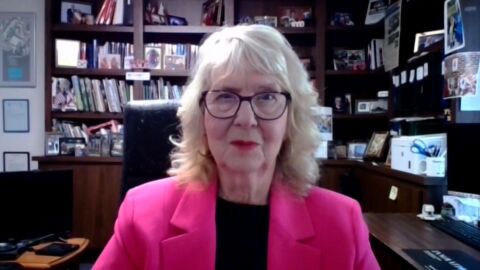
Analyst Susan MacManus has been keeping a close eye on this, and she joins Michel Martin in this discussion.
MICHEL MARTIN, HOST: Thanks, Bianna.
Professor Susan MacManus, thank you so much for joining us.
MACMANUS: Nice to be here. Thank you for asking.
MARTIN: So let me start with the headline. Democrats flipped a Republican- held state House seat in Florida in a district that includes Mar-a-Lago, where President Trump has his estate, his vacation home. It’s a place that
he carried by about 11 points just in 2024. How big of a surprise was this?
MACMANUS: Very much of a surprise, actually. And you have to be careful about taking those numbers from 2024. For one thing, Democratic turnout was
7 percent lower than Republican, and Republican registrants were a lot higher. So you have to be cautious about using those.
But what we were seeing in that district was a very, very well-run campaign by Gregory, doing some things that you also saw in another district in
Florida that flipped in my area, Senate District 14. So two seats flipped that same evening. They showed a lot of commonalities.
First of all, both of these victors were first-time candidates. And one thing we know for sure is that a lot of people, particularly younger voters
— and we see that we have more of those in Florida than a lot of people realize — that is what they’re looking for. I always refer to it as the
phenomenon of new faces in high places.
So she was a first-time candidate. She was a mom. She has her own business as a wellness business for postpartum women. And she’s also married to an
Army vet. So there were a lot of things that were different about her, and her whole campaign was different. And the same kind of differentials would
apply to the flip in the Tampa area.
MARTIN: So was the same thing true in that state Senate seat? As you just mentioned, they narrowly flipped. There was a GOP-held state Senate seat in
the Tampa area. Is it — was it the same factors at play there, too? New candidates who ran good campaigns?
MACMANUS: Right, right. And they were able to turn out the voters, and that was critical. That was the missing element in the 2024 race. It was very
bad for Florida Democrats. But this time out, these fresh faces, new approaches to campaigning, they relied much more heavily on local kinds of
contacts.
The Democratic Party in Florida is divided into a bunch of different caucuses, and each of those caucuses has their own list of members. And so
they were able to micro-target two groups that people were familiar with the leaders of and really urge turnout. That was very, very successful.
MARTIN: So obviously the Florida GOP is downplaying these. They say special elections are different, they’re special. But let’s sort of look at it more
broadly. I mean, OK, so yes, Emily Gregory for the state House seat in Palm Beach County. Brian Nathan, we just talked about the state Senate seat. But
there’s also in Boca Raton, Andy Thomson won there.
Eileen Higgins won for Miami mayor. That was in December of 2025. Ken Welch for St. Petersburg mayor, November of 2021. Is there a broader trend here
that is worth looking at?
MACMANUS: It’s certainly worth looking at and looking ahead to the next November’s elections, because the thing that was most monumental about each
of these cases was they used a model for turnout that had been missing from a lot of Democratic races in the past. And I think that’s very, very
important.
But there’s one other element that we haven’t talked about that worked here and has been a point of division among Democrats nationally. But what you
saw with both of the winning candidates in Florida, they did not use the bash Trump approach. They focused explicitly on the number one concern of
Floridians.
Every poll is showing us some aspect of affordability. But they also avoided that broad term of affordability and used specific terms for
affordability that were more relatable. Gas prices, grocery prices, those two top the list. But also insurance costs, housing availability is a
shortfall, all of those things.
And Gregory and Nathan both pointed out, don’t you want somebody to look at these things and focus on it? And here I am, and I’m a member of your
community, and I can do the job. Just get me to Tallahassee.
MARTIN: And you said that they didn’t focus their campaigns on Trump.
MACMANUS: Right.
MARTIN: But Trump is at the center of a lot of those issues. I mean, that is the whole argument. The argument — part of the argument here is that
that gas prices are in — are high, in part, in part, because of a war that President Trump decided to start, the tariffs, which have had an impact on
prices.
These aren’t related to President Trump. So I guess I’m trying to figure out how they threaded the needle. I mean, these are policy choices made by
this President.
MACMANUS: Well, these were state legislative contests. And when people were trying to run to gain seats in Tallahassee, and most Democrats, for
example, and Republicans know exactly what Trump stands are on all of these issues that you mentioned. So surely for some voters, you know, Trump was
part of the equation for turning out to vote.
But I think what people miss in this is that Gregory and Nathan were able to articulate in layperson’s terms exactly what was affecting their
personal lives. And that’s what got turned out up. After all, in a lot of places in Florida, there were two other elections that day where
Republicans clearly ran away with those two. So Democrats won two, Republicans two.
But in these competitive urban districts, one of the focus points for Florida Democrats was to try to reel back in some of the working class
voters who switched to Trump last time, but this time were drawn to because it was more localized and how the whole race was run, switch back to
Democrats, no as any mention of Trump, because everyone knows everything about Trump and how it affects them. So that wasn’t going to pull people in
one direction or another, in my judgment.
MARTIN: Let me just ask one other question about sort of demographics. Sometimes when people see a flip, they say it’s one of three things.
Existing voters, consistent voters changed their minds or voters who didn’t come out did come or new people moved. The demographics of the district
changed. Of those three things, what was the predominant factor?
MACMANUS: I think you can’t really separate them. But let me talk about the change in demographics of Florida. This is very important because these are
large media markets and they have very diverse electorates. But we have seen two changes that most people don’t realize about Florida, and that is
a huge generational change.
At this point in time, what you see is that the two younger generations, that would be millennials and Gen Zs, make up 36 percent of Florida’s
registered voters. Boomers, 32 percent. The younger vote has become much more preeminent. And the younger vote, a higher share of that, are people
who don’t vote on party. They’re registered as no party affiliation.
It’s the fastest growing group in Florida. And so the candidates, the thing that really helped bring some of those younger people in and the no party
affiliate people in, was this demographic that was open to new faces and high places. So generational shifts are there.
No longer is Florida an elderly state. I mean, it’s still positive that way, and everybody looks at the older person’s vote. But the key in Florida
winning anymore has got to be the younger vote. And if you take the three youngest generations, it’s 60 percent of Florida’s registered voters.
So generational shifts were very important. And in these areas where a lot of young people have moved and work and are struggling financially and
whatever, the idea of somebody talking about affordability drew them to the polls. So you have a lot of what we suspect were first-time voters among
that younger group. I think that was a huge part.
The second really big change has been in the racial and ethnic composition of Florida. And that has become much more diverse. And now well over a
third of our registered voters are persons of color, Hispanics being the larger group, followed by Blacks and then Asians. But even within those
groups, there are massive splits depending upon heritage and country of origin.
So we are a very diverse state. People don’t realize it. People move in here. We’re still a high-growth state. And what you see in a lot of places
are new people voting. I taught Florida politics for years. I used to tell my students, don’t take data from two years prior and try to run with it
this election because you could easily make a mistake.
MARTIN: Let’s take a bigger step back and talk about why Florida matters so much in our national politics. And I think Florida has been sort of a pain
point for Democrats. We’re sort of talking about Democrats here.
MACMANUS: Right.
MARTIN: The last time a Democrat won the state in a presidential race, as I understand, was Obama, I think, right, in 2012.
MACMANUS: Right.
MARTIN: They thought that it was going to be sort of purple, it was going to stay purple, it was going to be competitive. And then all of a sudden,
it seems to have taken this rightward turn with President Trump prevailing there and doing very well there.
It just seems as though Democrats seem to feel that they should be able to have a lock on the state and have not been able to sort of consolidate
their gains there. Why is that?
MACMANUS: The big shift was COVID. A lot of people don’t know how many people moved into Florida during those COVID years. And an example of this
would be in October of 2021, there were still more registered Democrats than Republicans. Today, the breakdown is Republicans 41 percent, Democrats
30 percent, and no party affiliation in minor parties, 28 percent or thereabouts.
So COVID, people who moved in here were a lot of younger people. We had jobs, we were open state, the environment’s good, cost of living’s not bad,
and there were jobs available. So you saw a younger population moving in here.
There was a second group of people that also moved in here, kind of unnoticed. It was sort of younger families moving in here for parents that
had relatives here and could stay here or whatever. They did not want their kids locked down. They wanted them to be able to go to school in person. So
those are two of the demographic shifts that kind of went unnoticed, but that’s what accounted for the huge change in the partisan makeup of the
state.
But I am curious, do the folks that you’re talking about see themselves as Floridians? Are they invested in the politics there?
MACMANUS: I think they are, particularly those family ones we’re talking about because of education. And again, Florida is a state that has the
school choice and a lot of options for people. But education is always a big part of it. And for some of these people moving in here, you know, we
don’t have an income tax, and that’s a very big attraction to a lot of people.
Some of that’s changing now. And one of the questions you kind of asked was how Democrats lost some of this. And I have looked at their briefings and
analyses of why they’ve lost elections, and there’s several things that have commonly been pointed out have been problems.
And one is this inattention to the changing demographics, which meant that some of the campaign strategies and messages and so forth were kind of
stale or weren’t working. So that was one of the things you saw really happening. But a second one was, and this is very important going to our
special election ones, a second really big complaint among Democrats in Florida, and a lot of party activists, was the outside consultants that
were sent into Florida to campaign for Florida candidates.
And we had a lot of complaints from local party people that said the people they sent in didn’t know anything about the area or whatever else. A huge
shift in the special election in Mar-a-Lago and the one here in Tampa, you saw a totally different approach, localized approach, local experts instead
of outside experts.
What improved them for Democrats? Two things. First of all, their messaging was better targeted and hitting the right people. So their messaging, plus
the second one, a big one, they understood the means of communicating with people. A lot of the Democrats in these races didn’t have bukus of money,
had less than Republicans actually, but they were able to offset that by using social media to their advantage, using a lot of these influencer
groups with local. Everything is the word local.
MARTIN: So before we let you go, I mean, you’ve given us a lot to think about. When you take a step back and you look at all of this together, are
these Democratic wins sort of early warning signs for Republicans heading into the midterms? Are they just a temporary blip in a state that still
leans red as it were? What do you think?
MACMANUS: It really looks a lot like the fact that this is going to be a first step forward. There’s no one looking at all of this that’s projecting
that overnight Florida will turn blue. I don’t think that’s the argument. Some people miss a point that to gain back, you have to sometimes do it
gradually. And I think that’s part of the plan.
And so that possibility is there. But on the other hand, Republicans really have to seriously look at the turnout in this whole arena, this last
election cycle, because what has happened in Florida and happened across the country is that we’ve seen the parties sort of switch.
So now the Republicans in Florida look more like the working class. Democrats look more like the, you know, better educated, particularly among
the women, elites and so forth. And obviously, then we also know historically that working class individuals don’t tend to vote in midterms,
they vote in presidential.
And they just saw that they spent a lot of money on both of the races they lost. They’re going to have to go back and carefully look at better micro
targeting and better model for turnout.
MARTIN: Susan MacManus, thank you so much for talking with us.
MACMANUS: Thank you.
GOLODRYGA: And finally, NASA says it’s ready to take another giant leap for mankind. As soon as Wednesday, four astronauts are set to launch farther
from Earth than any human has gone, shuttling around the never before visited far side of the moon. The Artemis 2 is the first crewed spaceflight
towards the moon in over five decades, carrying the first black astronaut, Victor Glover, and the first woman, Christina Koch, to travel in its orbit.
With the ambition to push ahead in a renewed space race, the mission aims to bring astronauts closer to another lunar landing and beyond. NASA bills
it as a stepping stone to Mars. We’ll be, of course, following all of those developments for you this week.
And that is it for us for now. Remember, you can always catch us online on our website and all over social media. Thanks so much for watching and
goodbye from New York.
END