
Read Full Transcript EXPAND
BIANNA GOLODRYGA, ANCHOR: Hello, everyone, and welcome to “Amanpour.” Here’s what’s coming up.
(BEGIN VIDEO CLIP)
UNIDENTIFIED MALE: It looks very much as if Californians really will have the chance to vote for change in November.
(END VIDEO CLIP)
GOLODRYGA: A crucial night of primary elections across six U.S. states as the midterm race begins to take shape. POLITICO senior columnist Jonathan
Martin joins us to break it all down.
Then —
(BEGIN VIDEO CLIP)
DONALD TRUMP, U.S. PRESIDENT: This July 4th, we will mark two and a half centuries of liberty and triumph, progress and freedom in the most
incredible and exceptional nation ever to exist on the face of the earth.
(END VIDEO CLIP)
GOLODRYGA: But with national pride near record lows, are Americans up for celebrating? I speak to historian Dominic Erdozain, author of “To Love a
Country,” about the complicated history of patriotism and its uncertain future.
Also, ahead —
(BEGIN VIDEO CLIP)
ROBERT KAGAN, SENIOR FELLOW, THE BROOKINGS INSTITUTION AND CONTRIBUTING WRITER, THE ATLANTIC: We have already lost this war. It’s just a question
of when do we acknowledge it?
(END VIDEO CLIP)
GOLODRYGA: — stalled negotiations and new escalations between the U.S. and Iran. Has Trump run out of cards to play? Foreign policy expert Robert
Kagan tells Walter Isaacson why he believes America is losing leverage and how it could change the world order.
Welcome to the program, everyone. I’m Bianna Golodryga in New York, sitting in for Christiane Amanpour.
A mixed picture is emerging from primary elections across America with major implications for the political fight ahead. It’s a cliffhanger in
California and the closely watched race for the state’s next governor. Republican Steve Hilton currently leads the count, followed by Democrat
Xavier Becerra and Tom Steyer, with the top two set to face off in November. In Iowa, Republican voters delivered a shock defeat to a Trump-
endorsed candidate for governor. While in a Senate race, the Democratic establishment prevailed over a progressive challenger.
All this comes at a crucial moment for Democrats. President Trump is facing record low approval ratings while claiming he doesn’t care about the
midterms.
But are the Democrats doing all they can to bolster their chances of recapturing the House and possibly even the Senate? To dig into all of
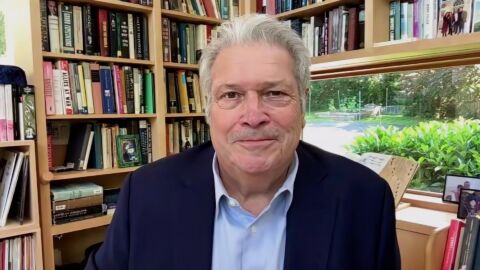
this, I’m joined by Jonathan Martin. He’s a senior political columnist at POLITICO, joining me from Minnesota. Jonathan, great to have you on the
program.
So, let’s start with California. We know votes are still being counted there. Deep blue state, deep blue city of Los Angeles. And yet, Republicans
ran strong on voter anger over cost of living, homelessness, the wildfire response. Trump-backed Steve Hilton is in the top two for governor. Reality
TV star Spencer Pratt is fighting for number two for the L.A. mayor’s race. What is this showing this strong say about the state of the Democratic
Party in California and particularly where Democrats run everything?
JONATHAN MARTIN, SENIOR POLITICAL COLUMNIST, POLITICO: Well, there’s a backlash to the party in power when voters are upset about the status quo.
And I think we’re seeing that in California. We’re seeing that nationwide. Californians have been frustrated with the cost of living with wildfires.
Obviously, the price at the pump, which has gotten even higher and it was already high.
And I think there’s an element of the vote center, center, right, even a little center left that’s willing to take a chance on different candidates.
Candidates who are unconventional like this fellow Pratt running for mayor in L.A. And obviously Hilton, you can hear that accent obviously grew up in
in the U.K. I just think it’s a different story when you get to the fall. You know, don’t forget, California has this top two system in which
everybody runs on the same ballot in June. Then the fall, it’s the top two vote getters.
I think in the fall, the California’s deep blue nature, especially at a moment where Trump is so unpopular, will revert to form. And they’ll elect
Democrats as governor and mayor. But there’s definitely a sense of frustration among voters everywhere.
But certainly, in California, because of the sort of unique nature of some of the challenges in California these days.
GOLODRYGA: Yes. And Democrats outnumber Republicans two to one in California. But as you noted, Spencer Pratt, he’s been getting a lot of
praise for how he’s campaigned thus far, not only on the issues, but his use of social media, A.I. in some of his ads.
MARTIN: Yes.
GOLODRYGA: I’m curious, given the low approval ratings we see nationwide for President Trump, these are candidates from Hilton to Pratt that he’s
endorsed, how are they embracing that, if at all?
MARTIN: Not too much. I mean, because, you know, they know that the Trump endorsement in a general election is the kiss of death. And they’re not
going to want to embrace that. This is the challenge with Republicans nationally, though, is that, you know, as the old saying goes, you, you
know, lose the general election to win the primary. They’ve got to have Trump on their side, or oftentimes they do, to get through a primary.
But once you’re in the general election, certainly in blue America, but in purple America, too, it’s a huge liability. And so, you know, Spencer Pratt
is not going to want to have Trump next to his name this fall. But certainly, Karen Bass, the mayor of L.A., is going to make that a central
case against him. And assuming that the deep blue nature of L.A. will revert to form in November.
But I got to say that clearly Californians, Angelinos, want, you know, some kind of change. There’s deep frustration with establishment politicians.
We’re seeing that everywhere. And we saw it last night, by the way, in the middle of the country, too.
GOLODRYGA: Right. And Karen Bass was never really able to gain momentum or trust from so many of those residents in the city when she was out of the
country at the height of those wildfires.
You mentioned the jungle primary. That is all of the candidates really sharing one ballot in California. Then the top two advance, even if they
happen to be in the same party. Democrats briefly feared perhaps there would be a scenario where you have two Republicans in a lockout for the
governor’s race. Now, there’s an undue the top two repeal effort for 2028.
Is the system genuinely broken or is this a sign of perhaps some weakness or concern among Democrats about their standing in these particular
candidates in the in the upcoming election?
MARTIN: Oh, I think you had a year where the Democrats couldn’t find a top tier nominee for governor of California. It wasn’t for a lack of looking.
Lord knows they went through Kamala Harris, Alex Padilla, Rob Bonta, who’s the attorney general out there and got to about their fifth option, which
is Xavier Becerra.
So, I think this is more reflective of the end of a period of really big figures, Schwarzenegger, Jerry Brown, Gavin Newsom, who were the governor
of the biggest state in the country. And Democrats couldn’t find somebody of that stature to run this time. And so, they’re left with somebody who’s
just not a top tier candidate, frankly.
Interestingly enough, though, the top two system is something that Schwarzenegger was passionate about, because the whole point of the top
two, the jungle primary, is you want to incentivize people in both parties to run toward the center and forge coalitions that aren’t just at the
flanks.
So, the California model was seen as a reform model nationally. And I think you could see more of that going forward nationally, because obviously
everywhere people are trying to figure out how do we incentivize the voters to reward people running toward the center. And that’s really hard to do in
a closed primary system. And maybe we can do that if you have this top two system where everybody’s on the ballot the same day.
GOLODRYGA: Yes. Instead of gravitating, as we’ve seen in so many of these primaries, to the extremes, either the right or the left. You mentioned
Gavin Newsom’s term limited out. Also, Nancy Pelosi is retiring. It really does seem like the fading of the old guard in California and even for San
Francisco in particular.
But we know that California Democrats, Jonathan Reed, drew the congressional map last year to add seats, flipping districts like San
Diego’s Area 48th, where Darrell Issa opted not to run. Based on Tuesday’s results, on last night’s results, was that a gamble that paid off?
MARTIN: Yes, they were going to add a couple of more seats. Democrats will, but it may not be the hall that they originally hoped for. I don’t
want to get too far in the weeds, but California famously takes a long time to count its ballots. There’s a lot of mail in ballots. So, this is going
to be days until we know the final results.
But there are a couple of house seats in which Democrats were hoping to pick up with the redraw there. You may actually get two Republicans make it
through into the fall, which obviously would mean backfire. It’s a complicated system and it’s possible when the votes really fractured that
two people of one party can get through in the fall.
And obviously, that was the Democratic fear in governor. That’s not going to happen, but it could happen, as you allude to in some of these House
races.
GOLODRYGA: We talked about the impact of the Trump factor in terms of who he’s endorsed. And it’s a mixed bag, I guess, depending on the race and
obviously a primary in certain areas and parts of the country. Trump just this week was boasting of a 38 and 0 endorsement record, having forced out
two sitting senators and then Thomas Massie, all of whom he said were not loyal enough. Then his pick, however, Friday for governor of Iowa, Randy
Feenstra had narrowly lost to a MAHA-backed outsider. How much should we read into this?
MARTIN: Well, I think these results last night in Iowa and South Dakota are actually more revealing than anything else so far that we’ve seen from
the Tuesday elections for this reason. In both states, you had a sitting member of the House, Randy Feenstra in Iowa and Dusty Johnson in South
Dakota, who lost their primaries for governor.
Now, in the case of Feenstra, as you allude to, Trump endorsed him. Now, Trump endorsed too late. It wasn’t enough to get in the bloodstream. But
still, Trump was for Randy Feenstra, a sitting member of the House. And Feenstra couldn’t win the primary loss to an outsider who had never been
elected to anything before.
Similarly, across the Missouri River in South Dakota, you’ve got a situation where the sitting governor and the House member at large are both
going to be outpolled by another outsider who’s never been elected to anything before. That tells me that in the Republican Party, there’s still
a lot of energy for outsiders, folks who do not come from the elected class of politicians, and certainly aren’t part of the Congress today.
Having a representative or senator in front of your name, if you’re a Republican, clearly is now a liability in this primary season.
GOLODRYGA: OK. Speaking of the outsider’s theme, I have to ask you about Bill Pulte. Donald Trump nominated him as a federal housing finance agency
chief. For those who may say that that name sounds familiar, but they associated more with mortgage rates. Donald Trump appointed him as acting
DNI. Not any experience in the intelligence world.
Chuck Schumer called him a partisan thug. That may not be as surprising as some of the uncomfortable responses, I would say, from establishment
Republicans who are now seeing sort of a theme of the president making choices that they don’t agree with, that they don’t think benefit the party
or the country. First, there was the endorsement of Ken Paxton for Senate in Texas.
This is a different type of pick, but I’m just wondering how much pushback you think this is going to get from the Republican Party itself.
MARTIN: It’s already getting some. You can see it in the body language from John Thune as he’s addressing the cameras this week on Capitol Hill.
And as you point out, it’s one more brick in the load, right? It’s so humiliating for these senators, especially the kind of traditional pre-
Trump senators, Bianna.
Whether it’s, you know, targeting Ken Paxton, targeting John Cornyn or Bill Cassidy, whether or not it’s the weaponization fund, now it’s naming your
housing guy who’s really your political enforcer, who’s trying to go after your enemies real and perceived as the head of National Intelligence, it’s
— these members know that this is not right. They’re deeply uncomfortable with it.
But look, a lot of their voters don’t care or they like it. So, it’s awkward because they don’t want to be openly critical of Trump, but at the
same time, they’re not comfortable with this. So, there has been pushback. And by the way, the pushback on the weaponization fund, Bianna, got through
to Trump. He dropped the idea.
GOLODRYGA: Yes.
MARTIN: So, we’ll see if Pulte survives. I’ll say this. I don’t think he can get confirmed as the permanent head of National Intelligence. He can be
acting. He can be temporary. The votes, I don’t think, are there in today’s Senate, given the frustration with Trump and his own party to confirm this
man to be the full DNI.
GOLODRYGA: Yes. We’ll see how far President Trump is willing to go to fight to keep him in this position, at least an acting position, which
could be for months to come.
MARTIN: Right.
GOLODRYGA: Overall, Jonathan, for the Democrats, you could say that two separate wings of the party, the progressive and the establishment, could
claim victory last night from New Jersey to California. Where do you think the party is right now? And just walk us through some of the wins, both for
the progressive part of the party in New Jersey and for some of the establishment candidates as well.
MARTIN: Sure. Well, look, the biggest win so far for the progressive was when Janet Mills, the governor of Maine, dropped out because she couldn’t
raise the money against Graham Platner. And we’ll see how Platner can get through in the fall. But that was obviously significant earlier this
spring.
Last night in New Jersey, you saw some progressives win House primaries, but as you go further west on the map and you look at the candidates who
were running for the Democratic nomination, obviously in Iowa in the Senate, Josh Turek, much more of a Schumer-approved establishment candidate
winning the nomination in Iowa. Rob Sand, unopposed for governor, a really promising candidate for the Democrats for Iowa governor, but somebody who
clearly is OK with the establishment wing, is no progressive flamethrower.
And then in California, it’s the most vivid example of this. The mayor of L.A., Karen Bass, who as you alluded to, has got a really flawed record as
mayor, and you know, even hardcore Democrats aren’t happy with her. She still easily outpolled the far-left candidate there in the mayor’s race.
And then lastly, in the governor’s race in California, Tom Steyer, a billionaire, reinvented himself as the sort of descendant of Karl Marx and
sort of a traitor to his class, really ran far left and is not going to make it through to the fall, it doesn’t appear. And Xavier Becerra, who’s a
much more conventional Democratic pick, basically blessed by the kind of Sacramento Democratic establishment, is clearly going to be the Democratic
candidate this fall in California. So, more wins last night from the establishment than not, Bianna.
GOLODRYGA: Yes, and that’s notwithstanding the amount of money that went into this race. Tom Steyer, in particular, I think, what was it, a couple
of hundred million dollars overall that was spent here, and he still was not able to prevail there.
MARTIN: The consultant class is doing pretty well, as are the TV stations in California, thanks to Tom Steyer.
GOLODRYGA: You brought up Graham Platner, and I think for our international viewers, it’s important to remind just how scandal-ridden he
has been as of late throughout his campaign. He’s ridden on the momentum there, definitely in the State of Maine, but whether it’s past comments,
tattoos, Nazi-affiliated tattoos, and most recently reporting that he sent explicit messages to women while he’s just newly married, as well, has
really rocked his campaign. He’s now avoiding many interviews. I think today I saw something suggesting that despite all of these scandals, that
Mainers still are supporting him.
Could he be the noose around the Democratic Party that perhaps Ken Paxton is for Republicans, and what does that mean for Democrats’ chances in the
Senate?
MARTIN: I think the question is there, we have to see. I think it’s, again, it’s the accumulation, as you alluded to, of difficult stories and
connections. The opposition file, as we say, is growing heavier by the day.
What else is out there? Are there unexploded mines that are even more damaging for Platner? I think right now he could survive in a really anti-
Trump year in what’s a pretty traditionally a blue state, in which Collins is facing profound structural challenges, Senator Collins, that is, the
Republican. But again, let’s see what else is out there.
But this is why the Senate map is so important, because if Democrats can’t count on Maine, what should be the easiest state, looking at the numbers
for them to pick up, boy, North Carolina, Ohio, Iowa, Texas, and Alaska, you got to find four from that list if you can’t count on Maine, and Ohio
and North Carolina, OK, you know, Obama won, you know, each of those states at least once.
But you’re talking about Alaska and Texas and Iowa, you’re talking about pretty darn red states in American politics, and it’s possible this year,
because Trump is so unpopular, but that creates enormous challenges for Democrats on the map if they can’t count on Maine to start.
GOLODRYGA: Yes. Jonathan, I’d like to finish by just pointing out a segment that you have been working on that I’ve just really enjoyed. It’s
gotten a lot of pickup online as well, and that is your series of conversations, and meals, with players from both parties.
MARTIN: Yes.
GOLODRYGA: You sat down with Pennsylvania Governor Josh Shapiro, you asked how he’d stack up against Wes Moore or Gavin Newsom, hypothetically, right,
because all of them are saying they’re not even focused on 2028, no idea where that kind of question or idea could come from, but you talked to him
about basketball, and I want to play this clip.
(BEGIN VIDEO CLIP)
MARTIN: Do you think that you would be competitive? I’m not saying you could take them, but would you be competitive playing pickup basketball
against Wes Moore or Gavin Newsom?
GOV. JOSH SHAPIRO (D-PA): I’ve never played — do they even play Hoops? I don’t know, do they?
MARTIN: They played in high school, yes.
SHAPIRO: OK, OK, I didn’t know that. I mean, look —
MARTIN: Wow, you didn’t even know.
SHAPIRO: I didn’t know. But here’s what I would say. If I could keep Wes off the blocks and force him to shoot threes, then I think I’d have a shot.
(END VIDEO CLIP)
GOLODRYGA: Basketball, of course, a fitting topic, given the start of the NBA Finals tonight.
MARTIN: Exactly.
GOLODRYGA: So, what are you learning from these men, their strengths, their blind spots, their food preferences?
MARTIN: Well, this series is called “On the Road,” and you’re nice to mention it. You can find it on YouTube or on POLITICO. And the idea is that
I travel the country and I have meals with politicians in a pretty casual environment. We did pizza and cheesesteaks in Philly and with Westmoreland
and crab cakes and with Gavin Newsom did seafood out in San Francisco. And the hope is that you get a more casual, revealing side of them, but still a
competitive side, as you just alluded to there with Governor Shapiro. Now, it does come with doctor’s advice.
Now, if you’re watching this, you’re going to get hungry and you’re going to see folks eating on air, which you don’t always see. People should know
this at home. There’s an art to it. The food isn’t just a prop. We’re actually eating on camera, Bianna. So, it does come with a PG-13 warning
that we’re going to be eating on the air.
But look, I think we’re learning a bit. These guys are competitive. A lot of them want to run for president. They don’t want to say it out loud just
now. But they do want to show a side of them that’s more accessible. And I think they understand the world is changing and you’ve got to do shows like
this that are a little bit different and that, yes, do show grown adults eating on camera.
GOLODRYGA: Yes, there’s an art to eating a slice of pepperoni pizza while you’re talking about health care and foreign policy.
MARTIN: Exactly.
GOLODRYGA: Jonathan Martin, great to have you on. Please come back. Really appreciate it.
MARTIN: Thank you. Enjoy.
GOLODRYGA: Now, in a month’s time, America will celebrate its 250th birthday. But for many Americans, it’s a difficult time to celebrate. The
country is divided, strained by conflict abroad, political polarization at home, and economic hardship for millions. On top of that, President Trump
has put a partisan stamp on the planned commemorations, from a coin featuring his face to a giant MAGA rally.
So, what exactly does it mean to be a patriot in today’s America? To explore that question, our next guest looks back to the nation’s founding,
tracing the evolution and contradictions of its ideals. It’s all in his new book, “To Love a Country: The Problems of Patriotism in America.” Author
and historian Dominic Erdozain joins me now from Atlanta.
Dominic, it’s good to have you on the program. Congratulations on the book. I think it does seem quite fitting to have a Brit write a book about
America celebrating its 250th anniversary, especially with this president in office, I have to say. He really has inserted himself just about in
every facet of this celebration. He has floated the idea that he’d host a giant MAGA rally now, after some artists dropped out of what they believed
was going to be a nonpartisan celebration.
Congressman Hakeem Jeffries wrote this on X. He said, get over yourself. The upcoming July 4th anniversary is not about a wannabe king. It is about
celebrating the American journey. The Trump administration considers any sort of criticism like that unpatriotic.
So, what kind of American patriotism are we seeing in Trump and his supporters, in your view?
DOMINIC ERDOZAIN, AUTHOR “TO LOVE A COUNTRY”: Well, thank you very much for having me. I take your previous guest’s point about the perils of a
British accent. So, I should tread carefully here.
But I think what you just described there of patriotism being kind of compressed into an individual is kind of what I mean by the problem of
patriotism and the problem of a certain kind of exceptionalism leading to a kind of merging of egoism with the greatness of the nation. And it’s
something that some of the early founders warn very explicitly about.
GOLODRYGA: When does the health of loving a country, because you’ll have so many people say there’s nothing wrong with that. You’re unpatriotic if
you don’t love your country. Where does that veer into dangerous territory, if at all? And what does that say about the current society, if that’s in
fact where parts of it are veering?
ERDOZAIN: Yes, I think two people that spring to mind here is a famous essay by George Orwell, where he talks — it’s called Notes on Nationalism.
He talks about nationalism as kind of the disease of the modern age, this kind of worship of this magnified version of ourselves in the state. And he
sees patriotism as a kind of a potential inoculation against that, that if you can love your country without worshipping it.
But the problem is if your version of patriotism is a form of exceptionalism that says we’re preeminent, then you’re going to tend into
that direction of uncritical affiliation. I mean, another person who springs to mind is the historian Richard Hofstadter, that really is an
aside in one of his reviews. He says, it’s been our fate as a nation not to have ideologies, but to be one. And when you are that ideology, it can make
you a blind follower, you know, a kind of, in a sense, a subject rather than a citizen.
GOLODRYGA: One criticism we hear a lot directed at the president or at Republicans from Democrats is that their loyalty is to the Constitution,
not to one party or not to one person. How do you think that resonates to most Americans? And I’m just curious to get your perspective. How does that
resonate to those around the world who are watching the United States celebrate 250 years?
ERDOZAIN: Yes, I think that it’s important. You know, I find myself defending America a lot to my kind of British friends and family. And, you
know, to emphasize that the current kind of MAGA phenomenon is not synonymous with the nation.
But this idea, I mean, one of my go to people is John Adams in the book. He talks about an empire of laws rather than an empire of men and the
importance of following the ideals and the ideas rather than our appointed spokesman of the time, our team. And, you know, they talk a lot about
factionalism.
And I think, you know, it’s again back to Orwell. Orwell has this great idea of transferred nationalism when a party or an ideology becomes the
avatar or the synonym for your nationalism and therefore supporting the party becomes your way of supporting the nation. And the effect is that you
end up undermining many of the values and commitments of that nation.
GOLODRYGA: And norms of that nation as well, as we see in real-time. The title of your book, “To Love a Country: The Problem of Patriotism in
America.” You separate patriotism from freedom. I think a lot of Americans would assume they’re quite similar. Why doesn’t that persuade you?
ERDOZAIN: I think the right kind of patriotism could. I mean, one of the motives for writing this is, was the response to Trump’s presidency among
liberal intellectuals who talk about reclaiming patriotism rather than, say, rethinking it or re-examining it in a more fundamental way.
And I think that for the people I’m — you know, it’s a historical book rather than a philosophical treatise. And one of the processes you see is
that the more patriotic people are, the more they’re inclined to sacrifice their liberties, their freedom of speech, their freedom not to be drafted
into an illegal war, for example. And this is something that Thoreau talks a lot about in Civil Disobedience, is that patriotism makes us proud, but
oddly lacking in self-respect at times, that we sort of sign away our liberties without thinking about it and that kind of ability to think on
your feet.
I mean, another one, if you forgive one more quotation, is Dwight Eisenhower in his famous farewell speech, he warns about the military-
industrial complex. He says we need a knowledgeable and alert citizenry to protect our democratic processes and to prevent the encroachment of the
military-industrial complex, which is absolutely right. But the kind of patriotism he promoted as president is the kind that puts us back to sleep.
GOLODRYGA: Well, I want to ask about one of the more provocative and I think really important, of course, it’s one of the dark chapters of U.S.
history, and that is on race. And you highlight the exceptionalism in patriotism has worked against race equality.
And you quote Abraham Lincoln here. You say, much as I hate slavery, I would consent to the extension of it rather than see the union dissolved,
just as I would consent to any great evil to avoid a greater one. So, what does that line reveal about how patriotism could, in fact, enable harm?
ERDOZAIN: Yes. Well, that’s — I’m glad you quoted that, because that’s the clearest summary of the argument in a way that you could be concerned
about something, but if you make it secondary, you’ve perhaps forgotten about it or neglected it. And that was the argument of people like William
Lloyd Garrison, Frederick Douglass, the abolitionists who felt that you’ve got this glorious thing called the Declaration of Independence, this
assertion of human dignity and equality and the right to life and liberty. Then you have a constitution that allows people to be classified as
property. Then you have patriotism that protects the constitution, that prevents structural analysis, structural radical change.
So, for people like Garrison to be a patriot was to rivet the chains of so many million enslaved people. So, you know, the clearest rhetorical version
of this would be someone like Douglass himself sort of mocking the patriots by saying, who were your daddies, referring to the founding fathers as your
daddies to say that just because they made this covenant with death, it doesn’t mean we can’t change it now. So, for them, it was a kind of
counter-revolutionary force that sort of denied the core ideas.
GOLODRYGA: And what you do in this book is you hold up people like Jane Addams, Martin Luther King Jr., Gandhi as models. All three loved their
countries while being able to indict them as well. What is the practical difference between their model as opposed to blind loyalty through and
through?
ERDOZAIN: Yes. Well, I think that the key thing for me with each of those thinkers is that they were dynamic. Their view of patriotism was that it
was a moving thing. It’s got to it’s got to change.
You know, Addams is so — you have all these anti-imperialists, including people like Mark Twain at the turn of the century, the turn of the 20th
century, who are critics of imperialism and their approach is very much what would Jefferson do here? He wouldn’t be invading these other
countries. Whereas Adams says that maybe we need a bit more than that. Maybe we need a more forward-looking patriotism that isn’t linked to
militarism in any way.
So, she’s kind of breezy in her disdain for the for the great generals of the Civil War and say we need a different kind of man and, you know, a
cosmic patriotism, which is a bit of a contradiction in terms. But she sort of draws her patriotism from the diversity and the plurality of Chicago,
where she founds Hull House and makes it central to her peace activism.
And the same with King. You know, he he’s always invoking the promise, but he doesn’t think the car is going to drive itself. You know, he finds
traditional patriotism too static and too kind of invocatory. You know, we are great. Whereas he’s like, we’ve got to breathe life into this
experiment and it’s going to happen now.
GOLODRYGA: Yes. It’s that form of encouragement, but the encouragement that that takes work and really galvanizing a movement. Christiane spoke
with former Obama adviser Ben Rhodes, who’s also written a book about American history. He traces the division, some of which you talk about back
to the constitutional the the Constitutional Convention. And he cited a speech by Benjamin Franklin, in particular, rallying support for the
Constitution’s passage. Let’s play that clip.
(BEGIN VIDEO CLIP)
BEN RHODES, FORMER DEPUTY NATIONAL SECURITY ADVISOR: Yes. So, I wanted to understand what’s happening now by understanding the history of the debate
we’ve had in this country. And I start with Benjamin Franklin because the speech that he authored, there was a closing argument at the Constitutional
Convention, did not defend the Constitution. It defended compromise.
It said, if a bunch of people are going to come together in a room with different interests, different views, different prejudices, then we are not
going to have a union without compromise. That made the country possible. But it was a starting point for this competition and this conflict we’ve
had ever since.
(END VIDEO CLIP)
GOLODRYGA: It sort of speaks, I think, to some of the language from Abraham Lincoln as well. Rhodes argued there’d be no United States without
those compromises. Do you agree with him?
ERDOZAIN: Yes. But I think that if you go back to the constitutional debate, you have these thinkers, these skeptics who are known as the anti-
federalists, who said, you’ve got to be careful how firmly you force these things together. It’s one thing to say we have differences. It’s another
thing to say that Georgia, where I am, and Massachusetts can be bound into the same unitary republic.
You have people in New York, like the federal farmer, who’s one of the — you know, they all have this kind of flamboyant pseudonyms, saying that
this is like a forced marriage and it’s going to result in divorce, if not civil war. That it’s one thing to compromise, but it’s another thing to put
polar opposites.
You have people in Georgia — I’m sorry to beat up on the state, but you have one of the representatives at the Second Continental Congress who’s
saying, you know, the principles of republicanism are the principle of devils. You know, they have no interest in the democratic experiment.
And a few years later, they find themselves in a state and they have in a federal state and they have the power to veto many of the things that
people in New England and Pennsylvania, for example, wanted to implement. So, it’s more than a failure to compromise, it’s — we’re talking about
ideological polarities of some extreme, which we’re living with still today.
GOLODRYGA: I find your background so fascinating. And I think given your background and all of the experiences that you’ve had being raised in
Britain, now living in Georgia, as you’ve noted, as a professor there and writing about this country, your previous book, “One Nation Under Guns,”
now about patriotism.
Your background, I think, really bears the significance of the points you’re making here from the experience that you’ve had. You said you find
yourself defending this country abroad. What did you learn in writing this book that you perhaps had yet to know about this country when you wrote
your previous book about guns?
ERDOZAIN: Yes. I think that — I was very conscious in so many arguments, and I have a lot, about whether it would be about militarism or race or
economic policy or whatever it may be, I came back again and again to Martin Luther King Jr. He was sort of my go-to person. In a way, he became
the exception that proved the rule. And I felt the weakness of that.
And then writing this book, I found this cast of characters that I didn’t know existed. And I always had this problem with Lincoln and the Civil War
and the violence of resolving that conflict through war. And I felt a bit of a loner. I was even afraid to discuss that. And then studying it, going
back to the primary sources, just filled me with some confidence that there are other people who think differently. I feel more at home here in the
U.S. having written the book and felt that there is this kind of company of witnesses that I can bring to play.
And I think, as a scholar, I’ve always been on that side of, you know, some historians are purists. They don’t believe in applying their research to
the present. But I’ve always been with kind of E. P. Thompson, who’s a great social historian, who says, you know, the past is alive. It’s teeming
with energies that we can bring to our side. And that’s how I felt when I wrote this book.
GOLODRYGA: You end the book on hope rather than despair. That’s quite American of you, I have to say. You ended with a commencement address by
John F. Kennedy Jr. at the American University. So, it does seem, and I want to make sure our audience knows, that you are optimistic. There is
room for optimism here. And a lot of what we know now about the country stems from a lot of the research that you’ve been able to put together for
this book. So, well done, Dominic Erdozain. Thank you so much for the time. Great to have you on.
ERDOZAIN: Thank you so much.
GOLODRYGA: Congratulations on the book. Incredible timing, we should note.
ERDOZAIN: Thanks very much.
GOLODRYGA: And full disclosure, Dominic is married to a CNN executive who we just adore. So, there’s something in the water there in Georgia that
just makes the Erdozains a wonderful family. Really appreciate it. Thank you for the time.
ERDOZAIN: Thank you very much.
GOLODRYGA: Now, hopes for a diplomatic resolution to the war in Iran have stalled after tensions in the Gulf flared again early Wednesday morning.
Iranian strikes on Kuwait have caused widespread damage. One person was killed and more than 60 wounded in the attack that hit Kuwait’s airport.
Meanwhile, the U.S. military carried out its own strikes near the Strait of Hormuz. In a new piece for The Atlantic, foreign policy scholar Robert
Kagan argues that Iran’s leverage in the Strait leaves the U.S. with few options. He explains why to Walter Isaacson.
(BEGIN VIDEOTAPE)
WALTER ISAACSON, CO-HOST, AMANPOUR AND CO.: Thank you, Bianna. And, Robert Kagan, welcome to the show.
ROBERT KAGAN, SENIOR FELLOW, THE BROOKINGS INSTITUTION AND CONTRIBUTING WRITER, THE ATLANTIC: Thank you.
ISAACSON: This war in Iran has gone on for four months now. Does it surprise you it’s gone on that long?
KAGAN: Well, in some ways it hasn’t gone on that long. I mean, in some respects, the war ended in March after the Israelis hit the Iranian Pars
oil field and the Iranians retaliated by hitting the Qatari gas industrial complex. Trump ordered an end to attacks on Iranian energy facilities and
then went into a ceasefire. And really nothing has changed since then.
Trump says a million things. One way or another he’s going to attack, he’s not going to attack. But if you look at what’s actually happened, it’s
clear that Trump is unwilling to escalate. And so, we’ve been in this kind of sort of Cold War situation with nothing really happening for four
months, other than the fact that the Strait has been closed.
ISAACSON: Well, other than the fact that the Strait has been closed, it’s a pretty big other thing. What happens there?
KAGAN: Well, we can clearly see now what the future looks like. Iran is in control of the Strait. There seems to be no prospect the United States is
going to be able to open the Strait by military force. Trump clearly doesn’t want to do that, which means the Strait will be open, but under new
management. It’ll be under Iranian management, which means they will control who gets in and who gets out, how quickly and at what price,
because they’re certainly going to charge for it eventually.
And this gives Iran enormous leverage in the region and in the world. And we’re already seeing that leverage playing out today with the crisis in
Lebanon and how Trump is handling that.
ISAACSON: So, what should the administration do or what can it do? Because this seems like a pretty bad stalemate of an outcome.
KAGAN: I don’t see any particular options. I think we have already lost this war. It’s just a question of when do we acknowledge it. Trump, of
course, doesn’t want to acknowledge it at all, which is why we’re sort of in this stasis, sort of paralysis right now. But I don’t see any options
for the United States. This mistake, unfortunately, is going to be a lasting mistake with lasting strategic consequences.
ISAACSON: If the Strait of Hormuz is open, sort of under new management, I think you put it, with Iran sort of controlling it, what does that mean?
KAGAN: Well, it means that the power relationship in the region will shift dramatically. I mean, before the war began, Israel was by far the strongest
power in the region. Iran was decimated, weak, isolated. After the war, with Iran in control of the Strait, Iran is going to be calling the shots.
You’ll see the Gulf states cutting deals with Iran. They’ve already begun to do so.
And you’ll see Iran exercising influence over Israel’s behavior, as it is doing right now in Lebanon. Iran wanted an end to Israel’s bombing of
Beirut. They demanded it, and Trump called up Bibi Netanyahu and told him to cut it out. That’s the future.
Israel’s going to find itself tremendously isolated. Iran is going to be in a position to have leverage over countries as far away as Japan and Korea,
who are, of course, utterly dependent on access to the energy supplies of the Gulf, which Iran will be able to control that access.
ISAACSON: Well, let me summarize what I think you just said about where we stand now, is that Iran will effectively control the Strait. The enriched
uranium, I assume, will not be taken out. They will help control what Israel can do in southern Lebanon. And there’s not been a regime change,
except for to a younger, more radical regime. That seems absolutely unacceptable. Is there any alternative? Is there anything that can be done?
KAGAN: Unfortunately, just because something is unacceptable doesn’t mean that we’re not going to have to accept it. And again, look, I suppose there
is some kind of war that the United States could fight, which would be a multi-month war at the very least. It would require risking losing ships,
you know, in the Strait. When you convoy in a contested area, you lose ships.
In addition to which, I don’t think that the Strait will be safe again as long as this regime is in power. And so, if you really wanted to, I
suppose, solve the problem, although I’m not sure what kind of solution it is, you’d have to invade and occupy Iran and stay there for a long time so
that you had a new regime. And I just think there’s no way the American people are interested in doing that. And I’m not even sure I would
recommend doing that at this point because the costs are going to be enormous.
So, you know, we have to accept the fact that this is a loss. I mean, we have lost in the past. We’ve lost previous wars in Vietnam, obviously.
Unfortunately, this one has much, as we’ve been discussing, much greater strategic ramifications than the loss in Vietnam did actually.
ISAACSON: Well, if you’re Trump and you hear what you just said, I think his instinct is very hard for me to know would be, OK, let’s bomb, let’s
hit more targets, let’s destroy even some infrastructure until they were lent. Is that a possible approach?
KAGAN: It really isn’t. And I don’t think he has — that’s not what I’m guessing he’s going to do. What he would like to do is hope that the
American people somehow can forget about all this. So, he’s telling, you know, his latest statements are relaxed. It’s going to take time. It always
works out, he says. And I think he would like to change the subject and move on.
But, you know, even an increased bombing campaign is not going to solve the problem. I mean, we bombed Iran very effectively, it seemed, for 37 days
without changing their course. I don’t know what the occasional tit-for-tat bombing is going to accomplish, in addition to which we cannot solve the
problem, which is at the heart of this, that we cannot prevent Iran from wreaking untold destruction on its neighbors in the Gulf and also and
perhaps, you know, from the world’s point of view, just as importantly, the energy infrastructure.
Iran is capable of destroying energy infrastructure in such a way that it could take years, if not longer, maybe even a decade to repair, which would
have implications for the global economy that are disastrous.
ISAACSON: How come nobody could foresee, or they did not foresee, that this could be a total fiasco the way you’ve just described it?
KAGAN: Well, I think that it should have been foreseen. After all, Trump is not the first president to face the Iran problem, and he’s certainly not
the first, you know, sort of hawkish American president to face the Iran problem. But if you look at what the decisions made by the two Bush
administrations and all the other Democratic administrations, they all decided that this was a threat.
I’m sure that Trump’s military advisors and maybe the CIA warned him that this could happen. They would be remiss in their jobs if they didn’t. But
he didn’t listen, because he’s Donald Trump. He saw a glittering object that Bibi Netanyahu presented with this possibility for a big win, and he
will go down in history and have his head on Mount Rushmore for getting rid of the ayatollah and the Iranian regime. And he didn’t think too much about
day two, obviously.
ISAACSON: Well, you said it was an opportunity that Prime Minister Benjamin Netanyahu presented to him. To what extent do you think that Prime
Minister Netanyahu pushed him into this?
KAGAN: Well, I don’t know how hard he had to push, but he certainly enticed him into this. I mean, it’s clear that he came to the White House
and recommended this plan. I mean, reports are that people like Rubio and the CIA director said that they didn’t think this was going to work, and
Trump did it anyway.
But it’s clear that this was an Israeli idea, which, I got to say, the tragic irony from Israel’s point of view is that I think this is going to
turn out to be the biggest setback in Israelis, you know, biggest strategic setback in Israeli history. And it was definitely an Israeli decision to go
ahead and do it.
ISAACSON: Yes, you talk about in your piece that this will be the biggest strategic setback in Israel’s entire history. Explain why.
KAGAN: Well, just because Israel’s arch enemy, I mean, what Israel considers an existential threat, is now in a stronger position than it’s
ever been before because, as we’ve been discussing, because of its control of the Strait, which means it’s going to be able to manipulate other powers
around the world in ways that it wants.
So, if Israel does anything that Iran doesn’t like, Iran can force the rest of the world to put pressure on Israel. As again, it’s happening right now,
right before our eyes. This is the future. So, Israel is going to be highly constrained on what it can do against Hezbollah and Hamas in Gaza because
Iran will be able to pull the string on oil and gas supplies if Israel does something it doesn’t like. That’s a very weak position.
Plus, Israel is now going to be more isolated than it’s ever been before because in addition to the fact that the whole world is now — you look at
the U.N. Security Council resolution yesterday, it was unanimous except for the United States. And support in the United States for Israel is at the
lowest point, I think, probably in its history. Neither party is very pro- Israel.
And Trump — and let’s think this is important, Trump is now turning against Israel. He may turn his MAGA followers against Israel too. And
anyone who assumes that MAGA is diehard supporters of Israel and can’t be shifted if Trump gets annoyed with Netanyahu are mistaken.
So, Israel — I just think Israel is going to find itself in a very isolated — Israel is used to being somewhat isolated, this is more
isolated because I don’t think they have the United States behind their back anymore.
ISAACSON: You paint a pretty dire, a very dire picture of what it means for the United States strategic interest and Israel’s. It also seems like
it’s pretty devastating to the strategic interest of the Gulf states, the Saudis, the UAE and others. Are they going to just sit back and watch this
happen?
KAGAN: Well, they, what their response is going to be, they’re going to have to cut deals with Iran. And they are, of course, some of them are
already doing that. Oman is clearly working with Iran. I saw that the Qatari foreign minister talked about making at least a temporary deal with
Iran. They’re going to have to come around. I don’t know that the UAE — the United Arab Emirates seems to be still sort of in the Israeli camp. I
don’t know how long that’ll last, but the others are not.
And it was pretty clear, at least from what we picked up, that the Saudis in particular were not in favor of this war. They could see very clearly
over the course of the war that the United States prioritized Israel defense over the Gulf states defense.
I mean, look, if you’re the Gulf state now, you put all your money on the United States. The United States then initiated this war at Israel’s
behest. And the war has been disastrous for the Gulf states, disastrous for their economies. So, you know, I don’t see why they don’t react to that by
turning both to Iran, but also to China, which is an important player, an increasingly important player in the region, partly because of its alliance
with Iran.
And so, you’re going to see an overall shift in the balance of power away from the United States and Israel and toward other powers in the region.
ISAACSON: The main reason we got into this situation at first, or so they said, was to stop Iran from becoming a nuclear power and maybe even get the
enriched uranium out. Now, we’re just talking about, can we try to get the Strait open? Is that totally — is Iran going to become a nuclear power
now?
KAGAN: Well, first of all, it’s less important now whether they do or they don’t, because their nuclear program is of less utility to them as a lever
in the international system than control of the Strait. The control of the Strait is like a — is greater than a nuclear weapon. But on the other
hand, they also have no incentive to make any concessions on the nuclear issue.
Now, you know, they have been saying for decades that they have no intention of building a nuclear weapon. So, I’m wondering whether Donald
Trump could have them say that yet again, and then declare victory and go home. He’s got to find some way to declare a victory. So, it’s possible
they’ll give him that. But the reality is Iran is not going to make any fundamental concessions on the uranium or on anything else.
ISAACSON: Well, let me ask you the big strategic question, which is what does this do to America’s alliances around the world? And to what extent
does that affect our competition, I’ll call it with China?
KAGAN: And with Russia, I would say. I mean, you know, the war itself takes place already in a context of the United States destroying our
alliance relationships. I mean, we’re pulling our troops out of Europe. We’ve made it clear that we are not going to be responsible for providing
security to our allies, which has been our main mission for 80 years. And so, those alliances are falling down.
And in Asia too, where we haven’t pulled out, we have as a — over the course of this war, drawn down huge amounts of military capability, which
are intended to deal with the China, Taiwan scenario, or another kind of Asian scenario. So, everybody can see how weakened we are, which means that
countries like Japan are going to have to go their own way.
So, that was sort of — all that was sort of in place. The Iran war has exacerbated all of that because in addition to us making it clear that
we’re not going to defend our allies, we also are not capable of playing the role that we’ve played for 80 years in keeping, you know, international
waterways open. That was a major American task. It’s one reason why nations in the world depended on us and therefore, listened to us.
I mean, you know, we, we always are unhappy about the degree to which nations depend on us, but it also gives us enormous influence. That
influence is going to be gone as nations go their own way.
As we prove that we are incapable of finishing a war we started, as we prove that we are incapable of dealing with, by the way, a pretty lesser
power that was already very weak. I mean, again, a lot of sort of war boosters on the Republican side, we’re bragging about how much damage we’ve
done and how China and Russia are going to be scared of us. I’m sorry, that is not the lesson of this war. The lesson of this war is that we took on a
very weak and damaged power and have not been able to complete the job. I think the world is going to see what that means.
ISAACSON: Robert Kagan, thank you so much for joining us.
KAGAN: Thank you.
(END VIDEOTAPE)
GOLODRYGA: And finally, hockey has enjoyed a surge in popularity this year, thanks in part to hit shows like “Heated Rivalry.” But while ice
hockey continues to grab headlines, some players are taking the game to new depths, out of the rink and into the pool, as you see here. Invented in
England in the 1950s, underwater hockey has developed into an international sport with a dedicated following across the globe.
Now, these enthusiasts who play for teams in the United Arab Emirates hope to take it even further as they head to the Asian championships in
Indonesia this August. Good luck to all players.
All right. That is it for now. Thank you so much for watching. Goodbye from New York.
END