
Read Transcript EXPAND
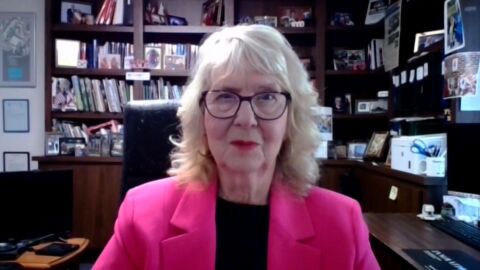
BIANNA GOLODRYGA: Now in the U.S., the Democrats appear to be gaining momentum. Since Trump took office, the party has flipped 30 Republican-held seats in state legislatures across the country, the latest two being in Florida’s Tampa and the President’s Mar-a-Lago home district. As both parties gear up for the midterm elections later this year, do these recent victories signal a shift in the deep red state’s political dynamics? Analyst Susan MacManus has been keeping a close eye on this, and she joins Michel Martin in this discussion.
MICHEL MARTIN: Thanks Bianna. Professor Susan MacManus. Thank you so much for joining us.
SUSAN MACMANUS: Nice to be here. Thank you for asking.
MARTIN: So let me start with the headline. Democrats flipped a Republican-held state House seat in Florida in a district that includes Mar-a-Lago, where President Trump has his estate, his vacation home. It’s a place that he carried by about 11 points just in 2024. How big of a surprise was this?
MACMANUS: Not very much of a surprise, actually. And you have to be careful about taking those numbers from 2024. For one thing, Democratic turnout was 7% lower than Republican, and Republican registrants were a lot higher. So you have to be cautious about using those.
But what we were seeing in that district was a very, very well-run campaign by Gregory doing some things that you also saw in another district in Florida that flipped in my area, Senate District 14. So two seats flipped that same evening. They showed a lot of commonalities. First of all, both of these victors were first-time candidates. And one thing we know for sure is that a lot of people, particularly younger voter — and we see that we have more of those in Florida than a lot of people realize — that is what they’re looking for. I always refer to it as the phenomenon of new faces and high places. So she was a first time candidate. She was a mom. She has her own business as a wellness business for postpartum women. And she’s also married to an Army vet. So there were a lot of things that were different about her. And her whole campaign was different, and the same kind of differentials would apply to the flip in the Tampa area.
MARTIN: So was the same thing true in that state Senate seat as you just mentioned, they narrowly flipped. It was a GOP-held state Senate seat in the Tampa area. Is it — was the same factors at play there to new candidates who ran good campaigns?
MACMANUS: Right. Right. And they were able to turn out the voters. And that was critical. That was the missing element in the 2024 race. It was very bad for Florida Democrats. But this time out, these fresh faces, new approaches to campaigning, they relied much more heavily on local kinds of contacts. The Democratic party in Florida’s divided into a bunch of different caucuses, and each of those caucuses has their own list of members. And so they were able to micro-target two groups that people were familiar with the leaders of, and really urge turnout that was very, very successful.
MARTIN: So, obviously the Florida GOP is downplaying these, they say special elections are different. They’re special, but let’s sort of look at it more broadly. I mean, okay. So yes. Emily Gregory for the State House seat in Palm Beach County. Brian Nathan, we just talked about the state Senate seat. But there’s also in Boca Raton, Andy Thomson won there. Eileen Higgins won from Miami Mayor, that was in December of 2025. Ken Welch for St. Petersburg Mayor November of 2021. Is there a broader trend here that is worth looking at?
MACMANUS: It’s certainly worth looking at and looking ahead to the next November’s elections, because the thing that was most monumental about each of these cases was they used a model for turnout that had been missing from a lot of Democratic races in the past. And I think that’s very, very important.
But there’s one other element that we haven’t talked about that worked here and has been a point of division among Democrats nationally. But what you saw with both of the winning candidates in Florida, they did not use, they did not use the “Bash Trump” approach. They focus explicitly on the number one concern of Floridians — every poll is showing this — some aspect of affordability. But they also avoided that broad term of affordability and used specific terms for affordability that were more relatable. Gas prices, grocery prices, those two top the list, but also insurance costs. Housing availability is a shortfall. All of those things. And Gregory and Nathan both pointed out, Don’t you want somebody to look at these things and focus on it? And here I am and I’m a member of your community, and I can do the job. Just get me to Tallahassee.
MARTIN: And you said that they didn’t focus their campaigns on Trump.
MACMANUS: Right.
MARTIN: But Trump is at the center of a lot of those issues. I mean, that is the whole argument. The argument, part of the argument here is that gas prices are in, are high — in part, in part — because of a war that President Trump decided to start. The tariffs which have had an impact on prices, these are related to President Trump. So I guess I’m trying to figure out how they threaded the needle. I mean, these were policy choices made by this president.
MACMANUS: Well, these were state legislative contents. And when people were trying to run to gain seats in Tallahassee, and most Democrats, for example, and Republicans know exactly what Trump stances are on all of these issues that you mentioned. So surely for some voters, you know, Trump was part of the equation for turning out to vote. But I think what people miss in this is that Gregory and Nathan were able to articulate in layperson’s terms exactly what was affecting their personal lives. And that’s what got turn out up. After all, in a lot of places in Florida, there were two other elections that day where Republicans clearly ran away with those two. So Democrats won two, Republicans two.
But in these competitive urban districts, one of the focus points for Florida Democrats was to try to reel back in some of the working-class voters who switched to Trump last time. But this time we’re drawn to — because it was more localized in how the whole race was run — switch back to Democrats. And there wasn’t any mention of Trump, because everyone knows everything about Trump and how it affects ’em. So that wasn’t gonna pull people in one direction or another, in my judgment.
MARTIN: Let me just ask one other question about sort of demographics. Sometimes when people see a flip, they say it’s one of three things. Existing voters, consistent voters changed their minds, or voters who didn’t come out did come. Or new people moved. The demographics of the district changed. Of those three things, what was the predominant factor?
MACMANUS: I think you can’t really separate ’em, but let me talk about the change in demographics of Florida. This is very important. Because these are large media markets and they have very diverse electorates. But we have seen two changes that most people don’t realize about Florida. And that is a huge generational change.
At this point in time, what you see is that the two younger generations — that would be millennials and Gen Zs — make up 36% of Florida’s registered voters. Boomers 32. The younger vote has become much more preeminent. And the younger vote, a higher share of that, are people who don’t vote on party. They’re registered as No Party Affiliation. It’s the fastest growing group in Florida. And so the candidates – the thing that really helped bring some of those younger people in, and the No Party Affiliate people in – was this demographic that was open to new faces in high places.
So generational shifts are there. No longer is Florida an elderly state. I mean, it’s still posited that way, and everybody looks at the older person’s vote. But the key in Florida winning anymore has got to be the younger vote. And if you take the three youngest generations, it’s 60% of Florida’s registered voters. So generational shifts were very important. And in these areas where a lot of young people have moved, and work, and are struggling financially, and whatever the idea of somebody talking about affordability drew them to the poll. So you have a lot of what we suspect were first time voters among that younger group. I think that was a huge part.
The second really big change has been in the racial and ethnic composition of Florida. (11:35) And that has become much more diverse. And now well over a third of our registered voters are persons of color, Hispanics being the larger group followed by Blacks and then Asians. But even within those groups, there are massive splits, depending upon heritage and country of origin. So we are a very diverse state. People don’t realize it. People move in here. We’re still a high-growth state. And what you see in a lot of places are new people voting. I taught Florida politics for years. I used to tell my students, Don’t take data from two years prior and try to run with it this election ’cause you could easily make a mistake.
MARTIN: That’s so interesting. Tell me more, because people often think about Florida in those broad strokes that you just mentioned. They think elderly voters, older voters, snowbirds, you know, people going to retire. Not interested in the schools, have already got a lot of money. And of course, they think about the Latino vote broadly defined. And as you point out, that Latino vote means lots of different things. I know that there was a large move of people from say, Puerto Rico after the devastating hurricane, some, some sort of 10 years ago. People think about the Cuban-American vote as being sort of dominant, I guess, is that still, is that still the case?
MACMANUS: And no, it’s not. In fact, the Cuban vote is not the largest proportion anymore like it used to be. And it’s also spread out. Keep in mind, we have sizable country of origin groups: Venezuelans, Colombians, Nicaraguans, you know, El Salvador, a lot of other places. But the bottom line is that those groups don’t vote alike. And for example, the Cuban vote is still pretty solidly Republican. But what you see, the Latino vote can be very split. Because what you see the Puerto Rican is, and Mexican heritage groups are much more likely to vote Democrat.
You also have diversity within Florida’s Black population, particularly in South Florida. You have huge influxes of people from Haiti and Jamaica and other of those countries, Caribbean countries. So to the point of now, a lot of South Florida politics often pits American-born Blacks and their priorities and issues versus the Caribbean Blacks who have become involved in politics as well.
Same thing is true among our Asian makeup. You have different leanings of people who come from or have heritage from India versus those, for example, from Vietnam. One size, fits all does not describe Florida in any way — generationally, racially, and ethically, or even from a gender perspective.
MARTIN: Let’s take a bigger step back and talk about why Florida matters so much in our national politics. I mean, I think Florida has been sort of a pain point for Democrats. We’re sort of talking about Democrats here. The last time a Democrat won the state in a presidential race, as I understand, was Obama, I think, right? In 2012.
MACMANUS: Right.
MARTIN: They thought that it was gonna be sort of purple. It was gonna stay purple, it was gonna be competitive. And then all of a sudden it seems to have taken this rightward turn with President Trump prevailing there and doing very well there. It just seems as though Democrats seem to feel that they should be able to have a lock on the state and have not been able to sort of consolidate their gains there. Why is that?
MACMANUS: The big shift was COVID, A lot of people don’t know how many people moved into Florida during those COVID years. And an example of this would be in October of 2021, there were still more registered Democrats than Republicans. Today the breakdown is Republicans 41%, Democrats 30%, and No Party Affiliation and minor parties 28%, or thereabouts. So COVID, people who moved in here were a lot of younger people. We had jobs. We were an open state and environment’s good. It’s cost of living’s not bad. And there were jobs available. So you saw a younger population moving in here.
And there was a second group of people that also moved in here kind of unnoticed. It was sort of younger families moving in here for parents that had relatives here and could stay here or whatever. They did not want their kids locked down. They wanted them to be able to go to school in person. So those are two of the demographic shifts that kind of went unnoticed. But that’s what accounted for the huge change in the partisan makeup of the state.
MARTIN: But I am curious, do the folks that you’re talking about see themselves as Floridians? Are they invested in the politics there?
MACMANUS: I think they are, particularly those family ones we’re talking about because of education. And again, Florida’s a state that has the school choice and a lot of options for people. But education is always a big part of it. And for some of these people moving in here, you know, we don’t have an income tax. And that’s a very big attraction to a lot of people.
Whether — some of that’s changing now. And one of the questions you kind of asked was how Democrats lost some of this. And I have looked at their briefings and analyses of why they’ve lost elections. And there’s several things that have commonly been pointed out have been problems. And one is this inattention to the changing demographics, which meant that some of the campaign strategies and messages and so forth were kind of stale or weren’t working.
So that was one of the things you saw really happening. But a second one was, and this is very important, going to our special election ones, a second really big complaint among Democrats of Florida – a lot of party activists – was the outside consultants that were sent into Florida to campaign for Florida candidates and had a lot of complaints from local party people that said the people they sent in didn’t know anything about the area or whatever else. A huge shift in the special election Mar-a-Lago and the one here in Tampa, you saw a totally different approach: localized approach, local experts instead of outside experts.
What improved then for Democrats? Two things. First of all, their messaging was better targeted and hitting the right people. So their messaging plus the second one, a big one, they understood the means of communicating with people. A lot of the Democrats in these races didn’t have beaucoops of money and had less than Republicans actually. But they were able to offset that by using social media to their advantage, using a lot of these in influencer groups with local. Everything is the word local.
MARTIN: So before we let you go, I mean, you’ve given us a lot to think about. When you take a step back and you look at all of this together, are these Democratic wins sort of early warning signs for Republicans heading into the midterms? Are they just a temporary blip in a state that still leans red as it were? What do you think?
MACMANUS: It really looks a lot like the fact that this is gonna be a first step forward. There’s no one looking at all of this that’s projecting that overnight Florida will turn blue. I don’t think that’s the argument. Some people miss a point that to gain back, you have to sometimes do it gradually. And I think that’s part of the plan. And so that possibility is there.
But on the other hand, Republicans really have to seriously look at the turnout in this whole arena, this last election cycle. Because what has happened in Florida, and it happened across the country, is that we’ve signed, seen the party sort of switch. So now the Republicans in Florida look more like the working-class. Democrats look more like the, you know, better-educated, particularly among the women, elites and so forth. And obviously then we also know historically that working-class individuals don’t tend to vote in midterms. They vote in presidential. And they just saw that they spent a lot of money on both of the races they lost. They’re going to have to go back and carefully look at better microtargeting and a better model for turnout.
I will say one other thing that’s been called to my attention by a Democrat, and that is that there’s a danger of looking at what happened in these two special elections be, as a broader issue. Because the people who were heavily involved in large part were activists. And is the general electorate and the general election going to be broader than that? It’s one of those unanswered questions. Although I think the big thing you can take away from this, these elections were a shot in the arm for Florida Democrats and a wake-up call for Florida Republicans.
MARTIN: Susan MacManus, thank you so much for talking with us.
MACMANUS: Thank you.
About This Episode EXPAND
Democrats appear to be gaining momentum. Since Trump took office, Democrats have flipped 30 Republican-held seats in state legislatures. The latest upsets happened in Florida. With both parties gearing up for the midterm elections later this year, might these recent victories signal a shift in the state’s deep-red politics? Analyst Susan ManManus discusses what she has been seeing.
WATCH FULL EPISODE