
Read Full Transcript EXPAND
CHRISTIANE AMANPOUR, CHIEF INTERNATIONAL ANCHOR: Hello, everyone, and welcome to “Amanpour and Company.” Here’s what’s coming up.
One of the deadliest weeks in Gaza since the ceasefire began, as Israeli strikes killed dozens more people there, while settlers seize the agenda on
the occupied West Bank. We have a report.
And “Coexistence, My Ass!” Israeli comedian Noam Shuster-Eliassi uses humor to get through life and amid conflict. And how she actually bridges the
divide between Israelis and Palestinians.
Then, how cuts to USAID are devastating countries like Mozambique, from food scarcity to the resurgence of ISIS.
Also, ahead, notes on how we got here. 2012 to today, the dean of the Columbia Journalism School, Jelani Cobb, talks to Michelle Martin about
race, power, and democracy in America.
Welcome to the program, everyone. I’m Christiane Amanpour in New York.
A familiar, morbid scene in Gaza again. The bodies of Palestinians on the ground in Gaza City, victims of the latest Israeli airstrikes. 32 more
people have been killed, bringing the total dead Palestinians in Gaza to 312 since the U.S. broke its ceasefire between Israel and Hamas six weeks
ago. The Israeli military says its forces struck Hamas targets across Gaza after members of the Palestinian militant group fired on its troops.
Meanwhile, in the occupied West Bank, violence perpetrated by Israeli settlers is rising. The U.N. has logged 264 attacks in October alone, its
highest monthly tally as settlers go after farmers and burn olive trees. Senior Israeli officials are warning that the state is losing control
there.
So, let’s go now to Nic Robertson in Jerusalem. Nick, thanks for being there. It really does seem like there’s an uptick in violence just when
people think, whoa, you know, a ceasefire has calmed the situation. Let’s first talk about Gaza. Why so many have been killed in the last six weeks,
but especially this week?
NIC ROBERTSON, INTERNATIONAL DIPLOMATIC EDITOR: Yes, the IDF, as you said there, said Hamas hit first. Hamas said they didn’t. A government
spokesman put more detail on it today, saying that several terrorists crossed the yellow line. That’s the line in Gaza that separates the IDF-
controlled part and, if you will, the Hamas-Palestinian part of the Gaza Strip.
They were neutralized, according to the government spokesman. The government spokesman also said that that Hamas or terrorist gunmen came
across into an area where the IDF were, that they were firing their weapons and that put a danger on those IDF troops. And then the IDF took the
decision, and it was interesting that the government spokesman, whatever anyone’s concept about how the ceasefire might be intended to work in the
future, the government spokesman said Israel did not seek anyone’s permission to strike. It decided to strike.
32 people, as you say, killed. Twelve of them were children. Eight of them were women. Eighty-eight people injured. And perhaps this typifies the
breakdown in information that is not clearly not being shared and the disparity of interpretation of what the ceasefire is about by both sides.
AMANPOUR: Exactly, and it does not look right now whether all the things around the ceasefire that are meant to really start a proper stabilization
with the force and then governance and all the other hard, hard things, it doesn’t seem they’d be in place yet, despite the U.N. Security Council
resolution. So, can you tell what the feeling is about any of these, you know, later phases?
ROBERTSON: They seem immensely troubled right now. There is no Board of Peace working who’s supposed to oversee the International Stabilization
Force that doesn’t have a commitment of troops from countries yet or detailed way that they’re supposed to operate on the ground. Neither is
there a Palestinian police operation been put in place as the resolution implicated, and we’ve heard from both Hamas and the Israeli government
about the resolution.
Hamas has said, we don’t want the Board of Peace because this is an international guardianship. They’ve said, we’re not going to be disarmed.
We don’t want an International Stabilization Force running after us. They should be monitoring the ceasefire. Some Palestinians in Gaza have sort of
expressed a similar sentiment about having an international force there. They think, they perceive, as there to do Israel’s bidding, and we’ve heard
from the Israeli prime minister, from Israel’s ambassador at the U.N., Danny Danon, saying very clearly the International Stabilizing Force is
there to disarm Hamas.
So, you have a huge disparity of view, and as you rightly say, nothing even there that was called into being is there, exists, and it’s realistically,
you know, maybe as much as six months away, according to some diplomats I was talking to.
AMANPOUR: Well, six months is a massive, massive vacuum in this case. Let me ask you, though, of course, you mentioned the number of children, the
number of women in the latest strikes. This really does trouble a lot of people when we’re told they go after just Hamas targets, and you’ve —
we’ve also talked about the number of attacks by Israeli settlers or soldiers on Palestinian farming communities in the occupied West Bank.
Apparently, this in 2025 has surpassed any year on record since the U.N. started counting in 2006. So, some Israeli, you know, security officials,
former generals and the like, are saying it looks like the government has lost control of the agenda there. For so long, they’ve let the settlers do
what they pretty much want. So, what are you hearing about that? Because now, they’re putting out statements that it’s got to stop, et cetera. What
is the actual, you know, hope that it will stop there?
ROBERTSON: You know, I think there’s another view of the government, and that’s certainly a view shared by Palestinians in the occupied West Bank
and by Israeli activist groups that we’ve been talking to, that in fact the government, despite what they say is enabling this, there’s been very
strong language used by members of the opposition that these so-called hilltop youth, these settlers, are in fact Jewish terrorists, and they
should be treated as such.
Avi Bluth, who’s in charge of the IDF for the Gaza area, has actually called them anarchists, and after he did that, those settlers spray-painted
graffiti during one of their attacks, saying we’re not afraid of the IDF, not afraid of Avi Bluth. So, I think that’s an answer back from them.
One of the key things people point to is the fact that Israel Katz, the defense minister, when he came into office last year, removed
administrative detention for settlers, which is a tool that’s used to arrest Palestinians and keep them in jail absent of a conviction. It’s not
being used against settlers, and the interpretation is, therefore, that there is not enough restraining influence on them.
I was in the West Bank just yesterday, traveling around three different villages that are feeling the brunt of settler violence, and literally I
just left one of those villages an hour later, settlers were there attacking it, an average of eight attacks a day. But I think the key thing
that activists and Palestinians in Gaza want the International Community to understand at the moment is the settlers have gone to another level, not
just the scale, scope, and organization, but what they’re doing is they’ve, if you will, done with the rural areas, they’re now encroaching on the
towns, and the allegation is that they would have a plan to try to force all Palestinians into a couple of major cities in the West Bank.
AMANPOUR: Yes. It’s really very systematic, and many are saying, you know, by not actually cracking down on it, and even the U.S. lifting sanctions on
some of the worst offending settlers, it kind of gives a green light. Nic, we look forward to that report from the Occupied West Bank, and thank you
for joining us.
Now, of course, there are many Israelis and Palestinians fighting tirelessly for peace, including our next guest, the Israeli comedian Noam
Shuster-Eliassi. She lends her unique voice to the dialogue on the hard work of making peace, and it is the focus of her new documentary,
“Coexistence, My Ass!” Here’s a clip.
(BEGIN VIDEO CLIP)
NOAM SHUSTER-ELIASSI, ISRAELI COMEDIAN: My mother is Iranian Jewish. My father is Romanian Jewish. They’ve been together since high school. So,
they basically grew up together, and they grew up to become the thing that Israelis love to hate the most, woke, progressive leftists. They believe in
the radical idea that Israelis and Palestinians deserve the same equal human rights. Crazy, so radical.
When I was seven years old, they said, let’s not raise our kids to be normal Israelis. Let’s move to the only place in the country where Jews and
Palestinians live together by choice, like on purpose.
(MUSIC PLAYING)
SHUSTER-ELIASSI: This is where the inspiration comes from. Jews and Arabs living together.
UNIDENTIFIED FEMALE: Dreaming of peace. Dreaming.
(END VIDEO CLIP)
AMANPOUR: Oh, my goodness, it looks so idyllic. And Noam is joining our program from Jerusalem. I’m so happy to have you on because you really do
typify, I think it’s a dwindling group of people who still believe that there is a possibility of, you can define it, but peace in some form or
fashion. Just tell us why your parents moved over to, I think it’s called the Oasis of Peace, and how you were brought up. It was a deliberate move.
SHUSTER-ELIASSI: Yes, it’s called the Oasis of Peace in English. In Arabic, it’s Wahat al-Salam. In Hebrew, it’s Neve Shalom. And when I type
it on my iPhone, it auto-corrects it to Never Shalom. So, I like to say that I grew up in Never Shalom.
I grew up in a very political household. My parents made a decision when I was seven years old to move to the only place where Jews and Palestinians
live together by choice. And I think for them it was a way to demonstrate what they believe is the alternative. So, I grew up as the literal poster
child of the peace movement, but I also grew up to — which is what we are dealing with in this film, “Coexistence, My Ass!”, and why I called my show
“Coexistence, My Ass! is because I wanted to face some harsh realities when it comes to the term coexistence and peace, which is thrown and used
without, you know, stopping and thinking, what does it really mean? How can Israelis and Palestinians coexist when we are denying the existence of
Palestinians?
And when Palestinians are living under occupation and this ongoing genocide in Gaza? And I wanted to put on the screen and in the show and through this
film these crucial questions about coexistence and what real coexistence means.
AMANPOUR: So, the documentary is super interesting and it does start with you at Harvard developing a stand-up comedy routine that’s, you know,
skewering the ideas that you’re talking about right now. You talk about denying the existence, some on the other side deny the existence of Israel,
of Jews as well. What conclusion have you come to or not yet? Because you grew up thinking that it was possible. And clearly, so much has happened
since then.
Are you — is it gone from your table or do you have another route towards coming back to that idea of peace between all sides?
SHUSTER-ELIASSI: I think that if we face the harsh questions and if we face the elephants in the room, then there could be a reckoning and there
could be a path forward for the future. I would not be doing comedy and I would not be going on stages and I would not be, you know, doing this
interview with you if I didn’t believe that there is hope. I’m also speaking to you seven months pregnant. And I think of this also as somewhat
of an act of hope of, you know, me becoming a mother.
But I think that me being an Israeli Jew, I carry a responsibility. What do I do with my voice? What do I do with my jokes? What do I do with my
responsibility towards my Palestinian friends, towards the Palestinians that I grew up with everywhere? And I think that we can’t just throw the
words peace and coexistence.
Peace and coexistence will be a side effect when there will be justice, when we will be able to stop the occupation, when we will be able to hold
Israel accountable for the war crimes and everything that it’s been, you know, doing for decades. There is a lot of dehumanization of Palestinians
in Israeli society and very much widespread. And I feel like I’m carrying the responsibility to — you know, to talk about it because I’m looking at
my society going more and more and more to the extreme. And so, I feel like I’m carrying this responsibility.
AMANPOUR: It is obviously something that I can see weighs heavily on you. I want to get back to the comedy part of all of this.
SHUSTER-ELIASSI: Yes.
AMANPOUR: And we’re going to — because it’s important because even that is altered given post October 7th, given your particular view.
SHUSTER-ELIASSI: Oh, yes.
AMANPOUR: So, I’m just going to play a snippet from the doc where you recently performed in front of Palestinian audiences, even took the stage
of the Palestine Comedy Festival in Sheikh Jarrah in front of a Palestinian crowd living the daily realities that you talk about. Here’s a clip that
we’re going to be playing.
(BEGIN VIDEO CLIP)
UNIDENTIFIED MALE: One of our comedians tonight is one of our Jewish brothers and sisters. Please help me welcome to the stage, Noam Shuster-
Eliassi.
SHUSTER-ELIASSI: I’m only staying for seven minutes, not 70 years. By the way, this is Amar’s joke. I stole it. It’s mine now. God promised it to me.
(END VIDEO CLIP)
AMANPOUR: Do you know, it’s actually really amazing. I assume that was a while ago because you said 70 years. I think we’re now at 75 or years since
the Nakba, as they say.
SHUSTER-ELIASSI: It was in 2018. Yes.
AMANPOUR: Exactly. Yes, well, there you go. And you see Palestinians laughing at their plight, you know, through your comedy. That is not going
to happen today, right? I mean, you talk about — or maybe it will. But I understand that you’re having more difficulty getting bookings. There isn’t
that sort of, you know, eagerness, certainly amongst Israelis, to go and listen to that kind of humor. Maybe not amongst Palestinians either. What
is the situation now for you?
SHUSTER-ELIASSI: Well, first of all, you know, I’m really wondering how to answer these questions because there is no definite answer. People are
eager for a connection. People are eager for empathy. I think what comedy has brought me, it has brought me the great gift of being able to uncensor
myself, to use this amazing tool to, as you saw now on stage, I didn’t have to explain myself. It was obvious.
And the one — and this is the wonders of what comedy can do. But I am very, very sensitive to what is happening. A stage like this cannot happen
today because I am seeing the reality around me in that same neighborhood where I’m performing actively. Israeli settlers are taking over Palestinian
homes and it’s an ongoing process of ethnic cleansing.
So, I’m very mindful that what I am doing, it’s comedy, but it’s also a very active, outspoken thing that I am doing to make present something that
most comedians — you know how many times, Christiane, comedians told me, oh, here is the comedian who is like doing the heavy stuff. She’s doing,
you know, the Arabs, the Jews, the coexistence, the Palestine, the this, the that. And I was kind of stubborn on continuing to do that.
And I think since October 2023, I’ve also had a real heartbreak with this craft because also in the U.S. and also here, we are seeing comedians using
the tool of comedy for propaganda, using the tool of comedy. It is that is supposed to shine light on power dynamics and to expose, you know, the
power and to challenge it, we are seeing comedian using their podcast and using their stage to entertain war, to become part of a war machine, to
entertain propaganda, to help Trump get elected through their comedy podcasts.
I mean, I think it’s a — I think I had a little bit of a heartbreak with it, but it also really reinforced my role and that I don’t have to choose
all the time. You know, I still have shows here. Palestinians and Jews come to my shows. This film, “Coexistence, My Ass!”, which is based on my show,
is being watched. You know, we’ve had 65 festivals around the world. We’re about to have a premiere in my hometown where, you know, the Palestinian
mothers and teachers who have been carrying so much, you know, pain for the past two years are going to come. And I can’t wait to see them watch the
film and, you know, be proud and laugh and cry.
And so, I think that it has just made my role like just more clear. And the fact that I am not going to stop, you know, not on the activism and not on
the comedy.
AMANPOUR: Yes. Well, I was going to say, I can see you emotional. I can see you really clear that you want to continue your art and your activism.
And to that point, I want to play a clip, because in the, you know, documentary, it’s not just about comedy. It’s also you confronting, you
know, anti-peace processes or whatever you want to call them there. It was this one, an anti-Netanyahu demonstration. You confronted protesters who
were demanding democracy without ever addressing the issue of Palestinian rights or the occupation. So, here you are. I’m going to I’m going to play
this.
(BEGIN VIDEO CLIP)
UNIDENTIFIED MALE (through translator): I just want to tell you that you’re —
SHUSTER-ELIASSI (through translator): That’s a compliment for me. (INAUDIBLE). Because the Israel you (INAUDIBLE). Thank you very much.
You’re the only one (INAUDIBLE). Look where you understanding (INAUDIBLE). Look where you’ve led us. (INAUDIBLE).
AMANPOUR: So, Noam, you know, you’re there and you’re actually, you know, sort of shaking your hand and having this argument with somebody who’s on
the same side, essentially, looking for democracy. It was anti — you know, the interference with the Supreme Court and all the rest of it, protest.
And even they, you find, don’t get the whole story. So, just very briefly, because we’re running out of time, what is your hope for the future?
SHUSTER-ELIASSI: My hope for the future is that the very basic things we’re saying in this film and the basic things I stand for don’t seem
radical, even in a left-wing demonstration, as you are saying very rightfully. Demanding full and equal rights to Palestinians is not radical.
Wanting ethnic cleansing to stop is not radical. Wanting the genocide to stop is not radical. What I am representing is a very simple truth of
equality, and hopefully people will also laugh on the way.
AMANPOUR: Well, we certainly need some kind of hope out of all of this darkness. So — and good luck with your baby and everything.
SHUSTER-ELIASSI: Thank you.
AMANPOUR: Noam Shuster-Eliassi, thank you very much for joining us.
SHUSTER-ELIASSI: Thank you so much for having me.
AMANPOUR: More than 22 million people, many of them children, could die from preventable causes by 2030, due to aid cuts by the United States and
European countries, too. That’s according to a group of respected global health organizations. In particular, the void left by USAID is being felt
in countries like Mozambique, where food and medicine are increasingly difficult to find.
Meanwhile, ISIS is staging a resurgence in the north of Mozambique, sweeping into small villages, carrying out beheadings and expelling people
from their homes. Nick Paton Walsh is there with this report.
(BEGIN VIDEOTAPE)
NICK PATON WALSH, CHIEF INTERNATIONAL SECURITY CORRESPONDENT (voice- over): The little holding ISIS back as it surges, making swathes of Africa. A new heartland, is fading. Darkness in its place.
Help from the American people, so vital in Mozambique, about 3 percent of its economy. And in January, it was suddenly gone. The hole it left seems
to suck everyone in, an open space for ISIS to surge in the north. Beheadings, child abductions, emptying Christian neighborhoods. Nearly
100,000 on the move, finding little food or help where they flee to. In a place where billions in LNG gas wealth, enough to transform life here, and
an American investment sits untapped until security returns.
It looks like a place where nothing should go wrong, but Mozambique’s north is ravaged by a resurgent ISIS, finding a new life across Africa.
We land in the flashpoint of Macimba de Praia, seven weeks after ISIS started their worst offensive since they occupied the town in 2021. We’re
the first international journalists here in a year. The government’s grip is so shaky, they’ve let Rwandan forces in to be the real muscle on streets
where ISIS seem to rule the night.
WALSH: So, USAID’s contribution to Mozambique amounted to about 3 percent of its GDP. And so, obviously they’re reeling from that suddenly stopping.
In a place like this, well, it was controlled briefly by ISIS about four years ago. They were kicked out. And that USAID money helped the economy
here, development, schools, really enabled the government to try and promote its hold on the place. And so, now that money has suddenly
vanished, well, they’re reeling here. And ISIS are back.
WALSH (voice-over): The little video we have of ISIS’ recent onslaught is terrifying. Outgunning Mozambican forces, slaughtering captives. But in
October, they tried something new, less savage and confident. They walked unopposed, armed, in stolen uniforms, straight into this mosque in
Messumba’s coastal fishing community to deliver a manifesto.
UNIDENTIFIED MALE (through translator): The Islamic state always remains. By the grace of God. The Islamic government always remains and will lead
until the end of the world.
WALSH (voice-over): The crowd didn’t flee, but instead filmed. When ISIS arrived, asked for the keys and walked in wearing their boots, the imam had
presumed they were soldiers.
WALSH: What did you think on that night when these guys came in?
SUMAIL ISSA, IMAM (through translator): The seven were standing outside and two came inside after opening the doors. They ordered the old man,
asking for the microphone to broadcast their voices. When they displayed their banner like this, I was surprised that they are Al-Shabab.
WALSH: It is extraordinary, after all these years of ISIS spread across the Middle East, to stand in — startling to stand in a place where they
had freedom of movement just a couple of days ago.
WALSH (voice-over): Locals say they alerted the military, but ISIS had made their point about control. 93,000 people around this area fled in just
six weeks after ISIS’ attacks began on September 7th. Not a breath or noise of life here in a Christian neighborhood, Filipe Nyusi, emptied. We’re the
first journalists to see this.
Rafael takes us directly to the home of his brother-in-law, now abandoned. They were not rich and also took U.S. aid. But ISIS still came for their
money in the dark, knowing exactly which door to knock on.
RAFAEL NDINENGO (through translator): He was tied up, they took a stick and beat him. They cut off his head and put it on his bottom. This place
you see here is where we laid my son’s spilled blood. You are going to make me cry because of my son. My son, I lost him. My feelings for my son,
you’re going to make me cry. I didn’t want to come here.
He was calling me papa, papa.
WALSH: Eight men killed by ISIS, seven of them beheaded, some in front of their families. And you just — for looking around, I mean, there’s nobody
here. It’s startling. This used to be a vibrant area, Christian area. You can sense just how much fear ISIS are able to project with these night
raids when they just turn up in the dark, hit particular houses and behead the men.
WALSH (voice-over): USAID gave about $586 million in 2024 to Mozambique. A total of about $2.4 billion was intended for ongoing projects, from water
sanitation to anti-extremism, according to documents seen by CNN. When USAID stopped, roughly $800 million of that probably did too.
The money USAID spent here urgently tried to curb the spread of ISIS. They gave $50,000 here to help motorcycle taxi drivers improve their working
conditions with paperwork, vests, helmets. Young and poor, they risk recruitment to ISIS unless they find a livelihood. Their anger about that
help suddenly disappearing and then us asking questions clear.
WALSH: Now, please, my friend, tell me, how do you feel now the USAID money has stopped?
UNIDENTIFIED MALE (through translator): You’re offending me. Things in my house are my business. Why are you asking about my house? We’re here at a
community meeting. You’re offending me.
WALSH: Emotions are incredibly high here. I mean, it’s all about people’s livelihoods, really, and a lot of anger.
WALSH (voice-over): The man who ran the project describes how it is the only way to stop ISIS.
KHAMISSA FABIAO, PROJECT COORDINATOR (through translator): The only way to stop the insurgency is to continue with this funding. If they have an
opportunity to earn money, I don’t think they will go into the jungle, because nobody wants to die. When we started this project, I personally
recruited many young people to keep them integrated into society. President Trump should have a heart. Not all Mozambicans, not all Africans are
corrupt. That money has benefitted us.
WALSH (voice-over): Fishermen, the main workforce here, but also a source of ISIS recruits. We visit a USAID project aimed too at giving them a
better livelihood, now shut.
WALSH: It’s absolutely stunning here, but just on the other side of that bay over there is the mosque where ISIS gave their speech matter of days
ago. And here’s the project.
WALSH (voice-over): Funded discreetly by US$70,000 from USAID through local government, it helped register and repair boats, nets and motors, and
was meant to continue.
CADUMO SUFO, PROJECT COORDINATOR (through translator): We increasingly monitor the boats and the fishermen. Most are young men within the age
range. They (ISIS) capture then to recruit them.
WALSH: Interrupting ISIS is personal to Cadumo. Over 60 years ago, they abducted both his sons and daughter. She escaped, but he doesn’t know if
his boys are alive.
SUFO (through translator): I haven’t heard from them fox six or seven years. I haven’t heard my children’s voices. When I remember my children,
it hurts a lot. So, it’s not worth it. I’m feeling very sorry.
WALSH: I mean, it’s just crazy how frequently we come across stories of abduction and killing.
WALSH (voice-over): The town so many flee to, Mueda, is a back-breaking nine hours’ drive away. The shorter roads we avoid, ISIS killed police
there days earlier.
WALSH: But this really is an aid town. But we’re told that since USAID shut down, 10 international aid workers have left here, leaving not that
many. Many offices have been closed. A real sense of the air kind of being sucked out of here.
WALSH (voice-over): 10,000 new arrivals in this camp alone met with a steep drop in food aid. The Norwegian Refugee Council, half-funded by
USAID, can now only provide a month’s stopgap rations. They build again here, new homes from bamboo and netting, all vividly aware they cannot go
back.
SAVIANA NDIWICA (through translator): They come and immediately start shooting. There is war. Beheaded. You flee with nothing. They come and cut
your throat. When you see someone else being killed, you flee along to a safe place. Since we arrived here, we sleep on the floor. We barely eat,
something we cook cassava leaves, without oil and we eat that. Without a chimney. We have nothing, no flour, no rice.
WALSH (voice-over): Most stories you hear in the heat, dust and smoke, end in a beheading. Already there are signs of real hunger. You might choose to
eat these snails fresh from the sea, but not like this so far inland.
This girl’s father was killed by ISIS. He was part of a local government militia. They arrived here, desperate, two days ago, to find the aid they
yearned for wasn’t there.
The U.N. say they need $352 million in aid for this crisis-hit region in the north, but as of October have a fifth, only $3.5 million from the U.S.
so far, although more from the State Department is said to be coming. The U.S. gave much more in previous years.
MARIIA RIABININA, WORLD FOOD PROGRAMME: We’re assisting about 1 million people at the beginning of 2024, and then we decreased to around 345,000
people that we are targeting now.
ULRIKA BLOM, NORWEGIAN REFUGEE COUNCIL: It is limited funding and we see now that we cannot help them and it’s very, very stressful.
NICHOLAS WASUNNA, UNICEF: We have to address the priority of the priority, which means we have to make very tough choices and this means we focus on
life-saving.
WALSH (voice-over): But Mozambique could be rich. Around the town of Parma, shielded by these fortifications, it’s clear that while the Trump
administration is stripping away aid here, it’s also investing fast and hard, a $4.7 billion loan in March, in vast liquid natural gas facilities.
U.S. giant ExxonMobil and France’s Total Energy plan to spend at least $20 billion here.
WALSH: This is one so much of that intensity is all about. Mozambique’s liquid natural gas resources, so plentiful yet untapped, but it could make
the country second only to Qatar in terms of the wealth they get from it.
WALSH (voice-over): It is a contradiction and too a risk. ISIS violence pours building here for years, but even though it is now worsening, Total
Energy suggested last month they would push ahead with the bill.
Yet, with this remarkable savagery swirling around it, a future of Gulf- like prosperity seems far-fetched. Surrounded by a crisis of escalating hunger, displacement and extremism, deepened by a sudden collapse in the
aid that once kept life afloat here.
A State Department spokesperson said the U.S. had continued to provide assistance this year in Mozambique, a majority of which was life-saving
food and nutrition assistance. They added that worldwide aid was constantly under review to ensure it meets the needs of the receiving country and the
priorities of the United States. The State Department did not respond to our questions about the resurgence of ISIS following the withdrawal of U.S.
aid. Their statement added, the United States continues to be the most generous nation in the world. This administration is significantly
enhancing the efficiency and strategic impact of foreign assistance programs around the world. We call on other nations to increase in burden-
sharing globally.
Nick Paton Walsh, Mocimboa da Praia, Mozambique.
(END VIDEOTAPE)
AMANPOUR: Now, from mass ICE raids across immigrant communities to enforcing anti-DEI policies, fears mount for the melting pot society that
the U.S. once championed slowly unraveling under President Trump. At this moment of social and political upheaval, the dean of the Columbia School of
Journalism, Jelani Cobb, told his own students back in March that, quote, “nobody can protect you. These are dangerous times.”
Now, through a collection of his articles written over the last decade, he reflects with Michel Martin on how the United States got to this place.
(BEGIN VIDEOTAPE)
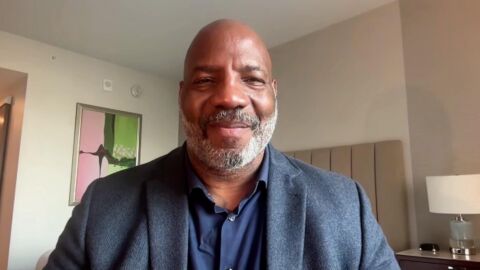
MICHEL MARTIN, CONTRIBUTOR: Thanks, Christiane. Jelani Cobb, thank you so much for talking with us once again.
JELANI COBB, AUTHOR, “THREE OR MORE IS A RIOT”: Thank you. I’m happy to be here.
MARTIN: So, your new book is a collection of your essays. They span from 2012 to 2025. It’s titled “Three or More is a Riot.” Where does the title
come from?
COBB: I’ve done a lot of coverage that was in and around South Carolina, particularly, you know, one very difficult story that I covered, which was
the deaths of nine African Americans at the Emanuel AME church in 2015, the result of a mass shooting that had been orchestrated by a white
supremacist. And it reminded me that there had been, you know, years before the civil code of South Carolina, colonial South Carolina, had held that a
slave revolt was defined as three or more negroes, as black people would have been called then, outside the company of a white man.
And then interestingly enough, a lot of civil codes, their definition of riot is public mayhem committed by three or more people. And, you know, I
thought that there were — this line about numbers, demography, you know, social tensions, order, and all those themes that kept coming up and the
things I wrote about. And so, the title just kind of jumped out at me, it was “Three or More is a Riot.”
MARTIN: You start by talking about the shooting death of Trayvon Martin. For many people who may not remember this, he was a Florida teenager. He
was shot by a white Hispanic man named George Zimmerman back in 2012, who was sort of a self-appointed neighborhood watchman. Trayvon was visiting
his dad. He went out to get his little brother a snack at the convenience store. Zimmerman decided that he was suspicious. He was going to follow
him. Trayvon doesn’t like being followed. And he feels threatened. So, he confronts Zimmerman. Zimmerman shoots him. He’s not arrested for weeks.
Public outcry ensues. He’s finally arrested. And eventually he’s acquitted. And that whole — the irony, of course, that it takes place during the
Obama administration.
COBB: Right.
MARTIN: Right. And the book kind of follows this sort of different sections. It’s got the parameters of winter in America and history lessons.
I was curious, like, why you decided to open the book with the Trayvon essay, as opposed to, for example, the election of Barack Obama in 2008.
COBB: So, here’s the interesting thing. There were a couple of reasons why the book opens where it does. And, you know, I started writing for the New
Yorker in 2012. The first thing I ever wrote about was Trayvon. But at that time, it was a kind of a news blip. It wasn’t a story that had the
dimensions that it eventually came to occupy. And so, it was the beginning of my relationship with the New Yorker. It was the first thing that I had
written about.
And then also it occurred to me that when we were putting the collection together, that if we looked at 2012 to 2016, you know, the second term of
Barack Obama, then 2016 to 2020, and then 2020 to 2024, it’s just a little bit that creeps over into 2025. It could be like a three-act play, really,
with the three presidential administrations. You can kind of see an arc of the story evolving and how we came to find ourselves in increasingly
volatile social and political circumstances.
MARTIN: One of the things you write about is the way in which the President Trump has been very good at turning racial grievances, cultural
grievances, class grievances into political capital, OK? But why do you think that is, that he’s been so successful at it?
COBB: I mean, I think some of this is a particular political skill, and I mean, dare I say, even talent, at finding the buttons that really trigger
rage in people. And, you know, he has a background in television, which shows, you know, and reality TV. And, you know, some ways the kind of
politic that we’ve seen him deploy has been, you know, the fundamental with the kind of simplicity level of reality television. And that has been
compelling to people.
The other thing is that this is a very old playbook. You know, populist movements, particularly reactionary populist movements, if you go back to
Pat Buchanan in the ’90s, or George Wallace in the 1960s, or if you went all the way back to Tom Watson in the 1890s into the early 20th century,
and if you took all their speeches and threw the pages up in the air, and let them hit the ground, you would have a hard time discerning who was
saying what, you know, because there is this big overlap in the kind of ways in which they leverage people’s feelings of resentment and, you know,
galvanize that into political force.
MARTIN: Yes, but Pat Buchanan didn’t make it to the White House. George Wallace didn’t make it to the White House. Certainly not for two terms, I
mean, not for no terms in their case, and certainly not for two terms. It’s just — I don’t know. I mean, to kind of be defeated, to win an election,
be defeated, and then to come back, that’s a pretty remarkable achievement.
COBB: Yes, I’m not doubting that at all. And so, that’s the thing that I’m saying, though, like that those kinds of movements have existed for a long
time. The dynamic of someone who’s able to galvanize that. Also, I should say, none of those people were running for president in the aftermath of a
black man being elected president, which is another kind of point, you know, that bears mention.
MARTIN: The book is not exclusively, but it is very much focused on kind of the black-white racial dynamic, in part because of the times that you
were writing about. I mean, an African-American president in his second term, a, you know, white populist figure arising, in part, as you noted,
out of a resentment around that fact. OK.
So, in the current moment, though, many of the people who seem to be the focus of this president’s resentment are people of other ethnic
backgrounds, many people from, you know, South America, Central America, many of the people who are the targets of this immigration crackdown, which
has taken on this kind of furious dimension. And I was just wondering if that kind of, how that, how you’re thinking about that.
COBB: So, I think it’s interesting. There’s a piece that I wrote in The New Yorker, but it was too recent to actually get into the collection. And
there’s a couple of other pieces that talk about, you know, this dynamic of immigration and anti-immigration, you know, xenophobia in American society
and the kind of high groundswell of it that we’re experiencing right now.
But one of the things that I would point out, that historically, we have seen, we’ve tended to see xenophobic politics rise at the same time that we
have seen anti-black politics. Like those two things seem to have had like a connection that goes to a fundamental concern about demography and trying
to curate who is in the United States and therefore who is in the electorate. There are issues of voter access and voter suppression that
also tend to go hand in hand with anti-immigration rhetoric, with nativism and xenophobia.
And so, all of these things, I think, are responding to a common sense of persecution or maybe anxiety about where people fit into the bigger
demography of the United States.
MARTIN: In some of your essays, you revisit them, like you have like an epilogue or a postscript where you kind of reflect on what you wrote then
and what you might think now. Anyone in particular where you really felt like, I kind of got that wrong? I was really wrong?
COBB: No, I feel like I got everything right.
MARTIN: Lucky.
COBB: No. I think some of my assessments, my early assessments about the MAGA phenomenon underestimated, one, the broad array of issues that were
really kind of buoying that movement. I certainly underestimated the speed at which it was going to come into fruition. And, you know, once I started
to see it, I couldn’t unsee it. I was thinking about it in relationship to older populist movements in the United States. And then it becomes much
more legible and much more understandable. But I think early on, I didn’t understand that. And so, the writing that I did probably reflected that
then.
MARTIN: What do you make of the fact that this MAGA movement, this movement that the president has called MAGA, is a multiracial movement? Is
he the FBI director who has been a prime agent of his, you know, revenge campaign against his perceived political enemies is an Indian-American who
took his oath of office on a Hindu sacred text? What do you make of the fact that the head of one of these kind of militia groups like the Proud
Boys has Hispanic heritage? The fact that he got larger percentages of Hispanic and Black votes in his second election than he did in the first.
COBB: Sure.
MARTIN: What do you make of that?
COBB: So, I think there are a few things that are at play. One is that if we looked at all sorts of kind of movements that preceded this, if we
looked at the kind of anti-communist movements of the 1950s or so on, you have people of different backgrounds and different kind of vantage points
who also found something that they connected to in those movements.
The other thing that I will say that has happened here is that the politics of othering has played — has been kind of like playing off of various
counterpoints, if I can say it. The person who — for the large numbers of black men or the larger numbers of black men who voted for Donald Trump in
2024 were very often responding to the kind of masculinist and some people thought were sexist politics that Trump represented. And so, they weren’t
voting necessarily on the basis of race, but they were voting about anxieties and resentments that they experienced along the lines of gender.
There were people who were women who could have been concerned about the questions about policies that he would have advocated that weren’t
beneficial to women, but also were more concerned about immigration and ideas that — and so, it was a kind of masterful example of playing people
off of each other on the basis of their resentments, their anxieties, and their fears. That’s one thing.
The other thing is that some of this is not about the increased appeal of Donald Trump. It’s about the decreased appeal of the Democratic Party,
which has two huge issues, the extent to which we haven’t really sorted in terms of how they factored in to the previous presidential election. But
the first is that lots of young voters who were turned off by Gaza simply didn’t come out. And so, Trump’s proportion of these voters increases
because the anticipated turnout on the other side is lower than what had been suspected.
And then the other side of it was that when Joe Biden dropped out of the presidential race, there were significant numbers of Democrats who felt
that he should not have been able to just hand the nomination to Kamala Harris as if he were passing a torch. And, you know, those kinds of
resentments and anxieties led people to be, you know, her campaign kind of suffered the brunt of that as well.
Not to mention, you know, the fact that this was a campaign for somebody that had 107 days, I think it was, to make a case to the entire 340
million-plus population of the United States about why they should be the next leader. I think when you look at it like that, it’s probably some
combination of all those things and not simply, you know, one group of people decided that Donald Trump was more appealing in 2024 than he had
been in 2020 or 2016.
MARTIN: So, before we let you go, let’s go back to kind of where we started, one of the places we started, which is that you’ve got several
hats, but the journalist hat, the historian hat. Did the experience of going back and looking at your writings from 2012 on, has that changed
anything about the way you look at the current moment?
COBB: Yes, it has, actually, because, you know, one, kind of going back and reading the pieces, and I write these assessments, you know, that look
at, you know, how — what I got right, what I got wrong. It’s just my own assessment.
But the other part of it was that it made the patterns that we kind of see that weren’t as visible at the time much more legible and visible to me on
the other side of it, in retrospect. And so, that was also something I think I took from going through all of it and going like, oh, wow, this is
connected to this, and this is connected to that, and these things go together, and so on.
MARTIN: Jelani Cobb, thank you so much for talking with us.
COBB: Thank you.
(END VIDEOTAPE)
AMANPOUR: And finally, some well-earned recognition for another journalist documenting the patterns of today, Omar El Akkad, an American author born
in Egypt, won the National Book Award for nonfiction for “One Day, Everyone Will Have Always Been Against This.” An indictment of the global response
to the war in Gaza. When I spoke with El Akkad in March, I asked him if writing the book felt cathartic. He said the short answer is no.
(BEGIN VIDEO CLIP)
OMAR EL AKKAD, AUTHOR, “ONE DAY, EVERYONE WILL HAVE ALWAYS BEEN AGAINST THIS”: I don’t know if this book is worth a damn. I don’t know if it’s
going to change anything. I can’t tell you that about my own work. But I can tell you that, had I not written it, I don’t think I would have been
able to live with myself. I certainly wouldn’t have been able to call myself a writer.
(END VIDEO CLIP)
AMANPOUR: The National Book Award is among the most prestigious in American literature. But speaking at last night’s ceremony, El Akkad said,
it’s very difficult to think in celebratory terms about a book that was written in response to a genocide.
That is it for now. If you ever miss our show, you can find the latest episode shortly after it airs on our podcast. And remember, you can always
catch us online, on our website, and all-over social media. Thank you for watching, and goodbye from London.