

Read Transcript EXPAND
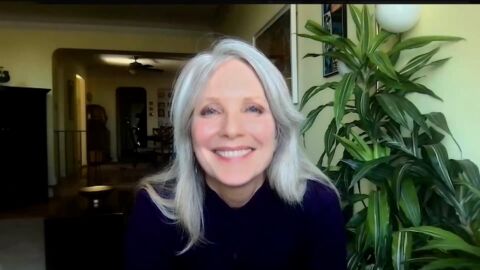
BIANNA GOLODRYGA: Does America have a marijuana problem? The New York Times editorial board argues in a recent opinion piece that it does. And it’s certainly true that in just over 10 years, attitudes to the drug have changed dramatically. It’s now legal in some 40 states for medical use, 24 for recreational use. And it’s more common to use cannabis daily than it is alcohol, that’s according to the National Survey on Drug Use and Health. But is it as safe as regular users think? Margaret Haney is a neurobiology professor at Columbia University Medical Center and has spent decades researching how marijuana affects the brain. She joins Michel Martin to unpack the latest data.
MICHEL MARTIN: Thanks Bianna. Dr. Margaret Haney, thank you so much for talking with us.
MARGARET HANEY: I’m very happy to be here.
MARTIN: You’ve studied cannabis for 30 years. You’ve studied cannabis — it’s the health effects — for some 30 years now. How did you get started in this? And the reason I ask is it’s not easy to study a drug that is considered illegal in the United States, even if it’s for medical research.
HANEY: Yeah. No, it’s a really good question. It’s, I don’t think the public is aware of how difficult it is to study cannabis, so I got into it because I was studying the cocaine addiction. It was kind of the era of crack cocaine. And I was doing a lot of research looking at potential treatment medications for cocaine, which is an easier drug to study, believe it or not ’cause it’s not Schedule I, ’cause it’s considered to have some medicinal benefit.
So, while I was doing this back in the nineties, this paper came out showing that there’s a cannabis withdrawal that you could precipitate in rats. And it really blew our minds. We did not think something like withdrawal to cannabis existed. This was to THC.
So we enrolled daily cannabis smokers. They lived in the lab with us. We had the licenses and approvals in place to give them cannabis. And then when we switched their active cannabis to placebo cannabis, we could track a whole withdrawal syndrome to cannabis. And this was the nineties. And it got me completely immersed in the field.
But when it comes to studying cannabis, have to have cannabis stored in a gun safe in a drug room. I get into with my fingerprint. It’s treated like as if I were giving people heroin. So it’s an extraordinarily difficult drug to study as a Schedule I drug. You need DEA license, you need narcotics control license, you need FDA approval. It’s a very high bar. And it’s significantly limiting how we can study this plant that, you know, millions and millions of people are using, thinking it has medical benefit for which we don’t have good scientific evidence for ’cause we can’t conduct these studies.
MARTIN: So when, when you saw that marijuana, cannabis, was being legalized at a very rapid pace, right? Were you relieved or were you worried?
HANEY: Yeah, so I have a lot of thoughts on that because it’s still federally illegal. States can do whatever they want. It doesn’t matter federally. So it’s federally illegal. So I still have to operate under those rules.
So there’s two things when you legalize. There’s legalization for recreational, you know, use, and then there’s medical cannabis. And what really, really bothered me was that politicians were basically deciding what was a medicine or not. You know, at one point in New Jersey, it was deemed a medication for glaucoma in New York it was illegal. So that’s not the way we decide what a medicine is. So just as a scientist, it really made me crazy that in lieu of any evidence that’s needed for every other drug and medication, cannabis got this backdoor entry as a medicine.
Now, that’s not to say it doesn’t have therapeutic potential, but I think everyone would benefit if we could demonstrate what it has therapeutic potential for. This is a safe medication at this dose, it works for this indication. There’s no data. So when you ask, they say, talk to your doctor. Your doctor doesn’t have anything to go by about what dose or what indication. So it’s a problem. The way we’re treating it as a medicine for everything, I think there’s like 60 indications if you add them up across the United States. And varies state by state.
So how, you know, anti depressants don’t vary state by state. It works in New Jersey, not in New York. So it’s, that’s where we would, I would really wanna start. Like recreational use, that’s a decision for voters to have, do we want another legal intoxicant out there? Let’s look at the pros and cons and decide federally. But in terms of the medicine, it, it really, it really bothers me.
MARTIN: Well, it’s already kind of decided. I mean, the fact is, a 2024 study from Carnegie Mellon University estimates that roughly 18 million Americans now use marijuana almost daily. That’s up from under 1 million in 1992. The study shows that in 2022, for the first time, there were more daily or near daily users of cannabis than alcohol. Cannabis, when we talk about, what are we talking about is weed, is it weed?
HANEY: Yeah. Yes. It’s the plant.
MARTIN: And so when you see people sort of selling, you know, THC products, is that the same thing?
HANEY: No, it can be, you know, quite different. And that’s been the other enormous societal shift. So you have the plant. And the plant can only get up to, I don’t know, maybe 25% Delta Nine THC. That’s as good as you’re gonna get in terms of that. You know, in the seventies it was one to 4% THC. Now it’s, you can get up to 20, 25% THC. But the other thing is now are these THC oils sold in, you know, pens, and then there’s dabbing. And it’s very concentrated THC. It can be up to 90%. THC, that’s a whole other can of worms. Like the plant, we kind of understand and know what to do. <Laugh>, you know, how to handle, understand its effects. But these, these very, very high concentrated solutions of THC that are so easy in the vape pens to mask and to hide and to use in school and so forth. That’s a real concern.
MARTIN: What are some of the things that people thought were true when there was this big push to decriminalize and then legalize that turned out just not to be true?
HANEY: Well, like, the one near and dear to my heart is an addiction. You know, the way we define a use disorder, there’s a list of criteria. And all the drugs share the same criteria. Do you undergo withdrawal? Are you giving up important things in your life for the drug? You know, is it disrupting your family and job? You know, there’s a series of criteria and you, the more you meet, the more severe your use disorder is.
When I started the, the notion was, was laughed at that that addiction to cannabis can occur. And now people are seeing it. And I think most significantly, all the people who start using cannabis for therapeutic reasons are developing a use disorder. If you’re using cannabis for pain, what are you gonna do? You’re gonna use, as soon as you wake up, you’re gonna use it as soon as it wears off, you’re gonna use it repeatedly throughout the day. These are enormous risk factors for developing a use disorder.
And nobody’s telling them that this is — no, it’s not gonna kill you, but who wants it? Because the defining feature of use disorder, not only is it impeding various aspects of your life, but quitting or just reigning it in is enormously difficult. That’s what people seeking treatment for, come in for. And they’re really hard on themselves. It’s just cannabis. Why can’t I quit this? Why can’t I use two days a week instead of seven days a week? And they’re, you know, because it’s “just cannabis.” And that’s something that we’re seeing over and over and over again. And, and we’re doing multiple studies looking for potential treatment for cannabis use disorder because there’s a need for it.
MARTIN: You as a medical researcher are saying you are seeing people who are really sick, who are having serious health effects, who are unable to stop using if they want to. I’m just curious, like why is there this big disconnect between what you’re seeing in the health fields and what our sort of public conversation about it is.
HANEY: Yes, completely. And I think that’s the public conversation we have to have. And I think it’s been this halo effect around cannabis. Parents have been kind of unsure what to say to their kids ’cause they don’t think it’s all that terrible. We have our own endocannabinoid system. We have this part of our brain where THC binds and it goes under tremendous development in the adolescent years. That’s when your brain develops. And, and to, you know, to be exposing it to high levels of THC on a daily basis is a risk factor. You know, there’s consequences for educational achievement, psychiatric outcomes, a range of things. So the point being – and what I would try to say to my own sons is, you know – it’s a big difference between smoking every day when you’re 14 and when you’re 34. That really matters. And that’s something again, ER doctors talk about the high incidence of psychiatric consequences of people who are smoking. And the younger you start, the more vulnerable you are to developing cannabis use disorder, but also having psychiatric and other outcomes.
MARTIN: What I think I hear you saying is that you can actually have psychiatric impacts from heavy use.
HANEY: Yeah.
MARTIN: Daily use, near daily use. Why, why is that?
HANEY: There is something the, cannabis induced psychosis that is increasingly pretty common. These receptors where THC bind are in every part of the brain in areas that are important for mood and mood regulation and so forth. But there is an association between a lot of cannabis use and development of these psychiatric symptoms. Psychosis being one of them.
That’s the other thing that I really care about. If you think about, if you look at surveys as to why people seek medical cannabis, the three top reasons are pain, anxiety, and sleep. Well, all three of those have an enormous placebo response. That means if — you know, you have society telling you this, this plant is gonna cure what ails you. The placebo response, people taking something they think is gonna help them have a tremendously high, you know, success rate, they literally feel better. They’re paying neurobiology lessons when they take a placebo that they think is gonna help.
So placebos work. So people do feel better. This just can’t be our medical policy. This is why we need to bring good science to this question, because we need to account for every other medication. You have to compare it to a placebo and say, the medication is superior. It’s not expectation. We don’t have that for cannabis. And the few studies that have done that have not really panned out.
MARTIN: You’re saying that even people are using cannabis every day, can’t stop if they want to, somehow they don’t see it as a problem or they don’t understand that it is a problem. Like, why is there this halo effect? Is it because it’s a plant because people think, Oh, it’s a plant?
HANEY: I think it was because it was so unreasonably demonized for so long. It really was. I mean, it, when I started in the, that my participants were thrown in jail constantly for having a nickel bag in their pocket. You know, they’d go through the system for the week. And it was so demonized for so long. I think the whole, everyone was just like, enough, this is this, this, this went too far in that direction. This is just my, my own thought on this. And now it went on in the complete other direction, which is why it was very hard to bring up any negative consequences to cannabis ’cause people were like, We don’t wanna hear this.
MARTIN: We don’t wanna hear it.
HANEY: We’re fine. Yeah. We’re not ready for this. Now again, it seems to me people are starting to recognize, of course it’s a drug with that, that can be misused. And it’s a drug with potential therapeutic consequences. But that doesn’t mean it’s all good or all bad. It’s something in between. And if people can come into it recognizing, if I’m using it for my pain every day, I might run the risk of developing a problem with it. I don’t think anyone’s warned of that.
MARTIN: And you touched on this a bit earlier. There was a joint study between Danish researchers and the NIH looking at more than 6 million people in Denmark. And they found a strong link between cannabis use disorder and schizophrenia, especially among young men. I mean, it was estimated that up to 30% of schizophrenia cases in men aged 21 to 30 might not have occurred without heavy cannabis use. There’s a link there. Can you say more about that?
HANEY: Yeah, there’s a, there’s definitely a link. There’s a, there is a strong association between cannabis use and psychotic symptoms and including psychotic disorders. The causality of the link is still tricky. So we know there’s a link. Just like we know there’s a link between early onset cannabis use and worse educational outcomes. The trick is the causality of it. So I remain a tiny bit agnostic about causality. But it is, there is a strong association between cannabis and you know, psychotic symptoms.
MARTIN: Do we have enough to know that there’s a difference between occasional use and heavy use? Is there a difference and what, what defines the difference?
HANEY: Yeah. You know, it’s hard for us to def — to say like what levels acceptable and what’s not clinically. What is a big red flag for me is morning use, “wake and bake.” You know, somebody who’s doing that to me, that’s, they’re showing, if you’re doing that every day, you’re really showing signs of an increased likelihood of a cannabis use disorder.
But you know, clearly the poison’s in the dose. So, you know, if you’re, you know, before going to bed two nights a week, you know, smoke half a joint, you know, I’m not gonna be — it’s all, you know, proportionate. Just like the person who has a glass of wine on a Saturday night, you know, of course it all depends on the dose. So there’s no hard and fast rule. There’s different vulnerabilities. But daily use, repeated use throughout the day. These are all the things that are red flags for me.
MARTIN: So there was an NIH study that found that daily cannabis smoking was associated with a 25% higher likelihood of heart attack and a 42% higher likelihood of stroke. Why might that be?
HANEY: Yeah, I mean, well, can — one of its very, very reliable and robust effects is to increase heart rate. And, you know, not to the level that cocaine does, but it’s a very reliable 10 to 15 beats per minute increase in heart rate. And I think that there’s underlying vulnerability in any way because that, that it, if somebody’s vulnerable cardiovascularly, that could be one consequence
MARTIN: And that’s counterintuitive because I think a lot of people think that it’s a relaxant, it would open up the sort of the blood flow, right?
HANEY:
You know, like even low doses of alcohol have like a stimulant-like effect. And, and I think this is almost like a stimulant-like effect that cannabis has. And it’s something I can see. It’s one of my most robust effects I see in a lab when people smoke cannabis is an increase in heart rates.
MARTIN: Interesting, okay.
HANEY: So that to me, there’s a lot more that needs to be done about the cardiovascular, like the cardiovascular risks of that. For sure.
MARTIN: There’s also this other syndrome…
HANEY: Hyperemesis. Yeah.
MARTIN: Hyperemesis, which is basically violent, is vomiting, right? Why, why does that happen?
HANEY: You know, we don’t entirely understand it, it didn’t exist back in the seventies, eighties when cannabis was much less potent. But it seems to be with this, with this with these new products, this phenomenon is real.
MARTIN: And it affects apparently women, particularly older women, apparently more than men. So in December, President Trump reclassified cannabis from Schedule I, Schedule III drug by Executive Order. And the White House says that this is gonna facilitate research on how marijuana can treat pain. Is that true?
HANEY: It hasn’t happened yet. Like it hasn’t, that rescheduling hasn’t occurred yet. And I have advocated for this because I do wanna open the doors for more people to be able to study it with all these barriers with all the regulatory barriers in place <crosstalk> easier to study. There’s still a lot of questions that remain. And of course, business, the cannabis industry, it’s a billion dollar industry. And they were extremely excited about this change. So that — I have a cynical reason as to why I think that this change is happening, but it should, it should improve research. And it’s gonna greatly improve profits for the cannabis industry because the tax that the, you know, there’s financial differences when it’s —
MARTIN: Well, you’re not, you’re cut out. You’re essentially, if you’re, it’s a Schedule I drug, you’re basically barred from the kind of banking system
HANEY: Exactly.
MARTIN: People that misuse it, et cetera. But it hasn’t happened yet. You know, what about this whole thing? You, you start, you’ve, you started hearing people talk about Big Weed. You know, Big Weed in the same way that people used to talk about Big Pharma. Okay. So what, what impact does the commercialization of the industry have on the issues that you’ve been working on?
HANEY: No, it has a tremendous impact because they’re driving the narrative. Because the science can’t get done. And it’s, you know, the horse is out of the barn and everyone’s gobbling up for every indication. We can’t keep up. They’re driving the narrative. They’re selling, you know, there’s dispensaries — if I can leave the viewers with one piece of advice, is, Do not believe a word your very friendly bud tender tells you in a dispensary, because they’re making it up. They’re claiming…
MARTIN: They don’t know.
HANEY: …the cannabigerol, the content is gonna help with this. And the cannabidiol content is gonna help with that. It’s nonsense. It’s made up. It’s based on invitro data or mice data at best. They’re marketers and they’re driven by the cannabis industry. So this is hugely distressing to me.
The other avenue I care about greatly is pregnant — use during pregnancy. And not to demonize anybody, but again, you call a dispensary and say, I’m nauseated and I’m pregnant. They’re gonna tell you to come right in and get a particular product. Another time of tremendous brain development. Not a good time to be introducing cannabis or cannabinoids. It’s, it’s, that’s distressing to me.
MARTIN: For people who are listening to our conversation, whether they don’t use it all, whether they’re occasional users, whether they’re considering it, whether they think, Gee, I am in chronic pain. I’d like to be more comfortable. Like, how would you go about creating a risk benefit analysis for yourself?
HANEY: I think I just would leave people with: there are consequences to using cannabis. I mean, it can, depending on how you’re taking it, it could affect metabolize of, metabolism of your other drugs. It increases heart rate. There are consequences. It’s not the, it’s not the worst drug in the world, but there are consequences to using it. And whatever they bud tenders tell you, you can, you can just forget. Don’t, don’t trust that. Don’t trust, don’t trust them at all. But, you know, that’s, that’s, that’s something I really wanna emphasize.
MARTIN: Dr. Margaret Haney, thanks so much for talking with us.
HANEY: You bet. I’m very happy to be here.
About This Episode EXPAND
In a recent Opinion piece, NYT editorial board argues that America has a marijuana problem. In just over ten years, attitudes towards the drug have changed dramatically. Marijuana is now legal for medical use in 40 states, and for recreational use in 24 states. Margaret Haney is a neurobiology professor who researches the effects of marijuana on the brain. She joins the show to discuss.
WATCH FULL EPISODE