
Read Transcript EXPAND
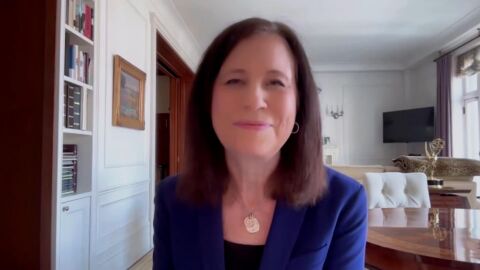
CHRISTIANE AMANPOUR: Now, it’s not just USAID and humanitarian aid that’s been slashed but the Trump administration is also slashing DEI efforts. Our next guest warns this could reverse decades of progress for gender equality at work. Joanne Lipman has spent decades reporting on workplace culture and gender dynamics and she tells Michel Martin how some companies are ending or hiding their inclusion efforts and the chilling effect it’s having on women.
MICHEL MARTIN: Thanks, Christiane. Joanne Lipman, thank you so much for talking with us.
JOANNE LIPMAN: Thanks for having me.
MARTIN: You’ve written about women and work, gender and work for years now. You wrote a recent essay in the New York Times where you argue that we are entering a moment where even talking about women at work is becoming taboo. You open with the line, “Believe women was the defining message of the Me Too movement. Today there’s a new one: Erase Women.” Obviously there’s a lot to talk about here, but what, what made you say that? Was there something in particular that caught your attention, that made you feel that?
LIPMAN: Sure. Yeah. So Michel, I’ve been covering women in the workplace for more than 15 years, and I’ve also been an editor and editor in chief of several different publications and have assigned a lot of coverage of women in the workplace. And I noticed something different that’s happening now, and that is because I’ve been covering these issues, my inbox is usually filled with companies that are talking about all these great initiatives that they have and they wanna boast about it and how well they’re doing. And suddenly, not only did they stop doing that, now they’re afraid to talk about it.
MARTIN: You have an anecdote in your piece where you described asking a room full of HR executives whether their companies were still supporting diversity efforts. And you said every hand goes up. And then when you asked who would talk about it publicly, and you saw almost every hand go down, which is kind of wild what – ?
LIPMAN: Yes. And so I talked to some of these people privately, and I’ve talked to executives at some major companies that in the past have been banging their chests about how great they are with diversity. And as one of these executives said to me, they said, you know, there’s fear. It’s fear both because of all the anti DEI measures that are coming down from Washington, but also fear of right wing activists, fear of misogynistic trolls. And so there’s a fear of even, you know, raising your hand a little bit, there’s a fear of even mentioning the word women, female. And so people don’t wanna talk about their efforts at all. And it’s led to some absolutely insane kinds of evasions that we’re seeing. So for example, there’s a medical newsletter that actually advised its readers to strip out the words female or women from any of their research grants. Even those that have to do with women, obviously. There was actually an example of a researcher who was looking at maternal mortality, who felt like they had to strip out references to women in order to get federal funding for that.
MARTIN: So there are people who have made this point before, but they’re arguing that this is just kind of a brand pivot, that this isn’t really substantive, that this – do you know what I’m saying? That some people say it’s a rhetorical or a branding shift, but it’s not a substantive rollback.
LIPMAN: Well, well for sure there are people who are, and organizations that are still committed to equity and to diversity that are rebranding their programs. The issue is that because of the fear that is out there, we’re also seeing literal rollbacks, we’re seeing real impact because of that. Right. We are already seeing, you know, the wage gap has increased, the gender wage gap has increased for two years in a row. We’re seeing women disproportionately, particularly mothers of young children who are leaving the workforce.
And we’re seeing some pretty alarming things that are coming actually from the administration. Like for example, the United Nations has every year puts out this sort of statement about women inequality and 35 nations sign off on this thing every year. It’s very anodyne. It’s basically, we believe in not having legislation against women. Right. It’s pretty basic. And for the first year, first time ever, the United States refused to sign off on it, calling it “gender ideology.”
MARTIN: You point to the great exit of mothers of young children from the workforce that, are you sure that this is due to this kind of, sort of atmosphere of erasure that you’re talking about? Or could it be due to other factors like COVID, for example? I’m curious, like what evidence do you have it is that, as opposed to sort of other factors that aren’t really driven by any one person or entity or point of view?
LIPMAN: Oh, absolutely. So let’s like, take a step back for a second. So, during COVID, women disproportionately left the workforce. Then when kids went back to school, people started working remotely, women poured into the workforce. And we actually had a historic high number of women in the workforce that was propelled by mothers of young children who wanted to work, who could work or who needed to work, who were able to work in a way that they were not able to before because of the ability to work generally hybrid remote, not fully remote, but hybrid remote was you know, a, a huge plus. Now what’s happened is in that case there you have the situation where one of the first executive orders to come out of this administration was that everybody has to be back at work five days a week. And that gave the excuse to an awful lot of companies out there to say, okay, everybody has to be back in the office. And that’s the primary issue for mothers of young kids.
But I wanna go back to this issue of erasure because I think what we’re seeing is something I have not seen before, or we haven’t seen it in many years, which is there’s an embarrassment to talk about and a fear of talking about women, period, because it makes you a target. So we’ve, we’ve seen, you know, yes, we’ve seen – this is top down administration where you’ve seen Trump allies who blame women for everything. You know, they’re blamed for the California wildfires, they’re blamed for the Potomac plane crash, you name it. Women get blamed. Pete Hegseth has been firing female officers.
But what we’re what concerned me was actually less that and more of the bottom up. What we’re seeing is organizations that are afraid to even utter the word women to talk at all about women for fear that they will be targeted. So they’re actually going further than they need to, further than what the administration is asking them to do. There are organizations that are defunding things like these employee resource groups, which are groups centered on, you know, people who are, you know, women, people of color, LGBTQ people. These groups are perfectly legal as long as anyone can join, which is the case for most of them. But people, but they’re getting defunded and even closed down because companies are afraid that simply having them will make them a target. And I think that is what really concerned me.
What actually got me started on this was I was just interested in how women in the workplace were doing a year after the administration started cracking down on DEI on diversity, equity and inclusion. And actually at first I thought we would find some positive results because there’s a lot of organizations that maybe did away with the scholarship or the training program that’s only for women. But they opened up other programs that are actually for everyone, but disproportionately help boost the fortunes of women and people of color. Things like mentorship, programs that are open to everyone, things like childcare, which actually helps men as much as it helps women, childcare assistance. And there was a wonderful piece in Harvard Business Review by a couple of sociologists. And they wrote this piece naming several companies and programs that they had put in place that were for everyone and had very positive outcomes for women and people of color. And they named a couple of companies, including IBM, Walmart, the Gap. And I thought, this is really interesting. And so I called all of those companies to say, Hey, can you elaborate on that? None of them wanted to talk about it.
MARTIN: But at least they’re doing it. I guess, which leads me to my other question here, which is, is there a substantive result of not wanting to talk about women or taking women as a sort of a subject of concern off the table?
LIPMAN: What we found so far is, it’s, you know, it’s early days, but what we’re seeing so far is, you know, we’re no longer reporting a lot of the numbers. So it’s a little bit hard to tell. Major companies have stopped. They used to talk about workforce diversity data. The share of S&P 500 companies that talks about how many, discloses how many women are on their boards has fallen by about a third. The companies that used to share ethnic, racial and gender diversity of their workforces, and importantly of their workforce divided by job level, so you can see how many people are in management, they’ve stopped reporting it. So we’re a little bit flying blind to see what’s happening here.
The problem is, if you’re not seeing it and you’re not talking about it’s very, very easy for that progress to reverse. And I noticed, for example, McKinsey and Lean In, every year they put out a report on women in the workforce. And first of all, I noticed this year the number of participants fell by more than half. Even though the participants, companies are anonymous, it still fell by more than half. The corporate equality index, same thing, participants fell more than half. And even, so the Lean in McKinsey report found that women felt like they had less support and fewer career opportunities. So again, I think what I would say on the positive side is there are lots of programs that corporations can embrace that are perfectly legal, that are out there for everyone, that actually have a really positive impact so we don’t have to have a decline in the opportunities for women and for people of color. But you know, if you don’t count it, if you don’t talk about it, it’s really easy to backslide.
MARTIN: The irony of course of all this is that, you know, the president, president Trump. On the one hand, he’s given women a number of important, really, critical roles in his administration. But they were also the first people he fired when he was – I don’t know. It’s, it’s just, it’s kind of interesting to contemplate.
LIPMAN: The conversation at the top is one thing, but the fear that is really leading to this backlash against anything having to do with women is really concerning. I mean, you see universities that no longer will talk about the Women’s Center on their – they will talk about cultural centers maybe – but they’re taking out words like women. You know, look at all the organizations that used to support, used to see all the ads for Women’s History Month. You would be forgiven if you didn’t even know we just finished Women’s History Month because it was so quiet. There were, I think it was Ohio University that had every single year this big, you know, celebrating women event. And they canceled it at the last minute. So, you know, we’re seeing – what we’re seeing is I think, very concerning for what might happen.
MARTIN: Playing devil’s advocate here, is it really wrong for publicly facing organizations, publicly traded organizations to be responsive to the political environment? Because this administration has made it very clear that they will seek retribution against entities that they don’t like.
LIPMAN: So there’s a difference between companies that are continuing to do the work of diversity, not talking about it versus those who are going further than what is being asked of them. Right? Companies that are doing things that are perfectly legal people, researchers, medical researchers who are doing things that are perfectly legal and yet are feeling that they can’t even talk about things that are legal. In other words, they are going further than what is being asked of them.
I will also say that we saw a tremendous amount of performative nonsense out of companies, and that has definitely gone away. So, you know, one of the interesting issues is that particularly after the 2020 murder of George Floyd, where companies came out, they, they committed billions of dollars. They made big, grand, sweeping statements, and they were, many of these companies were really, it was performative. They were over their skis and promising things they were not gonna deliver. They were pouring money into things that really had zero impact. And a lot of that has gone away. And that’s all for the good. I think the organizations that are still committed to diversity are still doing it. Yeah. They’re still committed. They’re just doing it quietly.
MARTIN: So who should be called out in your opinion?
LIPMAN: I do think that organizations that are going way too far, that are retreating more than they have to, are putting the rest of us in a fraught and potentially dangerous position. I heard from so many people after this piece came out who are like, who’s gonna stand up to this? Right? And we have seen that organizations that do stand up when we’ve seen it in other arenas, when we’ve seen it with law firms that have stood up in some of the universities that have stood up to some, some of these pronouncements or attacks that have gone too far and they’ve been successful. And there are companies, there are large companies that are still committed to a diverse work workforce, equality, which doesn’t mean giving preference to women or to people of color. It simply means giving preference to talent and not firing, because of their race or ethnicity or gender.
MARTIN: So collective response is difficult unless you sort of find people who agree with you about sort of these sets of issues. But individually, are there things that people could be doing?
LIPMAN: So, yeah. So first of all, I wanna say that this is not a women issue. This is really a social, society-wide issue and also a democracy issue. I mean, at heart, this is a democracy issue, right? That is, if you look at the autocrat playbook which many scholars have talked about, one of the major features, tenets of the autocrats playbook is the repression of women, the erasure of women. And the reason is that when women mobilize they, and women are obviously a little more than half of the population, and when they do mobilize, they tend to mobilize in the direction of egalitarianism and democracy. And so it’s really important for the autocrats to put that down. And that’s, that’s a, you know, that’s also related to this issue of pronatalism that we’re seeing that women shouldn’t be working, they should be at home and having their kids, et cetera. So, you know, so I would say that the premise that this is a woman problem, I would reject.
MARTIN: Before let you go, Joanne, as a person who sort of covered the business environment for years, what’s your argument to companies about why this isn’t their best interest to do. Not just to resist, but to just to do what they actually say they were doing before, which is to, you know, open the doors and make sure that the best people have an opportunity to thrive and contribute.
LIPMAN: First of all, can I just emphasize exactly what you said? The best people. You want the best people. And every piece of research shows you that diverse organizations outperform homogeneous organizations. There’s been like years and years of research on this at this point. Return on equity, profitability, employee retention, creativity, innovation, every single one of those things improves with diverse workforces. There was even a piece of research that found that a diverse group will more accurately solve the murder mystery, a murder case, than a homogeneous group. So we know, I mean, I really believe that every CEO, every CFO, Chief Financial Officer, it is in their interest and they should be held to account because we know that the diverse organizations perform better.
MARTIN: Joanne Lipman, thank you so much for talking with us.
LIPMAN: Thanks for having me.
About This Episode EXPAND
As the Trump administration slashes DEI initiatives, Joanne Lipman warns that the attacks could reverse decades of progress for gender equality at work. Lipman has spent decades reporting on workplace culture and gender dynamics. She tells us how some companies are ending — or hiding — their inclusion efforts, and the chilling effect it’s having on women in the workplace.
WATCH FULL EPISODE