
Read Full Transcript EXPAND
BIANNA GOLODRYGA, ANCHOR: Hello, everyone, and welcome to “Amanpour.” Here’s what’s coming up.
(BEGIN VIDEO CLIP)
DONALD TRUMP, U.S. PRESIDENT: We have our deal done with Iran, and it should be successful.
(END VIDEO CLIP)
GOLODRYGA: As G7 leaders look to President Trump for clarity on Iran, Volodymyr Zelenskyy works to keep Ukraine on the agenda. I speak to
Canada’s former Deputy Prime Minister, Chrystia Freeland, now an adviser to the Kyiv government.
And —
(BEGIN VIDEO CLIP)
UNIDENTIFIED MALE: Are you ready for the battle of Britain?
(END VIDEO CLIP)
GOLODRYGA: — in Britain, the far-right moves to the mainstream amidst a leadership crisis for Prime Minister Keir Starmer. We ask, where is the
country headed?
Then —
(BEGIN VIDEO CLIP)
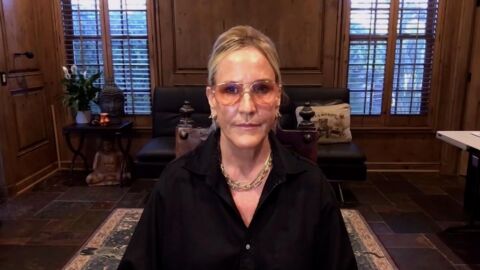
ERIN BROCKOVICH, ENVIRONMENTAL ACTIVIST: Their entire resources and environment feels under assault and is in jeopardy.
(END VIDEO CLIP)
GOLODRYGA: — Hari Sreenivasan speaks with environmental crusader Erin Brockovich, who’s now taking on A.I. data centers.
Welcome to the program, everyone. I’m Bianna Golodryga in New York, sitting in for Chrystiane Amanpour.
Today, in the Alpine resort town of Evian, world leaders meeting for the G7 summit have a lot to talk about. First up, they’re looking for more details
on the U.S. peace agreement with Iran, which, according to President Trump, says Tehran will never have a nuclear weapon and that the Strait of Hormuz
will be fully opened by Friday. But until the document is public, only the negotiators know the actual terms.
Also, in Evian, Ukrainian President Volodymyr Zelenskyy is looking to jumpstart peace talks with Russia.
(BEGIN VIDEO CLIP)
VOLODYMYR ZELENSKYY, UKRAINIAN PRESIDENT: Of course, Europe wants negotiations with coordination with the United States, but we don’t know
all the tracks. Between us, it doesn’t matter. We need useful tracks to stop Putin. Now, I think President Trump can do it and Europe also will do
it.
(END VIDEO CLIP)
GOLODRYGA: On the battlefield, Kyiv claims that it recaptured more territory last month than it lost, amid signs that Russia is losing more
troops than it can recruit to shore up its forces.
But on the home front, Ukraine’s cities are weathering devastating attacks. Kyiv’s historic Dormition Cathedral was struck Monday, an attack President
Zelenskyy calls a crime against Chrystian culture.
As Canada’s former Deputy Prime Minister, Chrystia Freeland is intimately familiar with what happens behind the scenes at meetings like the G7. Since
January, she’s served as an economic adviser to President Zelenskyy, and she joins us now from London.
Chrystia, welcome to the program. Can you hear me?
CHRYSTIA FREELAND, FORMER CANADIAN DEPUTY PRIME MINISTER AND ECONOMIC ADVISER TO VOLODYMYR ZELENSKYY: I can. Great to be with you, Bianna.
GOLODRYGA: OK. It’s great to have you on. Let’s start with news of this memorandum of understanding that’s been reached between the United States
and Iran. President Trump has been lauding this MOU, though we don’t know much about what’s in it, other than it’s a page and a half, according to
the vice president.
We’ve heard a number of European leaders begin this G7 summit by congratulating the president on coming to terms with Iran. It is said to be
finalized on Friday. As I said, though, nobody has seen the text. There’s a lot of ambiguities here and a lot of conflicting reporting from both the
United States and Iran. Where are you in terms of your comfort right now with this deal?
FREELAND: I absolutely share your caution. I think someone counted that there had been 50 announcements already of a peace deal. So, we have to be
really, really careful and recognize that until we absolutely see what is in the deal, until we see a sustainable peace, we should not assume that
everything is over.
Having said that, I think we can already draw two conclusions. The first one is, this has been a remarkable show of American weakness. I think Ian
Bremmer was one of the first people to call it America’s Suez. That was the moment when the European great powers were shown to no longer be able to
exercise authority in the world. I wouldn’t go that far with the United States, but this is really a remarkable own goal. Even if the deal holds,
we’re basically where we were before the war started, probably in a weaker position. So, I think that’s the first conclusion. It’s a really important
one.
I think the second conclusion is, even with all of that, even with the uncertainty, even with the fact that this was an utterly unnecessary,
utterly costly war of choice, European leaders would really like the war to end, because this is causing huge volatility in the global economy. It’s
causing huge economic problems for Europe. So, they’re going to be encouraging the Americans there to get the deal done.
GOLODRYGA: Yes. You referenced Ian Bremmer. Karim Sadjadpour, who is one of the top experts in this field, has called this a memorandum of
misunderstanding at this point.
But let’s talk about the potential opening here for putting focus back on the war in Ukraine, because there had been so many resources, so much
attention, so much capital that had been allocated toward the war in Iran, that President Zelenskyy and others have said that this is coming at the
expense of what’s happening in Ukraine, and it is giving Russia more opportunity not only to enrich itself with the spike in oil prices, but
also to continue unleashing devastating attacks on civilians in Ukraine.
Do you think that now this is the opening that President Zelenskyy had been hoping for, even if this is a short 60-day pause, however long this MOU is,
to put direction back where President Zelenskyy would like it to be, and that is on the war in his country?
FREELAND: Well, you know, I think everyone in Ukraine and everyone in the world would like the war to end. Everyone would like a just peace. I think
what’s really important that has happened really since the beginning of the year is the Ukrainians have not been sitting on their hands. They have been
extremely effective. They are now manufacturing not only their own drones, but their own mid and deep strike missiles.
And, you know, I think we all remember that awful degrading scene in the White House when President Zelenskyy was insulted by President Trump. And
one of the insults was, you have to give up, you don’t have any cards. I think what we’ve seen over the past few months is Ukraine has a lot of
cards.
Ukraine right now is winning the war. It is steadily degrading Russia’s economic capacity, Russia’s military capacity. When Zelenskyy announces the
strikes in Ukrainian, he calls it our self-sanction program. And we are seeing, as you mentioned, that Ukraine today is now retaking some
territory.
And crucially, Ukraine is degrading Russian military forces more quickly than Russia can conscript soldiers. And that comes from a, you know,
superior technological innovation, superior strategy, and a Ukrainian strategy that is putting human lives first.
So, I think that there is a real opportunity right now, and that opportunity is created first and foremost by Ukrainian prowess on the
battlefield. And I would give the Europeans a lot of credit, too. They have stood by Ukraine. They have provided financial support to Ukraine. They’re
providing military support to Ukraine, too.
So, you know, we’re seeing something that a lot of people thought was not possible, which is Ukraine and Europe really standing up to Putin.
GOLODRYGA: Yes. And through its innovation in drone technology, we’re seeing a lot of progress in terms of Ukraine has proven that it is
literally redefining the future of warfare. But they also are in desperate need of continued air defense systems. And that, I know, came up in
conversation as recently as today, I believe, between President Zelenskyy and President Trump. Do you know if any inroads on that front were made?
FREELAND: I can’t say, but you’re absolutely right. One of the really unfortunate consequences of the war of choice in Iran is it means that
there are fewer of those air defense systems available. And that does make it easier for Putin to continue to strike Ukrainian civilian targets. And
that is really — you know, these are war crimes that are being committed, and we have to be clear about that.
I would also say, you know, a strategic shift that I am seeing people are really recognizing is we’ve gone from thinking about Ukraine as the
righteous victim, as sort of a charity case we need to support. And certainly, the Europeans are now seeing Ukraine as a powerful ally, as a
shield and an arsenal that can help them defend themselves.
I think you’ve seen the Gulf states understand that as well. And you’re now seeing deals being done between the Gulf states and Ukraine when it comes
particularly to drone technology. So, you know, the balance of power is really, really shifting, and it’s shifting fast.
GOLODRYGA: One of the reasons President Zelenskyy brought you in was to attract investment and rebuild the future of this country once the war,
whenever it comes to an end. It is now longer, I believe, as of last week than World War I in terms of duration. Yet it is notable that Ukraine’s, at
least for the moment, sharpest economic weapon appears to be making the war quite expensive for Vladimir Putin to sustain.
You’ve seen day after day constant torching of Russia’s refineries. There appears to be a fuel blockade around Crimea right now, his golden jewel. Is
there any indication that these types of offensives will give Kyiv the leverage to finally bring Putin to the negotiating table in earnest?
FREELAND: I think there is. I mean, I think what we’re seeing is a sort of two-pronged attack from Ukraine. One is specifically on the battlefield.
This is building the Ukrainian drone wall. This is really sophisticated efforts at the line of contact.
And then the second effort is deep strikes within Russia to weaken Russia’s economic capacity, to make it harder for Russia to keep fighting the war,
and also to make regular Russian people aware that the war is happening. In the early years of the war, it was quite possible, if you lived in Moscow
or St. Petersburg, not to really feel your country is at war. These deep strikes are changing that situation.
And, you know, if you look at, say, Telegram, at what Russian military bloggers are saying, there is starting to be some concern and criticism of
how the war is being conducted. There is starting to be a realization by, I’m not going to say regular Russian people, more — you know, your
affluent middle-class professionals in Moscow and St. Petersburg, that this is really costly.
And it’s small things, like, you know, the internet is being disrupted. Well, that means that people are seeing a real impact in their lives. The
airports are not necessarily safe. People are getting scared to travel. Even the attacks that you mentioned on Crimea. Crimea was being touted at
the beginning of the war as this wonderful holiday destination. And traditionally, it was that in the Soviet Union. Well, now people are scared
to travel there.
So, I do think that the Ukrainian strikes are not only being effective on the front lines, but they’re starting to change the calculus inside Russia.
And this is a terrible war. Far too many people are dying. It would be great for Ukraine and for the world if the war could end sooner rather than
later.
GOLODRYGA: Let’s talk about, in our final moments, your new book, which is titled “Unreliable Boyfriend.” I think I remember hearing you use that
phrase on Bill Marshall. Was it a couple of years ago? You call it an unreliable boyfriend. We heard Prime Minister Carney take it a step even
further, describing the relationship as ruptured.
You actually negotiated the NAFTA — rewrite, I would say, a renegotiation under President Trump’s first term. When you’re advising President
Zelenskyy, would you say that the relationship between the West and — well, the Western countries outside of the United States and the U.S. are
ruptured, or do you think there’s still opportunities to make specific deals like you were able to?
FREELAND: You know, I think that that is the single most important question in the world today. When I was first starting as a journalist in
the early ’90s, we were focused on emerging markets and thinking about how can we help these countries with rule of law? How can we help them fight
corruption? How can we help them be functional democracies? And the country where we need to ask those questions right now, tragically, is the United
States.
And one of the big questions that the United States needs to ask itself is, does it want allies? Does it want partners in the world? I think that the
rest of the world, what the rest of the world needs to do is have a sort of three-pronged strategy. I think you do find the areas where you have common
ground and collaborate on those. I think you also apply what, during the NAFTA negotiations, we called the donut strategy. And that meant
recognizing that the president was not the only player in the United States.
America is a huge country. I think Americans are wonderful people. And we worked really hard as Canadians to take our story to Americans, regular
Americans, and to say, guys, do you really want to have a fight with Canada? I think all of us need to be doing that. But then the final thing
is, I do think we have to be strong. I think we should not be escalating, but we should not capitulate.
When you’re dealing with a bully, you have to remember that if you get hit, you have to hit back. Otherwise, the pummeling continues. So, that’s how I
think we need to deal with this administration right now.
GOLODRYGA: Chrystia Freeland, it’s great to have you on. Thank you so much for your perspective. Really appreciate it.
FREELAND: Great to be with you.
GOLODRYGA: Next to Britain, where a special by-election on Thursday could determine the fate of the country. Greater Manchester’s Mayor Andy Burnham
is campaigning to win a seat in Parliament and hoping from there to challenge Prime Minister Keir Starmer for the top job. But the northern
constituency of Makerfield typifies Labour’s challenge, with not one far- right party in the race, but two, reform and restore Britain. It’s a big moment for the country, which has seen fraught politics over the last 10
years, with six, six different prime ministers.
Stephanie Flanders is head of the economics and politics at Bloomberg News. She joins me now from London to discuss why this by-election is so
important for Britain. Stephanie, welcome to the program.
So, Makerfield is one seat out of 650, a Labour stronghold at that, and yet it’s being called the most consequential by-election in a century. Why does
this one constituency carry so much weight?
STEPHANIE FLANDERS, HEAD OF ECONOMICS AND POLITICS, BLOOMBERG NEWS: So, you have someone who has been waiting in the wings as a potential
replacement for Sir Keir Starmer, who has been remarkably unpopular and what many would say ineffective, given that he came in a couple of years
ago after this long period of Conservative rule with a very large majority in Parliament and seemingly a mandate from the people. But he has been sort
of consistently, in fact, even very soon after being elected, had lost popularity, particularly to reform.
You mentioned one of the right-wing populist challenging parties. And Andy Burnham is someone who actually had worked in the Blair government, has
worked in numerous Labour administrations, is not necessarily a kind of edgy new face in British politics, but he’d done something interesting.
He’d gone to be a mayor in Manchester, in a country we’re relatively new to having elected mayors who become political leaders in their own right.
That’s obviously very common in the U.S. and in many places around the world. It’s only a relatively recent thing in the U.K.
But in Manchester, he inherited or came into a situation where there had been a very strong administration that had actually been doing some great
things. He built on that and he has this story he can tell about effective government, which seems like a real contrast with what’s been going on in
Whitehall.
So, he’s now, through a very complicated process, he’s ended up quitting his job or if he’s running for a Member of Parliament in this seat, if he
wins the seat, he will quit his job as Mayor of Manchester. And he’ll be sitting there very obviously in Parliament and very much expected to
challenge the prime minister for the top job.
So, that’s the very odd way in which you have a very small number of people in the north of England potentially electing the next prime minister of the
U.K.
GOLODRYGA: And Andy Burnham says a vote for him is a vote to change Labour. Here’s what else he said.
(BEGIN VIDEO CLIP)
ANDY BURNHAM, LABOUR CANDIDATE: I know my own party needs to change. We need to be better than we’ve been. We’ve not been good enough. And I want
to leave people in no doubt today. A vote for me in this by-election campaign is a vote to change Labour.
(END VIDEO CLIP)
GOLODRYGA: But Stephanie, some of his own allies say that his policy program is still a work in progress. So, is this substantive change or is
it literally just a change of face?
FLANDERS: You know, it’s one of those difficult things because the fact that he’s having to speak to the people in this particular constituency at
the same time as potentially speaking to a much bigger audience as the potential future prime minister means it’s very hard for him to sound too
radical.
He has to say, I’m going to be very different from Keir Starmer. I know you don’t like him, but still vote Labour. Vote for his party. Just don’t vote
for him. Vote for me and then I will change everything. But at the same time, as he says — tries to be exciting to those electors in that one
seat, he has to be reassuring to the international markets on whom the U.K. is extremely dependent.
We have a high budget deficit and a lot of our debt, like the U.S. in fact, is owned by foreign investors who are often, in fact in many cases
currently, requiring a very high rate of interest to part their money in the U.K. So, he can’t do anything to spook them because he knows that the
more markets are spooked, the more expensive that debt is going to be, the less room for maneuver he would have as an incoming prime minister.
But as you say, he has to kind of sound radical. So, many people have said it’s impossible to square that circle.
GOLODRYGA: Yes. And Keir Starmer appears quite frustrated by all of this and the attention now on Andy Burnham. To say the least, he continues to
remind the press and everyone that will listen that he won a mandate and that he has a job to finish. And yet, we see so many people who are now
disillusioned with him, members of his own cabinet leaving.
And in the by-elections in May, it became pretty clear that traditional parties in the U.K. are facing a popularity crisis. We saw Reform and
Greens make the greatest gains, and we’re seeing that trend around the world, the polar extremes on either end really gaining traction. Here’s how
one voter in Makerfield put it. Let’s listen.
(BEGIN VIDEO CLIP)
UNIDENTIFIED MALE: I will be voting this time for Reform. And very good reason. I’m 78 years of age next month. All my voting life, there’s only
been two parties that were from this country, Labour and Conservatives. Look around you. It’s a mess. Every time one party gets in, they spend two
years or three years criticizing what the last party left them, what a mess it was in, you know. And they’re as bad as each other. It’s time for a
change.
(END VIDEO CLIP)
GOLODRYGA: So, is this a protest vote or one of permanent realignment? And how many voters does that one that we just heard from speak for?
FLANDERS: I mean, it’s interesting. That quote actually does capture what has happened in the last two years. As I said, you had Labour Party come
- It felt like, you know, finally, after 14 years of Conservatives in office, and then the poor performance of the Labour Party, many
Conservative politicians would say that’s been bad for them as well, because it is suggested that these two main parties, neither of them can
deliver.
And then people are then looking for people on the extremes. I mean, you haven’t mentioned it because it’s not such a feature of the Machiavelli
constituency, but in many parts of the U.K., Labour is also battling with the Green Party, which has now got a very charismatic leader, a very
different kind of leader, who is taking the Green Party well away from just environmental issues into a very kind of far-left positions on many things.
So, we have something unprecedented in my lifetime in the U.K. Five parties who are, you know, on double digits, high double digits, or even, you know,
20 or 30 percent in the polls. What will happen when you have an election based on a first-past-the-post system is really going to be a very
interesting thing to watch, because we’ve never had that situation where, you know, you could have someone — you could have a government that was
elected on a very small percentage of the vote because they’ve just been slightly more in enough constituencies to give the majority.
That is not a recipe for stable. Our political system was not designed for that kind of fragmentation of politics.
GOLODRYGA: And again, this is indicative of what’s happening in other countries, too. It’s not just isolated to the United Kingdom. How much
weight does the theory that the traditional parties have really lost the ability to tell voters what they stand for? How much does that weight
carry?
FLANDERS: You know, I think it’s interesting because for some who didn’t particularly want Britain to leave the European Union, there was a feeling,
well, at least, you know, that sort of populist experiment, which is now widely felt to have not succeeded, has kind of inoculated the U.K. against
some of the populism that you’ve seen on the continent and, of course, that you saw with the election of Donald Trump.
But that hasn’t turned out to be the case. I think you’ve just ended up seeing a much more irreversible electorate who just changed their minds
about people. The moment that they don’t deliver, it’s on to the next thing. And I think that’s what’s most corrosive.
You have the centrist part — the central has not held in the U.K. or in Europe, despite having a very different political system. But I don’t it’s
going to be very hard for any parliament or any politician to really break through and to show voters that they can deliver in this environment where
they’re given so little space to do it.
GOLODRYGA: Reform is now being outflanked on its right by Restore Britain and has sent Zia Yusuf to Washington to court MAGA. What does it tell us
that the contest in the United Kingdom right now in politics there is increasingly focused on the right?
FLANDERS: I think there’s a normalization of quite far-right discussion and talking points. And people talk about the Overton window, that sort of
window of what’s an acceptable range of conversation in mainstream politics or mainstream debate. And it’s shifted in the U.S.
And for sure, it has shifted almost as dramatically in the U.K., in some cases, even more dramatically because you have now this Rupert Lowe, who
is, you know, a significant politician in his own right, in fact, has more followers now on X than any other politician in parliament. And he is
allying himself with quite far-right, indeed, Nazi sympathizing people and has also talked about re-migration, which I have to say, is not something
that has been part of the U.K. debate in the past.
But it’s, again, speaks to some of the things that you saw in the Brexit vote, which is people who felt that they weren’t being reflected in the
body politic, that the politics was not for them. And I think many people did feel left out.
Another thing that’s come up, which is much more well-known and established in the U.S. is that the support for capital punishment for the death
penalty. That’s just not been on the political agenda for 50 years in the U.K.
And yet, it’s something that these leaders are bringing back. And it’s something that a large proportion of the population has always supported
throughout these 50 years. And they have not felt reflected in political debate. So, the fringes are having their say and they’re getting bigger.
GOLODRYGA: And it’s one thing to campaign as a fringe party. If Reform actually won power, what would its policies, its governing policies look
like?
FLANDERS: You know, the interesting thing, and I guess what you would hear from some of the mainstream politicians on this is wait until you have a
serious campaign, because, you know, we haven’t mentioned the irony of reform’s popularity. The most unpopular things in the U.S. — U.K. at the
moment, apart from the prime minister, would be Donald Trump, really not a popular figure. And Brexit is considered to have been a failure.
And yet, one person who’s most associated with both of those two things in the U.K., I mean, until recently was very close to Donald Trump, was also
the single person who did most to achieve that positive vote for leaving the E.U. is Nigel Farage, the leader of the Reform Party. So, you have even
someone who’s got a proven record of being associated with things that are now very unpopular, is now still the sort of exciting person to turn to.
But when he’s actually asked what his policies are, at least a lot of people are wondering, will the voters realize that he doesn’t have a
popular mandate, or at least, you know, effective policy ideas? We’ll see. I mean, he’s a very effective politician, and he does have a theory of the
case. It’s just very different from what the mainstream politicians have had over the years.
GOLODRYGA: Again, he has a lot more leeway campaigning on a lot of these policies than actually governing on them. That’s quite a different
challenge and quite a different responsibility. Stephanie Flanders, we’ll have to leave it there — sorry, there’s a delay.
FLANDERS: Lovely to join you.
GOLODRYGA: Appreciate the time. Thank you. Well, now, as we’ve been discussing, Britain’s tumultuous political environment is seeing the
country tilt to the right. It’s a trend that’s been snowballing since the Brexit referendum in 2016. Today actually marks exactly 10 years since the
Labour MP Jo Cox was murdered by a far-right extremist who was heard shouting Britain first as he attacked her.
Now, her sister, who took over Cox’s former parliamentary seat, is warning that political hatred and division are worse now than they were back then.
Correspondent Jomana Karadsheh has been investigating the growing popularity of far-right politics in the U.K. and brings us this report.
(BEGIN VIDEOTAPE)
UNIDENTIFIED FEMALE: Leftie scum off our streets.
UNIDENTIFIED MALE: Let’s take our country back.
JOE MULHALL, DIRECTOR OF RESEARCH, HOPE NOT HATE: There is a magma chamber of anger sat underneath British society right now.
JOMANA KARADSHEH, CORRESPONDENT (voice-over): Britain’s been shifting to the right. I’ve spent the past few months trying to understand what’s
happening in this country. No one speak to the media room. Attending far- right protests, including Unite the Kingdom, one of the biggest far-right rallies ever.
On the streets of the U.K., where tens of thousands responded to the call of this man, anti-Islam activist Tommy Robinson, a convicted criminal
turned anti-establishment figure.
TOMMY ROBINSON: Are you ready for the battle of Britain?
KARADSHEH (voice-over): But it’s not just on the streets, and it’s not just the extreme right that’s on the up. The populist right-wing party
Reform U.K., led by long-time Trump ally Nigel Farage, made massive gains in local elections in May.
This rightward shift isn’t one single movement. The different groups represent different shades of right-wing politics, but they all seem to be
feeding off of a divided Britain. At the heart of those divisions is the issue of migration.
Just this week, a horrific attack by a Sudanese refugee on the streets of Belfast almost immediately turned into the latest I told you so moment for
the far-right, transforming a local tragedy into a national rallying cry. Powerful allies amplifying the message and fanning the flames of hate.
MULHALL: People in Britain are angry.
KARADSHEH (voice-over): Joe Mulhall infiltrated far-right groups, undercover here in the U.K. and in the U.S. He’s one of the U.K.’s top
experts on these movements.
MULHALL: You know, if you look at the way that people’s lives have been, you know, lack of jobs, houses, schools, hospitals, stagnated wages, living
standards going down or stagnating for years and years, and they feel that mainstream political parties have not met their material needs. What the
far-right are really good at is going to those people, and they turn up and they say, you’re right to be angry, and they give them a scapegoat.
And they say, it’s because someone has come to this country and taken it from you. They’re really good at redirecting people’s anger from where it
should be directed.
KARADSHEH (voice-over): I’ve seen exactly what Joe’s talking about. There have been hundreds of protests across the country over the past year,
according to activists tracking far-right movements. It’s mostly been about migration and how consecutive governments have dealt with this issue.
And with the center-left Labour Party back in power for the first time in two decades, the far-right senses conditions are ripe for a resurgence.
It’s in tight-knit communities like this one in the sleepy market town of Faversham outside London, where we saw it all play out late last year.
Walking through town with a protest organized by a far-right activist, you see those divisions and feel the anger.
UNIDENTIFIED FEMALE: Shame on you.
UNIDENTIFIED MALE: Don’t — touch me.
UNIDENTIFIED FEMALE: Shame on you.
UNIDENTIFIED MALE: Shame on me?
KARADSHEH: Right now, they’re marching towards this facility where unaccompanied minors, asylum seekers, have been housed in this town.
KARADSHEH (voice-over): They’re a loud crowd, but it’s clear there are more noise than numbers. And you do see locals coming out to confront them.
CROWD: Refugees are welcome here.
KARADSHEH (voice-over): The main event kicks off with a rambling mix of racist rhetoric, fear-mongering, and white supremacist conspiracy theories.
HARRY HILDEN, ANTI-IMMIGRATION ACTIVIST: They’re teaching about Mohammed and Allah. We will not tolerate our children to be taught about LGBTQ and
not prone as a belief what they can identify as. We will not tolerate that around here.
PAUL GOLDING, LEADER, BRITAIN FIRST: Keep up the pressure and one day you will be victorious.
KARADSHEH (voice-over): At this one tiny town’s protest, we find one of the leaders of the U.K.’s extreme right.
GOLDING: Our country’s been taken over by mass immigration. We’re fed up. This is not the future that our grandparents and great-grandparents fought
for in two world wars. They didn’t fight for this to be done to our country.
KARADSHEH: So, you want a white Britain?
GOLDING: We want our country to be like it was before this immigration invasion was foisted on us. Yes. You mentioned far-right, neo-Nazi, all
that a minute ago, as if that kind of stuff, that doesn’t hold any power anymore. You must have learned this from Trump’s victory. No one cares if
they’re called racist anymore. Those terms are just used to silence people.
KARADSHEH (voice-over): The re-election of Donald Trump is not only an inspiration for this one extreme right figure. At every far-right event
I’ve been to, it is a constant theme. Trump’s Make America Great Again has come to the U.K.
UNIDENTIFIED MALE: This is MEGA. Make England Great Again.
UNIDENTIFIED MALE: Trump is the man.
UNIDENTIFIED MALE: I have so much respect for President Trump. He is saving not just America, he is saving the West and he’s saving the world.
KARADSHEH: You’re wearing this because?
UNIDENTIFIED MALE: Because I’m a Donald fan.
KARADSHEH: What is it that’s going on? How much of this is really influence from the U.S.?
MULHALL: There’s no question they’re a huge influence. When the far-right is small little fringe political parties, that sounds fanciful. When you’ve
got Donald Trump in the White House, the most powerful man in the world, they can then point someone and say, look, it’s happened there. If it can
happen there, it can happen here.
KARADSHEH: Are we headed into a direction where the far-right is turning into a significant political force in Britain?
MULHALL: I think there’s no doubt about it, right? The far-right is no longer something that sits on the very margins of our politics in Britain,
an annoyance to the right. It is increasingly something that actually has the real chance of taking power in Britain.
KARADSHEH (voice-over): The once fringe voices seem to be moving into the mainstream. It’s a small but vocal minority that’s threatening to change
the face of Britain. Now, they believe their moment has arrived.
Jomana Karadsheh, CNN, London.
GOLODRYGA: Now, 5 million gallons. That’s how much water a large data center in the U.S. can use on an average day. That shocking statistic
according to the nonpartisan Environmental and Energy Study Institute. This is all because of the need to cool down servers, raising concerns about the
huge environmental impact of running these centers.
Our next guest is calling for more transparency on the impact to neighboring communities, from persistent noise pollution to dwindling water
supplies. Renowned environmental activist Erin Brockovich joins Hari Sreenivasan to discuss her latest campaign.
(BEGIN VIDEOTAPE)
HARI SREENIVASAN, INTERNATIONAL CORRESPONDENT: Bianna, thanks. Erin Brockovich, thanks so much for joining us. You know, most people watching
this will have heard your name probably from a movie where one Julia Roberts played you for a very famous lawsuit that came against Pacific Gas
and Electric. And this was a settlement because you really were fighting on behalf of people who had their drinking water contaminated.
But now what’s interesting is that you are advocating on behalf of people who are affected by data centers in their community. You’ve built this
amazing crowdsourced map around the country. Your site crashed a couple of times. You’ve got what, now 5,000 reports from 49 states?
ERIN BROCKOVICH, ENVIRONMENTAL ACTIVIST: So, it’s over 10,000 submissions and each submission that comes in, I hand read. And then that gets moved to
another team member who hand reads and vets again, ZIP code, location, all of that kind of information. And then it goes to Excel and it’s put onto
the Google Maps.
And so, what was very interesting is quickly that I was learning while it was across the country, everybody had the exact same concern. First and
foremost, they had no idea what was going on. They weren’t informed. If they did show up, they couldn’t speak. They were asked to leave. And so,
that became a real place for these people to start becoming concerned about what was happening.
I clearly learned for 30 years that communities handle the truth. They like to have a conversation. They like to know what’s going on. But when
something’s done in secret or they’re lied to, it becomes a different game. So, very quickly, that was my first concern that I could see across the
board that was happening for everybody.
SREENIVASAN: What are the kinds of problems that people are writing to you about? I mean, somebody at the sort of county commissioner’s office, so to
speak, or whoever does the permitting for these things, whether it’s a city or a state government, somebody is in a conversation with a hyperscaler
data center company or one of the big social media companies that uses these, right, or the A.I. companies. What is the deal? What are the types
of deals that are being done?
BROCKOVICH: Well, in the beginning, and again, as this gets bigger, more information comes in, we start learning more about what’s happening. For
many of them, it was just blanket. They had no idea. Just all of a sudden, this construction was starting in their backyard.
So, when they would go into city councils, they were told it wasn’t on the meeting. It wasn’t scheduled. They weren’t notified. They didn’t have an
opportunity to show up. And that this was done under non-disclosures agreements. So, these companies just came in and made deals.
What we’re seeing now, as people are knowing more, getting into city council, what happened, a lot of times zoning was changed to permit to
allow for the larger data centers to come in. So, they will tell you, and their verbiage to me is secrecy, cover-ups, lies, denied what they feel was
their right to show up to a meeting and have a say about what was happening in their backyard.
So, it was like — and nothing was done with any notice. They’re very concerned that there was no environmental impact studies done. They were
concerned, are there any regulations, the water, all of that. And so, that is what really, I think, began this huge conversation was secrecy.
And it wasn’t one town. I think that’s what’s really surprising me. You know, Hinckley was one town, one aquifer, one chemical. This is a Hinckley
in multiple counties and cities in every single state. And the fact that all of it was just in secret is kind of shocking.
SREENIVASAN: There was a recent piece in The Atlantic talking about Loudoun County, Virginia, which is a home for lots and lots of different
data centers. And look, the county commissioners and people there, the leaders there said, look, we have we’re projecting one point three billion
dollars in revenue from the property taxes and the taxes from these places. You know, the county has used that money to build 32 schools, 16 fire
stations. They’ve cut property taxes for homeowners by a third, right? So, there’s this enormous pile of money that people see. And I don’t know.
So, when you get these emails from people, are they taking those sort of costs and benefits into consideration?
BROCKOVICH: Yes, they are. And they understand that this could be a benefit to the county, but it doesn’t always spill over into the county.
We’ve watched this happen over and over again. You know, the city council gets money, but they don’t put it towards something that the community
feels that they need. It goes to something else or it’s misappropriated or misbudget. We’ve seen that go on forever. So, they are thoughtful of that.
But here’s what I think is so important. They were left out of every equation to have a seat at the table and give us a boundary. How about we
start there and not put them in our literally backyard? They’re right there. Give us a space, what, 25 miles, 30 miles, but have a conversation.
So, they do appreciate that. They do understand that.
But it’s coming at a cost to them where I’m now seeing utility bills double, tripling, water bills double, tripling. They’re extraordinarily
concerned for those that are on well water. They’re losing water pressure. They’re having brownouts. They’re having flickering. Their Wi-Fi is going
down. The noise is deafening. And that comes at a great cost.
SREENIVASAN: Let’s talk a little bit about each of these separate costs that people are complaining to you about and pointing out to you. Let’s
start with electricity. The Lawrence Berkeley National Lab estimated that U.S. data centers are using about four percent of all the energy that’s
being, you know, generated in the country. What does that number mean? That’s really abstract.
But when you hear from people on the ground, what is the cost of these data centers? How does that translate to their personal lives?
BROCKOVICH: Well, you know, so like I pulled out a couple of people that had just written in recently, you know, and they’re coming from all states.
So, this is a person out of the Massachusetts area who normally had a — this was their water bill, around $22 a month, which is now spiked over
$350 a month. There’s other reports here on electric. This person is reporting that their summertime electric bill went from about 50 a month to
in excess of 300 a month. These are big jumps and it’s a huge strain for them.
And there hasn’t been a conversation for these companies that are going to come in. You pay for the electric. Why do we have to pay that cost? And
then we have a facility in our backyard that is straining our other natural resources and they’re very concerned about the future impact of their
health.
So, I even just received — and again, I really want people to know we read each submission and try to vet and verify that information coming out of
Texas where they got a notice from the utility that their electric rates could increase 75 percent.
SREENIVASAN: Let’s talk also a little bit about the water usage and the concerns that people have. Most people watching, they might not understand
what does the local aquifer have to do? What’s the water coming out of my sink? What’s the water that’s going into the data center? How are these all
connected?
BROCKOVICH: So, there’s a whole lot of things that are happening. There’s the municipal side and then there’s people on their own well water. And I’m
watching a lot what’s going on with the well water because these big data centers are coming in rural areas. The old data centers and we know we’re
smaller and they were mostly in suburban areas. But now they’re encroaching out into these rural areas of farmland where a lot of people are on their
own well water.
So, they report a reduction in water pressure. They aren’t getting any pressure. Their water is just dripping into a bucket. They’re starting to
report, especially during construction phases. And these are very, very large centers. I mean, you’re talking that could be 20 supersized in one
location in a big farmland area.
And so, the aquifers can be disturbed and they start sending in pictures. Wait a minute. Why is my water this murky brown? Well, you can’t drink it
at that point until you know what’s in it. Then they report water pressure losses and then they report that they’re having to drill new wells. They’re
starting to report that they’re already in a drought-stricken location. And the amounts of water that the A.I. data centers need, they’re very
concerned that they could lose their aquifers and they could literally be out of water.
SREENIVASAN: Yes. You know, there’s been some pushback to this idea, partly because people say, hey, you know what? Look at the number of golf
courses there are and what kind of water we use there. And the A.I. centers use a much, much incredibly smaller fraction. How do you respond to that
idea that this isn’t that much water in the grand scheme of things?
BROCKOVICH: Well, I’m not sure about that, considering how many are coming up in the size of them and the massive amounts of, you know, 30 million
liters, et cetera, 60 million liters, et cetera, of water that’s being used on top of an already strained system. I think this is a conversation that
needs to be had because we have limited resources, we have drought conditions and we have antiquated, aged out infrastructure everywhere.
And in comparison to a golf course or a data center, you know, you’ve seen the studies where they say they’d rather live next to a nuclear facility
than a large data center because this isn’t about one issue. It’s all of our resources. It’s every resource that’s important to them. And they feel
that this is a stake that’s too high. You’re not talking just water. You’re talking water. You’re talking land. You’re talking air. You’re talking
health. You’re talking their entire resources and environment feels under assault and is in jeopardy with no conversation to be had.
SREENIVASAN: Are there specific companies that have been responsive to what they’re seeing through your map, the numbers of letters that you’re
talking about? What’s the response been?
BROCKOVICH: We’ve seen one situation where Microsoft came out and educated the community and they did show up. We have a trust factor at this point,
right, because we should have done that in the beginning. But they did show up. They start to get their questions answered. And when that happens, you
know, this is where we are seeing some shifts. I believe there’s about 79 municipalities that have now put on bans, moratoriums or a pause.
Give us the data. Give us an environmental impact study. Let the council and us relook at this agenda. So, let’s have a pause before we come back
and make a vote.
SREENIVASAN: You know, you’ve also started collecting health reports when you talk about health. There was a model in 2024 led by Caltech and UC
Riverside. And the researchers there estimated that the data centers could and I want to emphasize the word could contribute to increased numbers of
asthma symptom cases and premature deaths. And, you know, that this public health costs could be somewhere around $20 billion. What are you seeing?
What are people complaining about most?
BROCKOVICH: The noise, for one. Let’s start right there. They said it — literally it makes them feel like they’re going mad. I’ve heard from
ranchers who are concerned with this long 24-hour humming, hissing. It’s pretty hard to describe. It is pretty irritating if you’ve got to listen to
it 24 seven.
And again, this information comes in and we’re going to go out and take a look at it. But they’re concerned that in the past year, the cattle haven’t
had one live birth. So, what is that? So, these are things that we have to look at. They talk about headaches from the noise during the construction
phase. This is a huge job and it comes out of nowhere, whether it be the dust, increased asthma, congestion, being delayed to work, watery eyes,
itchy skin, all those types of health issues are there.
So, we kind of monitor what it is from during construction to, again, something that’s up and running. And it does take time for these things to
show themselves once it once something’s up and running.
SREENIVASAN: Should there be a different response from the federal government? Right now the administration, the president passed an executive
order saying, quote, “My administration will utilize federally owned land and resources for the expeditious and orderly development of data centers.”
And it goes on to instruct the EPA to change the Clean Water and Clean Air Act regulations to get these facilities built fast.
So, what would you advise the federal government to do?
BROCKOVICH: Oh, well, that’s a really difficult question for me to answer. You know, I’ve done this for 30 years and watch federal oversight that goes
down to state and then state goes down to local. And I think we’re just on a very slippery slope here.
You know, we do the same thing over and over again, expecting a different result. And we put the cart before the horse. And I’ve learned communities
have learned, I think we all have, that once we do that process and then the studies come, we come to find out 10 years later, we have a huge
problem.
I think that we really need to know this information on the up front so we don’t make that type of mistake again. This is everything on the table that
matters. Our water, our electricity, our land, our food, our wildlife, our animals and our health. And I would like to see our government take that
into account and do the right thing on the up front. We’re more than capable of doing that.
SREENIVASAN: Erin Brockovich, thanks so much.
BROCKOVICH: Thank you.
(END VIDEOTAPE)
GOLODRYGA: And finally, Romeo, Romeo, wherefore art thou Ro-meow? Well, at Turkey’s Bornova Open Air Theater, this cat showed no sign of stage fright,
making an unexpected entrance during a performance. So, Romeo and Juliet, the feline sauntered on stage during the pivotal scene of Shakespeare’s
notorious tragedy, stealing the spotlight from the unfolding drama.
While this certainly isn’t the traditional ending to the show, the star- crossed performers were a real crowd pleaser. Shout out to Violet for writing that for U.S. We loved we love this video. What a great story.
All right. This is it for us for now. Thanks so much for watching, and goodbye from New York.
END