

Read Transcript EXPAND
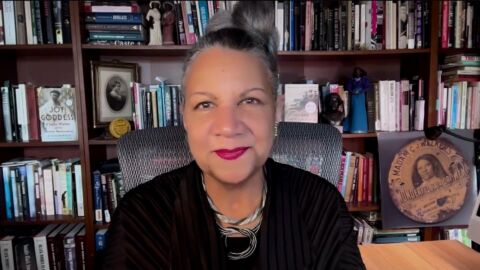
CHRISTIANE AMANPOUR: Tributes have been pouring in for the late Reverend Jesse Jackson, who died earlier this week at the age of 84. A life dedicated to fighting for racial justice. Jackson’s presidential campaigns in 1984 and 1988 reshaped the Democratic Party and paved the way for black politicians like Barack Obama. As journalist A’Leila Bundles explains now to Michel Martin.
MICHEL MARTIN: Thanks, Christiane. A’Lelia Bundles, thank you so much for talking with us.
A’LELIA BUNDLES: Absolutely.
MARTIN: One of the reasons I was glad to speak with you is that you are both a journalist and a biographer. I mean, you haven’t written a biography of Jesse Jackson, but you’ve written biographies of other notable figures who had an important role in American public life. So I wanna start with your coverage of the Jackson campaign. What do you remember from that campaign?
BUNDLES: So, I actually covered the 1984 campaign. So I was on the trail from January through the convention in San Francisco. It was an amazing ride. It was both historical. It was sometimes a little chaotic, but we really did see an amazing change in the electorate.
MARTIN: Tell me about the sort of, when people say it was sort of chaotic, and why is that? I mean, it wasn’t a conventional campaign.
BUNDLES: Well, you know, it really, it was as much a crusade, I think, as a campaign. And I remember having – I was in the Atlanta Bureau for NBC – and the summer of 1983, Reverend Jackson had been out encouraging people to register to vote. I remember being in Mississippi, I don’t remember which town, but it was the first time I’d heard people say, run Jesse Run. And he was getting people out to vote. He was saying, “you’ve gotta register to ride. You gotta get on board the ride.” And that was sort of the beginning. You could see it was a crusade to just raise people’s consciousness about the power they could have if they voted.
And then the campaign, even before the primaries, Reverend Jackson had gone overseas and he had been able to get a prisoner released. And that was kind of, he was always cooking up something that got headlines, but it was you know, instinct. But it was also strategy to get attention so that by the time the primary started, by the time New Hampshire was happening by the time Iowa was happening, he was already in the headlines.
MARTIN: Did he think that he could actually win?
BUNDLES: Well, you know, when you think, when you read about, as I’ve been doing for the last day, reminding myself about his childhood and how charismatic he was and really what a big ego he had, how much self-confidence he had, even from a young age, I think Reverend Jackson might have believed that he could win, you know, and the reality is that he did much better than many people predicted that he really did connect with a wide range of people. He, I think, helped to build this coalition that we see now that’s part of the progressive wing of the Democratic Party. But he was stirring up that enthusiasm in a way that no one had really done before.
MARTIN: I was there from the ‘88 campaign, and I remember that there were people there that frankly, other people did not expect to see at a Jesse Jackson event. So tell me about the 84 campaign. Who were some of the people who turned up?
BUNDLES: Well, because he would go visit people, he would stay in people’s homes. So farmers in Iowa were there. At the town hall meetings in New Hampshire that, you know – obviously a very white state – he drew people, people who would not normally have been there, but he had been making these relationships with people. I was reading something earlier today with Vincent Chin, the young Chinese American man who’d been murdered in Detroit in 1983. So that’s before the 84 campaign. But he was starting to develop relationships with what became his Rainbow Coalition. He was one of the first people to really embrace the LGBT community. So people from across the spectrum were there.
MARTIN: And that was interesting because, you know, he grew up in a Pentecostal background. He came from a religiously conservative background. I mean, his own sort of origin story, he was, you know, born out of wedlock. His mother being sort of forced to kind of hold him — was forced to stand in front of her church congregation and, you know, ask forgiveness and things. So for him to then embrace reproductive rights, to embrace LGBTQ rights, for example, that was not, you know, organic to, that’s not something he grew up with.
BUNDLES: So I remember being in high school in Indianapolis and going with my parents to an Operation Bread Basket rally, and it was the first time I’d heard that “I am – somebody” chant and having people respond, and he was speaking to every single thing. I may be poor, but I am somebody that now we think of that. Okay, so that happened, but that was revolutionary at the time. It was still Jim Crow America, no matter where you were, there were still thousands of African-Americans who were disenfranchised. The Democratic Party was still controlled by the Dixiecrats. And so for somebody to have the kind of personal arc, the personal evolution that he had from someone who was born out of wedlock, who was, you know, told that he should be ashamed, to dig deep down inside of himself and say, I identify with you if you’re disenfranchised, I identify with you if the rest of society hates you. And I’m gonna tell you that you are somebody.
MARTIN: Karen Tumulty, who’s now with the Washington Post, was with the LA Times, wrote a piece in the Washington Post, describing being on one of those campaigns and just – she’s white, and talked about just the unbridled racism that she sometimes saw directed at him, and so I just wondered if you, as a journalist, did you ever witness scenes like that?
BUNDLES: We certainly knew that it was going on. And I would say even for those of us who were working for major news organizations, you knew that there was a skepticism about Jesse Jackson’s campaign. And in some ways, the reporters who were assigned to the campaign, a lot of African-Americans covered a presidential campaign for the first time. I know I certainly covered something for the first time, and it was, it was so much a part – when I was at NBC, but at ABC, CBS, New York Times, Wall Street Journal, Washington Post, those slots, the boys on the bus were literally the boys on the bus. And there were very few African Americans who had covered political campaigns. But those political campaigns were, you know, what you used to say, you got your ticket punched. It was the thing that helped you move to the next level.
So, while I can’t tell you about a situation where someone who was a white racist poured their heart out to me with their honesty, I can tell you about what it was like to be a reporter and to know that part of the reason that black reporters and producers were assigned to these campaigns is that some of our news organizations didn’t really take it seriously. And they thought maybe we might have some specific inroads, or they could just give us that assignment and somebody else would get the bigger, more important assignment.
But something that you can’t look away from. And so we have to cover it. He was starting to get a lot of attention in Iowa and New Hampshire, so he couldn’t be ignored. After he had helped get the release of Goodman, then that meant that there was some international attention to what he was doing.
MARTIN: Just to clarify, Robert Goodman, a Navy flyer who was sort of captured behind lines. I think he’d been on a reconnaissance mission. And unfortunately his plane went down in an area that was hostile to the United States. And Jesse Jackson went and negotiated his release, which he went on to do a number of times. And so after that, you think it kind of changed things a little bit.
BUNDLES: Yes, it did make a big difference because now you couldn’t ignore him. He had actually had an achievement, a diplomatic achievement that the US government had not been able to do on its own. So you couldn’t ignore him.
MARTIN: And his showing was more than people thought it would be. What was he good at? I know people have been playing clips of his speeches that famous “I am – somebody” chant. He actually appeared on Sesame Street, which is kind of the kind of a pinnacle of mainstream acceptance.
(BEGIN VIDEO CLIP)
(END VIDEO CLIP)
But, certainly he was gifted, a gifted speaker. But what else was he good at? Like, why do you think his campaign achieved what it did?
BUNDLES: Well, he was a gifted speaker. He was very charismatic. But, and sometimes people might have made, you know, sort of light of the rhyming that he did, but that rhyming and then the real analysis that he would make of whatever the political situation was, he could boil it down in ways that everybody could understand. So he could have these sort of big political thoughts, these big policy thoughts, but he brought it home in a way that resonated with people. That made a huge difference.
But I think he also had, from his own experience, that authenticity of, I have been the one who is down and out. And I’m gonna give you a reason to believe that you don’t have to stay there. People understood that.
MARTIN: One of the things that is noteworthy is that a lot of political activists worked on his campaign and got organizing experience that they later translated into their own campaigns. Can you sort of talk a little bit about just the political impact that he had kind of beyond his own race?
BUNDLES: Well, so I would say there were many people who were – Ernie Green, one of the Little Rock Nine was always around and as one of the advisors, but I would say especially women, you know, Donna Brazile really care who became the first black woman to lead a, to be a campaign manager for a major presidential campaign, the Gore campaign, the Albert Gore campaign. So she says he taught her everything. She was still a young person, and he gave her confidence that she could organize. And then she went on to an incredible career in politics. Minyon Moore, who was the chair of the democratic Convention last, in 2024. These are women who he brought to the table. He said, I believe in you. I trust you. And those people were able to leverage that into political influence later on. He really did give a lot of people opportunities.
MARTIN: Some of the things that people may know about him though are some of the lower points, right? Like the episode where he used – and I think he thought it was a private conversation, he used an antisemitic epithet to describe Jewish people. But, you know, talk about that. Like, it just, it’s hard for people to square that person with a person who was working so hard to create kind of a multiracial coalition in a way that really had not been achieved sort of politically.
BUNDLES: You know, that that incident has many, you know, many iterations and it’s a little murky on exactly what happened. I was not in the room, so I can’t say exactly what happened, but it did, you know, this use of a slur really did do tremendous damage to his campaign. I think he already had some skepticism from some Jewish leaders even before this happened. And that just really threw the campaign into a tailspin. I think over time he finally said, look, I did this. I’m sorry that I did this. I didn’t mean it in this way, that sometimes he was too casual with people. You know, some of it was the, it was a guy who’s born in 1941 who grew up in the segregated south, who sometimes used slang to describe people.
MARTIN: Colloquialisms or slang. You spend a lot of time together driving around in small cars and in caravans and in buses and being tired together. So how do you square the person who said that in private with a person who was working so hard in public to do the opposite?
BUNDLES: You know, Reverend Jackson, you know, like all of us, is a really complicated person. There are flaws, there are things that people have criticized and things in his personal life. There are flaws. And he had them, certainly. I think when I look at the overall assessment, I have to say, yes, there were things that he did that, you know, made other people, made people uncomfortable, things that were not particularly flattering to him. But when you assess the whole person, he is someone who opened doors for other people. He’s someone who gave people confidence. He changed the way the Democratic party counted delegates that opened the door for Barack Obama. So yes, on balance, he’s a person who was a visionary who made a huge difference, but he definitely had flaws. You can’t ignore that when you’re looking at the whole man.
MARTIN: Interestingly enough, president Trump actually released a statement praising Jesse Jackson as a “force of nature.” He noted that he provided office space to the Rainbow Coalition, worked with Reverend Jackson on criminal justice reform, which is true. Long-term HBCU funding, which is true. Opportunity zones that was in his first term, and also asserted that Jackson helped pave the way for Obama’s election. Could you just say more about how he paved the way for Obama’s election?
BUNDLES: Well, I think, you know, we have to mention Ron Brown here, and Ron Brown was a chair of the Democratic National Committee and was very much an ally of Reverend Jackson’s. And at that point primaries were winner take all, and it was really through that, you know, sort of back room policy change that primaries became proportional. Your delegates became proportional to the number of votes you had gotten in the primary. That was a huge change because it meant that if you had one candidate who, you know, won by 51% of the vote, that person would’ve gotten all the delegates to be able to divide that up, opened the door, both for Reverend Jackson to get a certain number of primary wins. But it certainly opened the door for Barack Obama when he was first running. And that, when you look at the difference that would’ve been whether Barack Obama would’ve been the nominee, or Hillary Clinton would’ve been the nominee, I think that policy change made that difference.
MARTIN: We’ve talked about him as a civil rights activist, and of course, we’ve kind of moved past the fact that he was actually with Reverend Martin Luther King Jr. when he was killed. I mean, he was there in Memphis at that motel. He was one of the last people to see him alive. But so fast forward, how do you position Jesse Jackson as sort of a figure in the American story? What would you say if you were writing his biography?
BUNDLES: You know, that he is a person who was born in the segregated Jim Crow South, where black people had few rights. You were a laborer. You were not even having the right to vote in most instances. He also was a person who, because he was born out of wedlock, was supposed to feel shame. And he took that, those personal experiences, he expanded them to look at ways to involve and to engage African Americans and other people who were disenfranchised to create this coalition. And I, you could see that arc. Born in 1941, that means before World War II, that he then went through the Jim Crow South, through the opening up civil rights legislation. He was able to tap into that, to take advantage of that, to be a part of what Reverend Martin Luther King was embodying. And then to say, we are going to have a position on the American stage. We’re going to be intricately involved in politics. We’re going to be intricately involved in corporate America, and we want to have our place and our share.
It was a coalition, it was diversifying, it was diversity and inclusion and equality. Those are things that he embodied. And even though we are seeing a pushback on that, I think that people are going to think of him as a visionary. And while some people are saying, is this the end of an era? I think it is a reminder that, as we will see with the, what the funeral services, the memorial services, we will see some of these new young people who are inspired by what he represented, taking that mantle.
MARTIN: A’Lelia Bundles, thank you so much for talking with us.
BUNDLES: Thank you.
About This Episode EXPAND
A’lelia Bundles on the life and legacy of Rev. Jesse Jackson.
WATCH FULL EPISODE