

Read Transcript EXPAND
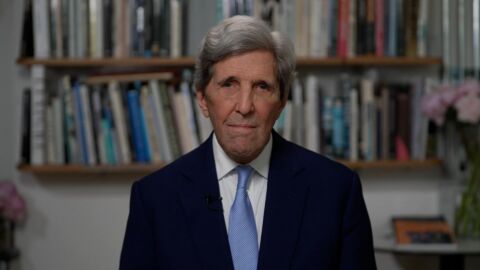
MICHEL MARTIN: Thanks Christiane. Michael Scherer, thanks so much for talking with us.
MICHAEL SCHERER: Yeah, thanks for having me.
MARTIN: So you’ve been covering this whole issue around the festivities, how we’re going to acknowledge, celebrate America’s 250th. You’ve been covering this for more than a year. But before we get into the conflicts around it, tell us the original idea. It’s my understanding that Congress created the America250 Commission a decade ago.
SCHERER: Some of your viewers might remember the bicentennial in 1976, President Ford coming out of Watergate tried to make it a very unifying event. And there were nationwide celebrations that were remembered for years afterwards. In 2016, Congress saw the 250th coming up a quarter millennia for the country, and decided it would fund a similar celebration. And the idea was to come up with events, come up with branding, get the American people involved, have contests, all kinds of things like that. And that planning proceeded for about eight years until President Trump was reelected. And when he was reelected, he was reelected on a platform that included his own ideas for what, what the country should be doing for America’s 250th celebrations. And that’s sort of where the current story begins.
MARTIN: So, Freedom 250, that’s President Trump’s idea. What was his vision? What is his vision?
SCHERER: Yeah. Well, so initially President Trump’s team wanted to work with the congressionally authorized group. So Freedom 250 only comes into existence late last year. Trump’s vision was a bunch of other events. He was very interested in big, spectacular events. He had talked during the campaign about having a Great American State Fair — and his initial planning would be in Iowa, and it would last a year, and it would involve 50 state, states participating. He’s talked about a Patriot Games, which is a high school athletic competition. He’s talking about a Garden of American Heroes, a statue of garden that he actually talked about during his first term. And obviously he wants a big party in Washington for the 4th of July.
Over the course of the first year of his presidency, those plans started to shift. The Iowa State Fair idea just wasn’t practical. So he basically took over a celebration on the National Mall that was being planned by the Smithsonian Institution and rebranded it the Great American State Fair. And then he added a bunch of other branded events. You know, that we had the UFC fight on his birthday a couple weeks ago. We have an IndyCar race. A number of his cabinet agencies are doing what are now branded as Freedom 250 events, embassies around the world have been doing that. You know, banners with Trump’s face on it have been unfurled outside buildings across D.C. You know, National Park employees are being told to wear Freedom 250 pins. And so as we’ve gotten closer to the actual 250th, the plans have really started to expand. And the president is increasingly sort of putting his mark on them.
MARTIN: Well, so, but what happened to America250? I mean, this was a bipartisan effort, right? I mean, this wasn’t something like the Democrats dreamed up, or something that the Republicans dreamed up. It’s my understanding that the America250 Committee, all of it has always been bipartisan.
SCHERER: That’s right.
MARTIN: So what happened that was there like beef from the beginning?
SCHERER: Not from the very beginning. So the very beginning, they’re actually getting along the first few months of 2025. The president tells America 250 that he wants to have a number of events in the spring of last year to set off a year of celebrations. And these include a visit to Fort Bragg to celebrate the Army’s 250th birthday. Army starts before the country. And he wants a parade on his birthday in Washington D.C. to celebrate the Army’s 250th. He wanted celebrations for the Navy and the Marines. There were some other speaking events. And initially, America250, this bipartisan group says, Sure, we’ll work with you. They allowed President Trump to raise money from private donors through the America250 apparatus. So, you know, companies like Coinbase or Palantir, or Lockheed Martin who paid for the parade were giving money actually to America250. And they worked together to get $150 million in appropriations as part of the One Big Beautiful Bill act that would go to the 250th celebrations.
Then in July of last year, the president goes to Iowa to kick off this, you know, year-long celebration of the 250th birthday. And at that speech says, speaking of congressional Democrats, I hate them.
(BEGIN SOT)
Donald Trump: “But all of the things we’ve given, and they wouldn’t vote — only because they hate Trump. But I hate them too, you know that? So it’s — I really do. I hate them.”
(END SOT)
And, and he was particularly upset at that point, at, you know, obstruction on his legislative agenda. But that was rather alarming for the America250 supporters. You know, people were waving America250 signs in the audience when that happened. And that was an event that was technically paid for by America250. And so it began the process of this divorce where America250 organizers said, We’re not comfortable with this becoming too political. Why don’t we make it so that you focus on certain events and we’ll focus on other events, and we just agree on how to divide up this money that Congress has appropriated. And in the late summer of 2025, they actually came to an agreement roughly about what the programming would be, how the money would be divided, and within months that agreement had fallen apart.
MARTIN: Why, why did it fall apart? I mean, is it about the money, is it, or is it, just to be blunt about it, that, that President Trump just doesn’t play well with others.
SCHERER: Yeah, I think money was a big part of it. I think as the president’s plans for these celebrations expanded, it became clear that he wasn’t gonna be able to raise all the money he might’ve wanted — or that was originally budgeted from private sources. And there was this $150 million pot. And so, initially, when that, when that bill passes, the sort of working agreement is that about $100 million of it’s gonna go to America250 projects, and $50 million of it will go to White House projects. By late last year that had flipped. And America250 is told you’re only getting $50 million. They sign a memorandum of understanding with the Interior Department who is distributing that money.
And under the agreement, Interior would transfer $50 million to America250 for its programming. This is down from the initial hope of a hundred. And then even that falls apart. $25 million is transferred in early January, but the other $25 million never comes. And when I went to the Interior Department with this and the White House and said, Why, you know, why have you broken this agreement you made? They started questioning, really without basis, the spending of America250, the congressionally authorized group, and started attacking basically their integrity. That this is wasteful, that consultants were taking the money, that they’re not gonna light money on fire.
Ironically, there are people who are supporters of America250, who say, Freedom 250 is doing exactly that. That, you know, it’s Trump’s consultants and campaign vendors who are taking in all that money through the Freedom 250 planning efforts. And so now we have basically this, this war of words between two groups who both say they’re focused on uniting the entire country over the coming weeks to celebrate the nation’s birthday.
MARTIN: So let’s go back to the fact that the original group, the America250 group is bipartisan.
SCHERER: Yes.
MARTIN: It is set up to be bipartisan. There are Republican members. What do they say about all this? Because presumably a lot of them are still involved. And in fact, some of them, as I understand it, I guess they’re called commissioners, were Trump supporters.
SCHERER: So there’s two tiers of those members on the commission. There are elected leaders who are commissioners, and then there’s an executive board who are made up of Republican and Democratic appointees of the Republican and Democratic leaders of the House and Senate. So, you know, the Speaker of the House gets a certain number of appointees. The minority leader in the House gets a certain number of appointees. Republicans members have expressed concern about this money never being delivered. Lisa Murkowski, who’s been very involved in the commission, a senator from Alaska questioned Burgum in a recent hearing about why the other $25 million had not been delivered as agreed —
MARTIN: Burgum being the Interior Secretary.
SCHERER: That’s right. The Interior Secretary. And Burgum basically said in that hearing, Look, it’s not up to me. The White House is handling this. I’ll talk to them and find out what’s going on. This is really a White House matter, even though the money’s coming from my agency. So there is definitely concern from elected Republicans.
But then within the commission of the appointed members, there is significant frustration about the attacks on their basic integrity, you know, on their ability to handle public money. There’s a lot of anger from both Republicans and Democrats inside America250 at any suggestion that anything, what they’ve been doing is divisive or partisan or not looking out for the taxpayers whose money they’re spending. But there’s not much of that happening in public because we’re really, you know, a week away or so from the pinnacle of these celebrations. And we’re gonna have America250 events in New York and Philadelphia and Los Angeles, lots of smaller events around the country. We’re gonna have lots of smaller Freedom 250 events. And then, and then all the celebrations in the Washington area are being put on by Freedom 250. And so everybody’s sort of, you know, biting their tongue for the moment to see if we can get through this.
MARTIN: Are they though? Because one of the things that I think has gotten a lot of people’s attention who may not be following this particularly closely was this, this concert that the president wanted to put on Freedom 250. And that a number of entertainers, well, actually I don’t even think, I think most of them…
SCHERER: Yes.
MARTIN: …withdrew. I mean, they withdrew within days, in some cases, hours of having been announced. What, tell us what, what happened there and why did it unfold that way?
SCHERER: Well, that’s part of this confusion. I mean, you know, one of the remarkable things about Freedom 250 is that they have done everything they can to mimic America250 in almost every way. You know, America250 has a pretty extensive online store where you can buy America250 merchandise. Freedom 250 basically mirrors that store exactly. You know, almost every piece of merchandise you get with the America250 logo you get with a Freedom 250 logo. Trump’s campaign vendor is the one producing those items. And so I think there was a lot of confusion. This event on the National Mall was originally a Smithsonian event. It was gonna be a government event.
So what happened was, you know, once the president realized he couldn’t have his year-long state fair in Iowa, he decided to move it to the National Mall to make it just a few weeks. And he basically told the Smithsonian that I’m gonna use your permit. Replacing what would’ve been the Smithsonian Festival of Festivals. And as part of it, just like at any other state fair that you go to, there were going to be musical acts.
Now, the memo never got to the musical acts that this was not the government putting it on anymore, or bipartisan commission putting it on. This was the president’s team in this new nonprofit called Freedom 250. And so once they realized that, and they realized the political overtones, they started to back out, the president became very upset, canceled all the musical acts, sort of confirmed their worst fears and announced that he would hold a kickoff rally instead that he would call the rally to end all rallies. That would be basically a MAGA political Trump rally.
MARTIN: A political rally, A typical Trump rally.
SCHERER: Right.
MARTIN: So here’s the thing, here’s the thing that I’m sort of curious about though, is, you know, why?
You’ve told us that there are all these similar activities, but did he just have a different vision of what he thinks the celebration should be about?
SCHERER: The answer is a lot of it looks similar on the outside, and that there are differences. And those differences are very important to some people. The biggest difference is that Trump is at the center of the Freedom 250 stuff. I mean, the banners that are hanging from the building show Trump’s face right now. Trump will be the star attraction of this new concert as opposed to the musical acts where the star attraction previously, or even the festivals where the star attraction when Smithsonian was running this thing.
There’s also been materials distributed by Freedom 250, that sort of gives a playbook for other parts of the country to have their own celebrations. And in that, people are encouraged to focus on issues like election integrity and school choice, and really conservative Republican issues. And so the ways in which there’s sort of political overtones added on this is what makes it controversial. Right now in the National Mall, there’s a sort of smaller model of the triumphal arch that Trump wants to build that Democrats universally oppose. You know, that would not have been there if America250 was doing the event. And, and like I said, last year no one would’ve guessed that at a America250 event, the President of the United States would say, I hate Democrats.
MARTIN: The funding – that money was already appropriated. So, how is it possible that the president can just decide not to spend it?
SCHERER: Yeah. There are two types of funding that America250. It got annual appropriation. So it was getting $10, $15 million a year starting in 2016 to begin this planning. But then last year it sought a supplemental appropriation, a one-time payment to really pay for a lot of the events this year. And that was added to the One Big Beautiful Bill Act. , that was a Republican only bill that passed that was drafted by the White House with, with Republicans in Congress. And the way that law was written, it said $150 million will be spent on the semi centennial celebrations. It did not name the organization that would get the money. And so that gave Interior and therefore the White House a lot of power over how it was actually spent in the end.
MARTIN: So Congress has no recourse here to your understanding that they just, they appropriated the money.
Many of these members of Congress were there, they were there 10 years ago when this commission was first established. I was just wondering if any of them are gonna say anything about it.
SCHERER: Well, Congress’ recourse, Congress’ leverage over the White House’s future appropriation. So they have that leverage still. It’s very possible we’ll have a lawsuit when this is all over, about the Interior Department not giving the second half of that $50 million they agreed to. So that’s another avenue of recourse.
And then the third thing to mention is that, you know, Democrats on the House Natural Resources Committee have begun their own investigation of this. And if Democrats reclaim Congress in November, it’s very possible, and I don’t know how to predict this, but it’s very possible that next year you would have hearings in investigation about how the America250 money was spent. Where did this money go? I mean, there’s still a lot we don’t know about where this money is moving around and how the various organizations are spending it. And it’s possible the Democrats win back control of the House, and then they decide to make this an issue next year. And it could be.
MARTIN: I wanna go back to the Republicans though, because again, Republicans have been participants in this all along…
Interestingly enough, Kellyanne Conway, a very close Trump advisor in his first term, She is an America 250 commissioner. She told you that “America’s birthday party will be epic.” And she says she’s “witnessed more collaboration than confrontation.” I mean, is that just spin, or, or how do you, how do you hear that?
SCHERER: Well, her role at America250 is sort of the bridge builder right now because she is close to the president. She does talk to the President. And she’s tried to lower these tensions and she was definitely trying to do it when I spoke to her as well. And trying to, to de-emphasize the divide that has happened. I mean, I think there’s still a hope from some people in the, on the America250 commission that Trump attends some of their events as well over the coming weeks. So far we haven’t gotten any indication that that’s gonna happen. I doubt it will happen. But we don’t know exactly how it’ll play out.
We also really don’t know how the president himself will behave over the next week and a half. You know, he’s got two big speaking events, one on the National Mall this week, one on July 4th. He could make those unifying speeches about celebrating the whole country and bringing the country together in the spirit of Gerald Ford in 1976. Or he could, you know, repeat what he said in Iowa and say, I hate Democrats. And those would, those would give a very different sheen on the event. And, and there’s really no way of predicting what he will decide to do.
MARTIN: Michael Scherer. Thank you.
SCHERER: Thank you.
About This Episode EXPAND
250th celebrations led by President Trump are already in the works — like the Great American State Fair, which aims to showcase the best of the nation. What you might not know is that the two organizations tasked with planning the festivities are locked in a tense dispute. The Atlantic’s Michael Scherer has been following all this, and joins Michel Martin to discuss.
WATCH FULL EPISODE