
Read Full Transcript EXPAND
CHRISTIANE AMANPOUR, CHIEF INTERNATIONAL ANCHOR: Hello, everyone, and welcome to “Amanpour.” Here’s what’s coming up.
(BEGIN VIDEO CLIP)
MARTY BARON, FORMER EXECUTIVE EDITOR, THE WASHINGTON POST: What he means by a free press is free to say what he — only what he wanted to say.
(END VIDEO CLIP)
AMANPOUR: He says he’s bringing free speech back to America, but one year into Trump 2.0, few presidents have done as much to degrade civil liberties
and muzzle the free press. Former Washington Post executive editor Marty Baron joins me to discuss how American journalism can survive.
Then —
(BEGIN VIDEO CLIP)
MAHMOOD MAMDANI, AUTHOR, “SLOW POISON” AND PROFESSOR OF GOVERNMENT, COLUMBIA UNIVERSITY: Once he comes into power, he begins to understand
that he needs violence to stay in power, and he becomes what he fought against.
(END VIDEO CLIP)
AMANPOUR: — how Uganda’s post-colonial past is shaping its present. My conversation with Columbia University professor Mahmood Mamdani, father of
the New York mayor, about his new book, “Slow Poison,” and his own experience of exile.
Plus —
(BEGIN VIDEO CLIP)
PAUL SALOPEK, NATIONAL GEOGRAPHIC FELLOW: I’m using my body to report. So, I’m moving through the big stories of our day, you know, whether they’re
politics, economics, culture, war, environment, at a walking pace.
(END VIDEO CLIP)
AMANPOUR: — Pulitzer Prize-winning journalist Paul Salopek tells Hari Sreenivasan what he’s learned about happiness and humanity on his epic walk
over 13 years reporting the globe.
Welcome to the program, everyone. I’m Christiane Amanpour in London.
One year ago, in his second inaugural address, President Trump vowed to bring, quote, “a tide of change to America.” Today, few can deny that he
has. But Trump 2.0 has seen America’s commander-in-chief attacking First Amendment rights with his renewed vigor and few restraints, all while
claiming to defend them. Just this week in Davos, he once again hit out at the press, and its coverage of him.
(BEGIN VIDEO CLIP)
DONALD TRUMP, U.S. PRESIDENT: You need strong borders, strong elections, and ideally a good press. I always say it. Strong borders, strong
elections, free, fair elections, and a fair media. And they only get negative press. That means that it has no credibility. And if they’re going
to get credibility, they’re going to have to be fair.
(END VIDEO CLIP)
AMANPOUR: Last week, in an exceptionally rare move, the FBI raided the home of a Washington Post reporter and confiscated her devices. Authorities
say it was part of an investigation into classified documents. But federal regulations to preserve press freedom and protect sources traditionally
prevent such invasive action.
On the international stage, too, journalists are facing threats to their lives. The Washington Post reporting an Israeli strike killed three
journalists in their car in central Gaza on Wednesday.
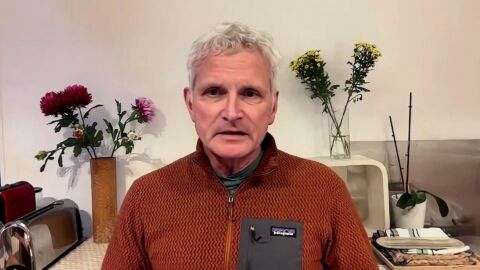
Marty Baron made his name, holding the powerful to account as a longtime editor of the Washington Post, and before that at the Boston Globe during
the paper’s award-winning investigation into the Catholic Church sexual abuse scandal. He’s joining me now from Stockbridge, Massachusetts. Marty
Baron, welcome back to our program.
MARTY BARON, FORMER EXECUTIVE EDITOR, THE WASHINGTON POST: Thank you. Thanks for having me.
AMANPOUR: I just wonder whether you heard it in real time, but you just heard it now. President Trump decided to take a swing not just at his NATO
allies, but at the press as well during his Davos speech, saying he needed a good press, implying that it has to be positive about him, otherwise it
lacks no credibility. What do you make about that?
BARON: Well, I’m not surprised that he took a swipe at the press because he does so at every opportunity. As for good press, what he means by good
press is good for him. What he means by a free press is free to say what he — only what he wants it to say. He wants a press, really, that’s entirely
under his control, and he’s taken a number of steps in that regard during the first year of his second term.
AMANPOUR: Marty, how dangerous is it? Is it just words, or as we’ve said – – we’ve alluded to this Washington Post reporter who had her home raided? How much do you know about that story? I know you are still vigilant about
what happens, and how unusual is it?
BARON: Well, it’s extraordinarily unusual. In fact, it’s unprecedented to actually raid a reporter’s home to go into a reporter’s home as part of a
national security investigation. That has never happened before.
And it demonstrates that this administration will put no limits whatsoever on its aggressions against a free and independent press. This is an
escalation of what’s been happening since the beginning of this second term. You know, there have been baseless lawsuits against media
organizations with Trump using his power as president to extract settlements. There have been threats to rescind the licenses of TV stations
that are affiliated with the major networks. There have been incessant attacks on the media.
I mean, Trump actually, since 2015, has attacked the media on social media more than 3,500 times. He’s ended funding for public broadcasting and
funding for Voice of America and its related entities. He’s ICE agents have been roughing up journalists as they conduct their raids. They’ve expelled
real reporters from the Pentagon and replaced them with essentially stenographers and propagandists.
And so, this is — this raid on Hannah Natanson of the Washington Post is really an escalation and shows that there will be no limits, and I suspect
he will do more.
I mean, look, Trump in 2022, during at least two rallies of his, campaign rallies of his, talked about his desire to incarcerate journalists so that
they would reveal their national security sources. And he said that once they were in prison, they would meet, as he put it, their bride. And then
they would be willing to reveal their sources.
What did he mean by that? He meant that they would be sexually assaulted and for fear of sexual assault, they would reveal their sources. He
received applause and cheers for that. But imagine, who says something like that? Who imagines something like that? Who imagines using that kind of
pressure to extract sources from reporters?
So, this latest event is really a demonstration that there is no limit to what he’s going to do to attack and undermine a free press in this country.
AMANPOUR: Look, it’s quite shocking. I need to ask you what you mean by meet their bride. How did you interpret that as sexual assault? That’s
really shocking.
BARON: Well, he said — I mean, he said that somebody — well, how else could you interpret that? He talked about meeting somebody in prison who
would be tough, mean, all of that, and suggested that this would be somebody who would attack them sexually. There’s no other way, I don’t
believe, to interpret that comment. And it’s clearly his audience at this rally understood exactly what he intended by that.
AMANPOUR: It’s so shocking. Look, I want to ask you, though, by what law and power does he have? You listed a whole gamut of what he’s done,
including defunding and other things. But the 1980 Privacy Protection Act protects journalists from government searches. They require a subpoena
unless the reporters themselves are being investigated for a crime.
So, just to make that clear, and they — you know, obviously the FBI has violated that provision. But when you listed a very important set of
circumstances, like barring basically regular reporters from the Pentagon or forcing them to not go because of draconian new conditions put on them,
when you’ve got a sycophantic press, either in the White House press corps or in the Pentagon press corps, when you stop funding public broadcasting,
just let’s take those two, and VOA, et cetera, what effect does that have for the reader, the viewer, the user, the consumer of what they hope to be
full and credible and accurate news?
BARON: Well, look, I think we have to think fundamentally about what the purpose of a free and independent press is in a democracy. And the purpose
is to give the public the information it needs and deserves to know so that people can govern themselves.
So, in order to obtain information, reporters need to be free to actually do their work. They are not intended to be propagandists. The founders of
the United States did not intend them to be propagandists. They did not want them to do that. James Madison, who was the principal author of the
First Amendment, talked about freely examining public characters and measures. So, public characters, politicians, measures, their policies.
Free, I think we understand that word.
And we should focus on the word examining, which means to look beneath the surface, look behind the curtain, to investigate. That is what it means,
and that is what the founders intended. It’s impossible to do that if the government is doing everything it can to suppress a free and independent
press in this country, and that is what they are endeavoring to do right now.
AMANPOUR: So, you know, free, you say, means something that we all know. Yes, it did. But this administration and others like it around the world,
populists, nationalists, have used the word free simply for their own side. And anything that criticizes their side, whether it’s the extreme right, as
J.D. Vance talked about a year ago in Munich, accusing, you know, Western governments of removing the freedom of their people by trying to, you know,
stop their hate speech.
We’re in a real battle over the word free, much less all the other attributes and, you know, First Amendment protections that come for the
American press.
BARON: Well, it’s true. I mean, I think this administration and populists around the world really distorted language, actually, the real meaning of
words. But I think the founders of the United States understood what they meant by free, and it’s not what this administration is describing as free.
So, they meant to have a press that could do its work on its own, holding government to account, holding powerful individuals to account and powerful
institutions to account. They wanted a fourth estate, as it was described.
And so, that is not what the Trump administration is describing. And they’ve used every means, including distorting the clearly, the clear
meaning of words to achieve their ends.
AMANPOUR: How — you’ve been around for a long time. How does this compare to previous administrations? I suppose the most heinous in terms of
relations with the press was Nixon in recent memory. Of course, we had the Watergate, which the Washington Post, of course, did that, broke that. But
can this be repaired? How does this compare to other major crackdowns by an administration on the American press?
BARON: Well, look, we’ve had crackdowns on the press in this country since the very beginning. John Adams, you know, we had the Sedition Act under
John Adams. It was hugely controversial. It was reversed or eliminated with Thomas Jefferson under Woodrow Wilson. He was very harsh on the press. We
also had another Sedition Act and the Espionage Act and all of that. The Espionage Act, which we’re still living with today, still exists. And I
expect that this administration will someday try to take advantage of that so that it can, in fact, imprison journalists.
So, we faced a lot of challenges in this country over many years, and we’ve gotten beyond them. I still remain an optimist that we will get beyond
this, but I think we’re in for a very rough patch because I do think that Trump does want to imprison journalists. He said that openly at his rallies
in 2022. And all of the steps that this administration is taking lead to the conclusion that they will seek to incarcerate journalists. And I worry
about that.
Can we reverse this? Yes. Obviously, at some point, we can. There are some things that we won’t be able to reverse. It will be very hard to
reestablish a strong voice of America. It will be very hard to reconstitute public funding, funding for public media. All of that, I think, is going to
be very difficult to reconstruct.
Look, it’s easier to destroy than it is to build. And what this administration is doing with regard to the press, it’s seeking to destroy.
AMANPOUR: Marty, you know, also, I don’t know whether you agree, but it seems that this is a particularly fallow period for courageous ownership of
the press. In other words, all these business people, including the one who owns The Washington Post, Jeff Bezos, have seemed to have bowed to trying
to please Donald Trump.
So, Bezos has remained completely silent in the face of one of his own reporter’s home being illegally raided. He chose the famous Washington Post
motto, democracy dies in the darkness. And when you were there, and even in 1.0, you said Bezos, and he certainly did, always protected independence
despite the pressure from Trump. What has changed? Why, all of a sudden, are they all kowtowing and we can do Bezos, we can do, you know, the people
who bought CBS and on and on and on?
BARON: Well, I think they fear Trump as more vengeful in his second term. And he’s turned out to be exactly that. So, I think that accounts for the
change in behavior on the part of Jeff Bezos, who, during my time there and in the years — in the immediate years afterward, was, I think, a very good
owner, spoke up very eloquently on behalf of the press and resisted enormous pressure from Donald Trump. But anticipating his return to the
White House, he then started to capitulate, I think, in various ways.
Number one was deciding not to publish a presidential endorsement for Kamala Harris. That decision was made 11 days before the election in 2024.
And then he appeared on the stage during the inauguration. He bought a so- called documentary about Melania Trump that she’s the executive producer of, paid almost three times the price of the next highest bid, acquired the
rights to — Amazon acquired the rights to the “Apprentice” TV series of Donald Trump, which essentially is money directly in Donald Trump’s pocket.
That said, the Washington Post newsroom continues to do a really excellent job of holding this administration to account and providing really good
coverage. That is why this administration raided the home of one of its reporters because they were concerned about the reporting that reporter,
the reporting of that reporter and of the newspaper overall.
I am pleased that even though Jeff Bezos hasn’t said anything directly about this, and I wish he would, but the paper has. Now, they went to court
to seek the return of all her electronic devices, her computer, her phone, various electronic devices to have that return. They also sought to prevent
the administration from extracting all of the information that was on those devices, almost all of which, 99.99 percent of which has nothing to do with
the investigation that they’re conducting. The administration refused to do that.
And then I’m pleased that an organization that I’m proud to be on the board of, the Reporters Committee for Freedom of the Press, which is really the
leading advocate for press freedom in the United States, also went to court with an amicus brief supporting the Washington Post in that regard.
The Washington Post talked about this as being a censorship via search warrant, and that is really what the administration wants. It wants to
intimidate reporters, suggest that they can go into their homes, seize their devices, extract everything they want from those devices. The
administration, apparently, according to the Post, has already extracted the information from Hannah Natanson’s report — devices, although they say
they haven’t reviewed it yet. They were unwilling to wait for an actual court ruling on whether they could extract that information. They just went
ahead and did it.
And so, the objective here is not just to obtain the information, although that’s a priority of theirs, but to intimidate reporters to instill fear.
And not just in reporters, by the way. The real objective here is to intimidate any potential sources.
You know, one thing I would like to point out is that for so long, starting with the first Trump administration, Trump has said they have no sources,
they’re just making this stuff up, et cetera, it’s all fake news, they invent that. Well, obviously, they have sources because the administration
is going to extreme means to obtain the identities of reporters’ sources.
All of this activity indicates, is a verification that reporters do have very good sources and the administration is particularly concerned about
that. They’re not inventing this. They’re actually relying on people who know what they’re talking about and are providing information.
AMANPOUR: You know, which is very encouraging for all of us. And of course, you know, the Washington Post has a storied history, but even
today, I’m reading that there are potentially a whole another tranche of cuts coming, staff and budget cuts of the Washington Post. The leadership
now is trying to resolve and low newsroom morale, declining readership. You know, long-time staffers are leaving of their own accord, not even being
downsized or whatever, retired, so to speak. That’s bad.
BARON: Doesn’t sound like a question there.
AMANPOUR: It’s not. I just — but or is it just a reflection of the business model right now?
BARON: I think it’s a combination of things, really. I think the business model is very difficult at the moment for a whole variety of reasons. Lack
of traffic from social media, lack of traffic from search engines, the advent of artificial intelligence. So, a lot of the people are just getting
their news from, you know, chatbots and things like that. So, we’ve seen a real decline in activity on news sites. The advertising market is
incredibly competitive. All of that is a factor.
At The Washington Post, I think there’s an additional factor, and that is that there’s been a concern about ownership and leadership and whether it
really stands for what it says it stands for, what it says in its motto, which is, democracy dies in darkness. Are they being the true advocate?
I think, in the newsroom, the news department, which is separate from the opinion department, they are, in fact, doing that. I’ve been disappointed
with what I’ve seen on the editorial board where Bezos has decreed that it should a big change in the posture of the editorial page. And I think
they’ve been timid and tepid in their editorials and their criticism of this administration, completely unwilling to use the word abuse of power.
They constantly resort to the word overreach. Well, it’s not overreach. It’s an abuse of power. And they should say so. And they should say so
clearly.
They’re constantly finding opportunities for false equivalence between the Biden administration or the Obama administration and what Trump is doing.
There may have been abuses during the Biden administration and the Obama administration, but none of them actually compare to what we’re seeing
today. And so, I’m disappointed in that.
And so, I think there is a disenchantment with ownership and with the business management, and people are reacting to that. And they’re leaving.
They’re saying they want to go to another place where they think they are fully committed to the mission of our of our profession and will stand by
their reporters.
AMANPOUR: Marty Barron, thank you very much indeed for joining us. To Uganda now, where strongman leader Yoweri Museveni has won a seventh term at the age of 81. The opposition has disputed the election,
which saw widespread protest and a vote carried out under an internet blackout.
Museveni’s fourth decade in power makes him one of Africa’s longest serving leaders. And now, a new book, “Slow Poison,” is reflecting on Uganda,
colonialism, and the authoritarian leaders who’ve shaped its recent history. A Ugandan citizen of Indian origin, Mahmood Mamdani, writes of his
quest to understand who belongs, who does not, and how that has changed over time. When we spoke, I asked him about the historic forces in Africa
and America that have influenced his worldview and that of his son Zohran, whose extraordinary political rise saw him spawn in as mayor of New York at
the start of this year.
(BEGIN VIDEOTAPE)
AMANPOUR: Professor Mahmood Mamdani, welcome to the program.
MAHMOOD MAMDANI, AUTHOR, “SLOW POISON” AND PROFESSOR OF GOVERNMENT, COLUMBIA UNIVERSITY: Thank you.
AMANPOUR: So, let’s get to the nitty gritty of “Slow Poison,” your latest book. It’s about your — essentially your homeland, Uganda, and we’ll talk
all about it. But first I want to ask you about the two strongmen who you focus on, Idi Amin and the current president, Yoweri Museveni.
You have met them both. Once in Kampala, you met Amin and you tell a story in your book that is extraordinary. Amin comes to the university or the
school where you are, correct?
MAMDANI: That’s right. He comes to the university on the university’s 50th anniversary. The university is called Makerere University. He comes to the
podium. He looks at us, which is about a thousand students, straight in the eye. And he says, I came with a battalion of soldiers.
So, when you lift your eyes from your books, you know who has power. And that suddenly did the trick. It’s just stunned silence. And then he goes on
to say, on my way over, I stopped at Mulago hospital, which is the university teaching hospital. I looked at your records, and I see that most
of you are suffering from gonorrhea. And he pauses a bit and says, I will not tolerate you spreading political gonorrhea in Uganda.
AMANPOUR: That’s —
MAMDANI: And if we had any doubt as to what he meant.
AMANPOUR: Oh, yes. That is him laying down the law and the fear factor immediately. I know that you have written this book about the difference
between Museveni, who’s president now and who’s just had an election, which he’s won overwhelmingly despite what the opposition says, and Idi Amin, who
was known as the dictator back in the ’70s.
So, I want to first ask you about why you feel the need for some revisionism, relooking at Idi Amin and what you think he was doing there.
MAMDANI: Well, I was fascinated by the journey that each of them took, because these were very opposite journeys. Amin began as a child soldier
recruited by the British, as a mercenary. He was trained in counterinsurgency, which we know is a polite word for state terrorism. And
he used to boast to African heads of states, for example, in the meeting in Morocco, show them how he used to twist the neck of a Mau Mau insurgent
with a handkerchief.
And then Amin goes his worst days when he’s at his most brutal and kills or his people kill thousands of soldiers. This is at the time of the coup in
- That’s his worst period. And that is what most of the Amin writing is focused on. Anyway, after that, Amin is kind of a different person. He goes
through a series of reforms and everything in my book details these.
Museveni is an opposite journey. Museveni’s journey, Museveni begins as an insurgent. And he is determined that there’s no way you can overthrow a
colonial dictatorship except through violence. Once he comes into power, he begins to understand that he needs violence to stay in power. And he
becomes what he fought against. He becomes the oppressor who uses violence to stay in power.
AMANPOUR: OK. What I’m very interested in, obviously, is your experience, because you were in Uganda and you were then with the Indian diaspora
expelled by Idi Amin. And your wife, Mira Nair’s film, Mississippi Masada, documents a little bit of that personal history of the Indian expatriates
in — who were brought actually to Uganda being expelled by Idi Amin. That must have been a very painful time.
And the film anyway, and what you’ve written about in your book documents that it was a total betrayal. You really thought that this was your home
and that you had you and others had had worked so hard to build a modern Uganda. Tell me about that.
MAMDANI: Well, my views changed as I began to explore this history. The more I began to explore it, the more I realized that Amin was simply the
front man. Amin was not really responsible for the expulsion of Asians. The process began with the British. The British had set up the Asians in a way
by dividing the Ugandan population into two groups, those indigenous and those not indigenous. And only those indigenous were said to have rights
within the country, not those not indigenous. And Indians came amongst the not indigenous.
AMANPOUR: The story goes that Idi Amin wanted Uganda for Uganda’s black population. It was going to be a nation of blacks and not any others. And I
wanted to ask you about your own political awakening, as you write. It didn’t happen in Uganda, but in Alabama, in the United States, you had
eventually gone to the United States to study. You joined a bus convoy from New York. You marched in Montgomery with the famous SNCC, the Students
Nonviolent Coordinating Committee. You heard speeches by Dr. King and others. How did this affect you?
MAMDANI: Well, the Uganda I grew up in was a highly racialized country. We lived in Indian quarters, quarters sanctioned and assigned by the colonial
government. We went to schools built by the colonial government for Indian children. When we were sick, we went to a hospital for Indians. When we
when we went to play, we played in a playground, which was only for Indians. When we went to pray, we went to a mosque. Even though Islam
claims to be non-racial, the mosque was only for Indian Muslims.
So, that’s the Uganda I grew up in, and that’s the Uganda I left. And later on, I asked myself, how did I change? And I realized there were two
critical turning points. One was in the U.S., which was the civil rights movement, what you just talked about, and then the anti-war movement. And
the second was in Tanzania.
My first job after the U.S. was University of Dar es Salaam. When I returned, I returned to Kampala. I knew the city. I knew every street. But
I couldn’t recognize a single person because everybody I knew had been expelled. And it was the most bizarre experience to see territory
completely detached from society. I went to the university, and it was my second growing up. I went to the university, and I got a sense of what it
was like to live in a non-Asian Uganda.
AMANPOUR: You know, you mentioned, well, we talked about all those — you said a highly racialized society in Uganda, all those separate facilities
for Indians. You then went to South Africa, right, and your son Zohran, the current mayor of New York, I think he spent some of his formative years in
South Africa with those very racialist things that you’re talking about. But I wonder if South Africa informed your son’s politics, too.
MAMDANI: Well, South Africa was the super apartheid society. Uganda, I came to understand, was a minor version of apartheid, the Uganda I had
grown up in. By the time we went to South Africa, which was 1993, ’94, that was the end of apartheid, and South Africa, was in a transition period.
Friends who would come to our house, we were deeply involved in conversation on what it would mean to de-apartheid South Africa.
And Zohran was young. He was five, six, seven, like that. But, of course, a six-, seven-year-old is curious, and he listened to these things. The
school he went to, I remember once I went to pick him up, and the teacher said to me that they had a lesson on color. I said, color? He said, yes.
Every child was to say which color he was. And he said, until we came to Zohran. And when we asked Zohran, what color are you, he said, mustard.
And I thought it was wonderful. The teacher was totally perplexed. Why would your son say mustard? I said, well, because he wasn’t reading from a
textbook. He was reading from life.
AMANPOUR: That is a great anecdote. Let me ask you another anecdote about the United States, which you write about in your book. You know, right now,
obviously, I don’t have to tell you, you see it, the whole world sees it, there is a deep othering. People of color, you know, there’s a terrible
situation going on where this mass deportation, the ICE federal agents, and the real threat to immigrants.
And in your book, you recount a story many, many decades ago when you were taking a Greyhound bus trip across the country, and at one point you asked
the bus driver to stop. Take it from there.
MAMDANI: Yes. It was a trip from Las Vegas into Arizona. Part of — one leg of a trip. And we were reaching around noon time and I walked over to
the driver and I said, excuse me, can you stop the bus so I can pray? He said, pray? I said, yes. He said, what kind of religion is that? I said,
I’m a Muslim. So, he stopped the bus and he turned on his microphone and he said, folks, we’ve got a Muslim in the bus and he wants to pray. And he
wants us to stop. It will take only five minutes or 10 minutes, and said, how many of you think we should stop? Please raise your hand. The entire
bus raised their hand.
And at which point I came out of the bus and the whole bus followed me and they formed a circle around me and they watched me as I prayed. And when I
finished, we all watched. We all marched back into the bus. I did not feel like an object of — I mean, there was curiosity, of course, but it was a
human curiosity. I didn’t feel like I was being othered at that point. I mean, they were genuinely ignorant. They’d never seen a Muslim and didn’t
know how a Muslim prayed, but didn’t see anything threatening in it.
AMANPOUR: So, that’s an amazing moment and a real moment of connection. And as you say, satisfying a curiosity. But I wonder, do you think if you
or somebody of a younger generation today had taken that same trip, asked the bus driver the same question, that it would unfold the same way in
America?
MAMDANI: Unlikely. Unlikely, I think it would it would raise a lot of questions about what’s the real agenda of this guy? What kind of threat
does he represent or she represents? I don’t think it would be the same experience. It was a different time. It was pre 9/11. Way pre 9/11. It was
1963, ’64.
AMANPOUR: Can I ask you a question about your son, the mayor? I mean, he’s got extraordinary political views, which obviously I assume he learned from
you. He learned from South Africa and he’s resonated with so many people in the United States and around the world. Do you wonder somehow how he became
so sure of himself, how he was so confident and how he was so resolute?
MAMDANI: I must say, we, Mira and I, have both been surprised by his confidence, the speed with which he has learned, the confidence with which
he’s been able to wage his battles and traverse the territory. But also, at the same time, I can see that he is no stranger at navigating places he
doesn’t know, at moving through new terrain, at learning very fast and very quickly. And he’s very kind. He’s very kind. He’s very considerate. He
reaches out. He doesn’t look down on anybody. These are his very strong points.
AMANPOUR: Professor Mahmood Mamdani, thank you very much indeed. It’s all we have time for. The book is called “Slow Poison.” Thanks for joining us.
MAMDANI: Thank you, Christiane.
(END VIDEOTAPE)
AMANPOUR: Now, we turn to one man’s epic quest to retread the steps of some of the planet’s first migrants. Pulitzer Prize winning journalist Paul
Salopek spent 13 years walking across four continents covering more than 38,000 kilometers. He describes it as slow journalism exploring the human
condition at ground level. He spoke to Hari Sreenivasan on the last leg of his odyssey traveling through North America.
(BEGIN VIDEOTAPE)
HARI SREENIVASAN, INTERNATIONAL CORRESPONDENT: Paul Salopek, thanks so much for joining us again. I want to point out to our audience the first
time I interviewed you before you started this walk, I was naive enough to believe you when you said it’s going to be about seven years. I mean in
fact we titled the video, Paul Salopek aims to walk the globe in seven years. That was 13 years ago.
Just to refresh people what is this sort of act of slow journalism that you’re performing and why do it?
PAUL SALOPEK, NATIONAL GEOGRAPHIC FELLOW: So, this project is based on many layers but the base layer is I’m trying to follow as well as science
can tell me the pathway of the ancient people who first spread out of Africa back in the stone age, right, in the Pleistocene. So, it’s a
rediscovery of the planet on foot using deep history to try to unravel current events. I’m a journalist. And so, using my body to report.
So, I’m moving through the stories of our day. You know, whatever, their politics, economics, culture, war, environment at a walking pace. And slow
journalism isn’t just slowing down. I mean, that’s de facto. That’s my default mode. But it’s more about approaching current events and news like
a hunter. Like the original hunters that moved out of Africa. And that means not knowing what the story is ahead of me, right? And so, I have to
be constantly alert.
Stories appear by serendipity, by chance. They’re not boxed in by preconceptions and it’s a wonderful way to work actually. It’s basically
giving your curiosity foray.
SREENIVASAN: You’ve also kind of been at the right place at the wrong time and the right place at the right time. I mean, there was COVID-19 and, you
know, when that happened you were walking your way through Myanmar, if I’m right, and you said, in Ethiopia I’ve walked through a ferocious resource
war between pastoral groups and I’ve been shot at by the Israeli Defense Force in the West Bank. Kurdish guerrillas ambushed me in eastern Turkey,
and my hike through Afghanistan was delayed by a Taliban offensive. But never in all my experience of murdered innocence had I stumbled into
anything like the coup in Yangon. What happened there? Tell us.
SALOPEK: I was in northern Myanmar waiting to renew a visa and COVID hit while I was there, as you mentioned. And so, I was actually in a quarantine
in the big commercial City of Yangon when the military coup occurred. And I could hear demonstrations outside. I could hear people by the thousands
marching in the streets.
And what was so heartbreaking, Hari, even for me who have covered many, many conflicts around the world, was the innocence of these young people.
This was kind of five years into Myanmar’s fledgling democracy. They were just kind of getting their feet under them after decades of military rule
and the young people were young digital nomads. They were people who lived on the internet like kids anywhere now.
They had this naive innocence that the world was going to come rescue them, and I had to kind of hold my tongue saying, you know, they’re probably not.
And when the military started shooting them, it was heartbreak simply because there was nobody there to kind of come to their rescue, right?
SREENIVASAN: We should remind our viewers that you’re not walking completely solo. Throughout every different country you’ve got these
amazing volunteers, walking partners that go with you maybe for 10 miles, maybe for 100 miles, maybe for a thousand miles. So, you spent about two
and a half years walking through China.
We in the United States or in the west, we have these conceptions of what China is. And I guess over those two and a half years, what challenged
those conceptions for you? What did you come away with?
SALOPEK: The way I tell my readers, it’s more than one and a half times walking from L.A. to New York. It’s like walking the flight line from
Chicago to Paris but it’s all through China, right? And it’s all through the belly of China. It’s through this kind of vast center and west that not
too many people go to. I’m not talking about the far west and Xinjiang, which is in the news for political reasons, human rights reasons, and
rightfully so. I’m talking through this kind of vast center.
But my surprise going in was just how incredibly variegated the Chinese population is outside of the big cities and certainly from that industrial
eastern quarter where all the people like you and me are based, right? In Beijing, Shanghai, who are not allowed to travel easily into the interior.
So, the diversity of China’s landscape, the diversity of the peoples, people are all mixed up from past diasporas, you know? Everything from
Mao’s kind of failed experiments in the ’60s where they displaced millions to the Mongol invasions, you know, 700, 800 years ago. So, there’s this
notion of China kind of as being monolithic, this being the factory of the world, this gigantic kind of industrial park.
SREENIVASAN: Yes.
SALOPEK: I had the amazing privilege of going through China that even the Chinese themselves that would be kind of an alien country because so many
people have migrated over the past three generations into the cities. This is the land of the ancestors. This is the land of kind of a depopulating
agricultural zone. It’s a land where it’s — you know, people were so startled to see me in some locations they asked me if I was Japanese,
right?
SREENIVASAN: Wow.
SALOPEK: So, it was an amazing walk to go through this kind of transect of the Middle Kingdom.
SREENIVASAN: There is an interesting kind of merging of kind of digital life and real life in both of these countries where the export image might
be of these hyper 5G super connected cities. But as you point out, what were the kinds of costs? Who are the kinds of people that you met in Korea
and in Japan that showed you that, well, there are these trade-offs as a society that we’re starting to make?
SALOPEK: Loneliness. You know, it’s — with a developed economy, you can purchase the luxury of privacy, number one. And when you plug into a highly
post-industrialized, you know, into the information age technology, A.I. and all that, it is even possibly further isolating if you’re not careful
with society.
My walk, because of practical reasons, goes through an awful lot of countryside, right? I do walk through giant megacities. I walk through the
outskirts of Tokyo, one of the biggest metropolises in the world, 38 million people. And it takes days and days and days to walk across these
big cities and I write stories about it. But I would say about 80 percent of my route is through agricultural zones, through rural zones.
And what I saw leaving Mainland Asia, from China, then to South Korea, and then to Japan, was this really sobering after effect of the vast migration
of country people into cities, they call it hyper urbanization, that was fueled by hyper globalization, right? The hyper connectedness of these
societies has pushed people into the cities to have, you know, urban jobs.
So, in South Korea, and in Japan, I walked through landscapes of loneliness, where I would walk through villages, especially in Japan, it
got more and more acute as I was heading eastward. I walked through villages where there was maybe one or two old people, I’m talking people in
their ’70s, and all the houses were empty. And the Japanese government is trying to kind of encourage people to go back to villages to alleviate the
pressures of urbanization.
So, strangely, some of these villages were really well maintained. They’re like villages under bell jars, cleaned, clean lawns, parks, but they were
empty.
SREENIVASAN: So, there are very small chunks where you have to — there is no land and you have to take a ship across and you made a fantastic kind
time lapse video of the container ship and you wrote about the people that are on board when you came from Japan to Alaska. And you said on this ship,
yet 1.9 million seafarers who keep this vast conveyor belt of globalization moving remain anonymous, unacknowledged, all but invisible to the public.
Where are the blockbuster films set in the wheelhouse? Where are container ship shanties? The merchant marine bestsellers? The nautical memes? Tell us
about some of these men that you met.
SALOPEK: It was again, another gift of the walk. I had no idea that I’d be taking a container ship across the Pacific. And I used to be a fisherman, a
commercial fisherman in my day, but nothing on these gigantic, this ship was 300 meters long, like three football fields long. It was carrying
something like 7,000 containers of everything that we wear, what’s in our homes, what we drive, it’s on this ship. I was hoping for a container of
ice cream that would break open.
And there were 21 crew. And it’s one — you know, it’s globalization’s ultimate kind of crystallization in the workforce, which these crews are
multicultural, multinational. They’re mainly from Asia, so they were crew from the Philippines, which seems to be dominant, from India, China,
Eastern Europeans. And the meals around the tables were Western and Eastern, kind of alternating day after day. And these were mostly young
people, mostly men. I think it’s one of the most masculine work kind of job descriptions still left in the world, I think something like 98 percent
men. And they are moving all of our stuff for us.
The reason we can order stuff on Amazon, the reason we can have a delivery economy and e-economy are these young guys in their 20s and 30s from South
and East Asia. And they sometimes stay at sea for six to nine months without seeing their families. It’s quite a sacrifice.
SREENIVASAN: You went and spent some time in Shishmaref, which a lot of the journalists that have gone there, this is one of the classic kind of
Alaska towns that are really falling into the sea. And you’ve not just covered the climate in Alaska, you’ve covered the effects of climate change
now for these past 13 years in all these different countries and all these different ways. What are you seeing? What did you see?
SALOPEK: It’s probably one of the ultimate, if not the ultimate stories of our time that is obscured by all these other concerns, the geopolitics, you
know, wars. It was a constant theme, almost every footfall for the last, you know, 18,000 miles had an element of this drastically changing climate
across all the planets that I’ve been walking across. It’s on everybody’s lips and nobody sort of knows what to do because, you know, it’s such a
massive thing that people feel disempowered. There are very powerful vested interests to keep, you know, fossil fuels going. So, it adds to a sense of
kind of melancholy and passivity.
But I think in Shishmaref, the reason why journalists go there is this little village of Inupiaq people, these people are hunters, they hunt
walrus, mainly at sea and seals, is eroding into the ocean. And so, their village, they’re on a barrier island, the whole island is going to be gone
in 20 or 30 years, one generation.
And there’s — what kind of was fascinating to me as a writer is that they’re still paralyzed about what to do. They keep holding these tribal
councils with votes. It’s a community of maybe 600 people. And the votes are always razor thin about whether we leave or we stay.
And my project is about rootlessness. My project is about migration, human nobodism, voting with your feet, this kind of the oldest coping mechanism
for crisis that goes back to day one for human beings. Here were people who said they just in November voted to finally relocate. And it’s going to
take years. They still have to find funding, but it’s heartbreaking.
SREENIVASAN: What have you learned from some of the elders that you’ve visited with? What is sitting in those spaces in all these different
contexts taught you?
SALOPEK: Centuries ago, every culture — most every culture and civilization has a tradition of wondering monks or wondering scholars where
you would walk to a master and sit at the master’s knee and listen. And the out of Eden walk kind of conforms to that old, old model. And so, it’s been
one of the most enormous gifts of the project. It’s been one of the greatest rewards is to be able to meet these folks in a world that is
entering what I call kind of cultural aphasia.
We’re kind of entering a phase where we don’t have a memory. And to tap into their memories of a way when there was human connection, I’m not
romanticizing kind of the difficulty of their lives. The guy who built the road had a very difficult life, right? He’s a village boy who had to work,
you know, for months for almost no wages through the jungle, building — bashing this road across the mountains to — you know, for — to ward off
the enemy in World War II.
And I think what I get from my readers, Hari, is a thirst for this kind of storytelling, because this thing of looking at our phones is as informative
as it can be, or as disinformative, is it’s like having — it’s watery. It doesn’t have too strong of a flavor. It’s very diluted. And people have a
yearning for kind of authenticity, for authentic experience.
And I think in my humble opinion, what the walk has taught me and listening to these elders, men and women who were born in the pre-digital age, is
that the key ingredient to authenticity and meaning is time, is time. It’s the ability to take time to think before you act, to think before you
speak, to think before you create is time. And that golden kind of ingredient, I think, is getting rare as diamonds these days, the time to do
these things.
SREENIVASAN: Well, it is one of the greatest stories being written. You can go check out all of Paul’s dispatches at outofedenwalk.org. Paul
Salopek, thanks so much for joining us.
SALOPEK: Hari, it’s always a pleasure. Come walk.
(END VIDEOTAPE)
AMANPOUR: And what an amazing experience. That’s it for now. If you ever miss our show, you can find the latest episode shortly after it airs on our
podcast. And remember, you can always catch us online on our website, and all-over social media. Thank you for watching, and goodbye from London.
END