
Read Full Transcript EXPAND
CHRISTIANE AMANPOUR, CHIEF INTERNATIONAL ANCHOR: Hello, everyone, and welcome to “Amanpour.” Here’s what’s coming up.
(BEGIN VIDEO CLIP)
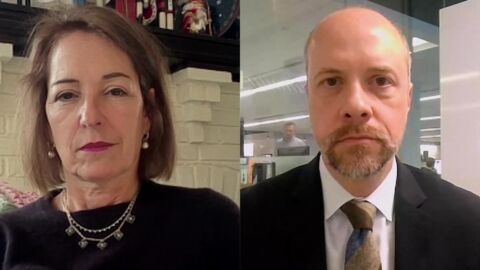
JARED GENSER, INTERNATIONAL HUMAN RIGHTS LAWYER: This approach cannot be something that becomes the norm under international law.
(END VIDEO CLIP)
AMANPOUR: In a whirlwind week, we’ve seen President Trump capture the Venezuelan dictator, seize tankers and threaten to take Greenland. Is
international law dead and buried? I asked the international human rights lawyer, Jared Gensler.
Then —
(BEGIN VIDEO CLIP)
ETHAN HAWKE, ACTOR, “BLUE MOON”: It’s a moment I think a lot of us can relate to of when you fully absorb your own irrelevance.
(END VIDEO CLIP)
AMANPOUR: — “Blue Moon” traces the tragic decline of the famed Broadway lyricist, Lorenz Hart. My conversation with the film’s star, Ethan Hawke.
Plus —
(BEGIN VIDEO CLIP)
CAROL LEONNIG, CO-AUTHOR, “INJUSTICE”: This is a three-act tragedy, a play with a lot of sad moments, but perhaps the saddest is the ending.
(END VIDEO CLIP)
AMANPOUR: — “Injustice,” a new book by Pulitzer Prize-winning journalist, explores how politics and fear vanquished America’s Justice Department.
Welcome to the program, everyone. I’m Christiane Amanpour in London.
In a stunning week, the world has watched as the United States captured a foreign head of state, boarded oil tankers and threatened military action
against more countries. President Donald Trump has ripped up the rule book and his lieutenants insist that might makes right.
Inside Venezuela, Trump’s main interest appears to be oil and he says there won’t be democratic elections anytime soon. Hundreds of political prisoners
are still behind bars there, and there are reports that the security forces still in power are still cracking down and hunting for anyone who might
celebrate Maduro’s ouster. Plus, international law experts are accusing Trump of violating the U.N. Charter by seizing Maduro.
To make sense of all of this, I’m joined by an international human rights lawyer, Jared Genser, who has extensive experience working against
dictatorships and has been called the extractor for his work freeing political prisoners. Jared Genser, welcome to the program.
JARED GENSER, INTERNATIONAL HUMAN RIGHTS LAWYER: Thanks so much for having me.
AMANPOUR: So, I set all that up. You know, nobody is shedding any crocodile tears really for Maduro. Many people are saying it was a morally
right thing to do, if not potentially legally sound. So, as a human rights lawyer who’s got such extensive, you know, experience in Venezuela,
especially with the opposition, what do you feel about the removal of Maduro?
GENSER: Well, I think I would begin by saying that he was, of course, a dictator and a thug and responsible for egregious crimes against his own
people. But at the same time, the U.N. Charter is quite clear. You can only, you know, invade or intervene in a foreign country in two
circumstances. One is when you’re exercising your right to self-defense, which wasn’t present here because there was no attack on the United States.
And the second is if the United Nations Security Council authorizes the intervention, which also didn’t happen.
And so, as a matter of international law, it’s quite straightforward. The U.N. Charter is a treaty. It’s a treaty that was signed and ratified by the
United States under the U.S. Constitution. Treaties are the supreme law of the land, equivalent to domestic law in the United States. And what took
place was illegal as a matter of international law. But, of course, that’s just the beginning of the conversation. There’s much more to come from
there.
AMANPOUR: But let’s just drill down on what you’ve just said. Does the United States, despite being a fully paid-up signatory to the United
Nations and the Charter, does a nation like the U.S. have to obey an international law or can a nation’s law take precedence? For instance, the
United States is not even talking about regime change in this case. It said it’s executing a law enforcement arrest warrant.
GENSER: Yes. I mean, there would be two potential justifications that the U.S. could put forward. And, in essence, they’re doing both. One is that
this is somehow a law enforcement action. But, again, the U.S. Constitution is quite clear, a law enforcement action doesn’t change the U.S.
Constitution, which says that any treaty that’s been signed is the supreme law of the land. So, to my mind, this is not a valid legal argument.
The second argument you could put forward relates to the oil of Venezuela. People have not talked as much about this, but actually U.S. oil companies
under the prior regime of Hugo Chavez expropriated billions of dollars’ worth of U.S. assets in Venezuela. Today it’s estimated about $30 billion
total expropriated.
But even though ConocoPhillips, for example, has $10 billion in an arbitral award, you know, this isn’t an award given to the United States of America.
And even if it had been, the U.S. doesn’t have the right to remove a head of state simply to enforce an arbitral award as well.
AMANPOUR: OK. I’m going to get to the award first and then to the head of state. So, are you saying the U.S. expropriated or Venezuela expropriated
these billions?
GENSER: No. Yes, no. Yes, no, no. Venezuela expropriated what’s estimated to be about $30 billion worth of assets and of property rights of U.S. oil
companies.
AMANPOUR: OK. And then they have been rewarded, or a lot has, by international arbitration, correct?
GENSER: Correct, exactly.
AMANPOUR: OK. Now, on to the head of state, because the other thing they say is, well, actually we never recognized him. You know, the last two
elections, at least most definitely the last one, was decisively won and provably won by the opposition, and we always said that, you know, Maduro
stole the election. That’s the view of the United States, even before Trump, and the view of much of the rest of the democratic world.
So, talk to me about that, because Maduro himself has claimed, through his lawyers, head of state immunity.
GOLODRYGA: Yes, there are two aspects of that issue. The first is, what does international law have to say? And the second is, what does U.S. law
have to say? On the international law side, the fact that a government like the United States did not recognize Maduro as a legitimate leader of his
country is for the United States, as a sovereign nation, to decide. Every country in the world decides what leaders they recognize.
But just because a country decides not to recognize the legitimacy of a ruler, and indeed Maduro and his regime did in fact steal the last
election, that doesn’t give you the right to intervene militarily and to remove them as head of state of that country.
As a domestic law question, and this is of course going to be the central question in New York at the trial of Nicolas Maduro, right at the very
beginning, is whether the fact that the U.S. did not recognize him can be overcome by the ordinary assumption built into U.S. law that heads of state
are in fact immune from prosecution.
And the precedent for that case, of course, is looking back to Manuel Noriega in Panama in ’89, where the United States removed him from power
under similar kinds of circumstances. He made all those arguments in court in the United States. The U.S. back then did not recognize Noriega, just as
it doesn’t recognize Maduro today. And ultimately, Noriega failed in that legal argument. And that’s really the precedent that’s on point.
So, I wouldn’t expect a U.S. court to rule that he is somehow immune from prosecution, because U.S. courts historically defer to the judgment of the
executive branch of the United States when determining what foreign leaders are recognized as legitimate leaders of their country.
AMANPOUR: OK. So, on that issue of Noriega, Noriega came to power in a coup. He wasn’t even elected, and then afterwards there was an election and
that person was recognized. But the question also then is the law enforcement aspect of it. Some people think that it’ll be a slam-dunk case,
and the Southern District, I think it is, will be able to easily convict. Others say, oh, I don’t think so. It’s going to be really tricky. Again,
Maduro is calling himself a prisoner of war.
You’re a lawyer. What do you think? Does the United States have a good, solid law enforcement case to make?
GENSER: Yes. I think if you put aside the fact that what took place, you know, with Maduro may well have violated international law, as a domestic
law question and based on the facts and the evidence described in the indictment, it does seem like the United States has a lot of evidence and
information to put forward.
You know, it seems clear from the level of detail being provided and what prosecutors are saying that there are a number of people that are close to
him that have turned against him that will provide direct evidence on all these points. We honestly won’t know until all that evidence is made
public. So, I think right now predicting what the outcome is going to be is definitely very tricky.
I don’t think the case will be dismissed because he was a head of state, given that the U.S. did not recognize him as such. And I would think from
all I know about the regime, and I’ve worked on Venezuela-related issues for more than a dozen years, that there should be a lot of evidence that he
did a lot of terrible things relating to drug trafficking, weapons trafficking, and, you know, narcoterrorism. You know, but ultimately, we’ll
have to see what the evidence, you know, shows and ultimately what a jury would do.
AMANPOUR: OK. I’m going to get to some of the human rights issues, which is also your area of expertise. But first, I just want to play a soundbite
from President Trump and Secretary Rubio about the whole business of not notifying Congress. So, here’s what they said.
(BEGIN VIDEO CLIP)
MARCO RUBIO, U.S. SECRETARY OF STATE: We call member Congress immediately after this. This was not the kind of mission that you can do congressional
notification on. It was a trigger-based mission in which conditions had to be met. Night after night, we watch and monitor for a number of days. So,
it’s just simply not the kind of mission you can call people and say, hey, we may do this at some point in the next 15 days.
DONALD TRUMP, U.S. PRESIDENT: I can add one thing to that. Congress has a tendency to leak. This would not be good. If they leaked, General, I think
it would have been maybe a very different result.
(END VIDEO CLIP)
AMANPOUR: Obviously, everybody always worries about leaks. Even we journalists have to agree not to report things in real-time when we get
notification that something might be happening. I remember in the first Gulf War, that was the case. We didn’t leak. But the question is, is Marco
Rubio right that there’s a hair-trigger situation that you can’t be notifying Congress? That’s not happened in the past, has it?
GENSER: No. I mean, not — in this kind of a high-profile example, not to my knowledge. You know, I think to me, U.S. law is quite clear on this, and
this happened after the Gulf of Tonkin incident, which was the first real major military intervention of the United States in the Vietnam War, that
Congress adopted in the president’s signing to law the War Powers Resolution, which says that if the U.S. is going to attack another country
with military force, that in advance of that happening, Congress needs to be notified. And then subsequently, Congress needs to be continually
briefed about what’s going on, and Congress has the power to, you know, if it adopts a law saying so, to stop a military intervention coming from the
United States.
So, while I understand why there was concerns about leaks and there are reasonable reasons in light of this kind of an operation to have those
kinds of concerns, that doesn’t change what the law actually says. And the law is very clear, there has to be advance notice, not to every member of
Congress, but what’s referred to as the Gang of Eight, which are the leaders of the key committees that relate to war powers in the U.S.
Congress, in the House and in the Senate, respectively.
AMANPOUR: And it’s only in retrospect, since the operation, that they are going to be doing a whole Senate briefing. But here’s the thing, what about
the people of Venezuela? The thing that’s really mind-boggling and difficult to try to figure out the logic of all of this is that, you know,
usually Americans talk about democracy and human rights, and that’s why they’re toppling dictators, not just for their narco-terrorism or whatever
crimes, but to relieve that kind of criminal activity on the people.
And in this case, it’s just not happening, and that’s not what the administration is saying. In fact, quite the opposite. No to any Democratic
elections anytime soon. No to the actual tried-and-tested Democratic leaders who did win the last election, at least so far. And yes, the
current regime is still in power. Maybe Maduro’s gone, and they are continuing their very vicious crackdowns on the people. What recourse do
the people have?
GENSER: Yes. I mean, look, I have to say I’m a little surprised, because, you know, when one looks back at past interventions done for human rights
grounds, that might not have been legal. And I think what comes to mind most clearly is the NATO intervention in Serbia, attacking Slobodan
Milosevic to protect the people of Kosovo, which didn’t have U.N. Security Council authorization and was at the time and subsequently, you know,
evaluated by international law experts as something that might have been morally justifiable, but not legal as a matter of international law.
I would have thought that the Trump administration would have taken advantage of the enormous volume of evidence that Nicolas Maduro, you know,
isn’t just a dictator, but in fact has committed gross human rights against his own people, in fact, crimes against humanity. You know, he’s accused of
having committed more than 20,000 extrajudicial killings, imprisoning thousands of political prisoners and torturing them, starving large parts
of his population where he wasn’t politically popular, right?
And I would have hoped that in addition to laying out a law enforcement reason for taking him, that there would have been a focus on the human
rights abuses as well. It’s not too late, of course, on that score. In my view, the International Criminal Court has been very slow to act and has
not issued indictments against Maduro, which it should have done, but the U.S. could play a role in setting up a hybrid court like was done in
countries like Lebanon, Sierra Leone and Cambodia, and also, in parallel, put Maduro on trial for crimes against humanity, and this would at least
get to the underlying heart of why the Venezuelan people have been, you know, suffering for so long.
AMANPOUR: Jared, we’ve got literally less than a minute. What about the issue of more of this? Stephen Miller has been endlessly quoted as talking
about, you know, targeting other countries that might makes right, that it’s all about power and strength now from the United States, that they own
the Western Hemisphere, but they’re also looking at Iran. You’ve had a lot of activity there with getting people released from jail.
What does this mean? Is the United States now untrammeled and nothing can keep it adhering to the law?
GENSER: You know, look, I honestly hope not. At the same time, obviously, we’re going to have to wait and see. So, you know, my own view is that, you
know, the president obviously says a lot of things, and we’ll have to see, you know, what he ultimately does.
But, you know, this approach cannot be something that becomes the norm under international law because, you know, this might makes right approach
obviously means that powerful countries of all kinds, including those that maybe are adversaries, you know, would be able to do the very same thing,
and I don’t think we’re going to like it in the reverse.
AMANPOUR: Jared Genser, thank you so much indeed. Now, we turn now to the lights, glitz and glamour of Broadway in the 1940s. Director Richard Linklater’s new film “Blue Moon” tells the story of
Lorenz Hart, a brilliant but tragic lyricist who for 25 years collaborated with the famed composer Richard Rodgers. They were a theatrical force until
one day Rodgers found another partner. It became Rodgers and Hammerstein. And, of course, that musical duo brought in the golden age of Broadway with
the likes of “South Pacific” and “The Sound of Music.”
“Blue Moon” is set on the opening night of the new duo’s breakout show Oklahoma. And in the intimate setting of a Manhattan restaurant, we see
Lorenz Hart unraveling.
(BEGIN VIDEOTAPE)
(MUSIC PLAYING)
(BEGIN VIDEO CLIP)
UNIDENTIFIED MALE: I need a drink.
UNIDENTIFIED MALE: Big smile.
UNIDENTIFIED MALE: We write together for a quarter of a century and the first show he writes with someone else is going to be the biggest hit he
ever had. Am I bitter? Yes.
(END VIDEO CLIP)
AMANPOUR: Do you recognize him there? Lorenz Hart is played by Ethan Hawke, which critics are calling a career-defining performance. He’s
already bagged a Golden Globe nomination. Ethan Hawke joined me from New York to discuss this poignant and gut-wrenching film.
(BEGIN VIDEOTAPE)
AMANPOUR: Ethan Hawke, welcome to the program.
ETHAN HAWKE, ACTOR, “BLUE MOON”: Thank you for having me.
AMANPOUR: Can I say, I’m now seeing Ethan Hawke as I know Ethan Hawke. When I saw you turn up in “Blue Moon,” I literally nearly fell off my
chair. You were barely recognizable. I mean, no hair or at least heavily, you know, shaved and all the rest of it. And so, short. I’m sorry to bring
that up. But I was just so fixated by the way you, you know, sort of visualized, you know, Hart’s height.
HAWKE: Well, it was a big part of his identity. You know, I mean, he experienced the world often as the smallest person in the room and it
forced him to behave like the biggest person in the room. You know, he’s not — you know, there’s some people that talk a lot because they’re self-
important or but he was the kind of person that had to command the room. Otherwise, he felt like people wouldn’t even see him.
AMANPOUR: Yes. Yes. And he really did, because in my notes when I was watching it, I mean, literally the first 30 minutes of this film was all
rat-a-tat dialogue, right. I mean, he was — you, he, would just talking at us for 30 minutes. And it was very interesting sort of dance.
And just tell me a little bit about Lorenz Hart and what made him a person who you wanted to inhabit and you wanted to tell this story.
HAWKE: Well, this story is kind of a howl into the night. It’s a moment I think a lot of us can relate to of when you fully absorb your own
irrelevance. And when it’s happening from a human being whose ego is huge, it’s even more devastating.
This is a guy who — you know, Rodgers and Hart were the Lennon and McCartney of their era. For 25 years, their music was played on every
jukebox in America, and they’re being covered by all the other musicians in the world, and all of a sudden, you know, Rodgers is collaborating with a
new partner, Oscar Hammerstein, and musical theater is changing, and it’s almost like Lorenz Hart is put on a little iceberg that’s just floating
away as the jazz era ends and this new era of American arts is happening. And he knows he’s witnessing his own death.
AMANPOUR: And he does actually allude to it, and we’ll get to that in a second, in many, many ways. But I think, you know, given what you just
said, I was also very well-touched, moved, you know, sort of sparked by when he was at, I mean, this film says that he was at the party for the
opening night of Oklahoma in the famous Broadway bar Sardis, and in walks his erstwhile partner Richard Rodgers and the new guy on the block, Oscar
Hammerstein, and he accuses, in an aside with Rodgers, a little bit of pandering with this new music, this new American art form. He just couldn’t
accept that what he considered the height of, you know, musical civilization, jazz, was about to be sort of given over for this.
HAWKE: Yes. Well, you know, I mean, there’s a great line in the movie that I find really relevant about Oklahoma is nostalgic for a world that never
existed. And it’s kind of the beginning of America seeing itself in the third person. You know, we were winning the war, and it was this moment of
a heightening of the ego, of a national ego.
And, you know, Oklahoma is rife with the sins of America, but that musical’s nothing about that. And that’s the kind of thing that’s making
Lorenz Hart crazy, because he’s just, it wants a little more from art than just to make people feel good. But of course, the musical’s wonderful in
its own way, right? But it’s — to Hart’s mind, it is pandering.
AMANPOUR: So, I’m going to play the first of the few clips that we have, and this is about them talking. Rodgers has said that he wants to
collaborate again with Hart. And this is a little bit of this as they take photos together.
(BEGIN VIDEO CLIP)
UNIDENTIFIED MALE: So, uh, you up for that? You feeling healthy? Is that something you could take seriously?
HAWKE: Yes. I’m on the wagon. I’m serious. I’ve been drinking ginger ale all night, well, except for this second, because this second we have to
celebrate. This is the greatest musical in the history of American theater.
UNIDENTIFIED MALE: No, no, no, I’m not drinking with you, Larry.
HAWKE: OK. OK. All right. Shoot this.
UNIDENTIFIED MALE: What? Oh, no, no, no. Larry, I got it.
HAWKE: Rodgers and Hart, together again.
UNIDENTIFIED MALE: All right. Closer. Come on, closer.
HAWKE: I want 10 copies of that.
UNIDENTIFIED MALE: Great. Write me a check.
(END VIDEO CLIP)
AMANPOUR: I mean, it’s poignant. By the way, do you even recognize yourself looking at that scene?
HAWKE: No, I don’t. I mean, that was — you know, I’ve done nine movies with Richard Linklater, and before we started this one, he told me, right
when rehearsal started, he’s like, I don’t want to see you for the next couple months. And part of my job was the deductive process of trying to
get rid of all the normal tools I use as an actor and try to find different ones.
You know and I did want to say that clip that you showed is really interesting because Hart did write a few more songs for the revival of
Connecticut Yankee and that was the last time they collaborated. But it’s so sad because at the opening night of that Connecticut Yankee revival Hart
was so drunk that he wouldn’t stop singing along with the actors on stage to the point where Rodgers had to ask police to escort him out. And of
course, he drank himself to death shortly thereafter.
AMANPOUR: I want to talk about Richard Linklater because as you say nine movies with him. What is it about him and also, you know, they talk about
sort of in the film — I mean, the impact is of a creative divorce between Hart and Rodgers and obviously, you haven’t had that with Linklater. You’re
still working really strong.
But tell me about what it’s like to work with somebody for so long and to trust them and to both of you make such good work and be so rightly
celebrated for it like those two were. In their case it fell apart. Do you ever think about that and consider that?
HAWKE: Yes. I mean, it’s certainly in the subconscious of the film. Rodgers and Hart had a 20-year, 25- year collaboration, and so do Linklater
and I. And what is it that makes artistic intimacy? I mean, it’s a very close — when you create together, when your names are associated with each
other, when you’re pouring pieces of yourself into your art, mixing them with the other person, it’s a powerful connection and I think we wanted to
make a film about that.
The obvious answer about how we keep working together is we stay at a rehab you know or meaning in a lot of ways the greatest demons in our life and
the destruction of our relationships is usually self-sabotage. And Larry Hart had some demons he couldn’t, he couldn’t wrangle and then that made it
very difficult for him to maintain friendships. And I think that Rick and I, we do try to take care of ourselves and each other.
AMANPOUR: Yes. Well, that’s excellent because actually the film really made that clear and I was very conscious of the self-sabotaging that Hart
was doing even as Rodgers was saying, let’s do a revival of the Connecticut Yankee, and he was just saying everything that Rodgers didn’t want about —
you know, his vision was completely different to Rodgers’ vision.
And then, shortly thereafter, you know, in the movie he goes back to the bar and he talks to E. B. White, of course, the famous essayist, but he
also talks to the barman and I think he gets that bottle of bourbon or whiskey and he says, this should be named, you know, the bottle that ended
my career or something like that. And I just thought that was really poignant. He really got it though, you know, even though he was very, very
drunk, he got it that he was self-sabotaging.
HAWKE: I mean, we do. We know what we’re doing. We know when we’re hurting ourselves. I mean, it’s just — I mean, simply put the whiskey is a
painkiller, right, and he cannot figure out another way to stop the pain that he’s feeling. I mean, this is a gay man in 1943 where his sexuality is
illegal. There’s a lot of easy things to point to that might be causing him suffering. Not least of which is Richard Rodgers falling out of love with
him, you know, and not maintaining that collaboration.
AMANPOUR: Well, he said, they should put my face on that bottle, the whiskey that made Lorenz Hart unemployable. And then he —
HAWKE: Yes.
AMANPOUR: Yes, which I think is — you know, it’s a great line. Then he’s talking to E. B. White, as I said, the famous essayist, the famous, you
know, writer and they talk about the sort of for better or for worse life and they’re both entering their for worse part of their life. I thought
that was just really amazing. And I’m going to play a little bit of him with E. B. White at the bar.
(BEGIN VIDEO CLIP)
HAWKE: OK. Best line in “Casablanca.”
UNIDENTIFIED MALE AND HAWKE: Nobody ever loved me that much.
HAWKE: Isn’t that magnificent? Six words. Nobody ever loved me that much. And really, who’s ever been loved enough? Who’s ever been loved half
enough? Would you get me a shot?
UNIDENTIFIED MALE: Larry you told me under no circumstances.
HAWKE: I’m just going to look at it. Take the measure of its amber heft in my hands.
UNIDENTIFIED MALE: You told me not to.
HAWKE: Just give me the drink.
(END VIDEO CLIP)
AMANPOUR: Well, that was the wrong clip, Ethan Hawke. But do you want to comment on that?
HAWKE: Yes. That’s — I mean, I’m talking there about “Casablanca,” which I love is that one of the things, yes, Larry’s full of vanity and
bitterness and this hurt but he also has this incredible joy and love of other arts. He can’t stop talking about how much he loves “Casablanca.” And
when he does meet E. B. White later on, he can’t stop talking about how much he loves E. B. White’s essays and how profoundly moved by them he is.
And it gets into my favorite part of why I wanted to play this character, which is this thing that I like to call the correlation of opposites. It’s
when you see a very large person who can dance elegantly, right, or when you see Marlon Brando act, he’s incredibly masculine and incredibly
feminine at the same time, and it’s this correlation of opposites. It’s like a top that’s spinning. You can’t take your eyes off it because you’re
worried it’s going to fall and Lorenz Hart was like that. He’s the smallest person in the room and he’s the biggest person in the room. He’s gay and
he’s in love with a woman. He’s self-defeating and self-loathing and full of confidence. He’s — anytime I had one thing to play in the movie, the
opposite was also true.
AMANPOUR: That makes absolutely — can I just ask you whether this is true, the scene between them that I was trying to allude to where E. B.
White is saying that he’s now going to write a novel and he’s trying to figure out, you know, a children’s book and he’s trying to figure out what
it should be called. And Hart tells him about the mouse that he liberates into Central Park every day and that he calls Stuart with a U, with a U.
And of course, E. B. White’s book.
HAWKE: A middle-class mouse.
AMANPOUR: Right, yes.
HAWKE: Yes.
AMANPOUR: And the book became Stuart Little. Did E. B. Wright rip that off or is that just artistic license in the book?
HAWKE: Well, what that is is really interesting, which is Robert Kaplow, who wrote the screenplay, and it’s one of the best screenplays I’ve ever
come across in my life. If you understand Hart’s complete life, he had an amazing positive impact on other artists. And he was always offering ideas
to people and was often credited with inspiring other people’s creativity.
And so, Robert kind of designed this little — did E. B. White go to Sardi’s (ph) all the time? Yes, he was. He was constantly there. Was he at
the opening night party? We don’t know. We know Larry Hart was. But Robert just kind of imagined this scene to show how often beautiful ideas just
flowed right off of Larry Hart’s lips and how much he inspired other artists.
AMANPOUR: So, I want to go back to what you were saying, you know, he was gay but in love with a woman. And there’s a very poignant scene. It’s one
of my favorites, frankly, of the long talk between Hart and Elizabeth Weiland. She’s the character — or she’s the person, the name of the
person. Here is the scene as she — Hart is listening to her talk about her unrequited love.
(BEGIN VIDEO CLIP)
HAWKE: I wrote a song once, years ago, called “The Heart is Quicker Than the Eye.” It’s not a great song, but it’s a good title and it’s true. I
think the head has nothing to do with the madness of love. And it doesn’t matter at all about worthiness, does it? We invest our hearts in worthless
stocks and we know they’re worthless, but we cling to them like little children clutching their little stuffed bears.
Oh, Elizabeth, tell me truthfully, how do you feel about me?
(END VIDEO CLIP)
AMANPOUR: Oh, golly, that is so painful because she’s just been talking about this other guy who she loves. It’s so painful. It’s so almost
cringey, right? They would say now. Tell me about Elizabeth Weiland. Who was she? And apparently the film, I don’t know, I read this, at least it
said it on the credits, that it’s based on their letters.
HAWKE: Well, it’s inspired by it. Robert, our screenwriter, he came across these letters between Larry Hart and this young student at Yale and they
really teeter on love letters and he got really intrigued on how Larry Hart would be in love with this young woman and it was all around the same
period of the opening night party and it’s just a little window into his soul that to me, it’s the way we often distract ourselves from our real
pain and you make up a smaller pain that you can control.
He can’t even look at this giant arrow in his heart that is Richard Rodgers because he knows that if he tries to pull that out, he’ll die. So, he kind
of creates this other pain that is slightly more manageable that he can handle. I don’t even pretend to understand the psychology of it but I do
know that it felt incredibly human to me and incredibly true.
And, yes, let’s face it, we’re all pretty cringey sometimes. Whenever you have to ask somebody how they feel about you, you probably shouldn’t.
AMANPOUR: Well, I’m going to ask you now, how you feel about — no, I will, seriously. It’s been a blockbuster year for the Hawkes. You have done
this. You’ve done many others. You’ve done “The Lowdown,” “Black Phone 2,” et cetera, all these things. You’re getting a lot of critical acclaim. Your
son is doing so well in his role. And your daughter, Maya Hawke, is part of the massive zeitgeist right now in “Stranger Things,” right? How do you
feel about that?
HAWKE: It’s one of these incredible gifts I never — I guess you can’t understand it until it happens to you, to watch your children become
themselves. You know, I got to see my son star at Lincoln Center doing Ibsen’s Ghosts this year. Maya’s not only in “Stranger Things” but she was
in this beautiful Sarah Ruhl play, “Eurydice,” here.
And to watch them thrive and watch them love each other, their younger siblings, watching these people that were children have their own lives and
being so proud of them is something my heart didn’t know was going to happen. You know, they spend a lot of energy telling you you’re going to
fall in love someday, but this feeling of watching your children grow up and watching them thrive is not like any other feeling I’ve understood.
AMANPOUR: So, this whole drama about our company, WBD, and who it’s going to be sold to or what, now it looks like they’re only entertaining the
Netflix bid and fellow actors, Leonardo DiCaprio, others, have warned that these streaming giants like Netflix and Disney could spell the end for
cinemas. And I just wondered what your opinion of all of this was.
HAWKE: Well, one thing is for certain is that the world is always changing and it will change again. I find there’s a reason why we tried to do away
with monopolies a long time ago. It’s not that history repeats itself, it’s that it rhymes. In the same, humanity seems to put itself through the same
trials.
It’s incredibly — imagine if one publishing company published all the books. It would destroy our ability to have counterpoint of views and have
different kinds of books and different kinds of literature and different kinds of ideas. And we’re watching it happen. And what that creates is kind
of a great dumbing down because they just want to make it the easiest thing for you to watch as possible.
And it’s very scary if you love art. It’s terribly scary. In a way, I don’t worry about it because at the end of my life — not the end of my life, I
hope, at the end of his life, Sidney Lumet, I made his last movie and I was really concerned about the future and things in digital and this. And he
was 83 years old and he said, you can relax and just try — the pursuit of excellence is its own reward.
And these things — I agree with DiCaprio. I think DiCaprio is incredibly smart and I think we have to be very conscious and we have to work very
hard not to let these things happen. If they do happen, then we need to work really hard to defeat it once it does happen.
I mean, it’s just — I don’t — I’m not a business person. I never have been. I’ve never been any good at it at all. And but I see what’s
happening. And it’s in correlation with a lot of other things that are happening in the world. And it’s really time for us all to pay as much
attention as we can and do the good that we each have the power to do.
AMANPOUR: I think what you just said was really incredible, quoting Sidney Lumet, that, you know, the pursuit of excellence is in itself a really
worthy activity. So, I think it’s great to be reminded of that amongst all these dangers that you mentioned. Ethan, thank you very much for being with
us.
HAWKE: Thank you. Appreciate it.
(END VIDEOTAPE)
AMANPOUR: Next, a deep dive into America’s Justice Department. Pulitzer Prize winning journalists Carol Leonnig and Aaron Davis have co-authored a
book examining the internal and external pressures faced by the DOJ and the FBI. The New York Times bestseller investigates how these institutions were
weakened by fear, delay, and political pressures under the Trump administration.
They sit down with Michel Martin to discuss the shocking accounts of partisans and enablers undoing democracy over the last 10 years.
(BEGIN VIDEOTAPE)
MICHEL MARTIN, CONTRIBUTOR: Thanks, Christiane. Carol Leonnig, Aaron Davis, thanks so much for talking with us.
CAROL LEONNIG, CO-AUTHOR, “INJUSTICE”: Thanks for having us.
AARON C. DAVIS, CO-AUTHOR, “INJUSTICE”: Thank you.
MARTIN: So, you’ve written a book where you take a deep dive into the Trump administration’s efforts to politicize the Justice Department, but
there have been two significant news events that have happened in recent weeks, and both of them speak to the reporting that you did over a long
period of time.
I mean, the first is the anniversary of the January 6th mob attack on the Capitol, which was an effort to disrupt the peaceful transfer of power. And
the second was that Special Counsel Jack Smith, he testified behind closed doors. He wanted to testify publicly, but he testified behind closed doors.
But then, ultimately, the testimony was released, at least a transcript of it, tape of it was released.
So, the first thing I wanted to ask you, if you could remind people who may not remember, who was Jack Smith? Why was he appointed Special Counsel? And
why was his testimony so significant?
LEONNIG: Jack Smith was a kind of legendary public corruption prosecutor in the Department of Justice who had gone on to another career, but was
appointed and chosen by Attorney General Merrick Garland to be the Special Counsel investigating evidence of two potential crimes by Donald Trump and
some of his allies.
The first, as you know well, was the one about whether or not he had illegally interfered and tried to overturn a federal election. And the
second was much more cut and dry and about Donald Trump’s efforts that were pretty open to hoard classified records after he’d left office and conceal
them from the Justice Department when faced with a subpoena to return them.
MARTIN: The thing that you make clear in your book is that Jack Smith was a vault. I mean, he did not countenance leaks. He was very disciplined. He
expected everybody on his team to be very disciplined. So, I was curious about what struck you when you first heard him lay out his case in his own
words because of this testimony.
DAVIS: Well, I would say that, you know, a lot of the things that he spoke to in that closed-door testimony that we, you know, got the transcript of
on New Year’s Eve echoed some of the findings that he had in his first report that came out last year and, you know, kept rubbing up against some
of the things in a second report that remains hidden from the public about the classified documents case. And, you know, both of those were cases that
were very thoroughly investigated in his office, and you’re right, he was a vault.
We happened to benefit from a little bit of timing in that, you know, we were working on this book for two years, but we went on a second book leave
after the election and spoke to people who were just beside themselves that these cases had never gotten their day in court, that a jury had never had
its chance to decide if Donald Trump, you know, had acted illegally and should have been in jail, let alone in the White House.
And so, there was a point in time when people did talk to us and tell us just how deeply and carefully, they had reported or they had investigated
these cases. And, you know, we try to lay that out in the book.
LEONNIG: I’d add one thing, which is that, you know, Jack Smith, in his testimony, said so declaratively in a way that no one’s ever heard before,
but we reported about his team saying this, but he said so declaratively that he had evidence beyond a reasonable doubt to convict Donald Trump on
both obstructing justice and hoarding classified records and illegally interfering in a federal election. And he described Donald Trump as the
most culpable for these actions.
And also, I think another striking thing, if I can add, was to hear Jack Smith say, you know, he found lots of reasons to bring this case, thought
he would win if he ever got to trial, and felt very strongly that this had been misrepresented by Donald Trump and by his Republican allies.
MARTIN: And so, the question becomes, why did these cases never go to trial?
DAVIS: Well, one of the biggest reasons is that they did not use the full four years that they had between January 6, 2021, and when voters went back
to the poll in 2024.
We go into deep detail about how they really wanted to start — they had a different idea of how to run this investigation, that it would start with
the rioters, all the various crimes that were so clearly had taken place on camera at the Capitol. And that was an approach, you know, supported by
Attorney General Merrick Garland and his senior team, and they thought they would build their way up the way you’d kind of build a mob case almost and
kept flipping people until you got to the top organizers.
It took a long time before they kind of realized that the things that Donald Trump was doing and those around him regarding trying to push this
false narrative that brought people to the Capitol — you know, to Washington on that day, was a very different investigation than looking at
the rioters who went in and the physical violence that took place that day.
In fact, we report that the FBI did not sign off and begin an investigation on the very things that became the heart of Jack Smith’s investigation
until April of 2022. So, a full 15 months after January 6th. And in that time period, Donald Trump’s resurgency really took hold, and he knew during
that time period that he was not under investigation. He heard no footsteps. None of his allies were getting subpoenas or, you know, there
were no search warrants. And so, in that time period, we don’t know what would have happened if things had gone differently.
MARTIN: Obviously, hindsight is always 20/20, but why did they approach this from the standpoint of sort of the guy on the street as opposed to the
person telling the guys on the street what to do? I don’t know. What was the logic there, especially since, as you pointed out, and so many people
have said this, is that this was the most photographed criminal event in history? So, Carol, do you want to take that? Why did they take that
approach?
LEONNIG: The why was twofold. One, Donald Trump, we discovered, damaged the Department of Justice much more dramatically than we realized in his
first presidency. He had personally, individually targeted and humiliated and harassed middle-level career public servants and some high, but mostly
some public servants who were in the mid-career range, and all they were doing was doing their job in the first administration, investigating part
of the Mueller probe, Russian intervention in the 2016 election, and he went after them so personally that there were people who had scar tissue
from that and recoiled from the idea of directly investigating Donald Trump again.
The second answer to your great why question is that Merrick Garland, upon arriving, upon being appointed by Joseph Biden, took it as his mission to
restore faith in the Department of Justice after Trump’s presidency, and his idea of restoring faith was to avoid, like the plague, any inference or
appearance that he was going after someone for political reasons.
The problem was, as his close allies told us, it ended up being a political decision not to pursue the open evidence of Donald Trump’s potential crimes
without fear or favor, which is the DOJ way.
MARTIN: So, Aaron, listening to Jack Smith’s testimony, he says, quoting here, “The evidence here made clear that President Trump was by a large
measure the most culpable and most responsible person in this conspiracy. These crimes were committed for his benefit. The attack that happened at
the Capitol, part of this case, does not happen without him.”
Having laid that out so directly, was that obvious at the time? I guess what I’m just trying to understand here is that were the political
leadership of the Biden administration, were they also sort of intimidated by the kinds of things that former President Trump was doing? I’m trying to
understand what role they played in all this.
DAVIS: Yes. I think one of the kind of heartbreaking moments that, you know, people we spoke to in our reporting, and then you can see laid out in
documents, that sometimes Republicans have made public in the months since they retook Congress and the new year here, is that some of the very
evidence that the FBI cited in 2022 when they began their investigation was known to the public over a year before that.
And that includes the, you know, fake electorate documents, if you will, these documents where, you know, Republicans in different swing states were
claiming that, you know, Donald Trump won the election and those were being spirited to Congress on January 6th to create the pretense that Mike Pence
could say that there’s dispute about the outcome of this election and send it back to the states. Those were things that were footnoted in the FBI
investigation and opening that investigation in April 2022 that had been discovered and put out in public under a FOIA request, a public records
request, back in March of 2021.
In fact, we know that the National Archives had taken their concerns about these to the Department of Justice even before January 6th and they were
turned down.
You know, Carol really hit on an important point, which is that the idea was that they didn’t think that there was a clock ticking when this whole –
– when this starts back in 2021. And Merrick Garland wanted to, you know, turn back to post-Watergate period where these decisions would bubble up
slowly and organically from the blind prosecutors and the FBI agents on the case.
There were, however, times when there was pushback, especially in this level of the top of the Washington field office and the FBI, where they
were very reticent to go directly back at Trump. And that was a big roadblock and took a long time to get over. And there was no point in time
that we discovered where Merrick Garland or the Deputy attorney general, Lisa Monaco, said, no, we need to go do this now. There’s enough evidence
to go forward.
And then you end up in this kind of situation where Jack Smith is handed the investigation and really has to sprint to try to get where he gets.
MARTIN: Then here comes Jack Smith, and you describe him in the book as moving with real urgency once he was appointed, in contrast to the more
than year-long delay after January 6th. Did you have a sense that he walked into that investigation understanding that there had been this
institutional hesitation? I’m just curious about why he approached it so differently.
LEONNIG: Smith knew that there was a clock, but he was not, according to all the reporting that we did, all the interviews we did with various
people briefed on all of this inside, he was not saying to himself, gee, an election is around the corner. I’ve got to convict this guy and get him to
trial before we’re there. He said to his team over and over again, we have a duty. We only have so much time. It’s of the essence that we answer the
question for the American people and for Donald Trump. Did he engage in a crime? Was there evidence to indict and ultimately bring him to trial, both
for the public and for Donald Trump? He said, you know, this guy’s running for office. Why should these allegations be hanging out there in questions?
They should be answered by us.
And as he said in his testimony, he didn’t come in on November 18, 2023, deciding we’re going to indict this guy. But he did say to both teams, the
classified documents team and the election interference team, let’s get on this and let’s have some decisions made quickly. To the documents team, he
shocked them when he said, let’s make a decision on indictment within three months. You know, he read every interview. He read all the notes before an
interview of a key witness. So, he knew that the questions would cover the waterfront and get to the core of what he needed, needed to be done.
MARTIN: And, Carol, stepping back, your book argues that the independence of the Department of Justice really isn’t protected by law, but by norms.
And if after all that has now transpired, how damaged is that system of norms now?
LEONNIG: It’s really devastated, Michel. It’s — as we describe it, this is a three-act tragedy, a play with a lot of sad moments, but perhaps the
saddest is the ending in which — and the things that happened even after we put down the pen in April of 2025. And that is twofold. One, centuries
worth of experience and expertise have been kicked out the door.
People that protect you and me and intervene when there’s a national security threat. A foreign adversary attempting something that really puts
us at risk. People that are the masters of unspooling and unraveling criminal conspiracies and protecting us from them. That’s one.
The second part is the norms you describe are obliterated in that the President of the United States has self-described, and his attorney general
has described him as the chief law enforcement officer for the country. The person that Pam Bondi says she works at the directive of.
And as we have reported at my new organization, MS Now, in extensive detail, Donald Trump has ordered up the prosecutions of people he does not
like and people he considers his critics, is calling for people like Jack Smith to be in jail, and has succeeded in directing and installing the
individuals who will indict his perceived foes. That is the stuff of kings. To quote John Keller, former acting head of the public integrity section,
this is the hallmark of a dictatorship.
And it’s going to take a long time for us as a country and politicians on the Democratic and Republican side to sort through how are we going to
shape that department in the future to insulate it as we attempted to insulate it after Watergate from a White House willing to break those
rules.
MARTIN: Caro Leonnig, Aaron Davis, thank you so much for talking with us today.
LEONNIG: Thank you.
DAVIS: Thanks so much.
(END VIDEOTAPE)
AMANPOUR: Now, impartial justice is the bedrock of a successful democracy. That’s it for now. If you ever miss our show, you can find the latest
episode shortly after it airs on our podcast. Remember, you can always catch us online, and on our website, and all-over social media.
Thank you for watching, and goodbye from London.
END