
Read Full Transcript EXPAND
BIANNA GOLODRYGA, ANCHOR: Hello everyone and welcome to “Amanpour.” Here’s what’s coming up. The U.S. and Iran agree to a deal, but what does
it actually achieve? We’ll dig into the details.
And —
(BEGIN VIDEO CLIP)
UNIDENTIFIED FEMALE: Elon Musk has more money and more wealth than anyone in human history.
(END VIDEO CLIP)
GOLODRYGA: — Elon Musk’s worth soars to new heights. What it tells us about power, inequality, and the state of the U.S. economy.
Then —
(BEGIN VIDEO CLIP)
UNIDENTIFIED FEMALE: You can see all around, the people, the streets, everyone wants change.
(END VIDEO CLIP)
GOLODRYGA: The changing face of Hungary. I speak to a longtime journalist about Prime Minister Peter Magyar’s move away from the legacy of strongman
Viktor Orban.
Plus —
(BEGIN VIDEO CLIP)
DAN DIAMOND, REPORTER, THE WASHINGTON POST: It’s not that these things are getting fixed, it’s that one person is deciding how to fix them. And that
doesn’t sit well with lots of Americans.
(END VIDEO CLIP)
GOLODRYGA: — Trump’s town. Reporter Dan Diamond speaks to Michel Martin about the president’s many building projects across Washington, D.C.
Welcome to the program, everyone. I’m Bianna Golodryga in New York sitting in for Christiane Amanpour.
Leaders from some of the world’s most powerful nations are gathering today in France for the G7. This year’s summit comes just after the U.S. and Iran
say they’ve struck a tentative deal to end hostilities and open the Strait of Hormuz.
(BEGIN VIDEO CLIP)
DONALD TRUMP, U.S. PRESIDENT: The deal’s all signed. And the Strait is already partially opened. As you know, they’re doing a little hunting for a
couple of mines that they’ve already found. But it is essentially, ships are starting to go out now on Friday. It’ll be completely opened.
(END VIDEO CLIP)
GOLODRYGA: So, far, the text of the deal has not been made public. And both sides have offered conflicting accounts of what will follow a signing
ceremony on Friday. To add to the uncertainty, the agreement doesn’t resolve perhaps the most important long-term issue, Iran’s nuclear program
and its existing highly enriched uranium. Those negotiations are meant to be dealt with in the next two months.
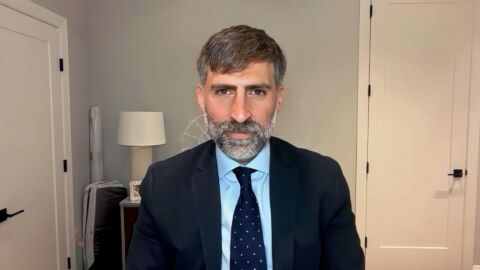
Karim Sadjadpour is following all of this closely. He’s a senior fellow at the Carnegie Endowment for International Peace. And he joins me now from
Washington. Karim, great to have you back on.
Given that the nuclear issue wasn’t addressed, it was notable and quite interesting to hear President Macron and his introductory remarks say that
this MOU fixes the nuclear issue because we haven’t seen any exact concrete details as to how it does that.
So, from everything that you’ve gathered and from what you’ve heard from your sources, aside from this signing ceremony on Friday, what do we know
about what changes in terms of the U.S. conflict with Iran now?
KARIM SADJADPOUR, GLOBAL AFFAIRS ANALYST AND SENIOR FELLOW, CARNEGIE ENDOWMENT FOR INTERNATIONAL PEACE: Bianna, what we’ve done is essentially
go from what has been a hot war over the last four months back to a Cold War conflict with Iran. This isn’t a resolution.
Still, the major sources of tension between America and Iran, whether it’s Iran’s nuclear ambitions, its missile program, its regional proxies, and
its revolutionary identity have not changed. And as you alluded to, it’s going to be very difficult to resolve the nuclear dispute over 60 days.
But I think as President Macron was getting to, this was a conflict which disrupted the global economy. And with the exception of Russia, which made
a lot of money over the last four months because of the disruption in global oil trade, the entire world wanted this conflict to be done with.
GOLODRYGA: As for the Strait of Hormuz, which, again, there’s some conflicting reporting on how long the strait would remain toll-free,
Iranian news sources say that that only applies to the first 60 days. President Trump says that’s permanent going forward, that the Strait is
partially open now, will be fully open on Friday. Is it in Iran’s interest, then, to keep the Strait fully open at least through these next 60 days?
SADJADPOUR: So, I think, as you put your finger on, this is going to be one of the major sources of contention because Iran doesn’t want to go back
to the status quo ante of the Strait of Hormuz being an international waterway.
They want it to be not only a fixed revenue stream for them, but also a deterrent against future attacks that they can threaten and maybe even act
on closing the Strait if they’re attacked again by the United States and Israel. So, President Trump has said that the Strait is going to be free
and open. Iran’s officials have said something different. And so, just one of many reasons why this MOU, which was signed virtually, hasn’t really
resolved the reasons why we got into the war.
GOLODRYGA: Yes. And the president said today that the text of the MOU should be released following the official signing, which is slated for
Friday. What are you going to be watching for in terms of any potential tripwires between now and that official signing on Friday?
SADJADPOUR: So, the — if you compare this potential MOU to the Obama nuclear deal that was signed in 2015, that was an incredibly detailed
document. It was over 150 pages and it had a great granular detail about Iran’s responsibilities.
From my understanding, this is a much shorter document. And again, there’s major sources of contention about what Iran has agreed to on the nuclear
file. What is it getting in exchange in terms of sanctions relief? Iran wants this economic relief up front. The United States says that it will
only get economic relief upon performance. So, it’s not clear to me that by Friday we’ll have any more clarity.
GOLODRYGA: What is that performance actually — what is the benchmark for what Iran’s performance needs to be before some of that frozen funds comes
their way?
SADJADPOUR: So, President Trump’s benchmark is to do better than the Obama nuclear deal of 2015. What that essentially means is that, first of all, he
needs to get out Iran’s highly enriched uranium, the 400-plus kilograms of highly enriched uranium, what he calls the nuclear dust, because it’s
something he’s insisted on.
Now, initially he said that he wants the United States to go in there themselves and retrieve that. I think he’s downsized his ambitions and may
be content with Iran diluting that highly enriched uranium.
But the second point is on the question of uranium enrichment. The Obama nuclear deal allowed Iran to enrich uranium at a very low level. President
Trump is trying to get Iran to cease enrichment of uranium for five, 10, 15 years. That, in my view, is going to be a tall order. It doesn’t seem like
Iran is prepared to cede ground on that.
And then the second question, to be honest, will the cost of the war vindicate any deal? If you want to contrast it again to the Obama nuclear
deal of 2015, that provided Iran about $1.5, $1.7 billion in sanctions relief and economic relief.
But this time around, President Trump has launched a very costly war, perhaps costing American taxpayers north of $100 billion. He’s talking
about Iran, offering Iran significantly more economic relief, and in exchange for a deal which could be perhaps moderately better. So, nothing
I’ve seen so far justifies or vindicates the enormous price tag of this war.
GOLODRYGA: And what we’ve seen the Iranians do is couple the conflict between the United States and Israel and Iran with the conflict between
Hezbollah and Israel in Lebanon. And President Trump, through a number of interviews that he’s given with reporters over the last few weeks, has
expressed his frustration with Prime Minister Netanyahu and some of the actions taken by Israel in response to Hezbollah strikes. And this really
puts Israel in a box because not only are they not party to this particular deal, but there’s some ambiguity as to what they will be able to or won’t
be able to do as far as the ceasefire and it holding.
President Trump said today that he’ll have to straighten out the Lebanon thing and we’ll have to have a little talk with Hezbollah. He seems to be
downplaying this, but how much of an issue is this now for Iran? Could they actually be the ones calling the shots as it relates to that ongoing
conflict?
SADJADPOUR: This is going to be a source of likely tension between America and Israel because we haven’t seen Iran exercise real restraint over
Hezbollah and that Hezbollah attacks on Israel continue. And so, the Israelis say, well, if we’re receiving incoming rocket missile fire from
our northern border, we’re going to respond.
And as you alluded to, President Trump is angry at Israel for responding because Iran has insisted that Lebanon and Hezbollah be included as part of
this ceasefire.
So, historically, American presidents have always been in lockstep solidarity when an Israeli leader is responding against attacks against
Lebanese Hezbollah. This time around, you see a tension between President Trump’s interest in wanting to resolve this war and Prime Minister
Netanyahu’s interest in wanting to retaliate against Hezbollah.
GOLODRYGA: We’ve heard President Trump, he just did it moments ago there in France, make clear that there is, in his words, regime change, that this
is the third leadership that he’s been dealing with. He calls them very strong and smart. By all measures, these are the hardliners of the
hardliners here that are now calling the shots here and some of the decision makers.
There’s reporting that Mohammad Ghalibaf, the speaker of the parliament, will be participating in the signing. There are a number of reports on the
rise of Ahmad Vahidi, and he’s the Revolutionary Guards chief there.
When it comes to the Iranian people themselves, what does this mean for what the next 60 days, the next few months will look like for them under
this particular leadership, given what the previous did in slaughtering tens of thousands?
SADJADPOUR: As you said, Bianna, this is an equally brutal ideological regime, which is committed to staying in power, committed to what I call
Vision 1979, to the revolutionary identity. Now, for some Iranians, they will welcome the pause in this conflict and the lifting of the U.S.
blockade because it will potentially bring people economic relief.
But I think for many Iranians, it’s also been very disillusioning, the experience of the last four to six months, because in January, when there
was a popular uprising and subsequent massacre, President Trump reassured Iranians that help was on the way. He encouraged them to take to the
streets. And I saw a quote from President Trump yesterday saying, well, he doesn’t really care about regime change, and he respects Mojtaba Khamenei
and wants to work with him.
And so, I think that it’s just another reminder for people in Iran that there’s no foreign saviors here. You know, their faith is in their own
hand.
GOLODRYGA: Yes. Remember President Trump’s words at the start of the year following those mass protests and then the slaughter saying that help is on
the way. I can’t imagine that for so many of those Iranians, this is the help that they were asking for. Karim Sadjadpour, we’ll have to leave it
there. Thank you so much.
SADJADPOUR: Thank you, Bianna.
GOLODRYGA: Next to Wall Street, where unimaginable levels of wealth were reached on Friday. The IPO of SpaceX was truly historic, making CEO Elon
Musk the world’s first trillionaire, at least on paper. This amount of wealth and power now concentrated in the hands of one man is staggering.
So, what does it tell us about the state and the health of the U.S. economy? For years, William Cohan has chronicled American business and
finance, having worked on Wall Street before writing about it extensively, including in his upcoming book, “Money to Burn.” He’s also a co-founder and
columnist at Puck, and he is joining me from Massachusetts.
Bill, great to have you on the program. A lot to get in here. Before this SpaceX IPO, at this particular valuation, you were suggesting that this
would put Elon Musk in a different stratosphere and financial force than any other CEO or business leader or billionaire. And now, by definition,
he’s done just that. He would be, on paper, the world’s first trillionaire. Just describe to us what that signals.
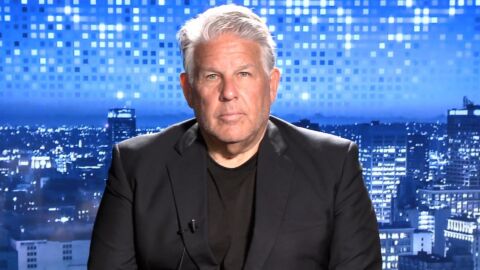
WILLIAM D. COHAN, FINANCIAL AUTHOR AND JOURNALIST AND FOUNDING PARTNER, PUCK NEWS: Well, I think, Bianna, it’s a very interesting question. Maybe
it’s a moment to take a pause and reflect on what it means to have one single man be worth, on paper or anywhere, in excess of $1 trillion. I
believe today, given that SpaceX’s stock is up another 13 percent and that company is now worth $2.3 trillion, given all of Elon’s other holdings,
he’s now listed at around $1.1 trillion.
I mean, I think many of us, Bianna, are struggling as it is to get our minds around, you know, billionaires. I mean, we’ve been living with
billionaires now for 30 or 40 years, and the amount of billions that have accumulated in the hands of, say, the top 10 people, wealthiest people in
the world, is hundreds of billions of dollars. That already requires a lot to get your mind around.
Now, in the last few weeks, we’re presented with this idea that Elon Musk, one single man, is worth $1.1 trillion. Is that a sign from above that we
should pause and reflect? I mean, we are also in the middle of, quote, unquote, an affordability crisis across the country, and so the fact that
one man is worth this much money should be maybe a moment to reflect and pause about whether there might be a problem with the way we accumulate
wealth in this country.
GOLODRYGA: And we mentioned this is all on paper, not to say he is not a very, very, very rich man, even prior to this IPO, but it is the largest
IPO in history. $75 billion were raised at a $1.77 trillion valuation for a company we should note with no clear profit at this point. As a banker, is
that price real value?
COHAN: Well, I mean, you know, value is a judgment call, I think. Look, as you and I both know, Wall Street is very, very good at these moments of
creating tremendous amount of hype, whether good or bad, around not only this particular company, SpaceX, but also others coming down the pike.
Anthropic, an A.I. company, OpenAI, another A.I. company, Goldman Sachs just raised $80 billion for Google/Alphabet for their A.I. build. I mean,
these are extraordinary sums of money. Wall Street is very, very good at this.
For the underwriting of SpaceX alone, the Wall Street banks made more than $500 million. Goldman Sachs and Morgan Stanley made $111 million each in
fees for taking risks that maybe there were risks, I don’t know, maybe for a second or two there were risks, but not risks of any substance. That’s an
extraordinary amount of money.
But, you know, this is what Wall Street is set up to do. Wall Street’s very, very good at this. Our Wall Street banks are the envy of the world,
and that’s why other companies come here to go public and raise these vast sums of money. Is there something unethical about it or unfair about it or
unequal about it? You know, that’s a question we should begin to think about.
GOLODRYGA: You mentioned the affordability crisis now that so many, not just in the United States but around the world, are grappling with, because
at the surface, the U.S. economy seems to still be holding quite strong. The unemployment rate remains rather low at this point.
And so, while we’re not seeing 2008 financial crisis levels, we are seeing that the economy continues to be the number one priority and focus for
American voters, and they’ve expressed that in the last election, and we see it in poll numbers now. The Fed’s latest data shows that the top 1
percent now hold about a third of all U.S. wealth, and that brings us back to the Gilded Age levels. You’ve chronicled a number of stock market and
economy swings.
Where does this one at this point rate? Are you concerned at all about hitting a peak bubble?
COHAN: Well, the onetime Fed Chairman Alan Greenspan once spoke about irrational exuberance, and this was leading up to the 2008 financial
crisis. I certainly feel like we’re in a period now of irrational exuberance squared or on steroids.
People have once again lost their minds about the risks that are potentially out there. When you, you know, price SpaceX as a company at
$2.3 trillion today, and it’s only got really one good business, and that’s Starlink, which makes, you know, $7 or $8 billion of profit a year, but
hardly justifies a $2.3 trillion valuation, you know, you understand how the hype machine works.
I mean, again, this is what Wall Street does so well, and who usually ends up getting held, holding the bag in these situations is retail investors
who get in at the end, like today and tomorrow and yesterday. Because at some point, the reality catches up with these companies, and the reality
means the profitability, the financial performance, and if it doesn’t justify the extreme valuations that have been posted on these companies,
then they return to Earth, no pun intended. And I would not be surprised to see SpaceX return to Earth at some point if it doesn’t start putting up
some massive profitability numbers.
GOLODRYGA: Well, you mentioned retail investors. SpaceX handed up to 30 percent of this IPO to retail investors and pension funds. So, one could
argue that perhaps it’s giving the everyday investor a bite of the apple. On the other hand, there’s concern about potential risk in the amount of
money that some of these pensions could potentially lose, especially as you note that there is a chance, given that this is not a profitable company
yet, that it could come back to Earth. So, how do you view this?
COHAN: Well, that makes me very uncomfortable. It’s not something I would invest in, although I certainly enjoyed the beautiful pictures of the
rocket ships taking off that were in the prospectus. I mean, I’ve just seen too many times, Bianna, especially in recent years, where, you know, the
hype kicks in, the hype machine goes into overdrive, everybody gets excited about an IPO, and then, you know, next thing you know, the IPO has
completely lost its lofty status, and it’s not unheard of to see such stocks lose 99 percent of their value.
And who gets burned in those instances? It’s the retail investors who got in once the stock was public, because they couldn’t get in before. And who
makes a bundle? It’s all those institutional investors and those venture capital firms and private equity firms that invested before the IPO that
are now reaping the rewards.
Now, a number of them are locked up, yes, and a lot of it’s on paper, and they’re hoping probably to get out as soon as they possibly can. And again,
it’s the retail investors who get all excited. I get it. I get it. Everybody loves a get-rich-quick scheme, but unfortunately Wall Street is
better at hyping up these stocks than the companies probably are at performing to justify the valuations that they’ve been given.
GOLODRYGA: You titled your 2011 Goldman Sachs book “Money and Power: How One Firm Came to Rule the World.” Musk, one could argue, has gone even
further. He controls Starlink, which the Pentagon and Ukraine and many countries now depend on. He’s had an inside seat in the U.S. government.
We’ve seen what’s happened to his relationship with Donald Trump and his work at DOGE and that relationship sort of imploding, but now they seem to
be back on good terms.
Is that more dangerous, do you think, the power that one man wields versus an institution like Goldman Sachs?
COHAN: No, infinitely more dangerous. You know, Goldman Sachs, as you know, will occasionally have former partners who end up in government and
positions of power, secretaries of the treasury, you know, et cetera.
But, you know, Elon Musk was like a cosplaying, you know, government executive without any mandate except to be incredibly disruptive, and he
did that for a few months and he caused a lot of disruption and a lot of hurt and pain by closing all sorts of very important benefits and parts of
the government that were providing very valuable services like USAID.
And then he, like, disappears and next thing you know he’s running SpaceX and that’s just one of his companies. He’s, of course, got Tesla, which is
another company you could argue is extremely overvalued.
I mean, the question is, is it justifiable in this day and age for some one man to have so much wealth and power? I mean, he’s literally untouchable,
Bianna. There’s nothing really anybody can do to — if he wants to misbehave, what can be done to prevent him from misbehaving or from being
held accountable for his misbehaving? And I think the answer, we all know it, unfortunately is nothing.
GOLODRYGA: So, then what is the correct response? Because you’re someone who has at least been more sympathetic to the idea of free markets. You’ve
covered them while you’ve actually been a banker and as a journalist as well. We see immediate responses from Washington and elected officials.
Not surprising, Democrats like Elizabeth Warren, Bernie Sanders calling for a wealth tax, candidate Graham Platner saying that the goal should be that
Elon Musk would be the first and only and last trillionaire. Republicans seem to be a bit more muted about this. I wouldn’t imagine it’s a great
platform to run on. But nonetheless, they are embracing free markets. How do you view it?
COHAN: Well, I think there needs to be some sort of a wealth tax configured here because I think it’s just gotten way, way out of control.
And this group of 10 or 20 people who are at the top of the Bloomberg billionaires index are just amassing huge amounts of wealth, obscene
amounts of wealth, more than any single person could ever justify having or needing.
And they’re also cozying up to the president of the United States who’s more than willing to be cozied up to by them. And in fact, as we remember
from his second inauguration, he was surrounded by these tech billionaires and that has continued to this day, including, you know, last night at the
circus on the White House lawn.
GOLODRYGA: Yes.
COHAN: So, I think it’s time to consider seriously some of the things that people like Senator Warren are talking about doing. It’s nuanced and has to
be done carefully because you don’t want to upset what is really an incredible machine of raising capital for people who need it and can pay
for it.
GOLODRYGA: Well, we’re just going to leave our viewers with a bigger picture of what a trillion dollars actually is. That’s twice the GDP of
Elon Musk’s native South Africa. $1 trillion were divided amongst every person on Earth, everyone would have $122. And if Musk spent $1 million per
day, it would take him almost 3,000 years to spend $1 trillion. He is now worth more than the next five billionaires combined. Just to put that into
perspective.
William Cohan, great to have you on. Thank you so much.
COHAN: Thank you, Brianna.
GOLODRYGA: Well, now we turn to Hungary, a country that used to be a darling of the MAGA movement until April when Peter Magyar ousted Trump’s
ally, the strongman, Prime Minister Viktor Orban.
Since taking office, Magyar has quickly got to work on reforms which unlocked frozen E.U. funds and pushing for term limits that could block
Orban from returning to power. For its part, Orban’s Fidesz party isn’t changing course. Just this weekend, re-electing Orban as party leader for
another year.
But what do Hungarian voters make of their new government so far? Hungarian journalist Viktoria Serdult joined me from Budapest.
Victoria, welcome to the program. It’s great to have you on. It has been two months since Peter Magyar has won as prime minister, ousting Viktor
Orban. He was officially sworn in last month. And in terms of what we’ve seen transpire since, let’s begin with Ukraine, because Magyar struck a
deal with Kyiv that now clears the way for E.U. accession talks. He claims that he did something in three weeks’ time that Viktor Orban couldn’t do in
10 years.
But he’s also floated a referendum and then a 10- to 15-year timeline in terms of joining the European Union. So, is he helping to clear Ukraine’s
path, or is this just more of a polite slow walk?
VIKTORIA SERDULT, HUNGARIAN JOURNALIST: I would say that this certainly was a big breakthrough with Ukraine. But Peter Magyar is definitely
cautious, like Hungarian and Ukrainian relations have always been strained. So, it’s not only because of Viktor Orban. It’s also a decade-long strain
between the two countries based upon minority rights of Hungarians living in the western part of Ukraine. And that was further strained by Viktor
Orban cozying up to Russia and President Vladimir Putin.
So, certainly it is a breakthrough what Peter Magyar did, but he doesn’t want to seem too eager to help Ukraine on the path of E.U. accession,
because that is something that actually many Hungarians would oppose.
So, I think that’s the reason why he certainly shows that he’s willing to open the negotiations with Ukraine in the European Union and sort of not
use his veto rights anymore, like Viktor Orban did. But still, he — sort of, yes, as you said, he’s walking a slow path, and he certainly said that
he wants to first see whether all the negotiation clusters have been closed. And after that one, he will have a referendum with the Hungarian
people.
GOLODRYGA: The E.U. Commission had frozen 16 billion euros over corruption over Orban and released it within just weeks of Peter Magyar taking office.
That is a really short period of time. Have you seen any genuine change in the country since Peter Magyar has become prime minister, specifically
related to the issues that the E.U. froze that funding over?
SERDULT: That is a very good question, because actually you can’t really see any big changes in Hungary right now. As you said in the beginning,
it’s only been six weeks since the new government came to power, so you can’t effectively even have the laws and the draft bills to be submitted to
Parliament in such a short time. But there is certainly a bill in Peter Magyar’s government to fulfil those requirements of the European
Commission.
So, first of all, they submitted a huge draft bill to Parliament, actually last week, that would certainly fulfil many of the requirements of the
European Commission, including asset declaration forms, including strengthening the role of the so-called Integrity Authority that would
investigate corruption cases. And it’s also very important to note that Hungary has formally asked to join the European Public Prosecutor’s Office.
So, these are indeed very big steps from Peter Magyar’s government, but they really have a very short period of time to fulfil all the laws and
requirements that is needed until the end of August. So, they are in a hurry. We will certainly need more bills, more constitutional amendments in
the coming weeks.
GOLODRYGA: And it was notable following his victory to see so many European officials publicly celebrate and congratulate him, saying that now
Hungary is officially joining or is a member, an active member of the European Union. Has there been a sense that Hungary has now been embraced
more as a partner in these last few weeks?
SERDULT: I think certainly is. And it’s not only the European Commission. Peter Magyar has also visited many of the European allies as well. So, he
visited Warsaw, he visited Paris, Berlin, many other European allies visited Hungary. So, there is a visible sign of relief, in my opinion, from
many of the allies within the European Union.
GOLODRYGA: Well, there was a cost to pay because while Hungary had been alienated from the European Union and much of the commission under the
prime ministership of Viktor Orban, we know that he was very close with the Trump administration. We’d seen something almost unprecedented in recent
times where the vice president of the United States was actively campaigning for Viktor Orban in the last election, the president calling
him as well.
What are relations like now between Magyar and the White House, the Trump administration?
SERDULT: I don’t think I would say there’s any official relationship between the two countries at this time. But if I remember well, President
Trump said that he expects Peter Magyar to be a good prime minister.
And basically, as — I was actually there when Vice President J.D. Vance was giving his speech in Budapest, and you could feel it in the air that
the support really was immense for Viktor Orban’s government. And everybody anticipated that after such a huge loss for Viktor Orban, there would be
some kind of, I don’t know, backlash or at least disagreement with the new government from the U.S. allies. But so far, we haven’t seen any of that.
So, I expect that there’s going to be a pragmatic relationship between the two countries.
GOLODRYGA: And what is the role of Viktor Orban right now? He was obviously the opposition leader and still remains that. He was just re-
elected as president of Fidesz. And when he lost back in April, he said that he will still be around. The Fidesz will still be around. They will be
there watching everything that this new prime minister does. Has his popularity continued to wane since he’s lost?
SERDULT: Yes, it absolutely has. I mean, like I think Fidesz and Viktor Orban were basically visibly shocked by the election defeat in April. They
haven’t really expected it. If they did, they kept it a secret because like just seeing them on the stage visibly shocked was even a surprise to me as
a journalist. But they are still around.
And they basically, as you said, Viktor Orban was not surprisingly expectedly reelected on Sunday. But that also means that actually Fidesz
are not really willing to change anything on their policies. They haven’t taken really the blame for the election losses. They haven’t learned their
lessons. They haven’t even changed their slogans. They are just campaigning with migration. They are campaigning against the European Union. So, I
highly doubt whether that is the right path to follow for Fidesz if they really want to renew and get back their voters.
The latest polls suggest that their popularity is at an all-time low and the number of voters has fallen to 1.5 million people. That is quite
unprecedented for such a huge party like Fidesz.
GOLODRYGA: Yes. And for one that had been in power for such a long period of time. And it is notable the number of institutions that Viktor Orban
during his time in power had managed to control including the media and journalists like yourself.
You interviewed many journalists and one told you that in 2020 the government control of the press they described as a snake tightening its
grip with every breath. Has that grip loosened in the past two months?
SERDULT: So, actually I think the day of the election was a relief for many of the independent journalists. But it will take some time for us to
reflect on the past 16 years. It is probably hard to imagine for any foreign correspondent in the European Union or the United States that
Hungary — the daily life of Hungarian journalists was really obstructed in a way that was quite unprecedented in other E.U. states for example.
But — and as time goes by unfortunately you get used to it. So, the fact that they were not invited to interviews. The fact that they were not
invited to press conferences. Our emails have not been answered. And these were just the smaller obstructions. The prime minister, in his famous
speech, he likened Hungarian journalists to bugs that were constantly harassed. So, that will probably take some time to process the past 16
years.
But I think there is as I said a sigh of relief. And yes, we can actually feel that the new government is trying at least to have a partnership with
the independent press instead of harassing it. And that’s a big difference.
GOLODRYGA: Thank you, Viktoria. Thank you so much for your time and your analysis. We really appreciate it.
SERDULT: Thank you so much for having me.
GOLODRYGA: Now, a massive claw structure stands on the South Lawn of the White House and under it a UFC fighting ring. Thousands gathered to watch
the first fights on President Trump’s 80th birthday with more scheduled for the 250th anniversary of America’s independence.
This is just one example of the president’s controversial reshaping of historic landmarks from the demolition of the East Wing to putting his name
on the Kennedy Center last December. This was removed over the weekend after a judge ruled the installation illegal.
Washington Post journalist Dan Diamond has been keeping a close eye and he speaks with Michel Martin about what these projects reveal.
(BEGIN VIDEOTAPE)
MICHEL MARTIN, CONTRIBUTOR: Thanks, Bianna. Dan Diamond, thank you so much for joining us.
DAN DIAMOND, REPORTER, THE WASHINGTON POST: Michel, thanks for having me.
MARTIN: You’ve been reporting for months on all the building projects that this administration, that President Trump, has initiated. So, for people
who don’t live in the Washington area, who don’t follow this, give me the short list of just what comes to mind. Like, what are we talking about
here?
DIAMOND: How could I forget them? So, the president tore down the East Wing in October to start building the planned White House ballroom. Around
that time, we also saw the first mock-ups of what we now know is the Triumphal Arch that he’s trying to build just on the outskirts,
essentially, of D.C., right on the border with Virginia. We saw in recent weeks a project to resurface and renovate the Reflecting Pool. The
president wants to build a statuary garden in one of Washington’s parks.
And that’s not even counting, Michel, the dozens of other projects, smaller projects like renovating fountains, cleaning up parts of the city. Some of
those things, very controversial. Other things, many D.C. residents are happy about.
MARTIN: Well, the fountains for sure. I’ve seen it on my — I live in Washington. So, I see like on my neighborhood, you know, chat board, people
are like, I kind of did like the fountain. Also, the golf courses. There’s a public golf course, two public golf courses in D.C. And I think there’s
also in Maryland, too, as well. Is that, is that right? Do I have that right?
DIAMOND: That’s right. So, the president is also working to redevelop several golf courses here in Washington and then nearby in Maryland. The
one in Washington, East Potomac Park, that’s a part of Washington where for years I’ve gone to go running, people go biking. The president wants to
turn it into a world class golf course. We have this Mooney course, this course that’s open to the public right now.
And then there are two courses at Andrews Air Force Base that President Trump has enlisted Jack Nicklaus, the famous golf player and course
designer, to come and redevelop, too. That has sparked a bit of a standoff with Westmore, the Maryland governor. Trump is claiming that Westmore is
getting in the way of quickly redeveloping those golf courses.
My colleague, Erin Cox, and I talk to Maryland officials who say they don’t understand what Trump’s so angry about. They’re working with him. They
might just not be working as quickly as Trump wants them to, which I think is a theme here, Michel. Trump wants to do all these things and he wants to
do them as quickly as possible and preferably during his term.
MARTIN: OK. So, that’s another question I was going to ask you. When you take all these together, is there a theme that emerges? Is there a kind of
a through line to all this?
DIAMOND: Absolutely. I think President Trump thinks of himself, talks about himself as a builder at heart. This was his career before he became a
politician. He thinks he’s good at it. He enjoys it. He would rather do this kind of work than almost anything else. And we’ve reported on
conversations that he’s had in the White House where he’s been talking about some important national security issue or health issue, and it gets
diverted to these construction projects.
He will wave to people in the Oval Office, say, take a look at what I’ve done here on the campus. The changes I’ve made right outside the office,
the new colonnade, for instance, that he put in, were the changes to the Rose Garden. He is very proud of these things. In some cases, maybe these
were changes that needed to happen. But in many cases, they’re things that Trump just wanted to have happen. And he sees it as the legacy that he is
going to leave behind as the builder president.
MARTIN: I was going to ask you about that. When you talk to Trump administration officials about these projects, what did they say? What did
they say they’re doing?
DIAMOND: It depends on the project. So, the White House ballroom, we’ll start with that. That is something that has captivated the nation. I think
we’ve seen the reaction. My colleague Jonathan Edwards and I wrote the first story about the East Wing being demolished. So, we’ve heard since
October, thousands and thousands of comments. And we’ve seen public reaction, maybe even in the millions of people who have thoughts on seeing
part of the White House torn down.
There are members of the administration who say, look, we don’t think that we should have this big a ballroom, but could we use more space? I don’t
know, Michel, if you’ve been in the West Wing or in the White House. Yes, it’s actually like kind of small. And I think the vision for the White
House was that it was not going to be a castle. It was not going to be imposing. It was supposed to have this graceful symmetry and simplicity.
So, when President Trump is trying to add a very large ballroom that is essentially twice the size of the White House mansion, there are folks,
even some Democrats who say, look, we could use more space. But is this the amount of space? Is this the kind of structure that should be built?
Probably not.
So, I think the White House ballroom is one area where some Trump officials might offer some acknowledgement of it’s just too big. But then there’s a
project like the reflecting pool, which the president moved very quickly in the past couple weeks to do. He went around all the normal legal reviews,
didn’t get sign-off from Congress, just went ahead and did it.
And there are many Trump officials who are pointing to that, including the president, who say, look, this is a playbook for what he’s trying to do.
These kinds of projects can be done quickly. They can be done less expensively and they can be done effectively because the reflecting pool as
of today, as we’re talking, it does look pretty good. This is what President Trump is trying to do.
So, the project kind of depends on what reaction you’re going to get. I will say Trump officials have learned to sing from the Trump hymn book on
everything. So, it’s hard to get them, even on things that might be somewhat controversial, to be outright critical of the president.
MARTIN: A large part of your reporting is process. It’s the what and it’s also the how. And what is the through line on process, like whether it’s
the ballroom, the arch, the reflecting pool or putting his name on the Kennedy Center, which, you know, technically the board made that decision,
but he handpicked that board and made himself the chairman. So — you know, so here we are. The way he’s gone about these things is also a big part of
the story. What is that?
DIAMOND: Well, you’re absolutely right. I think President Trump wants to move as fast as possible and as exhaustively as possible. So, what I mean
by that is he will clear out these federal boards, these commissions that historically were apolitical. They might have had people on them for years
serving across multiple presidencies.
President Trump and his team have figured out that if you, say, fire all the commissioners of fine arts, these experts in architecture and sculpture
and art who historically might have taken a project like the White House ballroom, asked months or years of questions, sent it back to the drawing
board, said this project is way too big. It should be half the size. That review team doesn’t exist anymore.
The people that President Trump has put on that commission include his young executive assistant, include some people who currently serve in the
Trump administration. The chairman of that commission has been very much an ambassador for President Trump’s ideas. He doesn’t seem like someone who’s
objectively weighing in. He’s going around the world talking about how great President Trump’s ballroom will be. So, that is a very big
difference.
I think President Trump is on the verge of getting what he wants here because he has figured out that if these commissions are on his side and if
he can find these loopholes where he might not need to go to Congress, like soliciting private money to pay for things, really the only vestige of
resistance is in the courts. And it’s unclear as of now whether the highest court, the Supreme Court, will rein in Trump when those projects get in
front of them.
MARTIN: Who’s paying for all this?
DIAMOND: It depends on the project. In some cases, it may well be the American taxpayer. In other cases, it is going to be private donors, people
who have given to Trump on a number of different projects. Rich Americans, I should say that Amazon, which was founded by Jeff Bezos, which he’s the
owner of the Washington Post, Amazon’s given money, Google’s given money, Palantir, these major corporations that in many cases have business before
the Trump administration.
So, we’re still finding out who’s paying for, say, the triumphal arch. But my understanding is that many of these projects are going to dip in to
private money that Trump is raising on his own.
MARTIN: Is that legal?
DIAMOND: Yes, we’re going to find out. I have been following the court case with my colleague Jonathan Edwards over the ballroom. And Judge Leon,
who was an appointee of a Republican president, was very skeptical of this idea of using private donations to pay for the ballroom. He called it a
Rube Goldberg contraption, alluding to one of those funny things, you know, that it sort of works eventually, but it has all these different steps.
The White House is arguing that they can raise the private donations, they can use the gifts because of these different authorities that they have.
This judge, appointed by a Republican president, was skeptical of that. We’re going to find out if other judges agree. And there are similar ideas
to pay for, say, the Statuary Garden, the Triumphal Arch.
But all we know right now, Michel, is that there hasn’t been full transparency over who’s paid what. Some of this has leaked out in reports
and credit to the New York Times and other outlets have found out some of the amounts of money. But we don’t have a full list of all the donors, what
they’ve given and importantly, what they have received. If they’ve been promised any special access, if they’ve gotten any special audience with
the president, if this is essentially paying to play and buying an audience with the president because they’re giving to a pet project.
MARTIN: Lawsuits. Have there been many?
DIAMOND: I think every project has drawn at least one lawsuit. The ballroom lawsuit is the furthest along. A federal judge ruled to halt the
project. That order was stayed. There’s an appeals panel considering whether to let the project go forward or halt it again.
My read, having been in court, is that the three-judge panel, two of whom were appointed by Democratic presidents, pretty skeptical of the Trump
administration arguments. I wouldn’t be surprised to see the ballroom halted one more time.
The litigation around the Kennedy Center, President Trump, in some ways, has admitted defeat. He said that he’s going to give the Kennedy Center
control back to Congress. Of course, this comes after President Trump driving away many of the acts that were going to perform at the Kennedy
Center. So, you could say his work is already done with the Kennedy Center.
There’s litigation around the Triumphal Arch and whether to pause that project. The Trump administration says it’s too early to pause the project
because technically work hasn’t started yet. There’s been litigation around the reflecting pool. The reflecting pool job was done so quickly that the
judge didn’t even get a chance to rule in that case. And other efforts that Trump has undertaken to pursue changes have also drawn litigation, too.
MARTIN: You know, one of the things that’s so fascinating is that I understand that the president and also his supporters, particularly in the
administration, say that this is what happens when government functions the way it’s supposed to. When you act with urgency, you get things done. It is
also true that many people in the public do get frustrated with the pace of government. Do you have any sense of whether the broader public is actually
paying attention to this?
DIAMOND: So, Michel, here’s what I point to. First, we’ve seen the polling. Virtually all of these projects are opposed by a majority of
Americans. It’s not unusual that a major Washington project might draw resistance. Other changes in Washington have been opposed. And this
sometimes happens. People like things the way they are and something gets built and then they end up liking the new thing after all. But it’s fair to
say that the ballroom and the arch in particular have drawn negative reviews and multiple polls.
And then we’ve also seen waves of public comment, not just like on our stories of The Washington Post, public comment of people weighing in with
the federal commissions that are reviewing these projects. We did a study at The Post of, I think, the 35,000 comments that poured in on the ballroom
and 97 percent, probably in reality, closer to 99 percent were negative on the project. There have been other commentary periods on other projects and
officials have basically said it’s the same story, unanimous or near unanimous resistance to these ideas.
So, we know that this exercises Americans. And I think the reason why is these are familiar places. You don’t have to live in Washington, D.C., to
care about the White House or care about the National Mall, the Lincoln Memorial, Arlington National Cemetery. These are places that have meaning
and resonance to Americans, in some cases, people abroad, they are symbols of this country. And the fact that they are maybe getting renovated or
fixed, that’s one thing. The fact that these spaces are getting potentially permanently altered.
If President Trump builds this large ballroom, there are some Democrats who say we need to tear that down on day one. But I think there’s a pretty good
chance that if the ballroom gets built, Democratic presidents will just learn to live with it, and they’ll want to use the space in some ways.
So, President Trump has found this way to impose his will. And it’s not that these things are getting fixed. It’s that one person is deciding how
to fix them. And that doesn’t sit well with lots of Americans, including some Republicans.
MARTIN: So, looking ahead, if these projects — let’s say for the sake of argument, these projects are in fact completed. OK. Do you think that —
you know, will other presidents look at this as a precedent for sort of remaking the physical landscape to their liking, or do you think that this
is a particular preoccupation of a particular person? What’s your sense of that?
DIAMOND: Well, I’d never say no to another builder president or someone like Trump. I mean, who could have imagined Trump until we got Trump,
right? So, there may be another president in the future who wants to follow a similar playbook. But I have to imagine that most presidents would be
more restrained in how they do things and also probably have a different priority set. President Trump is devoting a lot of mental energy and time
to these projects. I don’t know if another president would care as much about the walkway outside the Oval Office, for instance.
But I think we will think — no matter what happens, Michel, there’s now a big hole next to the White House mansion. There are now changes to the
reflecting pool. Maybe it won’t look good in 15 years because we didn’t do all the studies that we should on what the new blue bottom will mean for
the algae that grows in the reflecting pool.
But this will be a time, I think, where President Trump will have figured out a way, maybe not to achieve all of his projects, but some of them and
put a physical imprint on this city in a way that he thinks will be part of his legacy as president.
MARTIN: Dan Diamond, thank you so much for joining us.
DIAMOND: Michel, thanks for having me. I’m glad to talk about The Washington Post reporting.
(END VIDEOTAPE)
GOLODRYGA: And finally, all aboard the unhurried train. If you enjoy taking the scenic route, this new Polish train service is offering a Wi-Fi-
free slow travel experience so passengers can relax and really take in the beauty of Poland’s countryside landscape.
What makes this even more special is the traditional Polish food. Popular dishes like zurek, a sour rye soup, and sauerkraut stew are prepared in
their kitchen and served in their ’80s retro-style dining car. So, far, it’s attracted many nostalgic enthusiasts who feel transported back to the
train rides they took in their youth. All right. Something interesting to leave you with.
That is it for now. If you ever miss our show, you can find the latest episode shortly after it airs on our podcast. And remember, you can always
catch us online, on our website, and all-over social media. Thanks so much for watching, and goodbye from New York.
END