
Read Full Transcript EXPAND
CHRISTIANE AMANPOUR, CHIEF INTERNATIONAL ANCHOR: Hello, everyone, and welcome to “Amanpour and Company.” Here’s what’s coming up.
(BEGIN VIDEO CLIP)
ELLIOTT ABRAMS, SENIOR FELLOW FOR MIDDLE EASTERN STUDIES, COUNCIL ON FOREIGN RELATIONS: Either there is some kind of uprising against the
regime, or in probably a week or two, the president will call it off.
(END VIDEO CLIP)
AMANPOUR: Spiraling conflict in the Middle East as Israel, the United States, and Iran continue to trade blows. And Lebanon is caught in the
crossfire. Former Trump adviser and regional expert Elliott Abrams joins me to discuss America’s endgame.
Then —
(BEGIN VIDEO CLIP)
REZA ASLAN, AUTHOR, “AN AMERICAN MARTYR IN PERSIA” AND IRANIAN-AMERICAN SCHOLAR: I think the wish-fulfillment fantasy that somehow American bombs
are going to result in homegrown democracy in the region has to be put to bed.
(END VIDEO CLIP)
AMANPOUR: — could regime change be coming to Iran? I ask Iranian-American religious scholar Reza Aslan about his predictions for the future of the
Islamic Republic.
Plus —
(BEGIN VIDEO CLIP)
CAITLIN DICKERSON, STAFF WRITER, THE ATLANTIC: They want to send a very scary message to discourage people from immigrating to the United States or
from staying here once they’ve arrived.
(END VIDEO CLIP)
AMANPOUR: — Trump’s immigration crackdown. Award-winning journalist Caitlin Dickerson speaks to Michel Martin about the devastating choices
facing families all over America.
Welcome to the program, everyone. I’m Christiane Amanpour in London.
The war in the Middle East is about to enter its third week with the U.S. and Israel continuing major airstrikes across Iran. Tehran retaliating with
asymmetric warfare, firing thousands of one-way drones towards its neighbors, and a major situation developing in the Strait of Hormuz, with
trade through that energy checkpoint grinding almost completely to a halt and global oil prices surging. The CEO of Saudi Aramco, the world’s top oil
exporter, warns the longer the disruption goes on, the more catastrophic the consequences.
Israel’s defense minister says their military operation will, quote, “proceed without any limit.” But Donald Trump’s messaging has been unclear,
saying that he could end it now or go even further.
Meantime, civilians on the ground pay the highest price. In Iran, more than 1,300 have been killed since the war started, according to Iran’s U.N.
ambassador.
Now, after a week-long investigation, sources report that the attack on the school in Minab that killed at least 168 schoolgirls and 14 teachers, those
are numbers from Iran, was done by the U.S. military, based on outdated intelligence. U.S. authorities have declined to comment.
So, what is America’s endgame here? I asked Elliott Abrams, who was President Trump’s point person on Iran during his first term. He joined me
from Washington.
Elliott Abrams, welcome back to the program.
ELLIOTT ABRAMS, SENIOR FELLOW FOR MIDDLE EASTERN STUDIES, COUNCIL ON FOREIGN RELATIONS: Thank you.
AMANPOUR: So, it’s two weeks into this war. Do you have any clear idea of the exit strategy and the precise goals?
ABRAMS: Well, I think the goals have been set out. We’ll come back to that. But the exit strategy, I think, is really one of two things. Either
there is some kind of uprising against the regime, or in probably a week or two, the president will call it off. He will say, we have hit all the
targets we planned to hit, and now it’s over.
AMANPOUR: And knowing him as you do, because you were in 1.0, you had the Iran file, you had the Venezuela file, what do you think is more likely?
ABRAMS: Oh, I think it’s more likely that he will just call it off. I do think that this regime is doomed because the people of Iran really hate it.
But that doesn’t tell us whether it’s going to fall in a week or five years.
AMANPOUR: Let me just play you — to your point exactly, let me play you what Karoline Leavitt, the White House spokesperson, said from the podium
when asked over and again, how does this end?
(BEGIN VIDEO CLIP)
KAROLINE LEAVITT, WHITE HOUSE PRESS SECRETARY: The U.S. military’s initial timeline was about four to six weeks to achieve the full objectives of
Operation Epic Fury. But ultimately, the operations will end when the commander-in-chief determines the military objectives have been met, fully
realized, and that Iran is in a position of complete and unconditional surrender, whether they say it or not.
(END VIDEO CLIP)
AMANPOUR: So, OK, whether they say it or not. So, what exactly do you read into that? What does that mean?
ABRAMS: I think that her purpose there was to give the president complete flexibility. If he were to decide to call it off this weekend, she could
say, see, I told you so. And if it does go on a couple more weeks, again, she will say the initial plan was four weeks or something like that. I
don’t think there’s much substance to that other than saying the president can do what he wants.
AMANPOUR: OK. Well, we also know that the senators were again briefed this week, classified briefings. They were once briefed a few days after the war
started. And now, we’re being told by Senator Murphy that the goals, when specifically asked what the American goals were here, did not involve
destroying Iran’s nuclear weapons program. This is, for me, surprising, since President Trump said over and over again that is a key goal. And then
he also said, Senator Murphy, that the goal did not involve regime change. So, what constitutes a successful end to this then?
ABRAMS: I think what the president will say at the end of this, again, assuming that there is not regime change. What he will say is they started
trying to rebuild their nuclear program. We’ve hit those sites again and again and obliterated whatever they had been trying to rebuild.
Secondly, we have hit very hard at their missile program, at missiles, at missile warehouses, at missile production sites, at launchers. And that’s
completely obliterated. He will say we’ve destroyed their navy and we’ve set them back years and years on their efforts to dominate the Arabian Gulf
region. I think that is what he will say.
AMANPOUR: What do you think of all of that? Because it’s very, very less than the maximalist goals they set out at the beginning, including several
times calling on the people of Iran to rise up. And if they’re now saying the goal is not to destroy the whole nuclear program, to me it sounds
really weird. But what do you make of what they are saying and how they’re rationalizing?
Because clearly, they’ve been surprised, A, by Iran’s retaliation, and B, the decapitation of the first Khamenei did not cause regime collapse.
ABRAMS: I don’t think they’ve been surprised at the failure of the regime to completely collapse. I do think they’ve been surprised at the ferocity
of the attack on neighbors, on the Gulf Arabs, on Azerbaijan, on Turkey. I mean, I personally have been surprised at that ferocity, too.
I do have to say, Christiane, that I would not take at face value what you hear from Senator Murphy. We are in a period of very, very intense
partisanship now in Washington. And what you’re going to hear from Democrats is completely negative, except for Senator Fetterman. And what
you’re going to hear from Republicans is completely supportive.
AMANPOUR: Well, yes. And we’ve heard some Republicans actually not be so supportive. But we also know that President Trump himself has stepped away
from regime change and has basically said, you — it’s up to you, the Iranian people, to do whatever. It’s like, like, over to you, guys. You
know, we’ve helped.
But, in fact, it does seem to be a very strange kind of war. And you know, based on your experience in this regard, that the idea of mining the
Straits of Hormuz, mining the Persian Gulf, harks back to the ’80s. And it took a huge amount of American military prowess and effort to then — you
know, remind us of that, of when they say, we’re going to escort ships through the Strait of Hormuz, which they haven’t yet. Remind us about how
it happened in the ’80s.
ABRAMS: Well, in the earlier period, the United States did the re-flagging of Kuwaiti and other tankers. And Iran did not attack those American ships.
I don’t think the president’s going to do that now. I may be wrong, but it seems to me that that’s too dangerous for the U.S. Navy. And he is actually
better off, I would argue, trying some other things, like insurance for ships going through. That’s just money. That doesn’t then involve American
warships and the possible loss of life to American soldiers and sailors.
So, I don’t think we’re going to do that. I do think the president is trying to balance here how many of his goals can he achieve, as opposed to
the upset in the world economy, and particularly for him, of course.
The U.S. economy. I mean, gasoline prices by this weekend will be much, much higher, and they’ll keep going up. We don’t have a supply problem in
the U.S., as you know, but we do have a price problem. And it’s easy to say, well, prices are going to go down as soon as this ends. And they will.
But I think the president is worried about that and worried about the impact on inflation.
AMANPOUR: So, that also seems strange to me, because in his public statements, he has said, even before the war, yes, there might be a blip, I
think he said, on the prices, but I’m not so worried about that. So, again, they are kind of surprised by the amount of hike and the amount of pressure
Iran has put on to stop the oil exports and things like that.
The head of Saudi Aramco said this week that the ongoing closure of the Straits of Hormuz, I think he said, would be a catastrophe for the whole
global economy. Again, why wasn’t this factored in? And I have to say, I mean, Iran did telegraph exactly how it was going to respond.
ABRAMS: Well, I find it very hard to understand why it’s not factored in. I do think it’s not, frankly, if there is a month, let’s say, in which the
Strait of Hormuz is closed, you lose about 20 million barrels a day, but you can make up 5 million of those barrels. The Saudis can, by using the
pipeline they have to Yanbu on the Red Sea. So, 15 million barrels a day. People have stocks.
Many countries, we’ve heard this week from the IEA, International Energy Agency, people can start using those stocks. So, it is a one-time increase
in the cost of oil to consumers. That’s not a catastrophe. I do think what is much more dangerous is not the closure of the Strait of Hormuz, which
can be opened in a day. It’s the attacks on oil production facilities, and we’ve seen some of that. We’ve seen it particularly in Bahrain.
In other cases, there have been Iranian efforts, and the drones or missiles have simply been knocked down. That’s more dangerous, because, for example,
if you lose a refinery, you can’t replace that in a week.
AMANPOUR: What would you be thinking if you were still in the advisory position, and what would you advise the president and essentially his war
cabinet right now?
ABRAMS: I would say I would worry less, frankly, about gas prices. If gas prices peak in March, don’t worry about November. People will have other
things to worry about when they’re voting. I would say what the president ought to be thinking about is the remaining almost three years.
Do you want to have to do that again? What happens if Iran starts, for example, rebuilding? You want to be in a position to say, I have taken
these facilities out. I’ve taken them all out, the nuclear and the missile, and you won’t have to do this again while you are president. I think you
want to be able to say, I have achieved what I wanted to achieve, and my successors may have to deal with this if the Iranian people do not
overthrow the regime, by the time I leave office. But you don’t want to have to do this again.
AMANPOUR: So, it’s hard to actually evaluate because, let’s face it, both Donald Trump and Benjamin Netanyahu, after the June 12-day war, stood in
front of their publics, looked them in the eye, and said, we have obliterated the nuclear program. Everything’s entombed, or we’ve crashed it
down, or they cannot do it. They just can’t do it for a generation. We’ve removed this existential threat, said the Israeli prime minister. And now,
apparently, they didn’t, and they knew they didn’t, so they’re going again. So, you say, I mean, I think I’m hearing you say, this could go on for
years.
The most important thing in the nuclear thing, right, is the highly enriched uranium. Is that not right? The 400 kilograms that is there
somewhere that they need to get out?
ABRAMS: That’s very important, but there are other questions also, which is their ability to enrich uranium going forward from now. Yes, they
presumably still have that amount of enriched uranium, but they can always create more, unless they’re prevented from doing so.
I think also people realize now, their neighbors above all realize now, the dangers that were coming from their missile program, which obviously have
done a lot more damage. The nuclear program has not yet done any damage to neighbors, but the missile and drone programs have. So, those need to be
hit and really hit very hard.
AMANPOUR: Can I ask you again about the people of Iran? Because as you know, not only in the diaspora, which I’m sure you have contact with, but
inside Iran, there have been celebrations, there have been real hope that these bombing attacks, this war against the regime, really, in the system,
would in fact liberate them. This does not appear to be happening.
And again, we were told, as I said, that regime change is not on the offing. And also, when asked directly to Senator, or rather Secretary of
State Marco Rubio, what will you do to fulfill your promise of helping the Iranian people if they come out after all this, they basically had no
answer to that. And you’ve probably also seen that in Iran, state media is ramping up the pressure against the protesters, saying, don’t even try to
come out. You’ll be considered an enemy if you come out in response to our enemies and shoot to kill orders have already been — I mean, this is
really violent stuff that they’re saying.
I guess I’m asking you because Venezuela, also, slightly different situation, but there is not the attention to democracy and freedom of the
people in Venezuela. So, are you comfortable with that?
ABRAMS: Well, I think you have to look at this not from March 2026 only. The president, again, has just short of three years. I really do believe
that though they are not moving at all fast enough toward transition to democracy, there will be one and there will be an election next year in
Venezuela. And by the time Trump leaves office, they will have restored democracy in Venezuela.
In the case of Iran, you know, if two years from today there is an uprising and the regime falls, I think we will all say, well, this would not have
happened if it weren’t for the events of 2026 and the damage that was done to the regime and its instruments of repression. So, yes, if you look at it
from this week, it may seem as if, well, that’s not working.
But that’s not the critical thing. The critical thing is what happens now over the next months and years in Iran and when does the regime fall?
AMANPOUR: All right. Well, you’re sure it will. Others are not so sure. But look, there’s a hope for many people that it will. But now we have a
national security, of course, a national security strategy. It said the priority should be the Western Hemisphere. Cuba is being blocked, as you
know, from oil supplies from its traditional allies, Mexico, Venezuela, et cetera.
Do you think that this administration has its eyes next set on Cuba and will Cuba collapse? What do you think is the status there?
ABRAMS: Well, I absolutely think they have their eyes on Cuba. And the problem in Cuba is there’s nobody to talk to. That is, the president of
Cuba, Mr. Diaz-Canel, has no power in their system. It’s not — it’s pointless talking to him. So, who do you talk to? Raul Castro, well into
his 90s, may or may not really be in charge. I know the administration is making efforts to figure that out.
Look, without the oil from Venezuela and Mexico, their economy really is going to collapse and they’re going to have to start talking to the United
States. I’m sure they’re willing to do economic change at this point. Political change is going to be harder and it’s harder than Venezuela
because Venezuela was a democracy more recently. Venezuela has had a real parliament. Venezuela has real opposition political leaders like Maria
Corina Machado. The transition to democracy will be easier there.
But yes, I think the administration wants this to happen while Trump is president and even this year. And I think the chances of it are pretty
good.
AMANPOUR: Wow. You just mentioned Maria Corina Machado, who Trump has sidelined and yet you say you do believe — you’ve mentioned her, obviously
you rate her, and you’ve said you think there will be a transition to democracy. Do you think she will be an important leader in the democratic
movement?
ABRAMS: I do think so. And President Trump actually met with her earlier this week for the second time in the Oval Office. So, he does still regard
her as a player. The only polls I’ve seen have her beating Delcy Rodriguez in a free election, if one were held now, 67-25.
So, I think, yes, she is the likely opposition candidate, whether the election is at the end of this year or I think more likely next year.
She’ll be playing a key role. I think she’s the next president of Venezuela.
AMANPOUR: We shall see. All right. Elliott Abrams, when we see how this all pans out, I’m going to take this interview and question you again on
it. Regime change in Iran, Maria Corina Machado in Venezuela, and collapse of the regime in Cuba, I think you said this year. All right.
ABRAMS: I did.
AMANPOUR: All right. Thank you for joining us.
ABRAMS: My pleasure, as always.
AMANPOUR: Coming up, regime change, regime collapse, or none of the above. I speak to the acclaimed Iranian-American scholar, Reza Aslan, about his
guest essay in the New York Times and the mistake Iranians make about America and vice versa.
Now, according to sources familiar with the latest U.S. intelligence assessments, they see no sign after two weeks of this war of
the Iran regime collapsing. Despite President Trump urging Iranians to take over their government, many people there now who might have wanted change
and who still do live under increasing fear during the intensity that’s growing of these bombardments.
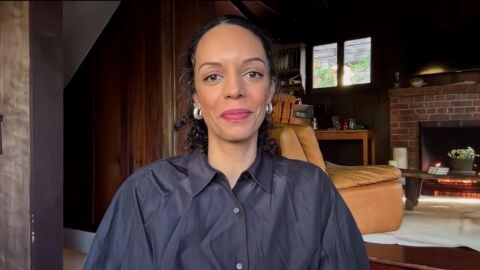
My next guest says that the American-Israeli bombing campaign won’t lead to liberal democracy anyway, but to rather much worse. Reza Aslan is an
Iranian-American religious scholar whose family left Iran in 1979, and he’s author of An American Martyr in Persia. He joined me from Los Angeles to
discuss what’s ahead. Reza Aslan, welcome to the program.
REZA ASLAN, AUTHOR, “AN AMERICAN MARTYR IN PERSIA” AND IRANIAN-AMERICAN SCHOLAR: Thank you for having me.
AMANPOUR: So, you know what former envoy Elliott Abrams said. You know he’s a well-known conservative. He’s always been hardline on these kinds of
issues. But he seemed, as you saw, to really believe that this was going to work out as Trump wanted it. What do you think of that?
ASLAN: Well, I guess we should ask ourselves how much longer we are going to listen to Elliott Abrams when he has been wrong about the Middle East
for decades. I mean, this is the same exact thing, of course, that he said about Iraq. I think the wish-fulfillment fantasy that somehow American
bombs are going to result in homegrown democracy in the region has to be put to bed at a certain point, Christiane.
I think what we’re seeing in Iran, which is a consolidation of hardline power, which is further repression, further silencing of any voices that
are arguing for moderation or reform, is exactly what everyone expected to see once bombs from Israel and the United States start raining down
indiscriminately on Tehran. And I can’t imagine why we are still peddling this fantasy that this is the road to democracy promotion.
AMANPOUR: So, I’m going to ask you about what is the road to democracy promotion, but first I want to ask you, the latest findings of U.S.
intelligence, according to sources, is that actually after two weeks of this, and it’s very heavy bombing all over the country, is not causing
regime collapse.
ASLAN: This is an argument that has been made in the walls of think tanks in D.C. and New York for decades and decades. We’ve been hearing it for a
very, very long time.
But of course, any sober-minded analyst who looks at Iran especially, which has a profoundly stable and strong sense of nationalism and national
cohesion, has been saying over and over again that the way to consolidate hardline power, the way to put an end to the hope of any kind of reform is
precisely by ramping up the national security threat that Iranians use, that the Iranian regime, I should say, uses to maintain its grip on the
country and the people in the first place.
Look, it doesn’t take a foreign policy genius to understand that when death starts raining down from the skies, what tends to happen is that people
rally to their government, regardless of how much they hate their government. And listen, the neocons are correct. The Iranian people loathe
their government. They want nothing more than to drag these mullahs out onto the streets and probably beat them to death. But the notion that the
way to achieve regime change is by only validating the rhetoric of the government, that they are under threat by the Zionists and the colonialists
is, as I’ve said a bunch of times now, a fantasy.
AMANPOUR: So, let me just press a little bit on the idea of what the people want. Obviously, you saw, we all saw in the first hours, especially
after the death of Khamenei, there was quite a lot of celebrations inside Tehran, at least. We saw the videos, we heard it.
I asked the Iranian analyst, Mostafa Daneshgar, who’s a professor in the United States and who has a slightly different view because he, like many
in the diaspora feel that no matter how hard the bombing is, no matter how much the difficulty is, really people want it in order for once and for all
this regime to fall. Let me just play you what he told me this week.
(BEGIN VIDEO CLIP)
MOSTAFA DANESHGAR, IRANIAN POLITICAL ANALYST: They are in anger from their country, from the massacre that happened in January 8th and 9th. So, they
will, at some moment, they can take over the government. They can — this can lead to the collapse in the political system, political structure and
lead to people to feel that they are secured and they can take the protest to the street one more time. One more time. So, there is — I think there
is a big chance for that.
(END VIDEO CLIP)
AMANPOUR: So, obviously that’s a hope, obviously. And we see Trump backing off that idea, but not Israel. We think that Netanyahu in statements from
the IDF recently, we’re going to do something big. We’re going to give you the opportunity to take your destiny into your own hands. Is there
somewhere you think that this could still happen?
ASLAN: Well, two things. First of all, there is no world in which Netanyahu or the Israeli government believe that a bombing campaign in Iran
was going to lead to regime change. There is no interest necessarily in regime change coming out of the Israeli government. The interest, which has
been there for decades, Netanyahu especially has been trying for decades to manipulate American presidents into bombing Iran along with them and not to
change the government, but to essentially destroy the national security threat that Israel feels.
And whether they achieve that by just simply bombing the country into oblivion and whether it’s still the same clerical regime, I don’t think
that that’s important for Israel. This idea that the bombing campaign will lead to sort of a mass protest that will bring down the government is an
idea that is peddled in the Iranian diaspora, but not in Iran itself.
And listen, I am part of the Iranian diaspora. I understand the anger and frustration and desperation that it takes to truly believe that the death
and destruction of our family that we left behind in Iran is worth it because it might bring down this government. I mean, again, please
understand how desperate one must be to believe that idea. And I get it, I sympathize with it, but it’s an emotional argument, not a rational
argument. And in fact, it’s an argument that we’ve already seen be proven incorrect by what’s happening in Iran with the consolidation of the
authoritarian regime being even further entrenched in the region.
I want this regime to be gone like everyone else does. But again, the notion that what that will require is an aerial campaign by the regime’s
greatest enemy, by the enemy that it uses as its entire reason for existence is I think belied by the facts that we are seeing on the ground
themselves.
AMANPOUR: So, then let me ask you, because you said if this is not the way to democracy in Iran, there has to be another way. What is the other way?
Because clearly there is opposition. You just mentioned the opposition in the diaspora. The best known is Reza Pahlavi, who’s talked and told me
about wanting to be a sort of a transitional figure, not a monarch, leave it up to the people, have a referendum, et cetera. And potentially even
working with someone from within. We’ve heard that sort of floated around, at least for the beginning.
What hope do the Iranians have? Let’s say this war ends or the bombing campaign ends and the regime is still in place. This is the regime that
killed so many people and really crossed, if there was a line that it was going to cross, it really crossed the line of barbaric behavior to its own
people in January. How do people who want change actually try to affect change?
ASLAN: This is a question that we’ve been asking for a very long time. And there are models of this throughout the 20th century. Look, an
authoritarian regime, a tyrant, stays in power by isolating his people from the rest of the world. The United States has been doing the tyrant’s work
for him in Iran for the last half century. Our policy of containment, isolation and sanction as a hope for regime change has done the exact
opposite. That’s just a fact.
We have entrenched this regime further into power. That’s not illogical. If the people themselves have no access to the rest of the world, no access to
the free market economy, then they are handicapped from being able to rise up and take down a government that they rely upon for their very
sustenance, for their very bread.
No wonder that these protests that we see, these legitimate protests that we see almost every year, which had been brutally repressed by these
dictatorial police state in Iran, have never actually managed to bring down this regime because the only way to do so is to get the entirety of the
people and particularly the pious poor and the sort of mid-level, low-level clerics and seminary students to come out onto the streets as well.
Look, we actually had a plan in place. The P5+1 negotiations that President Obama put together, which miraculously brought in Russia and China, two
countries that have radically opposing interests in Iran than the United States, was by every measure working. First of all, it absolutely removed
Iran’s ability to develop nuclear weapons, to enrich uranium to the point in which it could develop nuclear weapons.
That relationship that we put together under President Obama had an opportunity to possibly give, particularly the struggling middle class in
Iran, the chance to rise up and make their voices heard. We started seeing a wave of reform in Iran immediately following that negotiation, but of
course the negotiation was torn up.
And what we have seen since that moment, which has resulted in the destruction and death that we are seeing now, was a direct result of
reversing course on a policy that had the possibility, not guarantee, but the possibility of actually creating the change that we are desperate to
see in Iran.
AMANPOUR: Indeed, and I’m just going to say it because so many in the diaspora think that any engagement, any at all, is just colluding with the
regime and there should be no engagement whatsoever. But I understand that it is much more complicated.
ASLAN: I hear that all the time.
AMANPOUR: Yes, yes, as you just lined up. But let’s talk about religion now. Your latest article for the L.A. Times talks about Mojtaba Khamenei
and this and that. Where he is, we don’t know. The state TV has read a proclamation from him. But there’s — it’s kind of apocalyptic, as it’s
been described by actually a former senior Saudi to me, that you’ve got the fundamentalist Shi’ism in Iran against the orthodox of Israel, that the
religion. And also, in the United States, as he described to me, Christian Zionism.
And you just saw maybe Secretary Pete Hegseth recently quoted Psalm 144, blessed be the Lord, my rock who trains my hands for war and my fingers for
battle. He’s literally reading that at the end of a press briefing. This is going on from the American side right now. Tell me from the Iranian side,
how deep religion is playing in this right now? Not just nationalism.
ASLAN: Well, I don’t think religion is deciding the course of the war or Iran’s foreign policy. But like in the United States or in Israel, religion
is a powerful motivator.
It is the currency that holds them — it’s the language, I should say, that holds the most currency for the masses. It is the way in which, especially
in moments of death and destruction and desperation, in moments of threat, when your very family’s lives are at stake, you are going to revert not
just to religion, but to the most extreme versions of religion as a way of giving yourself hope, as a way of giving yourself meaning, as a way of
seeing a light at the end of the tunnel.
This kind of rhetoric, which has been going back and forth between these countries, these three countries for many, many decades now, is nothing but
destructive. I call it cosmic war rhetoric. The problem with this kind of cosmic war ideology is that there is no room for negotiation. There’s no
room for compromise when what is at stake is the battle between good and evil, the battle for the end times.
The more that rhetoric comes out, not just of our government, but out of our military in the United States, the more it only confirms what the
Iranian government is saying to its own people, which is that this is not about missiles or nuclear programs. This is about a battle between Judaism
and Christianity versus Islam, that this is an existential fight that can only be fought to the death. And indeed, that is precisely the kind of
rhetoric that is coming out of Mojtaba Khamenei.
And if I could just say one quick thing about Mojtaba, if we are really wanting to be hopeful about the idea of the end or collapse of this regime,
it’s not going to come from bombs raining down from the sky, but it could possibly come from this succession.
Christiane, you know as well as I do that the entire argument of the 1979 revolution was to put an end to hereditary rule. The Islamic Republic
itself has established its very identity as being the moral foundation of the state, right? That the leader of the state has to be the most qualified
senior cleric, the one who sort of reflects the religious values and morality of the state.
The notion that Iran has now just reverted back to hereditary rule, that a mid-level cleric who has absolutely no qualifications for this made-up
office of supreme leader, that he can have that office simply because he is the son of the previous one, again, puts a lie to the very foundation of
the Islamic Republic, which has already been cracking and delegitimized in the eyes of most Iranians anyway.
But by simply replacing the crown with a turban, there is no more room, particularly for the pious poor that I was referring to, and for those
seminary students whose support we need if this regime is truly going to fall, there’s no more room for the argument that the Islamic Republic
represents some ideal state and not just the same authoritarian regime that Iranians collapsed in 1979. If you want hope for the end of this regime,
that’s the best hope that I can give you.
AMANPOUR: Well, Reza Aslan, thank you very much indeed for that.
ASLAN: Anytime, Christiane, thank you.
AMANPOUR: Still to come, Trump’s immigration crackdown, how fear and distrust are being sowed across America.
Now, while the world is focused on the widening regional war in the Middle East, in America, Donald Trump’s immigration crackdown goes on,
from expanding ISIS’ ability to detain legal refugees to sowing fear in schools and communities.
Pulitzer Prize-winning journalist Caitlin Dickerson has been speaking to people across the country who no longer feel safe or welcome. And after
years of reporting on policies like family separation, she says she recognizes all too well that look of fear on Liam Ramos’ face, the 5-year-
old boy who was detained by ICE agents back in January. She joins Michel Martin to explain how all of this reshapes the lives of immigrant families
across the country.
(BEGIN VIDEOTAPE)
MICHEL MARTIN, CONTRIBUTOR: Thanks, Christiane. Caitlin Dickerson, thanks so much for talking with us once again.
CAITLIN DICKERSON, STAFF WRITER, THE ATLANTIC: Thanks for having me.
MARTIN: And the last time you spoke with us was just after you had won the Pulitzer Prize. It was for your reporting into the Trump administration’s
family separation policy. Your latest pieces look at a new phase of enforcement under the current administration. What exactly are you looking
at?
DICKERSON: So, there’s been a real transition from the first into the second Trump administration with a lot more focus on enforcement within the
United States. ICE has been arresting many people who’ve lived in the United States for years or decades who have deeply established lives.
And the most recent piece that I published is about one of those families, the Cruz family, who had lived in New York for 20 years. They had two
daughters. They were homeowners, very deeply established in their community. And they decided to leave, even though the mother in this family
is a U.S.-born American citizen, because they, I think, rightly intuited soon after Trump was elected that this new phase of enforcement was going
to focus on people just like the father in this family, and they wanted to leave rather than wait for ICE to come and pick him up.
MARTIN: The family separation policy, one of the things you reported is that the idea was that this would be a deterrent strategy, that people
would see how traumatic this was, that it was intended to be traumatic, and the idea was, well, if people see that, they’ll stop coming. Did that work?
DICKERSON: It didn’t work at the time, and you have to think about the context that we were in in that moment. I mean, there were so many people
who were leaving Central America because of dire circumstances there and felt like they had no other option. Many families who were coming to the
United States felt like they were fleeing certain death, and anything looks more appealing than that.
But that deterrence approach, this idea of making border crossing or living in the United States without status as uncomfortable, you know, as risky
and as dangerous and disturbing, all the adjectives we can think of to people and to their families, that is very much something that we’re still
seeing today. It’s part of the deportation campaign that is ongoing right now, and the Trump administration has been open about that.
They want to send a very scary message to discourage people from immigrating to the United States or from staying here once they’ve arrived.
MARTIN: And again, this is going back to sort of the earlier reporting. The Biden administration had a different idea.
DICKERSON: The Biden administration’s idea, looking at all of these new border crossers, especially Venezuelans, was to try to normalize the
process in some way to allow them to come in legally. So, they created the CBP One app, which allowed people to go online and apply for an appointment
for an interview at a port of entry.
If they passed that interview, they were then paroled into the United States and allowed to continue with the asylum-seeking process legally. And
that was their way of trying to create some level of order. But of course, as soon as Trump took office the second time, he canceled that program, and
people who’d entered the country legally lost their status, became subject to ICE’s deportation campaign.
MARTIN: So, that’s why we now see people who had — they were not sort of normalized into the process, like they hadn’t achieved, say, a green card,
they hadn’t achieved American citizenship, but who had in fact applied under the system. Now, that’s why we see people who are, say, at
immigration check-ins being arrested. Those are some of those folks.
DICKERSON: That’s exactly right. And to be clear, this is not because the immigrants themselves are slow-walking their process toward legalization.
It’s very typical when you seek asylum in the United States, because the courts are so backlogged, you won’t have a final court hearing until three,
five, seven years out.
So, people were going to these check-ins as part of the process, hoping to ultimately win legal status in court. One of those families who is most
famous, who your viewers probably know well, the story of Liam Ramos, the five-year-old who was from Ecuador, his family was in exactly this type of
process when they were detained.
MARTIN: And people know him because of his photo in the bunny hat, the little boy in the bunny hat, which went viral. Remind people of what
happened — what exactly happened in that case. How did this little boy wind up being detained?
DICKERSON: So, based on what we know from DHS’s official account as well as eyewitness accounts, and there have been lots of discrepancies on these
individual stories that we as journalists have dug into, so I want to emphasize this is the best information that we have, is that ICE went to
Liam’s house to arrest his father. His father was not charged or convicted of any criminal issue, so it’s not clear why he was personally being
targeted.
But what it seems happened is that Liam was somehow outside of the house, the father was inside the house, and ICE tried to coax a parent to come
outside and pick up Liam, but also at the same time to try to arrest that parent. And ultimately, that’s what happened. Liam’s mother stayed inside
with her other children. Liam’s father went outside to get him from the ICE officials. Both of them were detained.
They were ultimately transferred to the Dilley Immigration Processing Center, which is the family detention facility in Texas. It opened in 2014
and has really been mired in controversy from the very beginning. The United States is one of the only wealthy countries in the world that even
attempts family detention as a deterrent measure because child welfare experts consistently find that there’s really no way to humanely do it.
They find that family detention is really damaging to children’s mental and physical health, and you could see that in just the course of a week and a
half. There was a photograph of Liam in his bunny hat outside his house. He looks sad and scared, but he looks healthy and bright-eyed. And then a
photo of him in the Dilley Immigration Processing Center, which is he had this look that I’ve seen so many times in children, including children at
Dilley.
He wasn’t eating. He had a fever. He was vomiting. Kids tend to get very sick there. They refuse to eat the food because they find it to be
disgusting. You know, the lights are on all night, 24/7, so kids can’t sleep. And it was really no surprise to me how quickly he deteriorated
based on where he was being held.
MARTIN: You’ve been there. Can you confirm the conditions that have been described?
DICKERSON: I’ve toured it. I’ve looked at it closely. And it’s part of this national experiment, frankly, that’s been going on in family detention
since the early 2000s. And Dilley is a very expensive facility. For a time, it was ICE’s most expensive detention facility because so many lawsuits
found that children in ICE custody were becoming malnourished. They were losing weight. They were becoming gravely ill. That almost in response to
that, the Obama administration moved to open Dilley in hopes that it would be more accommodating and more safe for children.
So, Dilley is this interesting place because when you take a tour like I have, you see these amenities that the government has introduced. You know,
a hair salon where kids can go and get their hair cut. They have classrooms with smart boards. Real efforts or real signs that ICE tried to create
something that didn’t feel and look like a jail. But the problem is that the more time that you spend there, you see how those two things are really
fundamentally incompatible.
So, though I saw these amenities, I saw that the lights were on, as I mentioned, 24-7. And you can see how exhausted the families look. And then
one of the biggest complaints that families have is that they say that the water is rancid. And so, people don’t want to drink water. Women don’t want
to use the water to create baby formula because they fear that it’s not safe.
I went into the cafeteria, and I can confirm that I personally wouldn’t be able to eat in a place that had that smell. I had a mother I interviewed at
Dilley who told me that her son would throw up every time they even approached the dining hall because the smell was so bad. And it’s very
common for kids to not eat.
MARTIN: So, I’ll just say that there were 911 calls from inside the facility captured children with fever, struggling to breathe. In response
this week, the Department of Homeland Security told NBC News that parents and children at Dilley are, quote, “housed in facilities that cater to
their safety, security, and medical needs,” unquote, and that some are getting the best health care they’ve received in their entire lives. That’s
from the Department of Homeland Security.
Separately, in your recent reporting on Liam Ramos, you included a statement from Todd Bryan, who is a spokesperson for CoreCivic. That’s the
company that operates Dilley. He said that the company doesn’t, in his reporting on Liam Ramos, you included a statement from Todd Brian, who is a
spokesperson for CoreCivic, that’s the company that operates Dilley.
He said that the company doesn’t, quote, “cut corners on care, staff, or training,” unquote, and that, quote, “emergency medical services are
activated immediately when a child’s clinical presentation exceeds what can be safely managed on-site.”
And in recent court filings, ICE describes Dilley as a, quote, “model of regulatory compliance and humane care.” And what you’re saying is that that
just doesn’t square. So, what happened to Liam Ramos? I mean, can you just sort of, what’s the status now of that family?
DICKERSON: Liam Ramos was lucky in the sense that his case garnered so much attention. Lawyers were able to file a habeas corpus petition for his
detention at Dilley, and he was released within two weeks He’s back at home with his family now, recovering, and they’re continuing with the legal
asylum process. But it’s important to point out, you know, this year, the population at Dilley has hovered between 900 and 1,400. That’s a lot of
people. This is a facility that can hold up to 2,400 people, and I think the Trump administration has been very clear that they hope to detain as
many as possible.
And so, there are hundreds or thousands of kids like Liam who are still detained now or going to be detained at Dilley and won’t be released. These
habeas petitions, they have to be filed one at a time. They’re a complicated legal process. You have to have a lawyer to represent you who’s
willing to do it. Even though I’ve spoken to lawyers who’ve gotten clients, including Liam, released from Dilley, and they talk about how these habeas
petitions, the legal logic behind them applies to many kids in the facility, but they can’t file cases for every single one. So, Liam is back
at home, but many other children are not.
MARTIN: And when you’ve talked to people in the administration, as I know you do, about why they are employing these tactics, what does the
department say about the way they’re conducting these deportations, these raids, going into people’s homes, et cetera?
DICKERSON: Two things, primarily, I would say. The first is that they’re under unprecedented pressure. You know, Stephen Miller wants 3,000 arrests
per day, a number that ICE has never come close to. And it’s been made very clear to people who work in immigration enforcement that if they can’t show
that they are doing as much as they possibly can to make as many arrests and deportations happen on a daily basis, then their job is at risk.
And so, people are facing pressure to make arrests regardless of who it is that they’re going after, regardless of what sorts of story, the background
story that they might have, concerns within the community, ties to the community, pushback that’s going to come from local elected officials or
local leaders. That — those things are all going by the wayside because there’s just so much pressure coming straight from the White House to make
as many arrests as possible.
The second thing that I’m hearing from people who work in the administration is that a lot of what we’re seeing relates to the fact that
we’ve just seen so much turnover within ICE and at DHS that lots of veteran deportation officers I know, people who’ve worked at higher ranks within
ICE and DHS have left the agency.
MARTIN: So, as we are speaking, the person who had headed the Department of Homeland Security since the beginning of this Trump administration, the
second Trump administration, Kristi Noem, former South Dakota governor, was fired by the president, but now the president has nominated — has said he
was going to nominate the current senator from Oklahoma, Markwayne Mullin, to this post, who has no law enforcement experience, I do want to point
out. Does it suggest anything to you about the direction of the administration’s enforcement strategies?
DICKERSON: I don’t think that we’re going to see a significant change or a scaling back of the deportation campaign in any way. I think that the Trump
administration realized after Minnesota, after the deaths in particular of Renee Good and Alex Pretti, who were U.S. citizen protesters, the public
was very upset about their deaths, as well as, frankly, the deaths of immigrants who were being pursued by ICE and ended up fatally shot or
injured as well, that the public was not OK with the kind of aggressive street enforcement and escalation that they were seeing on the news.
However, while, as I mentioned, those tactics were new and novel, ICE arrests and deportations are not, and historically, they’ve really tried to
go about their work in a way that’s as discreet as possible. And so, I think we’ll see ICE under Senator Mullein, if he’s confirmed, go back to
being less visible, but no less effective. The administration and Senator Mullin have been very clear they want to continue Trump’s campaign of
enforcement. They want to get as many deportations done as possible.
I think that Kristi Noem’s departure as Homeland Security Secretary had to do both with personal differences with the president, as well as the need
or the thinking that perhaps a turnover in leadership might calm the public down, frankly, the backlash that ICE was facing down.
But the administration has been very clear. They are undeterred. They plan to continue this enforcement campaign as aggressively as possible.
MARTIN: Caitlin Dickerson, thanks so much for sharing this reporting with us.
DICKERSON: Thank you so much for having me, Michel.
(END VIDEOTAPE)
AMANPOUR: That is it for now. If you ever miss our show, you can find the latest episode shortly after it airs on our podcast. And remember, you can
always catch us online, on our website, and all-over social media. Thank you for watching, and goodbye from London.