

Read Transcript EXPAND
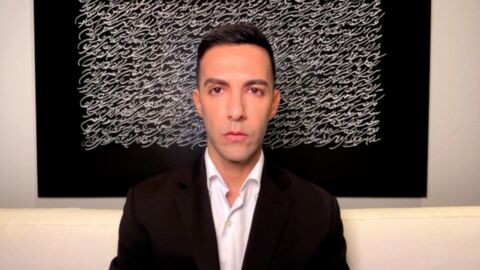
CHRISTIANE AMANPOUR: Now, the MAGA movement is very fractured over the Iran war, but there are other issues sowing divisions within. Rampant misogyny is one of them. And young women who were once drawn to MAGA are defecting, disillusioned by the explicit cruel and fickle sexism they see. In his recent New York Magazine article, journalist Sam Adler-Bell writes about “The Women Leaving the New Right,” and he’s speaking to Michel Martin about it.
MICHEL MARTIN: Thanks Christiane. Sam Adler-Bell. Thanks so much for talking with us.
SAM ADLER-BELL: Hi. I’m glad to be here.
MARTIN: Your story’s crazy. The short version is conservative women who have buyers’ remorse.
ADLER-BELL: Yeah. That’s a good way to put it.
MARTIN: How did you get onto this?
ADLER-BELL: Well, I mean, I, I have a sort of group of sources on the right that I talk to relatively frequently for my work — for my podcast, and also for my reporting. And so I’m kind of always in touch with them, trying to like, get a sense of where things are at, what’s going on internally. I mean, there’s an enormous amount of internal conflict on the right that we wouldn’t necessarily know about if there wasn’t people doing this kind of reporting.
And in this case, the way it came to me was really last fall after Nick Fuentes, this kind of pip squeak, antisemitic, incel character who’s very popular on the online right, he was interviewed by Tucker Carlson, as many people might remember, and a lot of the fallout from that. There, there was sort of internal to the right, a lot of dissension over it. But a lot of the fallout was about, you know, his antisemitism, a little bit about his racism. But when I was talking to women on the right, people that I know, they were frustrated that nobody was talking about the main thing — the kind of least ironic and most kind of obvious and painful aspect of Fuentes is self presentation, which is that he hates women. And it’s just so apparent. And they were frustrated that while the right was having this internal debate about where to draw the lines about antisemitism and about racism, they weren’t talking about the sexism, which from their perspective has become kind of the lifeblood of the movement that they are a part of.
MARTIN: So your piece opens with somebody called Anna, and she doesn’t wanna be identified by her real name for reasons you’re gonna tell us, but tell us Anna’s story.
ADLER-BELL: Well, Anna’s really a representative character for a certain kind of young woman who was attracted to the right during Trump’s first term, who was a very talented writer, became a popular pundit, writing for major outlets, working in conservative institutions and often writing about women, as a woman. Including this kind of narrative that the right was adopting at the time that women are really unwell, you know, that feminism has diverted their natural motherly instincts into this quest for worldly success. And now that they have it, women are using this newfound authority to punish and fetter men, which imperils civilization, the process. This is the kind of thing that Anna was writing.
But her experience is one that is representative of a lot of people I talk to in the piece, which is that over time she started to see that basically she was, you know, basically selling people the rope to hang herself. You know, she started to realize that she was participating in a movement that was using her and that it wasn’t worth it, really, to, you know, get this kind of career and status on the right. As the right sort of basically made their whole project about punishing women, pushing them out of public life, out of the workplace. And, she did start to see that this was wrong and that she didn’t wanna be a part of it. And that’s, you know, where, where she came to me at that point. This moment of kind of one foot in, one foot out, not ready to come out and say what she wanted to say under her own name.
And I think to be clear, she’s not making money on the right anymore. She has left you know, those positions that she once had. Her fear, I mean, her motivation for keeping her name out of the piece. And I, I do believe this is out of fear. People who support Nick Fuentes who is sort of one of the antagonists in this piece, they say they will “rape,” “die” and “kill” for Nick Fuentes. You know, they say this smirkingly, ironically, they might say. But nonetheless and is somebody who lives around a lot of conservatives, she’s somebody who was very connected, personal — on a personal and professional level with this movement. And she fears retaliation.
MARTIN: And at what point would you say the break came for her? Was it having kids herself where she realized, A) I don’t want that life for my kids. Or was it realizing that being a mother, being a trad wife is actually harder than it looks?
ADLER-BELL: Well, I mean, I, there’s, we’re combining two stories a little bit here because one of the people I spoke to, Alex Kaschuta, who is named in the piece, she describes very vividly that it was partially having kids where she realized that this sort of trad life, you know, trend on the right about, all women should just want to be mothers and stay at home and just focus on, you know, tending their garden and growing and making food with their kids. That that was ridiculous. That was totally absurd, first of all, because she wanted to continue to have, you know, a career. But also because the idea that she would have to do everything for the kids and her husband would do none of it was totally untenable. It just would not work. She says it, it kicks the trad out of you really fast. And I think that’s, that was a big ex big part of it for her.
I think she also talks about, Alex, talks about, how when she was on the right and before she had kids you know, she accepted the idea that, you know, female-coded things were low status. And that was something that she experienced amongst the men on the right. But once she became a mother and sort of experienced her womanhood in that way, she ceased to feel that way and thought that was an absurd thing to think.
I mean, I think this is another important part of this, which is that while people like Fuentes and Andrew Tate and Tristan Tate, and these sort of red-pill, awful manosphere, manosphere, people are saying, You know, we’re gonna be awful to women. We’re advertising it that we’re gonna, that, you know, our authority is gonna be fickle and vicious. On the other hand, you have the traditionalists who are saying women need to be re, you know, resubject to male authority, totally dependent upon them, all the rudiments of the ability to have an independent life, we’re gonna take those things away from women.
And so what you’re, what you’re, what you’ve got here is what I described in the piece is a pincer movement. On the one hand, you have a traditionalist saying you’re, you can’t have an independent life. You are gonna be forced into a marriage and forced into a home. And at the same time on the sort of red-pill right you have people saying, and the authority of men is gonna be awful.
MARTIN: What’s what’s fascinating to me is that I’m just wondering why they didn’t figure this out before.
ADLER-BELL: I would say that the prominence of these red pill, you know, as you say, the brute-force guys in the MAGA movement and the sort of acceptability of their views has just grown and grown and grown. They undermine the plausibility of the old conservative tradi — patriarchal Christian deal, you know? Because that involved a certain amount of reciprocity. Now these people are saying, No, men don’t have to do anything. And in fact, they can treat women awful, awfully and nonetheless, women should subject, you know, submit to their authority. And I think that became more and more clear and more and more sort of just explicit amongst various spheres of the MAGA world. And that contributed to, you know, these women moving away from men.
MARTIN: How widespread do you think, does your reporting indicate that those attitudes are, how prevalent are those attitudes among men who consider themselves, who are, part of the MAGA movement?
ADLER-BELL: Yeah, I mean, it’s hard to judge. I mean, one thing to look at is just how incredibly popular Nick Fuentes is.
MARTIN: How popular is he?
ADLER-BELL: I mean, he was banned from the X platform. And when he was welcomed back by Elon Musk, he, his audience grew from a couple hundred thousand to well over a million now. He gets more than a million views on many of his streams, his live streams that he posts on Rumble. And I’ve heard from sources within the White House, within the Trump administration, that there is no doubt that the younger people who work there, the junior staffer class, that many of them listen to Nick Fuentes. So there is, this is not quarantined to just, you know, I don’t know, our idea of the incel loser in the basement. These are people who have actual power over policymaking in the current government who are listening to this stuff, absorbing it and talking about it.
Another source who works on the Hill a conservative, you know, a devoted MAGA operative. He told me that all men are really concerned about this “feminization” of public life. And basically what that means is that there’s too many women involved in positions of power. I mean, one of the things I write in the piece, which I think does sort of, you know, encapsulate this, is that if you, if you listen and you pay close attention to all of the problems that the right is, in particular, the MAGA right, is diagnosing, at the center of every problem is a woman with too much power.
MARTIN: And how widespread do you think, based on your reporting, is this disillusionment among women who used to consider themselves part of this movement?
ADLER-BELL: Yeah, that’s also hard to judge. I mean, the women that I spoke to say that every single woman involved in conservative politics knows about this problem, and they are talking about it with each other. Whether they have decided, It’s fine, it’s not a big deal, or they’ve decided It is a problem, but I can’t leave. This is my career. This is my livelihood. And, and I, I have sort of political goals that are more important than my hurt feelings or whatever. Whatever their response to it is, the fact, the sources that I’ve talked to say that all women involved in MAGA politics are aware of this problem.
And, you know, you see it sort of come out in little bits and pieces every once in a while. You know, you had the New York Times reporting on women in Congress who are disappointed by Mike Johnson’s leadership saying that he’s too patriarchal, he’s not listening to women’s voices. You saw it with the sort of revolt over the Epstein files, which was led by conservative women. In little glimpses, you can see that this problem is there. But for the most part amongst this sort of pundit, influencer operative class of women that were most of my sources for this piece, they’re talking about it in private. They’re talking about it in group chats. They’re comparing notes about, you know, bad men they’ve encountered in the movement. But they’re not, for the most part, coming out publicly and, you know, calling for a reckoning.
MARTIN: This is white people, I assume.
ADLER-BELL: These are white women.
MARTIN: It’s a white people thing. These are all white women, right?
ADLER-BELL: Yeah.
MARTIN: Just because in the African American context, they’re just, it’s not sustainable. I mean, African American women have just a long history of being heads of heads of households, co-equal partners.
ADLER-BELL: Yes.
MARTIN: You know, especially in the modern era.
ADLER-BEL: Yeah. I would just say, I mean, something that should be noted about this whole phenomenon. And that it is mostly white women who are, who get these jobs and who are working in conservative politics. And, you know, we can applaud them for, you know, coming around and seeing that, you know, sexism is a huge problem, and that this thing that’s affecting them is making them upset. And maybe, you know, considering leaving conservative politics or the MAGA movement. But it’s fair to say that they’ve tolerated an enormous amount of racism, which, you know, doesn’t affect them personally, and therefore isn’t the thing that has pushed them, you know, out of the movement. I mean, this movement is, you know, unbelievably and explicitly racist, and that wasn’t the thing that caused these women to change their mind
MARTIN: But I’m struck by what something else you said at the beginning of our conversation, which is that some of the things that Nick Fuentes says, it’s basically glorifying rape. You’re talking about in some cases, not just Nick Fuentes but other people, the actual physical subjugation of women by force, if necessary. Women are half the population. It’s one thing to demonize a minority group. You may not know any members of that group. But all these men have mothers. They all have sisters. Some of them have daughters. And it’s just, it is interesting. And I’m curious what you make of that.
ADLER-BELL: Yes, these men have mothers they have sisters. They may have wives, they may have had girlfriends. Part of the problem, I think, and this gets, this becomes a little psychoanalytic, but when they encounter a woman with power, they are reminded of some moment where they were humiliated by a woman with more power over them. Whether that is a boss, you know, in their workplace who’s a woman or an authority figure in a classroom, you know, a teacher. And the experience for a certain kind of far right man or certain kind of, you know, patriarchal man, of being subject to female authority is totally intolerable. And they, it marks them. And then when they see someone, a woman with power in, you know, a politician or woman with power in a corporation or on television, even, they are reminded of this sort of primordial experience of being humiliated by a woman with power and they hate them. I mean, I think, like, it’s not crazy to say that part of where the hatred of women comes from is these sort of deep experiences that men have —
MARTIN: But from your recounting, you’re talking about hundreds of thousands of people. I mean, are all these people had bad experiences in kindergarten that were all on paper? I mean, is that what happened here?
ADLER-BELL: I, it could be just, just as pathetic as that. I mean, if you watch the way Pete Hegseth behaves on television he seems to have, you know, real anger towards women and people who have had any kind of authority over him. And that seems to motivate a lot of the way that he behaves.
Trump, I mean, like Trump — we haven’t even really talked about Trump, which is wild, you know, in these kinds of conversations. But, you know, we’ve, we, it’s, you don’t forget, but it’s possible to forget that, you know, his coming to power was the Hollywood, the Access Hollywood tape.
MARTIN: Sure.
ADLER-BELL: And defeating Hillary Clinton, who is like the emblematic female professional in the minds of the conservative movement, certainly, but also I think the whole country.
MARTIN: And then Kamala Harris.
ADLER-BELL: And Kamala Harris as well. And I think that for a lot of men in the MAGA movement, the humiliation, you know, Trump’s success in 2016 and the satisfactions of it are, are not, not hangable from the humiliation of Hillary Clinton. And I think that’s probably true of Kamala Harris as well.
MARTIN: But you know, what’s interesting about Trump though, is how many women in his orbit have had significant power? He did appoint the first female chief of staff in White House history. That is a fact. His press secretary, you know, who he seems to think highly of, you know, is a woman. The head of one of these largest departments. Kristi Noem, he recently, you know, dismissed her but the fact is that is one of the largest agencies. It’s one of the agencies that he, that has been sort of marked for prominence in this administration. She did have that role. Obviously you thought about it and some of the people you interviewed thought about it. What do they say?
ADLER-BELL: Well, I mean, I think that’s a good point. I mean, there is a difference between Trump and the movement that’s grown around him. And I think, you know, whatever we wanna say about Trump, he’s won two national elections and he’s done so because he does have a feel for how to build, you know, a plausible majority for his politics.
A lot of these people who are — these right-wing men in the manosphere, the Nick Fuentes of the world — their project is totally different. I mean, they’re just trying to maintain this audience and keep them rabid and angry and clicking on their videos and watching them. And there is a tension between this part of the movement that is, feels apparently no compunction about alienating half the population and the project, the political project of, of Trump and MAGA, which, you know, needs to try to win majorities, win congressional majorities and, you know, win in 2028, whoever the candidate is.
And there is, you know, there is a fear about that, I think. You’re starting to see it’s partly, partially what this piece is about, but in, in other sectors too, there’s this fear of what happens when Trump leaves the stage. If he’s not there, do we think JD Vance is gonna be able to hold that coalition together? I mean, that’s the fear. I think that is represented by all of this contestation over, whether it’s sexism in my piece or last year, the conversations over antisemitism. This is the fear. And, you know, conservative operatives, people who are working in the movement don’t want to talk about it because Trump doesn’t want to hear or be reminded of the fact that he’s not gonna be in charge forever. But that’s why this is happening.
MARTIN: Sam Adler-Bell, thanks so much for talking with us.
ADLER-BELL: Thank you. This was really nice.
About This Episode EXPAND
Former U.S. Defense Secretary Chuck Hagel reacts to the latest out of the U.S. and Israel’s war with Iran. Nuclear expert Ali Vaez discusses the disruption of the global energy supply. New York Magazine contributor Sam Adler-Bell reveals what’s pushing young women to leave MAGA behind.
WATCH FULL EPISODE