
Read Full Transcript EXPAND
CHRISTIANE AMANPOUR, CHIEF INTERNATIONAL ANCHOR: Hello, everyone, and welcome to “Amanpour and Company.” Here’s what’s coming up.
I ask South Africa’s foreign minister Ronald Lamola, what are these mystery flights carrying hundreds of Palestinians from Gaza into the country? And
why is the U.S. boycotting the G20 summit it’s hosting?
RONALD LAMOLA, SOUTH AFRICAN FOREIGN MINISTER: The doors are still open because they’re not expelled. They decided on their own.
(END VIDEO CLIP)
AMANPOUR: Plus, the Catholic Church in America fights back under Pope Leo’s leadership against the dehumanizing mass roundups and immigration
raids on terrified communities. New Jersey Catholic priest Alexander Santora tells us what’s happening to his own parishioners.
And —
(BEGIN VIDEO CLIP)
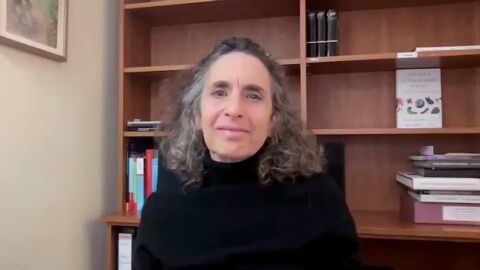
ELIZABETH KOLBERT, AUTHOR, “LIFE ON A LITTLE-KNOWN PLANET”: I think one of the problems is that climate change is a problem that is going to last
forever.
(END VIDEO CLIP)
AMANPOUR: — as the U.S. also boycotted this year’s COP30 climate summit in Brazil, Pulitzer Prize-winning author Elizabeth Kolbert speaks to Hari
Sreenivasan about her new book, “Life on a Little-Known Planet.”
Welcome to the program, everyone. I’m Christiane Amanpour in New York.
We begin though in South Africa where the G20 is preparing to kick off this weekend. It’s supposed to be where the world’s major powers come together
to tackle the biggest global challenges, from economic stability to climate change. And it is the first G20 to be held on the African continent.
But this year’s summit in Johannesburg begins with something extraordinary, virtually no senior U.S. presence. President Trump, Vice President Vance,
Secretary of State Rubio are all skipping it. Trump making clear his views on South Africa.
(BEGIN VIDEO CLIP)
DONALD TRUMP, U.S. PRESIDENT: I’m not going to South Africa for the G20 because I think their policies on the extermination of people are
unacceptable. So, I’m not going. So, I won’t refer to anything having to do with South Africa. South Africa has behaved extremely badly.
(END VIDEO CLIP)
AMANPOUR: Now, the South African president, Cyril Ramaphosa, calls the U.S. absence their loss. Experts say disengaging simply allows other
countries, competitors, to fill the U.S. leadership vacuum. All of it unfolds as South Africa now is confronting another unexpected crisis,
mystery flights carrying Palestinians from Gaza into their country, which officials fear could signal an effort to remove Palestinians from their own
homeland.
South African Foreign Minister Ronald Lamola is joining me now from Johannesburg. Foreign Minister, welcome to the program.
RONALD LAMOLA, SOUTH AFRICAN FOREIGN MINISTER: Thank you very much, Christiane, and to all the viewers.
AMANPOUR: Thank you. Look, I’m going to get to the issue of the Gazans, but I also want to talk about what’s upcoming in your country, and that is
hosting this important G20 for the very first time on the African continent.
So, you know, I quoted your own president who says it’s their loss if they’re not coming. First, your reaction to what you might have heard
President Trump saying in the Oval Office that we just played, that all these policies, your discrimination against members of the South African
community, he means the whites, make it, you know, somewhere where he’s not going to go.
LAMOLA: Yes, thank you. It is indeed a great week for us. We are upbeat as South Africa. It feels like the 2010 FIFA World Cup, which was hosted for
the first time in the African soil in South Africa. Similarly, G20, for the first time in the African soil, it will be hosted in South Africa.
And we are very upbeat to shine a spotlight on a number of challenges that are facing the African continent, issues related to climate change,
financing for development. As you are aware, we only receive less than 5 percent of climate mitigation finance, whereas we are mostly
disproportionately affected by climate change. So, this platform offers us an opportunity to bring this to the attention of the world and the G20
countries to address these issues, issues of artificial intelligence and so forth.
I did hear President Trump with regards to what he said in the White House yesterday, which is not based on any truthful information with regards to
South Africa. South Africa has got a history of apartheid, a history of inequality, which was race-based. And there is a need to have policies that
are aimed to address these issues of the past, the past imbalances on the basis of race.
And these policies are informed by our constitution, and there is enough safeguards. There is no arbitrary processes. There is courts, there is
parliament, there is debates, including organizations of Afrikaners do have challenges in our country, but they believe that there is enough safeguards
in the country within its constitution to address all the issues that the country might be suffering. And including the crime challenge that we are
facing, it affects everyone, black, white, Indians, all races are affected by crime. So, there is no targeted persecution of any race.
So, from our perspective, the G20 will go on. The countries that are present will have to take a decision on a declaration or on a leader’s
summary. But the G20 must go on, must be able to make decisions, and it must focus on the priorities that South Africa has put on the table that
relates to the theme. And all the overarching priorities that are on the table.
AMANPOUR: Foreign Minister, I’m just going to quote your own police statistics. They do not show that white people are more vulnerable to
violent crime than others in South Africa, as you mentioned. Black South Africans continue to lag behind white South Africans by virtually every
economic measure.
So, I just want to get, you know, your take on the fact that the Trump administration has dramatically reduced the Biden administration’s figures
on refugees that it accepts. I believe it was 125,000 annually under Biden. Now, it is 7,500. White South Africans are getting priority. What does that
say to you about President Trump’s priorities for the United States and actually for Africa?
LAMOLA: Yes, you are correct. Out of 252 crime attacks related to murder in the farming communities, 150 involved farm dwellers who are largely
black. About 100 involved farm owners who are largely white. But when you look at all the crime statistics, you will then realize that crime affects
everyone, including in the farming area. So, there is no evidence that begs this targeted persecution. And as you have already said, indeed, our
economy is still largely on the basis of race with the white South African on the upper part of the pyramid.
But this is not in any way a basis of targeting any particular race for crime. So, crime does affect everyone. But also, in terms of our
constitution, we have to address the imbalances of the past. It’s an economic imperative. And this is a discussion that happens amongst all
South Africans. And we — as you have said with regards to the program of refugees, when you look at it, it’s race-based.
Firstly, you must be a white South African. And secondly, you must be an Afrikaner. So, it’s a race-based refugee program. It’s not in line with the
Geneva Convention that someone to qualify to be a refugee should be persecuted, should be running from a war, and all those. This is just a
race-based policy position. So, in our context, it does not fit the definition of a refugee in line with the Geneva Convention. So, it can only
be aimed for a particular agenda that we believe is being pursued by the American government. Because there’s no real basis at all to have a race-
based refugee policy.
So, it is in this regard that we do not see anything wrong with the G20 continuing in South Africa, focusing on the agenda of the G20, which the
president of the Republic of South Africa has set the agenda, has set the theme to drive issues of solidarity, equality, and sustainability, and to
look at issues of critical minerals for beneficiation at source, which the African continent is endowed with. About 80 percent of the current critical
minerals that the world needs are in the African continent.
So, it is an opportunity and a platform to speak about how you beneficiate such issues of artificial intelligence so that the continent is not only a
receiver, a consumer, but also on the research and the innovative side of artificial intelligence. But also, not just the continent, but also the
Global South is brought into the picture in terms of the global financial architecture, its reform, and the pact of the future that was adopted at
the U.N. General Assembly, and also the Financing for Development agenda that was adopted in Seville.
AMANPOUR: Right.
LAMOLA: So, all these are issues that we look forward to see in the declaration of the Leaders’ Summit, and it will definitely be successful.
AMANPOUR: OK. I want to ask you about this other big kind of mysterious issue that, you know, nobody can quite get to the bottom of, and I
understand your government is also trying to figure out what’s happening. So, we reported in the lead-up to you that in the last week or so some 150
Palestinians arrived in South Africa. They, you, appeared caught off guard saying that they had no departure stamps or accommodations listed, they do
have valid passports. Many of them had to wait on the plane on the tarmac in South Africa for hours.
Could you please tell me what you understand and what you understood then about these plane loads or this plane load of apparently Gazans transported
from Israel to your country? What is this all about?
LAMOLA: Yes, indeed. We are still investigating the matter at this stage, what appears to be a program of depopulation of Gaza, of people from Gaza
who are being flown across many countries across the globe, and South Africa being one of those that is targeted for this program. And it was
against the background that the people had nowhere to go and they didn’t know even themselves what was their final destination, where they were, and
from South Africa where they are supposed to go to and so forth, that the South African government on a humanitarian basis decided that we need to
allow them because we have got a visa-free regime with Palestine of 90 days.
But there was no agreement with the Palestinian Authority to keep or to bring Palestinians in South Africa in the manner that the flight came. So,
it was a humanitarian decision and therefore, it will be a period of 90 days. And within that 90 days the South African government is investigating
all the circumstances that led to them to come to South Africa and then the way forward with regards to all the people that were in the flight.
AMANPOUR: So, you said you didn’t know that it was coming, you’ve made these, you know, interim declarations about them being allowed to stay for
a certain period. Israel has said that a third country approved this transportation but didn’t say which country. Was it South Africa? I mean,
did you approve this? I think you said that you didn’t know about it.
LAMOLA: No, we didn’t approve any. We don’t have any agreement with Israel to depopulate or to remove people from Gaza to South Africa because that
will go against a resolution that we support of a two-state solution, a resolution of the United Nations that Palestinians and the Israelis must
live side by side in the Gaza Strip with the Palestinian authorities and also in Jerusalem, with East Jerusalem as its capital.
There is no way we can agree to such an arrangement because it will go against that resolution of the United Nations and we will also not accept
any further flights of this nature just because it is against that resolution of the United Nations that there must be a two-state solution as
I’ve already mentioned.
AMANPOUR: Foreign Minister, the spokesman for the Israeli prime minister, we tried to get some personal reaction from them but they have already put
out reaction before. The prime minister has made it clear that if Palestinians want to leave, they should be allowed to leave the Gaza Strip
and if they want to come back to the Gaza Strip, they should also be allowed to come back. So, he’s basically saying that this is not a forced
transfer or depopulation, but you’ve made clear your view of this.
But I want to ask you this, obviously Palestinians in Gaza are desperate. It’s still, despite a ceasefire, no serious ramping up of humanitarian aid.
The pictures are horrendous of people living in flooded water, their tents with the heavy rains, children, you know, all these civilians in less than
humane conditions. I just want to play one soundbite from one of these Palestinians who dropped into your territory from Gaza. This is what he
said.
(BEGIN VIDEO CLIP)
UNIDENTIFIED MALE (through translator): As everyone knows, Rafah Crossing has been closed. It’s not open until now. So, we left through Kerem Shalom
Crossing and then to Ramon Airport. And this was reported in the media. From there to Nairobi Airport in Kenya for transit and then we reached
South Africa. After a very difficult journey we left Gaza with nothing, no personal belongings, just the clothes we were wearing.
(END VIDEO CLIP)
AMANPOUR: I mean, it is tragic and you can imagine why they wanted to leave even though it was very murky, as you said. They didn’t know where
they were going. Apparently one of these guys said they spent $2,000 per ticket to get on this plane, which was organized by a very unknown
organization.
You’ve made yourself clear on this. I just want to ask you one last question about the G20. You know, President Trump certainly in his first
term referred in derogatory terms to African nations and they don’t seem to be engaging much in Africa right now. I don’t know where the business
people are, but certainly the Chinese are, certainly the United Arab Emirates. There’s such a huge resource of opportunity and you mentioned
critical minerals.
What happens to U.S. prospects if it’s not involved in this and it kind of lets Chinese and UAE fill this international vacuum?
LAMOLA: Christiane, I can confirm that there is a huge contingent of American business that is participating in the South Africa G20 and the
American people have participated in a number of working groups that involve American citizens that were able to participate and they are also –
– in terms of our tourism numbers, America is surging very high. They are coming. So, people-to-people relations is going very well, and South Africa
is forging ahead with its diversification strategy in Southeast Asia, China, as you have already mentioned, also anchored on our own AFCTA
African continent, which most of our goods are exported to and also looking into Latin America and America as a broader sector that we continue to look
into.
But it’s a reality that you cannot ignore the U.S. as the biggest economy in the world and the market that is very fundamental and important and
that’s why we keep our line of communication in relations to trade open.
AMANPOUR: Yes. And you did say the door is still open. They decided they wouldn’t come. It’s not like they were barred. So, let’s see how this turns
out and we’ll be watching and reporting on the G20 after the weekend. Foreign Minister Lamola, thank you very much indeed for joining us.
Now, as you heard the foreign minister say, the G20 is created to tackle big global crises, but it’s the nuclear issue between the United States and
Iran that is in sharp focus once again. Tehran’s foreign minister says no uranium enrichment is happening right now after Israel and the United
States attacked Iran’s nuclear facilities this summer. But the negotiating trail has gone stone cold and fears are rising that Israel could strike
again.
Fred Pleitgen has been talking exclusively to the former foreign minister and now adviser to the Supreme Leader and he’s joining us now from Tehran.
Fred, good to have you there from Tehran. It is a big issue. Nobody’s quite sure what’s going to happen next between Israel and Iran. What sense did
you get from them of what they’re expecting to happen, given that there’s no negotiating going on right now, I think?
FREDERIK PLEITGEN, SENIOR INTERNATIONAL CORRESPONDENT: Well, first of all, I think the situation right now is indeed, Christiane, very volatile
here in this part of the Middle East and there are some who fear that there could be another military standoff or confrontation between Israel and Iran
and then possibly also between the U.S. and Iran as well. So, that’s something that sort of looms over everything.
At the same time, we’ve actually been speaking to a lot of Iranian officials over the past couple of days and as you mentioned, also the
adviser to the Supreme Leader, Kamal Harazi, and he told me that the Iranians are willing to talk to the Trump administration but only willing
to do so on their terms. What they don’t want, they say, is any threats from the Trump administration. One of the things, of course, that’s a big
issue for them is they say the last time that they were speaking to the U.S. envoy, Steve Witkoff, and they were supposed to have another round of
negotiations, that’s when the Israelis attacked, that’s when that 12-day war happened and in the end, the Trump administration, President Trump, of
course, bombed those nuclear sites here in Iran.
So, the Iranians are now saying as far as their nuclear program is concerned, they will keep that nuclear program. They want to keep enriching
uranium, but at the same time, they also say the degree to which uranium would be enriched is something that can be talked about. I want to listen
to a little of what Mr. Harazi had to say to me.
(BEGIN VIDEO CLIP)
KAMAS HARAZI, SENIOR POLICY ADVISER TO IRAN’S SUPREME LEADER: It is only a nuclear issue that we are ready to engage with the United States and
others. We are not going to speak with others or negotiate with others on the other issues, including missile activities.
PLEITGEN: What — as we sit here, what is your message right now to U.S. President Donald Trump?
HARAZI: Start with a positive approach with Iran. If it would be positive, certainly it would be reciprocated. But for that, they have to refrain from
any force against Iran.
(END VIDEO CLIP)
PLEITGEN: Refrain from any force against Iran. That was a point that the man for the Supreme Leader made once and again to me several times in that
interview. At the same time, as we were saying, there is that threat of possible use of force, of possible another military standoff between the
two countries. And I asked Mr. Harazi about that as well. And he said, of course, everything could happen, anything could happen. But at the same
time, the Iranians are saying they believe they are prepared if there is another military confrontation, Christiane.
AMANPOUR: Yes. And Fred, just to go back, I think I — you know, I read with great interest your interviews from Tehran, obviously, because it
matters so much. And they did say, I think, that they would go back to the status quo ante regarding nuclear talks before they were interrupted by the
bombing. So, I want to know whether they understand that for even those in favor of negotiations and a nonviolent solution to this nuclear standoff,
whether they really provoked the world with their 60 percent enrichment. That is, according to experts, practically, if not actually weapons grade.
PLEITGEN: So, first of all, the Iranians are saying that they believe that they need that enrichment. But one of the things that you’ve also mentioned
at the beginning of our live report here, I think, is really interesting, because I was actually there when Abbas Araghchi, the foreign minister of
Iran, said that right now there is no nuclear enrichment going on in Iran at all. It was a very important point for him to make.
The Iranians also, for the first time, I think, are — we’re saying to us and to others also publicly that those sites at Natanz and Fordow, those
very important enrichment sites, that those are completely destroyed and the Iranians can’t even assess to what degree those sites are destroyed at
this point in time. An Iranian official even went further than that and said that highly enriched uranium that is there, that 60 percent grade
uranium, that that is apparently buried beneath the rubble and the Iranians don’t even know how much of that is still around. So, that’s sort of the
picture that they’re painting right now.
They’re saying that as far as the enrichment is concerned, that it is something that can be talked about, the degree of enrichment. And, of
course, you’ll recall one of the things that was spoken about before the war happened in June of this year was a possible consortium between the
Iranians and some other powers, the Saudis possibly also involved, the U.S. involved. From what we’re hearing, that idea is off the table at this point
in time. However, that doesn’t mean that it’s not something that could be revived in the future.
However, right now, it seems to us as though both sides, the Iranians and the U.S. might be trying to find a way to start speaking to one another
again. But it seems as though at this point in time, the level of trust is so low that it’s going to be very interesting to see which side makes the
first move to try and possibly initiate those talks or any sort of talks going forward.
AMANPOUR: It’s really interesting because that consortium thing is viewed by certain experts in the United States as really something important to
try to get to. Fred, thank you very much for joining us from Tehran with all that important stuff.
AMANPOUR: Now, here in the United States, fear is mounting and spreading through immigrant communities as mass ICE raids sweep across mostly
Democrat-led cities. Families hiding, workers disappearing, children afraid to leave homes, even to go to school.
In the middle of this tense and painful moment, a powerful moral voice is speaking up. Pope Leo on Tuesday reminded America of its very own values.
(BEGIN VIDEO CLIP)
POPE LEO XIV: We have to look for ways of treating people humanely, treating people with the dignity that they have. If people are in the
United States illegally, there are ways to treat that. There are courts. There’s a system of justice.
(END VIDEO CLIP)
AMANPOUR: The first ever American pope speaking out there. Now, one priest on the front lines of this crackdown is the Reverend Alexander Santora, and
he’s joining me now. Father Santora, welcome to the program.
Just, you know, you minister across the river here in Hoboken, New Jersey. Can you just tell me from your own parishioners what you’re hearing about
what they’re undergoing and enduring right now?
REV. ALEXANDER M. SANTORA, PASTOR, CHURCH OF OUR LADY OF GRACE AND ST. JOSEPH, HOBOKEN: Well, first of all, Christiane, it’s an honor to be with
you. The people in my parish, we have two Spanish communities, and they’re very much bothered by the way people of color are being treated. One woman
came up to me after mass, and she started to cry, telling me a story about her uncle who was in Miami and came here 45 years ago, built up a business,
raised his family. And now, he’s going to self-deport to Mexico. And that’s one of probably thousands of stories that we’re hearing throughout the
country.
So, the people are really upset about this campaign of cruelty and fear, and it’s affecting churches all over the country.
AMANPOUR: And, Father, when people come to mass, and obviously your parishioners are disproportionately Catholic, and they’re also Hispanic,
and they are implicated in this raid — in these raids, what do they say about their children, about how they have to live their life in the
shadows? What do they say about just living day-to-day life today under this threat?
SANTORA: Well, my parish isn’t affected as intimately as some others, but I’ve talked to some staff at our Catholic schools in northern New Jersey,
which is heavily Hispanic, and they tell me that their enrollment is down because, as you mentioned in the introduction, parents don’t want to come
out with their children. They’re afraid that they’ll be arrested and their children will be alone.
So, it’s depressing attendance in Catholic schools. And as you may have heard throughout the country, bishops have given a dispensation to
Catholics because they’re afraid to come to church. So, they’re saying, stay home. So, you could see it is impacting the grassroots throughout the
United States.
AMANPOUR: And let me just elaborate why that’s important, because Catholics are obligated to go to Sunday mass. So, this dispensation is
very, very crucial. So, I want to ask you this also, because you have been quoted as saying this is not what Jesus Christ would want. It is immoral.
And you’re talking about not so far away from your church, some thousand immigrants are being held or were being held in a detention center. Talk
about the religious moral aspect of all of this.
SANTORA: Well, I think, you know, when you look at the Gospels and when people say we were with you, Jesus, and one of the questions he asks is,
how did you welcome the stranger? And this mass incarceration in Newark at Delaney Hall has been very controversial. There are probably a thousand
people there. And so, many stories have come out about the conditions inside.
But there’s a glimpse of good news. As you may know, our archbishop, Cardinal Tobin, has been very much involved in this since he’s been our
archbishop. And he appointed a Catholic priest, he’s a Colombian native who lives in Jersey City, to be his immigration vicar.
And as of September, he now goes into Delaney Hall three times a week. And he spends anywhere from six to 10 hours hearing confessions, saying mass,
leading prayer groups. And they’ve been devoting resources for the inmates who are predominantly Hispanic.
So, I spoke with him this morning. His name is Father Alex Gaetan (ph). And he’s very heartened that they have entree into this facility.
AMANPOUR: Yes. Well, that’s progress then, of course. Let me ask you, because this is all in also the context of what Pope Leo has said, the
basic Catholic and Christian mission of being charitable to others, treating everybody like equal human beings, and valuing life in all its
dimensions. And so, the Catholic Conference of Bishops in the United States has issued a statement on this issue. And I’m going to just play a little
bit of it.
(BEGIN VIDEO CLIP)
UNIDENTIFIED MALE: We are disturbed when we see among our people a climate of fear and anxiety around questions of profiling and immigration
enforcement.
UNIDENTIFIED MALE: We are saddened by the state of contemporary debate and the vilification of immigrants. We are concerned about the conditions in
detention centers and the lack of access to pastoral care.
(END VIDEO CLIP)
AMANPOUR: So, we’re hearing, Father, that, you know, almost universally the bishops signed on to this. Not everybody. There’s just a handful who
did not, but more than, you know, a huge majority did. What are — are you surprised by the unity or is it, you know, what your constituents would do?
And are you surprised by the holdouts?
SANTORA: Well, it was almost unanimous. We’re talking about a handful. But I think what’s significant is under Pope Francis, there was a bit of a
division among the bishops, which I found really not a good thing, that people would speak out against the pope. And so, I think the fact that Pope
Leo is both an American and spent 20 years in Peru gives him a unique perspective.
And clearly, he spoke out about this even before this document. And that might have given them the push to realize that, you know, there have been a
handful of bishops that have been speaking out for a long time. But basically, the need for them to be united and to speak with one voice so
that all Catholics now are asked to follow their lead and they are asked to do things in their communities to stand up to the cruelty, to stand up to
the profiling and to the hate and to speak up for the migrants. And I think that’s what’s so significant about what the bishops did.
AMANPOUR: Can I also ask you, because this is obviously resonated, the pictures that are emerging from here in the United States resonates around
the world, including in the world’s massive Catholic and Christian community, much, much bigger than the one here in the U.S. Immigration is a
global issue. Many countries, many democracies are having huge crises and issues trying to deal with this. And many of them are kind of going off the
rails. You know, president — rather the pope said, yes, if it’s illegal, you have to deal with it. But there are methods to do with it — to deal
with it.
Give me a sense of how this is resonating in the Christian community around the world versus not your Catholic community, but let’s say the evangelical
Christians here, because I think you’re all saying that the sanctity of life is not just about being anti-abortion, but it’s about being, you know,
respecting all manner of life and dignity and humanization.
SANTORA: Well, I think Pope Leo has given us what we need to be able to do, even in countries throughout the world. Can we absorb the migrants?
There is no doubt that we can. The question is, how do we do it in a humane way? And I think this pushback, especially in the United States, but other
parts of the world. I mean, even in Germany, other countries, they’re starting to try to come to grips with all of this. I think the point is do
it in a way that respects the human dignity of every person and make sure that there are ways for people to regularize their situation.
I mean, you know that immigrants fuel the economy in so many ways. And I shared that in my own church, which was built by Irish immigrants in the
mid-19th century. So, obviously all of that is very positive. But this campaign of hate is really what is I think people reject that unilaterally.
And I think this is what people are reacting to.
They know the people in their communities who’ve lived there, who work there. They know their children. They don’t see them being treated like
this as anything other than being inhumane.
AMANPOUR: I want to talk about the politics a little bit because it matters. Roman Catholics did vote for President Trump in this election. You
know, they swung away from the Democrats and voted for President Trump.
We’ve seen a sort of a swing back in the 2025 election earlier this month because presumably these issues that are going on in their own community.
But there are several very highly placed Roman Catholics in the Trump administration. You’ve got the border czar Tom Homan. You’ve got bright
Vice President J.D. Vance. And I dare to say Secretary of State Marco Rubio is, too. I mean, I don’t know, but he’s Cuban. Maybe he is. But this is
what Homan and Vance have said in general about the bishops weighing in on this.
(BEGIN VIDEO CLIP)
TOM HOMAN, WHITE HOUSE BORDER CZAR: The Catholic Church wrong. I’m sorry. I’m lifelong Catholic. I’m saying it as not only the borders, I’ll say it
as a Catholic, I think they need to spend time fixing the Catholic Church, in my opinion.
J.D. VANCE, U.S. VICE PRESIDENT: I think that the U.S. Conference of Catholic bishops needs to actually look in the mirror a little bit and
recognize that when they receive over $100 million to help resettle illegal immigrants, are they worried about humanitarian concerns or are they
actually worried about their bottom line?
(END VIDEO CLIP)
AMANPOUR: So, Vance was a — I’ll ask you in a second, but I just want to make clear Vance was talking in January, responding to previous bishops
weighing in. Homan was speaking about this latest message from you all. What’s your response?
SANTORA: Well, I hope Homan doesn’t come to me for confession, because clearly, he is out of the loop on Catholic teaching and he’s a disgrace to
our faith for him to say that. Also, Vance, you know, entered our church through almost a very ultra conservative Catholic movement. And yet, he’s
Catholic, but he doesn’t seem to espouse Catholic values. And I think the pope is the primary example. The pope is saying you can’t be pro-life and
just think that everything else doesn’t matter outside the womb. It does.
And so, these Catholics, they just are misguided and they’re putting humans before Jesus and God. And I think they have to account for their own
conscience. But based on what they’re saying, they’re clearly wrong.
AMANPOUR: And just very finally, where do you think this will all go? Do you see any kind of swing back to a more humane policy?
SANTORA: Well, I think it’s up to us Catholics in the pew, so to speak, and the parishes to be doing what needs to be done. I just want to end with
one point. If you’ve seen this movie that’s released, “Nuremberg,” at the end of the movie, the German translator who was raised in Germany but then
entered the United States and is in the military says to the psychiatrist, the reason that they were able to get away with what they did during the
Nazi era is because the German people did not protest. And I think that message could resonate with us in the United States. We need to stand up
for good values, humane treatment and dealing with people the way Jesus Christ would.
AMANPOUR: Well, that’s a very pointed quote. But of course, as Pope Leo said, Americans need to listen to their own values. Father Santoro, thank
you very much indeed for joining us.
SANTORA: Thank you, Christiane.
AMANPOUR: Now, the COP 30 climate conference is where world leaders try to hammer out solutions to the growing climate crisis. This year, the United
States also boycotted that gathering.
In Belem, Brazil, the past two weeks have seen indigenous protesters marching for better protections of their own territories, and thousands of
youth activists across the world calling for fossil fuel phase-outs, with many saying our future is being burnt down.
The Pulitzer Prize-winning journalist Elizabeth Kolbert has been covering climate for over 20 years, and her new book is a collection of essays. And
she’s joining Hari Sreenivasan to reflect on what she has learned.
(BEGIN VIDEOTAPE)
HARI SREENIVASAN, INTERNATIONAL CORRESPONDENT: Christiane, thanks. Elizabeth Kolbert, thanks so much for joining us. Your most recent book,
“Life on a Little-Known Planet,” takes the reader through 20 years of your essays and reporting on this topic. And there’s a quote that kind of sums
up some of your reporting. Even as we are upending the natural world, we are coming to understand it in ever more intimate detail. What is it about
the natural world that kept you going back to find these stories, to talk to these people, to share these experiences?
ELIZABETH KOLBERT, AUTHOR, “LIFE ON A LITTLE-KNOWN PLANET”: Well, the book and, you know, the stories in it are sort of, I think of them as sort of a
love letter or love letters, collection of love letters to a changing world, a changing planet. And as you mentioned, I have, in the process of
writing these stories, gone to amazing places, to New Zealand, to the Amazon, to the Great Barrier Reef. And I got to see amazing creatures and
meet amazing people. So — that, you know, what more really could a journalist ask for than that?
SREENIVASAN: All right. let’s talk about some of these amazing people and places. David Gruber is one of the first people you start your book out
with. How did you find his work in the first place? What led you to the story?
KOLBERT: Well, like all — you know, all journalists are sort of magpies. I read and came upon a reference to the project somewhere. It’s called
CETI, which is a purposeful allusion to the search for extraterrestrial intelligence, except now we’re looking for cetacean intelligence. So, the
project is looking to try to decipher the language of sperm whales. Sperm whales communicate through these very elaborate series of clicks that they
emit from their enormous heads.
And David came up with this idea in concert with some very eminent computer scientists, could we use machine learning and A.I. to try to decipher this?
It’s a big project and it’s a really fascinating project. And I got to spend a week out with them, listening to whales, and in the process
actually saw a sperm whale give birth, which was just an extraordinary experience.
SREENIVASAN: You’ve got a section called “Big Ideas,” and one of them is carbon sequestration, or taking the CO2 out of the air and figuring out how
to push it back underground. There are places where this is happening right now. It’s an incredibly small scale. Why is it so important?
KOLBERT: Well, one of the interesting things about, you know, how we tend to go about life these days, I suppose, and when I say we, I am speaking
very broadly about, you know, people, or certainly people in the Global North, is that we introduce things into the environment and then we decide,
OK, well, maybe that wasn’t such a great idea. You know, plastics, for example, being, you know, exhibited these days. But certainly, carbon
dioxide is way, way up there.
So, we’re emitting, you know, billions of tons a year of carbon dioxide into the atmosphere. And that’s warming our planet. You know, we kind of
all know that at this point, we kind of all experience it. And if you want to keep temperatures from exceeding 1.5 degrees, which we’re basically at
already, you really need to start taking big, big amounts of CO2 out of the air again.
And the challenge here, as you say, the technology does exist to do this. The challenge is that it takes energy. And if you’re using that energy, you
know, to take the CO2 out of the air, then you sort of say to yourself, well, OK, well, let’s just not put the CO2 up there to begin with. And that
is a big debate that’s going on, you know, even as we speak.
SREENIVASAN: As you read these different essays, you find that so much of how human beings approach just life is the framing of things, whether or
not this is a problem, how urgent is this problem? What should we do about it? One of the people that you have, the scientist that you spoke with,
Klaus Lackner, he kind of argues really that our sort of moral imposition is part of the problem. He says, such a moral stance makes virtually
everyone a sinner and makes hypocrites out of many who are concerned about climate change, but still partake in the benefits of modernity. Right? How
do you think about that framing?
KOLBERT: Meeting Klaus was a really interesting experience. He’s one of the pioneers in carbon capture. And his point was really, look, we produce
waste. We all produce waste. You know, and we treat it as such, you know, treated as garbage that needs to be collected. We don’t say, well, you
can’t produce any waste. We don’t say, well, you can’t produce any waste and we should treat carbon dioxide the same way.
And, you know, that’s a very attractive argument. When I was talking to Klaus, I found it extremely compelling. You know, the question is, or a
question is, is that practical? You know, I mean, that gets back to these questions of energy use. You know, this is not something that is going to
happen magically. Although I will say that, you know, when people go out and talk about planting trees, trees absorb carbon dioxide. So, that is
sort of a win-win on the carbon capture front.
But, you know, I think that one of the lessons of, unfortunately, the last few decades is that these problems, which we tend to create at scale, you
know, we scale, we’re really good at scaling things up, are really hard to confront at scale. So, carbon capture, I think, probably does have a place
on a small to medium scale, but whether it can ever be scaled to the extent that we just treat carbon dioxide as any other, you know, sort of waste
product, that’s probably very, very, very difficult.
SREENIVASAN: And there also seems to be a race for, you know, how to win market share of public opinion. I mean, just recently Bill Gates wrote an
essay, and he argued that the financial resources we’re talking about with climate change should be shifted to sort of supporting humans. His quote
was, although climate change will have serious consequences, particularly for people in the poorest countries, it will not lead to humanity’s demise.
He says, health and prosperity are the best defense against climate change. What do you think about that?
KOLBERT: Well, I guess I have two reactions. First of all, not lead to humanity’s demise is a pretty low bar. It will lead to a great deal of
suffering. We see that, you know, practically every other week now with some climate related disaster that costs a lot of people their lives and
costs even more people their livelihoods. We just saw that, you know, with Hurricane Melissa, which was a very, very severe storm, very rapidly
intensifying hurricane that hit Jamaica.
So, I think that, you know, this notion that we could just reassign resources and let climate change continue sort of unabated, and that
somehow, we’re going to make people so prosperous that this isn’t going to matter. I find that very hard to believe, unfortunately. And but that is
kind of an argument that’s out there. What we really need is just, you know, more prosperity, not to deal with the actual root cause of the
problem. I think it’s pretty rare that you can deal with a problem when you don’t deal with the root cause of it.
SREENIVASAN: You also profile James Hansen, who for we have been alive long enough to remember when he started his testimony in front of Congress,
talking to people over and over again and saying, hey, this is a huge problem. Kind of excerpt from an essay that he published, you know, this
was in 2009. It says — you wrote, Hansen has now concluded that the threat of global warming is far greater than even he had suspected. Carbon dioxide
isn’t just approaching dangerous levels. It is already there. Unless immediate action is taken, including the shutdown of all the world’s coal
plants within the next two decades, the planet will be committed to change on a scale society won’t be able to cope with.
We’re now almost at the 20-year mark of when that essay was published, when those predictions came true. What is it like revisiting that?
KOLBERT: I think, unfortunately, you know, Jim has had an sort of unfortunate habit of being right throughout his career. I mean, he made
very, very bold predictions at a time when people were really debating whether you could see the signal of climate change, whether it had emerged
from the sort of noise of natural climate variability. And Jim was one of the first people who said it had.
And in retrospect, when people go back and look at it, they say, you know, yes, he was right. And he made, you know, just a series of very legible
predictions that have all come true. And I think Jim’s point there and is, you know, it would be very interesting to get Jim in conversation with Bill
Gates. You can’t — you know, you can’t — you don’t get this planet back. Once you take the climate in a new direction, you don’t control it anymore
and you don’t get back the climate that you once had.
And what is really, I think, crucial to understand is, you know, all of human civilization developed during this time that we now know was a time
of relatively rare climate stability. And if you say, we’re all depending and we all live on coasts, we all live in places that have been formed by
the climate of the last 10,000 years and now, we’re really rapidly changing it, you know, what could go wrong? And now, we’re seeing, unfortunately,
what could go wrong.
And I think that reading Jim’s really eloquent plea is, you know, almost 20 years later is kind of heartbreaking because one of the points I think that
Jim would make, and Jim was doing this in the ’70s, you know, is we had all the information that we needed back in the 1970s to know that we were
facing a big problem and we didn’t act on it.
SREENIVASAN: What do you think has happened in those 20 years? I mean, it became an international priority, right? And there were moments where we
saw, hey, you know, we collectively got together to do something about the ozone hole over Australia, and we kind of did it. I mean, in a relatively
short period of time, we had the Paris Accords, the planet started to make these commitments. And then you see it just kind of being rolled back. What
happened?
KOLBERT: I think that, you know, one really simple answer is, look, obviously, there are huge vested interests that, you know, are protecting
the status quo, which is very heavily fossil fuel dependent. So, that’s no secret. I don’t think at this point anyone would make a secret of that.
And we’re seeing, certainly seeing this administration really trying to cater to fossil fuel interests and, you know, really trying to kneecap
other emerging clean technology industries. That, once again, it’s hard to argue with that. I think that’s just what’s going on.
So, the economics of it are, you know, really, really intense. And there are many nations that are basically, you know, petro states. And they
obviously also have a huge interest in not transforming the global energy economy.
So, that’s, you know, the basis. Now, the question of why, you know, the rest of us, as it were, those of us who are not petro states or not heavily
invested in the fossil fuel industry, why aren’t we all outraged and, you know, taking to the streets to demand this kind of change is a question
that I really can’t answer. As you say, it does happen.
There are moments when somehow, for whatever reason, public opinion, people get really upset and take to the streets and demand action on climate
change. And then we sort of see this low again. And I think one of the problems is that climate change is a problem that is going to last forever.
It’s going to be a problem for the rest of, you know, my life and your life and probably of everyone listening to this tonight. And so, it’s not
something that you can just say it’s solved and let’s move on. And that’s a really hard problem politically to deal with.
SREENIVASAN: Watching this for 20 years now and considering where the United States was in the climate conversation versus where we are today,
what gives the world any, I don’t know, sense that our word matters?
KOLBERT: Well, in the climate realm, I think that people only take the U.S., you know, seriously because we are such a big economy, we’re such a
big energy user, we’re such a big energy producer, and we are such a technological powerhouse. And I think the sense is, well, you can’t solve
this without the U.S. You can only deal with it with the U.S.
So, basically, we have to deal with the U.S. when they’re willing to be in the room. Now, the U.S. is not even willing to be in the room. You know,
the Trump administration has withdrawn from the Paris Agreement. They could still be at this COP in Brazil, but they’re not very pointedly. And some
people have, I think, are saying, well, so be it. You know, the world is going to have to move ahead on its own.
And one of the big developments in recent years has been China really taking the lead on technologies like, you know, solar panels and electric
cars. And a lot of people will say — and I’m not an economist, but a lot of people will say they’re going to eat our lunch because we are turning
our back. We’re going back to, you know, sort of 19th century technologies. And they are moving into, you know, the 22nd century economy.
And so, that is a question, you know, whether we’re not only doing a disservice to the world because we’re, you know, simply not willing to be
there at the table and acknowledge our role in this huge global problem, this role that we — this problem that we, to a certain extent, foisted off
on people in the developing world who did very little to cause it, but also, are we shooting ourselves, and I hope this isn’t too much of a niche
metaphor in the foot, you know, by turning our back on the economy of the future.
SREENIVASAN: The book is called “Life on a Little-Known Planet.” Elizabeth Kolbert, thank you so much for writing the book and for your time today.
KOLBERT: Oh, thanks for having me.
(END VIDEOTAPE)
AMANPOUR: And finally, tonight, the Stratosphere, Roger Federer, one of the greatest tennis players of all time, has been elected into the
International Tennis Hall of Fame.
Now, you might have thought he was already in there, but he’s only just become eligible, as it’s been five years since he was last on tour. It’s a
timely recognition of his 24-year career, from a racket-smashing junior sportsman to the serene and determined first man to win 20 Grand Slam
titles. And while he was still winning, I met Federer at Wimbledon, and I asked him how he became master of his craft.
(BEGIN VIDEO CLIP)
ROGER FEDERER, 20-TIME GRAND SLAM CHAMPION: I was always a match player, more than a practice guy, but I understood that without hard work, you’re
not going to get anywhere. And then I maybe was one of the first who was really able to play on all surfaces quite comfortably, actually,
throughout. And that allowed me then to have more success in more places, and I became very confident as well.
(END VIDEO CLIP)
AMANPOUR: In his own words, that is it for now. Thank you for watching, and goodbye from New York.