
Read Full Transcript EXPAND
BIANNA GOLODRYGA, ANCHOR: Hello everyone, and welcome to Amanpour. Here’s what’s coming up.
With peace talks between Israel and Lebanon underway, can a fragile ceasefire hold? I speak with L.A. Times Middle East Bureau Chief Nabih
Bulos on the ground in Beirut.
Then, as a pro-Trump candidate surges into Colombia’s presidential runoff, I speak with Mexico’s former foreign minister, Jorge Castaneda, about what
the upcoming election could mean for the region and the world.
Also ahead —
(BEGIN VIDEO CLIP)
- RICHARD KOJAN, EMERGENCY ICU DOCTOR, ALIMA: When people are suffering like this, I feel it. I feel it.
(END VIDEO CLIP)
GOLODRYGA: — doctors working around the clock to contain an out-of- control Ebola outbreak. Correspondent Clarissa Ward reports from Congo. And a cave grows in Paris. Famed French street artist JR reimagines the Pont-
Neuf.
Also —
(BEGIN VIDEO CLIP)
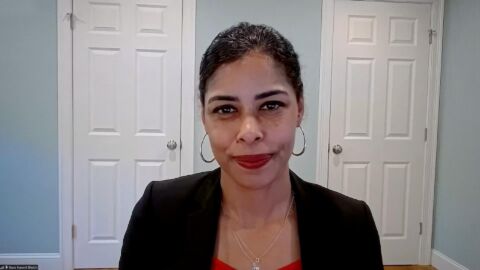
SARA NAOMI BLEICH, PROFESSOR OF PUBLIC HEALTH POLICY, HARVARD UNIVERSITY: States could choose to exit the program entirely, which would leave
millions of families without lifeline for food.
(END VIDEO CLIP)
GOLODRYGA: — Hari Sreenivasan speaks with public health expert Sara Naomi Bleich about massive cuts to federally funded food benefits in the U.S.
Welcome to the program, everyone. I’m Bianna Golodryga in New York, sitting in for Christiane Amanpour.
In Washington, talks between Israel and Lebanon are back on track, as representatives of both countries are meeting at the State Department.
Now, before the meetings began, four people were killed on Monday in an Israeli strike near a hospital in southern Lebanon. The Lebanese embassy in
Washington says Hezbollah has agreed to a U.S. proposal calling for a ceasefire with Israel.
And after a reportedly heated talk with Israeli Prime Minister Benjamin Netanyahu, President Trump declared that Israeli forces would not move on
Beirut. Netanyahu says the military will keep striking southern Lebanon, but tacitly acknowledged Trump’s ceasefire, saying Israel would not
immediately attack.
So, it’s a volatile situation, both diplomatically and militarily. Where is it headed? Nabih Bulos is Middle East Bureau Chief for the Los Angeles
Times, and he joins us now from Beirut. Nabih, it’s good to have you back on the program. It’s been a while.
So, I just laid out the situation as announced by President Trump, saying that a ceasefire has been agreed to, both Israel and Hezbollah saying that
they’ve stopped or agreed to stop attacking each other. But that’s not necessarily the case. Prime Minister Netanyahu saying that he would hold
off on going into Beirut. But we do know that exchanges of fire between the two sides are ongoing. So, is this just a ceasefire in name only at this
point?
NABIH BULOS, MIDDLE EAST BUREAU CHIEF, LOS ANGELES TIMES: Well, so you could argue we haven’t really had a ceasefire anyway, because the fact of
the matter is that despite the name ceasefire, no one has actually stopped shooting, right? I mean, if you consider what happened since April, I mean,
we’ve still had Hezbollah and Israel fighting each other in the south of Lebanon, and Hezbollah still lobbing drones and missiles in northern
Israel. That continued throughout this time, right? I mean, the only difference was that Beirut was not being targeted directly. That was
supposed to have changed yesterday with a new equation, supposedly.
But at the same time, we are still nowhere near the notion of a complete silencing of the guns, even now, right? All that has happened is that we’ve
returned to the, I suppose, April 7th status quo, which is to say that there is fighting in the south of Lebanon, but there’s no fighting
elsewhere, right? I mean, we’re not seeing attacks on Beirut. And for the moment, Hezbollah has been adhering to the equation now of not firing on
the Galilee in northern Israel. So, that’s what’s happening right now in that regard.
GOLODRYGA: Yes. So, things have been simmering, even as recently as Sunday, as Secretary of State Rubio was on the phone with Israeli officials
and with President Aoun of Lebanon, proposing an even more significant degradation now and de-escalation in terms of the fighting. And they said
that the sides agreed that it starts with Hezbollah stopping its attacks and Israel would then withhold going into Beirut. All of a sudden, things
started escalating and heating up again come Monday. So, what transpired in just those few hours?
BULOS: Well, the fact of the matter is we saw Israel actually advancing on Beaufort Castle. Now, it’s worth noting this fort, actually, it’s above the
Litani, right? And the Litani is a vital waterway in South Lebanon that has been used to demarcate a supposed security zone that Israel has wanted to
establish in recent months.
And I should also note that the Litani was used in a previous invasion of Israel back in the ’80s, right? To also demarcate the security zone. Now,
the castle lies atop a hill from which you can see this river, and it is quite a strategic location.
Now, the Israelis have managed to advance into that castle over the last few days, and that was seen actually as a, well, as a bit of a PR coup for
the Israeli military, right? And the idea was that this was presenting a moment of Israel pressing its advantage, because there has been a lot of
clamoring from northern Israeli communities and also from members of Netanyahu’s government that they should go in and finish the job.
Indeed, the tenor of the conversations in Israeli political circles is that he has not gone far enough, right? They should be going, you know, deeper
into Lebanon and crushing Hezbollah once and for all. But the fact of the matter is there are other factors at play, namely that it’s very hard to do
so in a military invasion.
GOLODRYGA: Yes. And it’s interesting because even some Israeli analysts were questioning the strategic value, as opposed to the pushback that that
type of a seizure, and given how sensitive it really is, what that would give Israel. And it is valid to say that Israelis in the north have been
very concerned about going back to their homes and being on the receiving end of fire from Hezbollah. But the point was, what was the significance of
seizing this specific castle?
I want to bring Iran into the conversation here, because Iran over the weekend suspended talks with the United States over Lebanon. President
Trump then telling CNBC he doesn’t care, that perhaps holding off all talks would be good now, he could care less. Then he got on the phone with Prime
Minister Netanyahu, said that he had spoken with representatives from Hezbollah, and all of a sudden signaled that ceasefire talks were back on.
Lebanon and Iran is tacitly admitting as much too.
So, is Lebanon now the leverage that Iran is using over the United States here to get to that MOU agreement?
BULOS: You know, it would be difficult to say that Lebanon is being used as leverage, mostly because the fact is that Lebanon has its own issues,
and its government has been actually insisting on not linking its fate to Iran at all.
Now, Hezbollah is a different factor, right? Hezbollah is an Iran-backed group, and it is very much relying on Iran to hold up and champion its
case. So, that is indeed happening. But in terms of the Lebanese government itself, it’s not very much into that idea.
Now, Iran could be using Lebanon in some way as an MOU, I suppose, or to get the MOU over the line. But it also has Hormuz, which I must say is
probably a far more strategic asset to have than Lebanon at this point, right? And the fact is Lebanon, again, has been insisting on forging its
own path in negotiations.
GOLODRYGA: And we heard from Secretary of State Rubio that these negotiations in earnest, at least some of the more specific technical
details, could go on for months, and that the Strait continues to be filled with mines that have been planted there by the Iranians. So, that continues
to be a huge issue for the United States and the world’s economy, is what to do with the Strait of Hormuz and Iran’s control over it at this point.
The relationship between Prime Minister Netanyahu and President Trump, we’ve reported previous times over the course of the last few years that at
times they would get into these heated conversations, President Trump expressing his frustration with the prime minister. But regionally, this is
a political issue as well.
There are elections coming up in Israel, as you noted. There is frustration among Israelis that he has not degraded Hezbollah enough. And yet you see
many saying there’s no strategy in this particular policy as it relates to Hezbollah now. How do you think that is impacting the relationship between
these two men, Trump and Netanyahu?
BULOS: It would be hard for me to speak to that. And I say this mostly because from the regional point of view, and I should say from the Arab
point of view, you know, in these various Arab governments, we’ve heard time and again about reports of Trump, or I should say, of U.S. presidents
having friction with Netanyahu. And time and again, it hasn’t mattered, right?
The fact of the matter is that although there might be friction, right, the — you know, the thrust of the policy remains very much in a pro-Israeli
vein. And so, therefore, I mean, the fact is we are seeing even now a sense of, I suppose, boldness for the Israeli military in attacking. So, just for
example, yesterday, as you said, there was the attack on the hospital in which four people were killed, and you’ve had dozens of medical health
workers were wounded there. But you’re also talking about repeated attacks on paramedics, et cetera. And just today, in fact, you had civilians also
being killed.
So, you know, these notions of red lines and changes to the relationship between Trump and Netanyahu, or really Netanyahu and any U.S. president
have been, I suppose, really ignored here in the region, mostly because we’ve heard it time and again before, and there hasn’t been any real
impact.
Now, the fact of the matter is, how will this affect, I suppose, Iran negotiations, right? There has been, of course, talk of this helping it
push over the line. But, you know, it’s also worth noting that this ceasefire, you know, talks with Iran have been going on for quite a few
weeks now. And almost every day we’re hearing about a breakthrough happening. And then, of course, nothing actually happens.
As you said, it’s very, very technical. You know, this took the JCPOA team months to do. And it would be hard to envision the same kind of rigor being
followed by the Trump administration, quite frankly.
GOLODRYGA: Yes. And it’s pretty clear that Trump would like to see this in the rearview mirror and focus on other issues at this point. But Iran has a
say, as we know. I do want to end by getting your reporting and perspective, given that you are there in Beirut.
Just the humanitarian toll, once again, that this has taken on the community. We know that a million people have been displaced. 3,400 have
been reported to have been killed. There’s, you know, ongoing back and forth. Is there a ceasefire? Is there not? Just give us the mood of the
country now and the City of Beirut in particular.
BULOS: Well, so Beirut itself, as you can imagine, yesterday, it was very, very tense because there was a feeling that, you know, we’re going to be
starting to seeing these big bombing campaigns in the Dahieh, which is the suburb where Hezbollah holds sway.
And, you know, I mean, of course, you’ve had Israeli drones buzzing overhead all day. In fact, it stopped only maybe about an hour and a half
ago. But it’s worth noting that in the south, it’s still an out and out war. I mean, it’s worth just remembering that today we’ve heard that the
City of Lombokli (ph), one of the largest cities in the south and one of the economic engines of the south, is now totally free of inhabitants. It’s
completely been — it has been completely emptied. And that’s a terrifying notion, just this idea of the south being completely empty in various parts
of it. It really just boggles the mind.
And then you add to the fact that there is a real sense of despair because Hezbollah has already said it will not adhere to any, I suppose,
proceedings from these negotiations. And at the same time, the government has proven unable to disarm the group.
And really, the fact is that even the Israeli military has not disarmed the group. You need a political breakthrough. You need a political solution,
right? There is no strategy for Israel right now because the fact is Hezbollah will not stop fighting. And that is what we’ve heard time and
again until there is actually a political resolution and one that includes the group, not that is being negotiated only with the government.
GOLODRYGA: And they’ve surprised many with how innovative that fighting has turned now, once again, using drones, the same type of drones that
we’ve seen on the battlefield in Ukraine now for a number of years. Nabih Bulos, good to see you. Thank you so much for your reporting. Appreciate
it.
BULOS: Sure. Thank you.
GOLODRYGA: Well, we turn now to the Democratic Republic of Congo, where the number of confirmed Ebola cases now tops 300, with almost 50 dead. But
the true number is likely far higher. Correspondent Clarissa Ward gained access to the Red Zone, an Ebola ward in the epicenter of the deadly
outbreak.
(BEGIN VIDEOTAPE)
CLARISSA WARD, CHIEF INTERNATIONAL CORRESPONDENT (voice-over): It is a surreal but now all too familiar ritual. Health care workers painstakingly
disinfect the coffin of the latest suspected victim of the Ebola virus at Bunya’s General Hospital.
His family members look on in anguish, unable to get close to their loved one, torn apart by grief and consumed by fear.
Oh, my father, why, God, this woman cries. Oh, God, this is my only father.
As the dead are carried out, new potential cases are arriving. At the entrance to the hospital, everyone’s temperature must be taken.
WARD: So, this is the room where they take people who are found to have a fever. There is a woman in there now. Obviously, they don’t know if she has
Ebola or not, but they’re going to keep her here until they do more tests and get a better sense of what’s going on.
WARD (voice-over): At a makeshift coordination center inside the hospital, Dr. Richard Kojan and his team are working around the clock to keep up with
an outbreak they say is out of control. They agree to show me and photojournalist Alex Platt what they’re up against.
WARD: We are now getting ready to go into the so-called red zone of this hospital. That is the area where all suspected Ebola patients are put. And
there is a lot of protective gear, unsurprisingly, that one needs to wear to go inside.
WARD (voice-over): Bundibugyo is a strain of the virus that few were expecting. There is no vaccine and no cure.
The doctors write our names on our backs so they can recognize us. And then it’s time to go in. At the moment, patients are treated in hastily
constructed tents.
30-year-old Gloria is a lab technician, one of dozens of health care workers believed to be infected.
WARD: She says it’s difficult to breathe.
WARD (voice-over): Earlier, we met her sister waiting outside for news.
WARD (through translator): I saw your sister. She’s waiting for the moment she can hug you again. Do you want us to toll your sister something from
you? A message?
WARD (voice-over): Do not be afraid, she says. But it’s impossible not to be scared. Some of the patients here are in very bad shape.
WARD: How do you stay strong when you’re seeing this?
- RICHARD KOJAN, EMERGENCY ICU DOCTOR, ALIMA: For me, it’s our humanity.
WARD: Your humanity?
- KOJAN: Yes, yes. It’s our humanity. When people are suffering like this, I feel it. I feel it.
He was in a coma. It’s Ebola confirmed.
WARD (voice-over): Ten-year-old Meshack (ph) is still very weak. His mouth ravaged with blisters from the virus. He asked the doctors for a banana, an
encouraging sign.
Slowly, slowly, Dr. Kojan warns him. His condition is improving, but he has a long way to go.
WARD: He wants to lay down? Let’s help him lay down then.
WARD (voice-over): They lay him down in the corridor while his room is disinfected. Nothing about this situation is OK. But these doctors are
doing everything they possibly can.
As we walk to another ward, a familiar sound in the distance.
WARD: You can hear the cries of a family who are claiming the body of their loved one. This is a scene that’s playing out here multiple times
every single day.
WARD (voice-over): This is a temporary ward for suspected cases. Patients lie waiting for test results that are taking up to a week to process.
WARD: So, this is the situation that health care workers really want to avoid and are racing to put a stop to. You have five patients in the same
room, all of them suspected of having Ebola. But doctors can’t be sure. They can’t rule out the possibility that one person in here may not have
Ebola. And then, of course, there’s a strong chance they could contract it.
WARD (voice-over): Every exit from the red zone is as careful as the entry. Protective equipment must be sprayed down with chlorine and
methodically removed.
WARD: We were in there for maybe half an hour, and I could barely stand up by the end. It’s incredibly tiring, really hot. You’re sweating so much.
You’re thirsty. I just like help us understand the kind of stamina that you need as a doctor to be going in and out of that red zone multiple times
every single day.
- KOJAN: It’s really hard. We have to stand strong for those patients. And otherwise, you know, the situation will be really very, very bad.
WARD: That 10-year-old boy. That’s hard to see.
- KOJAN: The first day, you know, he was really bleeding. A lot of diarrhea and shock, you know. So, you have to get a way to give IV fluid.
It’s not really easy. So, for me, you know, like an ICU doctor, when you have a situation like this, it’s very hard to just say, I have to stop
because I’m tired.
WARD (voice-over): On the outskirts of the city, the family we met earlier is burying their father, 72-year-old farmer Papa Babona Bodwan (ph). The
burial team forms a cordon around his grave. The mourners forced to grieve at a distance. The final cruelty of this vicious virus.
Clarissa Ward, CNN, Bunya, Democratic Republic of the Congo.
(END VIDEOTAPE)
GOLODRYGA: Clarissa Ward reporting there from Bunya in the Democratic Republic of Congo.
GOLODRYGA: Now, far-right outsider candidate Abelardo de la Espriella ran surprisingly strong in Colombia’s presidential election, setting up a
heated runoff election later this month against the leftist candidate Ivan Cepeda. De la Espriella is a self-described conservative nationalist
running on a bombastic tough-on-crime platform. Cepeda promises to carry on the progressive policies of incumbent President Gustavo Petro. But with the
threat of criminal gang violence rising, Colombian voters may choose change over more of the same.
In another potential change, President Petro has a fraught relationship with Washington. De la Espriella, with his law-and-order rhetoric, speaks
favorably of Donald Trump. So, what does this all mean? Jorge Castaneda served as Mexican foreign minister, and he joins me now from Mexico City to
discuss it all. It’s good to have you back on the program, Jorge.
So, de la Espriella really seemed to come out of nowhere in running on a security and extortion campaign. And his rise is really in part with the
regional right-wing rise that we’ve seen take over, as I mentioned, regionally, but one could argue around the world as well. Is he just an
outsider who picked up on an important policy and issue for voters, or is he part of that change?
JORGE CASTANEDA, FORMER MEXICAN FOREIGN MINISTER: Great to be back with you, Bianna. I think it’s a little bit of both. There are specifically
Colombian elements in the fact that he did so well, surprisingly, in the first round of the Colombian elections, way outpacing the other
conservative candidate, Maria Valencia, who was thought to have been, you know, tie with him, and in fact ended up getting almost 35 percent less
than he did on this first round.
There were specifically Colombian issues, such as a very serious crisis in the health system, such as the violence and the problems with the United
States and President Petro’s eccentric behavior on occasion. But there are also broader things. Very clearly, one of the trends we see in Latin
America over the last couple of years is that societies are increasingly nervous and upset about what they consider to be much greater levels of
violence, of crime, of lack of security, et cetera. We saw this in Ecuador. We saw this in Chile. We saw this a little bit in Argentina. We may see it
in Brazil later this year.
Clearly, the situation in Colombia is that President Petro’s total peace strategy is perceived to not have worked. Violence is up in many areas of
the country. And de la Espriella’s hardline, Bukele-like approach to violence, recalling the president of El Salvador and throwing a lot of
people in jail, was evidently very agreeable to the Colombian electorate. And he seems well-poised to win in the runoff in three weeks’ time.
GOLODRYGA: Yes, you took the words right out of my mouth, comparing him to a Bukele-style crackdown here. And Espriella has promised that if elected,
he will end Colombia’s conflict in 90 days. Also, very Trumpian. Think like two weeks or one day I can finish the war in Ukraine. Here’s what he said
specifically.
(BEGIN VIDEO CLIP)
ABELARDO DE LA ESPRIELLA, COLOMBIAN PRESIDENTIAL CANDIDATE (through translator): In my government, there will be no peace processes. Empirical
experience has taught us that peace processes in Colombia have gone wrong. Therefore, what is needed is to apply the Pax Romana, that which is
achieved with the force of arms and the laws of the republic. Bandits who do not surrender will be neutralized as the law dictates.
(END VIDEO CLIP)
GOLODRYGA: So, is that a doable policy, in your view?
CASTANEDA: Well, it’s been tried before in Colombia, particularly during the long civil war with the FARC guerrillas that lasted nearly 40 years. It
was tried particularly under President Alvaro Uribe with mixed results. He certainly weakened the FARC, and that made President Santos’ peace
agreements feasible. But at the same time, there were very significant human rights abuses, the so-called false positives in Colombia, where the
military would execute people who had nothing to do with the guerrillas just to present them as sort of a body count of dead guerrillas.
So, this strategy may work now, but the historical precedents are not particularly encouraging. And I think he will have to, the SPA, if he wins,
will have to deal with these historical realities and the realities on the ground that trying to neutralize, as he put it, all of the remnant
guerrilla groups, which are somewhere between guerrilla groups, narco- guerrillas, and just plain bandits, a little bit of all of those, is going to be much more complicated than he seems to think.
GOLODRYGA: Yes, it’s quite different, and it’s been noted that the issues, and even the issues related to crime in El Salvador, are different in
Colombia. For example, El Salvador, you have got street gangs. In Colombia, you are dealing with guerrillas and armed groups as well. Nonetheless, de
la Espriella said that he’s going to build up to 10 maximum security prisons at a time when the economy is also front and center for voters.
Does that resonate, hearing more detention centers, more prisons are promised?
CASTANEDA: Well, I think Colombians in a first response to these views probably think that they’re a good idea. Why don’t we just throw them all
in jail? And if we don’t have enough jails, why don’t we just build more? And then we will deal with all of this. The problem, as we have seen in El
Salvador, is, first of all, you end up jailing a lot of innocent people.
Secondly, your judicial system has no way to try them, give them a fair trial, due process, et cetera. And thirdly, El Salvador is a very small
country of 6-7 million inhabitants, even less, where an enormous percentage of the population is in jail. The equivalent percentage in Colombia would
be somewhere over a million people. That’s probably not doable.
In addition to which, Colombia’s geography, Colombia’s economy is very different from El Salvador’s. El Salvador lives to a great extent off
remittances. Although Colombia has received greater remittances in recent years, its economy is in just so-so shape, Bianna.
GOLODRYGA: If we do see a de la Espriella victory, and it’ll be interesting to see if President Trump weighs in too, because there is this
argument from the progressive left in the region that this is the United States interfering with a sovereign country. So, I’m curious to see what
President Trump will say, if anything, about this.
But given the right word trend that we are seeing in a number of these regional countries, how do you think that impacts where the U.S. stands
vis-a-vis Cuba today and the pressure the United States continues to apply to that island nation?
CASTANEDA: Well, clearly, if de la Espriella wins in Colombia, that would be a flip, in the sense that President Petro has been a strong supporter of
the Cuban dictatorship, has been a strong critic of the Trump policy towards the Cuban dictatorship, and also, until January 3rd, a strong
supporter, albeit with annoyance on his part, of former dictator Nicolas Maduro in Venezuela.
So, this flip would mean that, with the exception now of Uruguay, Brazil, and Mexico, practically every in Latin America would tend to be aligned
with President Trump and his policies on Cuba, on Venezuela, on Nicaragua, and on other international issues, obviously.
De la Espriella would probably be a very strong supporter of Trump’s hard line on Cuba, as opposed to Petro being a relative supporter, more
rhetorically than, in fact, by the way.
GOLODRYGA: Let me move to your country, your home country of Mexico, because we have seen policy clashes between Claudia Sheinbaum and the Trump
administration over Cuba. And now, over the interesting to see her accuse U.S. agencies, perhaps even the CIA, and business interests of working to
undermine her own government. She pinned it on the American far-right, coordinating with her own internal domestic opponents. Here’s what she
said.
(BEGIN VIDEOTAPE)
CLAUDIA SHEINBAUM, MEXICAN PRESIDENT (through translator): Is it truly a legitimate interest in combating organized crime, or are we perhaps
witnessing how sectors of the American far-right are using our countries to position themselves ahead of their 2026 elections, or do they perhaps
intend to influence the 2027 election in our country? These are not rhetorical questions. Mexico is not anyone’s pinata.
(END VIDEO CLIP)
GOLODRYGA: What’s interesting here, Jorge, is she’s not blaming Trump directly. So, this is actually a delicate line for her to walk down. Can
she rally the country against the U.S., against these right-wing forces, both in the U.S. and in Mexico, without clashing further with the Trump
administration?
CASTANEDA: I tend to doubt it, Bianna, because President Trump and his closest aides, particularly Stephen Miller, are very intent on what is
happening and what is said in Mexico, and very sensitive to criticisms or rhetoric that seems to be anti-American, anti-Trump, et cetera.
I think that she has decided that, given the Trump demands that she hand over a series of narco-politicians, as we call them in Mexico, and
particularly the sitting governor of the state of Sinaloa, whose extradition has been demanded by President Trump, if she doesn’t hand them
over, I think the Trump administration will get very upset.
Conversely, if she does hand them over, the danger is that many of the accusations made against this governor, Rocha Moya, could affect her
directly, because what he is accused of, among other things, is of having made a deal with the cartels, particularly the Sinaloa cartel, to receive
money for his campaign in exchange for letting them operate once he was elected governor.
There are many people in Mexico who believe that that money also went to Claudia Sheinbaum’s campaign, her primary campaign in 2023, and her
presidential campaign in 2024. And I’m not sure she wants Rocha Moya in Brooklyn in a court testifying that he knew that she had received financing
from the cartels. She would want to avoid that at all costs. But I’m not sure I know how President Trump is going to react to her refusal to hand
him and others over.
GOLODRYGA: Well, we know he usually takes issues like this very personally, so we’ll wait and see how he responds here. Also, interesting
to note that the USMCA is up for renewal by July 1st. That is between, obviously, trade between the United States, Mexico and Canada. We’ll see
how that renegotiation process continues. Jorge Castaneda, always good to see you. Thank you so much. Really appreciate it.
CASTANEDA: Thank you, Bianna.
GOLODRYGA: Now, turning to an issue that affects people across the United States, access to food stamps. Supplemental Nutrition Assistance Program or
SNAP benefits are a vital lifeline for many low-income families, helping them get the groceries they need to feed their households. But now millions
have lost that lifeline and at a time where consumers are struggling with rising price of necessities like food and fuel, it’s just the latest
cutback resulting from President Trump’s so-called Big Beautiful Bill Act. Professor of Public Health Policy at Harvard, Sara Naomi Bleich joins Hari
Sreenivasan to break down what this means.
(BEGIN VIDEOTAPE)
HARI SREENIVASAN, INTERNATIONAL CORRESPONDENT: Bianna, thanks. Sara Naomi Bleich, thanks so much for joining us. Just recently, there have been
a lot of headlines about people losing SNAP benefits. And I guess set the table for our audience a little bit. How significant are the changes and
how does SNAP benefits work in the United States?
SARA NAOMI BLEICH, PROFESSOR OF PUBLIC HEALTH POLICY, HARVARD UNIVERSITY: Yes, thank you very much for having me. It’s great to be here. So, the
changes are very significant. Millions and millions of people are going to lose access to SNAP benefits. And before talking about some of the changes,
just want to set the table on how important this program is.
So, SNAP, which stands for the Supplemental Nutrition Assistance Programs, it used to be called food stamps. It’s the nation’s largest anti-hunger
program. And so, each month, it serves about 42 million individuals, and that’s about one in eight Americans.
Now, 70 percent of those individuals are children, older adults, or people with disabilities. And the vast majority of families that participate in
SNAP have incomes below the poverty line, which is about $33,000 for a family of four. And there’s tons of evidence which shows that SNAP has
positive impacts on the economy, and it has positive impacts on individuals. So, when it comes to the economy, SNAP helps to stabilize it
because it’s designed to be counter-cyclical.
So, what does that mean? It means that as the economy worsens, enrollment goes up. And as the economy improves, enrollment goes down. And it’s been
very effective at that during the Great Recession, during COVID.
We also know that for local economies, SNAP is very effective. So, for every dollar in SNAP benefits, that generates about $1.50 to $1.80 in
economic activity. And then for individuals, SNAP does a lot of really important things. It helps to lift families out of poverty because it
provides monthly money for food. So, then families can then free up some of their income for other things they need, like rent and utilities. It also
helps to reduce food insecurity by about 30 percent, and it improves health and well-being.
So, for example, the annual medical costs for a SNAP participant are about 25 percent lower than someone who’s eligible for the program but not
participating.
SREENIVASAN: One of the rationales being offered by people in the administration and others is that, look, this was supposed to be temporary,
that there isn’t any incentive for them to get off of SNAP, start working, be on their own anymore. What’s wrong with that thinking?
BLEICH: What’s wrong with that thinking is that SNAP has very clear requirements, which is based on your income, it’s based on your assets. And
so, families qualify because they fall into a category which suggests that they have need for this program. It’s also the case that while COVID has
ended and a lot of the temporary programs that were in place during COVID have ended, food prices remain high. They’re about 30 percent higher than
they were three years ago.
So, families on the program are really struggling. In fact, there was a study that was done which found that if you look at the SNAP benefit, which
is about $180 per person per month, that’s about $6 a day, what the analysis shows is that it is only sufficient to buy a moderately priced
meal in 1 percent of U.S. counties, which means that in 99 percent of U.S. counties, the benefit is not adequate.
SREENIVASAN: OK. So, let’s go through some of the changes that people are hearing about. I guess the first is the really large scale, the $187
billion in funding. Put that in perspective for us.
BLEICH: Yes. So, the law passed in July of 2025, and it makes major structural changes. And those structural changes are going to mean that
millions of people lose coverage.
So, you mentioned the cut to the overall size of the program. And so, what will happen over the next 10 years, so between now and 2034, is that the
overall size of the SNAP program will go down by $187 billion. That is a 20 percent cut, and it’s the largest cut in the program’s history. So, that’s
one big structural change.
Another big structural change, the law is expanding the number of adults that are subject to what are called three-month time limits. And that means
you can only receive SNAP for three months within three years, unless you work for 20 hours a week or 80 hours a month. And so, those new rules are
going to apply to a bunch of different groups. It’s going to apply to adults that are ages 55 to 64, and they don’t have dependents. And it used
to be 18 to 54, so it’s expanded that group without dependents. It’s going to apply to caregivers or parents that have children that are age 14 or
older. It used to be age 18. And then previously exempt groups are being pulled in, so veterans, people experiencing homelessness, and youth aging
out of foster care.
So, to make that more concrete, take a single mom. She is a 15-year-old child and she’s working part-time to take care of her child, and she loses
her eligibility. Her family’s overall monthly SNAP assistance will go from $546 a month to $298 a month. So, that’s a huge shift for a family.
And then the third thing that’s happening is that there’s going to be a big shift in the cost of the program towards the states. And so, historically,
SNAP and the federal government have split the administrative costs of the program. Now, that’s a smaller amount of the overall pie of the program.
And — but now what’s going to happen beginning in fiscal year 2027, or this October, is that states are responsible for 75 percent of
administrative costs. So, that’s millions of dollars that states will have to start paying. The bigger change for states is going to happen in the
next fiscal year, fiscal year ’28.
For the very first time, states will have to pay a share of the SNAP benefits. And that’s going to range from 5 percent to 15 percent based on
their payment error rates. And what payment error rates are referring to is the amount that a family is under or overpaid for their SNAP benefit.
Now, this is where states could face huge, huge amounts of money. And so, just to give you an example, if a state has an error rate over 10 percent,
then they will have to pay 15 percent of benefits when this goes into effect. So, in fiscal year, it’s huge.
So, in fiscal year ’24, North Carolina’s error rate was 10.2 percent. The state received $2.9 billion in annual SNAP benefits for people in the
state. Based on this new penalty, North Carolina would owe $440 million. And so, states are really scrambling to try to work on their payment error
rates right now.
SREENIVASAN: So, if you suddenly have a new payment, if you’re a state of $440 million that you didn’t plan for, what are your options? I mean, could
states just say, you know what, how about I just turn SNAP off altogether?
BLEICH: They can. They can. And it remains to be seen what will happen. But yes, states could choose to exit the program entirely, which would
leave millions of families without lifeline for food.
SREENIVASAN: When you look at the larger timeline here, why do you think that this is happening at this juncture now? I mean, were there economic
preconditions? Were there any kinds of, you know, fraud, waste, and abuse? Were there red flags that were going up that said SNAP needs significant
structural reform and these sorts of cuts are what’s necessary?
BLEICH: Yes, that’s a great question. So, it’s important that we separate fraud from payment error. So, fraud is intentionally trying to remove money
from the program. And actually, fraud rates in SNAP are very low. They’re even low relative to other safety net programs that the government runs.
So, when it comes to fraud, SNAP is doing quite well. So, another question then is, so what’s happening with payment error rates and why have they
gone up? And the reality is they have gone up in recent years, but the question is why? So, one of the things that happened during COVID is that
temporary measures were put in place with the goal of helping families to maintain or to create access to SNAP because the goal was we need to
control food insecurity.
If you remember, I mentioned that when the Great Recession happened and there was a big upswing in the number of people on SNAP, there was also a
big upswing in food insecurity because families just didn’t have enough. With the increases that happened with the enrollment into SNAP, food
insecurity was actually kept very steady at about 10 percent during COVID, which was a huge achievement and a testament to how powerful the program
could be.
And so, basically, these temporary changes that were put in place by the federal government were basically designed to help states with this
enormous caseload that they were having to deal with.
And so, states had a number of options, and most of them took advantage of one of the three options. So, they could waive the interview requirements
during the application or recertification. They could extend the certification periods to reduce the number of times you have to reapply.
And you can even use telephone signatures to streamline remote application processing.
SREENIVASAN: Yes.
BLEICH: Now, one thing that’s important to know is that the payment error rates are really reflecting unintentional mistakes made by the state agency
or the applicants. And so, that can include you making a miscalculation or there’s incomplete information. Again, the priority during COVID was to
keep the food assistance flowing. But it’s going to be a real challenge for states to actually rein these payment error rates in by fiscal year 2028,
in part because there’s this compressed timeline. There’s been this big reduction in force by the Trump administration. And so, there are fewer
people in place to do all of this administrative work.
SREENIVASAN: One of the things that people who are supporting these changes say is, look, it shouldn’t be that difficult for you to document
that you’re working 20 hours a week. What’s wrong with that idea?
BLEICH: Well, one thing that’s really important to know is that there is a misconception that people who are in SNAP are not working. What the vast
majority of literature shows is that people who can work do work. And so, what this time limit requirement is, which, again, is expanding the number
of people that have to respond to this stricter timeline, and if they don’t, they only get benefits for three months out of three years, it’s
really just a paperwork requirement.
Because here’s what has to happen in practice. Again, most people who can work do work. Now, you’re subject to this additional rule. You have to
personally document it. You have to submit it to the state agency. The state agency then has to document the fact that you are still eligible to
receive benefits. So, it’s creating a massive amount of paperwork, and there’s not enough people to process all this paperwork. And so, it’s just
going to gum up the system.
SREENIVASAN: OK. So, what about a population that might be qualifying who have mixed immigrant households, right? So, the child might be born in the
United States, U.S. citizen, eligible for SNAP benefits, but maybe one of the parents is not. And I wonder if what we’ve been living through for the
last year or so, the increased deportations, the focus on, you know, ICE raids in different parts of the country, whether that’s affecting who will
bother to register, and what happens to the child who’s eligible for the benefits in the first place?
BLEICH: Yes, it’s an excellent point. So, it is definitely the case that confusion about who is eligible for SNAP right now, particularly among
mixed immigrant households, is very, very high. We’ve seen this in the past. We’re definitely seeing it now. So, it’s very possible that
individuals who could get benefits for their children but not for themselves are opting not to apply because there’s a fear that it will
impact immigration status.
Another change that happened through H.R.1 as well is that it ended eligibility for people with lawful immigration status, which adds to the
confusion right now as to who or who is not eligible for SNAP benefits.
SREENIVASAN: Right now, there’s also this kind of political impetus to try to make America healthy again, right? And you and your colleagues have kind
of written about reframing this discussion about food insecurity and benefits. And I’m wondering, is there some sort of political path here
where these two ideologies could have some overlap and see the benefit in having people fed?
BLEICH: Yes. So, the — you know, the platform, the Make America Healthy Again platform, is premised on the idea that chronic disease is high, which
is true, and that those rates need to be brought down, especially among children, which is also true. The platform makes an enormous amount of
sense in theory. The challenge is that the way the platform is being implemented is that we’re seeing these changes, like these massive CAD cuts
to SNAP, which are completely undermining the ability of the MAHA platform.
So, I think that there is a lot of opportunity for MAHA to have impact, but the changes that we’re seeing as part of this administration are really
working for counter purposes.
SREENIVASAN: I’m speaking to you now as a professor at one of the most prestigious institutions in America, Harvard, right? And I’ve read in your
profile that as a child growing up in inner-city Baltimore, that your family benefited from SNAP and WIC.
BLEICH: That’s exactly right. So, growing up, and I grew up in inner-city Baltimore in a low-income, working-class neighborhood, and my parents were
public school teachers. I have a twin sister. I have an older brother. When we were really little, my mom stepped out of the workforce to take care of
us, and we received SNAP benefits for a period. We received WIC benefits for a period. It was a critical lifeline for my family.
And so, it’s been a real honor to be able to work on these programs professionally and to be an alumni of these programs because I know
firsthand how impactful they can be.
SREENIVASAN: What are the impacts that we’re going to start seeing that you know and is supported by the data in two years, five years, when these
populations of SNAP shrink?
BLEICH: So, one thing we’ve seen just in terms of the shrinkage, the law was passed, H.R. 1 was passed in July of 2025. Six months later in
February, so just a few months ago, SNAP enrollment had gone down by 3.5 million or about 9 percent. So, the reduction of the program is happening
and it’s happening very quickly.
It’s also important to understand that if someone loses SNAP benefits because of the changes that are happening through H.R. 1, it can also
disrupt their access to other federal safety net programs, like the big cuts to Medicaid through H.R. 1. So, you lose Medicaid, you also lose SNAP,
and then families are facing this tidal wave of impacts and they will not have resources to deal with them.
A final point to mention as all these things are happening is that we are losing our ability to actually measure these impacts because the National
Monitoring System, which was the Household Food Security’s report, which comes out annually, that’s been eliminated. The last data came out in
January 2025 and it will not be going forward.
And so, without those metrics to understand what impact are all these changes happening on food insecurity, what we’re likely to see is that
we’re going to start focusing on program costs, we’re going to start focusing on error rates, we’re not going to be focusing on the thing that
SNAP is designed to address, which is food insecurity. And so, that gives me a great amount of concern in the coming five years.
SREENIVASAN: Professor of Public Health Policy at Harvard, Sara Naomi Bleich, thanks so much for joining us.
BLEICH: Thank you for having me.
(END VIDEOTAPE)
GOLODRYGA: Now, to Paris, where a centuries old landmark is being completely transformed. The Pont Neuf, the city’s oldest bridge, has become
the latest canvas for the acclaimed French artist, JR, who has turned it into a giant walkable cave. If it looks familiar, it’s because it’s a
tribute to late artists Christo and Jeanne-Claude, who wrapped the same bridge in fabric some 40 years ago. For JR, it was an opportunity to make
busy Parisians do something unusual, stop and look around. Melissa Bell gained exclusive early access.
(BEGIN VIDEOTAPE)
MELISSA BELL, SENIOR INTERNATIONAL CORRESPONDENT (voice-over): For weeks, it’s been the talk of the town.
BELL: It’s often said that Paris is just an open-air museum. But here, the city’s oldest bridge, the Pont Neuf, that has been brought to a new level
by the French artist JR and this monumental grotto. Let’s have a look inside.
The idea also is, Camille, that we’re all kind of wrapped up in algorithms, we’re all slightly separate. As you walk through here, and it takes 15
minutes to get to the other side of the bridge.
CAMILLE PAJOT, CREATIVE DIRECTOR, ATELIER JR: Yes.
BELL: Everyone who walks through here is doing it together. There’s something about that.
PAJOT: Yes. Because for us, the main reason for that project is for sure the visitors. We had to inflate it like two weeks ago. And then for us it
was really to create that expectation. We want people to be surprised.
BELL: This holds —
PAJOT: Yes.
BELL: — because of air pressure.
PAJOT: Exactly. So, there’s no structure, there is no strings, there is nothing that holds it.
BELL: Wow.
PAJOT: It’s just like changing of pressure behind those walls makes it rise.
BELL: And hold.
PAJOT: Yes.
BELL: Wow. That’s amazing.
BELL (voice-over): It was in 1985 that the Pont Neuf was wrapped in fabric by the artists Christo and Jeanne-Claude. Three million people visited
then. Another of Christo’s ideas was realized in 2021 with the wrapping of the Arc de Triomphe. It’s an artistic legacy that JR’s cave honors and
evolves.
PAJOT: It’s almost like a living organism. Because it moves with wind. So, you really feel the weather around you, but still deep inside. Something
that you’ve never experienced before.
BELL: It looks like you’re walking through a cave. That’s how it feels.
PAJOT: You want people to feel that they are going deep in a cave, very, very underground, while we’re still outside and we’re still on the bridge.
BELL (voice-over): A chance for visitors to lose themselves in space and time in one of the most famous places on Earth.
(END VIDEOTAPE)
GOLODRYGA: Incredible. And our thanks to correspondent Melissa Bell in Paris for that report. And finally, a history-making day at the French Open
with an all-Ukrainian quarterfinal match. Today in Paris, Elina Svitolina will head to the — head-to-head with Marta Kostyuk. And after 3-nil biting
sets, Kostyuk is heading to the semifinal, the first tennis player from her country to do so. The historic singles match at Roland-Garros was made even
more poignant with the ever-present reminder of war raging back in the athlete’s home.
An emotional Kostyuk got a huge cheer from the crowd during her courtside interview when she dedicated her win to the Ukrainian people and to their
resilience. All right. That’s an incredible image.
That does it for now. If you ever miss our show, you can find the latest episode shortly after it airs on our podcast. And remember, you can always
catch us online, on our website, and all-over social media. Thanks for watching, and goodbye from New York.
END