
Read Full Transcript EXPAND
BIANNA GOLODRYGA, ANCHOR: Hello, everyone, and welcome to “Amanpour.” Here’s what’s coming up.
Israel says it killed Iran’s security chief, calling it a significant blow to the regime. Middle East expert Karim Sadjadpour joins me to discuss
what’s next. And Jomana Karadsheh reports on the Iranians caught between strikes and security forces.
Then, at least 400 reportedly killed in an airstrike on an Afghan hospital, adding yet more suffering for civilians there. I speak to former Afghan
lawmaker Fawzia Koofi.
Also, ahead —
(BEGIN VIDEO CLIP)
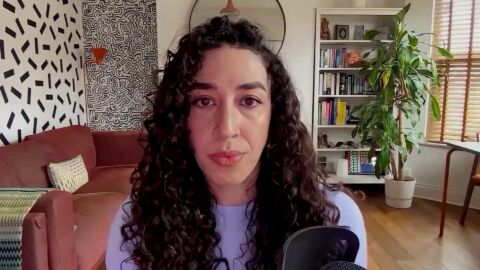
HEIDY KHLAAF, CHIEF A.I. SCIENTIST, AI NOW INSTITUTE: When you’re looking at the averages of these models, their accuracy rate is as low as 50
percent.
(END VIDEO CLIP)
GOLODRYGA: — the role of artificial intelligence in America’s military strategy in Iran and beyond. A.I. scientist Heidy Khlaaf joins Hari
Sreenivasan to share her serious safety concerns about autonomous weapon systems.
Iran’s top security official has been, quote, “eliminated.” That is according to Israel’s defense minister, who says Ali Larijani was killed in
a targeted IDF strike.
(BEGIN VIDEO CLIP)
ISRAEL KATZ, ISRAELI DEFENSE MINISTER (through translator): I was just updated by the chief of staff that the secretary of the National Security
Council, Larijani, and the head of the Basij, the central repression body of Iran, Soleimani, were eliminated last night and joined the head of
annihilation program, Khamenei, and all the eliminated members of the Axis of Evil in the depths of hell.
(END VIDEO CLIP)
GOLODRYGA: Larijani was one of Iran’s top decision makers, some calling him the de facto leader since the assassination of his former boss, Supreme
Leader Ayatollah Ali Khamenei. Larijani’s killing, if confirmed, plunges the nation and its future into even more uncertainty.
The IDF is pressing on with its offensive, conducting wide-scale attacks across Iran. And Iran is retaliating, launching strikes across the Middle
East from the U.S. embassy in Iraq to energy facilities in the UAE.
For civilians on the ground, the reality is harrowing. Since the war began more than two weeks ago, more than 1,300 Iranians have been killed in U.S.
and Israeli strikes, that is according to Iranian officials. The number is rising day by day.
Now, for those hopeful for regime change, it’s not just fire from the sky that they fear. The government is explicitly threatening would-be
protesters who might look to take advantage of the chaos, even telling people not to mark tonight’s traditional Zoroastrian festival of fire,
which leads up to the Persian New Year of Nowruz.
Correspondent Jomana Karadsheh reports on the people caught between foreign bombs and a repressive regime.
(BEGIN VIDEOTAPE)
JOMANA KARADSHEH, CORRESPONDENT (voice-over): Celebrating the death of their oppressor. This is what the world saw coming out of Iran last month
after Ayatollah Ali Khamenei was killed. But cloaked in digital darkness, a new wave of brutal suppression was already beginning.
Teenage brothers Ahmed Riza (ph) and Amir Hussein Faizi (ph) were among the crowds that poured into the streets on February 28th. This was the car they
were in with their father, honking the horn in celebration. Security forces opened fire on them, according to activists, killing the 15- and 19-year-
old boys.
As the regime faces America and Israel from the sky, it is tightening its grip on the ground, determined to extinguish any ember of an uprising. Two
months ago, it did just that, killing thousands of protesters in the bloodiest crackdown in the history of the Islamic Republic. Iranians still
reeling from the collective trauma of January 8th and 9th now being warned, take to the streets, and it will happen again.
UNIDENTIFIED MALE (through translator): Our team have their fingers on the trigger.
KARADSHEH (voice-over): The chief of police threatening protesters. They will be treated as the enemy and shot.
The feared Islamic Revolutionary Guard Corps promising another massacre of protesters. This time, they say, it will strike harder than they did in
January.
Messages we have received from Iranians inside the country describe a regime using every tool in its playbook to crush dissent.
UNIDENTIFIED FEMALE (through translator): Every time you go outside, even just to go to the market, you see machine guns and Dushkas, heavy guns, on
the streets. Everyone is afraid of the checkpoints. They are basically the regime’s street-level enforcers.
UNIDENTIFIED MALE (through translator): People are randomly being checked, their phones being searched, being asked questions like, what are you doing
out here? They even arrest and take them for a further investigation.
KARADSHEH (voice-over): Video trickling out, only a small window into this new climate of fear. Iran is a superpower, they chant. Iranians are proud.
Regime supporters roam the streets at night with a menacing message. They are still here. They are still in control.
State media, like so many times before, has been airing videos of those arrested allegedly confessing to being foreign agents. Text messages like
this one, warn those who find a way around the imposed internet blackout, will be treated as spies. This crackdown, only expected to get worse, as
outside forces that want to overthrow this regime add fuel to the fire.
UNIDENTIFIED MALE (through translator): We are now at the decisive stage of our final struggle. Await my final call.
KARADSHEH (voice-over): The Israeli prime minister telling Iranians his forces are, quote, “creating the conditions” on the ground for them to rise
- As the IDF releases video like this, showing what it says are attacks on regime checkpoints that have become a major instrument of suppression
and killing the regime’s top leadership, one after the other. An uprising seems impossible right now for those who find themselves trapped in two
hells. From inside their homes, they still defiantly cheer against the regime that time and time again has failed to silence a people risking it
all for freedom.
(END VIDEOTAPE)
GOLODRYGA: Thanks to Jomana Karadsheh reporting there. For more, let’s bring in Middle East expert Karim Sadjadpour, who monitors and analyzes
Iran for the Carnegie Endowment for International Peace. He joins me now from Washington, D.C. Karim, it is always good to see you, an honor to have
you on the program.
So, let’s just start there where Jomana’s piece left off, and that is the traumatized people of Iran who she says seem just not capable at this point
of coming to the streets with an uprising. To quote her, “uprising seems impossible right now.”
With the deaths, though they haven’t been confirmed by Iran, of Ali Larijani and the head of the Basij militia, does that possibility open up a
bit?
KARIM SADJADPOUR, SENIOR FELLOW, CARNEGIE ENDOWMENT FOR INTERNATIONAL PEACE: Bianna, I think Jomana put it really well. This is a population
trapped between two hells, the hell of war and the hell of a brutal authoritarian regime. Ali Larijani was one of the most important figures in
the Islamic Republic. He’s someone who was unique in that he had decades of both domestic and foreign policy expertise, experience. He had decades of
institutional memory. And in his absence, he leaves behind a much less competent regime than before.
But it is a regime which remains equally brutal. It still believes that if it doesn’t stay in power, if it loses power, it’s going to be killed. And
for that reason, I think, as we saw last January, it remains a regime which the only thing it really does effectively is repression. And it’s willing
to kill, continue to kill many thousands of its population to stay in power.
GOLODRYGA: With the system’s top enforcers now gone, who is actually calling the shots in Tehran now?
SADJADPOUR: One of the most important people now in the aftermath of Larijani’s death, I think, is the speaker of parliament, Mohammad-Bagher
Ghalibaf. He was already a very important figure, given his close relationship with the new supreme leader, Mojtaba Khamenei. Ghalibaf also
has a background as a Revolutionary Guard commander.
And what I’ve noticed, Jomana, is that in these three weeks of war, it’s a regime which has really closed ranks around the principles of the 1979
revolution. Even figures who maybe a year or two prior would have thought to be a little bit more pragmatic publicly, they’ve all doubled down on
revolutionary ideology, and that’s certainly the case with Ghalibaf.
GOLODRYGA: And that is picking up on something that Iran observers have, the point they have made in the last few hours since reports of Larijani’s
death, and that was that if he was considered a moderate by regime standards, is it fair to assume, as some are, that he will inevitably be
replaced by a hardliner?
SADJADPOUR: Well, we have to look at everything in the context of the realities of the Islamic Republic of Iran. Larijani was directly implicated
in the massacre of perhaps as many as 30,000 civilians last January.
GOLODRYGA: Exactly.
SADJADPOUR: So, that is definitely not someone who is a, quote/unquote, “moderate.” But in the context of the Islamic Republic of Iran, he was
thought to be a little more pragmatic, not necessarily internally, but in his willingness to talk to the United States or talk to Gulf countries.
And it seems that there’s now reports, I don’t know if it’s yet confirmed, that he’s being replaced by a guy called Saeed Jalili. Jalili is much more
ideological than Larijani and much less competent than Larijani. So, as I said, I think that Larijani, the net effect of his killing is that it is a
regime now which has lost its most experienced hands, but it’s not moderating as a result. If it was 9 out of 10 brutal and ideological, it’s
simply going to 10 out of 10.
GOLODRYGA: It appears that the goal here, specifically by the Israelis in targeting these top officials, is to fracture the regime’s internal
security. Does decapitating the Basij central command do just that?
SADJADPOUR: It’s too soon to say, Bianna. I think that in contrast to Larijani, the head of the Basij that was today killed seemed to me more of
an apparatchik, not really a great mind capable of leadership, but someone who was simply a thug. And thugs are replaceable in that system. But as I
said, they have very few men at that top level who have both decades of domestic experience and international experience, given how isolated this
regime has been.
GOLODRYGA: There had been reporting that internally there was a debate and tension between the IRGC and some of the more, we’ll put them in quotes,
pragmatic and moderate leaders and figures in this regime about who should replace the supreme leader, and that Mojtaba had not been the preferred
choice, not only by his, apparently not even by his father, but by Larijani as well. And yet, we know that he had become his advisor in these short few
days since Mojtaba has been appointed before Larijani had reportedly been killed.
So, if it’s not Larijani, who is now advising the new supreme leader, who I would imagine is somewhere in a bunker as well?
SADJADPOUR: I do think it’s the person of Mohammad-Baghel Ghalibaf, who is the current speaker of parliament. And one thing that Ayatollah Khamenei,
he firmly believed in the principles of 1979. We call them hardliners. They call themselves principalists because they say they’re loyal to the
principles of the revolution.
And really, there’s only a few principles left of the 1979 revolution, death to America, death to Israel. And they still believe in the
Islamicness of the regime. They’re not prepared to dilute that. And for them, even things like the mandatory hijab, which increasingly few women
adhere to in Iran, they’re not willing to give that up because they believe that is the flag of the Islamic revolution.
And so, Ayatollah Khamenei’s longtime view is that when you’re under pressure, you can’t abandon your principles. And he believes that, for
example, the collapse of the Soviet Union was hastened by Gorbachev’s attempts to reform it.
So, I see this as a regime, as of right now, it’s not prepared to meaningfully change its identity and compromise. And for that reason,
Bianna, I don’t really think that we’re going to see a resolution to this conflict between Israel and Iran or the United States and Iran anytime
soon.
GOLODRYGA: Yes, the president just moments ago saying he thinks this is going to wrap up very quickly. Obviously, a lot of pressure on him to do
just that is specifically about what’s going on the Strait of Hormuz and the impact that that closure is having on oil and gas prices.
As I do every week in reading your reporting and your pieces, the last piece you wrote in The Atlantic insists that instead of a pragmatist, this
war has spawned what you say is an Iranian Kim Jong Un in Mojtaba Khamenei.
You say he lacks his father’s revolutionary credibility and relies on brutal enforcers specifically like Hossein Taeb. Can you tell us who he is?
SADJADPOUR: So, Hossein Taeb, as I quoted a gentleman in that piece who had been a prisoner in the Islamic Republic’s Evin Prison for eight years,
he referred to Hossein Taeb as one of the most evil men in the Islamic Republic, the worst of the worst. Someone who’s been implicated in mass
imprisonments, hostage takings, tortures for decades, and he was someone who was the head of Revolutionary Guard Intelligence in the past, who had
even been actually expunged from the regime’s security networks because even in the context of a brutal regime, he was thought to be too radical.
And so, these are the types of people around Mojtaba Khamenei. Given Mojtaba Khamenei’s lack of legitimacy, his lack of popularity, he has no
choice but to really try to stay in power through brutality. And I’m skeptical, Bianna, that he’s going to be someone that we will be talking
about for many years to come.
The Israelis obviously are trying to assassinate him, but he also does not seem someone who is well placed for this role. He’s never really formally
held a public position. He’s never given a formal public speech. And we know now that he’s injured. He’s in hiding. His ability to communicate with
his underlings has been totally penetrated. And he’s really inheriting an impossible situation, a population which profoundly opposes his regime and
fighting a war against America and Israel.
GOLODRYGA: There is a piece I’m sure you’ve seen that has been widely circulated. I believe the president has even posted it as well. It’s an Al
Jazeera piece arguing that Operation Epic Fury is actually a massive strategic success. And the author goes on to say that looking at the data,
Iranian missile launches are now down 90 percent, that the proxy network is fragmenting. I’m going quote from the piece.
What the critics described as an expanding regional war is better understood as the death spasm of a proxy architecture whose authorizing
center has been shattered. Now, he’s specifically talking about the military strategy here and less the political. But do you agree with his
assessment that Iran’s ability to project regional power at this point has been greatly diminished?
SADJADPOUR: That is absolutely true, Bianna. And I think it was even true before this war had started that Iran’s regional proxies had been
significantly diminished by Israeli hard power since October 7, 2023.
For me, there’s kind of three important figures to pay close attention to. One is the price of oil, because so important part of Iran’s strategy is to
continue to spike the price of oil. The second number to pay close attention to is domestic public opinion in the United States. If oil prices
and domestic public opinion are continuing to trend upward, I think the regime will continue to fight. But the third number, which you alluded to
in the Al Jazeera piece, is the number of projectiles that Iran has left. It’s missiles and drones.
We know that they probably don’t have in the tens of thousands left, but they probably still have in the thousands left. And they have to be careful
about how they use those, because that’s not something that they can. I don’t think they can continue to fight at this pace for the next six
months.
GOLODRYGA: Right, because then if they use them, ultimately the launching pads from which they were launched will be the primary target. And we know
that they are running out quickly of launchers, which have been a prime target of both the United States and Israel.
Last question. You said something that I found very poignant last week on our air, and you said that the ally Iran is trying to summon is the
American public right now. Explain what you mean. And could you add to that potentially our NATO allies and European allies, which the president of the
United States has now publicly ridiculed and criticized for not getting involved in this war?
SADJADPOUR: So, Bianna, in the 47-year U.S.-Iran Cold War, Iran has often relied on domestic public opinion in America to restrain the ambitions of
American presidents. Perhaps the recent example of that before this war was the 2003 U.S. invasion of Iraq under George Bush. And at that time, there
was a lot of talk that after deposing of Saddam Hussein in Iraq, there was a possibility of moving the war eastward to Iran.
And what Iran did after the invasion of Iraq was to turn Iraq into an inferno. All they wanted to do was sabotage the Iraq war to hamstring
George W. Bush’s mandate for taking that war to Iran, and unfortunately, they succeeded in that realm. And now, they’re paying very close attention
to public opinion in the U.S., including within the MAGA movement, which they believe is opposed to this war.
On state television, they put on voices like recordings of people like Tucker Carlson. So, they are very much focused on domestic public opinion.
And, you know, that ultimately, I think, is going to be the most difficult question for President Trump. Can he continue to show resolve, despite the
fact that an increasing majority of Americans have real concerns about this conflict?
GOLODRYGA: Karim Sadjadpour, always a pleasure to have you on. Thank you so much for joining us.
SADJADPOUR: Thank you, Bianna.
GOLODRYGA: We turn now to Afghanistan, where another conflict is spiraling. Today, Kabul is reeling from a deadly strike on a hospital,
where Afghanistan says at least 408 people were killed in a Pakistani airstrike. Islamabad denies that. But it comes as the two neighboring
countries have been exchanging fire for weeks, with Pakistan claiming the Taliban are sponsoring militant attacks.
Meantime, another war is raging on the ground in Afghanistan, and that is the war on women and girls. The Taliban are now declaring that men may beat
their wives as long as they don’t break bones. It’s horrific. It is just the latest edict in a string of archaic rollbacks since they took over
nearly five years ago.
My next guest calls this gender apartheid, and she is demanding for world leaders to recognize it as such. In a speech at the European Parliament on
Monday, former Afghan lawmaker and peace negotiator Fawzia Koofi called on the International Community to put more pressure on the Taliban regime. And
she joins me now live from Brussels.
Fawzia, welcome to the program. Thank you so much for taking the time. Let me start with this strike on an Afghan drug rehab center, which we said
killed at least 408 people. The Taliban is threatening to retaliate over accusations that they are harboring terrorists. Where is this escalation
headed, in your view?
FAWZIA KOOFI, FORMER AFGHAN LAWMAKER AND AFGHAN WOMEN’S RIGHTS CAMPAIGNER: Thank you, Bianna, for having me. For five decades, the civilians, the
people of Afghanistan, the defenseless, have been dragged into the war as if it has never been their war. And as a result, civilian casualty one
after the other.
One of the things the Taliban were proud and they were claiming was the security that they were claiming that they were able to establish. However,
we see recently that they were in conflict with the neighboring countries internally as well. And also like the Pakistan strike, you know, the
civilians must be protected under any circumstances.
The Taliban claim that they are countering other military extremism, including the TTP that Pakistan is claiming that they are using Afghanistan
soil. I think this is a valid concern that, you know, the world must hold the Taliban accountable. We believe, you know, the civilian cannot continue
to pay the price for the careless and reckless Taliban act.
When they were in — fighting with the republic, they were killing people in a different way. Now, they are dragging people into a war which is not
our war. It’s not the war of people. It’s not over any value that we put ourselves around that. It’s over something that we don’t want that in our
land. If it’s TTP or ISIS, we don’t want them in our land because we are paying the price. And so, I think it’s a war that is going to escalate
further. And unfortunately, the civilians will be the further victim of this.
So, therefore, I think Pakistan must be very careful not to play with the public sentiment when it comes to their attacks. There should be an
accountability to this war and the culture of accountability should be in a way that civilians must be protected under any circumstances because
they’re the same people who are being suppressed by the Taliban. And as you said, there is already another war that is launched in Afghanistan, and
that’s the war against civilians, against people, against the ordinary people, and more than that, against the women in Afghanistan.
GOLODRYGA: So, with this as a backdrop of perhaps the two countries being on the brink of an all-out war, as we noted for our viewers in the
introduction, you are one of the few Afghan women who actually negotiated with the Taliban directly. You survived an assassination attempt and you
just addressed the European Parliament.
As global attention on Afghanistan fades and has faded, I would argue, for a number of months, if not years now, what is the most urgent message you
want to send to the world about what is happening in the country?
KOOFI: I think that the important thing is that Afghanistan is like an open wound. And the fact that there is conflict in Middle East and the
world is basically, you know, at its worst shape to be alive now, Afghanistan must not be, you know, dropped out of the world agenda because,
as I said before, not only in terms of militant extremism groups that are using Afghanistan, but also Taliban will use this opportunity to further
suppress women.
As, you know, they entered this war with Pakistan, they issued on the 4th of January yet another edict, which is called the (INAUDIBLE) Procedure,
which further suppress women and literally divide the society into four categories. And women are among the lowest category, giving men in the
family the power to do the punishment instead of court.
And this is a situation where women access to court and official justice system significantly declined because the protection mechanisms that were
there to protect the law on violence against women that we tabled in the parliament, the Ministry of Women’s Affairs that was there to protect
women, the Independent Human Rights Commission or other civil society organizations, even independent media is not there to report about that.
So, women are left with no protection means, and yet, the men of the family are given the responsibility to punish the woman. In one of the articles,
as you say, it actually legalizes the mate, legalizes if your master or your supervisor or somebody who is owning a human being has the power to
punish another human being, basically legalizing and formalizing slavery.
In another article, it says if a woman has been beaten to a point where her bones are fractured or she finds bruises, she can go to the court, and only
if she can prove that, the husband will be sentenced to 15 days, while if an animal is hurt, the person who is the perpetrator could be sentenced to
five months of imprisonment. So, a human — an animal has more rights than a woman in Afghanistan, as Meryl Streep once said in a session that I was
with her in the United Nations, this is disgusting.
We’re living in the 21st century. I think the world is just, you know, walking away from what’s happening in Afghanistan. Taliban feel emboldened.
They need to be pressurized because they promised during the peace talks, when I was part of it, that they would respect women’s rights, that they
would allow women to go to school. And they were portrayed as Taliban 2.0 by some of the diplomats, including some that negotiated with them. So, we
must hold them accountable because this culture of impunity should end before it reaches every door in your own borders.
GOLODRYGA: You just summarized in great detail and very effectively what a top U.N. official recently called Afghanistan, and that is a graveyard for
human rights. What are you hearing directly from women and children there and girls who are surviving now or trying to survive under such repressive
rules? You can imagine if a human being is not working, she or even he, because it’s not trying to survive under such repressive rules.
KOOFI: You can imagine if a human being is not working, she or even he, because it’s not only the woman who experiences this chaos and suppressive
measures, but the men as well in the society. They don’t have jobs. The economy is basically declining. There is 5 billion deficit, according to
some credible reports, deficit to our economy because of the fact that women are not in the job market.
They’re being killed by the war that they have not chosen. It’s not their war. And then they’re being suppressed. The 21st of March, just in a few
days, will be the beginning of a new education year in Afghanistan. It’s five years since our girls have not been to official school, universities
are closed, a huge mental health crisis in Afghanistan. I would say not only women are suffering from that mental health crisis, but men as well.
And people are just — when I talk to them, they’re waiting for a change. They are expecting the change might come now or next day. And you know,
Afghanistan is a country of so much unpredictability. So, we must actually prepare ourselves for that change. We should not think that the Taliban
will be there for — because from a political theory perspective, but from a society, somebody who has lived in Afghanistan, social perspective.
I know the situation is not sustainable. The Taliban will not be able to sustain it by suppressing half of the society and also making it hard for
the other half, which are the men. So, this is a situation that we must work before it’s too late and Afghanistan become another insecurity hub for
the global community.
GOLODRYGA: And a final question, the recent move by Marco Rubio to designate the Taliban as a state sponsor of wrongful detention. I would
imagine that you support that declaration. Are you now looking for the United States to take more actions, perhaps in the form of sanctions, but
then with that comes concern about what that means for those civilians on the ground? And I mean, more — additional sanctions.
KOOFI: I read the statement by State Department on Afghanistan being as a state that is favoring the hostility and hostages. I think that we should
really use the term carefully because it’s not Afghanistan. My country name should not be associated with any wrongdoings of the Taliban. It’s the
Taliban.
And of course, any measures — and Americans did it, the State Department did it for their own interest because their citizens are being, you know,
abducted by the Taliban. What about 18 million women who are actually who dreams are abducted, whose, you know, aspiration for a better life is taken
away from them? We must help to change their life as well.
GOLODRYGA: Yes, that is where the focus should be. You’re so right to point that out. Fawzia Koofi, thank you so much for joining us.
KOOFI: Thank you.
GOLODRYGA: We turn now to Cuba, where millions of people are without power after the island’s electricity grid collapsed on Monday. Take a look at
Cubans as they gathered in the streets to protest the situation.
Cuba has been plagued by blackouts for years, but this nationwide outage comes after the Trump administration effectively cut off the island’s
access to foreign oil. Cuba relies on that oil to generate electricity.
Meanwhile, here’s President Trump speaking on Monday.
(BEGIN VIDEO CLIP)
DONALD TRUMP, U.S. PRESIDENT: I do believe I’ll be the honor of having the honor of taking Cuba. That’s a big honor.
UNIDENTIFIED MALE: Taking Cuba?
TRUMP: Taking Cuba. In some form. Yes. Taking Cuba. I mean, whether I free it, take it. I think I can do anything I want with it.
(END VIDEO CLIP)
GOLODRYGA: Let’s bring in correspondent Patrick Oppmann, who’s in Havana with more. Patrick, first, the reaction to those comments from the
president that he’d be honored to take Cuba. And most importantly, how are those Cubans there responding and reacting to heightened sanctions and the
fact that they now don’t have electricity?
PATRICK OPPMANN, CORRESPONDENT: You know, power is slowly coming back on in pockets of this country, but I think for the majority of people, they
are now — you know, now more than one day into the largest power outage we have seen this year. The first island wide power outage that has taken
place since the oil embargo was implemented by the Trump administration. That, of course, is putting stress on an already overworked, already very,
very old and underfunded national power system.
And so, the longer this goes on, the worse it gets. But we should point out that even before this latest nationwide power outage, you know, people are
getting, you know, my neighborhood, maybe four hours of power every day. So, it’s just barely enough to get by. But it’s really not anything
approaching what you consider a normal life.
And so, people are on the edge. You’ve seen people going and protesting, actually, in one instance, attacking the headquarters of the Communist
Party. Per Donald Trump’s comments, that’s kind of comments that led Fidel Castro to fight his revolution, according to him and his supporters over
the years, it’s the kind of thing that makes people’s blood, many of them, run cold here, that the United States would essentially take over this
island.
Cubans are very nationalistic, very proud, even those who don’t support the revolution. But increasingly, when I talk to people, they say they just
want to get this economic crisis over with, no matter how that would occur.
So, people are at the end of the rope. People are having by the last months of cuts and power outages, and just the increasing difficulty of life on
this island. But, of course, many people probably aren’t even aware of the comments because they simply don’t have power or internet at the moment.
GOLODRYGA: And how are they responding to reports in The New York Times that the administration is effectively looking for the president of the
country, Miguel Diaz-Canel, to step down? He is not the one who most believe wields the most power, but this would be a largely symbolic, but a
big symbolic move on Cuba’s part. Is there any validity to that from what you’re hearing?
OPPMANN: I think — you know, it’s so interesting because, of course, Miguel Diaz-Canel is the president of Cuba since the revolution, the first
leader whose name is not Castro. But you’re very right that Raul Castro, even though he is retired, is the ultimate authority on this island, 94
years old. And there are no signs. I’ve followed Raul Castro for many, many years and seen many of his speeches and covered his entire presidency here.
And there are really no signs that he would ever give in to U.S. pressure.
Of course, times are just so different now. Life is getting so much harder. And unlike previous administrations that tightened the screws economically
on Cuba, now you have an administration that is openly talking about perhaps using military action or whatever coercive measure they need to,
certainly just as oil blockade feels like it’s an island that’s on fumes.
So, Miguel Diaz-Canel was handpicked by Raul Castro. He certainly could be unhandpicked. But the question then becomes, have you essentially kind of
split the government? And do people realize that the loyalty that they’ve given to the revolution, to the Castros, to the government over the years
is not being returned to them? It’s hard to imagine that they would essentially go into, that they would accept this kind of U.S. demand of who
the president of this island is. But we are, of course, at the end of the rope when it comes to the economy here.
GOLODRYGA: Yes. All right. Patrick Oppman reporting live from Cuba Forest. Thank you so much.
GOLODRYGA: Now, the U.S. is reportedly deploying artificial intelligence to help fight its war with Iran. As the Pentagon pushes for less human
oversight over the use of this technology, our next guest is sounding the alarm around the safety and reliability of these tools, particularly in
facilitating what is called a, quote, “kill chain.”
Heidy Khlaaf is the chief A.I. scientist at the A.I. Now, Institute, and she shares her concerns on the growing use of A.I. systems in the military
with Hari Sreenivasan.
HARI SREENIVASAN, INTERNATIONAL CORRESPONDENT: Bianna, thanks. Heidy Khlaaf, thanks so much for joining us. You are someone who helped pioneer
the field of A.I. safety. And as an engineer, what does it mean? And what does it look like in practice?
HEIDY KHLAAF, CHIEF A.I. SCIENTIST, AI NOW INSTITUTE: So, A.I. safety has a lot of different definitions to different types of people. But I come
from the traditional safety engineering discipline, which is about making sure that systems are safety critical. So, things like airplanes, nuclear
plants, our infrastructure. If it fails, human lives are at risk here. And that’s a very different type of discipline than what people think about in
terms of A.I. safety.
And over the years, A.I. safety has really become about, you know, existential risks or this fear that they will, these A.I. models will
become super intelligent and, you know, then become a risk to society at large. But the differences here, the risks that these A.I. companies talk
about when they talk about A.I. safety are really hypothetical. They’re not concerned with the everyday risk that A.I. models can pose to human lives.
That’s very different from safety engineering, which is my discipline, which thinks about the human lives that are affected from sort of like the
failures that could occur from our infrastructure.
And so, I often view A.I. safety as sort of safety revisionism or that that term has been co-opted because we moved very far away from trying to make
sure that our systems are accurate and reliable towards this idea that we’re going to build some super intelligent being that’s going to solve all
of our world problems. And I think it’s very important that we always focus on the science and how these systems actually fail rather than hypothetical
sci-fi situations that actually don’t help us make these systems reliable at all.
SREENIVASAN: There is this kind of life-threatening scenario that people are getting familiar with, which is how is A.I. being used in warfare? How
do you see A.I. contributing to the way that militaries are carrying out their actions?
KHLAAF: When you’re using things like generative A.I. or large language models for writing an email, these models getting something wrong is very
low risk, right? No one dies, nothing changes. But then when you move to trying to implement them in safety-critical systems, like in defense,
you’re literally determining the lives of people, right? This is very much high stakes. And when you’re looking at the accuracy of these systems, they
shouldn’t be near any sort of targeting at all.
So, for example, Maven, which is currently being used by the U.S. in Iran, has low accuracy rates. Two years ago, an investigation came out that
showed their accuracy rate are as low as 30 percent in some situations. And overall, when you’re looking at the averages of these models, their
accuracy rate is as low as 50 percent. And, you know, that’s really not far from flipping a coin, is it, right? This sort of 50-50 random chance.
And I think that should make us question, why are these systems even near targeting at all if they’re this inaccurate? And, you know, again, there
could be other uses of A.I. where, you know, there are life or death consequences, but in the case of military, that very much is what’s at
stake.
SREENIVASAN: So, help us kind of explain the difference in how the military uses it.
KHLAAF: So, first, I want to preface with the fact that A.I. has been used in the military since the 1960s, but it’s a very different type of A.I.
than what we’re seeing today. Back then and up until a few years ago, they were using what we call sort of purpose-built military A.I. models, where
they were very task-specific, and they were trained on specific tasks with specific data for, you know, some mission. And that’s very different from
what we’re seeing today in the use of generative A.I. or things like large language models, where they’re being implemented in what we call decision
support systems, which are essentially tools that bring together a lot of data, like satellite images, social media feeds, intercepted
communications.
And that model then uses all this information to make military recommendations, including targeting recommendations. And I think a lot of
people are probably confused about this type of term because we’re also hearing a lot about autonomous weapon systems. And the difference between
decision support systems and autonomous weapon systems is that autonomous weapon systems are allowed to select and engage with targets without
oversight from a human being, versus decision support systems that do have the so-called oversight, right, and it’s questionable how much oversight
there really is, that tend to provide a game-like or a chatbot interface that a military operator then uses to approve A.I. target recommendations.
But overall, A.I. is being used in every part of what we call the kill chain. So, things like intelligence, surveillance, and now we’re looking at
this selection, and then the strike of the targets as well.
SREENIVASAN: You’re talking about taking something that wasn’t designed for the military, the large language models, and we’re kind of putting that
into the military’s needs. How do we measure how accurate those systems are in the type of tasks that we’re asking in the middle of war?
KHLAAF: I mean, that’s a very good point. You know, if you have vision models, things that have been trained to detect the tank, they already had
low enough accuracy weights before. You know, we had the Air Force that had a targeting model, which they felt had 90 percent accuracy, and actually in
practice only had 25 percent accuracy.
So, we were already dealing with these issues long before large language models were being implemented within sort of military decision making.
Unfortunately, it is the case, and it has been shown by a lot of research, that commercial general models are much less accurate than military
purpose-built models.
And so, we have an issue where we’re actually going towards models that have reduced accuracy in terms of military context. And they also have
security issues, and I think we’re not talking about this enough. Because they are built on a commercial supply chain, the supply chain is not vetted
as we typically would see with a military system.
So, there’s actually security issues as well. It’s not just a safety issue. They can build back doors into these models. We have seen operations from
Russia and China that put out a lot of different types of, you know, propaganda to try to skew the outputs of large language models. And
Anthropic themselves have admitted you only need to change about 250 documents or data points for a model to be able to change its behavior. So,
we have multiple issues here.
And so, it’s very unfortunate that instead of trying to improve on these task-specific models that we’ve had before, which again had their own
accuracy issues, we’re moving towards something that’s much less deterministic, much less predictable, and unfortunately not accurate or
reliable either.
SREENIVASAN: There’s a video message from the head of U.S. CENTCOM last week, and it’s, he said partly, humans will always make final decisions on
what to shoot and what not to shoot and when to shoot. But advanced A.I. tools can turn processes that used to take hours and sometimes even days
into seconds.
So, I’m trying to figure out here, if you’re saying that these models are inherently not as accurate and reliable as we think, and if these decisions
are made so fast, even when a human gets that information in front of them, is there sort of a bias where I might say, this is probably good?
KHLAAF: Absolutely. There’s definitely a bias here, and that’s why human in the loop is typically not a very meaningful solution. In our field, we
have what we call automation bias, which is this idea based on decades of research showing that humans often trust the recommendations of algorithms
without corroborating with other sources to check if those recommendations were correct or not, even if they’re required to by law in the case of, you
know, military decision-making.
And this is especially the case in military context when operators typically only have a few seconds to make determinations on whether or not
to act on algorithmic output. For example, with Maven, the military is hoping to reach the point where it can select a thousand targets in a
single hour. And then they claim that a targeted cell of 20 people can replace previous operations that had 2,000 personnel instead.
So, this creates the very conditions where automation bias would thrive, especially when you have things like Palantir’s platform, that kind of
obscure where the A.I. output really is, or doesn’t really make it easy for you to trace or verify that decision. And either way, a lot of these models
have enormous scales, so they’re black boxes.
SREENIVASAN: What’s interesting to me right now is that there’s this back and forth between Anthropic and the Pentagon. And the core of the argument
seems to be at least publicly reduced to the idea that Anthropic is saying, we don’t want these models used for autonomous weapons systems. We don’t
actually think they’re accurate enough, and we don’t also want them used in mass surveillance of U.S. citizens.
My question is, are they reliable enough for the decision support systems that you’re mentioning in the surveillance and the intelligence gathering
in the first place?
KHLAAF: I mean, that’s a fantastic point. You know, when you consider automation bias with their lack of accuracy, and the CEO of Anthropic
himself admitting that these systems are not reliable, then it’s very much the case that if they believe their models are reliable enough for
autonomous weapons systems, they’re also not reliable enough for decision support systems. And we should be questioning altogether whether or not
these systems can be successfully used in military settings, especially targeting.
SREENIVASAN: So, there was a horrible, horrible mistake on February 28th when a missile hit an Iranian girl’s school in southern Iran. It killed
more than 170 people. In the preliminary investigations right now, it showed that the U.S. was responsible. And I wonder if, was this an
intelligence failure, or was this an artificial intelligence failure? And how will I know?
KHLAAF: Well, the lack of clarity surrounding the situation of whether or not A.I. was used in the school case actually touches on a very important
point that shows how A.I. models make it really easy to obscure accountability. Because the use of these systems makes it difficult to
distinguish if these civilian attacks were in fact deliberate, or due to intelligence failures, or due to the lack of A.I. accuracy itself, as you
said, or it could be a combination of all three.
For example, the A.I. could have been used to determine this intelligence based on the data it was given, and then that intelligence was then used
for targeting. But the black box and inaccurate nature of A.I. makes that really, really difficult to determine. And a recent investigation actually
showed that a strike on a civilian in Iraq in 2024, the U.S. Central Command admitted to not knowing whether some strikes were in fact A.I.
recommendations or not.
And if the Department of War is in fact deliberately not recording when A.I.-based decisions are being used, then it shows that A.I. is really
being used to muddy that accountability here, especially for the liability of the decision makers in the chain of command.
SREENIVASAN: I’ve got to imagine that part of their pitch to the Departments of War in any country that they might be working in would be,
listen, I can help save lives, right? I can help you prosecute this without putting boots on the ground. I have now intelligence systems that will help
you target, that will help you find exactly the right targets that only the military invest, kind of installations, and I can minimize civilian harm.
What’s wrong with that?
KHLAAF: Well, I think that the angle that they’re actually selling, you know, in combination with what you just said is speed, right? They’re
saying that you don’t have to put boots on the ground. It’s because speed gives you an advantage in these types of military operations. And I think
it’s actually very dangerous that speed is somehow being sold to us as strategic here by these companies because large language models, you know,
can just become a cover for indiscriminate targeting when you consider how inaccurate they are, right?
And so, you’re not only just muddying that accountability, you’re using A.I. to legitimize the speed in combination with their low accuracy rate,
and it might just become a high-tech version of carpet bombing. And so, I think militaries need to be very careful in assessing the claims that these
companies are putting forward.
For example, I actually believe that defense standards are some of the most strict and rigorous standards that there are, right? They require very high
reliability rates for a reason, right? Again, lives are at stake. And also, if military equipment fails or you’re overusing your missiles for civilian
targets, that’s not an advantage for you in warfare.
And yet, here we are, right, being told by these companies that this is an advantage, and we’re signing away these contracts where we’re no longer
having that rigorous defense oversight. These companies are often grading their own homework, right? And so, they’re saying, we will implement this
new system for you, and we, because we’re the only people who understand the system, evaluate it for you.
So, we’re actually moving away from this rigorous independent verification that defense used to carry out during procurement process and just
believing what these A.I. companies are saying.
SREENIVASAN: You can already see that there are these competitive forces that are also affected by speed, right? I mean, there was a recent
statement from the chief science officer of Anthropic who said, you know, they basically decided to drop their flagship kind of safety pledge. They
said, we felt that it wouldn’t actually help anyone for us to stop training A.I. models. We didn’t really feel with the rapid advance of A.I. that it
made sense for us to make unilateral commitments if competitors are blazing ahead.
KHLAAF: Well, I think, you know, just like many other tech companies that’ve come before them, OpenAI, for example, or Google, they always end
up sort of dropping their safety pledges. And Anthropic themselves are justifying this rollback, you know, by claiming that their rivals didn’t
adopt similar measures, which forces positions. And this really implies that they believe they’re sort of the rightful developers of capabilities
that they themselves admit will accelerate the arrival of the very risks that they feared.
And I think, you know, it shows that this voluntary policy, again, co-opt the safety terms to give a veneer of safety, but ultimately it was never
sufficient to guarantee any meaningful safety guardrails. And that is exactly why we’re meant to have independence and oversights over what these
companies are doing, because for them, they can just look at the term safety and change it to mean whatever they think it’s suitable at the time.
So, for example, in the case of Anthropic, they overemphasize on what they call CBRN, which is the A.I. having capabilities to develop chemical,
biological, nuclear, and radiological weapons. And their entire safety framework was sort of based on that, when you should be much more concerned
with, you know, the targeting accuracy if you’re putting these models in sort of military decision-making. And so, I think we need to be careful
when they’re putting forward this idea of safety.
SREENIVASAN: Chief A.I. scientist at the AI Now, Institute, Heidy Khlaaf, thanks so much for joining us.
KHLAAF: Thank you for having me.
(END VIDEOTAPE)
GOLODRYGA: And that is it for now. If you ever miss our show, you can find the latest episode shortly after it airs on our podcast. And remember, you
can always catch us online, on our website, and all-over social media. Thanks so much for watching, and goodbye from New York.
END