
Read Full Transcript EXPAND
CHRISTIANE AMANPOUR, CHIEF INTERNATIONAL ANCHOR: Hello, everyone, and welcome to “Amanpour and Company.” Here’s what’s coming up.
Saudi Arabia’s crown prince comes to the White House. I speak to Bernard Haykel, a scholar with unusual access to Mohammed bin Salman about
America’s strategic pivot from shunning a controversial guest to offering a warm welcome.
And —
(BEGIN VIDEO CLIP)
DONALD TRUMP, U.S. PRESIDENT: He has not been good to the United States. So, we’ll see what happens.
(END VIDEO CLIP)
AMANPOUR: — Trump ramps up pressure on Venezuela’s Nicolas Maduro. But where is this all heading? I asked former U.S. national security official
Juan Gonzalez.
Plus —
(BEGIN VIDEO CLIP)
GEETA GANDBHIR, DIRECTOR, “THE PERFECT NEIGHBOR”: I do believe that if Susan had been a person of color, that this would have gone very
differently.
(END VIDEO CLIP)
AMANPOUR: — “The Perfect Neighbor,” a look at why a white Florida resident could shoot and kill a black neighbor through police body cam
footage. The film’s director and the victim’s mother join Hari Sreenivasan.
Welcome to the program, everyone. I’m Christiane Amanpour in New York.
Saudi Arabia’s crown prince walked into the White House today just years after being labeled an international pariah. President Donald Trump
welcomed Mohammed bin Salman, the man increasingly seen as the kingdom’s most consequential leader in recent history, bringing the country into
modernity, while also shoring up loyalty by crushing dissent.
It seems the outrage has faded over the killing of Washington Post columnist and prominent Saudi Arabian critic, Jamal Khashoggi. Now, you may
remember in 2018, Saudi agents killed and dismembered Khashoggi at a Saudi consulate in Turkey, prompting worldwide condemnation. But with a
transactional Trump in office and the cold calculus that both countries need each other, the president has admitted, I like him maybe too much.
For his part, the crown prince wants sophisticated U.S. fighter jets and a pledge for a Palestinian State in return for joining the Abraham Accords,
which would normalize Saudi relations with Israel. Here’s a bit of their Oval Office meeting.
(BEGIN VIDEO CLIP)
DONALD TRUMP, U.S. PRESIDENT: And I want to thank you because you’ve agreed to invest $600 billion into the United States. And because he’s my
friend, he might make it a trillion, but I’m going to have to work on them, but it’s 600. We could count on 600 billion, but that number could go up a
little bit higher. Yes, sir. I don’t know. We’ll see.
(END VIDEO CLIP)
AMANPOUR: Sounds a little bit like an auctioneer. In any event, few Americans know or understand Mohammed bin Salman better than Princeton
scholar, Bernard Haykel. He was interviewed or has interviewed the crown prince more than 20 times for his forthcoming book, “The Realm.” And he’s
joining me now from Washington. Bernard Haykel, welcome back to our program.
BERNARD HAYKEL, PROFESSOR OF NEAR EASTERN STUDIES, PRINCETON UNIVERSITY: Thank you. It’s lovely to be here.
AMANPOUR: So, I don’t know what you thought, but you know, we had the entire press conference at the Oval Office live on television and it was
quite something. I just wondered from the get go, let’s just ask. President Trump was asked about, you know, welcoming Mohammed bin Salman, who his own
CIA determined in the first Trump administration had been behind Khashoggi’s murder. Now, obviously the Saudis denied, but Trump went at the
ABC journalist, called her fake news and been — sorry, Mohammed bin Salman answered in a measured and direct way to the journalist.
I want to get your reaction, but first I want to play that soundbite.
MOHAMMED BIN SALMAN, SAUDI CROWN PRINCE: About the journalist, it’s really painful to hear, you know, anyone that has been losing his life for, you
know, no real purpose or not in a legal way, and it’s been painful for us in Saudi Arabia. We’ve done all the right steps of investigation, et
cetera, in Saudi Arabia, and we’ve improved our system to be sure that nothing happened like that, and it’s painful, and it’s a huge mistake, and
we are doing our best that this doesn’t happen again.
(END VIDEO CLIP)
AMANPOUR: So, Professor Haykel, I was astounded that it was the Crown Prince himself who answered a reporter, a Western reporter, while President
Trump said that she was insulting his welcome visitor. What do you make of that encounter?
HAYKEL: Well, I mean, the crown prince of Saudi Arabia is a very, you know, dignified and respectful man when it comes to interacting with other
people. You know, he put the murder of Jamal also within the context of the 9/11 attacks, where he said that bin Laden was trying to destroy the
relationship between the Kingdom and the United States, and that that had failed, and that it was very important that that fails, and that he was
continuing with, you know, building that relationship, and that the Jamal Khashoggi murder was a rogue operation, effectively, and that, you know,
the people who had committed that crime were punished, and the family of Jamal was paid what we call blood money, or diya in Arabic, and that the
judicial procedures in the Kingdom were undertaken to make sure that justice was served according to Islamic law, and that, you know, this would
never happen again.
I don’t know what else he can say. I mean, he’s not going to admit to having, you know, ordered that.
AMANPOUR: No, no, but that’s not what I was asking. I was asking the difference of the Saudi crown prince directly answering a direct question
that Trump had batted away and essentially insulted and threatened the U.S. reporter.
HAYKEL: Yes. My sense of President Trump was essentially he accused the reporter of being disrespectful to his guest, and, you know, President
Trump wants to get on with the business of doing all these deals with the Kingdom and signing all these agreements, and that, you know, he doesn’t
want that — those jeopardized, and he feels that, you know, what he calls the extreme left, you know, is not wanting that to happen.
AMANPOUR: So, let’s get down to the actual business at hand. I mean, you have met and spoken to and interviewed the Crown Prince Mohammed bin Salman
many, many times. As I said, you’ve got a book coming up. You’ve referred to the relationship between him and Trump as a bromance, and you’ve just
talked about the business deals. So, what is the most important thing on Crown Prince bin Salman’s mind at this meeting at the White House?
HAYKEL: Right. So, the crown prince wants to establish a strategic alliance with the United States. He wants to accomplish for Saudi Arabia
what no previous king has been able to accomplish, which is to raise the status of Saudi Arabia in the administration, in this administration and in
future administrations, to the level of, say, the U.K. or France or Japan. That’s his ambition. So, for that, he wants ultimately a mutual defense
treaty, which he cannot get because it requires 67 votes in the Senate.
It’s going to start with an agreement, and then he’s going to build over time, as he becomes king and rules for many years, towards a treaty. He
also wants a strong artificial intelligence agreement because he sees that U.S. artificial intelligence is superior to the Chinese and to anyone else,
and he wants that also built in.
And there are many other treaties to do with mining and rare earths and so on, but essentially what he wants to do is develop a strong strategic
alliance that will provide security to the kingdom, security in a region that is very turbulent and with many aggressive neighbors like Iran, for
instance, or Shiite militias in Yemen or in Iraq, and civil wars such as you see in the Sudan. So, that’s what he wants. He wants security. And
that’s been a constant feature of Saudi foreign policy for many, many decades. He wants to now just secure that for his country.
AMANPOUR: OK. So, let’s take one by one, but first let’s go to what the Americans certainly want, and that is the crown jewel of the Abraham
Accords, which is, for them, getting the Saudi Arabians to normalize with Israel. Obviously, Crown Prince Mohammed runs the kingdom by all intents
and purposes.
What is the likelihood of him giving that, you know, during this visit? Will he tell Trump that, yes, you’ve persuaded me that I will recognize
Israel?
HAYKEL: He will only do that if the Israelis make a gesture towards the Palestinians. And also, he’s asked for several things. He’s asked first for
a ceasefire in Gaza, which is now accomplished. He’s asked for a full withdrawal and, you know, removing the arms from Hamas, a full withdrawal
of Israel from Gaza. And then he wants the Israelis to make a gesture towards a roadmap for a Palestinian State. If the Israelis make those
gestures, then I think he will begin the process of normalization. It will be a gradual process. It won’t be like what we saw with the UAE, with the
United Arab Emirates. And I think he does want that.
Let me just explain how I think the crown prince sees Israel. First, he sees a region in the Middle East that he wants to be stable and
economically prosperous. That stability and prosperity cannot be accomplished without Israel being included in the region and normalized
relations being had with Israel. But he also sees the Palestinian, the lack of Palestinian rights and self-determination for the Palestinians as a
cause of radicalization in the region. So, he wants the Palestinians to be given a state. He’s not going to determine what that state looks like.
But once that happens, that source of radicalization ends, and then normalization and order, stability and prosperity can be accomplished. And
then you can have a military alliance that would include both Israel, Saudi and other U.S. allies against the troublemakers in the region. Here read
Iran.
AMANPOUR: Obviously, everybody, including Israel and the United States, says Iran has been defanged, Hezbollah has been defanged, obviously Hamas
has been defanged, that Israel has accomplished all of that in its neighborhood. So, now would be the time. But I want to ask you, what do you
and how do the Saudis read the U.N. Security Council resolution overnight that essentially backed President Trump’s so-called 20-point plan?
But key to this, it basically says about a Palestinian State, only a sort of maybe reference, no specific timeline or process for achieving it or
judging what would make so-called reform in the Palestinian PA acceptable and to whom and by whom. What do the Saudis make of that resolution?
HAYKEL: So, let me first address the first point you made, which is that the Saudis do not believe that the Iranians are — they’re weakened, yes,
but they’re certainly not eliminated. And they’re worried that the Israelis will attack the Iranians again and that in a moment of existential crisis
for Iran, that the Iranians would lash out at Saudi Arabia. And the Iranians still have short-range missiles and drones that could damage Saudi
vital installations and facilities, oil, water and other facilities, communications, for instance. So, they’re not convinced that Iran is out of
the picture. So, that’s just — it’s important for you, I think, and your viewers to understand that.
As far as the Palestinians are concerned and this resolution, the Saudis are supportive, but they want more. They want a more definitive timeline.
They want, you know, the Palestinian Authority to be reformed. I think, you know, behind the scenes, what they would be saying to the Americans is that
we want a specific leadership in — among the Palestinians. There are people who are clean and technocratic and not corrupt. They want them to
take over. And they want the Palestinian — they want Hamas also to be demilitarized and disarmed, just as they want Hezbollah.
So, you know, there are interests that cross or intersect with Israel and Saudi Arabia when it comes to radical movements, but they will want more
from the Americans. And they will want specifically American pressure on Prime Minister Netanyahu and the Israeli government to come to an
acknowledgment that a Palestinian State with a roadmap towards that state be officially and openly acknowledged and declared by the Israelis.
AMANPOUR: There seems to be no progress in that regard. But clearly the Israelis, the Americans, many, many people want to see Hamas disarmed.
Hamas has responded to this resolution basically saying it won’t. I was under the impression that that was part of the ceasefire agreement, maybe
I’m wrong. But who is going to disarm? How will they be disarmed? And the resolution, I believe, is also about a stabilization force without which
nothing is going to happen in Gaza.
HAYKEL: That’s right. So, yes. Originally, I think the plan was that the Qataris and the Turks who have huge sway over Hamas would convince Hamas to
disarm. I don’t think that’s likely to happen. The Saudis have less, you know, influence over Hamas as similarly the UAE.
AMANPOUR: Yes.
HAYKEL: So, this international force may have to do it. I don’t know — see how it can be done. You know, there are — the Saudis certainly will
not contribute troops to that international stabilization force. What the Saudis are saying is that, you know, once Hamas is disarmed, once the
Israelis withdraw, we will help with financially, you know, rebuilding Gaza and helping restructure and reform the Palestinian Authority. That’s the
kind of Saudi role, essentially, that’s on offer.
AMANPOUR: Yes. Well, OK, that still seems to be stuck then. So, given that that aspect seems to be unresolved at the moment and showing no sign of
being resolved, no sign of maybe any immediate recognition, therefore, or normalization with Israel, what about wanting the F-35s? Apparently, this
is something that Saudi Arabia wants. You heard in the press conference that one reporter said to President Trump, do you accept that giving the
Saudi Arabians F-35s will put them at parity with the Israeli F-35s? And the Israelis obviously don’t want that.
Are you surprised that President Trump has said yes? And has he said yes or is he just floating it on the F-35s?
HAYKEL: I mean, the way I see the president — the president is basically using the F-35 as a symbol. He’s saying basically all American kit, all
American weaponry is available to you, Saudis. And this is a sign of how warmly he feels towards Saudi Arabia as an ally.
The Saudis are saying that’s wonderful. You know, of course, we want the F- 35. Now, whether they actually ever buy the F-35, you know, is, to my mind, a very big question. And that’s because the platform itself, you know, has
a U.S. skill switch on it. You can’t move the machine from one base to another within Saudi Arabia without American permission. You know, it’ll
take 10 years before delivery comes because there are a lot of other countries waiting for the machine. You know, also, the war in Ukraine has
shown that drones are more effective than airplanes.
So, I think the Saudis are basically telling Trump, you know, we want everything you can offer us. We’re going to invest endless amounts of
money. They’re trying to please him so that they can get on with the business of signing all these agreements, the most important of which are,
I think, three agreements. First, a mutual defense agreement. Second, an A.I. agreement. And third, a nuclear power agreement.
AMANPOUR: Yes. Just to note, of course, the U.S. Defense Intelligence Agency is also very reluctant on the F-35s because they don’t want that
technology getting into Chinese hands somehow via Saudi Arabia.
But let’s talk about the finances then. President Trump sounded like an auctioneer. You know, I’ve got a call for 600 billion here. Am I going to
hear a trillion? You know, he went back and forth. And finally, Prince Mohammed bin Salman basically said, yes, yes, tomorrow you’ll probably get
a trillion. But there are two issues here. One is that there’s plenty of reporting that Saudi Arabia is running out of that kind of money. It even
has to back off some of its big infrastructure plans, the very highfalutin, high-tech, you know, cities that it planned in the desert and the like. And
two, of course, you’ve got the controversy that Trump sort of addressed with criticism of Trump family members going into business and profiting in
terms of Saudi government assets.
Where do you think all that is leading? And how stressed are the Saudi finances?
HAYKEL: OK. I mean, we need to disentangle some of these issues. So, one is the Saudis have lots of money for sure, but they have to invest it
domestically because of their diversification of their economy project, which is to try to make themselves more independent — or less dependent on
oil revenue. That requires a lot of domestic investment.
So, a lot — if you listen carefully to the crown prince, he said that, you know, we’re going to invest in chips and so on. But what he meant is that
we, Saudi Arabia, need chips. So, in other words, whatever money he’s spending in the United States has to contribute directly to his own
domestic transformation and economic diversification projects. So, the money is going to — if it comes, has to, as it were, go back to rebuild
and help rebuild Saudi Arabia and modernize it.
As far as, you know, the other point about, you know, Trump’s family getting involved in business. First of all, there is no Trump business in
Saudi Arabia. As far as I know, there are promises of potential, you know, Trump buildings being built there and so on.
But to be honest and to be fair, every country in the world, certainly in the third world and in the developing world, is making promises to Trump
and his family for business. So, you have this in Turkey. We have the Indonesian president saying, how can I contact your son, Eric, you know, at
one of the meetings? You know, so everyone in the UAE, Qatar, everyone is basically in the business of trying to, you know, please the Trump family
and other — by the way, and other members of the administration. It’s not just Trump’s family that’s benefiting. Others are, too.
So, this is a kind of systemic issue. And I think it has more to do with domestic American politics than with these foreigners who basically want to
take advantage wherever they can to benefit their own country’s interests.
AMANPOUR: Yes. You’ve pretty much hit the nail on the head with that one. And thank you very much. Professor Bernard Haykel, thank you so much for
being with us.
HAYKEL: Thank you.
AMANPOUR: Now, the threat of a U.S. war with Venezuela keeps rising. Now, President Trump openly is musing about how to handle the country that he
claims is responsible for an influx of drugs into the United States. After striking boats, which they say carried cartel leaders, the president is
considering whether to strike Venezuela itself and even other countries in the region.
At the same time, Trump and Maduro say they’re open to dialogue with each other. Stefano Pozzebon is in Caracas with the very latest. So, Stefano,
thank you for being with us. So, which is it? What’s the feeling on the ground? Is there any chance people are thinking of potential negotiations
or are people hunkering down for a military attack?
STEFANO POZZEBON, CONTRIBUTOR: I think people that you speak with here, Christiane, in Caracas, both inside the government, in the
opposition, but also just regular people who have been really following the development of these news in the last few days and weeks, they do believe
that there is one more chance, one last chance perhaps, to negotiations.
Let’s remember that this is a country and a government in particular, the Maduro government, that has been involved in negotiations before with
everyone from the Qataris to the Norwegians, to several other international bodies and members of the opposition, the Biden administration, for
example, and through some negotiations with Maduro, to no success in part. And I think that they believe that the Republicans in this Trump
administration will give one last chance.
And this is why, for example, just yesterday on Monday night in his weekly television show, Maduro did say that he was ready to speak to Donald Trump
face to face. Take a listen.
(BEGIN VIDEO CLIP)
NICOLAS MADURO, VENEZUELAN PRESIDENT (through translator): So, this country is in peace. This country will continue to be at peace. And in the
United States, anyone who wants to talk to Venezuela will talk. Face to face without any problem.
(END VIDEO CLIP)
POZZEBON: I think what is crucial is that the message from Maduro has been frankly consistent in the last few months, since at least we have seen this
display of military forces off the coast of Venezuela. It’s not that he’s saying that now just because there is the largest aircraft carrier in the
world that is stationed again in the Caribbean on front of the Venezuelan coast. But it’s the first time that we hear that these messages have indeed
arrived to Donald Trump.
Maduro, for example, yesterday revealed that he had written a letter to Donald Trump suggesting talks and asking for a meeting as early as
September 6th. We would need to know more than what Maduro stands for, what is Donald Trump trying to achieve here and whether diplomacy is actually
what will get him. Christiane.
AMANPOUR: Stefano, what about people, you sort of touched on it, but ordinary people who are under so much stress, you know, the poverty, the
disorganization, there are obviously opposition people who voted for the opposition candidate who actually won the election. What do they think?
What are they bracing for?
POZZEBON: I think it’s a mix of emotions. I think you covered it really well, Christiane. I think that if you speak to most Venezuelans, at one
level, they are so used to this sort of geopolitical tensions and crisis. I’ve been here since 2016, for example, covering this story, and you’ve had
massive street protests back in 2014, then ’17, then ’19. You had the whole experience of Juan Guaido, who was a leader of the legislative assembly
that had grounds to self-declare himself as the leader of the republic, and then that led to nothing. Then the pandemic.
And then, yes, last year, just last year, this massive movement that came together to oust Maduro with democratic tools, by winning an election, and
then finally Maduro not giving an inch and not stepping down. I think that that some — the reason of some frustration, of course, that is widespread
all across the country.
And then on the other hand, Christiane, let’s not forget the economic crisis that is here. Like we’ve been here for almost 10 years. This country
has been in dire economic straits. Right now, it’s a country that has a 400 percent inflation rate year on year, and that’s why when you speak to
people, they’re more worried about what they’re putting on the table at dinner time rather than actually what they believe Trump will do with their
president.
AMANPOUR: Well, thank you, Stefano Pozzebon, for all that from Venezuela. And we’re going to turn now for more policy conversation with Juan
Gonzalez. He’s a former U.S. national security official for the Biden White House who worked on Latin America. Welcome back to our program.
JUAN GONZALEZ, FORMER NSC SENIOR DIRECTOR FOR THE WESTERN HEMISPHERE: Thanks for having me.
AMANPOUR: You just heard what Stefano said laying the table from Caracas. But I want to ask you about his, you know, conversation around what Maduro
said, what he said on television, the letters he’s been sending to the White House, what you’re hearing from President Trump as well. Where do you
think this stands? Is it giving a bit more room for potentially negotiations, or do you think with the military, you know, signaling that
it is going to be a military strike?
GONZALEZ: Yes. Well, the existence of dialogue or channel for dialogue is incredibly important, not least of which because there is a potential for
miscalculation where you have military assets operating near territorial lines and you could actually have some sort of accident.
But I think the real endgame here is the U.S. pressure campaign looks less like a march toward war and more like a negotiation strategy to raise the
cost of the status quo and force Maduro to a position. That said, it really will depend on what the contours of that conversation will be like.
Look, Maduro lost the election. He should leave power peacefully. But they are not going to — as Joe Biden says, you never back a man into a corner
where his only way out is over you. What are they going to put on the table? Are they going to be political guarantees, security guarantees? I
think the context of that conversation will be key to what happens next.
AMANPOUR: But do you really think reading the tea leaves and not just the tea leaves, the overt, you know, policy coming from Washington, that they –
– for instance, Maduro did offer a lot, right? And you can confirm to me there were negotiations. He offered to get rid of all the forces that the
Americans didn’t like, from the Chinese to the Iranians to everybody else, he offered a major share partnership in Venezuela’s natural resources and
on and on and on. That didn’t seem to work in Washington. The move towards regime change seems to have been on the ascendant.
GONZALEZ: Certainly. But I think if President Trump puts in front of Maduro that the only option is for him to leave power, it won’t actually
lead to Maduro removing power. I think there’s also this misconception that all this is a prelude to regime change by force. The reality, though, is
that removing Maduro is not the hard part. The hard part really comes after.
So, I think is there — in the Oval Office presser yesterday, the president was asked if there was any scenario under which he would allow Maduro to
stay. I think it will depend on the contours of that conversation. What more can Maduro put on the table, including when it comes to accepting
Venezuelan migrants back to the country, which is this administration’s top priority in Latin America overall.
AMANPOUR: So, is it even a more top priority than allowing democracy to return to Venezuela? I mean, you know better than I do that the main
opposition leader, Maria Corina Machado, pretty much supports the military pressure on Venezuela.
She has said that if they had allowed — you know, Maduro to allow the election results to stand, it would be de facto regime change. So, would
the U.S. allow Maduro to stay in power?
GONZALEZ: Well, I mean, if you look at, I think, the different paths by Secretary Rubio and then Rick Grinnell, when Rick Grinnell traveled to
Venezuela, Venezuela early in the administration, his focus was on everything he laid out, which he called an America First strategy toward
Venezuela, which was access to Venezuela’s reserves, driving a wedge between Venezuela, China, Iran, and the Russians.
And, you know, if you look at President Trump’s commentary, he’s not really talked about democracy, about, you know, actually having a free and fair
election. But again, what I would say, even if they try to — whether it’s through pressure or military force, I think what history tells us here is
that transitions really only succeed when there’s sequencing, not a winner- take-all purge, and that really means power sharing, security guarantees, humanitarian stabilization, and then a path toward elections once basic
order is restored.
You know, I’ve said this before, that the idea that you’re just going to put in Edmundo Gonzalez, who is the rightfully elected president in
Miraflores, and that Venezuela will return to normal, does not really understand that Venezuela isn’t a vacuum. It’s a state with overlapping
intelligence services, pseudo-paramilitary forces, foreign actors that have significant interest in the country, insurgent groups, and criminal revenue
streams. That’s not a system you collapse with one strike or one pressure. I think this is going to end up having to be an ongoing negotiation.
I think the question I have is, does Donald Trump have the space for it, or is he actually going to commit? And is this going to escalate toward,
number one, either missile attacks into Venezuelan territory, or more broadly, actually having boots on the ground to ensure the security? But
there’s really no stomach for 50,000 troop mobilization or stabilization force in the United States. I think what’s more likely is that the military
pressure becomes a negotiating tool, not a mechanism that removes Mundo.
AMANPOUR: OK. So, let’s just talk about the current, you know, overt military strategy and the words that are coming out of the administration.
So, Trump accuses Maduro of leading, quote, “Cartel de los Soles.” Now, he calls that an organization that is basically a violent drug cartel. But
apparently, it’s not. It’s a name for — it’s a general name. There’s no specific cartel by that name. Is that correct?
GONZALEZ: That is correct. You know, they described it as the largest cartel in the world. That would be Sinaloa. I think Cartel de los Soles
wouldn’t even be in the top 10. Again, 5 percent of the cocaine that comes into the United States, there’s more that goes to Europe, but 5 percent
comes from Venezuela. It’s a transshipment point.
And the Cartel de los Soles is a general term, as you mentioned. It refers to officials, yes, military and government officials that are involved in
drug trafficking, but they’re not a threat. I think when the Colombians think about all the security threats and drug organizations, trafficking
organizations that they’re dealing with, Cartel de los Soles nor Tren de Aragua really are in the top 10 list. These are criminal actors, they are
criminal groups, but they’re not the threat that really requires the United States to send a carrier strike group to the Caribbean. We’re bringing a
nuclear weapon to a knife fight.
And so, this is really — as I mentioned before, really about, characterizes a counter-drug operation, but it’s really about pressuring
for regime change.
AMANPOUR: OK. So, if the casus belli, or they’re stated, is that this is to counter narco-terrorists, as they say, is that a legitimate cause that
the United States Congress would approve? And does the United States Congress have to approve any strikes if this were to go to war or not?
GONZALEZ: Well, I mean, it’s — I don’t understand why the administration hasn’t pushed for this. They have the executive, they have Congress, they
have the, you know, majority on the Supreme Court. What are they afraid of? They should really have an open debate so that Americans can decide whether
this is something that we really want to employ U.S. forces toward.
The challenge here is that the strikes that have been taking place, there have been right now five disclosed strikes, there have been over 80
casualties approximately, do not meet the standard in the U.N. Charter or under international humanitarian law as a really credible use of force.
So, just designating a gang as a terrorist organization is not a license to use lethal force, especially when there’s no eminent danger. I think this
argument that the administration has made of an invasion, it was struck down when the administration tried to use it to use the Alien Enemies Act
to deport Venezuelans without due process, it was struck down in the Sixth Circuit, went to the appeals — to the Supreme Court, is now with the Fifth
Circuit.
So, a cynical read of whatever the administration is doing is that it is all about the ability to actually continue to deport Venezuelans without
due process. The majority of migrants that are being sent to third countries are Venezuelans.
And right now, the matters before the Fifth Circuit, the case was heard right around the time that this deployment started. So, I think, that’s one
view of why the administration is really focusing on a counter-drug, counter-terror operation. It’s also a way to sell it to the American
public, because if you’re not somebody who’s following this issue very closely, you’re not going to shed a tear for a dead drug trafficker. You
may actually support the use of the military against cartels, but I think what we know is that that fundamentally doesn’t work, especially when this
administration has cut $26 billion off of demand reduction and treatment programs for drugs, which actually does work.
AMANPOUR: OK. So, on the other issue of actually getting allies to keep, you know, helping with this kind of situation, if it’s really about drugs,
this U.S. military action has alienated allies, not just in Europe, but also in the region.
So, France says the strikes are a violation of international law. Canada and the Netherlands are distancing themselves. And Colombia, once
Washington’s closest partner on all of this, has cut its intelligence sharing. And as of last year, 80 percent of cocaine disruptions relied on
international partners, according to the U.S. defense officials, and that was mostly Colombia.
Without their help, then this whole idea of interdicting narcotics is made much more difficult, right?
GONZALEZ: Indeed. And I think there were reports about the U.K. potentially cutting off some intel sharing, but I think the key one is
Colombian intelligence has been central to our effort, not just at combating drug trafficking, but as a regional intelligence platform, we
have no better partner than Colombia.
And so, the region really has a meaningful role to play, because without, number one, regional buy-in, the U.S. owns the entire aftermath. You know,
Brazil and Colombia and the Caribbean states will deal with the refugees, the security spillover, the economics, if there’s no really shared
framework. But, you know, again, 95 percent of the cocaine that comes in the United States comes from Colombia. When you lose intelligence
cooperation with a key partner there, then you’re really cutting your nose off to spite your face.
I would say the statistics that this administration has used about how the drugs that are being trafficked from Venezuela are leading to the deaths of
50,000 or more Americans, I think what they’re talking about is fentanyl that’s coming primarily from Mexico, and over 80 percent of which enters
the United States carried by American citizens.
So, again, the tool that the administration is using is not the one that will actually achieve the intended result. And it begs the question, is
this really a counter-narcotics operation, or is it one big effort to actually achieve regime change, or a better deal for Trump when it comes to
Venezuela.
AMANPOUR: Yes. And he’s also musing about maybe hitting Mexico, maybe hitting other countries. So, yes, I don’t know, negotiating tactics, maybe.
Thank you, Juan Gonzalez, for your bird’s eye perch experience there. Thanks so much.
AMANPOUR: Next to the New York — sorry, to the new Netflix documentary, “The Perfect Neighbor,” which explores a two-year neighborhood dispute in
Florida that resulted in the tragic shooting death of Ajike Owens, a mother of four.
The story unfolds entirely through police body cam footage. The film raises urgent questions about stand-your-ground laws that allow the use of deadly
force if a person believes they’re in imminent danger. Here’s a look at the trailer.
(BEGIN VIDEO CLIP)
UNIDENTIFIED FEMALE: My neighbor has been screaming outside. She started banging on her door.
UNIDENTIFIED FEMALE: Pounding on it. Let me in. And then, bang.
UNIDENTIFIED MALE: Right here, right here.
UNIDENTIFIED FEMALE: I’m peaceful. I’m quiet. I don’t bug anybody.
UNIDENTIFIED MALE: Come outside with your hands up.
UNIDENTIFIED FEMALE: You barely ever see me. I’m like the perfect neighbor.
(END VIDEO CLIP)
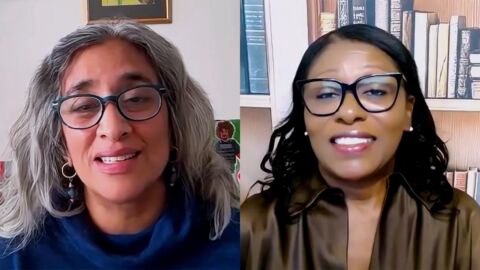
AMANPOUR: Hari Sreenivasan is joined by director Geeta Gandbhir and Pamela Dias, who’s the mother of Ajike Owens, to discuss the motivation behind the
documentary and what they hope viewers will take away from it.
(BEGIN VIDEOTAPE)
HARI SREENIVASAN, INTERNATIONAL CORRESPONDENT: Christiane, thanks. Pamela Dias, Geeta Ganbhir, thanks so much for joining us.
Geeta, you’ve done several social justice-focused films in the past. Your most recent one is on Netflix. It’s called “Perfect Neighbor.” And it
focuses on the death — the shooting of 35-year-old Ajike Owens, a Florida woman who was the mother of four who was shot by her neighbor, Susan
Lorincz. Tell us a little bit about this story and why you decided to tell it.
GEETA GANDBHIR, DIRECTOR, “THE PERFECT NEIGHBOR”: Sure. So, the background to the story is that Ajike Owens was a family friend. She was my sister-in-
law’s best friend. So, when this happened, we were immediately called. My partner in a Cam-Con 2 (ph), who’s also a producer on this film, and I were
on the ground immediately to try to support Pamela Dias and her family as far as keeping the story in the news.
That was something we wanted to do because we were concerned that due to stand-your-ground laws that exist in Florida, that Susan Lorincz would walk
from the crime. And we have the precursor of Trayvon Martin that I think is steeped in the national conscience. And that was — again, it was a
concern.
So, about two months later, after we became involved in supporting the family, we received the body camera footage from Pamela’s lawyers, Benjamin
Crump and Anthony Thomas. And they had used the Freedom of Information Act to acquire all the materials that the police had recorded in the process of
this case and prior to the murder.
And so, when we got our hands on that and went through the materials, we were asked to look through them to see if there was anything that would be
useful for the media or maybe even for the lawyers. We realized that there was a much bigger story here because the body camera footage stretched back
two years. So, that’s how the film began.
SREENIVASAN: Geeta, when you looked at the footage, what surprised you? Because I suspect you were expecting, well, the night of, but to have two
years’ worth of video.
GANDBHIR: Yes. No, absolutely. I think for us, as you mentioned, usually when a crime occurs, as far as police body camera footage, it really
usually is only the night of. You might have some security camera footage that captures something. But we were shocked to see the frequency with
which police were called to the scene. And again, like I said, it spanned back two years.
SREENIVASAN: Pamela, I guess for people who might not have seen the film, can you just tell us a little bit more about Ajike as a daughter, a mother,
a friend?
PAMELA DIAS, MOTHER OF AJIKE OWENS: Yes. So, Ajike was a single mother of four children. She was super mom, I would say. She was very involved in her
children’s lives. She had her children in private school. She instilled in them a deep faith. She had core values. She instilled in them respect for
their elders.
As you see in the film, where she tells her son, or she tells the police regarding her son, that if they have a problem with an adult, you know, to
take it — come tell her, and she’ll take it up with the adult. The kids were involved in a lot of extracurricular activities. She was the cheer
mom. She was the football team mom. I always joke and say that we have this great extended family because everyone that she considered a friend was
family to her. She had great high dreams, aspirations, just a joy, very comedic, funny, loved, and just a beautiful person.
SREENIVASAN: Before this event did you know much about the neighbor that shot your daughter?
DIAS: I did not know her by name. He always referenced her as a neighbor and she would tell me, my daughter would tell me that there was a white
neighbor that would harass the children and then she told me that there was an incident where she waved a gun. I couldn’t wrap my mind around the fact
that a neighbor would show a gun to children. It just didn’t seem real to me at that time, but obviously it was.
(BEGIN VIDEO CLIP)
UNIDENTIFIED FEMALE: Susan, she would come out and scream and the language around these little kids.
UNIDENTIFIED MALE: The Susan with you?
UNIDENTIFIED FEMALE: Yes.
UNIDENTIFIED MALE: Describe to me what she was saying.
UNIDENTIFIED MALE: The F word, the B word.
UNIDENTIFIED MALE: B word and the F word.
UNIDENTIFIED FEMALE: She called them slaves. She told them that the field that they weren’t on where it wasn’t the underground railroad.
(END VIDEO CLIP)
DIAS: So, it definitely had a major racial component to it. And Susan’s — Susan was never in fear. Susan was motivated by hate, biases and racism.
SREENIVASAN: Geeta, we see so many different interactions of the police that come to Susan’s door, that come to the neighborhood, that talk to the
kids, that talk to the families, black police, white police, male, female. What was their failure here? Was there — what was — how did race play
into those interactions?
GANDBHIR: Sure. So, I think what’s so fascinating in this, that we’ve — we saw in the footage, and I think what you see in the film is that there
were overall systemic failures in this case, and the police show up on scene multiple times. And what’s interesting — and I think when — again,
in sharing this film with audiences, what we see is that our bar for the police is so low that we sometimes mistake politeness, or again, them not
showing up guns blazing, you know, throwing people to the ground or shooting anyone as competence.
And I think what happened here is that Susan was treated as a client, again, because she was the person who called again and again, she as an
older white woman was handled with kid gloves and just treated as a nuisance, right? Ultimately, the police did get — seemed to tire of her,
but they never saw her as a threat. And they never saw the community, a multiracial community, as people who are worth protecting. They never saw
them as — I think, as important or as citizens in the way that they saw Susan. So, they sort of — again, they dismissed the idea that there was
any threat.
I think one of the reasons we were so committed to using the body camera footage is because it is evidence. Again, we are filmmakers first. So, we
wanted to make sure that we clearly documented or showed the audience the perspective of the police, Susan’s perspective and the community’s
perspective.
But when you look at all of them, you really see that Susan was the aggressor in this case. And the police, again, they should have — maybe by
the third time Susan called and it was unfounded, they should have flagged her. I do believe that if Susan had been a person of color, that this would
have gone very differently.
(BEGIN VIDEO CLIP)
UNIDENTIFIED MALE: You sure she got shot?
UNIDENTIFIED MALE: Yes.
UNIDENTIFIED FEMALE: Oh, my God. Why did she do this?
UNIDENTIFIED MALE: She’s on the ground.
UNIDENTIFIED MALE: Sheriff’s office. Come outside with your hands up.
(END VIDEO CLIP)
SREENIVASAN: The day Ajike was shot, she had gone over to Susan’s house because Susan allegedly threw roller skates at Ajike’s children and it
snowballed from there. According to the facts, Susan shot Ajike through a bolted metal door and her defense team called on the stand your ground
laws. And some people might remember that from 2012, when George Zimmerman used that defense when he shot Trayvon Martin, but just refresh us, what
are stand your ground laws?
DIAS: Yes. So, in essence, I’ll give you the short version. Basically, stand your ground law states that you have — it removes the duty to
retreat. If you feel that you are in danger, that you have the right to protect your home. And again, this law actually — it’s really being
misused. It creates fear. It emboldens people to shoot first and rationalize later.
Stand your ground law is definitely a law that needs to be reviewed, modified, taken off. It exists in about 38 states, I believe in some form
or fashion. So, it is a very — a law that basically allows people to weaponize it and lack accountability.
SREENIVASAN: Geeta, you have a statistic at the end of the film that shows — it says that these laws have been linked to an 8 to 11 percent increase
in homicide rates or roughly 700 additional deaths each year. And there are statistics from the FBI, this is about 10 years old now, but controlling
for other variables, the odds that a white on black homicide is ruled justified are 281 percent greater than when a white person kills another
white person.
How does race play into that foundational level of this policy that is so broadly adopted in the United States?
GANDBHIR: Sure. So, I think what’s so interesting to me is — I think the film is a microcosm of the best of American society, but also the worst of
American society. And the worst is the racial disparities that you see. And how — and systemic treatments. And I think that stand your ground laws,
again, it’s a predatory law falling under the castle doctrine.
But the key part of it is that if you can prove that — or if you feel that your life is in imminent danger, you have the right to defend yourself
without having the duty to retreat. And so, I think, again, there is this almost a paranoia in our society about those around us. I think those — I
think there is manufactured fear that — and that is a tool of an authoritarian government also, used to polarize and divide us.
We are — instead of sort of living together and living in community, the way that Ajike and her neighbors did, I think Susan sort of embodies those
fears. And you see this play out in history time and time again, and it’s particularly with white women. The story of Emmett Till is reflected on
that, that black people are punished and murdered for in some way offending, even if they do not, right, but a white person will claim that
they were somehow offended by, or insulted by, or, you know, harmed by a black person. And the result is death, you know, is a death sentence for
the black person. And stand your ground laws are just an extension of that.
(BEGIN VIDEO CLIP)
UNIDENTIFIED MALE: I think you know what you did was wrong. I think you know that there were already deputies on the way.
SUSAN LORINCZ: But there was times I called you and deputies never showed up.
UNIDENTIFIED MALE: I understand. It’s been two minutes. So —
LORINCZ: To me, it wasn’t two minutes. To me, it was much longer in my mind. It just — it felt it —
UNIDENTIFIED MALE: But there’s only one reality where time exists. And I understand perception of time can be different for different people. But in
the reality of things, you had just disconnected. Within two minutes, a shot was fired through that door.
(END VIDEO CLIP)
SREENIVASAN: Pamela, Susan Lorincz recently did an interview from the correctional facility that she’s in serving 25 years for. And in there, she
expresses some remorse. I want to read her quote, “I can’t take it back. I can’t replace her. And I’m still so sorry in regards to your daughter.”
But she still claims that your grandchildren repeatedly threatened her and maintains that she was fearful for her life when she shot. Pamela, what you
see in this film is these really difficult images of your grandchildren hearing that their mother is gone. And we are all collectively watching
this. And that must have been difficult for you to see the first time, but then to decide, yes, I wanted the rest of — well, America or the world to
see this. What made you say, yes, let’s go forward?
DIAS: I’m grieving. The grandchildren are grieving. The community is grieving. I said to myself, it has to be more than just grief. I can’t just
bury my child and just walk away. And that’s the end of the story. My daughter said the world would know her name. We don’t know the whens, the
whys, and the hows, but this is the way the world knows her name. And I had to honor her. I had to show up for her. I had to be her voice.
The manner in which she died under the premise of stand your ground law is a clear representation of why this law needs to be repealed. And for that
reason, I said, yes, we need — our family, our story will be the call to action, will be the catalyst to make real changes in our community, in our
society.
SREENIVASAN: The film is on Netflix now. It’s called “The Perfect Neighbor.” Pamela, I’m so saddened for your loss and the loss for your
grandchildren. And, Geeta Gandbhir, thanks so much for making the film.
GANDBHIR: Thank you for having us.
DIAS: Thank you.
(END VIDEOTAPE)
AMANPOUR: It’s really a tragic story and an important policy issue to keep an eye on. And finally, she is the hapless British heroine who stole the
hearts of the world with her chaotic romantic pursuits. Now, the main character of the book by Helen Fielding turned box office hit “Bridget
Jones” has been immortalized in bronze. And who better to unveil her own statue than the alter ego and actress Renee Zellweger, who brought her to
life and earned an Oscar nomination in the process.
The beloved character joins the likes of Harry Potter and Mary Poppins as permanent residents of London’s Leicester Square, the city’s cinema zone.
That is it for now. Thank you for watching, and goodbye from New York.