
Read Full Transcript EXPAND
PAULA NEWTON, ANCHOR: Hello, everyone, and welcome to “Amanpour and Company.” Here’s what’s coming up.
(BEGIN VIDEO CLIP)
UNIDENTIFIED MALE: Those who remain must be protected. There must be accountability for those carrying out the killing and the sexual violence.
(END VIDEO CLIP)
NEWTON: As Sudan’s humanitarian crisis worsens, the U.N. votes to investigate mass killings in Darfur. I speak with the U.N.’s relief chief,
Tom Fletcher, just back from Sudan.
Plus, in a major reversal, Donald Trump says he wants the Epstein files released. We discuss the political calculus with Stephen Collinson.
And —
(BEGIN VIDEO CLIP)
SARAH MCLACHLAN, SINGER: There’s sort of postcards of certain periods of time. I mean, music and writing is extremely cathartic for me.
(END VIDEO CLIP)
NEWTON: — after 11 years, Canadian musician Sarah McLachlan returns with a new album, a new tour, and a new documentary.
Also, ahead —
(BEGIN VIDEO CLIP)
TOM FRESTON, AUTHOR, “UNPLUGGED”: It really was unlike anything people had seen before on television.
(END VIDEO CLIP)
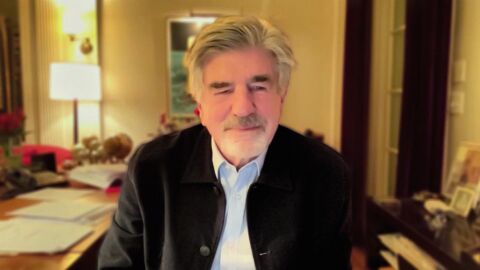
NEWTON: — “Unplugged: Adventures from MTV to Timbuktu.” Tom Freston helped shape modern pop culture by co-founding the iconic music channel. He
speaks to Walter Isaacson about his new memoir and the future of media.
And a very warm welcome to the program, everyone. I’m Paula Newton in New York, sitting in for Christiane Amanpour. And we begin in Sudan, where the
United Nations Human Rights Council on Friday moved with a strong consensus to investigate mass killings in Darfur. And that comes after stark new
evidence of atrocities in El Fasher in the Darfur region of Western Sudan.
And while the search for accountability now begins, the suffering on the ground is only deepening. The U.N.’s top aid official, Tom Fletcher, has
just returned from Tawila in northern Darfur, a town overwhelmed at this hour by families fleeing the violence. One woman described escaping the
city.
(BEGIN VIDEO CLIP)
UNIDENTIFIED FEMALE: I came on foot. We have suffered more in El Fasher. The war is very evil. Very dangerous. We live in fear.
(END VIDEO CLIP)
NEWTON: Now, with more than 21 million Sudanese facing acute food insecurity and a collapsing health system, the humanitarian emergency is
just spiraling. Fletcher also met with the Sudanese army chief, as well as the paramilitary Rapid Support Forces, and he joins us now from Chad.
And especially grateful to you, as you were just returned from Sudan, so that we can get really an eyewitness to what you describe as a horrific
situation for civilians. And you also say it’s unimaginable suffering that you’ve seen. And based on what you’ve seen and been briefed on, what
evidence do you have of what we’ve had reported, which is mass killings, sexual violence, house-to-house attacks carried out in the last few weeks
by the Rapid Support Forces in El Fasher?
TOM FLETCHER, U.N. UNDER-SECRETARY-GENERAL FOR HUMANITARIAN AFFAIRS AND U.N. EMERGENCY RELIEF COORDINATOR: Well, thanks for having me on, Paula,
and good afternoon. Yes, I’ve spent a week inside Darfur. I’ve just come back out through the Adre border crossing into Chad, and I met countless,
countless survivors who told me horror stories of mass executions, gang rapes, of the ordeal they’ve had to go through simply to escape from El
Fasher, leaving loved ones behind.
I met one young lady who had somehow managed to scoop up the malnourished child of her neighbor, having just watched her neighbor and her own husband
being killed. She’d then taken that perilous trek to Tawila, where we’d been able to provide her with that support. But on the way, she had her leg
broken when she was attacked by militia members. And so, many stories like that. This really is the epicenter right now of human suffering in the
world.
NEWTON: And you do call it the epicenter of human suffering. And on Friday, the Human Rights Council ordered an urgent investigation into
reports of human rights violations in El Fasher. I mean, realistically, and I ask you now, what do you expect from the process? You have been quite
tough on the U.N. in general, the organization that you work for. How confident are you that it will deliver real accountability and obviously
put a stop to this?
FLETCHER: Well, ultimately, that depends on how strong the member states, the International Community, are willing to be. I absolutely back that call
for an investigation. All the evidence I heard and saw during my visit suggests that El Fasher is a crime scene right now. And so, we’ve got to
get investigators in fast to hold people to account to investigate this atrocity.
But also, we need that presence on the ground and that international sustained effort to stop the next atrocity, whether it will be in the court
of fans or elsewhere. This conflict is still going on, and the world has been painfully inactive so far.
NEWTON: Painfully inactive. We will get to that in a moment. We do want to get to the point that rights groups really have been trying to gain as much
evidence as they can of girls sexually assaulted, ethnically targeted executions, abductions for ransom. I am wondering what kind of
documentation already exists from the U.N. And I want to ask you as well, from any evidence that’s been gathered, what are the patterns of atrocities
here that are emerging?
FLETCHER: So, a number of our partners across the humanitarian community are collecting evidence. We also have to get the professional investigators
in as quickly as possible. And one of the things I’ve been negotiating with the RSF and others is getting access to El Fasher as soon as we can, under
our conditions, which means complete neutrality and independence of our teams going in.
Based on what I’ve been hearing from the survivors just off the road, in Cormore (ph), where I was two days ago, and in Tawila, where I spent two
nights, there will be huge amounts of evidence. But you’ll also understand if I hesitate from giving too much detail right now as to how that evidence
is being collected, I need to protect our humanitarian workers and also protect the access that we are seeking to get for our lifesaving aid.
NEWTON: In fact, they have been a target throughout this conflict. What can you tell us about that? Because it must really hamper any kind of
humanitarian efforts that you have on the ground there.
FLETCHER: Hugely. And, you know, I’ve been in the last year to so many of these crisis spots. I’ve been into Gaza twice, and this is my second visit
to Darfur. I’ve not been anywhere where the complexity of the access arrangements is so difficult to navigate. You’ve got to get along. I’ve
just driven back down that, you know, two days on a very, very bumpy road to get to Tawila. Along the way, we must have gone through 40, 50
checkpoints, manned by different armed groups. I say manned, actually, it’s children who are running these checkpoints.
We came through a pretty dicey forest fire on the way back. There was a drone strike on a nearer U.N. convoy as we were going in. You know,
logistically, security-wise, politically, this is a really, really tough place to operate. But we’re determined that the U.N. will be as close as
possible to the people we are here to serve. The U.N. is not a ship that was built to stay in harbor.
NEWTON: True. And you talk about the risks. I do believe it is chilling, as you said, to see essentially teenagers running some of these
checkpoints, I’m sure. I do want to talk about your talks in the last week. So, you met with Sudan’s military leader, General Abdel Fattah al-Burhan,
in Port Sudan. You said those talks were constructive. What agreement, if anything, did you get from him to ensure neutral, independent access for
everything you have on the table right now? And you highlighted it yourself that you also spoke, in fact, to the RSF forces. Did they give you any
reason to be hopeful that you would have access to El Fasher?
FLETCHER: So, with General Burhan in Port Sudan, I insisted on the need for us to have complete access everywhere in Sudan on the basis of need.
And I’m confident that the agreements, the commitments he gave me, will hold. But we will be very clear in holding everyone here to account for
actually delivering on their commitments to give us that unhindered access.
With the RSF, I was particularly focused on getting access to El Fasher. Now, I don’t know how long that will take us, but I’m pretty confident we
will be in El Fasher very soon, based on the commitments that I secured a couple of days ago from them. But again, I insist, this has to be on our
terms. We can’t go in a way that instrumentalizes our aid or politicizes our aid or manipulates our aid in any way.
NEWTON: And again, you highlight how complicated this will be coming forward. You obviously need help from not just the U.N., but other
countries as well. The U.N. — you said at a meeting of the U.N. Security Council last month that you warned of a crisis of apathy. You know, do we
describe it as indifference? I’m wondering how you describe it. Is it just that they’ve had too much on their plate? I mean, Sudan’s suffering has
been profound, as you have pointed out again and again.
And yet, why do you believe the International Community is reacting this way? Is it apathy? Is it complacency? What is it?
FLETCHER: That’s the crucial, crucial question here. You know, our appeals are only 32 percent funded. So, we are making brutal — I’ve just sat with
our team here in Adre, who are literally today making life and death choices about which programs to cut.
And, you know, I mentioned that young lady I met in Tawila who’d escaped from Fasher, carrying that malnourished child of her neighbor. If
international leaders showed an ounce of the courage and humanity that she shows, then we’d be able to resolve this. Then we would get this outpouring
of generosity. She said to me as I left her, is help coming? And of course, I said, yes, but, you know, that’s the challenge. That’s the challenge to
world leaders, and particularly people who are boasting about cutting aid right now. Will you stand up and stop this war and get this help in because
it’s so badly needed? You’re right, apathy, indifference, distraction, but these are not good enough excuses right now.
NEWTON: And you make the point, right, that you had to look that woman in the face and say, is help coming? And you say, yes, obviously you want to
give her hope, and you still have hope. I can hear it in your voice. There is certainly the United States could do a lot here, although other
countries should not be excused.
The United States announced $200 billion worth of deals with UAE. That — you know, there are allegations against the Emirates in terms of their
involvement in this conflict. They deny any involvement. But what pressure do you believe that both the United States and other countries can put on
countries like the UAE to try and really stop whatever they are doing in order to affect the crisis that’s on the ground now in Sudan?
FLETCHER: Well, I think the United States is playing a very energized role right now in trying to stop this conflict. And I’m in daily contact with
Dr. Massad Boulos from President Trump’s team, who is incredibly engaged alongside the Quads, the Saudis, the Egyptians, and the Emiratis to try to
find ways to get the guns to fall silent. And I think that’s hugely welcome. It’s a level of engagement we’ve not seen in recent months. And I
hope it brings results.
In terms of the arms getting in, I’ve been very clear that there must be accountability for the people who fire the weapon, for the people who give
the order to fire the weapon, and that anyone providing arms to this conflict right now should take a long, hard look at themselves in the
mirror. The last thing Sudan needs right now is more guns and bullets. It needs food and medicine and water and peace.
NEWTON: And as you noted, President Trump has said himself that they are more engaged. I’m sure many will be relieved to hear that that is the same
message you were getting behind the scenes. We do want to turn to Gaza now. And as you mentioned, you have been in and out of Gaza as well. Since the
ceasefire we’ve seen the video, heavy storms and flooding have absolutely devastated the tent camps. With winter approaching, how concerned are you
that thousands of families there will not survive the coming months?
FLETCHER: I’m very worried, obviously. And we’re just over halfway through the 60-day plan that I outlined in response to the ceasefire deal. Hugely
welcome ceasefire deal that President Trump got. And we’re seeing a real surge in aid. We’re getting much, much more in. We’re getting millions of
meals out there. We’re standing up the health sector again. And we’re getting tens of thousands of tents in. That’s a real improvement on where
we were 32, 33 days ago. But it’s just not enough.
And particularly seeing these heavy rains, we need all the crossings open. We’ve got more tents we can get in. We’ve got a pipeline of supplies of
crucial winterization kits, the clothing and the fuel that people need to survive the winter. We can get all that in if those crossings are open and
we’re allowed to deliver at scale. We’ve only got three of the six crossings open right now.
And then we also need the whole humanitarian community allow the access because we rely hugely on our NGO partners that do crucial, crucial work
inside Gaza. And they’re not currently getting the access alongside us that they need and we need them to have.
NEWTON: And so, Tom, can we quantify this a little bit? I mean, we had heard 600 trucks a day. Apparently only about 150 are entering. And yet you
say that the influx is significant. So, how many are getting in? And as you said, you — the bottleneck is then the actual entrances in terms of the
entrances you can use to actually get the aid into Gaza. So, it’s both things?
FLETCHER: Yes. I mean, so we are getting far more trucks than we were before. It varies from day to day, but we’re trying to hit across the
sector the targets that were set in that peace agreement, in the deal that was announced in Sharm el-Sheikh. But — so, it’s the pipeline, but it’s
also the impediments to the NGOs that they’re facing. And it’s also just the scale that we need to get in.
We need to get those other three crossings open. Allenby Bridge in from Jordan, absolutely crucial lifeline for our suppliers. And that’s still
closed at the moment. And I know from my daily contacts with the White House on this file, how hard they’re working to get those convoys moving at
the scale that we need. But we need that sustained pressure.
NEWTON: Yes, they have certainly noted that they are engaged on that file as well. Tom Fletcher, really grateful to you, especially as you are just
out of Sudan and will continue to follow developments. Appreciate it.
FLETCHER: Thank you, Paula.
NEWTON: And now, to President Trump’s dramatic shift on the Jeffrey Epstein files. Now, in a post on his website, he urged Republicans to vote
to release the files and move on from what he’s calling a, quote, “Democratic hoax. Now, it marks a dramatic turnaround for the president,
and it comes as some Epstein survivors make a public push to try and convince House Republicans to vote to release the files. Here’s a clip from
their very powerful PSA.
(BEGIN VIDEO CLIP)
UNIDENTIFIED FEMALE: I was 14 years old.
UNIDENTIFIED FEMALE: I was 16 years old.
UNIDENTIFIED FEMALE: I was 16.
UNIDENTIFIED FEMALE: 17.
UNIDENTIFIED FEMALE: 14 years old.
UNIDENTIFIED FEMALE: This is me.
UNIDENTIFIED FEMALE: This was me.
UNIDENTIFIED FEMALE: This is me.
UNIDENTIFIED FEMALE: When I met Jeffrey Epstein.
UNIDENTIFIED FEMALE: This is me when I met Jeffrey Epstein.
UNIDENTIFIED FEMALE: It’s time to bring the secrets out of the shadows.
UNIDENTIFIED FEMALE: It’s time to shine a light into the darkness.
(END VIDEO CLIP)
NEWTON: Stephen Collinson joins me from Washington. And, Stephen, I’m grateful that those women are courageous enough to put a human face on
everything we talk about, because right now this is a huge political concern for where you are. What do you make of the president’s reversal on
all of this? You know, at first, he said it was a hoax now he’s encouraging them to release the files. This is after months of, you know, him trying to
break the party ranks on this.
STEPHEN COLLINSON, POLITICS SENIOR REPORTER: Yes. And that was the reason when this came out on his Truth Social social media account last
night. It was quite a shock and it really reverberated across Washington. I think the most likely explanation is that the president reasoned that he
was about to suffer a humiliating political defeat.
We’ve had through the weekend Republicans who support this bill to open the files saying that they expect multiple, perhaps tens or even up to 100
Republicans to repudiate the president and vote in the House to open these files. Now, at least the president can turn around and say, well, I wanted
this vote, too. So, it is not a public shattering of his authority, even though this is hugely unusual. It’s unprecedented really across the span of
Trump’s two White House terms for him to be led by the Republican conference in the House. He, of course, has had an iron grip on his party
and his party’s base. So, this is something that’s a very interesting political development.
Now, the question is, does this get to opening those files that those victims hope to see? I think that is very much up in the air. This may well
be a tactic by the president that doesn’t in the end represent a massive change of his position and his desire not to see those files released.
NEWTON: So, can you take us through this, Stephen, in terms of what the possible end game might be for the president? And a lot of this might
actually move over to the Senate, right? We had Senate leadership to say that today that they didn’t know if they were going to put a vote on the
floor on this.
COLLINSON: Yes, I think the question now is whether there is a big enough vote in the House to change the politics in the Senate to make it almost
impossible for the Senate Majority Leader John Thune not to bring this up. And would there then be sufficient Republican support to get to the 60-vote
filibuster threshold that would pass the bill and then get it to President Trump’s desk?
Then technically, at least, he could say that he’s going to veto this. That would send it back to the Congress. It would need a two-thirds majority in
both houses to override that. But the question here is almost moot, though. The president keeps telling us that he is the head — titular head of the
Justice Department in the United States of the justice system. If he wanted these files to come out, he doesn’t really have to wait for Congress to
authorize it. So, that is the reason why a lot of people believe that this is a tactical retreat by the president. And it doesn’t represent a full
shift of his position.
But, you know, I was listening to one of the victims on CNN last week, and she said that the political ground here is shifting at such a rate that no
one really knows how this is going to end up, because she said, you know, no one would have thought a year ago that Prince Andrew wouldn’t be a
prince. Of course, his own relationship with Jeffrey Epstein has come under scrutiny.
So, I think this is one of those political crises that does tend to create its own momentum. So, it’s difficult to predict from here what will happen.
NEWTON: And Marjorie Taylor Greene, perhaps the one person who noticed the political ground shifting before others, again, a huge MAGA supporter. What
is the story there? I mean, she was this MAGA superstar. The president has now called her wacky Marjorie and worse, Marjorie Traitor Greene.
COLLINSON: Yes. When she first came to Washington and after winning her seat in the 2020 election, she was almost seen as more Trumpy than Trump.
She was a massive supporter of Trump. She stood with him all through his legal problems when he was out of office, traveled with him in 2024 on the
campaign. She split with him over the Epstein issue. But it’s not just that, she’s been criticizing him for the last few weeks on the cost of
health care in the United States, on the price of groceries, the cost-of- living energy.
She has been making the case that Donald Trump, the architect of the MAGA movement and America first, no longer stands for those principles as much
as many of his supporters would like to see. She’s criticized his trips to Asia, to the Middle East, to Europe, his attempts to win the Nobel Peace
Prize. She says she wants him to park Air Force One in the United States and focus purely on domestic politics.
And I think this is — it’s just a hint right now. But you’re seeing a few Republican lawmakers start to think about what their own political futures
will look like in the MAGA movement and the Republican Party when Donald Trump is no longer leading it. And I think that is the most interesting
thing that really underlies not just the Epstein issue, but Marjorie Taylor Greene’s really interesting comments.
NEWTON: You know, as I said before, she seems to have recognized that the political ground was shifting earlier than anyone else. And after those
victories for the Democrats, right, that that recent victory has given many people, even in the MAGA movement, pause.
You’ve done an excellent job on bringing us right up to speed on what is an incredibly complicated story. Stephen Collinson for us. Grateful to you.
COLLINSON: Thanks.
NEWTON: And stay with us. We will be right back with more news.
(COMMERCIAL BREAK)
NEWTON: So, more than three decades after her breakout, Sarah McLachlan is experiencing a remarkable new chapter in her career after an 11-year wait,
she’s back with a new album of original songs, she’s on tour again and she’s even up for induction into the Songwriters Hall of Fame. And a new
Hulu documentary also revisits her trailblazing creation of an all-female songwriter, Lilith Fair.
Now, she stayed side for a month of shows and I spoke with her about music, activism and what still fuels her after all these years.
(BEGIN VIDEOTAPE)
NEWTON: Welcome to the program.
SARAH MCLACHLAN, SINGER: Thank you.
NEWTON: We do want to start with what’s new. Let’s start with what’s new. “Better Broken” is new. It’s your latest album and your first in more than
a decade. So, tell us why this album, these songs, give us some insight into your passion for this project?
MCLACHLAN: Well, yes. It’s been 11 years since my last record, and these are basically songs about my life. They’re sort of postcards of certain
periods of time. I mean, music and writing is extremely cathartic for me, so it’s a lot of my, I guess, angst and frustrations and sadness and just
writing as a way of sorting through a lot of the challenges that I faced in my life and sort of finding a place to put it.
You know, that being said, I’m in a great place in my life now. I’m really happy. Life is very easy. I just finished — I finally finished the 30th
anniversary “Falling Towards Ecstasy Tour” that I was supposed to finish last year, but I got a couple of wicked viruses, lost my voice for months,
and had to go on vocal rest, and actually, this whole winter, I was unsure whether I would actually be able to sing again, so that was a bit
stressful, but just finished that Canadian leg up, and I’ve got a couple days at home, and I’m coming back to starting in D.C., so I’m very excited
about that.
NEWTON: Exactly. You are in the United States, in fact, this entire week, and they are going to get quite a treat, the fans, and I will say, when you
say it’s cathartic, I can speak as someone listens to your music. It’s cathartic for so many that listen to your songs, and I want to get to a new
one. It’s called “Gravity,” and I call it — I’m taking some creative license here, I call it an adult child’s lullaby. Let’s listen for a
moment.
(BEGIN VIDEO CLIP)
(MUSIC PLAYING)
(END VIDEO CLIP)
NEWTON: Oh, so lovely to hear that. You’ve been open about the fact that that’s about a painful time in your relationship with your eldest daughter,
all patched up now, you’re glad to report. You know, many of your songs are about relationships, but how is this song different from others that you’ve
written and performed?
MCLACHLAN: Well, I think this is one of the most vulnerable songs I’ve ever written, and certainly, because it’s about my relationship with my
child, it’s just — the whole thing was very, very fraught. And I was actually tentative to — you know, to put it out, because I wanted to make
sure she was OK with it. It’s one thing when you talk about your own feelings about a certain issue, but when you bring somebody else into a
very public realm about a very private matter, you know, there needs to be discussions about it.
And I talked to my daughter a lot about it, and she was like, no, I want people to know about this. I think it’s really important, especially
because of the work that we did and how much that helps, because I think that can help other people as well.
And I do think it’s important to — for all of us to talk about the hard things that we’ve been through, because I think it allows other people to
feel less alone, because we all go through it. It’s tough being a parent, and kids these days are really struggling with social media, with the way
the world is, and they don’t have the same life experience that we have to — you know, to know that this is cyclical. And I mean, it is crazy-making
right now, for sure, for all of us.
But, you know, it’s just — it’s tough, and being able to talk openly about all of our struggles and how we’ve overcame them, I think, is really
important.
NEWTON: Yes, and I think as a mother of adult children, I think so many parents out there can really relate to that, and the fact that you’ve come
through it, and that the song can be helpful to everyone in doing that. With these songs, with “Better Broken,” I am wondering how they differ from
your early lyrics and your collaborations, because the soundtrack that you have given us for so many decades now, I mean, so many of us play it on
repeat.
We walk through the streets of big cities. We are in front of lakes and oceans listening to it. So, I am wondering how your songwriting has
changed, and maybe it hasn’t.
MCLACHLAN: I mean, I would hope that it’s evolved. I think as I’ve gotten older, hopefully my revelations and my insights about myself have slowly
inched forward. You know, I do find that I fall back on similar themes. As you said, I write a lot about relationships, and I think, you know, we all
have patterns in our lives, some of which we need to overcome. And I notice patterns in my songwriting, and I notice patterns in my relationships.
And part of the writing is allowing me to see those patterns and going, oh, OK, these are things I want to continue to work on and change. But I think
I’ve become — I hope I’ve become more open and have edited myself less. I think this album is probably one of the most vulnerable records I’ve
written. You know, “Gravity” is one of those songs. “Wilderness” as well is another song that’s very storytelling and very — you know, very kind of
harsh and bare for me, because, you know, that was a time for me that was incredibly — there was so much shame and so much vulnerability in there.
And I sing it now, and there’s a sense of strength and pride. And I think that’s where “Better Broken” came from, this sense of resilience that we —
you know, we go through these hard things, and we have to pick ourselves back up and find a way to move forward and use those things to learn and
grow and become better and stronger.
NEWTON: And I know for so many people, your songs actually give them a lot of resilience and listening to the lyrics. On the cover of your new album,
you know, I looked at the picture, and I think it’s a stunning picture, by the way, you’re both defiant and I think a bit mischievous in your
expression on the cover photo. Am I reading too much into it? Did I nail it? Is it something in between? I mean, because I want to ask you, what did
get you back in that studio? It had been more than over a decade.
MCLACHLAN: Yes, well, I had been writing on and off the whole time. I mean, life got in the way. I had two teenage daughters. I went through, you
know, a year of real struggle with my eldest child. I’ve been, you know, continuing to fundraise off the side of my desk for my free music schools,
and I continued to do some shows as well. So, there was just a lot of things that kind of took me away from music for a while.
And I think I definitely had some trepidation of getting back into the game because I know full well how much it takes to promote a record, which means
leaving for a lot of time. And I also thought if it’s my last record, I really want to try something different. So, it took me a while to get up
the guts to, you know, go find somebody to help me with this project.
And meeting Tony Berg and Will McClelland was such a gift because, you know, within a week of being in the studio with them for the first time, I
was completely reengaged and recharged and went, you know, in my own mind going, why would I think this is my last record? This is so much fun. I
love doing this.
NEWTON: I am so glad to hear that. And I’m sure many people listening here are as well. We do want to take you a little bit into your past. And for
those who don’t know, “Lilith Fair: Building a Mystery,” it’s a new documentary about Lilith Fair itself, arguably, and I’ll paraphrase it
here, one of, you know, your most worthy accomplishments, I would say. You founded it in the late 1990s, an all-female music festival, and really on
the conviction that women could headline and carry a major concert tour.
I want to ask you about how you feel about this triumph in the end. How do you feel about it now when you look back on it?
MCLACHLAN: I feel incredibly proud to have been part of it and that we all stood together and really, you know, shifted the dial and created some
change, not just in that moment, but I think there’s a real legacy that has continued. You know, there’s so many young people I’ve met over the years
who have come up to me and said, that was my first concert. You all showed me that I could do and be anything I wanted. I’m now running a corporation,
and I’m bringing other women alongside me. I’m supporting women.
And I think, you know, that’s one of the most powerful, lasting messages of that film and of that time is that when women support women, when we carry
each other and lift each other up instead of tearing each other down, success comes, and success looks like there’s many different facets of it.
And I love in particular right now that that movie is out there as just a reminder that, you know, when we choose to stand together, we can create
real change, and it’s powerful.
NEWTON: And speaking of that change, though, it’s more than a generation later, do you feel that it still has the same resonance? Has it diminished
at all? Because as you know, as both an artist and a mother, your daughters and mine, they live in different political realities today in 2025. I’m not
sure you could have even imagined them in the late ’90s.
MCLACHLAN: Yes, I definitely think that, you know, the film itself has a great message. And I think I hope that there is resonance today, and I hope
it encourages women to continue to stand up and support each other to create change in the world.
You know, I think there’s a number of lasting legacies. I mean, all the money I took — I made from Lilith, I took and put into the foundation,
which continues to support youth at risk to have music education in their lives. So, yes, I think it continues. In quiet ways, in loud ways, artists
like Brandi Carlile are continuing to champion female artists and support other musicians.
You know, I see it all over the place, Taylor Swift changing the face of the world and bringing along predominantly all-female artists to open up
for her as well. So, I see the shift continuing.
NEWTON: Continuing, not over yet, but continuing. I have to say, I’ve always loved the cover of Rolling Stone magazine in 1998. They called you
the flower child with a filthy mind. Tell us, Sarah McLachlan, it’s catchy, but was it true? Is it still true? Do you have a filthy mind?
MCLACHLAN: I don’t think I have a filthy mind. I think at the time I was very — I was interested in shocking people a little bit more than I am
now. I was — you know, I think people assumed that I was this quiet waif who, you know, sat in the attic reading Sylvia Plath and drinking red wine
with candles at 2:00 in the morning, that really is not — it’s not who I am at all. I’m a very happy and optimistic person. So, I think, you know, I
always was attempting to dispel some of those myths.
NEWTON: But getting back to what — you know, a lot of people would say, OK, that’s a badass cover. You’re a badass musician. At the end of the day,
I would say you probably had to be more of a pain in the ass, right? Just have the fortitude to see some of these things through like Lilith Fair.
MCLACHLAN: Well, I was extremely stubborn. I always have been. And I rage against injustice. And it seemed ludicrous when people said you can’t put
two women on the same bill. It will not succeed. And I think, well, I’ve already been doing that. And so, let’s put 11 on the same bill and screw
you. We’ll show you. And we did.
NEWTON: You did indeed and left us with quite a body of work that continues, we’re happy to say. As you said, you were touring in the United
States this week, continuing on with your tour. Such a pleasure. Sarah McLachlan, thank you. Appreciate it.
MCLACHLAN: My pleasure. Thank you.
(END VIDEOTAPE)
NEWTON: Clearly, Sarah McLachlan still enjoying her artistry. Stay with CNN. We will be right back after the break.
(COMMERCIAL BREAK)
NEWTON: Next to MTV, the first ever 24-hour cable network dedicated solely to music videos. Now, it was launched in the ’80s. It’s brought hit songs
to the living rooms of audiences right across the globe, revolutionizing music entertainment. Now, under Paramount and competing against online
streaming platforms, MTV is shutting down its European music channels by the end of the year, bringing that chapter of pop culture to a close.
Tom Freston is a co-founder of the once beloved video channel and former CEO of Viacom. And his new memoir, “Unplugged,” reflects on the birth of
MTV and his career. Here he is with Walter Isaacson.
WALTER ISAACSON, CO-HOST, AMANPOUR AND CO.: Thank you, Paula. And, Tom Freston, welcome to the show.
TOM FRESTON, AUTHOR, “UNPLUGGED”: Great to be here, Walter. Nice to see you.
ISAACSON: You know, I’m going to cut right to the chase. There’s just an amazing scene in this book, “Unplugged,” and I think you know which one it
is. It’s in a sauna, and it sort of sets a whole tone for the book. Tell me about that scene.
FRESTON: Well, I had gone to Gstaad at the invitation of David Bowie. We were recruiting rock stars basically to be in our “I Want My MTV” campaign.
This was early on in our existence, probably 1983, and we were doing this campaign to try and get our fans to demand their MTV so cable operators
would carry us.
So, we had recruited Mick Jagger and Pete Townshend, and my assignment was to get David Bowie. And I called his manager, and she said, well, you know,
David’s skiing in Gstaad, and if you want to come over here, he’ll do it. So, got on a plane with a 35-millimeter crew. We flew to Zurich, took a
train to Gstaad, long haul. We went out on the slopes, and David was there looking great. He was in his let’s dance phase. He had sort of figured out
what he wanted to do. He was going to ski down this hill and do a swoosh and say, I want my MTV.
(BEGIN VIDEO CLIP)
DAVID BOWIE, SINGER: I want my MTV.
(END VIDEO CLIP)
FRESTON: So, we did a few runs, and then it really went smoothly. He’s quite good at that. We would then take it back and, you know, post-produce
it, so put the logo there and so forth. But at the end, he said, well, why don’t you come take a sauna with me at the Palace Hotel, which was the
Grand Dame in Gstaad? And I was staying in basically like a Cutabubba Youth Hostel.
I went back and told my compatriots and the crew, I said, you know, see you losers later. I’m going to go to take a sauna with David Bowie in the spa
at the Palace Hotel. And when I show up there, you know, get down, I have a towel around me, and we both walk into the sauna. It’s really steamy.
There’s one other guy in there. He’s up like on a shelf, basically, up in the back. And it turns out it’s Paul McCartney.
ISAACSON: Well, wait, here’s one reason I asked you to tell that story, because in normal hands, this would be place-dropping, you know, Gstaad and
Paul McCartney and name-dropping and everything else. But one of the things you say in the book is that by hitchhiking around being an adventurer, you
learned a sense of humility. And there’s a self-deprecating quality in the book that makes all these famous names and places become funny as opposed
to arrogant or name-dropping.
FRESTON: Yes, I wasn’t being arrogant or name-dropping. But those were the two guys of the whole sort of rock and roll pantheon that I was the most
intimidated by. Normally, I wasn’t that star-struck. But I sat in the sauna, and we kind of — they wanted to know about MTV, because neither of
them had really seen it. We talked about this and that and threw some water on the rocks. And for a half hour, little Tom from, you know, my home,
Rowayton, Connecticut, was in there with these two huge stars. And they couldn’t have been nicer. It was a great experience and probably one of my
greatest stories of all my years there.
ISAACSON: So, wait, let’s get from Rowayton, Connecticut, suburban kid growing up in a very conventional thing. How all of a sudden, forget about
getting to Gstaad, how all of a sudden were you hitchhiking around the world and doing all these adventures? Where did that risk gene come from?
FRESTON: Well, one that has sort of a pent-up desire to travel. My dad never wanted to go anywhere. So, I really went anywhere as a kid. I went
off to college and learned how to, you know, in those days, you could hitchhike. So, I found this freedom on the road. And I also, I had sort of
fallen in love with the literature of the beats, where, you know, experience was the thing, and you could travel and get out on the road.
It’s the great classroom. And I gradually built-up confidence that I could kind of go anywhere. I was working in an ad agency, and they were going to
assign me to Charmin toilet paper, of all things, which wasn’t a pleasure. And I had a moment, I said, man, I can’t do this. I mean, but then this
girl called me from Paris, who I knew, an old girlfriend. She says, forget it. You can’t sell toilet paper. Come with me. I’m going to cross the
Sahara. And that sounded like a good idea. I quit my job a week. I was on a plane a week later.
ISAACSON: And you say you got off the ferry in Tangier. You write, as soon as I disembarked, I was hit with a high. I would chase the rest of my life,
the peculiar joy of disorientation. Explain that one to me.
FRESTON: Well, you know, you could say it’s a bit of culture shock. I had never really been anywhere before that seemed that unusual. And when you’re
in a place where you don’t know where you are, essentially everything seems a lot more vivid and alive. You know, you hear the call to prayer and you
think you’re in some kind of time capsule some.
So, I love the feeling of being uncomfortable and then having to adjust to this new altitude. And I would spend a lot of my life in places in what we
used to call the third world, traveling around and being in environments that were radically different from everything I had grown up and been
around, you know, beforehand.
ISAACSON: So, how did MTV get started?
FRESTON: Well, it got started with the Warner Communications and American Express had a joint venture called Warner-AmEx, and cable TV was just
getting really started. The notion was rather than be a broadcaster, we’re going to have specialized channels for all these niches for specialized
audiences. And we were sort of the tip of the spear in that group as cable was being laid across the country.
And it was — you know, cable didn’t really reach the big cities, you know, until years later. But in the early ’80s that’s when these brands that we
know today, like ESPN and MTV really got formed and started. And it was all very entrepreneurial and see to your pants and really done on a low cost.
ISAACSON: MTV was not just a business. It was actually a cultural revolution. It just changed the way music was. When you helped found it and
then ran it, did you see it as just another cable business enterprise or did you see there was some sort of mission there?
FRESTON: Oh, no, we were on a mission. I mean, everyone who worked there and we worked for very little money, we were like on a crusade. We wanted
to sweep the nation and then ultimately the world with this new musical invention that we thought was irresistible. We believed in the power of
music. Music was a real powerful force at the time. There had been nothing like this on television. People had never really seen music videos. So, it
was like a whole new visual vocabulary we were throwing at people. And it’s hard to think today how revolutionary MTV was in its earlier years, but it
really was unlike anything people had seen before on television.
So, people would spend untold hours watching MTV and it really created — really generated a creative renaissance in the video business and the music
business. And, and it became a real force. We became like the biggest radio station in the nation. And then we drove it internationally. We became the
world’s first really international network. CNN was international, but they were mostly in hotels. We actually had 50 versions in different languages
set up in different countries that really went out to people’s homes.
ISAACSON: Well, I remember when MTV would just create hits, somebody like myself say, OK, this, this just came out. I’m going to get it. Nowadays
with so much niche media and streaming and everything else, how has that changed the way music hits can be created?
FRESTON: It makes it really difficult. I mean, there’s more people making music that seems less remarkable, although there used to be 40 record
companies. Now, there’s like two and a half record companies, basically. And it’s — there is no monoculture. There is no massive medium. I mean,
Taylor Swift is really the exception to the case. A couple of others that really cross over to different demographics. It’s hard to discover new
music.
I mean, if you’re younger and you get it through word of mouth, but if you’re an older person in your 30s, 40s, 50s, it’s hard to really know
where new music’s coming from. People tend to go onto Spotify and listen to artists and get into this kind of algorithm. And you don’t really get
exposure to different types of music other than the type you started listening to in the first place.
ISAACSON: One of the other things you helped start was, of course, Comedy Central, and that launched the careers of so many people like Jon Stewart,
Stephen Colbert, I think John Oliver, Jimmy Kimmel, Bill — perhaps Bill Maher too. And all of them became very much, in some ways, political,
defining not just humor, but the politics of it. I think “South Park” was part of that whole thing.
FRESTON: South Park, yes.
ISAACSON: Yes. And it’s part of now the cultural resistance, both of the Trump administration and other things. Are you surprised that comedians
have emerged as sort of the resistance?
FRESTON: Yes. You know, going back to the late ’60s and early ’70s, when there was resistance to the war and to Richard Nixon, it was largely
musicians who kind of led the charge and certain cultural figures. It certainly wasn’t comedians. Comedians then really didn’t have this type of
edge. Right now, you don’t hear anything from musicians. I mean, no one’s standing up at these comedians. They are the front line.
And I’m — I really got to say all of these people, the leaders of this new line of resistance, throw Dave Chappelle in there also, all got their TV
start on Comedy Central. Amy Schumer is another one. And they have a big impact. I mean, you saw the impact they had and the kind of following
they’ve been able to establish when you saw ABC dropped Jimmy Kimmel and had to put it back on.
ISAACSON: Yes, but let’s drill down on that. Are you worried about the pressure? I mean, ABC had to drop Jimmy Kimmel partly because the
administration, some blowback on politics. Are you fearful that we’re getting to suppress the type of free speech that makes comedy so important?
FRESTON: Yes and no. I mean, in this Jimmy Kimmel instance, I mean, I think in the calculus of determining — ABC determining what to do, they
left out one cohort, which was the audience. And I just know from experience from the early MTV days, when we used to be thrown off cable
systems for one reason or another, the fans would always demand it to get back. Sometimes we would fan the flames of their discontent, but you know,
they’re very powerful.
And you saw in the case here, you know, they canceled, I don’t know, a million and a half streaming subscriptions for Disney. They did a lot of
reputational and economic damage. So, you can’t just — I don’t think it’s that easy. Yes, you could smother it if you really want to be ruthless, but
these comedians, it’s going to be hard to suppress them unless they start carting away these people and sending them to El Salvador. I don’t see that
they’re going to shut them up.
ISAACSON: You know, throughout this book, I’ll watch you as sort of rebellious against all the corporate overlords you have to deal with when
you’re at MTV, Comedy Central, dealing with Viacom and Paramount. And then as if the good lord had a perverse sense of humor, suddenly you become the
CEO. What was it like moving from being a rebellious division head to somebody who had to be a CEO of a company —
FRESTON: Well, it was a change for me because running MTV networks where every one of our networks was sort of out of the mainstream and on the
sidelines and sort of erratic and experimental. And now, I’m having to deal — rather deal with creative people and animators. It was a place where
everything I love kind of came together.
But when I got elevated to CEO of Viacom, all of a sudden now I’m dealing with bankers, I’m dealing with Wall Street, I’m dealing with earning calls,
a whole bunch of other things. It was a necessary step. I mean, someone said, well, you can’t stay a child forever. But, you know, it seemed to be
something I liked more. But I was able to kind of get going and get in the groove. And I thought it’d be a way to kind of improve my skill set and
move my career ahead. But I only had eight months at it before I was cashier.
ISAACSON: Shari Redstone just sold your old company, Paramount, and settled lawsuits with Donald Trump in order to get it through and stuff.
Tell me what you think of the way she handled that.
FRESTON: Well, I was not a fan. I mean, she really bent the knee and almost started a trend that we saw affect a lot of other, you know, media
consolidations and things. I think she felt the beat — the drumbeat of this thing coming, which if she didn’t close this deal by October 1st, she
would have to pay the Ellisons, David Ellison and his father, a $400 million kill fee, which is a lot of money, which would have put an already
suffering Paramount into more of a death spiral.
And the only way she was going to get it done and pass the FTC, FCC, was to be nice to Donald Trump. And that’s what she did. And in the process,
compromised what had been one of the great television news organizations that the country had ever seen. So, it was a disappointment, big
disappointment to the people who worked there.
ISAACSON: Looking at today’s cultural landscape with, you know, streaming wars, algorithm-driven content, this — we don’t have shared cultural
things like MTV creating a hit on any given week. What is that going to do to storytelling and creativity?
FRESTON: Well, good storytelling — if you’re a good storyteller, you can still have a hit. I mean, we see that now, there’s hits on these various
streaming services. The problem is, as a consumer, you know, there’s just so many more choices than there ever used to be. But if you have a hit,
which is really the rare thing, you know, word will get around and more and more people will watch it.
But it’s harder to have a hit record. It’s hard to have a hit TV show. And it’s not as if people aren’t looking, but the attention spans are short.
Social media is a bigger factor. You know, people keep saying how interesting TikTok is. And if you ever spend any time on TikTok, maybe I’m
just talking like an old person, there doesn’t seem to be a lot to engage you there other than that quick sensationalism and moving along.
But if you have something good and you’re in the mood, people will sit down and watch a long movie or watch it or spend 50 hours going through a
episodic television series.
ISAACSON: Tom Freston, thank you so much for joining us.
FRESTON: It’s good, Walter. Nice to talk to you. Thank you.
(END VIDEOTAPE)
NEWTON: And finally, for us, he’s known as Yuka and he had been frozen for almost 40,000 years. And now, this juvenile woolly mammoth’s RNA is the
oldest to ever be sequenced by scientists. It was extracted from mummified leg tissue that had been extremely well preserved. I know it doesn’t look
like it, but it was for millennia in Siberian permafrost. Researchers are using the RNA to figure out which of the mammoth’s genes were active at the
time of its death. An amazing feat, really, that now opens up a new avenue of scientific research into the past.
And that’s it for now. If you ever miss our show, remember you can always catch us online, on our website, and all-over social media. I want to thank
you for watching, and goodbye from New York.