
Read Full Transcript EXPAND
BIANNA GOLODRYGA, ANCHOR: Hello, everyone, and welcome to “Amanpour.” Here’s what’s coming up.
(BEGIN VIDEO CLIP)
MARCO RUBIO, U.S. SECRETARY OF STATE: I feel very optimistic that we can get something done here.
(END VIDEO CLIP)
GOLODRYGA: America’s push for peace in Ukraine. Trump and Rubio celebrate progress, but Ukrainians express fear over Moscow’s demands. We break down
the 28-point plan with former member of Zelenskyy’s government, Tymofiy Mylovanov.
Then, Israel strikes Beirut, leaving at least five people dead and dozens injured in an attack the IDF claims successfully targeted Hezbollah’s chief
of staff. We have the details.
Plus —
(BEGIN VIDEO CLIP)
UNIDENTIFIED MALE: Daddy. Where’s my mom?
UNIDENTIFIED MALE: Mommy is working, Alfred.
UNIDENTIFIED FEMALE: God.
(END VIDEO CLIP)
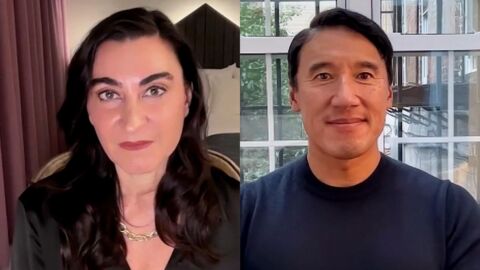
GOLODRYGA: — “Love + War.” Conflict photographer Lynsey Addario and award-winning filmmaker Jimmy Chin joined Hari Sreenivasan to discuss their
new film about the toll of bearing witness on the front lines.
Welcome to the program, everyone. I’m Bianna Golodryga in New York, sitting in for Christiane Amanpour.
Something good may just be happening in Geneva, those were the words of U.S. President Donald Trump in an optimistic post, hinting at progress on
his proposal for ending Russia’s war in Ukraine. But the 28-point peace plan has sparked alarm amongst Kyiv and its allies due to the large
concessions Kyiv would have to make from ceding large amounts of territory to shrinking its military.
Many suggest Trump has allowed Moscow to dictate the terms, but it seems that steps forward have been made since those initial concerns. With
President Volodymyr Zelenskyy’s close aide Andriy Yermak now also touting, quote, “very good progress in the negotiations.”
The devastating strikes on Ternopil in the west of Ukraine, which killed more than 30 people, serve as a reminder of the cost of war. Correspondent
Matthew Chance has been following these developments on the ground in Geneva and spoke to U.S. Secretary of State Marco Rubio during this
weekend’s talks between Washington and Kyiv.
(BEGIN VIDEOTAPE)
MATTHEW CHANCE, CHIEF GLOBAL AFFAIRS CORRESPONDENT: From everything we’ve heard from the Americans, from the Europeans, and from the Ukrainians
themselves, they’re very positive about the idea that these negotiations have taken place. They’re saying they’re very constructive. They’re saying
that, you know, progress was made, but what they’re not telling us are any details about what kind of progress, about what specifically Ukraine has
agreed to or what specifically has been put into this deal to make it more acceptable to the Ukrainians.
But, obviously, there are big issues that have to be addressed. Issues about, for instance, territory. Should Ukraine surrender, as Russia
demands, more of its territory, even territory that hasn’t been captured yet by the Russians?
(BEGIN VIDEO CLIP)
CHANCE: Has Ukraine indicated to you that it’s prepared to compromise, for instance, for some of those key issues like territory in exchange for peace
with Russia? Have they suggested that they are prepared to do that in any way?
MARCO RUBIO, U.S. SECRETARY OF STATE: Well, I’m not going to — look, it’s not cause — for purposes of evasion, it’s just I’m not going to get into
the details of the topics that were discussed because this is an ongoing process. What is important to understand in how these things work is you
have to — in order to have a proposal, you have to write it. If it’s just verbal, it’s in the air. You have to put it down on a piece of paper, and
just because it’s printed on a piece of paper doesn’t indicate finality.
So, you get input, and based on that input, you make adjustments, and then you get more input, or you make a counteroffer, and you get more
adjustments. That’s an ongoing process. There’s a lot more of that to happen. So, I’m not going to speculate or go into the details of any of the
specific items in the latest version of the proposal because, frankly, by tomorrow or the next day, that may have evolved and changed further.
And — but I can tell you, I guess, that I feel very optimistic that we can get something done here because we made a tremendous amount of progress.
CHANCE: What are you going to tell President Trump about the attitude of the Ukrainians during these negotiations?
RUBIO: Oh, it was very positive. I’m telling you, today was the most productive day.
CHANCE: Because he said they were ungrateful earlier.
RUBIO: Well, today, and we’ve talked to him since, I think he’s quite pleased at the reports we’ve given him about the amount of progress that’s
been made.
(END VIDEO CLIP)
CHANCE: And so, it’s not just a question of making Ukraine happy and making the Europeans happy. It’s a question of, would the Russians accept
any new proposals that stop short of its full objectives and full demands in this conflict? So, far, they’ve refused to compromise at all. And, you
know, there’s really no suggestion that we’ve had from Moscow that it would be any different this time.
(END VIDEOTAPE)
GOLODRYGA: Our thanks to Matthew Chance reporting there for us. Well, this push towards peace comes at a time when the Ukrainian president is under a
microscope at home. His government faces a major corruption scandal, and my next guest knows the inner workings of Zelenskyy’s government quite well,
having served as Minister of Economic Development and Trade. Tymofiy Mylovanov is president of Kyiv School of Economics, and he joins me now
live from Kyiv.
Tymofiy, thank you so much for taking the time. We have had a case of serious diplomatic whiplash over the past 48, 72 hours. Yesterday,
President Trump called Ukrainian President Zelenskyy ungrateful. This morning, he’s posting about big progress being made here. Clearly, there’s
been a lot of cleanup that Secretary of State and National Security Adviser Marco Rubio has stepped up to do on the global stage there in Geneva over
the weekend. He now says that he is quite optimistic that these were the most productive talks that they’ve had in amending the initial 28-plan
proposal that was skewed quite favorably towards Russia and not Ukraine. Do you share Secretary of State Rubio’s optimism?
TYMOFIY MYLOVANOV, PRESIDENT, KYIV SCHOOL OF ECONOMICS AND FORMER UKRAINIAN ECONOMY MINISTER: Well, you know, I’m not inside the room, but I’m also
optimistic, and there are a lot of symptoms or signs which are telling that maybe something is going to be happening.
For example, you know, we don’t see Russian side actively sabotaging the process. We don’t see them leaking information. We just see them
undermining our team. We also see that, indeed, this sort of back and forth of the attitude of President Trump is changing quite fast, faster than it
usually happens.
And if you remember, for example, the deal, the investment deal, the minerals deal, that Ukraine and the United States have been discussing, the
initial proposal from the United States was draconian, was completely unacceptable, was basically violating sovereignty of Ukraine, and in the
end it came down to something manageable and where all parties benefit.
I think currently the situation is much more difficult. It’s difficult to find a win-win here between Russia and Ukraine, but definitely I think all
parties are interested in ending the war.
GOLODRYGA: That includes Russia?
MYLOVANOV: I think so. I think so, yes. Well, you know, we never know with Russia, because, you know, you’re right, this is the fundamental question.
Is this an ultimatum or is it an opening bid? If it is an opening bid, I think we will be somewhere, we’ll get somewhere. If it is again an
ultimatum, if Russia is not willing to move on those 28 points, some of those points are, you know, not at all different from what we have seen in
Istanbul or before the full-scale invasion. So, if Russia is not willing to compromise, then basically I think no peace deal is possible.
But, you know, from the previous conversations or negotiations with Russia, we saw that that becomes clear almost immediately. So, I think today,
tomorrow, the day after tomorrow, it will become clearer.
GOLODRYGA: So, what points then — because you’re right, we haven’t heard a concrete response from the Russian side here, though we do see it in
terms of continued bombardment and we see the consequence on human life and the toll that has had on the country now as the war is approaching its
fourth year. But what are the terms here you think that both President Zelenskyy would sign off on and also would be able to get Ukrainians in
Parliament to agree to?
Because at the end of the day, even before President Trump’s administration, even President Biden, his advisers had acknowledged that
there are going to be some tough concessions that Ukraine will ultimately have to make here to bring this war to an end.
MYLOVANOV: Well, absolutely. So, you know, one point is that Russia always attacks and intensifies during negotiations. So, the fact that they attack
in Ternopil or they attack in other cities is actually consistent with them negotiating. We have seen it during Minsk 1 agreements, Minsk 2 agreements.
I’ve observed it being in the government. I couldn’t understand it then. It wouldn’t make any sense to me, but they would bomb and kill Ukrainians
exactly when they are negotiating. So, that’s their way of putting pressure and bargaining, which is awful. But, you know, this is not typical.
Then you are absolutely correct. President Zelenskyy faces a very tough domestic audience right now. And this recent crisis in Ukraine, crisis of
governance, crisis of transparency and accountability, that actually has generated some pressure. And this recent crisis in Ukraine, crisis of
governance, crisis of transparency and accountability, that actually has generated some dissent in his own party. And the government is working hard
to get the party back aligned. So, there’ll be probably some changes domestically, both political in terms of governance and rules.
But, you know, going back to the points, you know, what is important for Ukrainians is to ensure that this ceasefire or peace deal will not be
short-lived, that there are real security guarantees in whatever form, that Russia doesn’t get itself in a position that it can walk over or roll over
Ukraine again in the future, in a year or two, or when they please.
So, you know, specifically, what goes really badly in Ukraine is the point of reducing the military of Ukraine, because that’s exactly what we need to
protect ourselves. I think that’s going to be a very critical point for Ukraine. Then we can talk about territory, giving up territory. It’s
probably an absolute, you know, insult to every Ukrainian. I’m saying probably that even to those who might be completely exhausted from Ukraine
— from the war, who might be somewhere on the sidelines, you know.
But I think everyone thinks that if we give up territories — because Russia is speaking about specific territory, if we give up that territory,
that opens up a possibility, a strategic possibility for them to roll onto Dnipro, on Kharkiv, and basically have some version of Afghanistan, you
know, scenario that President Biden, unfortunately, had to deal with. So, that’s what Ukrainians want to avoid. I think these are the main two
points, but there are others.
GOLODRYGA: Right. Because Russia is demanding land that they don’t even fully occupy and control at this point. And you’re right to mention, I’ve
heard from other members of parliament, just the outrage at the idea of shrinking its military forces to some 600,000.
Why would you do that unless you’re planning one day to attack again? And then the other issue, I have to say, as part of this 28-point plan, that I
just, I find difficult for Ukrainians to accept, and Europeans too, because they’re on the line here as well, and that is no real accountability, broad
amnesty for Russia to be readmitted into the global stage, and sanctions relief, and no use of Russia’s foreign investment funding and those frozen
assets, and the rebuilding of Ukraine.
Would that be acceptable for Ukraine if, let’s say, Russia gave up on the size of its military and even some of the land, but the fact that there
would be no real accountability? Would that be acceptable?
MYLOVANOV: I think no, but I think those are bargaining points, because, you know, it’s very difficult to imagine how is it possible to enforce no
accountability. Basically, you know, everyone abandons — you know, under the guidance of the direction of the United States, the great democracy
here, actually, in fact.
And, you know, I’ve been in the United States for many years. I’ve taught there, and I’ve lived there, and to me, it’s a country which is based on
great principles. So, you know, basically saying that you can violate the international law, the human rights, the foundations of democracy, and, you
know, simply by your way out, by walking away through amnesty, and, you know, even getting your funding out, and, you know, not being accountable
at all, I think it’s going to basically change the world.
Not only — you know, it’s not only hurting Ukrainians, I think it’s going to change the world completely. So, that’s why I think it’s not going to
happen.
GOLODRYGA: You mentioned the backdrop of all of this happening, with the major corruption scandal unfolding, and some of the most significant
domestic pressure on President Zelenskyy since this war began. Let’s give our viewers just more information and insight into this scandal. Members of
his inner circle are accused of siphoning off and laundering about $100 million worth of state-owned nuclear power company.
You resigned from the board of that company, saying your anti-corruption proposals were ignored. Talk about how significant of a risk this scandal
posed to President Zelenskyy’s presidency, and perhaps the timing now of this 28-point plan that some are viewing as a lifeline, in a sense, for
President Zelenskyy domestically. Would you agree? Because that may seem a bit off and hard to balance, both that one would lead him to less
popularity, the other would boost popularity. But that’s how some are interpreting it.
MYLOVANOV: Yes, I think it’s a little bit of a myopic take on this. I mean, you know, almost Machiavellian, very cynical, to believe that, you
know, the president of Ukraine will, you know, trade off sovereignty or territory, or even use the opportunities presented by negotiations, or
maybe, you know, by resisting to the pressure that Russia and partly the United States is putting on him, you know, to save his political future.
I think his entire political future depends on two things. One is what kind of deal will happen, when will the war be over? You know, what will happen
with Ukraine? Will Ukraine stand as a sovereign country? And the second one, what happens, you know, internally? What — you know, what — how
ethical are people around him? How well the governance is? So, what people were doing, while some are dying, others have been enriching themselves?
So, you know, I think his incentives actually are aligned to do his best and perform the best on both. And I think it is true that the domestic
scandal has weakened him, but, you know, it also has given him an opportunity to demonstrate cleanup measures. And I think the government has
been doing quite proactive, much more proactive, like responding to the scandal that I have expected. But, however, I think we will wait and see.
GOLODRYGA: Yes, I’m by no means suggesting that he orchestrated this 28- point plan to deflect attention from the scandal. I’m just saying the timing, coming when the scandal is plaguing him domestically, now the
ultimatum given by President Trump to accept a deal that even Europeans viewed as capitulation may have given him an extra lifeline here. That was
the argument I was making.
MYLOVANOV: Yes, yes. So, I think the timing indeed is conspicuous. And, you know, what is being discussed in Ukraine — also, I think, maybe, I
didn’t mean to suggest that — OK, but the point which many people are making in Ukraine is, listen, that maybe Russia is behind all of this and
it’s timing it properly, using the opportunity that there is a scandal domestically. So, presumably, Zelenskyy is weakened. OK, let’s put pressure
on him.
I think — and every time it backfires, you know. We’ve seen that every time Russia does something like that, it backfires because it actually —
you know, people understand that domestic politics is domestic politics. But Ukraine’s future is most important.
GOLODRYGA: Yes, and it was interesting that you said in an interview to the Wall Street Journal over the weekend that President Zelenskyy’s ability
to sell this deal to the Ukrainian people is much higher than many would think. Explain why.
MYLOVANOV: Well, so, you know, OK, I don’t want to be too much of a nerd. I’m a professor of economics of —
GOLODRYGA: We — I’m married to an economist. So, we welcome nerds here.
MYLOVANOV: OK. So, you know, you ban those things. You know, when you need to — you know, usually you face multiple audiences. President Zelenskyy
has to please so many stakeholders, Europeans, the Americans. That’s an external phrase, stakeholders. But the multiple audiences domestically, his
own party, general public, opposition figures, you know, wannabe presidents, his competitors, if he decides to run in the future. So, you
know, he has to manage all of this.
And so, it’s easier to manage when he has some political decisions to make which reflect simply domestic politics. So, I think if I were him, I mean,
I’m not him — but — and that’s why advice should never be taken, but, you know, if I were a game theorist in his shoes, I would delay on, you know,
firing or hiring or appointing or reshuffling the government or doing other positions until it becomes clear what the deal is. And therefore, I would
be able to offer some positions, you know, to get some votes. Basically, that’s the usual political stuff.
And I think people do not understand it because at least they view it as two separate issues. I think banning (ph) will make a lot of sense, and we
can do simultaneously a peace deal if it’s acceptable for Ukraine, and we can do a corruption cleanup.
GOLODRYGA: All of this diplomacy can sound abstract, especially when it’s coming from safe countries in cities thousands of miles away from where you
are in Kyiv. But as the country is entering its fourth year of bombardment, another cold winter, we see what Russia’s intentions are here in targeting
not only civilians but the infrastructure. Just give us a sense of what life is like right now, the mentality of average Ukrainians who have
weathered so much.
MYLOVANOV: Well, you know, I’ve bought a lot of firewood, you know, for my apartment, and I have a little stove, and I think a lot of people have done
that. You know, yesterday a friend went to a movie theater. He said he didn’t — you know, he hadn’t gone there for a year, but they need to live
a life, so they go there, and there’s a blackout in the middle, and people — you know, like the administration comes in and says, oh, wait for 10
minutes, we’ll start generators.
And our students, you know, today — actually we had a student debate, the elections among student government, and there was a blackout just in the
middle of it, and they continued to debate vigorously. And as one of them said, it’s important to be heard, not necessarily to be seen.
GOLODRYGA: I mean, you just think of what Russia had imagined happening nearly four years ago, taking over Kyiv, taking over the country in a
matter of days and weeks. And here we are nearly four years later. Yes, blackouts, tragically so many lives lost, but your classes continue and
life in this very, very dangerous and unfortunate reality continues also in Ukraine. Thank you so much. Really appreciate the time, Tymofiy Mylovanov.
MYLOVANOV: Thank you.
GOLODRYGA: Turning now to Beirut. Israel says that it killed Hezbollah’s second most senior figure in an airstrike, and, quote, “precise blow to
those who attempt to harm the State of Israel.” Despite a nearly year-long ceasefire, the IDF claims the strike was intended to stop the organization
from strengthening its capabilities. Lebanese officials say at least five people were killed in the attack, which Hezbollah calls treacherous.
While there have been a number of Israeli attacks in the Hezbollah- controlled south, this is the first attack in Lebanon’s capital since June. For more on what this means for the fragile peace in the region, let’s
bring in Middle East Bureau Chief for the Los Angeles Times, Nabih Bulos. He joins me now from Beirut.
Nabih, it’s good to see you again. So, Israel says it struck because this figure, who they essentially called the acting chief of staff for
Hezbollah, Ali Tabatabai, was rebuilding Hezbollah’s military capability in violation of the ceasefire. From your vantage point now, why did Israel
choose to take such a risk, given the fragility of the ceasefire?
NABIH BULOS, MIDDLE EAST BUREAU CHIEF, LOS ANGELES TIMES: Well, one should say, I mean, it hasn’t really been fragile because I would argue that the
ceasefire has not really been followed. If you look at UNIFIL figures, we are talking about thousands of Israeli violations that have been recorded.
And Hezbollah, in truth, has not really responded.
Now, the Israelis are saying that what has been happening is that Hezbollah has been violating the terms of the ceasefire in the sense that it is
rebuilding its capabilities in the south. But in terms of actual kinetic action in response to an Israeli attack, we haven’t seen anything from
Hezbollah for a long time now. And this has not changed with the killing of Tabatabai either. In fact, today, I mean, there have been some expectations
that there would be some kind of retaliation. But word is that Hezbollah is favoring diplomacy in this case.
GOLODRYGA: Right. And Hezbollah has now confirmed his death, says that Israel did cross a red line. For our viewers who are not familiar with this
man, his role in Hezbollah, he was one of the senior figures who was not assassinated last year when Israel was not only targeting Nasrallah and the
head of Hezbollah, but also many other senior leaders. America also had sanctions on him and I believe a multimillion-dollar bounty. Who is he?
BULOS: Well, it’s quite interesting. His picture had not been seen before he was killed, as has been the custom with a lot of other Hezbollah
leaders. But it’s clear that Tabatabai was an important figure. He was involved apparently — well, I mean, there has been a biography released
since his death by Hezbollah. And apparently, he had been involved with Hezbollah since the ’90s. He was involved in some of their first operations
and was in charge of some of the fronts during its confrontation with Israel. This was before 2000 and then also 2006.
And also, he was involved in training cadres in Yemen and Syria. So, he’s been involved in those operations as well. After the killing of Shukr,
which happened last year, he apparently had taken over the position of chief of staff. But this is someone who, although has not been very well
known, he clearly has been involved in a lot of Hezbollah’s operations. But it should also be said that he apparently was one of three senior
commanders still was alive after the, I guess, all-out war that happened last year.
So, actually it’s quite notable because this is someone who in theory should have been aware of the security protocols — the security
requirements, after the killing of all this leadership that happened before. And yet, we saw that he was targeted and killed. It’s also notable
that he was killed in Beirut in the southern suburb known as Dahieh.
Now, I should note here, just for the viewers, that Dahieh is not — you know, we often use the word stronghold in Western media, but the fact is
this is a neighborhood, which is to say that you have stores, cell phone shops, supermarkets, et cetera, et cetera. This was very much a residential
neighborhood and a residential street on which he was killed on.
And it’s notable because the fact is that this is not the first time a senior Hezbollah commander has been killed in Beirut, but it is the first
time in quite a few months that we’ve seen it happening after the all-out war, as I said. And in theory, Hezbollah should have been aware of the
security requirements. It should also be noted that Haitham had been — there have been attempts to kill him in the past. He supposedly — there
was an assassination attempt against him in 2015 in Syria. So, this was someone who was known for the Israelis, and yet, Hezbollah seems not to
have taken the proper precautions.
GOLODRYGA: We spent a great deal of time last year talking about what a blow Israel’s attacks on not only Hezbollah leadership, but its
infrastructure, missile depots had been. Where is the group in terms of trying or attempting to reconstitute? Israel says that that’s exactly why
they took him out, because as the chief of staff, one of the highest officials there, he was already working on attempts to rebuild their
military capability. How capable is Hezbollah today, one year later?
BULOS: Well, it’s a great question. The fact of the matter is that if you hear some Israeli and U.S. officials say the group still is a menace in the
sense that it has anywhere from 15,000 to 20,000, I guess, rockets and missiles, and that it is rebuilding its capabilities with more cadres being
recruited, and at the same time that the third-rank leaders have now moved up to the second rank and et cetera, et cetera.
Now, the fact of the matter is that that may well be true in terms of it having those missiles, but it has not shown any ability to fire them
recently or even during the war, one should say, when it came to the — I mean, it fired primitive missiles, but those sort of large kind of — you
know, this like large like ballistic missiles that could cause some major damage in Israel, that never actually materialized. And so, it really is
now a question as to what remains of the group’s ability, especially in the south of Lebanon.
Now, elsewhere in the country, that remains to be a different question, but even with that being said, we actually don’t know what’s happening with
Hezbollah in terms of an organization right now, right? I mean, the fact of the matter is that in the past, the idea of decapitation strikes — I mean,
the idea was that they were not very effective. But the fact of the matter is if you hit everyone on that chain of command, then eventually it will
have a toll. And it’s actually interesting to note that in terms of the senior leadership remaining after the war, only two remain, right? One of
them is called Talal Hamiyah, and the other one is Mohammad Haidar, and both of those people have not been killed yet.
So, I mean, the fact of the matter is the veterans of the group are now lost, and so you are seeing new cadres maybe being recruited, but they
certainly will not have the same experience as those who have been killed. And all this to say that, of course, Hezbollah has been weakened. How
weakened in terms of it being, I’m going to say, a force that can fight on the ground in terms of guerrilla warfare, that’s a separate question. But
whether it can actually wage attacks on Israel, that I think is clear, that it is severely weakened.
GOLODRYGA: Well, a sign of its weakening grip was the optimism and the news of a new elected government, and that was General Joseph Aoun, who’s
been president now for nearly a year. There had been hopes that by this election, some of the comments that he had made and conversations even
behind closed channels with the Israelis, but specifically with the United States, that they would be a stronger force against Hezbollah.
Where is that government on that issue today? Have they been able to restrain Hezbollah forcefully enough? We know Israel’s answer to that
question, but let me ask you.
BULOS: Well, so the army has been saying that it is slowly disarming Hezbollah and that it is taking control of the south.
Now, part of the issue is that you have, I suppose, a declared — or declared terms for the ceasefire, and then there is perhaps a secret annex
that has not been declared, which is to say that Hezbollah, at this point, understands the ceasefire as being only south of the Litani River, which is
to say only south Lebanon, whereas the Israelis and Americans would say that they are talking about full-on disarmament across the country.
Now, Hezbollah has said repeatedly that it will not accept that. And in its areas where it dominates in the Beqaa, which is east of the country, and
perhaps other areas away from the south, it’s clear that it still has some capabilities.
Now, the fact of the matter is the army has been taking over positions in the south of Lebanon. It has taken over Hezbollah depots. It has taken
charge of the weapons there, or it has actually controlled the already destroyed weapons that happened during the war. So, there is progress.
Now, with that being said, the army says that the reason why it cannot take full control of the south is because the Israeli army remains in certain
points, and that if the Lebanese army approaches them, they would put themselves in danger. So, we’re now at a bit of a stalemate in that regard,
which is to say that the army here is saying they want to go and continue with their work, but they have two obstacles, and one of them is their lack
of capabilities, and the other one is the fact that the Israeli army is still on Lebanese territory.
And then the other force in this is that Hezbollah is not willing to disarm elsewhere. So, we’re in a statement — so, we’re in a stalemate actually in
regards of a full-on disarmament. But the south, at least right now, it perhaps will come to a denouement sometime by the end of the year.
With that being said, the army is in a bad position. I mean, there are growing questions as to whether it can actually defend the country. And the
fact of the matter is that even if there is, let’s say, you know, impetus to do so, it simply doesn’t have the ability in terms of weapons and also
numbers. And the fact is that if it’s going to be asked to attack Hezbollah, that would also cause issues of loyalty within the army’s ranks,
and that would be a real problem in the country.
GOLODRYGA: So, what’s the role here, if any, for Washington? I know Washington and Paris held broker this ceasefire, but specifically for
Washington here, I think they’ve publicly said that they were not made aware of this targeted assassination. But there had been reporting that for
months now they obviously have not intervened, and Israel constantly attacking Hezbollah facilities there, as you said, in violation of the
ceasefire, Israel saying that Hezbollah too was in violation, and the Lebanese government was saying that Israel was in violation. So, what, if
anything, should the United States be doing to maintain this ceasefire?
BULOS: Well, if the U.S. actually does want to see any kind of progress in this, it would have to go some way towards restricting the Israeli attacks.
The fact is that the president of the country here is not going to be willing or will not be able politically to move forward with a full-on
disarmament with this kind of attack still going on. That’s one.
And also, the fact is that alongside these attacks you are seeing, I mean, a lack of any kind of rebuilding in the south of the country, and that’s
largely because of the Israeli army presence. So, I mean, the fact is, the expectation is that Lebanon should be able to fulfill its role, but the
people in the south right now cannot go home because there are still active army operations or still active Israeli presence there.
Now, with all that being said, the U.S. can also play a role in terms of empowering the army and possibly, yes, pushing for a — let’s say a faster,
I suppose, implementation of the disarmament, but that requires funds and requires, I suppose, monitoring on both sides. At the same time, the real
issue is that there is no clarity as to what this ceasefire actually means. Oftentimes it seems that the Lebanese are ceasing while the Israelis
continue firing, and that’s a problem.
GOLODRYGA: This is the first strike, as we’ve noted, in Beirut in several months. In the final few seconds here for the show, you were there, which
is always so helpful for our viewers to understand the reality on the ground. What has that been like over the past few months?
BULOS: Well, so the fact is, where I live in Beirut actually is not very near the area of the Dahieh, right? So, I’m in a, I suppose, a Christian-
dominated neighborhood, I suppose, and it has been spared largely the effects of the war. With that being said, we’re talking about only a few
miles away, and so there are times when you sit and then you suddenly hear, you know, an explosion and things of that nature.
Of course, you’re always looking at the Israeli army Twitter to see if there are any kind of warnings for Beirut and the surrounding areas. It’s
actually quite surreal because, I mean, Beirut is a place that is, I mean, very sadly accustomed to war, and so people have been able to go on with
their lives and continue oftentimes as if nothing is happening. And you can see this actually really in most places, I guess, that are at war, but
especially so in Lebanon because it’s so accustomed to war, unfortunately.
And the fact is that, of course, it makes for a surreal kind of living. I mean, you could be at a birthday party, and you suddenly get, I guess if
it’s on your phone, that there’s an attack on Dahieh, and you hear some kind of a rumble, but you dismiss it. And, of course, the sounds of drones
have become omnipresent. You constantly hear the tone of drones almost every day these days. So, yes, that’s a part of life here, unfortunately.
People have been able to live with it. Oh, sorry. Pardon me.
GOLODRYGA: A common thread. No, no pardoning — no need to apologize. A common thread. I know you were listening to my conversation with Tymofiy
just a few minutes ago from Kyiv, and similar, similar their reality for those that have been living in war for so many years. They try to move on
and create some sort of normalcy, and every now and then are reminded of the war around them. Nabih Bulos, always good to see you. Thank you so
much.
BULOS: Thank you for having me. I appreciate it.
GOLODRYGA: Well, we turn now to northern Nigeria, where a true nightmare is unfolding for many parents. Armed bandits stormed a Catholic school in
the state of Niger on Friday, kidnapping hundreds of students and teachers. While 50 pupils have since escaped and reunited with their parents, more
than 250 children remain captive, some as young as 10 years old. Correspondent Larry Madowo has the story.
(BEGIN VIDEOTAPE)
LARRY MADOWO, INTERNATIONAL CORRESPONDENT (through translator): Anxious parents scramble to pick up their children from a boarding school
in Nigeria. The nightmare scenario of armed gangs kidnapping students has once again set the country on edge.
This school in Kaduna state told parents the school was closing because of unspecified security threats.
GLORIA SAMUEL, MATRON, FEDERAL GOVERNMENT GIRLS COLLEGE ZARIA: They have to let children go for their safety. Their life is important that their
education as far as now is concerned. So, I think it’s the best.
MADOWO (voice-over): Meanwhile, a mass abduction from a Catholic school in the neighboring Nigerian state of Niger is terrifying parents. More than
300 children and 12 teachers were kidnapped on Friday, though dozens have since escaped, according to the Christian Association of Nigeria. All
schools in the state of Niger have been closed. And people across the country are demanding that the government provide more security at schools
and churches.
IFEOMA ANEKE, BUSINESSWOMAN: I don’t think anybody feels safe with what is happening in Nigeria presently, because the kidnapping, the bandits
everywhere, the killing, everybody is so scared even to sleep. If you are sleeping, I don’t think people are sleeping with their eyes closed.
MADOWO (voice-over): So far, no group has claimed responsibility for the abductions, and authorities say tactical squads and local hunters are
looking for the children.
MOHAMMED UMARU BAGO, NIGER STATE GOVERNOR: It is not a time for blame game. Our mission today is to see how we can rescue these children and all
those that have been kidnapped in that incident.
MADOWO (voice-over): But there is a growing fear and anger across Nigeria about security concerns, especially after several brazen attacks in the
past week.
In Western Nigeria’s Kwara State, gunmen raided a church service, killing at least two people. Dozens of worshipers were kidnapped but have since
been freed. And 25 female students were taken after armed men stormed a government boarding school in the Northwestern Kebbi State.
CROWD: Bring back our girls.
MADOWO (voice-over): The violence once again putting Nigeria in the international spotlight. Just over a decade ago, there was a global outcry
after 276 girls from a school in Chibok were kidnapped by the terror group Boko Haram. Many of those girls never returned home.
U.S. President Donald Trump has expressed outrage over the alleged persecution of Christians in Nigeria and has even threatened military
action to protect Christians from Islamist insurgents, though radical groups in the area attack both Christians and Muslims.
Pope Leo also weighing in on Sunday, saying he is saddened by the incidents and appealed for the immediate release of the captives.
(END VIDEOTAPE)
GOLODRYGA: Our thanks to Larry Maddow reporting there. We’ll be right back after a short break.
GOLODRYGA: Next, navigating war-torn Sudan, hiding from explosions in Ukraine, even surviving kidnappings in Iraq and Libya. Photojournalist
Lynsey Addario has spent more than two decades documenting some of the most dangerous places on earth. Now, she’s the focus of a new film, “Love +
War,” which chronicles the struggle of balancing family life with trips to the front lines. Here’s part of the trailer.
(BEGIN VIDEO CLIP)
UNIDENTIFIED FEMALE: Lynsey has a very distinct ability to make memorable images, but also to be able to go out and find the story.
UNIDENTIFIED MALE: She’s really good at that. They prove his inner pictures and that she’s still alive.
LYNSEY ADDARIO, PHOTOJOURNALIST AND SUBJECT, “LOVE + WAR”: I want to have impact on policy and women’s issues, but the best stories are in the most
dangerous places. I have to constantly weigh what will I risk my life for?
You’ve never hugged me like that.
(END VIDEO CLIP)
GOLODRYGA: Lynsey Addario and Oscar-winning filmmaker Jimmy Chin join Hari Sreenivasan to discuss the duty and the danger of bearing witness to war.
(BEGIN VIDEOTAPE)
HARI SREENIVASAN, INTERNATIONAL CORRESPONDENT: Bianna, thanks. Lynsey Addario, Jimmy Chin, thanks so much for joining us.
Jimmy, let me start with you. Your new film is tracking Lynsey Addario, a war photographer’s life. But if anyone knows of you, they probably know of
you from your movies where you’re literally climbing and shooting big mountains or Alex Honnold climbing El Capitan or somebody climbing Mount
Everest. Why pick Lynsey and why pick this story?
JIMMY CHIN, CO-DIRECTOR, “LOVE + WAR”: Well, on a lot of levels, the stakes are even higher with the work that Lynsey does. You know, I’ve been
following Lynsey’s work almost my entire career. And we share a peer group, you know, of photographers. But I think when I first started thinking about
this with my co-director, Chai, we really wanted to capture a story about not just an extraordinary conflict photographer or a photographer, but what
it is to live that life, the weight of that responsibility, the weight of having a family at home, and really give a clear picture of what, you know,
someone like that’s life is like.
SREENIVASAN: Lynsey, we’ve had you on the program multiple times to try to help our audience understand the stories that you help bring to the front.
You’re usually behind the lens. What is it like for you to be on the other side?
ADDARIO: Well, I mean, I had been asked to be the subject of documentaries before, and I never felt like the time was right. Either I didn’t feel like
I was in the right place in my career or I didn’t really feel like my life merited a documentary. And then when Chai and Jimmy approached me, of
course, I had huge respect for their work. I was a huge fan as well. And the timing felt more right in the sense that it was right at the beginning
of the full-scale invasion of Ukraine.
I knew I would be embarking on a big project. And I also had come to a point in my career where I had seen so many depictions of war
photographers, be it fiction or nonfiction, and they were almost always men. And so, I just felt like, you know, it’s time we show what it’s like
for a woman, a mother, someone who has to come in and out, who, you know, for me, when I pack my bags, I have no idea if I’ll make it home alive. And
I think that it’s very complicated because I really straddle these two worlds.
(BEGIN VIDEO CLIP)
ADDARIO: It’s frustrating. I’m constantly tortured, like I’m not in the right place. But I come back. I’m supposed to be really happy. And I feel
like I should be there. And I feel like a bad journalist because I’m not. My head is always where I’m not.
(END VIDEO CLIP)
ADDARIO: And I felt like once I accepted to do this project, I knew the drill. I mean, I knew exactly what, you know, what they would be asking of
- And I, very luckily, the main photographer or cinematographer who shot all the home scenes was Thorsten Thielow, who was incredible to work with
because he was a one-man band. He didn’t show it. He showed up alone. And he would just hang out for like days on end. And that really works for me
because that’s the way I work. And so, you know, everyone in my family felt comfortable with him.
I respected his work ethic. I love the fact that he would be like, can I come at 5:00 in the morning before you wake up? Because I literally do the
same thing to my subjects. So, it kind of worked.
SREENIVASAN: Yes. Jimmy, why start the movie where you did? I mean, this is just days before the kind of official invasion of Ukraine. And you
already see Lynsey and her partner just, you know, in the presence of shelling. And, you know, he’s trying to capture what’s happening, going on
there.
(BEGIN VIDEO CLIP)
ADDARIO: This is Lynsey Addario in the village of Novo Luhansk. We’re being shelled.
(END VIDEO CLIP)
SREENIVASAN: How is it important for you to kind of get the audience primed for, hey, this is what this film is about?
CHIN: We went back and forth on what that opening scene would be, of course. I mean, that’s a common debate when you’re making a film. But I
thought that it was just so raw and so real. And it was like, OK, we’re going to just get right into it and show you what it’s actually like. And
obviously, I think it grabs people’s attention, it sets the tone. And I think it’s the reality of what she does. And I love that. I was a big
proponent of opening with that scene. Because then, you know, we then juxtapose it to when she goes back home, you know.
SREENIVASAN: Yes.
CHIN: And I think that sets up the film and kind of the main, I wouldn’t call it conflict, but the challenge that, you know, Lynsey is facing
through this film. And it’s actually something that I’m also very familiar with. I work in very high stakes and fairly dangerous environments. And
it’s kind of a weight that I understood from the beginning.
SREENIVASAN: Yes.
CHIN: And to just see it right off the bat and kind of, you know, set that tone was really important.
(BEGIN VIDEO CLIP)
UNIDENTIFIED MALE: Where is my mommy?
UNIDENTIFIED MALE: Mommy is working, Alfred.
UNIDENTIFIED MALE: Is she downstairs?
UNIDENTIFIED MALE: She’s in another country, but she’s going to come back soon.
(END VIDEO CLIP)
SREENIVASAN: I wonder, there are these scenes in the film that kind of show how difficult it must be to hear your kids say, hey, mommy, don’t go
back out. What is that conversation like in your heads when you are figuring out how to articulate this value structure that you have and why
it’s so important for you to do the work that you’re doing?
ADDARIO: I mean, it’s something that, of course, I wrestle with all the time. And it gets — you know, kids go through phases where they’re more
clingy sometimes and other times they’re fine. They understand. And I think, unfortunately, right now with Alfred, my six-year-old, it’s every
single day, you know, do you have to leave? How long do you have to go? Why do you have to go? The other day he asked, did you just come from a war
zone? I mean, he’s six. So, you know, there’s definitely, there’s a lot.
But what I try to explain to him is that this is a part of who I am. This is my job. I love what I do. It’s a privilege what I do. And it’s very
important. And I will always come home. And I think that it’s important for me to express that it’s a positive thing. You know, I don’t want it to seem
negative that I’m going off to work because I do love what I do. And I think that there are so — you know, there aren’t that many people who feel
the great sort of passion and privilege for what they love to do, and Jimmy’s the same.
SREENIVASAN: Linsey, one of the stories that is profiled in the film as well is a woman in Sierra Leone that you took a photo of and you kind of
got a little bit involved in as a reporter. And this is earlier in your career. And then later in the film, we kind of see that there maybe was a
payoff that you didn’t know about. Tell us a little bit about — what was it, Mamma Sessay?
ADDARIO: Mamma Sessay. So, in 2009, I was named a MacArthur Fellow. And I really wanted to do something focused with that grant. And I started
researching and maternal death was at extraordinary rates at that point. It was 2010, more than 500,000 women a year were dying in childbirth. And
Sierra Leone had one of the highest numbers of women dying in childbirth.
And so, I went there. And I went to the province where there were very few roads. There was one doctor in the entire province. And I went to the
maternity ward where maternal deaths were very high. And as I walked in, I met Mamma Sessay. And she had been pregnant with twins. And the first baby,
she delivered in her village. And the second baby wouldn’t come out.
And so, her sister, who was a midwife, sent an ambulance for her. To get to that ambulance, she had to take a canoe across a river and then an
ambulance for six hours in order to get to the nearest hospital. And so, I met her. And we talked for about an hour. And then she finally delivered
the second baby.
And she was bleeding a lot. And I was shooting video as well for the first time, ironically. And you could hear me saying, she’s bleeding, is that
normal? And the midwives were just kind of mopping up the blood. And I said, is there a doctor? And they said, there’s one doctor in the whole
province, but he’s in surgery.
And I put my cameras down and I ran to the surgical ward and literally put on scrubs and went into the surgical ward and said, you know, I think
there’s a woman dying. And he just looked at me like, obviously, I’m busy. And so, I ran back and I said, I don’t know, pick her up and bring her to
him. And her blood pressure at that point was 60 over 40, I think. And by the time he came out of surgery, she died. And that story was published
across eight pages in Time Magazine.
And then a year later, I got a message from a board member at Merck. And he said, can I please meet with you? And he said, when we saw your story of
Mamma Sessay, we distributed a copy of Time Magazine to every board member. And at the end of the meeting, which was where they were discussing
corporate responsibility, they decided unanimously to start Merck for Mothers and put $500 million aside to fight maternal death.
And it’s not exclusively because of that story, but certainly, I think the visuals and the story of one woman who senselessly died in childbirth, who
could have been prevented, really kind of spoke to them. And I think that that is the importance of journalism and of photojournalism. And to me, it
really — you know, it’s what we all strive for when we cover these human stories.
SREENIVASAN: If Mamma Sessay is an example of something that kind of fulfills your soul and recommits you to photojournalism, I’ve got to ask
also about Libya and where you and other colleagues were kidnapped and held for six days.
(BEGIN VIDEO CLIP)
UNIDENTIFIED MALE: No word from four New York Times journalists. Lynsey Addario is among the missing.
UNIDENTIFIED MALE: We didn’t know if they were alive or if they were dead.
ADDARIO: For six days.
(END VIDEO CLIP)
SREENIVASAN: And I wonder if surviving that, you know, what did that do to you when you came out of that? Did you think, maybe this isn’t for me?
ADDARIO: Libya was brutal. I mean, Libya was — it was me, Tyler Hicks, Anthony Shadid, and Stephen Farrell for the New York Times. And we were
held for six days. And it was — we were tied up, beaten up, blindfolded, punched in the face. The men were smacked on the back of the heads with gun
butts. I was groped by basically every man who came across us, while blindfolded, which is obviously terrifying.
And I think at the end of that, a few things happened. First of all, I was really grateful that we survived. Our driver did not. And I think it’s
important to understand how lucky we were. Less than a month later, two of my very dear friends and our colleagues were killed in Libya. And I think
there’s so much that happens in war that you can chalk up to luck alone. You know, there’s no reason we should have lived.
And so, I think, I think just understanding how lucky we were, just gave me that sense that there is a reason why I’m still here. I knew that I would
have to renegotiate kind of danger in a way that I wouldn’t get kidnapped again, of course. And that I couldn’t put my family through that again. Not
only my husband, I didn’t have children at the time, but my parents and my sisters. And I think that that’s also important, because we do this job,
but we also put our families through a fair amount of trauma.
And I think that that is something that I have to live with. And that’s why it’s almost impossible for me to watch the film, because I can’t bear to
watch my family talk about how much they’ve suffered because of the decisions I’ve made professionally.
And then I also realized that one thing that really got me through Libya was the fact that I have met and photographed so many extraordinary women
over the years who have suffered sexual assault. They’re survivors of rape and, you know, under the most brutal circumstances, yet they had the
courage to continue on. And I thought of them in those horrifically dark moments, and they helped me get through it. And I think that that’s really
important to have that knowledge and experience and to be able to use their human spirit and resilience to help me get through.
SREENIVASAN: Jimmy, I wonder, what did doing this film about Lynsey, the type of work she does, going through huge archives of all of her work, what
is kind of — what’s your takeaway from this, both as, you know, a peer and a colleague and someone who’s kind of a fan, but also as a parent who also
does some dangerous things?
CHIN: We made the film because we felt that her work is really important and extraordinary and, you know, really falls within the sphere of the
stories that are really important to me, where it’s about the power of the human spirit. It’s about the pushing the edge of the human potential. And,
you know, what she does, I think, very much falls into that category.
The films have to mean something to me, because we bleed for these films. You know, we work on them for years and years and years, and they have to
say something important. I’m just inspired all the time with the work that I do, and I get to work with people like Lynsey.
SREENIVASAN: The film is called “Love + War.” It is streaming now on Disney Plus. Director Jimmy Chin, Lynsey Addario, thank you both for
joining us.
ADDARIO: Thanks so much.
CHIN: Thank you.
(END VIDEOTAPE)
GOLODRYGA: All right. That is it for us for now. Thank you so much for watching, and goodbye from New York.
END