
Read Full Transcript EXPAND
BIANNA GOLODRYGA, ANCHOR: Hello everyone, and welcome to “Amanpour.” Here’s what’s coming up.
(BEGIN VIDEO CLIP)
VOLODYMYR ZELENSKYY, UKRAINIAN PRESIDENT (through translator): Today with Oleksandr Syrskyi and Andrii Hnatov, we talked about further formats of
service and the correct transfer of affairs.
(END VIDEO CLIP)
GOLODRYGA: A major shakeup among Ukraine’s top personnel as Zelenskyy replaces his commander-in-chief. I asked former Ukrainian minister, Tymofiy
Mylovanov what to make of these moves.
Then India’s youth-led Cockroach Movement is taking on Modi’s government. Correspondent Ivan Watson tells us why.
Plus, food insecurity in the United States as Republicans’ SNAP benefit cuts take a toll on millions.
Also, ahead —
(BEGIN VIDEO CLIP)
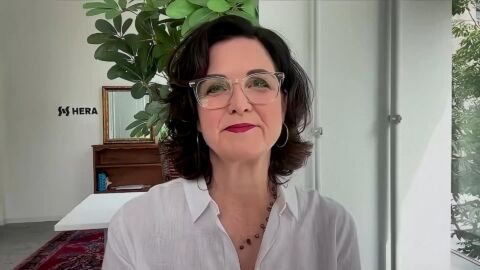
KATHY BAUGHMAN MCLEOD, CEO, HERA: I think a lot of questions need to be asked about who are these people who have lost their lives to extreme heat,
and why do we not care more that they are gone?
(END VIDEO CLIP)
GOLODRYGA: — how record-breaking heat is endangering women’s lives. CEO of non-profit HERA, Kathy Baughman McLeod explains to Hari Sreenivasan.
Welcome to the program, everyone. I’m Bianna Golodryga in New York, sitting in for Christiane Amanpour.
A major reshuffle among Kyiv’s top military personnel. President Zelenskyy has fired his commander-in-chief, Oleksandr Syrskyi. Vowing to pressure
from nationwide protests sparked last week by the controversial sacking of popular defense minister Mykhailo Fedorov, credited with leading Ukraine’s
successful drone campaign against Russia. Now, Zelenskyy is also attempting to bring him back for a, quote, “prominent position in government,” though
Ukrainians still want Fedorov fully reinstated.
Syrskyi, nicknamed the Butcher, has faced criticisms for his high tolerance of human casualties. And replacing him is a younger general, Mykhailo
Drapatyi, who forged much of his career in this current war with Russia.
The Ukrainian leader’s damage control exposes growing internal rifts over the nation’s wartime leadership. So, what impact is this turmoil having at
home and on the front lines? Tymofiy Mylovanov is Ukraine’s former minister of economy, and he’s joining me now from Kyiv. Tymofiy, welcome back to the
program.
So, let’s just start with this week of whiplash that we’ve seen. Zelenskyy didn’t technically fire, but he didn’t reappoint Fedorov to defense
minister job. He sided instead with his top general, Syrskyi, and then within a week fired him as well. Now, Drapatyi is in — and we can talk
about the party in just a moment. But was all of this the president responding to the people or was this a president who was not fully in tune
with where his military was headed?
TYMOFIY MYLOVANOV, PRESIDENT, KYIV SCHOOL OF ECONOMICS AND FORMER UKRAINIAN ECONOMY MINISTER: So, yes, that’s an interesting question. I think it’s
more of the public pressure coming on the to the president. However, when he is sacked or didn’t, you know — the way he dismissed — when he
dismissed the Defense Minister Fedorov of last week, he hedged his bets and he said, listen, in an ideal world, I would also have to dismiss commander-
in-chief Syrskyi. But I couldn’t do it right now because it would disrupt the military operations. And then a week later, after protests stayed and
escalated, he did fire him.
GOLODRYGA: So, this crisis, as we know, erupted at a time when momentum was really in Ukraine’s favor on the battlefield in terms of their longer-
range strike ability and capability within Russia. The fact that Fedorov was able to have Starlink readmitted for Ukrainian use, cut off for Russian
use as well. And President Trump for the last few weeks, at least, has been quite notably impressed by what President Zelenskyy has been able to
achieve. So, was this an unforced error and firing Fedorov of all times right now?
MYLOVANOV: So, maybe it’s more of a political issue in Kyiv rather than military. It looks like Ukraine will continue to innovate under any
commander.
And in fact, these disruptions, the political disruptions, I think, do not have any immediate effect on what is happening on the battlefield, both in
the front lines areas as well as for deep strikes. So, the campaigns continue. Russia is attacking us. We’re attacking Russia.
So, it’s more of the longer-term difference of visions where Fedorov, I think, decided to kind of place his bets and went open into conflict with
Syrskyi about the future of Ukrainian military. And Zelenskyy in the beginning sided with Syrskyi, but then reversed his view very quickly.
GOLODRYGA: But this really came down to what was an untenable relationship between the defense minister and the commander in chief. No, they weren’t
speaking most recently. And they come from two very different generational backgrounds and perspectives, both in their ages. Fedorov is 35 years old.
Syrskyi is 60 years old, but more of their background.
Syrskyi very much Soviet styled military upbringing. And then we’ve seen much more innovative, quick thinking, nimble contributions from Fedorov,
specifically as it relates to drone technology. Just talk about that dynamic and what that has exposed in terms of where Ukraine’s military is
right now.
MYLOVANOV: But let’s be fair to Syrskyi. So, he was the commander who defended Kyiv during the first days and weeks of the war. He actually ran a
very successful defense campaign with almost no resources, and he was also very innovative.
So, you know, the reality is somewhere in between. It’s not so black and white. You know, I recently spoke actually two days ago to this — to the
general chief of staff, Hnatov, the second man in command after Syrskyi. And they were talking. He talked to me and told me stories about how they
used tech very early in the war, even before Minister Fedorov was in any position in the government. So, you know, the story is mixed.
But I think there is really a cultural divide about what it takes to lead this war. And Minister Fedorov represents one part of this divide, which is
resonating with young people, with asymmetric warfare, with technology, with the future, with some hope. Whereas General Syrskyi represents the
idea that war is a tough business and there are costs and there are brutal decisions and you have to decide who lives and who dies. And tech is
important, but so everything else is important.
And so, you know, the reality is probably somewhere in between. But this this came to a head, you know, this conflict between them.
GOLODRYGA: Yes, no doubt. There are many supporters of General Syrskyi throughout this war now, now in its fifth year, especially in its early
days and early years. But now that it’s sort of been a grinding war of attrition, there has been a lot of criticism that perhaps Syrskyi viewed
the soldiers as being too expendable.
And on that point, I’d like to play an interview that Christian had with General Syrskyi recently. I believe it was just last year, a rare interview
in which he talked about his contact and relationship with soldiers on the front lines. Here’s what he said.
(BEGIN VIDEO CLIP)
OLEKSANDR SYRSKYI, FORMER UKRAINIAN COMMANDER-IN-CHIEF (THROUGH TRANSLATOR): We speak the same language. We understand each other no
matter who I am talking to, whether it is an ordinary soldier, a rifleman, for example, or a brigade commander or a battalion commander. You know that
I have been in this war since 2014, since the beginning of the full-scale aggression. I have been participating in combat operations as the commander
of the operational and strategic group.
Now, I am the commander-in-chief of the Armed Forces of Ukraine. That is the front line is my life. We understand each other. I know all the
problems that our servicemen, soldiers and officers experience.
(END VIDEO CLIP)
GOLODRYGA: And I should correct myself. That was September of 2024. How quickly time flies. I’m sure that’s not how it feels in Ukraine being on
the receiving end of this war now in its fifth year.
But his words really stand out now. The fact that he said that the front line is my life. And yet it was then soldiers, it was veterans, even his
own officers who have called for his removal. So, how did a commander who was so steeped in the war, in this mentality, in what these soldiers are
going through, how did he lose out on his own ranks?
MYLOVANOV: Yes. So, you know, the ranks are divided in a sense. There are people who are supportive of them, but there are a lot of people. And also,
actually, I spoke to some of them almost immediately after speaking to General Hnatov, who were very critical, even though they are rank and file
and have to keep discipline.
So, you know, you’re absolutely correct that something has changed. And partly, at least what we see in the public domain, there have been recently
cases coming up, investigations coming up of some assault units who have lost a lot of people, and some of them due to poor discipline and maybe
even some abuse within individual units. That has to be investigated. So, there’s some accountability which is desired by society.
I think a lot of this is coming from the fact that Ukraine feels that it is a democracy and it worries that, you know, people are not as accountable as
they would like to be. So, that concept definitely has been present among the protesters and among some military which joined the protests.
GOLODRYGA: And it’s interesting because his successor, here we had Syrskyi say in this interview with Christian that he’s been in this war since 2014.
That is a statement that his successor, Mykhailo Drapatyi, can make as well. It was in that war, he was much younger, I think about 31 years old
at the time when he really gained recognition.
Protesters were demanding that he replace Syrskyi. They got what they wanted here. He resigned about a year ago after a Russian strike killed 12
soldiers at a training ground. And he was saying commanders should be held accountable.
Now, that he is in this position, does this change the direction of this war from Ukraine’s perspective and how it is fought?
MYLOVANOV: I think a lot of people are optimistic. You see, you connect it immediately with this accountability story. It is true that he is perhaps
Drapatyi, the new commander-in-chief, is the only commander that I can think of who openly took responsibility for something he actually was not
guilty of but acted as a proper leader. And now, he is back. So, a lot of people are excited by this and have hope that the military will be kind of
renewed and refreshed.
There is an underline going to this that people get tired even in the leadership position. So, some renewal is needed. It’s almost like rotation
at the leadership because you have to have new blood coming in to keep innovating, to keep new ideas, to basically have a lot of energy and
health, frankly, to move on. So, no one talks about how exhausting and how damaging it is on people to be in leadership positions for this year, for
this many years.
So, I think that change is beneficial. A younger person, more energy, well- respected. And Syrskyi, while very respected, coming out, you know, has to resign because of this crisis currently.
GOLODRYGA: So, what happens with Fedorov now? Because it does seem that he has a bit more leverage. Protesters got half of what they wanted. Drapatyi
is in. Syrskyi is out. And while President Zelenskyy has offered some sort of government position for Fedorov, reports suggest he will only take back
the role of defense minister. Do you think that President Zelenskyy will do that?
MYLOVANOV: Well, we don’t know, but I wouldn’t be surprised if it actually were to happen because, A, there is a pattern. The pattern is that the
pressure sort of democratic pressure, if you wish. I mean, we don’t want to have the street protests rule the country during the war. But, you know,
people do pay attention to what voters or what citizens of Ukraine want. And what we see is that reaction of the government, be it the president or
be it the prime minister or anyone else, is accelerating over years.
So, last year, this summer, there were other protests about anti-corruption policies, but it took several months for this to settle down. Whereas here,
we see it’s taking days and weeks. On the other hand, I think Minister Fedorov would like to ensure that he has some kind of formal position,
formal authority, not some miltech czar post which is being circulated in the news, which is mostly kind of almost advisory role. A ministry without
a ministry, you know.
He — that’s what the rumor is. That’s what some people around him are saying. He wants to be back into the defense minister position, and I think
this is what the negotiations are about currently.
GOLODRYGA: Yes. And Fedorov, according to some polls, his popularity has jumped from 38 percent to 50 percent in the past six months. While
Zelenskyy’s has held flat, a May poll found that 67 percent of Ukrainians expect Zelenskyy to be replaced as president once this war ends.
And an editorial in the Kyiv Independent put it this way, the decision bears all the hallmarks of Zelenskyy’s tendency to dismiss top officials
and commanders who get too popular ahead of hypothetical elections that will never happen if Russia overwhelms Ukraine.
So, is that a fair read? Did Zelenskyy fire a rival, not just a minister here, from his perspective?
MYLOVANOV: Well, almost a fair read. Not quite, but it is true that Zelenskyy’s popularity didn’t help him to sort of stay in power two years
ago when he was removed as the commander in chief, very popular.
And then, it is true that many people are saying and thinking that all of this reshuffle is basically to suppress the popularity of, you know, up-
and-coming political star, Defense Minister Fedorov, which ironically has backfired and, in fact, propelled him to the political spotlight
immediately during these two weeks, almost instantly.
So, I think we do see a politician in the making with a very reasonable bid for a presidential position after the war is over or ceasefire is there.
Now, how the dynamics between the two of them, between President Zelenskyy and Minister Fedorov, will play out in the next weeks and months remains to
be seen. But I think that friction will probably stay there.
GOLODRYGA: And finally, how is Russia, in your view, reading this? Obviously, propagandists will try to expand upon the fact that there’s
chaos here and use that to their advantage in heavy turmoil. But at the same time, with Syrskyi out, and not to discredit any of his achievements,
but the latest achievements at least have come from more of the drone technology and more of the forward-thinking innovation that we’ve seen from
people like Fedorov and Drapatyi. Should they be worried now about what the next few months of this war will look like?
MYLOVANOV: Oh, they’re absolutely worried. I think Minister Fedorov has a very clear view of how the tech could evolve in the future and now, how
Crimea can be isolated, logistical pressure could be put in the near rear of Russia, in the occupied territories and further. So, that is a threat to
them. They are downplaying it right now. They were very happy when Fedorov was dismissed.
Now, they’re a little bit worried, especially with Drapatyi coming back. But, you know, what they are not saying right now is that Ukraine is not a
democracy. So, that narrative for now is gone. So, I think we are seeing both that Ukraine is a vivid democracy, even though there are no elections
now. And we are seeing that people want innovation. People want a young generation to lead the country. And people are optimistic, actually.
GOLODRYGA: Tymofiy Mylovanov, always appreciate the time. Thank you so much for joining us.
Well, we turn now to India, where youth-led protests are also having an impact. True to its name, the Cockroach Movement is proving a nuisance to
the government. Driven by anger over mass youth unemployment and demands for education reforms, tens of thousands have filled New Delhi’s streets
for days. And despite a brutal police crackdown earlier this week, with at least 60 protesters wounded in central Delhi, many say they’re not going to
leave until India’s education minister resigns. Correspondent Ivan Watson has more on what this unique moment means.
(BEGIN VIDEOTAPE)
IVAN WATSON, CNN SENIOR INTERNATIONAL CORRESPONDENT (voice-over): The Indian government has a cockroach problem. A youth protest movement that
calls itself the Cockroach Janta Party.
On Monday, thousands of these demonstrators descended on New Delhi. A rare mass protest in the heart of India’s capital, defying a police ban. Police
firing tear gas to stop the protesters from marching to the Indian Parliament.
UNIDENTIFIED MALE: I hope they listen to us because if not now then I don’t know if it’s a democracy or like dictatorship.
TANI SIDHU BHARGAVA, PROTESTER: We’ve had bad governments but we’ve never had such an evil government because this government is only interested in
power, fame and money. They’re genuinely non-biological. They don’t have a shred of decency in them.
WATSON (voice-over): The Cockroach Party began barely two months ago with this social media post from Abhijeet Dipke, a graduate student from Boston
University. In response to a top judge who appeared to call India’s unemployed youth cockroaches.
UNIDENTIFIED MALE: They are youngsters like cockroaches.
WATSON (voice-over): Dipke launched the Cockroach Party demanding reform of the country’s scandal prone education system and the firing of the
education minister. That official has since called the Cockroach Party terrorists.
Last month, the Cockroach Party began a small sit-in protest in downtown Delhi. It was joined by activist and educator, Sonam Wangchuk, who went on
hunger strike. On Saturday, police forcibly removed Wangchuk from the protest, taking him to a hospital.
Since then, a movement that had existed mostly online suddenly burst onto the streets of Indian cities. On Monday, India’s health minister met face
to face with Cockroach Party representatives asking them to end their sit- in. But they’re still calling for the resignation of the education minister. A rare show of defiance that’s put the government of Prime
Minister Narendra Modi on the defensive.
(END VIDEOTAPE)
GOLODRYGA: Now, time and time again, we’re told the U.S. economy is strong. Despite that, nationwide food insecurity hasn’t been this bad since
the height of COVID. That’s according to analysis from the Federal Reserve Bank of New York, which says lower educated and lower income households and
households with young children are the worst hit. This comes amid rising inflation and the Trump administration’s cuts to food assistance from the
Supplemental Nutrition Assistance Program, otherwise known as SNAP. The problem is pronounced in the nation’s capital.
So, let’s bring in LaMonika Jones, director of D.C. Hunger Solutions, who joins us from Washington. LaMonika, welcome to the program.
You know, most people would think of Washington, D.C., and the first thing that comes to their minds is power, wealth, influence. And here you are,
you are serving 132,000 SNAP recipients there, 48,000 of them are children. What does food insecurity look like in the nation’s capital?
LAMONIKA JONES, DIRECTOR, D.C. HUNGER SOLUTIONS: Yes, good afternoon. Thank you so much for having me. You know, food insecurity is one of the
most pressing issues across our entire nation, as well as here in the nation capital. As you stated, we have over 132,000 households that are
experiencing hunger, and that includes 48,000 children underneath the age of 18. It also includes individuals that are just outside the eligibility
for SNAP, but are still experiencing hunger and food insecurity throughout the district.
GOLODRYGA: And for 30 years, D.C. had a waiver from SNAP work requirements because of its unemployment levels. That waiver officially ended December
31st under H.R. 1. So, what has changed for families since June 1st?
JONES: So, there’s been several things that have changed since the implementation of H.R. 1, or One Big Beautiful Bill. We have seen
households that are now going to be required to complete those work requirements, to execute those work requirements here in the district.
We’re looking at about 17,000 newly deemed able-bodied adults without dependents. We already know that the vast majority of our SNAP clients are
already working. But as a result of the reinstatement of the work requirements, there are more households that are subject to proving that
they are working, as well as providing additional documentation in order to maintain eligibility for SNAP.
GOLODRYGA: So, Agriculture Secretary Rollins has said that states have abused these waivers for years, and that D.C. kept its waiver for three
decades, even through periods of low unemployment. What is your response to that claim?
JONES: I think, number one, it’s really important to note that, as I stated earlier, the vast majority of our SNAP clients are already working.
The second point to note is that in order for a state to be approved for a waiver, there is a process that they must go through. They must provide
documentation, justification, along with the approval of USDA to implement that waiver.
So, states are not arbitrarily approving waivers or operating in these waivers. This comes with checks from USDA to make sure that they are
actually experiencing what they are experiencing within their state, and that it’s not an opportunity to circumvent the program regulations or
guidance.
GOLODRYGA: And you mentioned states. Come October 1st, it is incumbent on the states to cover 75 percent of SNAP’s administrative costs. That’s up
from half before. What are you hearing about concerns about certain states that may or may not actually live up to those requirements?
JONES: You know, what we’re looking at here is that with the increased administrative costs, states are having to determine how is it that we can
ensure that we can maintain and continue to administer SNAP while having to operate other programs, other human needs services programs, such as child
care, our schools, our health care costs. And it’s really challenging.
We’re hearing from some of our state leaders that while they’re balancing their budgets and all of our states have to have a balanced budget, how do
we navigate this additional administrative cost shift while having to ensure that we can make sure that families receive access to critical
nutrition supports?
GOLODRYGA: Yes. And you work directly with SNAP clients. I mean, how are they navigating these new changes and changes to the rules? Give us some
perspective from their standpoint.
JONES: Yes, we work with families every single day all throughout the district and some outside of the district in Maryland. And we’re hearing
from families a lot of fear, a lot of concern. Many of our families are navigating already tight budgets, household budgets, and they’re having to
determine how is it that we can afford child care, health care costs, and now continue to remain eligible for SNAP all while having to worry about
providing proof that we’re following these work requirements.
So, they’re concerned. How do we navigate these multiple dynamics within our household? We have experienced and heard from households that have lost
eligibility even though they are following the requirements. So, families are concerned and they’re scared.
GOLODRYGA: And what are the ripple effects of that? Because, you know, we throw out figures, we throw out statistics, 48,000 children. What does this
do for children, not just today, but for their futures?
JONES: Yes, you know, I know we’re in summer vacation and, you know, we’re preparing for back to school. But when we’re talking about our child
nutrition programs, namely school meals, SUN Bucks as well. With the loss of SNAP, we’re concerned about, you know, the number of children that will
show up to school once the school year begins on an empty belly. That will increase the need for schools to make sure that they have the funding and
the support to operate school breakfast program, our school lunch program.
It will also impact the number — the amount of paperwork that parents have to complete to ensure that their students are continuing to receive a free
and reduced-price meals. And if parents do not submit that paperwork, that’s going to potentially be a loss for the higher, the free and reduced-
price reimbursement rate that our schools will receive that they need in order to operate our school meals programs.
GOLODRYGA: Yes. Your organization estimates that anywhere between 9,000 to 13,000 D.C. households could lose benefits under these new work
requirements. And you have called it a hunger cliff. We don’t hear that term here in the United States very often, if ever. What is a hunger cliff
actually look like?
JONES: What that looks like is that our households that are pushed further into food insecurity. We know that the USDA 2024 Household Food Insecurity
Report showed us that 10.3 percent of households in the district were experiencing food insecurity. This is an increase from the last time the
report was published that showed that right outside of the pandemic.
We — household district had — we were experiencing — 8.8 percent of households were experiencing food insecurity. What we’re looking at is more
households are going to continue to struggle with how they’re going to put food on the table. How are they going to feed their families? And it’s
going to continue to rise and continue to increase.
GOLODRYGA: And there’s an interesting ripple effect here. We talk about the impact that this has on children, on education, on the taxpayer down
the road when there’s food insecurity. But every SNAP dollar generates nearly $2 in local economic activity as well. $450 million a year in D.C.
alone.
What happens to neighborhood grocery stores where a number of these SNAP recipients shop for food?
JONES: So, what our SNAP — as you stated, you know, for every $1 SNAP, that generates close to $1.80 in economic activity here for all of our
states, but also here in the district. And so, as households begin to lose SNAP, that means that our local retailers are small. Our independent stores
will also lose that ability to offset their labor cost, the cost to purchase food items, and they run the risk of having to close their doors.
And so, that will then have an impact on our charitable food agencies and organizations where there will be an increased need for them to provide the
fill in the gap and fill in the hole where SNAP is not available. And we know that, you know, for every one meal that a food bank provides, that’s
nine meals that SNAP will provide. And so, our charitable organizations are unable to keep up with the need that SNAP is able to provide. So, again,
we’ll experience that hunger cliff here in the district.
GOLODRYGA: Were there any lessons learned from the pandemic that could perhaps at least be a bridge for organizations like yours to help some of
these families?
JONES: Absolutely. I will say one of the greatest lessons that we were able to see just here locally in the district was all of our community-
based organizations coming together collectively, working with district leadership to ensure that our local programs were supported.
We had several different organizations that stepped up and served as emergency food providers, and they continue to serve to ensure that our
families and our households, especially our most vulnerable households, our older adults, our veterans, our households with children, that they don’t
have to worry about where their next meal comes from so that we can continue to eradicate hunger across the district.
GOLODRYGA: How much concern do you have about providing nutritious foods now for these families that are approaching, as you note, a hunger cliff?
JONES: You know, it’s critical. It’s something that I think about every day. It is something that I’m concerned about. We hear from families. We
hear from our community-based organizations, our partners, our leaders. This is something that we’re concerned about because food is a basic human
right. Hunger doesn’t have a face. It doesn’t have a demographic. Everyone needs to have the ability to determine how they best provide food for their
family. It shouldn’t be something that we argue or that we debate about, but it’s a basic human right that we should all access.
GOLODRYGA: Have you seen a direct correlation or impact on federal workers? We know that thousands of them were laid off during the DOGE cuts.
Are they families that you are now working with?
JONES: Yes, we actually had a family for the first time. It was a new mom. She was an employee of the federal government and she was furloughed and
ultimately, she ended up losing her job. Unfortunately, as a new mom, she was trying to navigate WIC and SNAP for the very first time. She had never
been eligible prior to that. She reached out to us very concerned. She was crying because she didn’t know what her next step was going to be.
But fortunately, we were able to assist her and we were able to sign her up for SNAP and she was able to receive those WIC benefits. She’s not the only
family that we hear from. We hear from families daily that are navigating food insecurity and hunger for the very first time.
GOLODRYGA: And you mentioned at the top of the interview some of the steps you take to avoid waste, fraud, abuse, those that are trying to game the
system. The administration, I would imagine, their response to this would be that this isn’t a cut, that training, volunteering, even looking for
work all counts towards the 80 hours and caregivers and people with health conditions and parents who are taking care of young children are exempt.
What would your response be to that?
JONES: Again, as I mentioned earlier, the vast majority of our SNAP participants are working. They are meeting the work requirements. They are
doing what it is that they are supposed to do in order to maintain eligibility. The reality is the additional requirements in order to
maintain eligibility equate to a cut.
We’ve seen about 5.8 million households lose access to SNAP across the nation. That includes a 6 to 7 percent dip in participation here across the
district. And so, it is an extreme challenge that we’re seeing and that we’re trying to navigate, but families are doing everything that they can.
But it’s plainly cut — it’s plainly seen that these cuts are harmful and they’re detrimental to families.
GOLODRYGA: How much of a concern is inflation and the rising prices that we’ve been dealing with over the last few years, even predating the Trump
administration for these families?
JONES: The inflation and the rising costs that we’ve seen, the surges, are just additional factors that are contributing to the hunger cliff that
we’ll see in our families. Even before the return-to-work requirements or the changes that we’re currently seeing with SNAP, families were having to
navigate supply chain challenges, higher grocery costs, food costs, as well as higher costs for childcare, higher costs for housing.
And so, when you couple all of that together, we’re seeing the cost of living to simply exist and to live here in our nation is challenging. It
just exacerbates the issues that our families, especially our families that are experiencing low income and food insecurity, are having to navigate on
a daily basis.
GOLODRYGA: So, what is your advice for families that are scared, confused about whether they still qualify for SNAP benefits? What should they be
doing?
JONES: I will — you know, my reminder to families is that organizations like D.C. Hunger Solutions, Maryland Hunger Solutions, as well as several
advocate partners that we have across the entire nation, that we’re here to support our families, that we’re here to ask questions, that if they have a
need, we’ll do everything that we can.
But also, for our community-based food distribution organizations, that they are still here and we’re still serving our residents across our
respective jurisdictions.
GOLODRYGA: Well, thank you for shining a light on this very important subject matter and for everything that you and your organization do.
LaMonika Jones, thank you.
JONES: Thank you so much for having me.
GOLODRYGA: Now, with heat waves shattering records this year, one thing is clear. The planet is getting hotter. But our next guest argues that we
don’t all feel the heat equally. Kathy Baughman McLeod runs an NGO called HERA, and she joins Hari Sreenivasan to discuss their work protecting women
in low-income communities from extreme heat.
(BEGIN VIDEOTAPE)
HARI SREENIVASAN, INTERNATIONAL CORRESPONDENT: Bianna, thanks. Kathy Baughman McLeod, thanks so much for joining us.
This has been an exceptionally hot summer. Most people in the United States, across the eastern seaboard, certainly have felt that. But in
Europe, it’s been much more acute. There are researchers that estimate that there were in excess of 14,000 deaths across the six hardest hit countries
in Europe. And that’s just this heat wave from June, July this year. You’ve called this a mass casualty event, and yet we’re not really paying
attention to it.
KATHY BAUGHMAN MCLEOD, CEO, HERA: Those numbers are staggering, and yet we don’t quite have our arms around it. And we don’t have the sense of alarm
and action that’s necessary to save lives. And I think a lot of questions need to be asked about who are these people who have lost their lives to
extreme heat? And why do we not care more that they are gone? And what can we do to prevent more people from dying from extreme heat?
SREENIVASAN: So, what do we know about heat and how it affects the human body? I mean, does it break down differently across genders? Does it break
down differently across class and access to capital or poverty?
MCLEOD: Yes and yes, yes and yes. So, gender-wise, women are disproportionately physiologically impacted by heat. That’s because our
sweat rates are lower. That’s because our thermoregulation is affected by hormonal fluctuations, pregnancy, menopause.
And socioeconomically, poverty is a huge driver of higher impacts of heat costs through loss of income in the informal sectors. 60 percent of workers
in the informal sector are women. And we are seeing mental health effects from heat. And there is a rise in gender-based violence. People get angry
and frustrated.
And so, it shows up in higher crime rates. It shows up in domestic violence and harm to women and kids. It’s showing up as more visits to the hospital.
It’s showing up as miscarriage, preterm birth, and stillborn babies. It’s got immense impacts. And it does not affect people equally.
And people working outside, people without, like informality, people working without laws that protect them and their health from the heat,
people who are construction workers, law enforcement, people outside who are or in cooled or partially cooled spaces, warehouses, distribution or
fulfillment centers, farm workers. I mean, immense disproportionate exposure and vulnerability to heat driven by poverty and by socioeconomic
factors.
SREENIVASAN: You founded and run an organization called HERA, Heat Resilience Action. And I’m wondering, you focus specifically to try to
protect women from extreme heat. You also increase sort of heat literacy across the board. But why specifically focus around women?
MCLEOD: Women put 90 percent of what they make back into their community and into the economy. Men put 40 percent. So, just on a return-on-
investment factor, it’s a great idea. Just makes sense. The other reasons are that women are caring for children and elders. So, this immense care
burden that women have, they don’t get paid for it. And it’s been quantified in the hundreds of billions of dollars of free service to
families and community. That service takes women out of the workplace and out of the paid economy.
So, a few examples. So, women in Pakistan and in one of our programs, they are not by cultural and religious dictates. They can’t sweep outside on the
porch or outside where the airflow is. They have to sleep inside. And so, men and boys are on the front porch and women are inside just roasting. I
want to say that women working outside and exposed to the heat are experiencing urinary tract infections, rashes that don’t go away,
headaches, dizziness, miscarriage.
We’re learning more and more about menstrual health, that that heat has a huge effect on menstruation, the heavier flow or the frequency within the
cycle or how long it lasts. And that takes out of school. And so, when women are set back, the world is set back.
And so, we founded HERA specifically to focus on women and their health, their income and their dignity, because they are the key to our future. And
all of the data shows us that and the stories of the work we do and the solutions that we co-deliver with women backs that up. And it’s just good
for everybody.
SREENIVASAN: You focus a lot on women in developing countries, and many of those women are part of the labor pool, right? They do work in garment
factories and they do domestic work, of course. They’re street vendors. They are working in the fields and agriculture.
Is there something about that type of work or that part of the economy that is more sensitive to heat than if — you know, obviously, if they had a job
in the white-collar sector, they’re likely to work in an office that has air conditioning?
MCLEOD: Yes. And one of those reasons is that the developing world does not have air conditioning at the rates we do. And air conditioning cuts
both ways in terms of an instant cooling and also continuation and exacerbation of the drivers of climate change and global warming.
And so, in the places where we work, there is no expectation that air conditioning is coming. We’re working to deliver passive cooling solutions
and fans that are powered by solar. And so, what are the clean ways for us to cool people? And there are all kinds of ways. Nature is a huge cost-
effective solution for cooling. But specifically, for people and in our focus and women, those jobs like construction workers, waste recyclers,
market vendors, head loaders, people that carry things on their head from one end of the market to the other, all absolutely exposed. And of course,
as you’ve already said, socioeconomically vulnerable. And so, our economies and our families and communities are being set back by this.
And because heat is invisible and silent, it’s still not really recognized. And so, many women are losing — and in our community, we work with across
informal market traders in Freetown, Sierra Leone, they’re losing 60 percent of their income to heat. And that means they feel sick, of course,
disproportionately. They’re taking care of other people who are sick.
And what they’re selling, let’s say fruits and vegetables, meats, they’re going bad before they can sell them. They don’t have access to cold storage
to keep, you know, extending the life of what they’re selling. And they don’t have access to a good early warning system. And what we found is if
when they do have good access, they’re able to change what they buy. They might reduce what they buy. So, they have less loss of their inventory to
the heat.
And so, again, there are solutions, but we’re still, this field is in its infancy of understanding heat. And women are twice as likely to die from
heat in Europe than men. And so, this disproportionate impact is not just in informal economies and the developing world. It’s all over. And that
London heat wave, you know, if nothing’s going to wake us up to heat’s effects, that June heat wave that I think the U.K. estimated maybe 3,000
dead from just that week of heat.
So, it’s here. And there are lots of actions to take, but we’ve got to wake up and start investing in these solutions.
SREENIVASAN: Let’s talk a little bit about, I guess, the solutions that you know are working on both kind of first an individual level, then on a
structural level. So, on an individual basis, what is something that someone without any air conditioning can do to help prevent getting heat
exhaustion, heat stroke?
MCLEOD: So, one of the biggest things that is happening across the developing world, and in some cases, the developed world, and I want to
talk about the urban heat island effect. And this is the phenomenon that the materials we’ve built our cities with and the rooftops of so, so many
informal settlements around the world are corrugated metal roofs that absorb heat. And that same phenomenon happens in the developed world.
And so, think about London and the suffering that people went through. They don’t have air conditioning, and the buildings are holding heat. Black
asphalt holds heat and emanates it at night, glass and steel. And so, the cities are mega heat spots because of the materials we built them with and
because of the density.
And so, the first thing you can do is cool the roof. And that means coat it with a light surface. There are also green roof programs when you put some
sort of nature or grass or you can use nature around your house to shade your house. So, you need shade, you need to cover the windows during the
day, but let the air in during the night if you can. There are ways to use a fan very strategically and using water to put air across the water to
cool a room.
And so, that’s what I mean when I say we’ve got to get our heat literacy up. And I think one of the biggest pieces of heat literacy and the gap that
we have is an understanding of nighttime temperatures. And we’re beginning to understand that. But when the city is holding heat at night and then
during the day collecting it and then emanating it at night, the nighttime temperatures are not coming down anymore.
And one of the biggest numbers that we have that helps show that is that we have as a global community focused on not having the temperatures above the
industrial era rise more than 1.5 degrees centigrade. And that is the agreement we made across countries for the Paris Accord in 2015. That’s a
daytime average.
So, the nighttime temperatures and a recent analysis we did, and there’s a report across 100 cities in the world, we saw that some cities were
increasing their nighttime temperature as much as 13 times the daytime. And so, we’ve got to keep our eye on a 24-hour set of solutions.
SREENIVASAN: Let’s talk a little bit about this structurally. If we have these urban heat islands all over the planet, that really comes down to a
matter of city planning. You built this tool, a city heat solutions calculator. So, if I’m an urban planner and I start to plug things into
this calculator, what do I get? How do I try to rethink where I should make my investments in this city to decrease the effect of this?
MCLEOD: So, the first thing you want to do is understand where the most vulnerable communities are in your city. And what this calculator allows
you to do is look at six tried and true solutions and calculate what impact in terms of saving productivity in the community and saving lives you would
have if you did these things in your city.
And we looked at 11,000 cities in the world and the methodology is all there for — it’s open source and people can, you know, see how we did
that. But the essence is, if you have a heat response plan, if you had green or cool roofs, if you had an early warning system, if you used a
combination of insurance and cash support, what sort of saved productivity would you achieve in dollars and how many lives might you save if you did
that?
And so, it’s not a direct investment tool, but it is a directionally very helpful quantification of what a city can do in terms of its economic
impacts, but also looking at, if I did 50 percent of the city in green roofs, if I put nature-based solutions in half of the city, that sort of
thing, and you can come back to seeing, OK, this is the most effective solution for my city.
SREENIVASAN: So, what are some examples of cities that are thinking about this, that are doing something about this and where it’s working?
MCLEOD: So, India is the birthplace of heat solutions. They’ve had heat and built for heat for centuries and centuries. And so, cities,
particularly the city of Ahmedabad, is famous for its heat action plan. And so, hand-in-hand with the city calculator would be a heat action plan.
And so, the City of Ahmedabad is in the process of updating that heat action plan. Cities like Medellin have planted trees and long avenues all
over their downtown that has dropped the average daily temperature in the city substantially. The City of Athens has delivered all sorts of great
heat solutions that are nature-based and shade and thinking about where do people wait for the bus? How do you cool your metro system?
Looking at the City of Freetown and how they have a chief heat officer and she works with HERA and delivering all sorts of solutions that are training
first-line, frontline health workers, community health workers. We are co- creating and designing, delivering shade, shade infrastructure. What does that mean? That’s fans and solar lights and access to cold storage for
those market traders I mentioned earlier. Thinking about early warning and making sure that early warnings are reaching the people who need them.
And so, thinking about these solutions as integrated and multi-factor, but they have to be based on understanding the community, not just the science
of where the hotspots are and where the heat is going in terms of predictions, but also which communities are suffering the most and which
solutions work best for them.
SREENIVASAN: CEO of HERA, Kathy Baughman McLeod, thanks so much for joining us.
MCLEOD: Thank you for having me.
(END VIDEOTAPE)
GOLODRYGA: And finally, after 74 years lost at sea, search teams have at last found the wreckage of the Pan Am Clipper Endeavor. The aircraft
crashed into the Atlantic Ocean after its two right engines lost power off the coast of Puerto Rico. The terrible accident claimed 52 lives and
changed the future of airline safety forever. Correspondent Tom Foreman shares this report on the remarkable discovery.
(BEGIN VIDEOTAPE)
UNIDENTIFIED MALE: Oh God.
UNIDENTIFIED MALE: That’s a plane.
UNIDENTIFIED MALE: Wow. Look at that.
TOM FOREMAN, CORRESPONDENT (voice-over): For the search team, the discovery of the lost Pan Am plane is a sensation. After 74 years in the
sand and salt water, many thought this Douglas DC-4 would never be seen again. But there it is, ghostly images of the aluminum body, the wings,
even the logo, found after years of tireless work by the Air Sea Heritage Foundation, the Discovery Channel, and Deep Sea Vision, which brought a
highly advanced underwater drone.
JOSH GATES, HOST, “EXPEDITION UNKNOWN”: And that sonar vehicle, which is autonomous, went down to almost 2,000 feet below the surface. When we first
saw the sonar imagery and saw the outline of that plane, it just took our breath away.
UNIDENTIFIED MALE: Fly first class or tourist on Pan Am’s radar- equipped Super 7 Clippers.
FOREMAN (voice-over): In the decade after World War II, as civilian air traffic boomed, Pan Am was a global leader. The Clipper Endeavor promised a
then-quick eight-hour trip from Puerto Rico to New York City on Good Friday, 1952.
But shortly after takeoff, two of Endeavor’s four engines failed, along with efforts to turn back. The old accident report says all aboard survived
the violent watery impact, but passengers were not told where life jackets were located or instructed in their use prior to ditching.
Confusion over life rafts and escape exits followed as the plane sank in three minutes. Seventeen people survived amid pitching seas and swirling
sharks. Fifty-two did not.
UNIDENTIFIED FEMALE: Welcome aboard.
FOREMAN (voice-over): But the flight arguably has saved many, many lives since, because it directly led to the creation of regulations requiring
passenger safety briefings before every takeoff.
UNIDENTIFIED FEMALE: Locate the exit nearest to you.
FOREMAN (voice-over): A legacy for the living from dozens who were lost for so long and whose resting place now has been found.
GATES: This flight and this tragic accident really changed aviation, fundamentally changed it forever, and we’re all safer because of this
accident. And so, I think we owe them a real debt of remembrance.
(END VIDEOTAPE)
GOLODRYGA: All right. Our thanks to Tom Foreman for that report. And that is it for now. Thank you so much for watching, and goodbye from New York.
END