Grade Level 7-12
Subjects History, Geography and American
Studies
Estimated Time Required 1 (50-60 minute)
class period
Overview
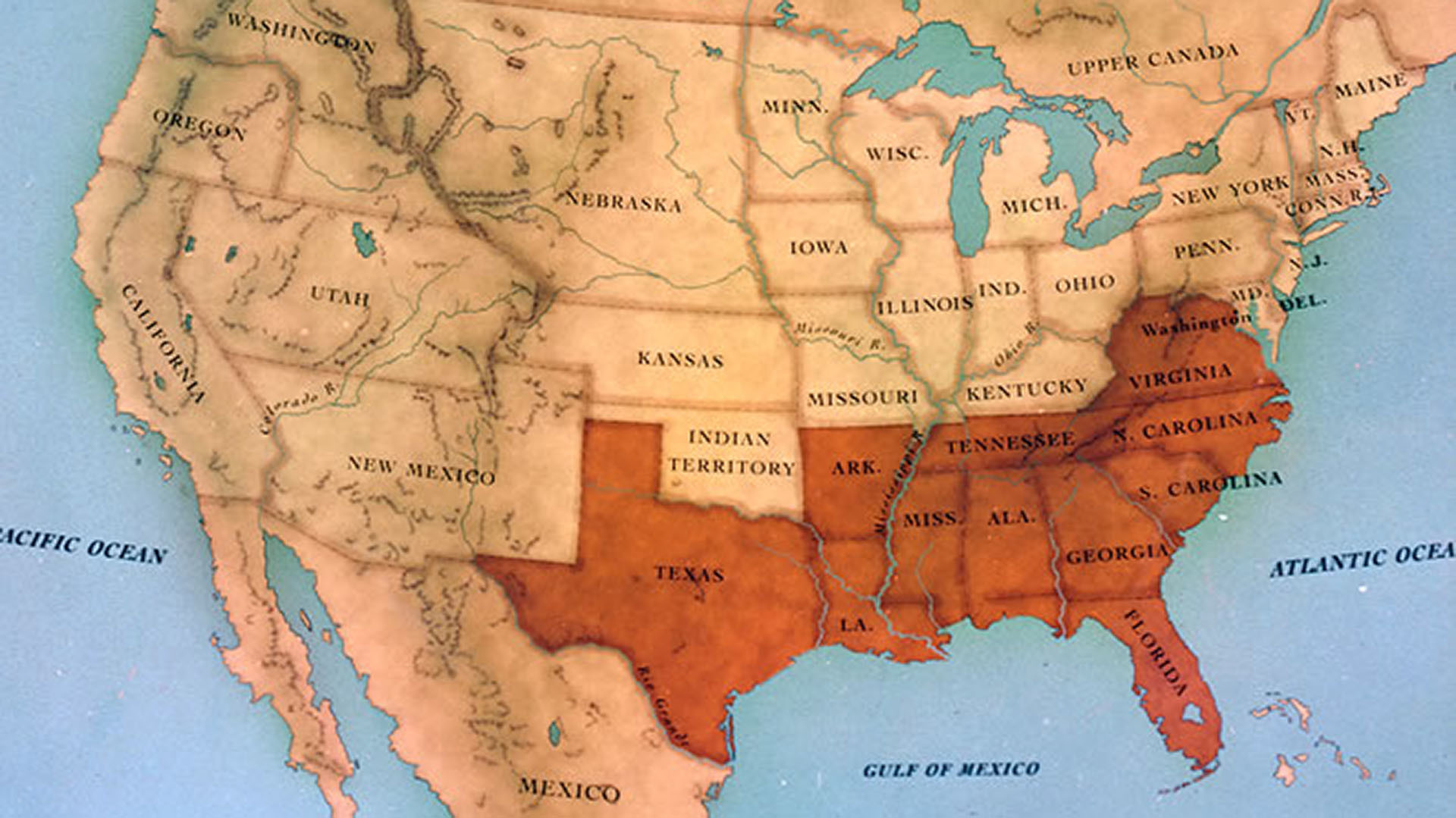
In this lesson, students will interpret a map highlighting
the "Grand Strategy" of the Union in fighting
against the Confederacy. The strategy, designed by General
George McClellan, included overland thrusts by the Union
in the East, toward Richmond, the central area of the
Confederacy, in the Tennessee Valley, and in the west,
along the Mississippi River.
Students will study the map, answer questions, and make
conclusions about the strategy and its effectiveness.
Resources for this Lesson
"Grand Strategy"
Map
Episode 1 of The
Civil War series, highly recommended but not required.
Relevant Standards
This lesson addresses national content standards established
by the Mid-Continent Research for Education and Learning
(http://www.mcrel.org/standards-benchmarks/).
History
• Understands military events that influenced
the outcome of the Civil War (e.g., the "hammering
campaigns" of Generals Grant and Sherman, the wartime
leadership of Jefferson Davis and Abraham Lincoln).
• Knows the locations of the southern and northern
states and their economic resources (e.g., the industries
and small family farms of the industrial North, the
agricultural economy and slavery of the South).
• Understands issues other than slavery that led
to the Civil War (e.g., the appeal of the northern "free
labor" ideology in preventing the further extension
of slavery in the new territories; cultural differences,
conflicting economic issues, opposing constitutional
perspectives).
• Understands the technological, social, and strategic
aspects of the Civil War (e.g., the impact of innovations
in military technology; turning points of the war; leaders
of the Confederacy and Union; conditions, characteristics,
and armies of the Confederacy and Union; major areas
of Civil War combat).
Geography
• Knows the geographic factors that have influenced
people and events in the past (e.g., the effects of
the site of a Civil War battle on the course of the
conflict.)
Procedure
The teacher should introduce this lesson with a short
overview of the early days of the war, especially the
period immediately after the First Battle of Bull Run
(Manassas), when both sides became more aware that the
war would not be won quickly.
At this point, the teacher should make the map available
to students, either by pausing the video or DVD, by
projecting the Web link, or by distributing copies of
the map to students.
Once students either have copies of the map or can see
the map, the teacher should distribute the question
sheet. (Please note: two versions of the question sheet
are posted. One with possible answers and one for student
distribution.) Have students answer the questions based
on the information on the map, as well as information
from the book, series, or student textbook.
Question Sheet for The Union’s Grand Strategy
(with possible answers)
1. Which states made up the Confederacy at the time
the strategy was devised?
(Virginia, North Carolina, South Carolina, Georgia,
Florida, Alabama, Mississippi, Louisiana, Texas, Arkansas,
and Tennessee)
2. What significance did the Union navy play in this
strategy?
(Since the Confederacy had little industry, it was required
to import most of what war materiel it needed. The Union
navy provided a blockade that made it difficult for
the Confederates to get the goods they needed from foreign
nations. In addition, the navy could pressure the southern
coast and force the Confederacy to place men and supplies
along the coast that might be more effectively used
against the Union in other areas.)
3. Explain the significance of the Union campaign in
the western part of the Confederacy.
(The significance might be described in several ways.
First, the Union wanted to gain control of the Mississippi
River, and thereby split the Confederacy. Second, to
gain control of the Mississippi would be a good way
to stop goods from being shipped to the Confederacy,
and a good way to get Union supplies and men to the
fighting more in the interior areas. Third, if the Union
captured New Orleans, it would control one of the largest
cities in the Confederacy.)
4. Why would the Union exert pressure into Tennessee?
(By exerting pressure on Tennessee, the Union might
be able to strike at the heartland of the Confederacy,
as well as control two major rivers, the Tennessee and
Cumberland. In addition, if the Union controlled this
area, that might protect border states --Kentucky, Missouri,
Ohio, and West Virginia-- from attack by Confederate
forces. In addition, Nashville and Memphis would be
two large cities whose loss, if captured by the Union,
would further cripple the Confederacy.)
5. What appeared to be the main focus of the Union strategy
in the East?
(The Union strategy in the East revolved around the
capture of the city of Richmond. Not only would this
disrupt the Confederate government, it would be a major
psychological victory for the Union.)
6. The Union strategy is often called the "Anaconda"
strategy. Why would this strategy have that nickname?
(Answers will vary. However, if the student knows an
Anaconda is a large snake that kills its prey by wrapping
itself around its victim and squeezing, the student
might be able to deduce that the Union strategy was
designed to accomplish the same… by applying pressure
along various frontlines, the Union could force the
Confederacy into submission.)
7. Even with this strategy, it took the Union four years
to actually subdue the Confederacy. In your view, why
do you think this was so? (Hint: this strategy was developed
by General George B. McClellan.)
(McClellan was a master tactician and strategist, but
he had a difficult time actually implementing strategies.
He was painfully slow in advancing. Students may take
that into account when answering this question. In addition,
they may also note that Confederate generals, especially
in the early days of the war, were more effective in
battle. Finally, they may note that while the western
strategy was very effective and New Orleans was captured
early in the war, the war in the east tended to bog
down, and McClellan spent a great deal of time protecting
Washington, D.C., from Confederate attack.)
8. If you were a Union general, what changes or additions
would you make in this strategy? Explain your choices.
(Most students might look at the Union’s lack
of pressure on some major cities or areas. For example,
in the map, there is no mention of an attack on Atlanta
or Charleston, two of the Confederacy’s most major
cities. In addition, while the Mississippi was a major
target, there is no major action contemplated west of
the Mississippi, in states such as Arkansas and Texas.
Nor was any action, other than the blockade and the
capture of New Orleans, targeted along the Atlantic
or Gulf Coast.)
9. Presume you’re a Confederate General, asked
by President Jefferson Davis to develop a Southern strategy
to combat McClellan’s. What advice could you give
the Confederate leadership in developing a battle strategy
of its own?
(Answers vary. Some students may note that one way to
eliminate pressure in various parts of the Confederacy
would be to put pressure on Washington, D.C. Others
may note that as long as the Confederacy maintained
a defensive strategy (kept an army in the field), they
could maintain resistance to the Union and possibly
get foreign recognition. Still other students may note
that Lee invaded the North twice (Antietam and Gettysburg),
and while both are considered defeats for his forces,
they may note that "the best defense is a good
offense".)
10. Based on what you’ve researched and know about
the Civil War, which particular aspect of the Union
strategy do you feel was the most effective in ending
the war? Explain your answer.
(Answers vary. Depending on the level of research into
the war students may have completed, some may say the
blockade was most important because of the lack of southern
industry. Since a great deal of what the South needed
had to be imported, the blockade significantly limited
the South’s ability to make war.
Other students may look at the Eastern strategy, noting
the small number of miles separating Washington, D.C.
from Richmond. It would be imperative for both sides
to keep their capitals free from harassment and possible
capture, so that part of the strategy may have been
significant.
Others may look at the Western strategy because that’s
where Union forces were most effective in the early
days of the war, and where Union generals such as US
Grant became commonly known.)
Question Sheet for The Union’s Grand Strategy
(for student distribution)
1. Which states made up the Confederacy at the time
the strategy was devised?
2. What significance did the Union navy play in this
strategy?
3. Explain the significance of the Union campaign in
the western part of the Confederacy.
4. Why would the Union exert pressure into Tennessee?
5. What appeared to be the
main focus of the Union strategy in the East?
6. The Union strategy is often called the "Anaconda"
strategy. Why would this strategy have that nickname?
7. Even with this strategy, it took the Union four years
to actually subdue the Confederacy. In your view, why
do you think this was so? (Hint: this strategy was developed
by General George B. McClellan.)
8. If you were a Union general, what changes or additions
would you make in this strategy? Explain your choices.
9. Presume you’re a Confederate General, asked
by President Jefferson Davis to develop a Southern strategy
to combat McClellan’s. What advice could you give
the Confederate leadership in developing a battle strategy
of its own?
10. Based on what you’ve researched and know about
the Civil War, which particular aspect of the Union
strategy do you feel was the most effective in ending
the war? Explain your answer.
This lesson was written by
Michael Hutchison.
|