Grade Level 7-12
Subjects History, American Studies,
African-American History
Estimated Time Required 2 (50-60 minute)
class periods
Introduction
Will the slave fight? If any man asks you, tell him
"no"…
But, if anyone asks you, will a Negro fight? Tell him
YES!
--Abolitionist Wendell Phillips
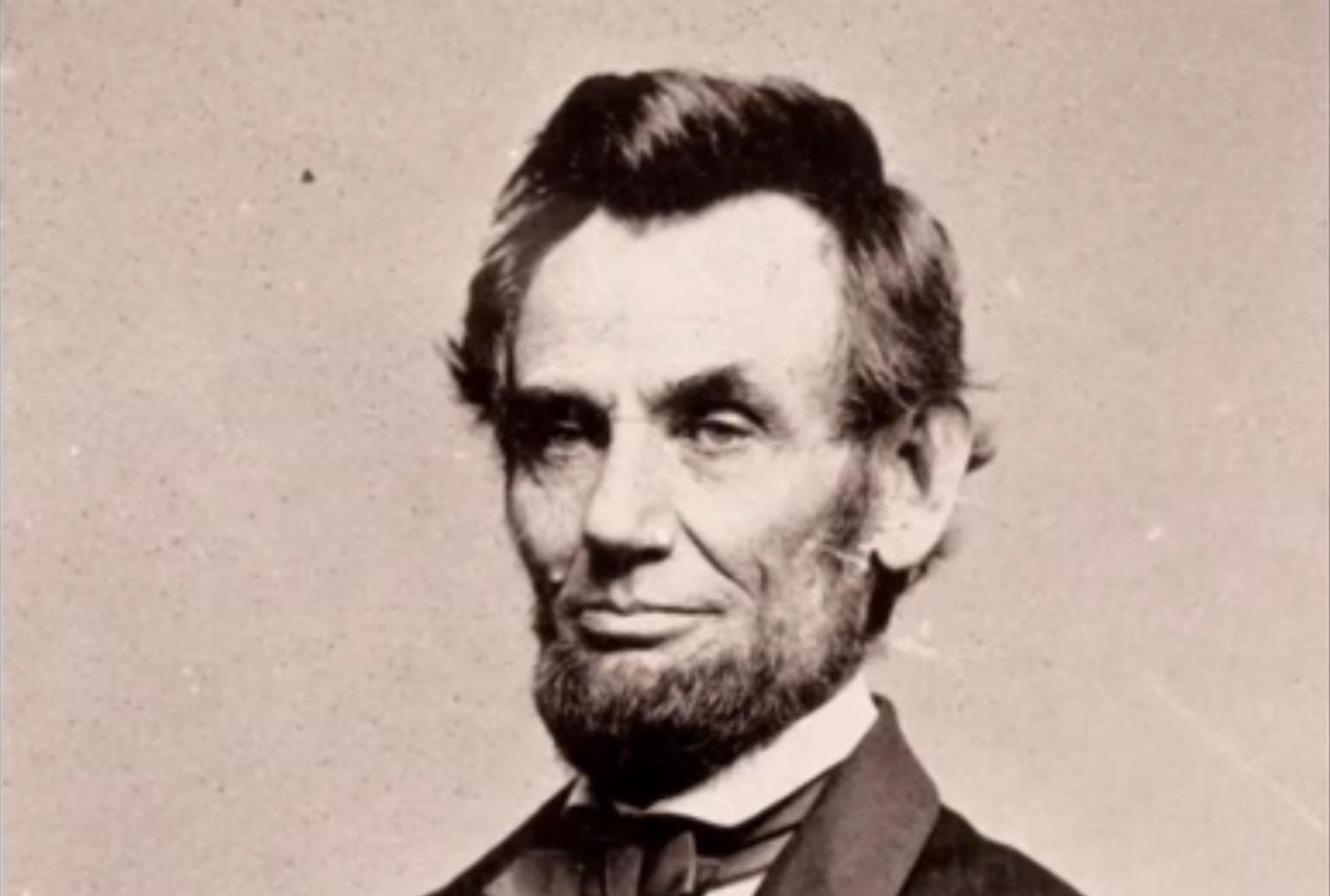
During the first part of the Civil War, President Abraham
Lincoln insisted the war was a fight to restore the
Union. Yet, many saw a higher purpose in the struggle,
and that purpose was to not only save the Union, but
abolish slavery as well. Many believed that if the abolition
of slavery was a reason for the war, black troops should
be allowed to fight. Many others disagreed, including
General Sherman, who was reported as saying, "…
can a Negro do our skirmishing and picket duty? Can
they improvise bridges, sorties, flank movements, etc.,
like the white man? I say no."
In Massachusetts, with urging from Frederick Douglass,
Governor John A. Andrew, and other abolitionists, the
54th Massachusetts Regiment was created in early 1863,
consisting of black troops. Andrew offered the command
of the regiment to 26 year-old Robert Gould Shaw, the
son of wealthy abolitionists. Shaw led the 54th, whose
contingent of troops included two of Frederick Douglass’
sons through training as well into battle in South Carolina.
In July 1863, Shaw requested "the honor" of
the 54th to lead the Union charge against Fort Wagner,
in Charleston Harbor. There, Shaw and many of his men
were killed in a failed attempt to capture the fort.
During the attack, Sergeant William Carney seized the
colors and returned back to his lines despite bullet
wounds to his head, chest, right arm, and leg. He became
the first of 23 black troops to be awarded the Congressional
Medal of Honor, although it took 37 years to receive
it.
In this activity, students will read a letter by Shaw
to his wife after the Union raid at Darien, Georgia;
then will draw conclusions about it.
Related Resources for this Lesson
Episode 5 (chapter 8/ 59:54-1:13:23) of The
Civil War series, highly recommended but not required.
Colonel Shaw’s letter to his wife, Annie, regarding
the raid at Darien, can be found at http://www.geocities.com/1stdragoon/files/rgs_darien.html.
The web page includes the text of the letter as well
as a photo of Shaw.
Supplemental Resources for this Lesson
The letter is part of a larger series of pages on Shaw,
located at http://www.geocities.com/1stdragoon/rgs.html.
The pages include a biography of Shaw, as well as related
pages on the 54th and contemporaries of Shaw.
http://www.awod.com/gallery/probono/cwchas/wagner.html
contains information about the assault on "Battery
Wagner"
http://www.civilwarliterature.com/2Battles/TippooSaib/
TheAttackOnFortWagner.htm
is an account of the attack on Fort Wagner from the
Civil War Literature web site.
http://www.geocities.com/1stdragoon/files/rgs_memorial.html
is a page on the Shaw Memorial (which is on display in Boston,
Massachusetts). The plaster cast of the bronze relief
is on display at the National Gallery of Art in Washington,
D.C.
http://www.exploredc.org/index.php?id=133
contains information on the African American Civil War
Memorial in Washington, D.C.
Relevant Standards
This lesson addresses the following national content
standards established by the Mid-Continent Research
for Education and Learning (McREL) (http://www.mcrel.org/standards-benchmarks/).
History
• Understands the provisions and significance
of the Emancipation Proclamation (e.g., reasons Abraham
Lincoln issued it, public reactions to it in the North
and the South)
• Understands the impact of the Civil War on social
and gender issues (e.g., the roles of women on the home
front and on the battlefield; the human and material
costs of the war; the degree to which the war united
the nation; how it changed the lives of women, men,
and children)
• Understands how different groups of people shaped
the Civil War (e.g., the motives and experiences of
Confederate and white and African American Union soldiers,
different perspectives on conscription, the effects
of divided loyalties)
• Understands how the Civil War influenced both
military personnel and civilians (e.g., the treatment
of African American soldiers in the Union Army and Confederacy,
how the war changed gender roles and traditional attitudes
toward women in the work force)
Strategy for the Lesson
The teacher may open this lesson with some of the debate
and concern about the Emancipation Proclamation as well
as the possibility of allowing blacks to serve in the
Union army. General Sherman’s quote noted in the
Introduction might be a good springboard for discussion
in regard to those opposed to allowing blacks to serve.
On the other side of this issue, this quote from Abraham
Lincoln might be a good discussion opener regarding
enlisting African Americans:
You say you will not fight to free Negroes. Some
of them seem willing to fight for you. [When victory
is won] there will be some black men who can remember
that, with silent tongue and clenched teeth, and steady
eye and well-poised bayonet, they have helped mankind
on to this great consummation; while, I fear, there
will be some white ones, unable to forget that with
malignant heart and deceitful speech, they strove to
hinder it.
Students should read the
biography of Shaw noted in the Supplemental Resources
section above and view the segment in The Civil
War series.
After class discussion,
the teacher should either direct students to the web
page with Colonel Shaw’s letter, or distribute
photocopies to the students. Next, distribute the question
sheet and have students answer the questions based on
the letter. (Please note: two versions of the question
sheet are posted. One with possible answers and one
for student distribution.)
Extension Activities
• The teacher may wish to have students compare
the situations and prejudices faced by the 54th Massachusetts
with those faced by the Tuskegee Airmen in World War
II. Students might also research the roles of blacks
(and other minorities) in World War II, the types of
duties they had compared to white soldiers, as well
as their treatment in society in general during the
1940s.
• Dependent on the time and ability of students,
the teacher may also wish to stage a mock trial of Colonel
Shaw presuming he refused to follow orders as he suggests
in the letter. Students may be assigned roles of Colonel
Shaw, Colonel Montgomery, and other officers and soldiers.
The teacher might open a morality question of honor
versus obligation: Does a soldier’s obligation
to follow orders outweigh refusing to do something he
believes morally wrong? (Other examples the teacher
might draw on regarding this issue include whether Nazi
concentration camp guards could be tried as war criminals
if they were simply following orders, or the role of
American soldiers involved in the My Lai massacre during
the Vietnam War.)
Question Sheet for Robert Gould Shaw and the
54th Massachusetts
(with possible answers)
1. How does Shaw describe his quarters and St. Simons
Island, where he and his men are stationed?
(He notes that he has his quarters in "the
house", very pleasantly situated, and surrounded
by fine large trees.
He notes, also, that the island is beautiful, as far
as he has seen it, and says to Annie that she would
be enchanted with the scenery there…. Noting,
"the foliage is wonderfully thick, and the trees
covered with hanging moss, making beautiful avenues
wherever there is a road or path.)
2. Shaw notes that he leaves with Colonel Montgomery
for Darien, Georgia. According to Shaw’s letter,
what does Montgomery do on the way toward Darien? How
does Shaw describe Darien when they arrive?
(Shaw wrote Annie, "on the way up, Montgomery threw
several shells among the plantation buildings, in what
seemed to me a very brutal way; for he didn’t
know how many women and children there might be.
Regarding Shaw’s description of Darien, he says,
"About noon, we came in sight of Darien, a beautiful
little town. The town was deserted, with the exception
of two white women and two Negroes.)
3. Upon finding out the town was deserted, what did
Montgomery do with furniture and moveable property?
In your view, why did he do this?
(It was common for soldiers to often forage for supplies,
and when they found furniture or goods they thought
they could sell or use, they would take those. Montgomery
probably ordered the removal of furniture and moveable
goods for his own use or to send back North for sale.)
4. After the town was "pretty thoroughly disemboweled",
what did Montgomery order? How did Shaw respond to the
order? Why did Shaw feel this way about this order?
(After goods had been removed, Montgomery said to Shaw,
"I shall burn this town". Shaw replied, "I
did not want the responsibility of it", in essence
objecting to the order. Montgomery fires some of the
buildings himself, but one company of the 54th assisted,
because, in Shaw’s words, "he ordered them
out, and I had to obey".
Shaw notes to Annie, "You must bear in mind that
not a shot had been fired at us from this place, and
there were evidentially very few men left in it. All
the inhabitants (principally women and children) had
fled on our approach, and were no doubt watching the
scene from a distance.")
5. How does Montgomery justify his actions at Darien
to Shaw?
(Shaw writes, "The reasons he gave me for destroying
Darien were, that the Southerners must be made to feel
that this was a real war, and they were to be swept
away by the hand of God, like the Jews of old."
Montgomery adds, "We are outlawed, and therefore
not bound by the rules of regular warfare.")
6. How does Shaw reply to Annie about Montgomery’s
statement?
(Regarding Montgomery’s comment that the South
must be "swept away by the hand of God," Shaw
notes, "In theory it may seem all right to some,
but when it comes to being made the instrument of the
Lord’s vengeance, I myself don’t like it."
Refuting Montgomery’s other comment about not
"being bound by the rules of regular warfare",
Shaw says, "but that makes it none the less revolting
to wreak our vengeance on the innocent and defenseless.")
7. Shaw asks Annie, "remember, not to breathe a
word of what I have written about this raid, to anyone
out of our two families, for I have not made up my mind
what I ought to do." What concerns does Shaw have
regarding his actions, or possible reactions, to the
raid?
(He mentions his own "distaste for this barbarous
sort of warfare", adding, "I am not sure that
it will not harm very much the reputation of black troops
and of those connected with them."
Continuing, Shaw says there was not a deed performed
which "required any pluck or courage", and
sums everything up by saying "as the case stands,
I can’t see any justification" for the events
at Darien. He notes "this makes me very ashamed
of myself".)
8. Farther into the letter, Shaw weighs his options
regarding how to deal with this incident. What does
he see as his options?
(He sees his "courses" as "to obey orders
and say nothing", or "to refuse to go on any more
such expeditions, and to put under arrest, probably
court-martialed, which is a serious thing.")
9. Based on Shaw’s letter, there’s no indication
about what choice he made regarding dealing with the
incident. If you were a friend of Shaw’s, and
he asked your advice in this situation, what would you
recommend he do? Why?
(Answers vary. Some may say that it is better to follow
orders and stay out of trouble, others might say that
no soldier is obligated to follow what he considers
an immoral order, regardless of the consequences for
not following it. Other students may agree with Montgomery’s
assessment that this was war, and the Southern states
should expect to see total war as it could be waged.)
Question Sheet for Robert Gould Shaw and the
54th Massachusetts
(for student distribution)
1.How does Shaw describe his quarters and St. Simons
Island, where he and his men are stationed?
2. Shaw notes that he leaves with Colonel Montgomery
for Darien, Georgia. According to Shaw’s letter,
what does Montgomery do on the way toward Darien? How
does Shaw describe Darien when they arrive?
3. Upon finding out the town was deserted, what did
Montgomery do with furniture and moveable property?
In your view, why did he do this?
4. After the town was "pretty thoroughly disemboweled",
what did Montgomery order? How did Shaw respond to the
order? Why did Shaw feel this way about this order?
5. How does Montgomery justify his actions at Darien
to Shaw?
6. How does Shaw reply to
Annie about Montgomery’s statement?
7. Shaw asks Annie, "remember, not to breathe a
word of what I have written about this raid, to anyone
out of our two families, for I have not made up my mind
what I ought to do." What concerns does Shaw have
regarding his actions, or possible reactions, to the
raid?
8. Farther into the letter, Shaw weighs his options
regarding how to deal with this incident. What does
he see as his options?
9. Based on Shaw’s letter, there’s no indication
about what choice he made regarding dealing with the
incident. If you were a friend of Shaw’s, and
he asked your advice in this situation, what would you
recommend he do? Why?
This
lesson was written by
Michael Hutchison.
|