|
|
Grade Level 7-12
Subjects History
Estimated Time Required 2 (50-60 minute)
class periods
Introduction
You cannot qualify war in harsher terms than I will.
War is cruelty, and you cannot refine it; and those who
brought war into our country deserve all the curses and
maledictions a people can pour out.
--William Tecumseh Sherman
Letter to the city of Atlanta, 1864
This activity highlights one of the more controversial
aspects of the later phases of the Civil War, the Union’s
"March to the Sea". Sent by Ulysses S. Grant
"create havoc and destruction of all resources that
would be beneficial to the enemy," Sherman began
his "Atlanta Campaign" in May 1864.
After capturing Atlanta, Sherman marched his army to the
sea, capturing the city of Savannah in December, and then
marching through South Carolina into North Carolina.
In this activity, students will analyze two sources. First,
they will look at a letter written by Sherman to Grant
as Sherman’s army approached Savannah. Second, they
will review the lyrics to the popular song of that period,
Marching Through Georgia.
Resources for this lesson
Episode 6 (chapter 8/ 56:50-1:04:45) and Episode 7 (chapter 4/ 10:18-14:04; chapter 5/ 14:05-19:08; and chapter 9/ 30:36-44:24)
of The Civil War series, highly recommended but
not required.
Letter
from Sherman to General Grant (http://www.cviog.uga.edu/Projects/gainfo/shrmltr.htm).
The
lyrics to "Marching Through Georgia" (http://www.civilwarpoetry.org/union/songs/marchga.html).
(Note: the lyrics are printed as they originally were
written, and contain one racial epithet that may be considered
objectionable by today’s standards. The teacher
should prepare students for this.) The lyrics page for
Marching Through Georgia also contains a link
to a MIDI file of the song. If the teacher has suitable
computer hardware, the file can be played so students
can listen, sing along, and so on.
Relevant Standards
This lesson addresses national content standards established
by the Mid-Continent Research for Education and Learning
(McREL) (http://www.mcrel.org/standards-benchmarks).
History Standards
• Knows the locations of the Southern and Northern
states and their economic resources (e.g., the industries
and small family farms of the industrial North, the agricultural
economy and slavery of the South)
• Understands the economic, social, and cultural
differences between the North and South (e.g., how the
free labor system of the North differed from that of the
South)
• Understands the technological, social, and strategic
aspects of the Civil War (e.g., the impact of innovations
in military technology; turning points of the war; leaders
of the Confederacy and Union; conditions, characteristics,
and armies of the Confederacy and Union; major areas of
Civil War combat)
• Understands the circumstances that shaped the
Civil War and its outcome (e.g., differences between the
economic, technological, and human resources of both sides;
the impact of the Emancipation Proclamation on the outcome
of the war)
Strategy for the lesson
The teacher might open the lesson with a discussion of
what would become "total war", which was first
implemented with Sherman’s March, but became even
more common in World War I and World War II. The prevailing
view regarding total war was that soldiers in the field
were backed up by civilian populations providing them
with food, supplies, morale, and monetary support. To
eliminate this support would affect soldiers as much as
a military battle.
Next, the teacher can enter into a discussion regarding
why Grant sent Sherman into Georgia, and discuss the extent
of the campaign. Many have believed that Sherman’s
March was overly brutal, and he was wrong for inflicting
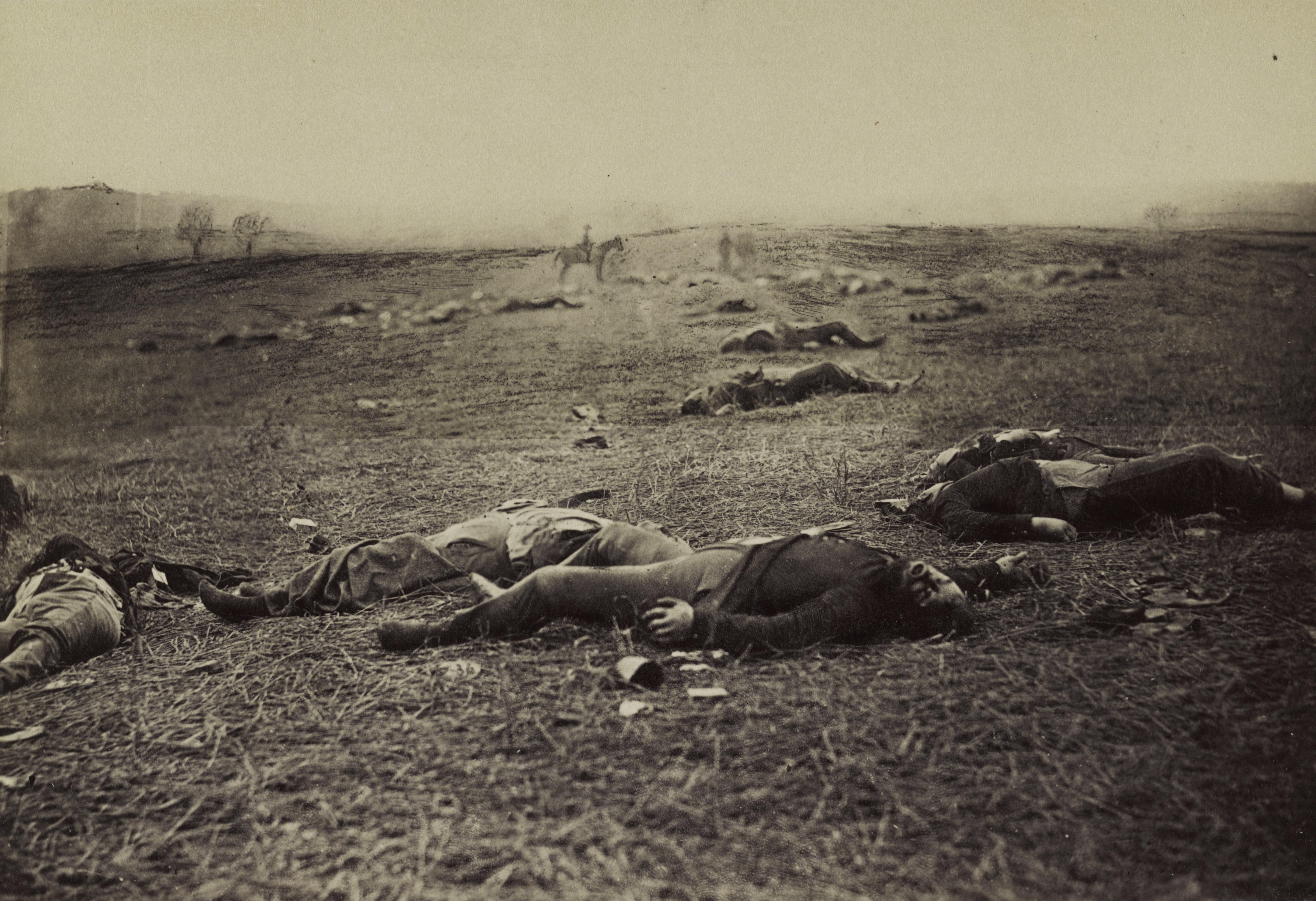
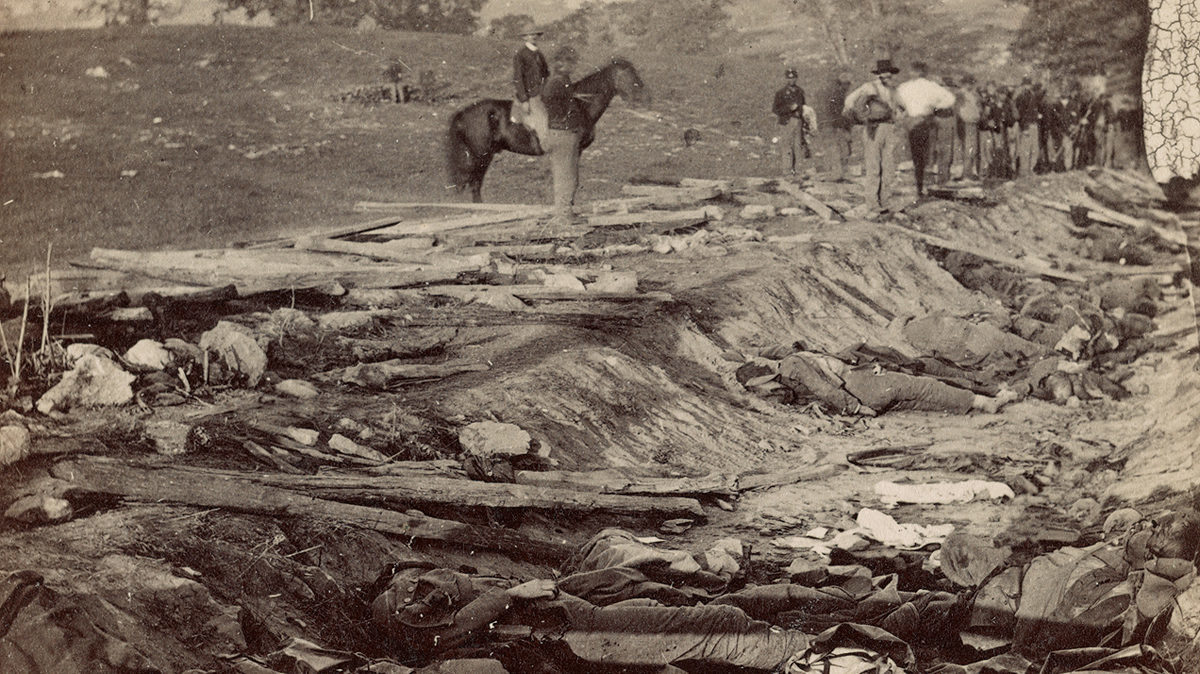
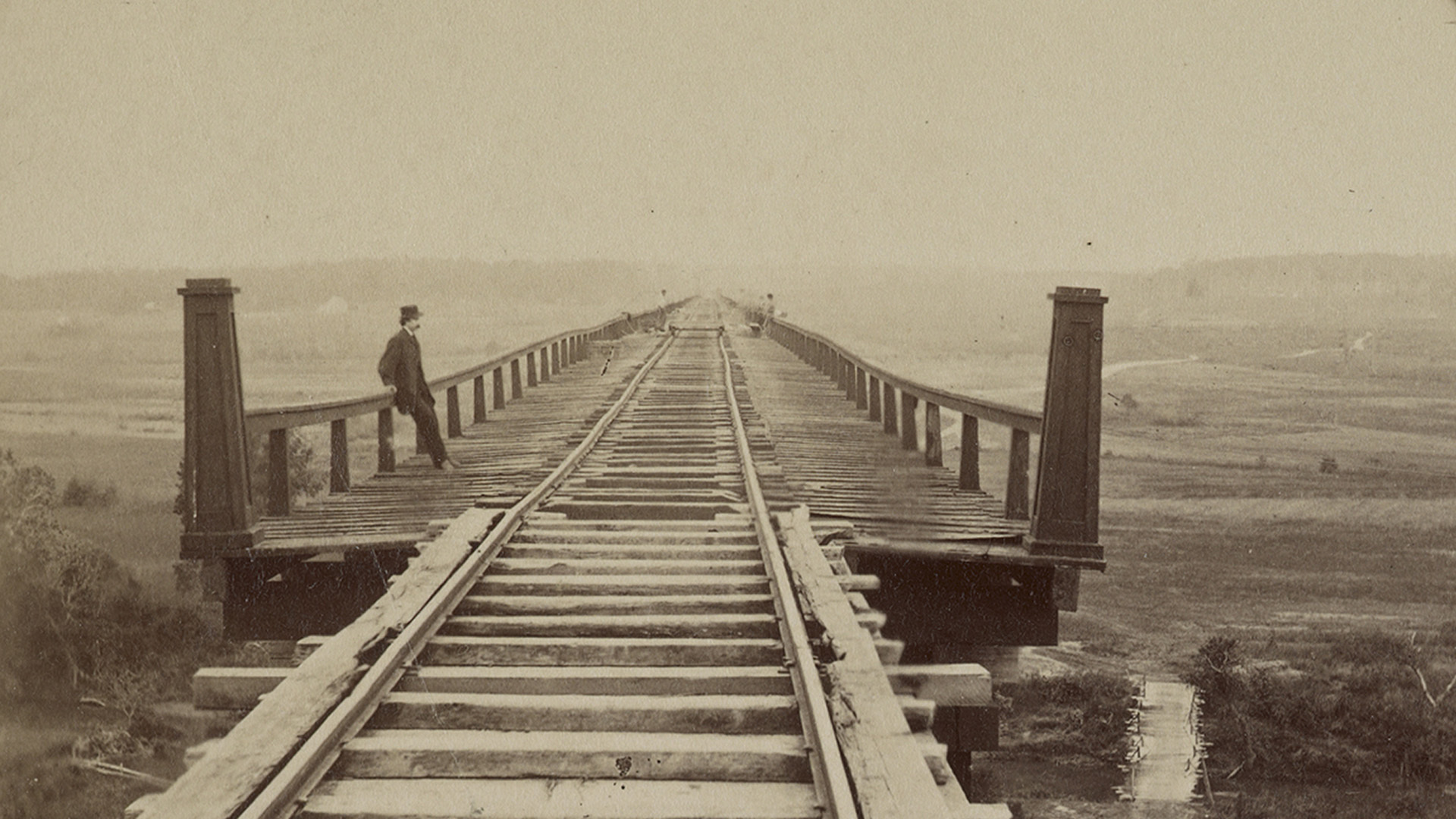
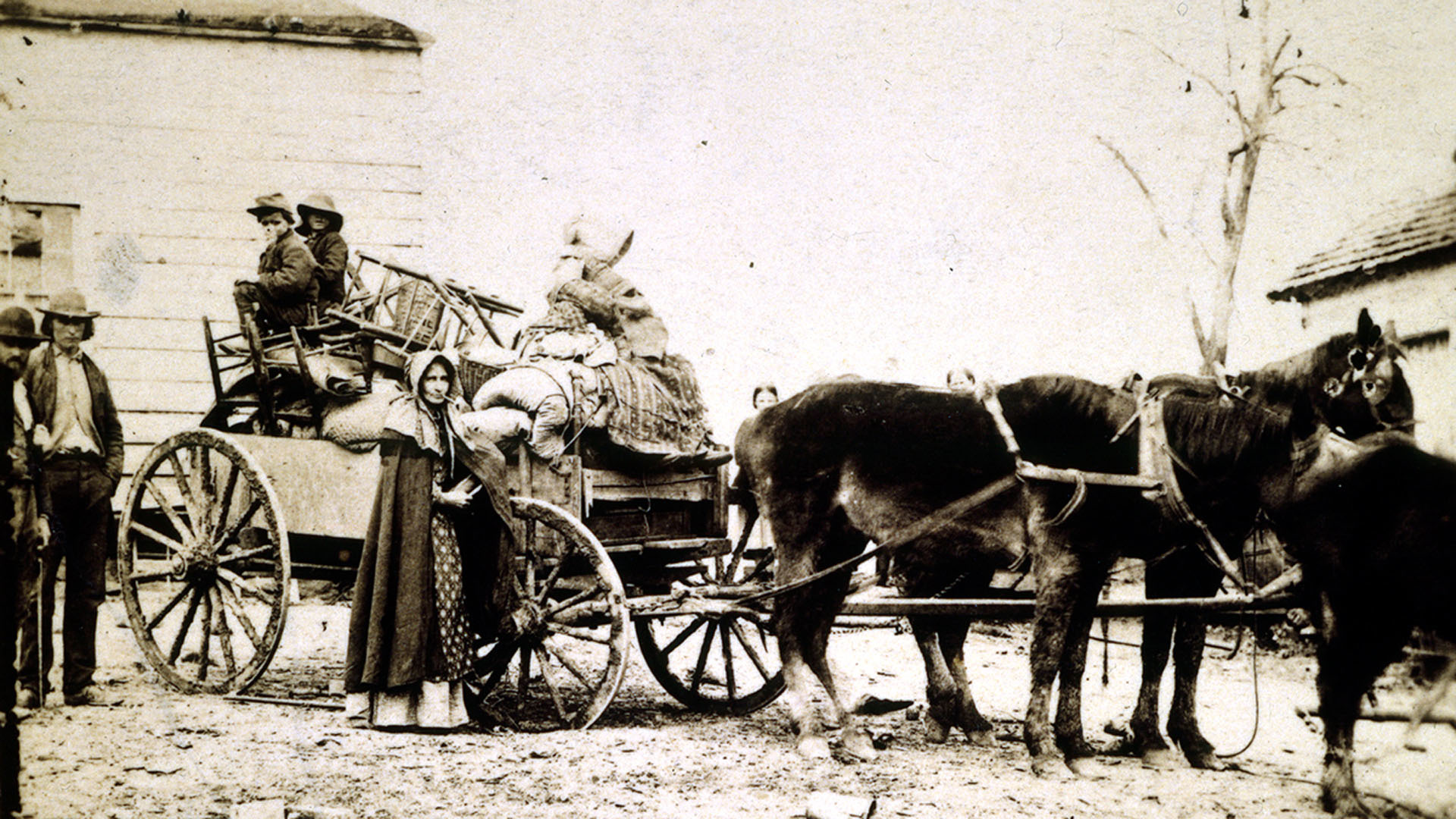
such destruction in the South. Photos in The Civil
War series (Episodes 6 and 7) might be used to highlight the level of
destruction in the South. Several photos in the Library
of Congress’ Selected Civil War Photograph Collection
(http://memory.loc.gov/ammem/cwphtml/cwphome.html)
also show the effects of the march.
Next, the teacher can distribute photocopies of the two
sources, or direct students to access them online. The
teacher should also distribute the question sheets, and
direct students to complete them. (Please note: two versions
of the question sheet are posted. One with possible answers
and one for student distribution.)
Extension Activities
• Suggest to students that they are writers or editors
for Civil War period newspapers (both North and South).
Have them write editorials regarding the march, either
as editors of Northern newspapers or Southern newspapers.
• Have students compare Sherman’s march with
other instances of total war in World War I or World War
II. (Some examples the firebombings of Hamburg and Dresden
during World War II, as well as the London Blitz or bombings
of Hiroshima and Nagasaki.)
• Students may also either debate the issue of total
war (regarding whether it is humane or inhumane) as a
class, or may wish to conduct a "mock trial"
of Union officers who were engaged in the practice, such
as Sherman.
Question Sheet for Sherman’s March to the
Sea
(with possible answers)
Note: These questions deal with General Sherman’s
letter to General Grant.
1. Where does Sherman report to Grant that he is located
at the time the letter is written? Approximately how many
men does Sherman have under his command?
(At the time the letter was written, Sherman was outside
Savannah. Under his command were 50,000 to 60,000 men.)
2. How does Sherman describe how he has provisioned his
men? Describe the kinds of food his men had. Why did the
army have more food at this point in the march compared
to when the march began?
(The army had various kinds of livestock, including cattle,
turkeys, chickens, sheep, hogs, as well as poultry, potatoes,
bread, and sweet potatoes. The men were able to forage
by taking supplies from farms they passed on their way
to Savannah.)
3. Sherman also describes how he will demand Savannah’s
surrender. In his letter, how does he plan to subdue the
city if it doesn’t surrender? Why did he plan this
way?
(His plan was to bombard the city because he "will
not risk the lives of our men by assaults across the narrow
causeway by which alone I can now reach it.")
4. How does Sherman describe the situation in Tennessee?
What does he write about General Thomas?
(Sherman notes, "I myself am somewhat astonished
at the attitude of things in Tennessee." He added
that he was concerned about Thomas because of Thomas’s
lack of action against Hood in Tennessee. He notes that
he knows "that General Thomas is slow in mind and
action, but he is judicious and brave, and the troops
feel great confidence in him".)
5. How does Sherman describe the Confederate forces in
Savannah?
(He believes (General) Hardee "has good artillerists,
some 5,000 or 6,000 infantry, and it may be a mongrel
mass of 8,000 to 10,000 militia.")
The next few questions focus on the lyrics to the song
Marching Through Georgia.
6. How does the writer of the song describe (in the first
stanza) the events of Sherman’s march?
(The events of the march are described in past tense,
but also in a patriotic tone.)
7. How does the song corroborate Sherman’s remarks
about foraging through Southern farms?
(The lyrics say… "The turkeys gobbled which
our commissary found… how the sweet potatoes even
started from the ground…)
8. How does the song describe people Sherman’s men
encounter in the South?
(Answers vary. Students may note that the song seems to
focus more on "union men", that is, those who
are living in the path of Sherman’s march who are
still loyal to the union. However, the lyrics do also
mention "saucy rebels", and "Treason".)
9. If you had to make a determination about why the Civil
War was fought based on the lyrics on the song alone,
what conclusion would you make? Why?
(Answers vary. Some may note the word "freedom"
mentioned and it may be concluded that the war was fought
to end slavery. Others may note the use of the word "union"
and "rebels", and may conclude that the war
was fought to save the union.)
10. Many have noted that they thought Sherman’s
march was too severe. Others have noted that it was the
only way to subdue the South and win the war as quickly
as possible. In your own words, discuss which view you
believe is correct. Explain your answer.
(Answers vary.)
Question Sheet for Sherman’s March to the
Sea
(for student distribution)
Note: These questions deal with General Sherman’s
letter to General Grant.
1.Where does Sherman report to Grant that he is located
at the time the letter is written? Approximately how many
men does Sherman have under his command?
2. How does Sherman describe how he has provisioned his
men? Describe the kinds of food his men had. Why did the
army have more food at this point in the march compared
to when the march began?
3. Sherman also describes how he will demand Savannah’s
surrender. In his letter, how does he plan to subdue the
city if it doesn’t surrender? Why did he plan this
way?
4. How does Sherman describe the situation in Tennessee?
What does he write about General Thomas?
5. How does Sherman describe the Confederate forces in
Savannah?
The next few questions focus on the lyrics to the song
Marching Through Georgia.
6. How does the writer of the song describe (in the first
stanza) the events of Sherman’s march?
7. How does the song corroborate Sherman’s remarks
about foraging through
Southern farms?
8. How does the song describe people Sherman’s men
encounter in the South?
9. If you had to make a determination about why the Civil
War was fought based on the lyrics on the song alone,
what conclusion would you make? Why?
10. Many have noted that they thought Sherman’s
march was too severe. Others have noted that it was the
only way to subdue the South and win the war as quickly
as possible. In your own words, discuss which view you
believe is correct. Explain your answer.
This lesson was written by
Michael Hutchison.
|
|