Grade Level
7-12
Subjects History, American Literature
and American Civilization
Estimated Time Required 1 (50-60 minute)
class periods for each activity
Overview
Walt Whitman, journalist and poet, created poems that
are boldly American in style and substance. He idealized
American leaders and workmen, chronicled Civil War battles,
praised 19th Century technology, and memorialized Abraham
Lincoln. While his perspective changed as the nation
developed, Whitman’s poems retained their democratic
spirit and faith in the American experiment.
During the Civil War Whitman visited soldiers in Washington,
D.C., hospitals, ministering to their needs and recording
the experience in newspaper articles, letters, and poems.
The poet considered his years with the wounded soldiers
the defining period of his life.
Activity Objectives
In this lesson students will have an opportunity to
• analyze historic events and concepts recorded
in Whitman’s poems
• examine conditions in Civil War hospitals and
the poet’s reactions to those conditions
• evaluate Whitman’s role as poet, historian,
and American visionary
Resources Needed
Episode 6 of The
Civil War series, highly recommended but not required.
Walt Whitman, Leaves of Grass (http://www.bartleby.com/142/)
or print copy.
Relevant Standards
This lesson addresses national content standards established
by the Mid-Continent Research for Education and Learning
(McREL) (http://www.mcrel.org/standards-benchmarks/).
History
• Understands the sources and character of cultural,
religious, and social reform movements in the antebellum
period.
• Understands the causes of the Civil War.
• Understands the course and character of the
Civil War and its effects on the American people.
Language Arts
• Demonstrates competence in the general skills
and strategies of the writing process.
• Demonstrates competence in the stylistic and
rhetorical aspects of writing.
• Gathers and uses information for research purposes.
• Demonstrates competence in the general skills
and strategies for reading a variety of literary texts.
• Demonstrates competence in the general skills
and strategies for reading a variety of informational
texts .
Introduction
I know very well that my "Leaves" could
not possibly have emerged or been fashioned or completed
from any other era than the latter half of the 19th
Century, nor any other land than democratic America
and from the absolute triumph of the National Union
Arms.-- W. Whitman
"I hear America singing!" Walt Whitman proclaimed
in an early poem. The song honors American mechanics,
carpenters, boatmen, ploughboys--the "divine average"
who, for Whitman, embodied democracy. Other poems in
Leaves of Grass celebrate American industry, innovation,
and expansion. Yet for the patriot poet the defining
event of his life and poetry was the Civil War, when
he visited sick and wounded soldiers in Washington,
D. C. hospitals.
Born in 1819 during the "Era of Good Feeling",
Whitman was raised on Jacksonian democracy. Walt Whitman,
Sr., trained his children as "radical Democrats,
on the side of the farmer, the laborer, the small tradesman."
Walt Whitman’s formal education ended when he
was 11 and he became an office boy in a New York law
firm. With the lawyers’ encouragement he became
an eclectic reader. Frequent attendance at concerts,
art galleries, and the theater completed his education.
In the years that followed Whitman worked as a printer,
schoolteacher, carpenter, and journalist--always observing
and absorbing the life around him.
Early 19th century optimism gave way to the turbulent
1850s, when sectional conflict--especially over the
issue of slavery-- threatened to destroy the nation.
Strongly devoted to the union, Whitman found the country’s
political leadership ineffectual, calling Presidents
Millard Fillmore, Franklin Pierce, and James Buchanan
"our topmost warning and shame."
Frustrated by compromises over the extension of slavery
into the western territories, Whitman joined the Free
Soil Party. He particularly despised the Fugitive Slave
Act. In his poem "Boston Ballad" he recounted
the case of Anthony Burns, an escaped slave, who was
arrested and imprisoned in Boston and returned to his
owner in Virginia. At the same time, he branded both
secessionists and abolitionists " radicals".
More and more Whitman came to feel that the strength
of the republic lay not in its leaders but in its hardworking,
patriotic citizens. Always carrying a little notebook,
he observed those citizens, jotting impressions of everyday
scenes. From those vignettes he fashioned twelve unnamed
poems, which he self-published in 1855 under the title
Leaves of Grass. Throughout his life he would
add, revise, rearrange and republish the poems until
the deathbed edition in 1892.
Whitman’s first edition of Leaves erupted
on the literary scene. A democratic spirit infused his
poems as he chronicled all facets of American life from
the significant to the mundane. He boldly celebrated
the body and soul of the average American--and his own.
Ignoring traditional rhyme and meter, Whitman spoke
directly to the reader in the manner of revival leaders
and political orators of his day. Using the ubiquitous
"I", he identified with the people and the
republic itself. In the opening poem, later entitled
"Song of Myself", Whitman wrote:
I speak the pass-word primeval, I give the sign of democracy.
By God! I will accept nothing which all cannot have
their counterpart
of the same terms.
As editor of the Brooklyn Daily Times in 1857 Whitman
commented on the deteriorating political climate of
the country. He also continued to write poetry. In the
"Year of the Meteors", 1859-60, he describes
the trial of abolitionist John Brown. A new 1860 edition
of Leaves opened with the Proto-Leaf (later
"Starting from Paumanok") in which the poet
declares:
I will make a song for These States, that no one State
may under any
circumstances be subjected to another State,
And I will make a song that there shall be comity by
day and by
night between all The States, and between any two of
them,
And I will make a song of the organic bargains of These
States--
And a shrill song of curses on him who would dissever
the Union.
Whitman, the poet, tried to accomplish what political
leaders could not: preserve the union.
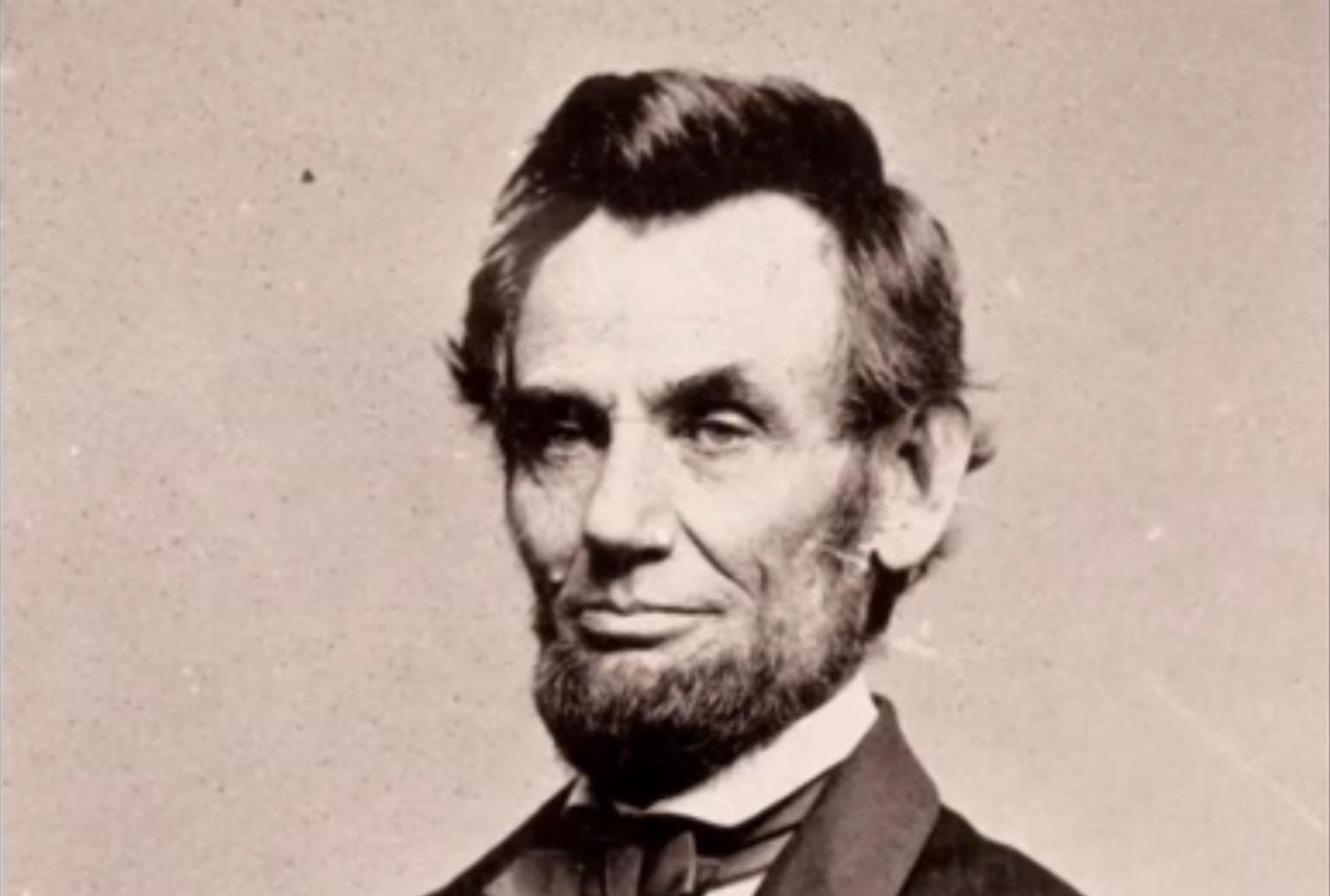
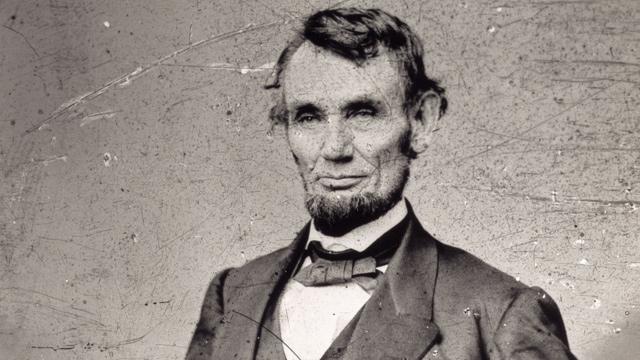
The year 1861 brought the inauguration of a new President,
Abraham Lincoln--finally a leader whom Whitman could
respect. The poet admired Lincoln’s humble beginnings
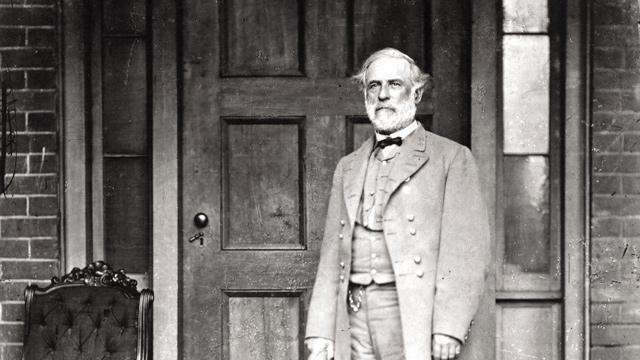
and his commitment to the union. The year also brought
secession of the confederate states and war.
After the first Battle of Bull Run (July 1861), Whitman
wrote, "Beat! Beat! Drum!" as a recruiting
poem. He endorsed the Civil War as a catharsis which
would purge the nation of political corruption and preserve
the union.
The war touched Whitman personally after his brother
George joined the 51st New York Volunteers. When the
New York Herald listed George among those wounded
at the Battle of Fredericksburg in December 1862, Whitman
raced to Washington. Failing to find his brother in
one of the city’s makeshift hospitals, he traveled
to the Union camp at Falmouth, Va., near Fredericksburg.
Fortunately, George had received only a superficial
wound. Nevertheless, Whitman stayed in the camp for
two weeks, visiting the wounded and listening to their
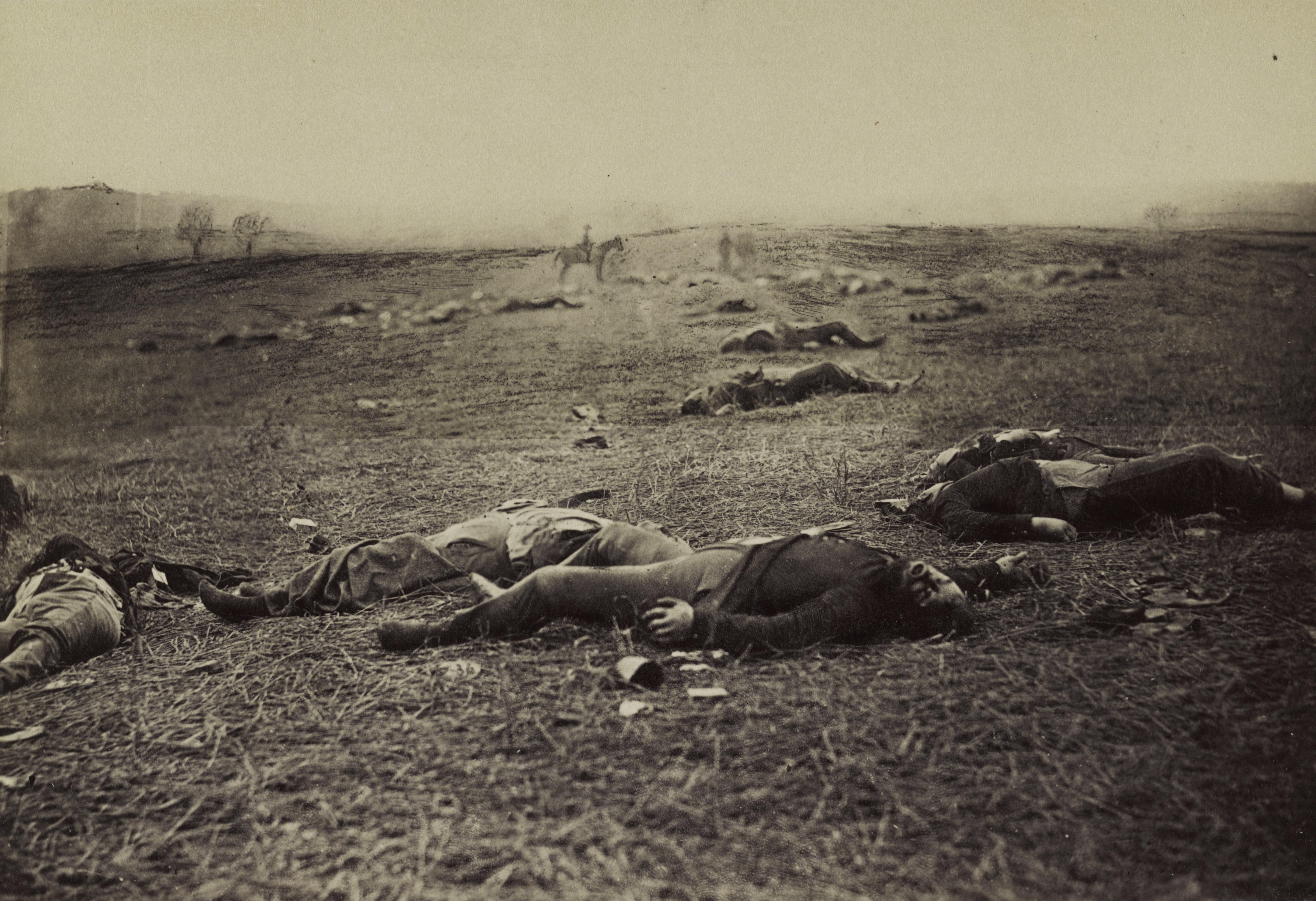
stories. Their descriptions of the Battle of Fredericksburg
are recorded in the poem, "The Artilleryman’s
Vision." Whitman accompanied the wounded to Washington’s
hospitals where he began visiting them almost daily--a
practice he continued for the next three years. He listened
to their complaints, fed them, and wrote letters home.
Describing his hospital role, Whitman wrote:
I supply often to some of these dear, suffering
boys in my presence and magnetism that which doctors
nor medicines nor skills nor routine assistance can
give. I can testify that friendship has literally cured
a fever and the medicine of daily affection, a bad wound.
Whitman’s poem "The Wound Dresser" attests
to his hospital experiences. To finance his stay, the
poet worked part-time in the Army Paymaster’s
Office. Later he obtained clerical jobs in the Department
of the Interior and the Attorney General’s Office.
When Whitman arrived in Washington, 43 facilities were
used as hospitals. Schools, hotels, abandoned barracks,
privately owned mansions, and government offices were
converted to house the wounded.
Often Whitman stayed with soldiers during and after
amputations. In that pre-antiseptic era doctors sometimes
failed to clean wounds properly and infections set in,
making amputation necessary. He was struck by the stoicism
and fortitude of the stricken soldiers. After one night
visiting patients at the Patent Office Hospital, he
recorded:
As I stood by the bedside of a Pennsylvania soldier
who lay, conscious of quick approaching death, yet perfectly
calm and with noble, spiritual manner, the veteran surgeon,
turning aside, said to me that though he had witnessed
many, many deaths of soldiers and had been a worker
at Bull Run, Antietam, Fredericksburg, etc., he had
not seen yet the first case of man or boy that met the
approach of dissolution with cowardly qualms or terror.
My own observation fully bears out these remarks.
Most often Whitman visited the Armory Square Hospital
because it contained "by far the worst cases, most
repulsive wounds, has the most suffering, and most need
of consolation." Another famous visitor to Armory
Square was President Lincoln, whom the poet admired
more and more for his perseverance during the war. Although
he never met Lincoln, Whitman sometimes saw the President
passing on the street.
I see the President often. I think better of him
than many do. He has conscience and homely shrewdness;
conceals an enormous tenacity under his mild, gawky
Western manner. The difficulties of his situation have
been unprecedented in the history of statesmanship.
That he has conserved the government so far is a miracle.
By his own estimate Whitman ministered to thousands
of sick and wounded soldiers.
Whitman always carried his little notebook where, "
nearly blind with tears", he jotted stories and
reactions to scenes in the hospital and on battlefields.
These impressions were recorded in Drum Taps,
a book of Civil War poems. He also published articles
in the New York Times and Brooklyn Daily
Eagle, providing a historical record of Washington
during the war.
By January 1, 1865, the Daily Morning Chronicle
reported that over 18,000 soldiers had died in Washington
hospitals during the war. Of that number, 3,421 were
victims of gunshot wounds, 2,255 typhoid fever, 1,370
chronic diarrhea, and 560 amputation. Whitman, who had
watched many of them die, provided a moving obituary
in his poem "Ashes of Soldiers".
The end of the war brought relief, optimism, and for
Whitman, a belief that the revitalized union would initiate
a new era of political and social justice.
It is certain to me that the United States, by virtue
of that war and its results--and through them and them
only--are now ready to enter . . .upon their genuine
career in history, as no more torn and divided in their
spinal requisites, but a great homogeneous Nation--free
states all--a moral and political unity in variety,
such as Nature shows in her grandest physical works,
and as much greater than the merely physical.
His poem "Turn O Libertad" celebrated the
war’s end and promised a "future greater
than all past." Jubilation over the union victory
gave way to national grief over the assassination of
President Lincoln. Devastated by the loss, Whitman wrote
"O Captain! My Captain!"-- a poem he repeatedly
was asked to read during the Lincoln lectures of his
later years. The poet himself preferred his elegy "When
Lilac’s Last in the Dooryard Bloom’d".
In both poems the poet is no longer the central figure;
instead, the tragedy of Lincoln’s death dominates.
In 1873 Whitman suffered a stroke and went to live with
his brother George in Camden, New Jersey. Later he bought
a little house on Mickle Street where he hosted a stream
of literary figures and admirers. Despite declining
health, he continued to travel, lecture on Abraham Lincoln,
write, and revise Leaves of Grass until the
last edition shortly before his death in 1892.
In his final years Whitman saw himself "not as
a verbal adventurer . . . but as a prophet and man of
wisdom." Often he remarked to friends, "the
war saved me". The statement puzzled critics, since
most of his best poems were written before the Civil
War. But for Whitman, the experience of visiting the
wounded in Washington hospitals confirmed his faith
in "the divine average": the strength of the
republic lay in the spirit, conduct, and quiet heroism
of its citizens. That spirit would unite the nation.
Suggested Activities
• Read a historic account of one major Civil War
battle. Select a poem from "Drum Taps" which
best describes the conflict. Indicate how the poem captures
the battle scene both visually and emotionally.
• Read about Union efforts to enlist troops for
the War. Create a poster to illustrate the recruiting
poem "Beat! Beat! Drums!"
• After reading "The Wound Dresser",
write an account of tending the wounded for publication
in a city newspaper in 1862.
• Compare statistics on Civil War casualties with
those of other U. S. wars. Using information on Whitman’s
work in Washington hospitals and the essay "Civil
War: Wounded City" (http://www.exploredc.org/index.php?id=113),
conclude why Civil War casualties were higher than those
in any other American conflict.
• Compare Walt Whitman’s work in Washington
hospitals during the Civil War with that of Red Cross
founder Clara Barton.
Memories of President Lincoln
• Analyze one of the poems written in response
to the death of Abraham Lincoln: "O Captain! My
Captain!" or "When Lilacs Last in the Dooryard
Bloom’d". Indicate how the content and style
of the poem reflect the impact of the President’s
life on the nation as well as grief over his loss.
• Write an obituary for the slain President. Compare
your article with one of Whitman’s poems memorializing
Lincoln.
Writing Style
• Compare the writing style of a pre-Civil War
poem with that of a poem written after the War. Show
how the author’s style reflects changes in the
national attitude and in the poet’s own perspective.
• After reading one of Whitman’s early poems,
write a first-person prose poem celebrating some aspect
of contemporary American life, such as work, recreation,
scenery, or charitable activities.
Patriotic Vision
• How accurate was Whitman as a national prophet?
Find a poem which you feel describes contemporary America,
fulfilling the poet’s vision of the future.
This lesson was written by
Nancy Hall.
|