|
|

Grade Level: 7-12
Subjects: U. S. History, Civics, World
History, Language Arts
Estimated Time Required: 2-4 class
period for most activities; some homework
The Civil War is a defining event in American history.
Battles, which drew participants from all of the then-existing
states, still intrigue students of military history.
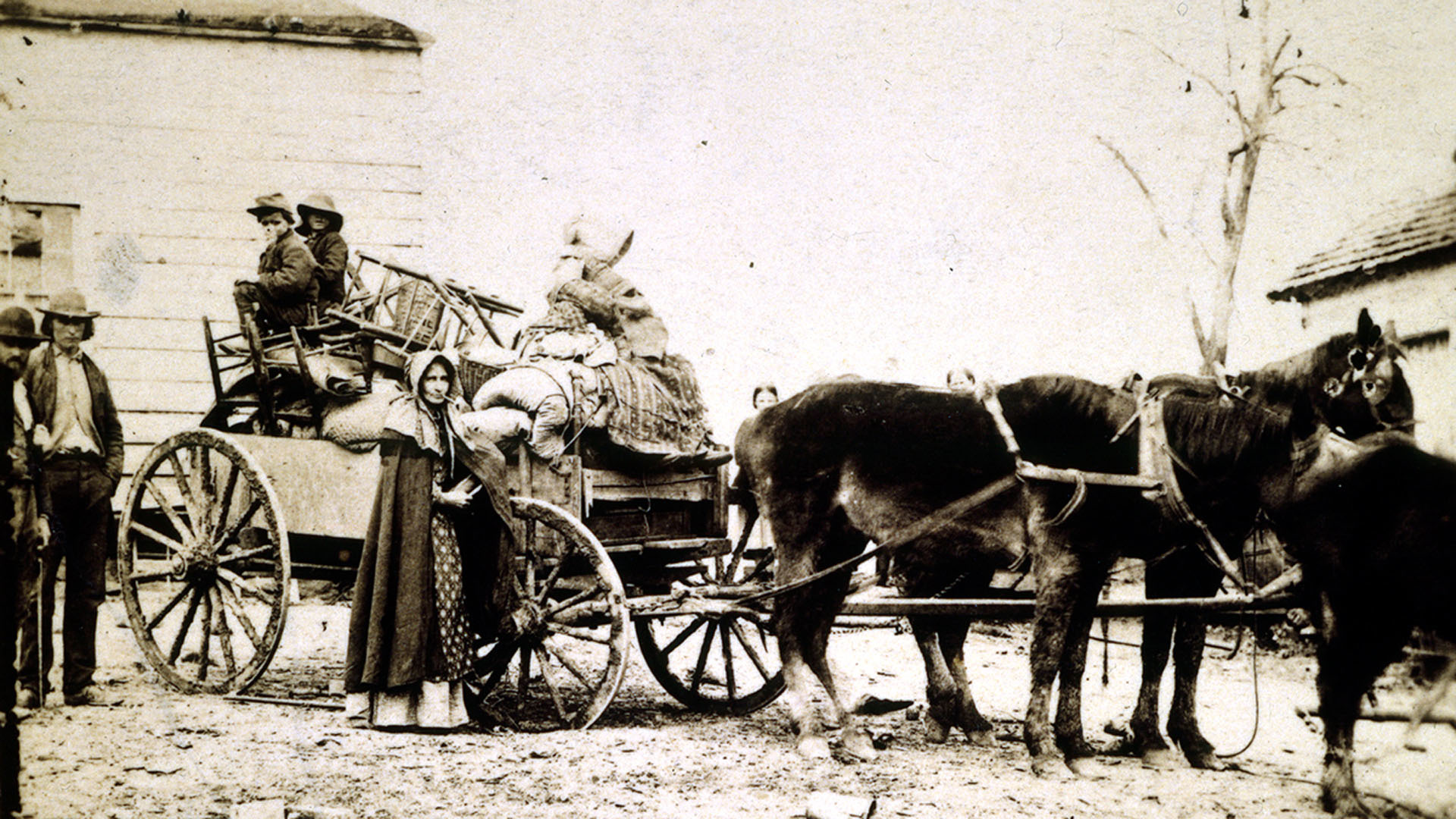
Men, women, and children on the homefront were challenged
to assume new economic and social roles and to provide
support for those directly engaged in the war. Politically,
the war confirmed the unalterable relationship between
the states and the union and the right of its African
American population to be free. Above all, the war defined
the character of Americans during the period, many of
whom exhibited extraordinary creativity and courage.
Lesson Activity Summary
This lesson identifies Online documents, records, and
articles as well as books useful in studying the U.
S. Civil War. Whenever possible, research is linked
to historic people and events in the student’s
own community or to the student’s background and
experiences.
Activity Objectives
In this lesson students will have an opportunity to
• Study Civil War battles, hospitals, and prisons
in their own state as well as military participants
and civilians affected by the war.
• Examine articles, records, letters, and diaries
available online and in their state archives and libraries.
• Assess the contributions of leaders, soldiers,
and civilians to the war effort and the effects of the
war on citizens in their state.
Relevant National Standards
This lesson correlates to standards for the Mid-Continent
Regional Laboratory
http://www.mcrel.org/standards-benchmarks/docs/contents.html.
History
• Understands how increasing immigration, the
rapid expansion of slavery, and the westward movement
changed American lives and led to regional tensions.
• Understands the causes of the Civil War.
• Understands the course and character of the
Civil War and its effects on the American people.
Civics
• Understands the roles of voluntarism and organized
groups in American social and political life.
• Understands issues concerning the disparities
between ideals and reality in American political and
social life.
• Understands the impact of significant political
and nonpolitical developments on the United States and
other nations.
• Understands how certain character traits enhance
citizens’ ability to fulfill personal and civic
responsibilities.
Language Arts
• Demonstrates competence in the general skills
and strategies of the writing process.
• Gathers and uses information for research purposes.
• Demonstrates competence in the general skills
and strategies of the reading process.
• Demonstrates competence in the general skills
and strategies for reading a variety of informational
texts.
Lesson Plans
Battles
• Select a battle which occurred in your state.
(see Battle
Summaries by State http://www2.cr.nps.gov/abpp/battles/bystate.htm)
If no Civil War conflict took place there, identify
a battle in which soldiers from your state participated.
(You may consult Regimental
Histories by State http://www.mosocco.com/regiment.html
or Regiments
www.itd.nps.gov/cwss/regiments.htm)
Assess the importance of leadership, number and condition
of troops, and terrain in determining the outcome of
the battle. Conclude which factors seemed most important.
• If no soldiers from your state participated
in the Civil War, select a major battle, such as Antietam,
Gettysburg, or Vicksburg. Identify factors which you
feel affected the outcome, such as leadership, strategy,
or troop morale. Decide whether or not the criteria
you developed could be used to analyze other battles.
Although your community did not participate directly
in the Civil War, how would citizens have reacted to
a Union or Confederate victory? Based on the battle
you selected, write a news story or editorial to appear
in a local newspaper shortly after the conflict.
• Compare a battle which took place in your state
with one which occurred in another theater of the war.
(See Civil
War Battle Summaries by Campaign http://www2.cr.nps.gov/abpp/battles/bycampgn.htm)
Consider leadership, number and condition of troops,
terrain, and strategy. Conclude which factors accounted
for similarities or differences in battle outcomes.
• If your state regiment participated in the war,
select two or more battles in which they were engaged.
Note differences in leadership, terrain, or other important
factors. Compare battle results.
• Historians contend that each side in the Civil
War had certain advantages. The North had a larger population
and could field more troops. It also had more factories,
a good railroad network, and control of the U. S. Navy.
However, the South fought on familiar territory and
did not need long supply lines. Many Confederate leaders
were West Point graduates, and southerners were experienced
in using firearms and horses. To what extent did the
battle which you studied reflect the perceived advantages
of each side? Decide whether you agree with traditional
assumptions about the North and South. Justify your
conclusion.
• Compare the battle which you studied with one
that occurred in a different year. Consider events which
took place during the time period between battles, such
as important political events or changes in military
leadership. (You may wish to use Timeline,
the Civil War, 1861--1865 (http://www.americancivilwar.com/tl/timeline.html)
or The
History Place: The U. S. Civil War 1861—65
(http://www.historyplace.com/civilwar/index.html)
Determine why results of the two battles were similar
or different.
• Create you own Civil War game. Minimum requirements
are knowledge of commanders, forces engaged, and terrain.
For information on commanders and troops, click on Civil
War Battle Summaries by State (http://www2.cr.nps.gov/abpp/battles/bystate.htm).
For maps click on Civil
War Battles by States (www.americancivilwar.com/statepic)
or West
Point Civil War Atlas (http://www.dean.usma.edu/history/dhistorymaps/AcivilwarPages/ACWToC.htm).
• Compare two or more accounts of a battle which
took place in your state or one in which soldiers from
your state participated. Note differences in factual
information, point of view, or conclusions. To what
extent does reading several accounts provide a fuller
understanding of the battle’s significance? Conclude
how the battle contributed to the final outcome of the
war.
• Compare a historical account of a major battle
with a fictional one. For example, compare the Battle
of Gettysburg as described in online historical accounts
with the description of that battle in Michael Shaara’s
Killer Angels. Or compare a historical account of the
Battle of Chancellorsville with Jeff Shaara’s
portrayal of the conflict in Gods and Generals. Determine
whether the fictional account distorts or enhances the
historic record.
• Write a story based on one of the battles you
have studied. While using the actual terrain and participants
as setting and characters, fashion the plot to reveal
the characters’ ideals, emotions, and reactions
to the battle.
• For the whole class: click on The
American Civil War (http://home.earthlink.net/~krwenger/civilwar.htm).
The timeline provides links to major battles. Ask individual
students or groups to explore each battle, following
links to additional information. The class should agree
on the basic data each group will provide, such as names
of commanders, number of troops engaged, battle strategy,
results, and casualties. In addition, students should
look for ways in which each battle impacted their community.
For example, did it draw participants from your state,
disrupt trade, create hardships, engage volunteer medical
personnel, or convince community members to participate
in the war? Students may want to consult their State
Archives or State Historic Preservation Office for additional
information. (see Recommended Research Sources,
General Information)
Caring for the Wounded
• To find a Civil War hospital in your community,
click on Civil
War Hospitals (http://www.msstate.edu/listarchives/afrigeneas/199706/msg00536.html)
If a hospital was located in or near your town, you may
be able to find more information by conducting a search
of the surgeon in charge (listed in the column under officer)
in your state archives or state library. The surgeon’s
journal or report may indicate the type of wounds or illnesses
treated, volunteers who offered assistance, and survival
rates.
• If your state was in the Union, see Caring
for Casualties of the Civil War (www.cr.nps.gov/nr/twhp/wwwlps/lessons/69bentonville/69facts1.htm)
to read about casualties in the First Battle of Manassas
and the 1862 Letterman Plan for organizing field hospitals
and dispatching ambulances. Compare conditions and procedures
at the hospital in your community with medical treatment
after the Manassas Battle. Determine whether the Letterman
Plan affected treatment.
• If your state was part of the Confederacy, read
Caring
for the Men – the History of Civil War Medicine
(http://www.civilwarhome.com/medicinehistory.htm).
The article describes the Confederate Medical Department
which established "pavilion hospitals" under
the direction of Dr. Samuel Preston Moore. Decide whether
the hospital in your state was a pavilion hospital.
You may also wish to click on
Civil War Medicine (http://www.library.vcu.edu/tml/bibs/cwmed.html),
which has links to many articles on hospitals and medicine
in the former Confederate states.
• Much of the work in Civil War hospitals was
carried out by volunteers working for the U. S. Sanitary
Commission, Western Sanitary Commission, and Women’s
Central Relief Association. These organizations had
hundreds of branches in the Northern and Western states.
To read about the U.
S. Sanitary Commission, click on (http://www.netwalk.com/~jpr).
The article Ladies’
Union Aid Society (http://www.stlcc.cc.mo.us/fv/users/mfuller/luas)
describes the activities of the Western Sanitary Commission
based in St. Louis. Search the Civil War database in
your state archives or library to find information on
these organization in your community. Based on your
findings, write a letter or design a brochure to raise
contributions and recruit volunteers for the organization.
• If you studied the Battle of Gettysburg or the
Peninsular Campaigns in Virginia, click on Medical Directors’
Reports from the Official
Records of the War of the Rebellion (http://civilwarhome.com/medicaldirectors.htm).
If you studied other battles in the eastern theater
of the war, click on U.
S. Sanitary Commission—Commission Activities
at Shiloh, Antietam, Olustee, Vicksburg, Chickamauga,
or Chancellorsville (http://civilwarhome.com/records.htm).
What do the articles reveal about the problem of caring
for the wounded under battle conditions? Assume the
role of a reporter who has interviewed a chief surgeon
or member of the Sanitary Commission. Write an article
on care of the wounded for a national newspaper or magazine.
Casualties
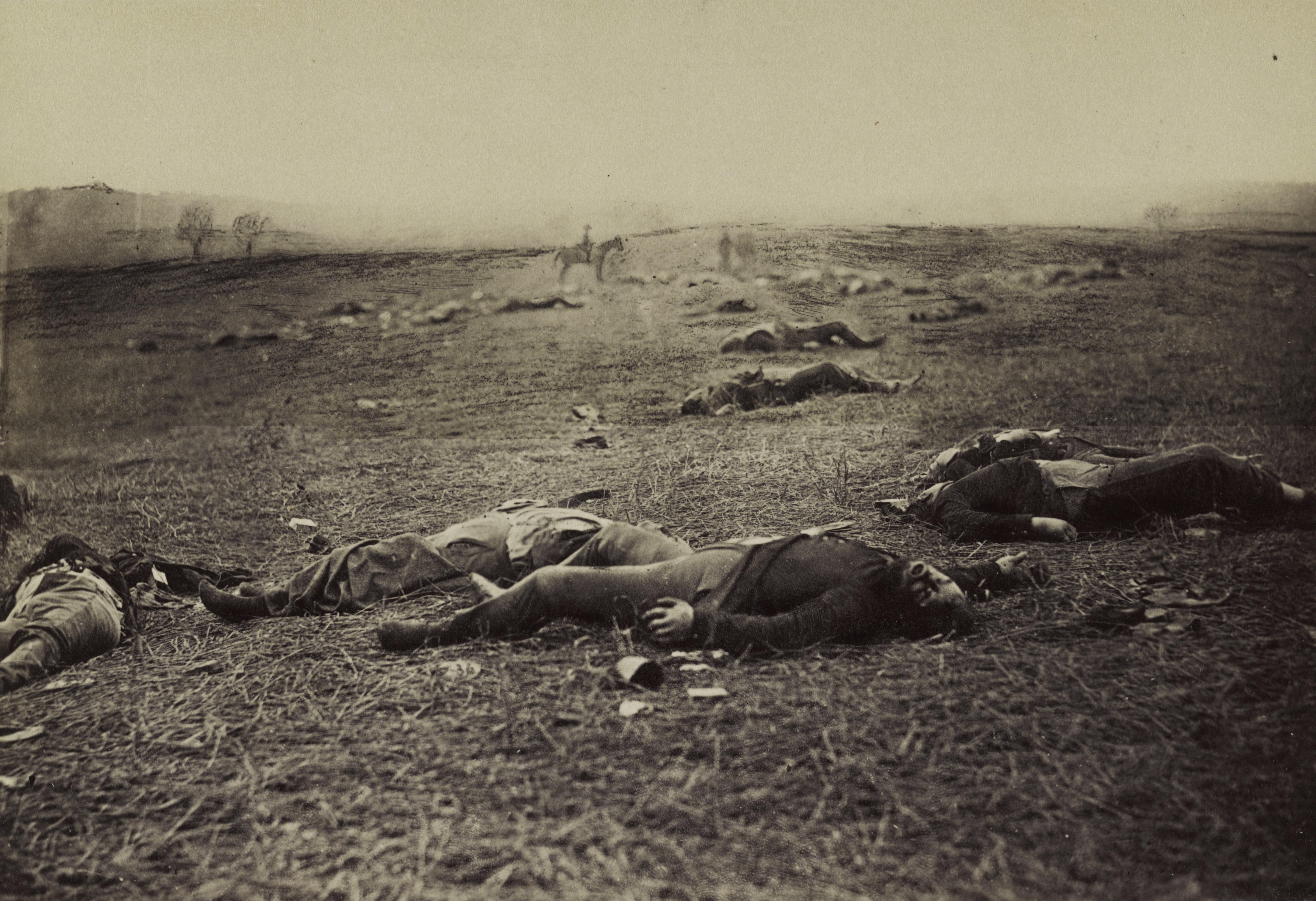
An estimated 620,000 Americans died in the Civil War—more
than in any other American conflict. The losses partly
explain why the war is inscribed in our collective memory.
• Review
Deaths of Union Forces by State, 1861—1865
(http://hometown.aol.com/dlharvey/cwmireg.htm).
Note the number of Union soldiers from your state who
were killed in action, died of wounds, or who died of
diseases and other causes. Then click on The
Price in Blood! Casualties in the Civil War (http://www.civilwarhome.com/casualties.htm)
Compare statistics in your state with those of all Union
armies. Are the percentages similar? Also review the
estimated losses of Confederate troops. Draw conclusions
about the state of medicine and care of the wounded
in the Civil War.
• Read American
Civil War Battle Statistics: Commanders and Casualties
(http://www.americancivilwar.com/cwstats.html).
Locate statistics for a battle you have studied. From
your knowledge of the battle, to what extent did military
leadership, battle strategy, or just unavoidable circumstances
account for the losses? Is the battle site memorialized
in a National Military Park or Monument? [You may refer
to Civil
War Related Sites in the National Park Service (http://www.itd.nps.gov/cwss/)
or your State Historic Preservation Office (http://www.sso.org/ncshpo/shpolist.htm)].
Write an editorial or persuasive essay on why the site
should be preserved.
• Read Losses
in the Battles of the Civil War and What They Mean
(http://www.civilwarhome.com/lossesmeaning.htm).
If you studied the Battle of Antietam, Gettysburg, or
Chickamauga, do you agree with the author’s assessment?
Justify your answer. The author contends that Civil
War losses attest to the courage and endurance of both
Union and Confederate soldiers. Does his thesis apply
to a battle which you studied? Provide examples to support
your position.
Homefront
During the Civil War civilians experienced the loss
of loved ones, economic hardship, and, in the case of
women, a change from traditional roles. Many responded
by contributing food and funds to support the fighting
men, volunteering in hospitals, or even acting as spies.
• Students who live in Georgia, Illinois, Maryland,
Mississippi, Missouri, Pennsylvania, South Carolina,
Tennessee, Virginia, or Wisconsin should investigate
sources in this lesson plan listed under Recommended
Research Resources, Homefront. After reading about someone
living in your state during the Civil War, describe
how the war affected his or her life.
If you live in a Northern or Western state, read The
Diary of Alice Williamson, a schoolgirl who describes
Union occupation of Gallatin, Tenn. (http://scriptorium.lib.duke.edu/collections/civil-war-women.html)
or The Journal of Jane Howison Beale, who lived in Fredericksburg,
Va. (http://www.nps.gov/frsp/beale1.htm). Compare her
reaction to the war with that of the person from your
state.
If you live in a former Confederate state, read Civil
War: the Wisconsin Homefront (http://wisconsinstories.org/2001season/civilwar/temmer_essay.html#top)
or Rachel Cormany Diary, June 14—July 6, 1863, describing
the town of Chambersburg during the Gettysburg campaign
(http://scriptorium.lib.duke.edu/women/cwdocs.html) Compare
her reaction to the war with that of a person from your
state.
• To find additional information about life in your
state during the Civil War, see Facts About Different
States in the Civil War. (http://www.cwc.lsu.edu/cwc/links/cwinfo.htm#facts).
Or you may search the Civil War database or collection
of your state archives or library. Newspapers published
in 1861-65 are a good source.
• Students in Alabama, Arkansas, Georgia, Kentucky,
Maryland, Massachusetts, New Jersey, New York, North
Carolina, Ohio, South Carolina, Texas, Washington, D.
C., and Wisconsin may want to read James Marten’s
The Children’s Civil War. The book relates
how newspaper articles, letters from family members,
and children’s literature influenced attitudes
toward the war. After reading the book, identify one
dramatic or formative experience which affected a young
person from your state. Conclude how the event influenced
his attitude toward the war.
• Students from Georgia, Indiana, Louisiana, Minnesota,
Mississippi, Ohio, Pennsylvania, Texas, West Virginia,
and Wisconsin may wish to read Emmy E. Werner’s
Reluctant Witnesses: Children’s Voices from the
Civil War. The book describes young people who witnessed
Civil War Battles, some as musicians in the army and
others as residents of nearby towns. After reading the
book, relate how someone from your state became a witness
or participant in a battle. Write a poem or monologue
describing the battle scene from his or her point of
view.
Participants
• To find Civil War leaders from your state, you
may click on Civil
War Biographies (http://www.civilwarhome.com/biograph.htm),
or Northern
Leaders of the American Civil War (http://www.swcivilwar.com/cw_northern.html),
or Southern
Leaders of the American Civil War (http://www.swcivilwar.com/cw_southern.html)
Additionally, you may find information on local leaders
by checking out
Facts About Different States in the Civil War (www.cwc.lsu.edu/cwc/links/cwinfo.htm#facts)
After you have found biographical information on a leader
from your state, evaluate his contribution to the war.
Write an obituary or commemorative article on your subject.
You may find a photograph to accompany your article
at
Library of Congress – Selected Civil War Photographs
(http://memory.loc.gov/ammem/cwphtml/cwphome.html)
• Some of the most interesting Civil War stories
are captured in the biographies, diaries, and journals
of ordinary people who served in the war. If you have
an ancestor who participated in the Civil War, click
on Genealogy
(http://www.cwc.lsu.edu/cwc/links/links5.htm).
The site provides access to sources by family name and
other links to state genealogical and historical societies.
• To find names of members of your state regiments,
go to
Regiments (www.itd.nps.gov/cwss/regiments.htm).
Or you can click on
Soldiers (www.itd.nps.gov/cwss/soldiers.htm)
and find names of Civil War soldiers from your state,
if records are available. A third alternative is to
"adopt a veteran" by choosing the name of
a Civil War soldier buried in your local cemetery. Once
you have a name, you can search records in your state
archives or library. While record keeping varies from
state to state, you may begin your search by accessing
the Civil War database or collection, state Civil War
service or pension files, or records of U. S. and state
veterans’ homes. When you have completed your
research, write a brief biography of your subject. If
possible, address questions such as: Why did he participate
in the war (was he a conscript or volunteer)? Which
battles did he engage in? Was he wounded? Did he apply
for and receive a pension?
• Some students may wish to investigate their
racial or ethnic heritage. To study African American
contributions to the war, read A
Historical Overview of African Americans and the Military
(www.itd.nps.gov/cwss/history/aa_militaryhistory.htm).
The article identifies African American regiments which
served in many U. S. conflicts, including the famous
54th Massachusetts Regiment of U. S. Colored Troops
depicted in the movie Glory. By clicking on
"Regiments," students can obtain the names
of individual soldiers. Or students can click on
Sailors Project (http://www.itd.nps.gov/cwss/sailors_index.html)
to find information on African American sailors who
served in the U. S. Navy. A map identifies states in
which sailors were born, and students can access names
and information about sailors by state.
• To find information on Native American participants,
click on Union
and Confederate Indians in the Civil War (http://www.civilwarhome.com/unionconfedindians.htm).
Students interested in the contributions of various
ethnic groups can go to Ethnic
Groups/Immigrants. (http://www.cwc.lsu.edu/cwc/links/links10.htm)
or European
Recruits (http://www.spartacus.schoolnet.co.uk/USAcivilwarE.htm).
After they have completed their research, students should
provide a biographical sketch of their subject. They
may write a one-act play about a post Civil War meeting
of veterans who discuss their experiences in the war.
Prisons
As the war progressed, prisons were built to house an
increasing number of deserters and captured soldiers.
A Union prison at Ft. McHenry, Md., detained not only
confederate prisoners of war but political prisoners
arrested after President Lincoln suspended the writ
of habeas corpus. They included the mayor of Baltimore,
31 members of the Md. legislature, and 32 newspaper
editors and owners. Ft. McHenry also received Confederate
prisoners captured at Gettysburg, Antietam, and other
Maryland battlefields.
• If you know the name of a prisoner at Ft. McHenry,
you can click on Records
from two Civil War Prisons: Ft. McHenry, Md., and Andersonville,
Ga. (www.itd.nps.gov/cwss/prisoners.htm).
Go to Search Records. You can also enter "political
prisoners" or "prisoners of war" to obtain
names of prisoners.
• The largest Confederate prison, Camp Sumter
at Andersonville, Ga., confined 45,000 union prisoners
after it was built in 1864. If you know the name of
a prisoner at Andersonville, you can go to Search
Records to get the name of his unit, capture site,
and other data. Or you can enter the name of your state
and get a list of soldiers from your state who were
detained there.
To find the names and locations of 16 other Union and
Confederate Civil War prison camps, click on maps
(www.cr.nps.gov/nr/twhp/wwwlps/lessons/11andersonville/11locate1.htm).
If a prison was located in your state, you may find more
information in your state archives or library. Civil War
databases in some state libraries also list members of
state regiments who were detained at Ft. McHenry or Andersonville.
• Were soldiers from your state among the 12,912
who died due to disease, malnutrition, or poor sanitation
at Camp Sumter? Hold a mock trial of prison officials.
Prosecutors can site conditions at the Andersonville
prison as well as mortality rates. Defense attorneys
can base their argument on shortages of food and supplies
in the South during the last months of the war. For
information on an actual court martial, click on
Official Records of the War of the Rebellion/Court-Martial
of Henry Wirz (http://www.civilwarhome.com/records.htm).
Revolutions, Historic and Current
• Students can compare the U. S. Civil War with
foreign revolutions they have studied. For information
on the French Revolution, click on http://www.woodberry.org/acad/hist/FRWEB/index.htm.
To read about the Spanish Civil War, click on http://www.richeast.org/htwm/SCW/scw.html.
They may compare objectives, leaders, important battles,
casualties, or results.
An interesting basis of comparison is "treatment
of defeated leaders and armies." Click on The
End of the Civil War (http://www.civilwarhome.com/endofwar.htm).
The excerpt from Reminiscences of the Civil War
by Maj. Gen. John B. Gordon, CS, describes the surrender
at Appomattox. Students should determine how the conclusion
of the U. S. Civil War differed from that of the revolution
they studied.
• Students may wish to compare the U. S. Civil
War with a current conflict in their country of origin.
Click on The
World at War
(http://www.fas.org/man/dod-101/ops/war/index.html)
for data on current wars worldwide. Are there important
similarities between the U. S. Civil War and the foreign
war? To what extent do differences reflect the passage
of time, geography, culture, or the influence of outside
parties?
This lesson was written by Nancy
Hall.
|
|