Jay Ungar and Molly Mason have been
playing music together since 1978 and have become widely known
for their work with Ken Burns and other public broadcasting
favorites, Great Performances and Garrison Keillor’s "Prairie
Home Companion."
 |

| Video
Clip |

|
|
| Jay
Ungar and Molly Mason discuss the writing
of "Ashokan Farewell" and its emotional
impact. |
|
| Ashokan
Farewell |
|
Listen
to an excerpt from this famous melody.
(c)1983 by Swinging Door Music (BMI) © information |
|
|
They also run Fiddle & Dance Workshop
at Ashokan in upstate New York where, each summer, people come
to learn traditional music and dance. Jay Ungar first wrote
"Ashokan Farewell" at the conclusion of one of those
summer workshops.
JAY UNGAR:
"Ashokan Farewell" is a tune that I wrote unintentionally,
really. It was a moment of deep emotion after the summer camps
at Ashokan had ended. It was the third summer, and it was
an experiment every summer, you know, pulling this together.
And it had been such a deeply moving experience and the community
of people and the feeling of unity that we had had through
music, and being away from the regular world was so important
to me that when I’d gotten home, I had a sense of loss
and longing; and I was looking for a Scottish lament, you
know, that would express how I felt. And I couldn’t
think of one, so I just started playing, and this tune came
out. And it brought me to tears. And every time I played the
beginning of it, for months afterward, I was brought to tears.
So, it was difficult to play it for anyone. But after a while,
our band Fiddle Fever started performing it, and we eventually
recorded it.
MOLLY MASON: I think a lot of people are
surprised that Jay wrote the tune, because they’re of
the mind-set that it must have come from the nineteenth century.
JAY UNGAR: We were asked by Ken to come to
Brattleboro, Vermont, and record music for The Civil War series,
and this would be a lot of the traditional, period music.
And as it turns out, a lot of that music was in our repertoire,
as square dance musicians and string band musicians. And we
spent a day [recording]. Pieces of sheet music were put in
front of us – these would be the original arrangements
– and then together with Ken, we created new arrangements
to fit the various scenes that he described.
The way he worked at that point was he would sit in the middle
of a group of musicians and describe a moment from an emotional
point of view in the film, and we would try to express that
through the tune that we were being asked to play. So, we
would reinterpret these tunes, and it was really fun and an
exciting day of music. And we just sat, and we went through
tune after tune, playing in all different ensembles –
you know, more instruments, less instruments, different feels,
different moods, different emotions. And it was all just trying
to get ideas.
But that actually became the final soundtrack, so it was spontaneous
and heartfelt and in the moment. We didn’t have a chance
to sit down and try to refine it, make it perfect. It’s
a little raw and very honest, and I think that’s part
of why it works.
MOLLY MASON: I remember one
scene he wanted Jacqueline Schwab [the pianist] to do a solo
piano version of "Battle Cry of Freedom" and so
he described some of the photos that were going to be this
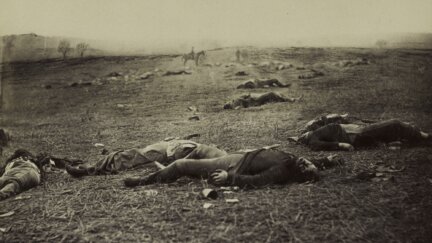
scene. And he said, "This battle has just finished, and
they are several photos of the dead, just lying, you know,
as far as you can see – both sides." And he went
on and described a little more.
So, Jacqueline nodded, and then played "Battle Cry of
Freedom," about 60 seconds’ worth, all the way
through the tune, very slowly and simply and sadly. And we
were all sitting in the room, being quiet, you know, with
our instruments. She got done, and we couldn’t speak
and were all almost in tears, because with that explanation
by Ken, followed by that musical version by Jacqueline, we
were just devastated. It was really powerful.
JAY UNGAR: The first scenes that we saw [of
the film] were at the end of our day of recording in Brattleboro.
We went back to Ken’s house in Walpole, New Hampshire,
and he showed us a trailer that used "Ashokan Farewell."
It was the Fiddle Fever recording, and it was basically the
opening 10 or 15 minutes of the film. And it was so powerful.
We were deeply affected by it, and we all knew this film was
going to affect America in a lot of important ways.
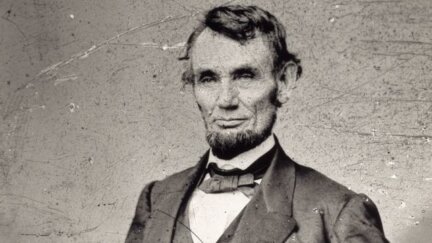
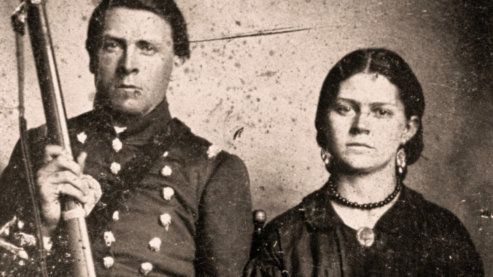
JAY UNGAR: One of the most powerful moments
in The Civil War series for many people is the reading
of Sullivan Ballou’s [link to the Ballou letter in Historical
Documents] letter with "Ashokan Farewell" behind
it. And when I first heard that I was just hit right inside.
You know, Ken saw the connection and put those together, and
it’s cosmic. A lot of people are very deeply moved by
that.
And I remember Ken showing us the Sullivan Ballou letter.
It was a tattered piece of paper – of course, not from
a 150 years ago. It was one that Ken had typed out himself
and been carrying in his wallet for probably 10 or 15 years.
So, it was a letter that always meant a lot to him, and it
means a lot to millions of people now.
JAY UNGAR: I guess I’ve played "Ashokan
Farewell" hundreds or thousands of times. People wonder,
you know, "How can you not tire of it, or still play
it with feeling?" And I feel lucky that this is a tune
that I’ve become known for, because I love it so much.
And I receive letters every week, still, from people who have
personal stories of how it’s affected them. So, for
me – I might not play it for myself now -- but I know
I’m playing it for somebody who cares about it out there;
and that’s what makes it possible to continue playing
it – and playing it like I mean it.
MOLLY MASON: And then there have been some
surprising and funny reactions. We were at a large event in
Cincinnati. There were several hundred people there, and there
was a string quartet playing for the people. And we edged
our way right up to the string quartet, and they played "Ashokan
Farewell."
And when they finished, they took a break, and Jay went up
to the first violinist. We all had nametags and he was about
to speak to her when looked at his nametag. She started getting
very nervous and sort of –
JAY UNGAR: She turned white as a sheet!
MOLLY MASON: Yeah, having a hard time breathing,
it seemed. The tune "Ashokan Farewell" is out there
in the world now. And we hear stories about it every now and
then. Somebody will come back from Ireland and say, "Oh,
I heard it in a pub in this little town in western Ireland!"
You know, it just pops up. But it’s got a life of its
own.
This
is an edited transcript taken from an interview conducted
for The Civil War DVD.
Ashokan
Farewell by Jay
Ungar
Performed by Fiddle Fever
(c)1983 by Swinging Door Music (BMI)
More information on Jay Ungar and Molly Mason is available
at their Web site http://www.janandmolly.com.
|